Transforming Business Challenge into Success | Guy Remond
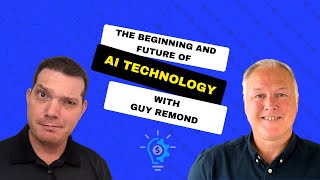
Guy Remond left school early, worked 11 years at Sainsbury's, then founded Cake Solutions in 2001 to build resilient streaming systems. The company nearly went bankrupt in 2004 but landed a contract that saved a client £1M per year, and was later acquired and rebranded as Disney Streaming Services before Remond sold in 2017.
Questions this video answers
2001
2017
Rob Harrop
Jan Mahacek
2004
Chapters
Whether it was foolish belief or, you know, bubble sight, I don't know honestly. But it was belief. And I think you've got to have belief in yourself and belief in your team and belief in what you're doing. If you've got that, then I honestly believe you can get over most issues that you face.
Well, our guest today was a founding member and CEO of Cake Solutions Limited. Now that started in 2001. We're going to hear about how he got going in business in a moment. Now, over the next 16 years he directly oversaw the development of that business from a small startup to an international multi million pound company on the cutting edge of engineering and a process in open source software. Now, after being recognized in the Deloitte UK technology Fast 50, Cake Solutions was acquired by a multinational corporation and then rebranded as Disney Streaming Services. He is now building several new organizations with his business partners Gary Fletcher and Dave Zampano. One is a highly efficient tech led private equity organization. It's really entrepreneurs helping entrepreneurs. In fact, EHE is what it's what it's called. Fabulous. With a focus on AI technologies to help those businesses. And with his partner Dave, they've got a legal document platform where their moonshot. Their big vision, their big goal is to be the largest law firm in the world that doesn't employ any lawyers. Fascinating. They are digitizing, democratizing and demonetizing legal services, helping smaller law firms compete in a digital era. I'm very excited to have Guy Ramon with me here and we're going to have an incredible journey on this wonderful story. And thank you for joining us all the way from the uk.
Yeah, thank you Richard. Excited to be speaking to you and to be on the show.
Amazing. Now I'm really curious. Every entrepreneur's journey starts somewhere. Yours began in 2001, but it really would have began before that. That's when the business got started. But what happened prior to that? What's one of the things that you think people need to know as they consider whether they're just thinking about starting their own business or they're reflecting on their own journey of being a business owner?
Yeah, I mean, you know the, I'll give you the quick speed dating version all the way through to when I started the company in 2000, World Cake Solutions and you know, I was, I was very, very average at school and you know, subsequently probably in my early 30s found out that I was quite highly dyslexic. My son was quite highly dyslexic, which is how I kind of cottoned onto that and then a lot of things that happened made sense. So, you know, I was always in the, let's put it this way, the average classes at school. I came out with some qualifications but not that many. I really enjoyed playing football at school and at lunchtime rather than actually being in class. And I actually left school at 17, 18 and I couldn't wait to get into work. And you know, I joined a supermarket group called Sainsbury's over here, which at the time was the largest supermarket in the UK. And you know, I spent 11 years there. I really enjoyed it. It's very hands on with, you know, actually the big thing I learned from that, which is just, it's defined me in all honesty, is I learned how to manage people, understand people, build relationships because these stores have 350 people in them and you know, you, you kind of learn to manage all walks of life, right? So anything from a student who comes in on a Saturday and sits on a till, probably hungover from the night before to the evening ship, ladies who come in and restock the shelves to the multitude of people that work on the tills in the warehouses, in the canteen, you know, whatever. And you know, looking back, it really, you know, kind of helped build my unique ability which is to build outstanding teams. That's what I'm really good at. And you know, we both aware of strategic coach. They have this concept called unique ability. And when I did it, it kind of, it all harped back to those early days of working for Sainsbury's in a supermarket, a big supermarket. And then I guess then I kind of. I've always had the ability to make decisions quickly and take chances. And you know, I saw an advert in the newspaper. I wasn't looking to leave Sandra's actually I really quite enjoyed it. But I saw an advert in the newspaper for an electrical superstore. So I applied for it and I got it and it was in PC World, which is basically a computer shop. And kind of my inner geek came out then. You know, I've always been interested in tech and the future and so on and you know, that was a really cool environment for me. And then very quickly I did that for sort of 18 months or so. And that's when I then set up a business called Netcars with a couple of young guys called Reg and Louis Ricks, couple of brothers. Their father was in the car industry, had several kind of car showrooms. They wanted to do things differently. They wanted to use the Internet to sell cars effectively. So we built something called Netcars 2000 and it was in the, it was a terrible time to set a business up. Right. It was right at the end of the dot com boom. So it was like 2000, so 2001. So, you know, the early 2000s, everything went wrong with tech. You know, it hit rock bottom kind of thing. And you know, quite frankly, we, you know, myself and a business partner, guy called Rob Harrop, who turned out to be technically still one of the most gifted engineers and architects I've ever worked with, even though he was a, he was a young guy at that particular point. And we started to build this company. He left in 2006, but by then we would begin to build a reasonable team up. So, you know, he left for all the right reasons. He's still a friend of mine. And, you know, he went and did what he did very successfully, as it happens. And, you know, I went on and began to develop Cake. And to begin with, it was, you know, kind of a lifestyle company. So, you know, we were not that ambitious, quite frankly. We were happy to, to do our thing and, and we were earning good money and, you know, we built really quite, you know, an incredible team of technical people and I was the commercial side of the business. And then we got to about 2010 and my CTO at the time, a guy called Jan Mahacek, who is again, one of the, again one of the most talented engineers and architects I've ever worked with. Him and Rob, you know, I'll be best people I've ever worked with directly. And he saw an opportunity with the new technology. Um, and this new technology would enable us to build systems that didn't fall over when there were spikes in demand. So you can imagine when there's an advert on in between a TV show and it's an advert for, you know, one of the online platforms. We, we have the, well, you, you guys have Ticketmaster over there. So we have Ticketmaster and Robbie Williams was doing a gig at Networth and literally within seconds of the tickets going on sale, the platform fell over and then it come back for a few minutes and it fall over. And you'd literally spend four or five frustrating hours trying to buy tickets for this show. It was just a nightmare. So the technology we were beginning to use, and it was early in, in their early days, solved that problem, right? So it enabled these platforms to deal with mass, you know, big spikes in demand and they slowed down, but they didn't fall over, which was key. And they could deal with much higher Bandwidth and, you know, higher concurrent user numbers and so on. And we started to work with some companies in the uk, One of the big price comparison websites called Money Supermarket, we'd worked with McLaren. We worked with Weight Watchers in New York. We worked with bamtech, which was emanated out of mlb, which was responsible for streaming all the major American sports at that particular point. And, you know, we. And the technologies that we were specializing in and we grew up using as they develop the technology itself, as the purveyors of this technology developed it, we, you know, we started to grow with the technology and started to work with companies that quite frankly, company of our size should really never be able to work with.
Amazing. Amazing. And so you overcame a few challenges in there. Obviously dyslexia being one of them, having a difficult time again, dot com bubble. Not everyone maybe remembers that to the same degree that you do. But starting a tech company, I think that that's, that's clear what kind of challenges would have been faced but now dealing with technological change, looking at what can we. What can we. What's the problem that we need to solve? Finding a way to solve it and then creating a space in the market that almost wouldn't have really been yours had it not been for the fact that you were actively trying to solve that problem for the purveyors you were working with. And so what other things came about in that timeframe? Because, you know, over 16 years in business before you sold the company, I'm sure there was a lot of other chaotic moments that would have occurred, both from maybe the economic standpoint, but even just in dealing with perhaps teams and people and different maybe regulations. So what are some of the other challenges you had to overcome during that time frame at the head of that company?
Yeah, I mean, we absolutely did. And you're quite right to call it out. So, you know, there was a couple of occasions we almost went bust. And on one of the occasions, if we'd have gone bust, I'd have gone bankrupt because I put everything I had and more using credit cards into the company to ensure its survival. So, you know, and interestingly, you just thought, you know, we started the business in the. When the dot com bust in the sort of early 2000s. And interestingly, actually during the recession in 2008, we did okay. We had some really good customers and that saw us through. We struggled in 2004. So, you know, I'm sure most young entrepreneurs who have built a business will kind of relate to this. I had had no clue What I was doing, you know, I'd never run a business. I'd never had any training about running a business. I'd gone into this, I suppose, in true entrepreneurial fashion, where I thought, well, I can do this.
There's certain moments in our life where we know that things are going to change. That happened to me in August of 2020, 2009. My life completely and totally changed forever. For the better. I learned about this incredible concept called the infinite banking concept. Becoming your own banker. It was created by R. Nelson Nash. Nelson became my friend and my mentor. I loved him dearly. I now have the blessed life of being able to teach his incredible messages, incredible concept to the people I love to serve. You can learn all about it by registering for a free webinar@learnibc.com Go ahead, take the initiative. Start your learning journey now.
What are some of the other challenges you had to overcome during that timeframe at the head of that company?
I had had no clue what I was doing. You know, I'd never run a business. I'd never had any training about running a business. I'd gone into this, I suppose, in true entrepreneurial fashion, where I thought, well, I can do this. It won't be a problem. I'm not technical, right? So I cannot write a line of code. My brain isn't wired that way. But what I was really good at was hiring the right people who could write lines of code and then eventually beginning to hire the right top team. But in 2004, we ran out of business. You know, we literally had no sales. We were probably two weeks away from going bust. And honestly, it was my business partner that pulled one out of the bag on this occasion. We had one lead for a company called the National Student of Union Services, and they were responsible for bulk buying all the alcohol that students drink. You can imagine that was quite a big business. So. And all our systems were manual, so they were looking for a piece of software that would help them deal with that. But also they also had really quite complicated discount offerings. And it turned out that after we built this piece of software, that they saved a million pounds a year because humans couldn't deal with the figures that were required as accurately as computers could. So that was a really unexpected strategic byproduct of what they were doing in terms of building software. But if we'd not won that piece of business and my, you know, I said my business partner went in and not knocked it out the ballpark from a presentational point of view, and we won the Business and we survived, but we were within two weeks of running out of money and going bust. But that particular point, I just moved house, had two young kids, a new mortgage and I had a house. The house I bought was from auction and it needed completely gutting and redoing. And honestly, if the company gone bust because I put so much money onto myself personally, I'd have been bankrupt as well. So that was a massive risk that really my family didn't know about. And I think that quite often happens in entrepreneurs that, you know, they're not trying to hide stuff from the families, but what they're trying to do is shelter them sometimes from some of the things that you have to do to get to where you really want to get to. You've got to have that confidence in the business that it's going to work. And I did and it did. So, you know, 2010, we made that technological change that I mentioned and honestly, we then had six years of sustained growth, 10 times in every multiple. We were really knocking out the ballpark, working with big companies, you know, working all over the world. We had big contracts in the Middle east, in the States, actually accounted for a high percentage of our business at this point. And we had a few in the UK as well. So really exciting times. And we were different. We still didn't ever. We never had a marketing department, we never had a sales arm to the business. What we did do was we encouraged, we built a culture. This is really important actually. I've written a couple of books on culture now. We built this culture within the business which encouraged the engineers to be proud about what they do and to shout about what they do in their technical communities. So, you know, we'd run user groups, we'd speak in user groups, we speak at conferences. You know, the last few years we were doing 20 odd conferences a year where we were speaking at them and we'd sponsor five major conferences a year where we had quite a big presence. Usually sort of 10, 15 of us would be there as well as the speakers, as a support team and, you know, to talk to potential clients at these conferences. And that worked really well for us. We were hitting the technical people within the communities and we were also, you know, our cto and then quite a number of the team were actually active bloggers at that point as well. So as blogging became a thing, we were at the forefront of doing that in the technical world. And we just became, we just built this reputation for being a bunch of experts at what we did. And we also worked on some really exciting projects, which, you know, the team were proud about, but it just made good stories. That's how we grew through notoriety, through the engineers. The engineers were our salespeople. They were brilliant.
That's a fascinating way to look at things because it's certainly unconventional. And that's part of, you know, really, that's a bit of an innovation in itself in that you spent your time working on teams and then empowering those teams to be able to feel the. Not just the confidence, but the inspiration to go and tell those stories. And it's interesting because it's literally like the reverse of a sales department. Because if you think about a sales department, you generally don't think about a highly technical person or an engineer being in that role. Not to label engineers, of course, have a lot of engineer clients and friends who are quite fantastic, actually. Some of them aren't great at sales. But it's not what you would normally consider when you think about that, you know, that very technological kind of aspect. But going to the events and sponsoring them and empowering them to go and speak. One thing that really comes up for me is, you know, if. If you're working with a large company and you want to have a software built or something in the technical space, you know, often the person who's at a CEO level or in a high management position, they are also not that technical individual. So they're most likely going to refer to who's the most technical, knowledgeable individual on their existing team and ask for a recommendation. And so because you have your technical people talking to the technical peoples of other major fir, it's almost like a backdoor sales technique, which is quite fascinating.
It is. And you know, what we did then, so, you know, it wasn't quite as unplanned as you might think. You know, what we did, we actually wrote five books, we started to blog, we started to speak at music, we started to speak at conferences, and we expanded on all of those things. And you're right, then the technical people would speak to the C suite and the C suite would then reach out and, you know, then our process was quite simple. It was me or my ops director, which I probably hired in, I don't know, 2012, something like that, maybe 2011. One of us would accompany the. Either the CTO or our technical director into the offices of this company and we'd have a chat with them. And it was interesting because our tech guys would go toe to toe in a good way and get a real rapport with their tech guys in the room and I would talk about the culture of our company and what we're about and what made us different and how we could help that team not just from helping them build a piece of software, but bringing that team along for the ride. Because, you know, the technology we were using was new in the commercial world, it being a academic language for 10 years. And we, we then started to commercialize it and work with the guys that were building a company called Lightband. And you know, they actually, they, they were our biggest referrers because they were consultants, they weren't doers. We were the doers and we shouted about their technology. It was a perfect symbiotic relationship that didn't have any money exchange. That's one of my principles. I do not ever. And I never ask for a kickback from any referrals I make because I want to be seen as neutral. I want to be seen for making referrals for the right reason. And I still maintain that, you know, that principle today. I do not take kickbacks for referrals because we demonstrated expertise and people wanted to work with us and they wanted their teams to use the technologies we specialize in. And we don't just build technology, we build it and we bring their teams along for the ride. We learn how to build things for when we leave. That was quite a unique proposition and, and worked really well, which meant that we could not quite name our price because we, we would never, you know, take advantage of that, but we understood what our value was at that point.
Yeah, that's very interesting. And you know, circling back to the point you kind of mentioned around 2007 where you know, you putting all your eggs in one basket, a government contract, a three month delay, although it was a little early, there wasn't the communication about the uncertainty of the upcoming market correction that was going to take place. I, I'm, I'm curious, what were some of the things that were going through your mind, you know, you know, having a young family, myself, considering the amount of risk that you have and knowing that, you know, you kind of got to put all your chips into this particular, you know, on this table. How, how was the process overcoming that? You know, if someone's going through that today and they're watching this, what's some of the advice and things that you would give them to as they're thinking through a similar situation and reflecting back on it?
Yeah, I think I just had belief in that we could solve the issue and if we did, then we could move forward and Be successful. And it was just belief. Whether it was foolish belief or, you know, bullsight, I don't know, honestly, but it was belief. And I think you've got to have belief in yourself and belief in your team and belief in what you're doing. If you've got that, then I honestly believe you can get over most issues that you face. We came close, but, you know, we. We always found a way of, you know, dealing with the issue. And, you know, again, you take those kind of expenses forward into your life now. Nothing phases me anymore. You know, I'm. I'm okay. You know, I become more and more resilient, that kind of thing. And I'm happy to. I probably take more risks now than I've ever taken. 19 times out of 20, that pays off occasionally get it wrong. And you know what? If you get it wrong and you understand what you know, I think you need to understand what the worst case scenario is. By the way, if you, if you do make those decisions and you've got to take the decision knowing what the worst case scenario is, and if it's not going to kill you personally or kill the business, then you have to take some decisions along the way that most of the time will come off, but occasionally you'll get wrong, which is fine because you learn from that. You learn much more from that than you do from getting things right every time. And you move forward and you either adjust what you're doing or you completely pivot what you're doing and change it. And there's been a few instances over the last few years where I've had to do that in both aturna, which is the digital, the online estate planning platform, and within EHE as well. We've made some pivots as we tried something, and that strategy didn't work in the way we expected it to. So we've made some fundamental changes.
Well, I'm excited about talking about a few of those changes, how you've adjusted those pivots, and more importantly, a little bit about the innovations you're coming up with and implementing right now as you move forward in your business life. And we'll get to that right after these messages.
What is this incredible thing called the Colby A Index I keep hearing about? I'm a certified Colby consultant and I can't wait for you to discover what your natural instincts on. It works incredible for teams, for business owners in families with our kids. The more you can develop and understand your knowledge of how you go and get things done in the world and how that happens with the people around you. Everything can get so much better. Take the initiative. Learn more about how this might show.
Up in your life.
As a certified coach, I'm happy to.
Sit with you and help you understand.
Understand the depth of your own superpowers. Get the process started by downloading my free guide@coachcanfield.com.
Well, we are back hearing about the incredible journey that guy's had at this point in his life. And specifically he's transitioned now. He's sold this incredible company that he founded and built and he's now sitting here looking for the next opportunity. And so opportunity has an interesting way of showing up for us. I'm curious, how did some of the new endeavors come up for you? What made you realize that there was something you were looking to do and how did they start showing up in your life?
I sold the business 2017. I had an 18 month burnout. I actually ended up doing 21 months and I then handed over to my technical director who took over for me and he became the VP for Disney streaming services in the uk And I took a year out. But you never actually take a year out when you take a year out, right? So I did a load of traveling with my family and went to some really nice places. Just really nice stuff all the time, was having conversations with people. I ended up investing in a couple of companies and I'm still actively involved with those companies and you know, taking them through some high growth stage, you know, and trying to help them achieve an exit. And I mentioned strategic coach before, which has been actually quite. I'm going to give them a shout out because they were an important part of what I did. You know, I talked about being highly dyslexic and then in my mid-30s, beginning to build my confidence and understanding. You know, I was going into meetings in these big corporate buildings with these high powered people thinking I was nervous, right? Nervous as hell. And actually I came out feeling a bit underwhelmed, thinking, well, they're not what I expected them to be, you know, I'm no different, you know, and I begin to build my confidence up. That is largely down, I think, to understanding why I was what I was in terms of the dyslexia side of things, but also through strategic coach with the tools that they have, kind of beginning to understand yourself. With Colby, you know, we discussed it just before the show started where it kind of measures your natural behaviors and that helps you understand yourself. Unique ability was just a big one for me. I spent a day with A lady called Julia Waller, who's just fantastic. And at the end of eight hours of questions and discussion, I was completely drained. But what I had at the end of that was a paragraph that described what I'm really good at. And ultimately it was building uniquely talented teams, you know, and that was all, you know, as I said before, from my experience with Sainsbury's and having to manage all sorts of different people, you know. You know, I'm good at, I think, recognizing other people's unique abilities and understanding where they'd fit around me or around the company that I'm supporting and helping the entrepreneur within that company build their own kind of unique team. So every company I involved with the team is at the center and the development of the team and the building of the team is at the center of everything that I do because ultimately I'm not going to make the company successful, they are. And that's kind of how it is, really. So, yeah, Coach was a massive thing for me. And actually I met both my business partners, Gary Fletcher for EHE entrepreneurs, health entrepreneurs, and Dave Sompano for aturna. I met them both at Strategic Coach in Toronto meetings at different times, but within six months of each other. And actually then we started both businesses just before COVID hit, which was in some ways useful because I was able to build out to platforms of both businesses at a time when there was an abundance of engineers available. So in some ways, you know, as horrible as Covid was, you know that it kind of worked in my favor in that regard.
You also supported people who otherwise wouldn't be working because they were available. So it's a bit of a, you know, not just was it helpful for you and growing two new companies, but also for the people that needed the ability to work on a project. It's kind of everyone wins in that scenario.
It does. And both projects were actually started by ex employees of mine and cake. So these guys had the kahunas to go out and start their own business. And I always support that. I never ever, you know, I actually enjoy it when people leave my company to go and start their own company because I think it's a completely brave and noble thing to do because you need people like that to build economies and create innovation and change the world. So, you know, I'm always really happy when people leave my companies to go and start their own business. And wherever possible I stay in touch with them, try and help them and occasionally employ them. And that's what happened in this case. I mean, I employed Quite a number of people that I used to work with that, yeah. Set my business up.
That's amazing. Now strategic coach, amazing organization. So shout out to Dan and Babs for what they've built there. And of course that's really the fundamental way that you and I got connected initially. And we had a great interview on our other, other program, Wealth Out Bay street podcast. And at the time it was around one of these business models that you were focused on with your business partner, Dave.
What?
But there's been some change and some pivoting that you mentioned there. So walk us through a little bit about what, what's the deciding factor on when you need to pivot and why have you made some of the changes you have in that particular technological structure?
Yeah, after all the companies that I'm now involved with, this has been the hardest one to, to, to get off the ground. But we continually made progress along the route. So, you know, nothing comes easy. Right. And every business I'm involved with has issues. There's a few. Was that when we launched, the business model was really simple. We built this platform, which I did. The platform's great. And we got patents on the platform which were granted in the US and the tech side worked really well. The plan was the business model was really to go through instead of going direct to consumer, which is always difficult. And because it just costs so much money to get above all the noise that goes on in that marketplace, we thought, okay, we're going to go through local lawyers. So what we try to do is most estate planning platforms, in fact all of them apart from us, try and bypass local lawyers. So they use technology to marginalize lawyers and they just maybe have a couple of their own in house lawyers. That's it. What we try and do is work with local lawyers. So you know the platform. So you know, we'd engage with a law firm, small law firm typically, and the idea was that they, they get two types of customers. They get customers that come in and want to will and they're prepared to pay maybe a couple of thousand dollars, maybe more, maybe slightly less, but around about that figure to go through a process where a lawyer handholds you through that process. It's usually in person and it's labour intensive. Right. And it's expensive because you're dealing directly with a lawyer or at least a paralegal. But then there's people that can't afford to do that. So they come to the law firm and they go, you know, how much is it to do, will? And they get $2,000 and you go, well we can't afford that. You say, okay. So the idea was then the lawyers would refer the customer to our platform and they would have their own unique URL. So it would be, you know, a Turner, legal forward slash Joe blogs, lawyers and it would be highly personalized to them, but it would also be branded a Turner. So it was a joint kind of branding exercise. And that person then would go through and self serve, really easy process, really quick and quite a bit cheap. And at the end of it though, the big difference at the end of it is he's still signed off by that local lawyer. And that's really important because a lot of these platforms produce wills that aren't checked or aren't checked well enough. And actually you only find out that when you go to court because someone's contesting something and you find out that actually you haven't dotted the I's and crossed the t's in the right way and therefore you don't really have a leg to stand on at that point you lose the case. Whereas, you know, the idea going through a Turner is that you have it checked by your local lawyer who signs it off and that will stand up in a court of law if it's contested. So it gives people that peace of mind. So that's the big difference. And really it doesn't cost any more. And these other platforms are charging not to use the lawyers. The lawyers benefit out of it because they take the majority of the fee. The platform benefits by taking small percentage of the fee. All really good in theory, right? And we tried that for 12 to 18 months and we really worked hard and lawyers were interested, but the reality was they just didn't refer people in the numbers to our platform that we were expecting, needed or hoped for. So we had to change our thinking. So we still want to use the local lawyers, but this time we're going to do the marketing. So we become the marketing platform as well as the processing platform, but we still get it signed off by a local lawyer. That required a complete rethink in our model, in the way that we dealt with things on the platform. So we had to change technically the workflow not massively, but enough that it took a while to do. And you know, we're now going to market with this revised strategy where we, we take areas within states and we hit that area and we go to local companies with maybe 400 employees. You know, 70 odd percent of people who should have wills as adults in the US do not have wills or trusts. So it's a big market. So we can offer discounted wills through companies. The company benefits because they're offering something that is useful and needed for their employees and we benefit because we get that business and the lawyers benefit because they get the business without having to do any of the marketing or any of the referring. So it's a different model and we are rolling that one out now. So that was a really major pivot that cost us 18 months at time. But the signs are good. We're beginning to roll it out and it's beginning to work really quite well now.
Well, I think a couple of interesting things that I heard in there is number one, you gave yourself a period of time to test the market before you were able to have good decisions with your business partners about when it made sense to pivot and what that pivot is. But the key thing I really heard you identify is that you had to rethink your thinking. You have to rethink the business or rethink the business model. You had to rethink your thinking and the result of that rethinking caused some changes in the business. I think that's really important. When we come back after these next messages, I'm excited to dive into some of the new innovations that you're focusing on with some of your other incredible projects.
Check out this great book, Cat Cash Follows the Leader. It's all about uninterrupted daily growth with high cash value life insurance. We unpack what people need to know about how you can grow and store and warehouse your wealth in a totally different way than what we've been trained to do. Go ahead and download a free copy by going to coachcanfield.com cashfollows and get a copy right to your inbox right now.
So what exactly is Abundance 360? Why should people know about this organization? And more importantly, what are the technological advances that people need to be keeping their eye on as we step into a bigger, brighter future? So Abundance360, it's an organization I'm familiar with, but our listeners may not give us a bit of an idea what this platform is and why you're a member and what are some of the things that people would expect to learn while they're there.
I have been a member of the Abundance community probably about eight years and I've been going in person for the past five years and honestly I kind of said that I was a little bit of a geek and this is my favorite kind of three working days of the year, every year, without fail. I love this because you can completely geek out on all the stuff that it looks at. So, you know, he's run by a guy called Peter Diamandis. He's a futurist. You know, he is. MTP is to help millions of entrepreneurs around the world understand where technology is going and how it will affect their businesses and the businesses that they work with. One of Peter Diamandis mantras is that in the next five years, if you as a company haven't adopted AI either in the products and services that you offer or on your internal processes, you're likely to be going bust because it's going to have that fundamental and impact on everything that's going on in the world. Actually, you know, the advent of ChatGPT, I think it was 3.5, wasn't it? That came out November, 82 months, two years ago now. That kind of changed people's perception of AI and it became almost overnight it became accepted that things were going to change massively. I still don't think that people understand how big an impact it's going to have on our lives and it is already having on our lives actually. But it's huge. And as an entrepreneur, it's really important that you understand where technology is going. So, you know, if you do get the opportunity to go to a business, it's an expensive conference, but they produce lots of free material. Start to look at the free material they produce and if you get the opportunity, go to this conference because it will give you an unfair advantage over everybody else. You know what's coming around the corner. You can make sure that you, you, you account for that when you're building your company strategies and you fundamentally change the. We moved from being a tech product investor to an AI tech product investor and honestly, it's already proved to be a really smart move with some of the investments that we've made.
Before we kind of hit record on our show, we were talking about one of those and it's around using AI in a book publishing model and also with some advent to some, some journaling components really from getting people at the speaking level into the writing level. And so walk us through what CLIO is all about and what has you excited about that endeavor.
A little bit of context. I've written five books now or been involved in writing five books, so two of my own, three within my companies, of which I've written several chapters in each of those books. But I've driven that because books are a really great way of proving credentials if you've written a book, people automatically assume you're an expert on the subject and you should be if you're writing a book on it. So that's fair. And I used the service. I'm dyslexic. There's no way I'm sort of dyslexic. I've got the attention span of a goldfish and I'm time poor. There was no way out in this earth that I was ever going to be able to write and sit down and write a book. I didn't have the time, patience, inclination, knowledge to do that. And I came across a lady that used to work for Strategic Coach in the UK called Georgia Kirk, who left Gcoach to set our own business up. And it was a speak your book business, perfect for me. Right. So yeah, a human at that point used to walk you through a process and it was eight one hour zoom calls. And the first one was really to understand the vision for the book, what you wanted to achieve. Maybe come up with at least a working title, it might not be the finalized title, but a working title. And then to come up with the chapter headings. If you achieve that in your first hour, that's great. Then you had seven other hours where the human would ask you questions around each chapter. You might get one or two chapters done per session and at the end of it it was recorded. The transcript using Otter was converted into text and then a human editor would come in, listen to the conversation you had. And it is just a conversation, him asking you questions about that chapter and you answering those questions. And the editor would come in and use their skills to write the chapter, make it a coherent passage of text instead of just this transcription, whilst retaining your tone of voice, which is really important. And I was a bit skeptical, but they do it brilliantly, they really do. It just sound like I've written it, as if I imagined how I'd write it if I ever did, which I obviously wouldn't. And ultimately they produce a book, they take you through a design process from an artwork point of view for the COVID and the inside and so on, and then they produce these publishing files. They got really good at this. And the last 30 or so books that they did with this manual process all became best sellers, including one of my books, which is an EHE book called Class Grow True Funding. And all these books were actually genuine added value books. They were not an advert for my company. We had them in the same livery, we had a logo very subtly put on the inside page. But that was it. They were all advice to startups as to how to achieve funding and what the process would be and what pitfalls to look out for, what to do, what not to do, that kind of thing. But great. And, you know, I've given away thousands of these at various events that we go to over the last few years. And people talk about them all the time. They remember you by the book. They don't remember Guy, they remember the book, which is fine. Right? I wouldn't say that personally. So, yeah, so all we've done is we've taken that manual process, digitized it, and applied AI to it. So the all the way through to that first draft now is an AI from a phone app, iPad app, or even just the desktop, where it asks you questions, the AI begins to understand the context of what you're trying to achieve, and it then begins to suggest titles, and you kind of fine tune that. It then begins to suggest chapter headings, and you fine tune that. The AI then gives you prompts. So instead of you giving it prompts like you know you would do, it gives you prompts and kind of reverse the way that it works, but it works really well. So it asks you questions about the chapter effectively, and then you just speak like me you are now, and have a conversation with this AI, which is kind of weird to begin with, but you soon get used to it. And, you know, ultimately it takes all that information, so your expertise, the stuff that you've spoken about, and it organizes it into a draft format and it will get 70% of that draft done human, because AIs aren't perfect yet. Right. So a human analysis still has to come in and polish it and finish it off. But again, we expect that these books will be the same standard as the previous books. Well, we already have one of them that's become a bestseller already in this early stage.
When you think about all the different endeavors that you have, I'm sure there's so many of them that you have on the go, the different companies that you're vested in. What would you say has you really excited about the future innovations that are coming out in the world and AI being one of them, but perhaps there's another that really appeals to you. What would you like to share with our viewers about what has you really excited about the future of the world that we live in today and how technology intersects with it?
Yeah, I'll start with AI. So just to kind of finish your story on Clio, and in the context of the question, you've just asked. You know, AI has the ability to make us way more efficient. Okay. And if we're more efficient, we can do things more cost effectively. It doesn't necessarily mean job cuts, and sometimes it will, but, you know, quite often it'll just make companies more efficient and better at what they do and be able to do more of what they do. And ultimately that filters down into cost savings for end consumers and maybe slightly higher profits for the companies as well, which is fine. So AI is already affecting every part of our lives and it will increasingly do so and it'll be a bit like the, you know, when the wheel was invented. You know, there will be change, and some people do change better than others, but there will be scary times for some people where AI is doing some of the more mundane tasks that people currently do. But what that should allow us to do is we should be allowed to use our intelligence and our skills at a higher level and let the AI do all the grunt work. So, you know, that's how AI can really help us. It can demonetize services, democratize services, and yeah, make, make people and companies way more efficient. There's so much stuff going on in longevity. You know, Peter Diamandis has a longevity trip, which he, he does several times a year now. And he goes around all these facilities. You know, it's people like David Sinclair from who is. Is literally reversing the age of rats at the moment successfully. You know, he had these twin rats. They were both. One of them was gray and old, and the other one who'd had a mixture of various things that Dave is looking into, was just undeniably much, much younger. And they're looking at ways of using genomics and stem cell serums as to how they can reverse aging in humans. And I don't think that's far off. Ray Kurzweil was on the stage. He predicted the singularity 20, 30 years ago, and he's going to be within a few years of it actually happening, where we have brain computer interfaces where we can tap into unlimited knowledge in the cloud wirelessly into our brain. And that's going to help dementia patients as well as improve the ability for humans to solve problems and tap into unlimited knowledge. And so much exciting stuff. People scared about this kind of stuff. I'm optimistic about it.
Amazing. Well, I love the optimism and I love what the future holds. And for you, being on the cutting edge of that future, as you really have been for over 20 years, 25 years, to be able to share your journey with us, thank you for being with us today, letting us know what you're excited about, the innovations that are upcoming, and your journey of overcoming major challenges in business. I appreciate you and thank you for joining us on today's program.
More from Richard





How Do You Use a Policy Loan to Buy Dividend Stocks? #dividendstocks #infinitebanking #shorts


Can Compounding Dividends Pay Your Bills? #wealthbuilding #investment #financeeducation


Should a Corporate Policy Offset Your Personal Coverage? #shorts #insurancetips

What Is Human Life Value? #shorts #insurancetips #dividend #wholelifeinsurance