Using The Infinite Banking Concept, Life Before and After
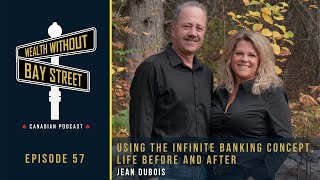
Jean Dubois used policy loans to pay off his car, credit cards, and fund a motorhome repair after reading R. Nelson Nash's Becoming Your Own Banker. He describes the mindset shift that followed and how the Infinite Banking Concept became a system for his family to rebuild after financial hardship.
Chapters
Get a copy of the book, of Nelson's book, Becoming youg Own Banker. It's going to really help to kind of open your mind and help you kind of change your thinking, because that's really important. Because most people, when they hear insurance is involved, they put up a wall right away. I think it's important people to realize it's. It's not like a product type of thing. It's more of a process. Right. So people have to go into it with an open mind. If they do that and are open to thinking a different way, that makes a huge difference. So they need to do a little bit of research, do the due diligence, and really get the information from the right sources. So you have to kind of look through the weeds a little bit. There's a lot of misinformation out there as well. So make sure they get their information from the proper source.
Discussing all things ibc, otherwise known as the infinite banking concept. The process of becoming your own banker. We are truly excited today, another Client series episode. And we are honored to be joined by Jean dubois, who has been a client who has been practicing this process for several years. And accompanying Jean is Sarblo Gill, the one and only, the infamous, the amazing, the man, the myth, the legend, Sarblogh Gill, an authorized Infinite Banking practitioner with the Nelson Nash Institute, an esteemed colleague, a wonderful teammate at Ascended Financial. Sarblo, Jean, welcome to the show. We're also joined by Richard Canfield, our amazing wealth without Bay street co host, who's hailing from Chilliwack, Alberta, otherwise known as the wac. Sarblo, would you mind taking us into this amazing Client Series episode with your client, Jean dubois?
Absolutely, Jason. And again, thank you, Jason and Richard, for inviting me again. This is a lot of fun. And without any further ado, I'm going to introduce Jean. I met John back in 2016, and him and his wonderful wife Shelly, who is a country singer and wonderful country singer. They were introduced to me via a mutual acquaintance. So this gentleman was a client of mine and that's how we got introduced. And I had a quick call with them. And you know, back then, John and Shelley, they used to live in Fort Saskatchewan. And we had a quick call and we connected right away, immediately. And the reason for that is because in our firm, we're looking to connect with the right mindset, people who are coachable, people who want to learn, people who want to create a difference, and then some other great attributes that we look for. So Jean and Shelly from Get Go they're like, yeah, we are coachable. We are sponge to teach us we are not suffering with the rival syndrome. And I had invited John and Shelley to one of our sessions and they came in, they drove all the way from for Saskatchewan, spend the day with us, and they basically educated themselves. And right after the session was over, they reached out, they said, yes, we want to create some time and we do have some questions, but we want to have a discussion, expanded discussion as to how this process can work for us, our family, and we want to come. And that's how the discussion started. Now, John, he is also a power engineer. And maybe that's another reason why we connected so well, because we have that same mindset.
Well, you guys probably looked at 722 illustrations too, before putting a policy.
Well, I was prepared to do that knowing that John was a power engineer. But John took action and right away he read the books that we have on this process and he actually came prepared to the meeting and he had some really awesome questions. So some other things about John that most people don't know. He also plays a guitar. That's one instrument that I know, but I think he may be playing more instruments. I'm not too sure, but I'll let John introduce himself. John, over to you.
Oh, thank you. Thanks for having me, guys. It's a pleasure to be here. Yeah, like Sarbul said, we met a few years ago and we just kind of connected right away. And I don't know, it's just Sarblo made it really easy for us to understand the way he explains things. And yeah, aside from that, I'm just a regular guy, really. Like we said, I did not suffer from the arrival syndrome, but being an average guy, an average Canadian guy, I was a very expert practitioner of the Parkinson's Law. So that's changed since then. Of course, I've read the book many times. And you know what? This book right here, of course, yes, yes. And you can never read it enough times. I have to say that right now, every time I read it, there's a little nugget in there. And I realize, oh, I should be doing it this way or that way and always learning. So that's where I'm from.
And the book that John is referring to is the book that was authored by the late R. Nelson Nash titled Becoming youg Own Banker. So for all of our listeners who aren't on the YouTubes or the Facebooks or the Instagram or other social media platforms, and you're tuning in on Spotify, itunes or whatever platform you listen to your podcasts on. This book, a 92 page read has sold over 470,000 copies for a reason. You want to know why? Because it works. And so we're going to provide, as we do in every show, a link for you to purchase your copy. Now, John, tell us a little bit about your journey with the process up to this point. What are some things that you've been able to achieve already by becoming your own banker? Well.
Since I started this process, I'm up to three policies, hopefully a fourth one this year.
All right.
But we've used the policy, these policies in various ways. Like it's not just one, one thing all the time. For last three years, actually we've wintered in Arizona even though I was working work a week on a week a week off at the time. So we were able to spend the winters there, just travel back and forth. So we used policy loans to help facilitate that. So where we were staying, we had to pay our rent for the winter up front. So we just took out a policy loan, use that and then we were able to just make monthly payments that way. So that's one example. We've paid off our credit cards. We had four credit cards that needed to be looked after. No balances anymore. Major repairs to our motorhome that were unexpected all of a sudden. You know, it gave us an opportunity to use a policy loan to fund that. And that's taken care of.
Are you telling me that motorhomes don't just work like clockwork all the time?
I didn't work like clockwork.
Broke down. That's a brand new information.
Yeah. And you know what? And the bigger they are, the more they cost, I'll tell you that much right now. We moved into a condo in Edmonton last year because we decided to, we're going to take a break from the full timing in the rv. So we were in a condo in Edmonton and when we sold our house in Fort Saskatchewan three years ago now we basically sold everything. So we needed to buy some new furniture. So we had to furnish the place. So there again policy loan able to, instead of trying, instead of using cash or instead of using a third party lender used the policy loan, it funded all of our purchases. So that was super, super handy. And the most recent thing was we paid off our car. So that's gone. We took that away from the bank. And actually another thing that people may not even think about, it's not necessarily purchases and sometimes you have life events that can affect the pocketbook. So a couple years ago, I started blowing nose. I had a mild heart attack and I had to spend. Yeah, I was off work for about three and a half, four months. And being on short term, it really reduces your income.
Right.
So we were able to use policy loan. A policy loan to just kind of subsidize the difference. So that worked out awesome.
Yeah.
Wow.
And what would you share, Jean, with listeners who maybe they're being exposed to this concept for the very first time. And, you know, they're out on YouTube, they're out on Google, they're searching around to expand their knowledge and their awareness of this process. What would you share to those folks?
Well, one big thing is actually follow this podcast. There's so much information. The Wealth Without Bay street podcast, lots of really good information. The other clients have different experiences, so they'll get a really good sense of how many ways this could be used. And number one, though, is to get a copy of the book, of Nelson's book, Becoming youg Own Banker. It's going to really help to kind of open your mind and help you kind of change your thinking, because that's really important. Because most people, when they hear insurance is involved, they put up a wall right away. And I think it's important people to realize it's not like a product type of thing. It's more of a process. Right. So people have to go into it with an open mind. So if they do that and are open to thinking a different way, that makes a huge difference. So they need to do a little bit of research, do the due diligence, and really get the information from the right sources. So you have to kind of look through the weeds a little bit. There's a lot of misinformation out there as well. So make sure they get their information from the proper source.
And I would wager that you would recommend that starblo be that proper source.
Absolutely, Without a doubt.
Well, one thing I think it's great that you mentioned, you mentioned weeds and Nelson, he would talk about weeds and when he would reference, you know, you need to learn how to put on a financial noise canceling headset because there's so much noise in the marketplace, in the media, in the news, on the Facebook feed, coming at you about all the things that you should be doing. Sometimes it's hard, we get bombarded to really be able to recognize what's going on there. So Nelson said you need to train your brain how to be able to cancel out some of those things that are just noise. And the other thing he would talk about when it comes to seeds, he would say, he would often say this to folks like, I know Jason Sarbi probably mentioned this to you is what he was really looking to do was to find high quality seeds. People, people, individuals with an open mind, planted in fertile soil and then tend to it. But he would always say, but Richard, you gotta watch out for weeds. Every time you plant a garden, there's gonna be. You're gonna have. You're gonna have something you planted, grow, but you're also gonna grow weeds. If you can't recognize what the weeds are, you might pluck out the thing that you actually planted in the first place. Is basically the takeaway was. So I'm really glad that you mentioned that because that's a nice key takeaway. It's a great analogy for people to recognize who else is speaking and talking at you in your financial life and where are you getting your advice fund? Because advice is just advice. But it's your world, it's your life. You have to run your life, and you have to be able to assess that information to be able to make. Make momentum, get moving forward in your. In your life.
Exactly.
Yeah. Very good point, Richard.
Very good point.
And you know, Joan, when so obviously working with an authorized practitioner, working with someone like Sarblo, who is so passionate, so committed to educating people about this process, if you think about your journey up to this point, you made a good point earlier where you said, I read the book often because I always pick up on maybe a new nugget of information, something that I didn't see before. And I think that's why you emphasize with listeners the importance of having having the book. If you were to think back to a recent time that you've gone through Nelson's book, what is something that jumped out at you that you didn't see before?
Hmm.
There's so many. I got little tabs on there, as you can see. I kind of tab things and highlight things.
Those look very organized, by the way, color coded on each side and perfectly in alignment.
Yeah.
Well, what would you say. What would you say is a message from Nelson's book that really inspires you?
The one that inspires me the most is about thinking about the way you think. Like, be open to thinking differently. You know, that's. To me, that's always grabbed me.
Interesting. Sarblo and I were just having conversation about that before the episode regarding a new book that'll be coming out soon titled Think Differently about yout Money.
Ooh, I like that.
Cool.
Now, John, you, you know, you're, you're in the oilfield industry in Alberta, you know, up in Fort McMurray, doing the, doing the, the back and forth as so many people do. And you've been you an operator for a number of years. You know, you're exposed to when you, when you go to that environment. As someone who used to work and live in that environment myself, you're, you're inside of a, almost like a little bubble, like a little box with all the people that are there and they're wonderful, great people, wonderful people to work with. But people are always getting around the water cooler. They got a lot of time on their hands, they start talking about things. Every once in a while, conversations about finances come up, you know, in the control room or the job trailer, et cetera. And so how do you find that since IBC came into your life, what your life was like prior to that, to then, after reading Nelson's book and meeting Sarblo, what's changed in those conversations?
I'm a little bit more excited than I used to be before. The conversations were always around RSPs and that kind of TFSAs and things like that. And this is like of course before I knew anything about ibc, but since then and actually sort of looking at test this when, of course, when we first, some of our first meetings after we had our policies in place, we'd have some follow up meetings and he'd show me like two or three days worth of policy values and how there was increasing. Every single day there was an increase. He was like showing me like on paper, like it was crazy because we didn't see that type of thing in our bank accounts. Didn't matter how much money there was in the savings account, there was nothing even come close to it. So when I tried to explain this to folks at work, I guess what happens is there's a little bit of a deer in the headlights kind of look that people say, well, what do you mean? Like you're using life insurance and you're doing all your banking through life insurance. So I explained it at first. I explained the absolute best I could because I'm still new to it, but as time goes on, I'm able to explain it much more easily because the more I do it, the easier it gets. Yeah, but it's one of those things where people are very, very stuck on. They want to max out their RSPs. And in my mind I'm just screaming says, you can do much better than this. Yeah. So, yeah, these conversations don't come up. A lot of times. It's mostly about stuff away from work, like are we going to go golfing next week? Or that kind of thing, or playing hockey. But when it comes to the financing part, financial part, some guys really take to it. I have actually referred a couple of guys to Sorreblo and I'm not sure how that's worked out. You know, it's none of my business, but they were happy that I connected them and they were intrigued. Whether they followed up with it or not, I'm not sure. But it excites me all the time to talk to them about that.
One of the things that I'll add for John and Shelley, what we want to achieve as a team at Ascending Financial is we truly want to empower our clients with this process so they can truly become their own banker. Because that is the process, not about me being the banker for them, it's they being their own banker. And Shelley and Jean, they've really embraced that. You know, when we got started in this journey together, you know, I used to assist them with some policy loans and some repayment structures on those loans and which was required part of coaching, but they caught it so quickly. And now I just see an email copied to me. I'm not even. It's not an email to server, it's CC Cerblo to insurance company. We want to request a policy loan. And then few weeks later, by the way, we paid a policy loan back. Could you please confirm that the money has been received? So I'm just kind of CC now. And John would reach out to me whenever he wants to use me as a sounding board. He wants to talk about a strategy. Hey, I'm thinking of using policy loans for this purpose. Just want to bend your ear. So that is what I'm seeing right now. And when I see all this, I was like, man, I must have done a really good job coaching them. So.
Undoubtedly, undoubtedly.
I'm really glad you shared that, Sarblo, because, John. What? You know, like, I think that's a perfect connection point because again, people are looking at this for the first time. They're new, they're discovering, they. They want financial change, they want financial empowerment in their life. And so that must have been something that was there for you to be able to do that. And I just, I'm curious, what's the contrast? There was a period time before you met Sarblo where you were doing things. You've been running a financial life and you didn't, you know, it sounds like you didn't have that same kind of coaching experience or level. So how's that shift changed for you, for you and your wife?
Well, the biggest thing is we can see so like more so like a light at the end of the tunnel, right? There's, there's more optimism in our future because Sarblo knows about this, but this might be new for you guys is on the side of being the average guy. There are some things that happen. Certain things happen in life sometimes you don't expect and they're tragic. And things were going well for us up until about 15 years ago. And then our oldest daughter was diagnosed with brain cancer and she was very sick for two years, but she was a fighter. She managed to actually complete a year in university, you know, while she was in treatment. Sadly, we did lose her a couple years later. But in the meantime, because the situation, it was inoperable and it basically, we had to do everything. We did, we did everything in our power to basically keep her alive, right? So that completely drained 3 of my pensions, all my RSPs, any savings we had, and maxed out our credit cards, you know, even though we had friends that helped out. So that kind of set us back, obviously back to kind of square one. And we were wondered after that, like, you know, what's our retirement going to be like? You know, what's, what's our future going to be like? Well, fortunately, I did get a very good job that paid well, so that kind of helped and then, but it still wasn't enough, you know, because everything that was available to us at the time was rsps, right, that type of thing. And if you need to borrow from that, you know, it's, you know, you withdraw, you got to pay taxes. That kind of thing is, you don't, you never have access to the full amount. You're not in control. But once we learned about IBC and we learned like, whoa, we get the control, we get to say when we can take the policy out, when we can pay it back. Like, it was very eye opening for us and it really excited us for the future. And that's, you know, this is kind of how it's affected us really, because now we have, we have a plan for the future and we're excited about it. We know it's, it's gonna just keep getting better and better. And we're, now we're gonna, we're having our youngest daughter involved as well. She's, she's prepared to get a policy herself. So we're happy for that. No grandkids yet, but, you know, that could be on the horizon. You never know. But, you know, so for us, this really actually changed our life.
This.
Yeah.
Thank you, Jean. Thank you sincerely for, you know, your vulnerability and for sharing that story. And we are, with the utmost sincerity, so sorry for your loss. And I had not heard this part of your journey in life until today, and it's really certainly, you know, heart, heart touching and thank you for sharing it. It's. It's very impactful because, you know, people, we're all human beings and we all have, you know, family and we all have history. And so from where you've experienced, you know, tragedy, tragedy, you have some positive ray of sunshine, you know, in your life and with you and your wife and, you know, your surviving family to look forward to, as you've said. And so that's right from the bottom of our hearts, we are so sorry that you experienced the loss of your daughter. And thank you for sharing that story.
And more importantly, John, your, you know, the story that you're sharing with people, you know, they're going to be. They're going to. It provides a context for them to their learning journey. So you're adding tremendous value to other people by sharing something like that for them to have context and an opportunity to learn. And it's not un. Nelson in his book, talking about the circumstances in the early 80s that led to the impetus of Infinite Banking being formulated in his brain. And similarly, a granddaughter of his experiencing basically at birth, pretty much a terminal cancer diagnosis. And so we really appreciate you sharing that because someone, I'm sure every listener that's on our podcast has been impacted in some way by cancer. So thank you for sharing. Absolutely.
Well, for me, I just thought it was. For me, it was important to share simply because people, when they think about, oh, I'm going to get a policy loan for this or for that, they just think about like a major purchase, like a car or a trip, that kind of thing. But sometimes things happen in life and this is a perfect, you know, if we'd have been practicing IBC back then, it would have made a huge difference. So that's why I think it's important that people realize that having that control, it's amazing.
Such an impactful story, very powerful. Now, Sarpo and I were chatting a little bit about you prior to today's episode, and we reminisced on. So you actually also had occasion to attend the annual Infinite Banking Think Tank conference that prior to Covid Several hundred Infinite Banking practitioners would congregate once a year, normally the week after super bowl, and get together in Birmingham, where of course, Nelson lived right up until he graduated. And you had an opportunity to be surrounded by this large group of practitioners and describe to our listeners what that experience was like for you attending that event.
Sure. And I want to thank Sarblo for the invite. Actually, it was quite an honor to be there and I didn't know what to expect, but what really captivated me was not only the content that was delivered and the speakers that had very important information to share, but what I found was the sense of family, of community. It seemed like everybody knew everybody, everybody was shaking hands or hugging and it was like a family reunion almost. That's the kind of the sense I got out of it. And the other thing was, even though I was there as a client, as a guest, I was welcomed as if I was one of the group. And to me, that told me a lot about the sense of community that the people in the IBC world have and the kind of respect they have for each other and how they're open to sharing ideas. And it's not like, oh, I don't want to share this because he's my competitor, that kind of thing. You don't. I never got that sense at all. It was like everybody was just openly sharing their ideas, their experiences. I thought it was a really great experience. That was actually, I don't want to say surprised by it because I didn't know what to expect to begin with, but it was refreshing to see something like that, I have to say.
Well, and you know, it speaks to the culture that we're working on establishing here in our client community with the introduction of our quarterly group client coaching sessions where we want to create that same sense of community where existing clients like yourself, who have so much great to share, don't feel like they're a lone ranger, that you can actually be surrounded by like minded people who are implementing this process and who have great stories to share about how they've gone about doing that. And so we are so excited this year in, you know, 2021 to be introducing that and to bring. Because I agree with everything you said, you know, that the relationships that have been formed over the years by being a part of practitioner community have just been incalculable in terms of the impact that those relationships have not only among each other, but the ripple effect is immeasurable. And so it was awesome having you there. We all had a great time and that was Good. Thank you for sharing that experience.
No problem.
Turblo. I'm really glad you shared that, by the way, John, because bringing up Nelson's book again, we are all here on this call, brought together essentially by 92 pages written by one man. And that whole event that you experienced, that what you're sharing with the listeners was all something that stemmed. Sure, people were involved in it, but it all was generated from an idea that came out of Nelson's brain. And then he put into print and he went on a mission to help share with the world. And so Jason and I were having another conversation with some of our colleagues earlier today about that very same thing.
How.
How the book itself, on its own, can really tremendously help a person, an individual and a family and a business owner. But then once you get involved in recognizing that there's a number of other people out there doing it, you're no longer a lone ranger. There's practitioners, there's individuals, there's clients that are doing this in their own life, then you're now part of something much bigger than yourself as well. So there's a connection to a much wider community that's created just by the virtue of embracing this in your life. So I really appreciate you for recognizing that and sharing that for our listeners today.
Thank you.
Love it.
I would just add that, you know, we all start where we want to get started. And, you know, as John was sharing, you know, when they met with me and they wanted to get started, they started where we want to get started, and now they're just expanding the program. And to speak to what Nelson says, this is not about a policy, it's about system of policies, because there's no way we can get it done or implement the process of becoming a banker and surely be the banker in life with just one policy. And the best time to start a new system is when we're ready. So that's exactly what John did. And now he manages capital from three policies. And with three systems, he's able to do way more things for his family than what he was able to do with just two systems. And as you're hearing, John is already talking about creating a family banking system by getting his daughter involved in this whole journey. So it's just incredible just to hear what John has gone through and exactly what I had gone through in my own system of policies when I got started. And anything that we share with the clients is something that we've all achieved ourselves. And I just want to say, John, you are a great. I don't want to use the example, but you're great individual who's embraced the process of becoming your banker. And kudos for you for truly being your own banker. It only took you four years.
Thank you. One step at a time.
Jean, do you have any additional insights or remarks that you'd like to share with our listeners?
I would say the biggest thing is.
To.
Not be scared, to at least start, you know, just, you know, listening to this podcast is one, get some ideas, look at some other other episodes of your podcast, read the book, become your own banker. And that's going to help to kind of open your mind a little bit to the possibilities. And I think that's important is to just get that, take that first step and go in with an open mind.
On that note, Richard, can you, with an open mind, share your remarks for our listeners today?
Well, I absolutely will. And we'd like to ask you a.
Key question, John, because as I'm sure you're aware, not all heroes wear capes. And even when you're an operator in Fort McMurray and you're helping do what Corb Lund would say, pulling the dragons out of the ground or getting that oil out from underneath so that we can get our cars moving and that sort of thing, you may not think of yourself as a hero, but when you're actually creating value for other people, you're benefiting them in some other way, you're making their lives better. What you've done today, sharing your story, an impactful story, and the things that are true for you, is a way that you're doing that right now with us. And so we appreciate, we embrace that. So their question for you is, who would you like to be a hero to?
Well, I'm going to be somewhat predictable here. I want to be a hero to my family, even though I don't consider myself a hero. But I think as well is if anybody is watching this podcast and is impacted by anything I shared and it makes them maybe see how they could think differently, how they can see they can get control and if it changes their life, you know, even if it's one client, you know, to me that's like, I just want to help. That's it. You know, if it helps one person or a couple of people, I'm just happy I've done that.
So.
On that note, Jean, thank you sincerely again for being with us here today and being a part of our client series. And we will definitely have you back because undoubtedly you're going to accumulate many more experiences along your journey of embracing this process. And as Sarblo said so rightly that this is all about becoming your own banker. And you are a very sharp example of getting that accomplished. And so kudos to you, kudos to Shelley, kudos to your family and thanks again for being here and for all of our listeners. If you're on the youtubes, just look over here and you're going to see a playlist. So as Jean recommended, please continue your journey of learning. We have recommended videos that are already queued up ready for you to watch. And if you're not on the YouTubes or the Facebooks, then just continue to scroll through our catalog and continue to listen. We sincerely appreciate each and every one of you. This concludes another Client series episode. Thank you so much for tuning in. And gentlemen, the pleasure is all mine. I loved being with all of you guys today and have an awesome rest of your day and a great weekend ahead.
Thank you. Jason, Richard and John, thank you.
All right.
More from Richard





How Do You Use a Policy Loan to Buy Dividend Stocks? #dividendstocks #infinitebanking #shorts


Can Compounding Dividends Pay Your Bills? #wealthbuilding #investment #financeeducation


Should a Corporate Policy Offset Your Personal Coverage? #shorts #insurancetips

What Is Human Life Value? #shorts #insurancetips #dividend #wholelifeinsurance