Velocity Banking and Infinite Banking Combined with @DenzelNapoleonRodriguez
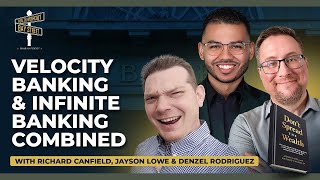
Denzel Rodriguez explains velocity banking and infinite banking, financial strategies he teaches to help single mothers and churches. He started his YouTube channel around 2018 and now has 55,000 subscribers and over 4 million views. His goal is to create a Ministry of Finance model where churches use insurance and loan structures to capitalize on tithes and offerings.
Questions this video answers
July 17, 2024.
28 years old.
Approximately 55,000 subscribers and more than 4 million views.
He began posting around 2018 (approaching six years as of the interview).
Harj Gill, Own Your Home Years Sooner and Retire Debt Free.
Chapters
There's gonna come a time where churches are gonna get really, really challenged to have to speak up about this. And we're seeing it now. We're seeing the devaluing of values in America, possibly in Canada as well. Yep. And people are asking more and more questions, right? How was this being used for? Where's the accountability? How is this being used for? Where's the accountability? Right. And it's like you look at all the money that's ever been received over a period of time, it makes you wonder, like, wait, there's even more homeless and more widows and more this and more that and like, what's going on? So that's my goal, to be able to like take the concept of infinite banking, bring it to the church and show them how you can literally capitalize cash flowing vehicles within the church and then the church actually feeds its members, not the reverse.
Velocity banking. So if you're immediately thinking, hey, this is like just a stylish way for my money to disappear really fast, that's not what we're going to be talking about today. Has nothing to do with that. But we're really honored to be joined by Denzel Rodriguez. Denzel, 28 years young, really making significant progress on his journey as an entrepreneur. We're going to have a great conversation about his journey with velocity banking and ask him some really great questions around that. We're also going to talk a little bit about how he was able to build this presence on YouTube. 55,000 subscribers, more than 4 million views, and his channel's been up for the last five days. No, I'm just kidding. It's. He's been at it for a little while and we're going to have a great discussion. And Denzel was able to also attend his very first infinite Banking think tank conference in Henderson this year. And so it was great to see him there. Denzel and I met at an event in Colorado and that gave rise to some follow up conversations. A collaboration between YouTube channels and so much more. So, Denzel, it's an honor to have you on the show. Welcome.
Thank you. Thank you for having me again. Also, Richard, thank you for putting me on on your YouTube channel. It seems like everyone is very open to collaboration. It's very real. It does sound cliche when maybe you're at these networking events or you're starting your business, but collaboration over competition really is a thing on, on YouTube and it's just a matter of you showing up every single day, you letting people know that you're serious, that you're here to create value, here to create content, here to educate. So it's an honor to be here. Yes, I'm 28 years young, but in the YouTube world I'm kind of like an adult.
Yeah, you're an og.
Yeah, like it's starting to feel that way. I'm getting clients that are, have been business owners for maybe as long as I've been alive, but don't have a clue as to how to bring that to YouTube and they're very interested in doing that and they're asking me for advice. Business owners that make way more money than I do, way more customers than have, but no one knows about them. Right. And so they're, they're like trying to learn how to add that additional piece of marketing and it's amazing how it, how it can dramatically lower your costs acquisition to do business in neighborhood in any sector.
Have you ever heard Denzel, the expression that the best product will never outsell the best known product?
Yes, I heard that from Grant Cardone. He said it a different, he said it a different way. I think he said a better, better known beats best. I think is how he said it. Yeah, yeah, yeah.
I'm gonna be with Grant on Saturday and Sunday as a matter of fact.
Well, I think this is interesting, Denzel, you being, you know, like say a little bit of an OG level status here. What I think our listeners probably don't really know and understand is maybe what was the, what was the start of the journey? What made you decide that? Hey, you know, there's this thing called YouTube. I think it'd be really great if my face was all over it. What prompted you to begin that part of the journey, Richard?
Someone just like you said that to me. They were like, Denzel, you know, you got a nice voice, good face, you know, I think you would do good on radio. That's what one person said. Another person, which is now a long time business partner, business friend over the year, very, very close friend of mine made it practical and said YouTube is your thing, you should get on YouTube. And as a young 22, 23 year old at the time, I was very familiar with YouTube. I knew how to use it as a customer. Right. As a user sounds like upload. So record, upload, post and get some views. It was, it was that simple to me. And I feel like in today's environment we, we have made it so much more difficult when you listen to the gurus of the world on how to get on YouTube from my practical strategy was simply hit that Red button, set the camera up, hit the red button, walk on onto the. To the set, start talking. And then I would stop talking just like this, Richard. And I would walk off and then I would go like that, hit stop. And I would literally post videos like that on YouTube. And then I, you know, learned, oh, you can edit that out. Okay, cool, so I'll just do that. And that makes the video shorter and, and maybe keeps the person on longer. And I said, oh, so those are views, those are likes, those are subscribes. Okay, okay, okay. And it, it was value first, give first. And you know, from 2018, starting when I started the YouTube channel, all the way up till now, we're approaching six years come August, is, is the. Is the harvest at this point. I'm, I'm yielding the fruit at, at this point of this particular YouTube channel. I've been growing over the last few years. So that's how it started. It was just a simple. A multitude of people encouraging me, giving me compliments. I think many of us receive compliments throughout the day and we simply ignore them because of all the pressures of life or that all the. A recent term I learned. I think you'll like this, Jason. You probably heard of this before, but automatic negative thoughts, ants, you know about that with a doctor. Amen. Uh, so I was at a mastermind and I heard that and I was like that. That really sit. Sat well with me because I was like, yes, there are so many people, even myself, probably even Jason, even Richard. You get automatic negative thoughts every single day, thousands of them. And you have a simple choice whether you're going to receive those thoughts into your subconsciousness and then act it out, or you're going to repel that you need some repellent, spray something, right? That. Some tools, some strategy, some resources. And from there you, you accept the compliments that would come in. And I'm someone that loves compliments. I accept them from. From a very young age, being told that I was a good dancer, handsome on the eyes, on the. Whatever it was, Jason, I, I received that and I'd run with it, right? And that just gave me a level of confidence and I would. My encouragement to people watching that. Think about the last compliment you received. What did you do with it? Did you throw it out? Say, oh, no, right? Ah, now stop it, stop it. Right? Think about that. If that's the only thing you take from this video today, really, really take a think about that. When's the last time you received a compliment? What did you do with it? Did you throw it out or did you receive it and act on it and actually embrace it? Right. Because you can't see you. Isn't that interesting? Yeah, right. When you're walking about, you're down. Unless you got a mirror in front of you, you can't see you. Others can and they can either point out things, both positive or negative. Right. They can point things out and I just choose to receive the positive as many times as I can right throughout the day and I throw out the negative.
This September 12th is don't spread the Wealth Day. Get a copy of our new book, Don't Spread the Wealth. How to leverage the family banking system to own all the gold, make all the rules and enjoy generational riches. This book is jam packed full of incredible bonuses that we've put together and including our 15 page guide to hosting your own family banking meetings. Pre order your copy today using the link down in the description or Visit don't spread wealth.com that's don't spread wealth.com. learn how to keep the money in the family so you can prosper together for generations to come.
That's incredible.
Well, I think it's also really interesting they identified this five, six year, almost six year experience of your YouTube journey and you kind of summarize it, you know, now it's this time where, you know, there's, there's, there's a harvest almost opportunity or mentality that, that can be created. But I think it's really important for our listeners understand, you know, we talk about capitalization and the importance of capitalization both with what Nelson Nash taught us and around the infinite banking concept. But I start to see it in a lot of other ways and really Nelson was trying to teach us how to grow a business. And fundamentally you hit the go button and you hit, you hit the start button in the record and walking off and uploading these videos. But it created a cascade of effect and action led to results. And some of those results are obviously a lot of great compliments. But more importantly, you've actually built a machine and that machine now allows you to be able to harvest. But it's the capitalization of all the time, effort, energy, videos, content, editing, networking, support, answering comments, late nights, interact. It's all of that stuff built up. That's capitalization. Now we talk about that in a policy world, but you've really done it in the YouTube world. And I think it's important to recognize how that activity can support all of our listeners to recognize that you have to capitalize. You got to get started on something to be able to enjoy a future harvest.
Yeah, that's such a good point. You can't read about doing push ups. You got to do them. And Denzel, if we, if we switch gears and maybe talk a little bit about the essence of velocity banking, it's, it's a term that I, I would say if we were to put a thousand people in a room, the vast majority in the room, at least here in Canada, may not have heard that term before or don't have a grasp on, on what that is. And so what is velocity banking?
So I'm going to give you guys the origin of velocity banking. This, this book right here written by a man named Harj Gill. It's titled own your home years sooner and retire debt free. So that's just me giving credit where credit is due. Kind of like this is the Nelson Nash of velocity banking for those that are listening and kind of understand that from that aspect. So this is the guy that really thought of this and he called it mortgage acceleration. That was the term. Company name is Speed Equity and he started this in Australia, approached the banks and went through a lot of turmoil, pain, right and being denied left and right, and eventually had his strings of success and eventually built a system or software calculator that showed how an individual can leverage a certain particular line of credit offered by the banks that one can use to accelerate these amortized loans or different structured debts that you would simply be able to pay off faster. Not only just faster, because that's only one metric is speed, but there's a unrealized value, what we call liquidity, which is huge in the infinite banking world. Right. What is the value of liquidity? How do you actually measure the ROI of liquidity? When a crisis arrives and you don't know where to pull from, most people are doing with their debt elimination strategy. They make money, they try to spend less than what they make. They have discretionary income, aka cash flow, and they send 100% of that to their smallest debt and they create a snowball effect. What happens, Jason, when there's $1,000 plus emergency the next month and you just used all your cash flow for however many prior months. If you don't have enough saved, then basically you drained your savings. And what most Americans, I don't know what most Canadians do, but most Americans will pull from their credit card first. It's the first thing in their wallet. It's what they first see. Plus they're getting bombarded every single day in their mailbox. With a, with an offer. An offer. An offer.
Oh, you guys get those too?
Yeah. The next thing is they get the loan offers from the discovers and the bank of America's and the cities and the, and all the bigger banks. So they're getting hit with the credit cards 25, 30% and then they're getting hit with the institutional loans, 10 plus percent. And they're never marketed these personal lines of credits or these home equity line of credits. Almost never. In fact, they're only marketed after they've exhausted their credit utilization and their loan approvals from the different banks. They're like the bank then says, hey Richard, you've got $100,000 in equity, come get a HELOC with us to go do your home repairs that you need to do. That's how it's sold. What this gentleman was teaching is the concept of how to use that same debt to eliminate all these other debts you took out to begin with. Right. Not only get rid of it faster, but retain liquidity in the process. In the event something happens, you know where to pull from. So it's like this automatic, you know, use of, of money and offsetting interest and that such. So that's the origin. I recommend people read this book. That's where you get the source. And then from that over the years it, it came to the US and someone decided to trademark it and call it velocity banking concept. And then it became accelerated banking concept, paycheck parking. So it's got different marketing terms to it at this point.
Did that book come out in the late, did that book come out in the late 90s or early 2000s? Yes, I've got it. I've got it up here somewhere. I know I've got that book on the shelf, guaranteed. Yeah, yeah, I've read that.
Yeah. So that's the origin story for those that are curious that like to go to the source and then work their way up to present day to find who they want to work with. Right. This person is still alive, still active, still working. Maybe one of these days I'll have the pleasure to collaborate with him. So maybe he'll reach out. He does know me and I know him. And it's just that it hasn't worked yet. But I've said on my channel I'd love to have him on and discuss these ideas. Pretty interesting dude overall. But that's that I got exposed to that teaching prior to starting the YouTube channel in 2017 real estate workshop. They were talking about this velocity banking strategy and it just caught my Eye. And I had a knack for finance already. I was building my credit. Young guy, just, you know, really excited to learn these things. I didn't do well in school, and I didn't get accepted in any colleges. And I was just like, I understand this. And so the moment I had that confidence, I was like, I'm going to see this through. Yeah. And then I just decided to start putting it on. On YouTube and just documenting case studies that I was working on. And my call to action was, hey, if you think this was valuable and if you'd like me to run your numbers, reach out. And that turned into a business.
Funny how that happens, huh?
Funny. Yeah, absolutely.
That's awesome.
You identified that there's in the experience of, of course, giving credit where credit is due, that there's a multitude of different naming conventions that are kind of out there in the marketplace. And, you know, you gave a few examples, but the core of it really circles back to what you identified. And I think it's kind of interesting how that same scenario has really occurred kind of in the infinite banking space as well, where, where there's. There's an, you know, an originator of a concept. And of course, it tends to take its own forms, and people want to put labels on things a little bit. But when you get down to the core elements, you know, the a spade is still a spade sort of a scenario, I guess, is what it boils down to.
I love, I just love that, you know, you, you act in integrity, obviously, and, you know, you're, You're. You led with, hey, I want to make sure I give credit where credit is due. And that's, that's a character trait that I think is a little lost nowadays. And so good for you for, you know, acting in integrity and, and doing that. And when you think about the impact that velocity banking has on, you know, clients that you work with, what would you say brings you the most energy now that you've got this experience? Right. You've been doing this for a while. And so what brings you the most energy in sharing this velocity banking with people that you're trying to establish a basis to. To serve?
Yeah. And to your point about giving credit where credit's due, like being fully transparent. I had no idea who Harsh Gill was the first couple years. I kept doing more and more research because I was getting asked, hey, where does this come from? And my answer was, oh, I got it from this company called Renatus, which is a real estate education company. This is where I got it from. And I. And that dude said he got it from Australia, and that's where it kind of ended. So I was like, well, who was the guy in Australia? That's. I didn't think to ask that question until years later. And then finally when I found him, I was like, oh, wow, this is pretty cool dude, right? And he's literally paved a path for a young Puerto Rican Colombian Kid on. On YouTube to create a seven figure income stream or multiple seven figure income streams for years to come. So I'm like, I gotta give this guy credit, right? So with that, what brings me joy. So my passion is working with single moms, divorced moms, widows, just moms in general. My first client was my mom. Took me two and a half years to convince her to do these things I was learning in personal finance. And when she finally got results, that was also a motivator to, to get started with the YouTube channel. And fast forward to today. What may seem redundant, just me doing phone calls every single day with clients. I really especially get lit up with people who claim that they're not good with with money or not good with finance. And all I need to do is spend about four to six phone calls an hour at an hour at a time or 30 minutes. When I really think about it, I'm like, wait a minute, I've only spent about four to six hours with this client. One to one. I don't know how much content they've been watching. They probably watched a lot of my videos in that. But they claim not to be smart or good or bad or illiterate about finance. And what took me years to understand and then even longer to teach it, they're comprehending it in roughly six to nine months or less. That lights me up. Especially when they're like in call number five, call number six, they're like, denzel, I think I finally get it. And they come to the phone call. They're like, here's what I'm thinking about doing. Thinking about borrowing from my second position home equity line of credit to accelerate this call. Car loan over here at 9% to push it over here on the HELOC, and then bring that HELOC effective rate down to like two and a half. And then I'm gonna take from this credit card over here at 0%, run my bills on it, get points and cash back rewards. And they're telling me what they're gonna do. And I'm over here, like just verifying their numbers as they're talking. This is a mom of four, a divorced mom of 25 year marriage, a widowed mom, lost husband two years ago and has two kids to still take care of that they're raising a mom that lost her husband to Covid. So the kids are really young and she's 45. And it's like those, those excuses that they have versus the pressures of life they have. It blows my mind. And so I've been, I've been blessed with wisdom from the Father in heaven to give me the, the tools to help that person really comprehend in such a short time frame that they can really reclaim their authority, their. Reclaim their control over their circumstances, accountability and their dignity. And their dignity, yeah. And just like move forward with such a sense of peace and understanding and never be a slave to money ever again. They have control over that mastery over money. And they serve one master, like truly living out that, that doctrine there of just serving one master. Right. It's amazing to see. Right. So that, that's what lights me up, just seeing that.
Love that. Absolutely love that. And when you, when you look ahead into kind of building a bigger future, what's on the horizon?
For me, it's building my own family now, getting married. You know, I'm getting married next year. And then we're, we're talking kids in about five to seven years. A big goal of mine is to actually build a ministry, a church, but it's going to be called the Ministry of Finance. Right. And it's going to be established like a normal church would be structured. Right. It's going to look and feel like a church and it's just going to have these additional services that you normally wouldn't think to go to the church for.
Right.
For example, financial services, financial education services is typically not the first place your average Christian Catholic even thinks to get service from.
Right?
Right. So that's what I'm going to build. Create a model and then hopefully duplicate it within the body. Right. Within the faith realm. Because there's a lot of broke Christians, Jason. I mean, it, it blows my mind.
It is the truth. That is the truth.
What's going on, guys? I mean, I'm reading the same thing you guys are reading. And you know, we're part of a royal family and we've been adopted into this royal family that has all these promises, but we don't seem to be collectively leading the way. Right. And what drives me up a wall is I can go on YouTube, Jason, Richard and I hear the world, the secular world, promoting living your best life, having abundance, having a mindset, a growth mindset. A 10x mindset, all of these really good, like awesome motivating talks, but I'm not getting that within the body itself. I have to go out and then somehow change what they're saying to match my faith doctrine so that I can, you know, so I don't have to walk on eggshells when I talk with other Christians about prosperity and abundance and being rich and those not feel like icky words. I don't know why.
You know, there's a really great book that you're going to want to read if you haven't already. It's titled Ordained for Business.
Ordained for Business.
And this is going to help you in your vision of what you want to make an achievable reality. A client, a pastor client of mine gifted me that book and I'll never forget this ever for the rest of my life. So him and his wife had embraced the process, the infinite banking concept had sort of started down their, their journey with it. They were a few years in and he showed up for just a connection meeting, just catching up how things are going. And he present, he presents me with this book I saw, that's such a nice gift. And he said, yeah, I know how much you love to read and, but he said, I want you to know, like you, you were born to do this. And I said, thank you for that lovely compliment. I'm, I'm very grateful, humbled to hear that. And he said, think about where, think about where Jesus got started in the marketplace. I was just sharing with another client earlier this week. I said, I, I, if, if Jesus showed up in this zoom meeting right now, he'd be asking how to get life license.
That's a bold statement, Jason.
But yeah, go ahead, Rich.
You tie that in. And, and I was thinking, Denzel, about this incredible vision that you have. And it is, it is an incredible vision and a very worthy, worthy goal. And it sounds like you've got it very crystallized in your brain. I can, I can sense that from the way you speak to it. And I think it's interesting because, you know, mutual insurance is free. People in free contract with one another in a voluntary basis. So you have a pool of individuals, it's managed by, you know, administrators and all that good stuff. But to enter the pool, essentially you need to think enough about others to even ask for entry. The virtue of an application for life insurance in a mutual insurance pool is already saying to the world, to some degree, I care about my family, I care about others enough that I want to support and protect them against an unknown future and to set up the best possible outcomes regardless of what may come. For me, I think at my core, I believe that there's other reasons why Nelson focused on mutual insurance. But I really firmly do think at the core that there was something to that idea. You have a group of people that already care about others. They're already put together. You don't even need to know who they are. The fact that they're a part of this pool already says something about them.
Absolutely. Can I go deeper?
Of course.
So the ministry that I want to have is going to really press on teaching the leaders of the church and the administrators, the people who make the decisions on where the tithes and offerings go.
Yeah.
Is to say, hey, what if we, before we spent the seed, the tithes and offerings before we spent it, that we simply syndicated that money through mutual life insurance policies or what's other, otherwise known as toli trust owned life insurance and had all that flowing into a guaranteed liquid tax free compounding account that the church could then from there capitalize the seed and then deploy the seed into the different ministries that they want to build. And from there you never have to ask for more seed. Now if you get more, great. But you're not going to be begging from the pulpit to receive these funds to do another project. To do another project. There's a book I'm reading right now called Toxic Charity. I actually read it through once and I'm going through it again because it has profound, controversial statements on how the church uses the tithes and offerings. Not so much the user tithing. I love the concept of tithing. I believe in it. I do it myself and making offerings. But then it's the concept of using the tithes and offerings, which no one seems to ever talk about. It's a very taboo topic. Hey, where's this money going, by the way? How do I know? Where's the accountability? Right. How do I know this is being used to actually improve people's lives? Right. And there's going to come a time where, where churches are going to get really, really challenged to have to speak up about this. And we're seeing it now. We're seeing the, the devaluing of values in America, possibly in Canada as well. Yep. And people are asking more and more questions, right? How was this being used for? Where's the accountability? How is this being used for? Where's the accountability? Right. And it's like you look at all the money that's ever been received over a period of time. It makes you wonder like wait, there's even more homeless and more widows and more this and more that and like what's going on. So that's my goal, to be able to like take the concept of infinite banking, bring it to the church and show them how you can literally capitalize cash flowing vehicles within the church and then the church actually feeds its members, not the reverse. Right. And so the church keeps the church up, the members come in and serve and there's a collaboration. Right. A very, very interesting model that I know I've been blessed with, to receive by my father in heaven. And I'm like really pumped up. But I'm also being very patient and just diligent in my day to day actions and, and working with people like yourself to be challenged on my own ideas and rip apart these different things and craft the message in such a way that would attract the world and the body together. Because at the end of the day that's our mission. We got to attract the world to be more like the kingdom and then in the body. Got to remember you're part of the 99. You're not the one that didn't get lost. So if you don't get that much attention or recognition, it's okay. You're safe. Yeah. Right. For the time being. Right.
That's, that's a whole. The, the ministry of Finance. I mean you can see it, you can see that you're the who to get that how done.
I see it so clearly, man. Yeah, it fires me up. That's like another like long term that I get like instant fire. And it helps you got.
And it's the whole thing, it's there, there's. There's a book there, there's a podcast there, there's a, another YouTube channel there, there's a, A coaching group. There's a. I mean God, the list goes on and on. And that would catch on so fast because people are hungry for it. They really truly are. They just need to know. Hence what we shared earlier.
Absolutely.
The best known wins.
It, it reminds me of what Nelson would say. He talked about the quote, I think it was from the fellow who started Piper Airplanes. It's like you may.
You.
You might have the best message in the world, but if you don't have anyone to give it to, it doesn't matter. He says you got a, you got a telephone, big deal. If there's no one on the other end of it, it, it ain't going to matter. And that concept that you know you, so you've got a message. And you also have a platform and you're using that platform. And now you have the ability. And you've done some of that with us today. And of course, our listeners maybe will be some of the first to hear this incredible mindset, this incredible vision that you have, and to start to see what that will progress into as the future unfolds.
And do yourself a favor, Denzel, I'm sure you may have received this good guidance already, but if you haven't copyright and trademark it right now.
You got it. Finance.
I'm talking tomorrow. Tomorrow. Get that done. And you will be relieved to know that it's done. It's protected, and it's done. And do both, like, not just trademark it, but register the copyright.
Got it? Absolutely. That part is complete. But what gets me even more excited about this concept is at the end of the day, it's not my idea, it's my father's. And the body itself, it can be done by multitude of people. It's just getting people to come together. And I think when we touch on infinite Banking, it's a great foundational concept for the average listener in your own household that to get started.
Absolutely.
So if. If you're the person that needs to build your reputation and credibility and authority up, let's start in your own household first. Before we go to the church, right. Before we try to attract leaders to do something, let's show them we're doing it right. And then we come together collectively. Now we have something to prove. We have something to show. Very, very real. And that's what takes institutions to say, yep, we'll take a look at that. Right. And we'll. You'll get the meeting at that point. Right. And where I'm at now in this journey is I'm showing. It's proven on the YouTube channel by leveraging people like you and others have been doing infant banking much longer. I get to just point. I'm like, you don't believe me? Go see Jason, who's been doing infinite banking for more than two decades. Go see this person right here has been doing infinite banking for 30 years. 25, 15 years. I'm only in it for six, right? Go see these guys. And then I'm gonna keep pointing until I get a decade 15 under my belt. Then I get to say, look, this is.
Ignore all these other guys. And speaking of infinite banking, so how was your experience at the think tank? Rich and I are genuinely curious to know what insights and how it impacted your thinking.
I enjoyed the passion from the different speakers. I did enjoy that. And I'm someone that's not in Nelson Nash Institute. I didn't learn from Nelson to begin with or I wouldn't read his book. Initially I Learned from a YouTuber and they never mentioned Nelson. They didn't bring it up. And then it took a couple other people before I heard his name and then, you know, started. But by then I was like already serving people and had policies already in place. So it's really interesting. Like my experience, it's like I didn't grow up in there. So I get to see how, how these people are doing it out here, how Nelson Nash Institute and IBC think tank is doing it. And I get to see the best of both worlds. I can, you know, compare and contrast. I get to challenge my own ideas, you know, and I have been challenged at the event. That was nice. That part was nice. I didn't realize how many people there knew me and I thought, I thought that was pretty cool. So I got to really have open conversations with different folks that I found to be very, very nice. And there is a world on YouTube where we can sometimes maybe speak before we think. I've done it before. I'll throw my shots whenever I've can in the past, or I use a tactic that would say get me more sales or get people to come do business with me instead of the other guy. I've used that before. The other side's done it right as well. And coming out of that event, I realize once I get in front of their face, people that maybe didn't agree with me 100%, they're quite open, they're quite willing to sit down, have a drink, break bread, discuss these ideas. Yeah, sometimes we need to do that. We see this in the, in the political world. We see this in just day to day life. Sometimes you just need to break bread with someone you don't agree with. Go to the other side, get out of your echo chamber, go to the other side, break some bread, have a glass of wine, whatever, whatever your style of choosing is of setting. Right. And you come to find out, wow, I actually agree 85% of the things that, that you do, I agree with that. It's just like this little five, this little 10, little 15. Right. Right here. So that was, that was a good experience for me. Very helpful. Right. That's my overall view on that point. And I think that organization has the potential to really, really expand. And we've spoke about this off camera. It's like coming to the other Side, like bringing these TikTokers, these YouTubers that are phenomenal marketers and they, they, they latch on to maybe one idea that may be a half truth.
Yeah.
Not the full. And with a little wisdom and guidance from a, from a senior. Right. To, to come in. That's been a. And when I say when I mean a senior, I mean someone experienced in the industry that's, that's been doing it, that's kind of seen where that guy's going. And, and if that person is willing to again be invited, which is something you did for me, you invited me, I showed up, and I consider you someone that again, you've been in the space long enough to probably be able to identify certain things that you're like, tweak right here. Consider it. Consider it. Consider, consider. Rather than you're wrong, you're crazy. Don't listen to this guy. And I didn't get that once. I actually was face to face with folks. So those who are new in licensed insurance agents and you're looking for a home, consider IBC think tank as a, as a convention, as an event to go to. Also consider Nelson Nash Institute. Right. And be willing to do in the church. They, they usually, they give it a term about, you know, sitting at the footsteps of the pastor or something like that. There's a, there's a saying of yielding, essentially.
Yeah.
Being willing to yield. And that's something I've been practicing over the years.
And that's, that's great advice. Rather than hold a grudge, hold a conversation.
I like that.
But both parties have to be willing to have the conversation. Some people don't like constructive conversation. Some people shy away from that, understandably.
So. Right.
We're human. And people, people respond emotionally to different things. And I like running head on into that. It's like if we need to have a crucial conversation, let's just start. Rather than holding a grudge, hold a conversation and watch how quickly misunderstandings get cleared up.
Yeah. Like within 30 minutes of the conversation.
Yeah.
It's fast. Probably fastest. Yeah.
Denzel, this was awesome. Absolutely awesome. Thank you for joining us.
Yeah. Thank you, Richard. Thank you, Jason. And to your audience as well, that will really obtain what's, what's being said here. And whether you're the, the client considering a policy or you're a new agent, this is the type of characters integrity that you should be looking for in the industry and do your due diligence. Right. So that's what I'll leave you all with. Thank you again for your time.
Great having you, Rich. Do you want to take us home?
Well, Denzel, one of the things we like to do here on our platform is we have one final question for you, and I think our viewers would love to know, and I think they probably already have an idea, but who is it that you would most want to be a hero to?
My mother. Absolutely. Oh, man. Let me not that. Wasn't expecting that question, actually. But, yes. My mom. Yeah. Wow. Love that.
Well, to all of our viewers on the YouTubes, you just saw another video show up, courtesy of our incredible editing team. That's a video that we're recommending you watch because we want you to continue your journey of learning. There's no such thing as having arrived in knowledge. And, Denzel, we are going to have you back on a number of occasions, and we're going to hold you accountable to making that bigger future an achievable reality. Ministry of Finance. Got to love it. Denzel was great. And to everyone listening and viewing, make the rest of your week outstanding, guys. This was awesome.
More from Richard





How Do You Use a Policy Loan to Buy Dividend Stocks? #dividendstocks #infinitebanking #shorts


Can Compounding Dividends Pay Your Bills? #wealthbuilding #investment #financeeducation


Should a Corporate Policy Offset Your Personal Coverage? #shorts #insurancetips

What Is Human Life Value? #shorts #insurancetips #dividend #wholelifeinsurance