What Happens to Your Whole Life Policy at Age 100?
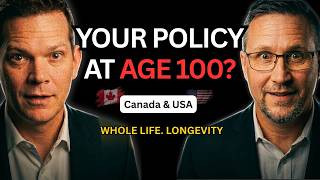
In this conversational YouTube episode, Richard Canfield and Jason discuss how dividend‑paying whole life insurance contracts behave when policyholders live to extreme ages—age 100 in Canada and age 121 in the United States. They explain that whole life policies are engineered for longevity: the cash value represents the net present value of the future death‑benefit obligation, and as the insured ages the contract’s net amount at risk shrinks, making the policy more valuable. The hosts cover the evolution of mortality tables (shift from 100‑year to 121‑year assumptions around 2009), various premium payment structures (life‑pay, 20‑pay, 65‑pay), and what occurs at policy maturity when cash value and death benefit converge. They warn about over‑loan situations that can cause lapse and tax consequences, and stress the importance of proactive spending and cash‑flow planning to sustain longevity. The discussion expands to the concept of a family‑banking system of multiple policies, citing Nelson Nash’s teachings, and highlights whole life’s role as an inflation‑hedging, non‑market‑correlated asset that provides emotional peace, liquidity, and certainty. Throughout, they blend educational content with marketing plugs for their 7‑Step report and "Don’t Spread the Wealth" book, while using humor and a conversational tone.
Chapters
What happens if I live past age 100 or past age 121 in the United States? What does that mean? What does that mean for my dividend-paying whole life insurance contracts?
What the contract becomes more valuable the longer that you live. But if you understand that cash value inside of a par whole life contract is not money, it's the net present value of the future obligation to pay a death benefit. It was designed to expire right when you become the greatest financial risk to yourself. It's literally designed. It's literally engineered with the assumption that you might live an extraordinarily long life. I haven't met anybody who's 92 that wants to become a day trader. There's a point in your life where boring becomes beautiful.
Live long and prosper. Boy, that would be great. We have all kinds of people these days that are living longer than expected. Longevity. It's amazing. It's incredible. In fact, We even have a longevity playlist that you can find on our YouTube channel. But why are we going to talk about Longevity Day? Well, here's why. We often get a question from our people who are looking at the concept of infinite banking. What happens if I live past age 100 or past age 121 in the United States? What does that mean? What does that mean for my dividend-paying whole life insurance contract? So we're going to unpack that a little bit more today. Jason, it's something that has come up a number of times. We hear it from our advisor teammates. We hear it. It gets typed in on chat boxes on live webinars. And in all the years we've done this, we've covered this question, I think, a number of different times. But we really want to unpack it a bit more today for our viewers so that they can understand and have confidence in what that looks like for them.
100%. I would say, too, that if so, if you, if you live to age 100 or age 121, and you're a dividend-paying whole life policy owner, you're not even a client anymore. You're basically a historical landmark. The government's studying you, and you've got policyholders that are younger than you that are like taking field trips to your birthday party.
And you know, it's birthday parties funded by a policy loan, of course, right?
Yeah, exactly. And so, you know, is it, is it, uh, unrealistic to think that more and more people are going to live to that age and beyond? Of course not. You know, um, the life insurance carriers, they update their mortality tables. They don't do it very often, mind you, but, um, people are living longer. Longevity is a rapidly growing, um, segment of the economy in terms of all the medical studies, the medical advancements. Um, people are just living longer, and I think that, um, it's just, it's not unreasonable. It is. I think that's what gave rise to this episode, because people ask that, like, what if, like, what if I live, you know, to that age and past? So it's something worthy of diving into.
Yeah. And, and it's also important to recognize, like, we mention age 100 frequently, and sometimes people, they— you hear 100 and your brain immediately sees a timeline or it sees the 100 number in your head, but it doesn't always necessarily say, oh, well, I'm presently, you know, 54, and therefore you're seeing 46 years. Like, you might look, you just see the 100. You don't necessarily see the amount of years you have left until that point in time. Right. And so there, there's a reference point there. So if you're, if you're picturing a timeline in your head, yeah, the 100 is a timeline, or if you're in the United States, it's 121. Where are you presently? And then what's the roadmap or what's the, what's the remaining runway that you have left, you know, to get your plane off the ground sort of a situation. So I think that's the way you want to look at it. And, and at the end of the day, you want to develop understanding. Understanding and clarity kind of go hand in hand. So once you have understanding, you achieve clarity. Clarity allows you to make good decisions ultimately. And because longevity is increasing and because the modern advances of technology, the potential or probability of that to go, continue on and, and maybe even at a rapid pace is certainly high. I mean, with AI helping people do all kinds of things these days, it's certainly gonna help the medical community be able to learn, unpack, and understand certain medical maladies, hopefully develop cures and methods of solving commonly challenging health conditions that would normally reduce mortality. And, you know, we are starting to ask our clients as they come in and have meetings with our advisors if longevity is something that runs in the family. You know, do they have any demonstrated aspect of that? When you go in for an insurance application, all those questions, you know, if you answer— they, they ask you questions about your parents and what happened to them. Did your dad die of a heart attack as an example? And what was the age? Well, they want to know that stuff because those are predictors. It goes directly to genetics, right? So all of that plays a role. And if the insurance company is looking at it, there's no reason for you as the individual not to also consider it. But the reason you should be considering it isn't because you want to understand what happens with the whole life policy. It's because you want to understand How can I be on the side of longevity? So how can we move you more in that direction from a mindset perspective?
Well, I, yeah, I, I would add to that, like it's, you know, people, people talk about dying too soon and I would say that very few talk about living too long. And a, you know, I heard a long time ago, it was actually Ray who said this a long time ago. He said, If you die too soon, you'll be a hero to your family. And if you live too long, you'll be a hero to your family. And that, that kind of immediately just helps somebody to think about their thinking. And the fact is, more so today than back when, you know, we first, uh, started implementing this process in our own lives many years ago— July of '08 for me and '09 for you— is that longevity risk has become more and more real. Like, if you're, if you're 65 and, and let's presume you're a 65-year-old couple, you have a very high probability that one spouse is going to live well into their 90s. And if, if— and somebody living to age 100, that's not a, uh, that's not a freak statistical accident anymore. And if medicine keeps advancing the way that it is, I think that age 100, even age 121, could eventually feel like today's age 85.
I would agree with you. And of course, you know, you and I are involved in coaching programs. Strategic Coach longevity is a key mindset around there and thinking differently about what that looks like. What do you need to do today around your own health in order to put the best foot forward to make that a reality? But then there's obviously we have external events. We all drive cars. There's all these things, these dangers that we have just by running and operating our daily life. And so nobody knows what your best before date is.. And we don't want to be a predictor of that. You know, Nelson Nash would say the only predictor of that is the actuaries that live in Sicily. They'll tell you not only when you're going to die, they're going to say how, and they're going to tell you where the body was buried. So, so just be mindful of it that we don't— we can't control those outcomes. But what we can control is what we know about what will happen with the policy. And if we are planning and planning intentionally and we are thinking about and putting our mindset towards longevity, towards not just, not just living longer, but living longer well, enjoying living longer. Because one thing to know that you might be around a long time, it's another thing to think, oh, I might be around a long time and not be happy because I don't, maybe I don't have the health condition I want. Well, if you pivot your mindset to, I want to be in this health condition when I'm that age, well then your body and your brain and your actions are going to start leading you down that path. And I was, I was on with somebody recently, Jason, and one of the common things that I'll do in when I'm reviewing it, let's say we get to a point where reviewing an illustration as part of the planning process and I, I go down to the bottom part of the chart and I say, okay, Jason, pick a year on here that you want to die. Go ahead and you let me know when you plan on graduating. Right. And they will give you a number. It's a, it's a joke. It's kind of a tongue-in-cheek thing because we, you know, we try to make it light a little bit, even though we're talking about a very serious subject. But if someone says, oh, let's look at 82, or let's look at 80, or let's look at 85, my immediate reaction is, oh wow, okay, interesting. We could definitely do that. But I tell you what, I'm going to bet on you to live longer. Are you okay if we shift it down the chart a little bit more? Because I think you've got more life in you. So that type of conversation helps to shift and change their mental perspective on what's possible. Because if I'm doing my job thoroughly, I'm not just helping them get an insurance policy, I'm helping them extend their lifespan through their own thinking. How can we adjust their thinking, to move them up, to level them up to a point where they can see that possibility as well. And that's actually one of the things I actually enjoy doing, and I didn't know that I was going to have the opportunity to do that when I got into this industry. Well, it—
I'll say, if, if I think of, um, the tool— so when I think of dividend-paying participating whole life insurance, it— I don't believe, I don't think you do either, that it was designed to expire right when you become the greatest financial risk to yourself. It's literally designed, it's literally engineered with the assumption that you might live an extraordinarily long life.
Not sure if Becoming Your Own Banker fits your goals? Trying to figure out if this is even for you? Well, save some time. Look, our free 7 Simple Steps report. Is the fastest way to find out. It's designed to give you total clarity and focus your effort on what really matters. Plus, you'll get access to 4 of our best-selling books as a bonus. Go ahead, get it at 7steps.ca. That's 7steps.ca.
And, and that— I think that alone, just again speaking to helping somebody think about their thinking, that alone changes how you think. And, and the, the cash value doesn't stop working because you got older. That's one of the remarkable advantages of, of this, of this contract. The cash value continues growing daily. Dividends can continue being paid. Death benefit can continue increasing. Access to capital remains, um available. But the contract itself, I mean, that's why you were approved, because the life insurance company believes that you're going to live a long time, correct?
They, they're not in the betting game. They're not, they're not playing the Vegas craps table, right? They ask a lot of medical questions and insights into your situation and behavior to determine if they can place a, not a bet, they can place the statistical probable outcome on you by granting you that contract.
And the, what so many people are completely unaware of, I can't recall ever speaking to somebody, and I don't know if you've ever had somebody say this to you when you expressed, uh, we used to say this, um, in, I think, uh, the training that we used to do where it was like a full day, we really kind of went really deep on the tool., and we would share with people the net amount at risk to the life insurance company goes down as you age with a dividend-paying whole life policy. It doesn't go up. And so people go, yeah, but hold on, the contract—
my numbers are bigger—
the contract becomes more valuable the longer that I live. And so it seems counterintuitive. It is, yeah, to most people when they, when they understand that Yes, the, the, the contract becomes more valuable the longer that you live. But if you understand that cash value inside of a par whole life contract is not money, it's the net present value of the future obligation to pay a death benefit. So as you get closer to that contract's maturity, age 100 in Canada, age 121 in the United States, that cash value, which is not money The net present value of the future obligation, it's getting closer and closer and closer to that total death benefit. And so the net amount at risk, the difference between those two numbers, it goes down, it doesn't go up.
Yeah. And that's a question we— I used to get a lot, and I haven't had it in years, not that I can remember, but people used to say, well, how, how was the insurance company able to do this?
Like, well, because they think cash value is money.
Well, that's true. That's why they think— that's why they think that. But the reality is, like, if you— the way I always address that, Jay, is, look, day number one, let's just say you put a premium in your— the premium you decided working with your coach was $50,000 for this year, and you put it in, and that gave you a number. Just to keep things simple, let's say it was a million-dollar policy.
Yeah.
Well, on day one, you've put in 50 grand, and the insurance company has pledged essentially in like an escrow account a million dollars. Now, they're not actually setting the million dollars aside. It's all available in the pool that they've got. But if you died the very next day, well, they're on the hook for the million dollars and they only got 50 grand. So that's a lose, not a lose, but it's, it's not a desirable situation. And those things do happen from time to time. That's right. But they understand that because they're not just selling that one policy, they're selling that month, maybe they're selling 50 or 60 $50,000 policies. They actually have all the cash flow coming in to pay the pol— to pay the claim on the one that goes, right?
Right.
And, and it's, it's a really— it's the law of large numbers. It's a really fascinating system when you understand. And so every single day that the policy's in force and that cash value— not, uh, not cash account— that cash value accumulates towards equaling the contractual requirement to meet the death benefit obligation, every day that you age, the insurance company is actually reducing their risk. All of their risk is on the front end.. And the longer that thing is enforced, the lower the risk is and the more they're able to continue using your premium dollars, not just yours, Jason's and mine and our advisor teammates who have policies and all of our clients who have policies. They're using those premium dollars plus all the other people putting into the pool to add speed and velocity onto that money to create an environment that is prosperous for everybody. It's, it's just, it's a very beautiful system.
Yeah, and ask yourself a question. To every viewer and, and listener, ask yourself a question like, what is, what is the emotional value? Okay, so we talk about cash value, we talk about total death benefit, we assign value to it, right, contractually. So what is the emotional value of knowing a pool of capital exists no matter how long you live? What is the emotional value of that? Because I haven't met anybody who's 92 that wants to become a day trader. I don't know about you, Rich, but can't say that's happened.
No, no. Like, but you know, so, so let's, let's, let's circle back to our main topic again. So Canada, age 100. In the States, it's 121. Now, it hasn't always been that way. They made that change roughly around 2009. So any new policies created after that point in time, they had to be calculated actuarially around the mortality table of 121 theoretical lifespan. It used to also be based on 100 up until about, you know, between 2004, 2009. So if you have an older policy, it may still be based around a, a 100 contract in the United States, but anything new issued in the last decade or so or 15 years is likely a 121 base contract. So just picture this timeline. Here's, here's the far point, 121, and you're wherever the starting block is. And that's going to help determine the premium relative to the amount of death benefit based on the age and the amount of timeline that we have there. And that'll help them reverse engineer how do we need to grow that cash value in order to meet that obligation. Okay. And then as dividends come in, they increase paid-up insurance and so on. And so Nelson in his book on page 38, He has a chart here on the book. It's got a couple square boxes in it. And the reason I wanted to point this out is simply because he's illustrating there are different payment periods that you can select when you choose to get the policy. And he mentioned something called ordinary life, or what we would refer to as a life pay. Well, that means, so if I'm— I'll use the age 100 for simple math. So if I'm 40, And that means it gives me 60 years to age 100. So if I'm going to take a life pay policy, well then it's calculating a premium as required each and every year, and it's spreading out that premium for 60 years to accomplish the amount of money. That's the way it works. I could choose a 20-pay policy where I'm compressing that timeframe. I'm still paying to age 100, but I'm compressing the timeframe into 20 years, which means the premium has to go up. I'm going to get a bit of a discount because I'm not going to have to do it for as many years. That's kind of how that works. There's also life paid at 65. Well, if I'm 40 and I'm going to pay it up at 65 and then I'm not going to be required to make a premium payment, well then now it's a 25-year payment plan. So there's different variations of this and they vary by life company. They all have these different options. It's not critically important. The key thing that binds them together is the theoretical lifespan to age 100 or age 121. They're all based upon that same lifespan period. The payment period and the lifespan period are two different items. So, okay, Jason, we shoot forward. We're having our 101st birthday. Yeah, I've got a whole life contract. What's transpired in the last year?
Well, by age 100 in Canada, the total cash value and the total death benefit match. They're identical. At 101, outside of the fact that we have an intern from the life insurance company that sends us a birthday card, and that person has been alive for less time than when we actually put the policy in place. Richard Canfield. The policy matures at age 100 in this scenario. Now, it's important because Rich and I don't want to necessarily sound absolute here in the sense of, you know, policy language matters, right? It's always important. Trust what you're hearing, verify what you're hearing. Either get in touch with the life carrier, talk to your agent, just trust but verify. Because dependent upon, I would say, you know, dependent upon jurisdiction, Canada or the United States. I mean, there could potentially— and Richard and I talked about this earlier— like, there could potentially be some implications if you've got a loan balance that has ballooned in the policy, which could have tax implications. And policies in the future, they may differ depending upon the carrier or the product design, right? But understand that the contract was designed recognizing longevity and the total cash value, the total death benefit at age 100 must be identical. That is a contractual guarantee.
Look, if you run a business, you know how critical it is to control your cash flow. Leave a comment with the financial hurdle that you're facing right now. Your insights, your questions, they inspire us to create episodes that give you real strategies to grow your business on your terms. And, and here's the key thing, because it's a whole life policy, it's not just a life to 100. So there's something called a term to age 100 that you can get. You know, when I was taking my exam to get, uh, to get off, you know, to get an insurance license, you had to learn about different kinds of what they called permanent insurance coverage, Jay? Well, they considered a term to age 100, which is not a whole life policy, it's a term insurance to age 100. They considered that a permanent policy. I don't know if they still do, but at the time I took my exam, it was considered a permanent policy because they, they couldn't— at that point in time, they couldn't visualize anyone living past 100, right? All right. And, and a universal life contract is considered on paper, a permanent policy. However, in many scenarios, those contracts implode early because the cost of insurance erodes and it eats it from within. It's like it's eating itself essentially, and, and they often could implode well before you reach 100. So it, it, it's designed to be permanent, but it may not be permanent based on the situation, and their, their treatment after age 100 may be different, or age 121. A whole life policy is a whole life policy. It's for your whole life regardless of how long that life is. That's the key distinction and differentiator here. Just because it's calculated on a timeframe doesn't mean that we can't go past the timeframe. Here's the other thing about that. Let's assume you have a life pay, or as Nelson said in his book, ordinary life pay structure where you are paying a premium or you're able to pay a premium, a, a contractual premium all the way to age 100 or 121. Well, once you cross that li— line, you're 101 years old or 122 years old, you no longer can pay that premium because it's fully funded. They won't accept any more of that premium at that stage. But if it's still earning dividends, it's still buying paid-up insurance, it's still growing, you're still building an asset. It's just that now the death benefit and the cash value are in lockstep with one another because they are fundamentally the same thing. And if you're taking a policy loan or you're taking a collateral loan, you are borrowing against that cash value asset. So your ability to do that continues. Nothing changes there. However, if you're outliving what you expected and you've also been outspending your living capacity, well, you might run a risk where now your loan arrangement is accelerating or growing to a point where it's starting to approach or may even get to a point where it begins to exceed the acceptable limits of the policy, right? If that happens, you, you get into what's referred to as an overloan situation. And similar to when you have an overloan situation, like on a piece of real estate, like on a line of credit, they might call the loan due. Well, the scenario, the, the reference point to that in a whole life insurance situation would be that the policy could lapse because of an overloan condition, because you're outside of your contractual bounds now on that contract element. And if that's the case, that could now create a taxable event because we haven't planned effectively. So if we're thinking about longevity, and if we're really asking the question, what happens if I live past 100 or past 121, you should— you shouldn't be asking just that one thing. What you should actually be asking is, What am I doing differently today? And what am I going to do to modify my spending and planning pattern to create long-term passive income so that I can reach those elements rather than relying exclusively and strictly on a policy? Because you, you could run a risk of creating a negative event if there's an interest rate spike or some other adjustment or change. That means the dividend performance isn't as good as it could have been. Any of these factors could still, you know, if you're at the line, you know, if you're on a tightrope and there's a wind gust, you know, there's a movie with a guy walking between the tightrope between two big buildings. I don't remember what it's called, but if you're this person and you're holding the bar and then a wind gust comes along and it tilts you one way and you go crashing down, I mean, that could happen to anybody given their financial situation. So if you build your financial house on some set of House of Cards situation, Yeah, it wouldn't take much for you to tip it all over. So you still need to be pragmatic and mindful about how you're managing your capital all the way throughout that period of time.
Yeah, that's right. What comes up for me, I think of the fact that, okay, dividend-paying whole life insurance contracts, they never have been, never will be an investment. We know that net realizable value continues growing inside of these contracts on a daily basis. It's not market correlated, it can't go backward. And then I think of what, what would a market decline feel like to somebody who's 85 compared to someone who's 35? Well, a 35-year-old knows, okay, markets recover, I've got time. At age 85, that person's probably thinking, you know, how many recoveries do I realistically have left? And you don't have to worry about that as a participating whole life insurance policy owner. And it just becomes emotionally less heavier the older that you get. And that's, that's comforting. And, um, you, you can be in a situation where you've heard the term asset rich and cash poor. People work their whole lives, they pay off everything, they have no debt, and then they need to get access to liquidity and they can't get access to it because they have to go through a gatekeeper. They have to qualify to get access to it.
And they have no income anymore, or very much lower income.
Yeah. And so if you've got a net worth of a million dollars but it's trapped somewhere and it's inaccessible, that doesn't help you during a real life emergency. Whereas if you've got ready access to capital from the life insurance company or from a conventional bank that has your policy collaterally assigned and you have access to money on demand Um, that's control. And you're not thinking of some theoretical market return. You know that you've got ready access capital. And I— the more I'm saying this, I mean, I started my journey at age 32. I'm turning 52 this year. And even at this young age, still, um, I value stability more and more. As, as time continues to go on. When I was younger than 32, I started my dividend reinvestment journey at age 19. Even then, I wasn't chasing excitement. I, I knew and understood, and I craved, uh, predictability. And so there's the point I'm making. Long story short, there's a point in your life where boring becomes beautiful. I love the fact that cash value continues rising every day. You and I have never had a client contact us saying, I'm really pissed off that my cash values keep rising every day. It's boring as shit, but man, does it ever, does it ever feel beautiful. It's, it's, it just takes all that heaviness away, right? Especially when you're dealing with families, especially when you're dealing with successful business owners. Emotional peace has value. Certainty has value. Uninterrupted access has value. Um, contractual guarantees have value. And so these contracts, if you live to age 100 and then past age 100, if you live to age 121 or past age 121, there's likely, an element of far less stress than someone who was dealing with all that market volatility, than someone who doesn't have as many recoveries, market recoveries left as that person who's 35 years young.
Are you tired of watching your hard-earned money leave your family and go to the banks? Look, our number one bestselling book, Don't Spread the Wealth shows you exactly how to build a family banking system that creates true generational wealth. Get the free digital copy plus over 4 hours of bonus videos and our guide to hosting family banking meetings. Go to dontspreadwealth.com. That's dontspreadwealth.com. Well, you know, here's— this kind of also ties into a system of policies. You know, Nelson indicated page 25 or 26, I believe, that this should become a system of policies. Uh, we're not talking about trying to get everything done with one. And well, one of the reasons or value propositions of a system is that other people are involved in that system, other family members, you know, who are usually starting there. You know, take Nelson, for example. When he, when he passed away, when he graduated, there are 45 contracts in force at that time that he had under his control in the family system, and 17 of those happened to be with Nelson as a life-insured person, right? And that means there were 17 death benefit checks that were paid out when Nelson left, but it left 28 assets still in force. Now, some of those assets were on great-grandchildren. Nelson, Nelson got a policy about 4, 5, or 5 or 6 months before he passed away. And he basically prefunded it for like 20 years effectively. And he was able to pass that on to the parent of that grandchild, whoever, however they decided to do it. And so that system continuity is really powerful. Here's the other thing that Nelson said. I don't know if you remember him talking about this. He said, what better thing to do? I'm paraphrasing here, but like to be able to, to be able to watch and see my kids grow a business. And he was referencing the family banking business. He wasn't talking about the institute or anything else. He's like, you know, you can't take this stuff with you. So what he was tying into was how he could take the lesson and be a part of and be a witness to and an active participant in the estate value, in the thing that's going to go when I'm gone. I'm actively engaging in, in the discovery, the creation, and the watching it happen before I go kind of a situation. And like, there's not a lot of areas where I think you can do that in the same way. There's, there probably is that maybe I'm just not thinking of right now, but what a, what a, what a tremendously powerful experience to be a part of. And so if you realize and recognize that you're going to leave some stuff behind, like physical stuff. You're going to have photo albums and whatever, computers and a car and a house and all these things you're going to leave behind. But what are you going to be experiencing and doing in these later periods of years where you have your children, your grandchildren, and maybe great-grandchildren, and you're able to impart wisdom and energy and and recognize that they— you can prepare them for the stewardship of what will happen when you're gone. And so maybe you own policies and you haven't transitioned ownership, but you've set up the ownership transition for when you're gone. So you've already selected the contingent owner when you are no longer with us, and now you're preparing that contingent owner with what's going to happen when, when, when life occurs, and like when you're, when you're no longer there. That, that seems exciting to me. Like, that seems like a great, um, life opportunity to be not only immensely connected but immensely strategic about what you want to see happen when you're gone by helping facilitate the, the living of it before you go.
Yeah, I would agree with everything you said. It's, uh, You know, for everybody viewing, everybody, you know, listening, whenever— even if you already have contracts in place and then you're expanding into a system of policies over time, you're adding more contracts over time, that should be part of your own checklist to say, I need to ask, how is this contract currently treated if I live to age 100 and beyond? Or if the life insured— if I've insured my kids or if I've insured someone that I have a beneficial interest in, how is this contract treated if the life insured lives to age 100 in Canada and beyond and age 121 in America and beyond? Always do that every single time you add a policy. Just get, get the advisor to, uh, to just double-check what the current treatment of that contract is. And I think that If you, if you ask yourself, okay, like, what, what happens if my life lasts longer? The mainstream discussion out there, it's entirely around planning for, um, a retirement window, a retirement time frame. And there's more and more discussion, thank goodness, around duration, right? The duration keeps getting longer, because it changes everything, right? If you live to those ages that we've described, I mean, that's not just a longevity story, that's a liquidity story, right? It's cash flow, it's control, it's everything that we've talked about. And likely you're living because of that element of peace of mind too, and you're not under so much stress.
And so, Other thing ties into that, Jay, is like the impact of inflation over that timeframe.
Oh, 100%.
Yeah. So being in a position where you have a tool and an asset class that has done a pretty good provable job over a long historical period of time to keep a measure of pace with inflation. Nelson's own State Farm policy is a perfect example of that. Where when you, 'cause you locked in the dollar a long time ago and if, you know, if you got a policy on your 2-year-old kid and you put in, you put in $1,000 a year, $2,000 a year, well that kid is now 80. So 78 years have passed. The $2,000 is the same one that you did 78, you know, 78 years ago or whatever it is. So you, you, you're getting the growth, that's vastly superior to that. And every time you put in a dollar, you're getting at that point, probably 10, maybe even as much as even 20 times that dollar in accumulation. That is a really effective and powerful way to help mitigate some of the risks that are posed by the hidden tax on the backs of all North Americans, inflation.
I agree. And, uh, you know, if you and I both make it to 121. I think, I think probably people viewing and listening will probably be sitting there going, are these two idiots still talking about dividend-paying whole life insurance contracts? And you and I will be like, we'll be pausing the podcast every 12 minutes so somebody can give us applesauce and remind us of what episode we're recording.
I thought you were going to say for a bathroom break.
Like, hey, what episode are we recording here? Here's your applesauce.
Well, I tell you what, when we get to that stage, I hope that I'm still on a walking treadmill. Standing and doing the podcast.
Yeah, but you'd hear your knees cracking too.
I can hear them cracking now.
All right, this was fun, Rich. I gotta run.
You bet. Cheers.
Okay, have a great rest of your day, buddy.
You bet. All right.
More from Richard





How Do You Use a Policy Loan to Buy Dividend Stocks? #dividendstocks #infinitebanking #shorts


Can Compounding Dividends Pay Your Bills? #wealthbuilding #investment #financeeducation


Should a Corporate Policy Offset Your Personal Coverage? #shorts #insurancetips

What Is Human Life Value? #shorts #insurancetips #dividend #wholelifeinsurance