What Is The Essence Of The Infinite Banking Concept | Wealth Without Bay Street Podcast in Canada
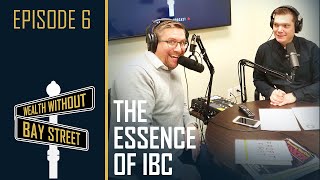
Podcast episode (Wealth Without Bay Street) featuring Richard Canfield and Jason Lowe explaining the Infinite Banking Concept (IBC). They define IBC as ‘becoming your own banker’ by recapturing interest paid to external lenders, describe using participating dividend‑paying whole life insurance as the preferred vehicle, discuss benefits (control of capital, legacy/death benefit, tax treatment in Canada), common questions (cost, policy loans, dividends, insurer choice), and stress coaching, habit formation, and community (Nelson Nash Institute, think‑tank).
Chapters
You are listening to the Wealth Without Bay Street Podcast, a Canadian guide to building dependable wealth. Join your host, Richard Canfield and Jason Lowe as they unlock the secrets to creating financial peace of mind in an uncertain world. Discover the strategies and mindsets to a financial future that you can bank on. All right, everybody. We, we are, we are live. We hit the, we hit that big bright red record button and we're coming at you again. The Wealth Without Bay street team. We've got the J. Lo, Jason Lowe here. I'm your man, Richard Canfield. And we're pumped and excited about talking about one of our favorite topics, which of course is the process of becoming your own banker. And we're going to be digging into a little bit of, just kind of getting some more clarity on what is the real essence of, of this concept of IBC or the infinite banking concept, and just going to have some discussion around that, because as Jason is quick to identify in conversations with clients and with people that call in who are listeners and that sort of thing, this really begins, as Nelson would have told us, it really begins with the way that we think. And so when you start to understand the essence of ibc, the framework starts with what's between our ears. It's that big mass of brain that we have that fires synapses and draws conclusions, and sometimes it draws conclusions based on our past experience. And we really need to be able to think more about how this process can come about in our life.
Yes, you know, introducing the process of becoming your own banker, the infinite banking concept to people quite often begins with what is it? What is becoming your own banker? And it's described wonderfully in R. Nelson Nash's book. And Rich and I both have our copies handy in R. Nelson Nash's book titled Becoming youg Own Banker. And the essence of becoming your own banker is to recapture the interest that you're presently paying to banks, to finance companies, to credit card companies, to outside lenders for the things that you need throughout your lifetime. Things like property education, investment opportunities, business expansion, business equipment and vacations and weddings and all those things that you need access to money to finance throughout your lifetime. If you have the ability to have that money flow back to you versus flowing away from you. Whether you're an individual or whether you're a business owner, you're going to need the use of money for the rest of your lifetime. And so to have that flow back to you versus flow away from you creates a financial advantage that really sets you apart when you compare it to what everyone else is doing financially.
And it's, you know, we use the word finance all the time. And so people, you know, they get into comparisons between different types of debt instruments and that sort of thing. And we've been taught, I think, for the most part, at least I know I was growing up, there was this connotation and understanding that debt is bad, loans equals bad. And therefore when we hear the idea or the words policy loan, there's an immediate brain connection assumption around that. But the reality is what we really need to understand and get clear on is the capital and that we're using this process of becoming your own banker and the vehicle that comes along with it. And ultimately you can do this in a number of ways. But what Nelson I really identified is that the best vehicle for doing it is a participating dividend paying whole life insurance contract. That's really set up in the way that we do and the practitioners with the Nelson Nash Institute do. And you're building up in creating a savings reservoir, a warehouse for your capital to reside so that when you need to deploy that money for any reason, the things you mentioned, business equipment, your vacation, okay, Christmas comes around once a year, people spend money on Christmas gifts. All these things that we deploy capital into the place where you store that capital so that you can access, it simply becomes a different medium. And that medium happens to be, just coincidentally happens to be a participating dividend paying whole life insurance contract. So the essence and the process of it is about taking over the financing aspect of things. But all people don't realize that we finance everything that we buy. And that's something that Nelson makes very clear in the book. Because even if you, for example, if you're one of our listeners and you have no debt, you're out of debt, first of all, that's wonderful, great for you. That means you've gotten rid of the third party lenders in your life. The missing link though is that you are still utilizing your capital. Your capital is walking out the door never to earn for you again. Financing, yeah.
You still owe money. You have property taxes to pay. You have, you know, when the bills come in for your cell phone, your cable, your utilities, you still owe money. And if you truly understand the problem, and I would define the problem initially, when somebody's first looking at this process, we always talk about understanding the problem first so that the solution becomes very clear and you'll know exactly what to do. And the problem for most people that we are contacted by is presently today they're earning income, whether it's T4 income, whether it's dividend income, investment, related income, they earn that money, it flows through the books of someone else's bank. And we'll say that again, probably repeatedly, that it's flowing through the books of someone else's bank. And every spending transaction, all that money that you're paying in exchange for the things that you need in your life is a permanent transfer of capital away from you. And so one of the things that I think Nelson does a good job highlighting in the book is that one of the problems is that you have to reckon with what's called lost opportunity cost. If you have a dollar in your savings account and you withdraw that dollar, you now have no dollars working for you, earning interest. And if you spend that dollar on something, you permanently forego the opportunity to earn interest on that dollar for the rest of your lifetime. And it's, people give lip service to, you know, the, the term of lost opportunity cost, but very few people actually reckon with it. And so that is a problem because.
When the problem is bigger than that even goes beyond that, because it's, if you, if you think Nelson. One of the things that Nelson, I never considered before I read his book and I didn't start to really chime in on until I met Nelson in person, was learning to think beyond your own generation. Nelson said as a forester, he Learned to think 70 years down the road and near the end of his life, he really started to focus on thinking three generations down the road. And so when you part with that capital out of your bank account, you know, you still utilize a traditional bank account for the day to day operation of things, but when you part with that money, you pay the property tax bill, let's say it is that that money transfers away from you and it's never earning again for your lifetime and for the people that come beyond you. So whether that is your children or your grandchildren, or whether that is maybe a charitable cause or some, you know, maybe it's, maybe it's your church or some other entity that you have a deep relationship with that could be having the compound potential. You're really cutting it out of everyone's lifespan. So it's a ripple effect that goes so much past your time here on this earth.
That is such a good point. Because when that day comes, when you being the listener, when you pass away, it's not going to put a stop to the need for money in the family. And so if you create this aquarium of capital, God forbid, the unthinkable happens and there's A death benefit that is part of this life insurance contract. That death benefit is a contractual promise to pay. And that money shows up for the family or for the business exactly when it's needed the most. And there's no, in Canada, there's no taxable event that's triggered when that death benefit is paid. And so, Richard, you hit the nail on the head there. And one of the things that I would suggest that we do to add some real value to our listeners is to walk through some of the most frequently asked questions that come up. I'll kick it off. One of the most frequently asked questions is what does it cost?
Right.
And that's a natural question to ponder right when you're first learning and you're like, oh, okay, if I'm going to put an insurance contract in place or a system of insurance contracts, what is this going to cost? And what's important is to think about what it's going to cost if you don't participate, if you choose to not implement this process. Everyone should begin with a financial objective in mind. So it's not about focusing and looking at it from the perspective of what is, is this going to cost? We need to shift our focus to what specific financial objective or objectives do we have, how much money is required to achieve them, and in what time frame. And the policy or the system of policies is constructed to achieve that. And if it's too much money to begin with, then you just lever it down and then that just changes the time frame that it's going to take to achieve the objective. If it's not enough and you can, you can store more capital inside this wonderful tool, then you just shrink the time frame. And so we try to keep things ridiculously simple when we're working through that. But before we even respond to a question like that, we want to make sure that the person has clarity on the problem and that they understand that becoming your own banker is the solution to the problem. And so we focus on the process first. And once we have clarity on the process, then we design the product which enables you to implement the process. What's next?
Well, and just to piggyback on the cost, because people usually have that relevance point, because you hear the word insurance and the word brings up certain things for people, because we have a custom view of that in other areas of life, we have our house insurance, we have our auto insurance, and we view these things as bills and payments. And they are, but they also are providing a need. There is some reason that you have that there's an exchange for you're getting something for having that there, you're getting some peace of mind. And often in most cases, you're required to have those if you have a house or you have a car, because generally speaking, there's a loan against that, there's a mortgage, or there's a debt on the car, which means the, the bank is the one requiring you to have that insurance. So we have these costs that get kind of beaten into our head. And the reality is, Nelson identifies very clearly on point number two, page 85 of his book. He says, if you knew at passive income time that you'd be getting back everything you put into a system potentially tax free, would you ever object to putting more money into it? And every program, system of policies, individual policy that is designed by an authorized practitioner, well, the end result is it doesn't cost you anything because you get all your money back. If all of your capital is built up in a reservoir where you can utilize it. And every time you put money into, every time you put a dollar in, it gives you a $10 back, or $1.20 or $1.30, why on earth would you stop putting the dollar in? That's just a deposit into a system that gives you more money back. It's no different than a piece of real estate. If you knew that you could go and put 25 grand into a basement suite and that basement suite produce another $300 a month in positive cash flow. Not a lot of investors who have 25 grand aren't going to do that if they can generate the return that they're looking for in that format. So it's all relative and it's compared to what? Well, if you get all your capital back, the cost is nothing. It's neutral. There's no cost. Right.
Yeah, that's a very good point. And so it's important for people to have some basic understandings of the problem and the that banking is a function, it's a process, it's not a product. And taking control of that process as it relates to your needs really puts you at a significant advantage financially. Because if you no longer are relying upon outside lenders, finance companies, lending institutions to access capital, you already have an advantage of speed to opportunity. And to be able to not only do that, but like you mentioned, create essentially a guaranteed stream of passive income in retirement that you simply cannot outlive. And so for people, when they're asking us questions, that's one. So what does cost? What would be another frequently asked question that comes up for you.
You know, the questions vary. So you know, one of the common ones is, well, you know, do I, I don't need any more insurance or I already have insurance coverage as an example, and so why should I get some more? So that I wouldn't know if that's that common. But you do hear that for sure when people are first discovering this. So, and to that point I, it's the purpose of doing this. First off, if you don't have coverage, you should get some. That's, that's just my belief. But if you already have some, that's fantastic. That means that you've probably already dealt with or established for your basic needs if something were to happen to you and you're not going to leave your family destitute. Wonderful. That's a, that's a wonderful thing. And that means the focus of our conversation really is owes all back to the process. Well, you've got capital flowing through your life. Money comes in, money goes up. Money comes in, money goes up. How much of the money as it's going from in to out is something you get to keep? How much of that are you containing in a warehouse where you get to maximize the long term potential of that capital on a constant compounding basis throughout your entire lifespan? That's what we're trying to work with. And so we're talking about the flow of money as it's going through your life. The insurance is simply a tool. It is simply a method, a medium, a vehicle that allows us to accomplish that objective in its most efficient method. At least that we're aware of today.
Absolutely, definitely. And you know, we get common questions that are product related, you know, what, what life insurance companies in Canada, you know, provide these unilateral binding contracts and which, which one, you know, do you prefer to work with? And those are all, you know, quite frequently asked. And another common one is around policy loans. And so when someone says, hey, you know, I, if I'm going to be borrowing money, one of the misconceptions that is out there is that you're borrowing your own money. And what's really important to emphasize for our listeners is that when you have a policy or a system of policies and you have accumulated cash value which grows on a daily basis, you, it's fully vested with you. You're the one that controls access to that capital. And so when you have this pool of accessible cash value, you're putting that cash value up as collateral to access a policy loan from the insurance company. And when you have one of these contracts. To expand on that, you become a part owner of the insurance company. And so when you need access to money, you're putting your own money up as collateral. Without interrupting any of its daily growth. The insurance company places a lien on the death benefit of the insurance policy for the amount that you borrowed and the loan is unstructured, meaning there's no repayment schedule. You're the one that determines and dictates the repayment schedule of any policy loan that you make. And all the while, when you've completed that transaction for whatever it was that you wanted to purchase or invest in, you utilized the insurance company's money. The money comes from the participating account of the life insurance company. Your total cash value is still intact. It's growing on a daily basis, uninterrupted. So that's something that is so important to emphasize. And then we get the notorious question about interest. How much interest does the insurance company charge? And the reason the person is asking that question is because they want to compare it to the rate that they can borrow money from another institution. And I immediately go back to regardless of the rate, Richard, if you and I co owned a Safeway grocery store together, would we ever purchase our food from any other grocery store?
No.
Regardless of the price? No.
No, I wouldn't.
And so I would want my capital.
To flow through the business that I am a part owner of. Right. Wouldn't want my, my dollars walking through someone else's business if I could choose otherwise.
Right.
And I think that's the key is choosing otherwise because nobody else has a choice.
Right.
And so choice is you need capital. You're going to get it from someplace. You got to get it from the place where the capital exists. The person that has most of the capital is a traditional bank or a third party lender. Right. That's because you haven't solved the capital problem for your own life, which we're teaching people how to do through the medium in the vehicle of par. Dividend paying, whole life.
Exactly. And to add to that, what's important is the process of who's getting the money. And so if you're repaying your policy loan and the insurance company that you are a part owner of is calling for 7% simple interest on that policy loan, if you get to access the equivalent of everything that you put back in, does the rate matter to you? If it does, then you really don't understand the problem.
If you understand your, you're still growing your capital at the same time.
Right.
And more importantly, going Back to your grocery analogy, which I'm really glad that you brought that up, by the way. I would, I would buy grocery store with you so well and see that.
Could present itself as an opportunity and then we can access a policy loan to get that business going.
We'll buy a grocery store. But, but if, if that's, you know, follow that analogy through, we own the grocery store. We're going and buying our groceries for our family at our, our own grocery store. Well, every time we do that, we're plugging our money right back into the business, which means in the back end of the business that capital comes back in. We can go take that money, we can go buy more groceries, more inventory. Yeah, that inventory comes into the back room and then we're going to sell that for a lift for, for, for a profit on the, on the front end. And so we're just churning the inventory and dollars and payments and interest and all that stuff coming back to the power pool of the insurance company that, that's a form of inventory for them. Right. And they're able to now take that capital and they're going to go put it to work. Because they actually have to put it to work. And they're putting it to work for the sole purpose and benefit of everyone that participates in that pool. There's no other reason for them to do it. It's to meet the guarantees of the product and to in and to provide a long term stable dividend profit return for the par owners of that, of that account. They don't do it for anyone else. It doesn't go outside of that account. It stays in that account. Those are the only people that get to earn a benefit from it. And so it's a singular focus with the insurance company. And so if they're giving that capital to you as a policy owner and you're pledging your cash as a collateral for that loan instrument to be issued at an unstructured method, meaning you have total control over the repayment of that tool. Then any interest earnings on it is intentionally designed to provide a return for the par pool which you're a part owner of, because they can't just give you the money for free because that would be a detriment to everyone else that's in the pool. If there's a gentleman who is 85 years old and he's got a $10 million insurance cash value and he wants to go borrow $9 million, if I'm in that same pool, I hope that the insurance company is going to charge an interest rate to him because eventually he's going to kick off, he's going to, you know, he's going to no longer be with us, that death benefit is going to pay out and any interest accumulation on that loan goes back to the pool for the benefit of everyone. So it's a self fulfilling system ultimately.
Well, and I would say that in addition to questions about loans, there are questions around dividends. And again, these are questions that are product focused, all product focus.
What is the, which matters very little if you understand the process.
What is the dividend rate of this company compared to that company and you know, the dividend scale interest rate. And it has absolutely nothing to do with the actual dividend yield that any one particular policy receives. You know, the one thing that we'll plant a seed on with listeners is that your behavior as a policy owner is far more critical than the behavior of the insurance company. And to really, truly understand that you can take control of the banking function as it relates to your needs versus if all you did was purchase a participating dividend paying whole life insurance contract. Okay, so let's presume that I had a twin brother, very same, obviously. Gender, smoking status, qualifications, medically, let's presume everything is the same and we both purchased the very same participating dividend paying whole life insurance policy. I'm putting 20,000 a year into mine, my twin brother's putting 20,000 a year into his. If my twin brother does not know anything about the process of becoming your own banker and he just simply paid the premium in that policy, the insurance company is going to administer that policy and deliver incredible outcome as it relates to total cash value, total death benefit. The policy will be participating. So my twin brother will receive dividends that he chunks right back in to the policy to buy fully paid up additions at no additional cost. And then if I am, as I do, as I practice the process of becoming your own banker, I can create a far better financial outcome than my twin brother. So we have the very same tool. We have the very, very same tool.
Same policy, loan, interest rates and everything, right?
And same dividend scale, same premium going in, same policy design. But my behavior as it relates to taking control of a process will create a far better financial outcome. And so in order to be able to do that, a person needs to have a good coach. And so working with someone on our team, they are, they are assured that they are going to be working with a very good coach. And when I talk about our team, I am talking about our entire extended team. And any Advisor that comes through our coaching and our mentoring. And our process is by proxy a part of a much larger community and the relationships that we have established over the past decade and longer with such an amazing community through the Nelson Nash Institute, a number of authorized practitioners that have been doing this much longer than you and I have. But in Canada, in our country, we are the most sought after experts on implementing this process. And so for people who are listening, if this is the first episode that you're consuming online, you're in the right place, you're in good hands and thank.
You for tuning in.
Yeah, thank you very much for being here. And now a word from our sponsors, which I'm kind of hoping we'll have at some point, maybe one day we'll.
Get some of those.
So let's cover some basic things just in good review.
Before you move on to that though, there's a really good point. And again, so if anyone hasn't bought or received or borrowed or rented a copy of Nelson's book becoming your own banker, I do know people who like rent the book. I've had some clients do that. It's pretty fun actually.
Well, and we'll provide a link for.
People to buy, for anyone to access it. On page 65 of Nelson's book, he identifies that to implement this process you have to recognize that controlling the banking function personally is the most important thing that can be done in your financial world. And he recommends that, you know, you work with an advisor that is thoroughly familiar with the infinite banking concept, act as a coach. So he identifies that. But more importantly, he says that you must be patient. It's going to take years to really kind of get up and running and stuff and you can't get started with the process course right away, but the whole, it's an ongoing process. He says it needs to become a lifetime commitment. So really that goes back to something that David Stern said, which is Nelson's son in law, who's now the, he's one of the directors, the founders of the Nelson Nash Institute is that IBC and infinite banking concept is a lifestyle, right? It is a lifestyle. It's something that you just do. It becomes habitual. It's something you have to build the habits on. Like any habits that we create, good or bad, they get built up over time. This is one of those things that falls in the habitual category and it becomes something that you, that you encompass in your life. It just is, it's just something that just happens all the time. And the more and more you Practice it. The better and better you get at it. And you're going to, nobody gets it perfect along the way we're going to mess it up and we're going to retool and refocus and like any other thing in your financial life and we get back on track and we keep going.
Yeah. And let's zoom in on the habit forming advantage of this process. If you are a person who has bad habits, maybe you smoke, maybe your eating habits are unhealthy, maybe it's alcohol, maybe it's whatever that is.
Too many speeding tickets.
Yeah, that could be a bad habit. Thank goodness it isn't for me. I've only had one ticket my entire life. Thank goodness. Knock on wood. Um, it, if you're, if you have those bad habits, it means that you've placed value on that. And so when you understand that this process, it really, it has to be become a lifestyle, well, you have to create a new habit around how you work with money as it relates to your needs individually or with your business or both. And the more you do it, the more value you place on it. And so it becomes part of just your lifestyle financially. And Nelson said in the very same page 65, he said, you know, above all, get started now because the longer you wait, the more you have penalized yourself. And that is just so true. We hear all the time. One of the most frequently made remarks that we hear all the time. When somebody reads Nelson's book, they come through our education process, they attend a live event, they consult with a coach, they say, where were you 10 years ago? I wish I would have known this.
And we always say this when I had my kids.
Yeah. And we always reply, you can't say that 10 years from now. If you get started now, you're here today. So focus on what you can control and what you can control.
When's the best time to plant a tree? 20 years ago. The next best time is right now.
And so some basic understandings, you hit the nail on the head. If you don't have a copy of Nelson's book Becoming youg Own Banker, then just click the link that it'll be on our webpage. If this, if this is where you're consuming it. If not, then there'll be some show notes, show notes and you can purchase a copy of the book. When you get a copy of the book and you've read it, the next step is to have a conversation with a coach, somebody who's experienced, who understands what they're doing with this process. More importantly, someone who's practicing it in their own lives and can demonstrate that to you, that would be very important. And then if you establish a basis to implement this in your life to some degree, then your coach will explain to you what those next steps are and how all that comes together. And, and we don't let people float around out there as lone rangers and not have any coaching or ongoing mentoring. That's part of your journey. In this process. You'll have an experienced coach there with you to help you navigate through forming a new financial lifestyle.
Yeah, it's habitual and to, I love how coaching analogies are, are, are very popular and I think it, it really plays a role in the habitual nature here because take, take, take any sport that you love. And if you're listening to this, I'm, I would say the probability is reasonably higher. A hockey fan like Jason is a big hockey fan and, and you know, so we're not going to, we're not going to go into a bunch of teams and Oilers and all that sort of thing. But I'm an oils fan. If you, if you're a hockey fan and you're, you're thinking about who's on the ice, well, that's the players. They're the ones that are in the game. Yeah, but it's a team effort. The coach never gets on the ice, but he helps develop the plays. It's the players that implement the place. Yeah. In your financial life, you're the player at all times. And so coaches come into your life at various stages and those are ones that help you come up with new plays. They help, they help, they're watching what's going on and they're help able to see things to help give you new direction on how to, you know, make, make the best out of the game that you're playing at that time. And so they're there to be available to you. And the other thing that's really important about especially professional sports. Well, every professional sport has training camp. You're constantly training, you're always working out, you're always developing your skills.
That's right.
Skills training. And at the beginning of training camp, well, what do you do? You got to dust off, you know, some of the extra pounds you put on over the summertime playing golf. And you got to go back to the basics. You're, you're always going back to the basics and you're doing training camp. As you know, I'm sure it's different for every club, but, but there's Always similarities and repetition and repetition and repetition. Well, Nelson's book is like training camp. So if you're not reading from the book frequently, and that's every time you're doing that, it's like you're going back into training camp and you're enhancing the skills that you're now you've been developing as part of this process as you're building and growing your habits. And the longer you're in, the longer you're in the game, the better and better you get at it. Generally speaking, certain games, of course, we have Hockey's. Hockey's a hard sport, so eventually it's hard to play the game. But you guys get where I'm going with this ultimately.
Well, I think that that, gosh, that was actually really great analogy to get people thinking about, you know, okay, if I'm just going to. Because in Canada we have well over a hundred thousand, if I'm not mistaken, life licensed advisors who can, you know, sell you a policy or a system of policy contract and that you can purchase it anywhere. It's everything that happens after the policy. The putting the policy in place is the easiest element of this entire, you know, process. And so you absolutely need to work with a good coach. And you know, to use the hockey analogy, you know, if. To work with a coach, if you're a player wanting to play on a team that has created a Stanley cup dynasty versus playing on a team where the coach just got hired yesterday, has no experience, the coach knows how to play the game of hockey, but has never coached before, then what team would you rather be on? And so that's why we always encourage folks, you know, if you have an existing advisor and a relationship in place there, we can speak on behalf of our organization that, you know, we don't want to interrupt or disrupt relationships. That's just not how we go about doing things. But we want to make sure that you are working with someone who really understands what they're doing. And we in Canada, we really are the best at it, bar none. And we don't say that to be braggadocious. It's fact, as evidenced by the abundance of people who are banging down our door saying, we want to talk to you more about this process. We've been doing research, we've been online, we've been reading Nelson's book, and we want to talk to you more. And so we're here, we're available to help and we'll provide direction on how to create that discovery meeting to see how this process, because ask Yourself this question. How would you feel if you were the banker in your life? How would you feel? We know what our clients tell us. They feel a sense of hope, they feel relief, they feel much less stressed financially. They feel optimistic about the use of money in their life. And they start to think abundantly versus coming from a place of thinking and scarcity. They're less anxious. Those are all things that contribute to just a better well being.
That brings up a memory for me of Nelson talking about a story. He was on a trip in Europe, I believe, and he was there with another advisor. They were going to a conference, I think it might have been in Austria. And there was a lot of political and financial turmoil happening at that time. This might have been around 2000. I don't know if it was 2008, but it was after that aftermath of the financial crisis, there was another crisis. Every year there's some kind of a crisis going on. And I think it had to do with the, the bank bailouts and things that were happening in Cyprus and in Greece around that time. And there was all, you know, they're in the hotel and on the news in the morning, they're having coffee and they're eating their breakfast. And all this financial noise, as Nelson called it, is going on in the tv, cnbc, cnn. They're talking about all these collapses and all this, this negative financial news. Yeah. And Nelson just says, well, last night my cash values went up.
That's something Nelson would have said.
He just identified at all times that it was such a peaceful, stress free way of life because you didn't care, you don't care what everyone else is doing. All that stuff that's going on in the marketplace is so much less relevant to you because you've taken control back of one of the corest aspects of the financial equation, which is where you store, warehouse your money and how money flows through your life with more control. And so that is the essence really of ibc, I think, is it ties into that, the flow and the control in that peace of mind that you can create by having.
Yeah, definitely. And we don't want to exclude, you know, personal responsibility. You know, we can. And we were speaking on a podcast episode that we recorded earlier this very same day. And I should share with listeners that. So Richard is live in our headquarters in Edmonton, Alberta. And I am coming to you from Palm Springs, California. I've been invited to speak to a group of Canadian business owners who are down here for the American Express PGA Tour just as spectators and they're hosting a number of events. And I was asked to come out and speak on the topic of becoming your own banker, the infinite banking concept. And so that leads me to this frequently asked question is, you know, why, why isn't everyone doing this? And the response is always, it's always the same, is that those who understand it are doing it. And so this is your opportunity to set a new course financially. And we won't. We're not excluding responsibility. You have to be personally responsible for embracing this process, for making it a lifestyle for you financially, because as your coach, we are responsible to you, not for you. We will share with you all the wisdom, the knowledge. We'll provide you with our best good guidance on how to maximize the implementation of this process in your life. But you're the one who is ultimately responsible for to execute to that and to make it happen, which is really.
No difference than what it's like in your financial life now. The buck still stops with you, no different than it does with me or it does with Jason. In our financial life, we are the ones that carry that torch on what must happen on a day to day and a year to year basis and how we go about implementing whatever financial strategy or idea or budget that we work with. Yeah. So, you know, the buck is always kind of at the you and me and the personal level. One of the other common questions that we get Jason kind of piggybacks off of that is why haven't I heard of this before? And, and so, and I find that that comes up more often after someone has started to really do some, some work and some education and getting into a little bit more. And they're, they're really thinking about embracing, or maybe they're starting to embrace the idea of, of doing this thing or often it's even with excitement, like, wow, this looks, I think this is what I've been looking for. I know for me that was kind of like that. And so why hadn't I heard of it before? Well, you know, interestingly enough, I was thinking about this. Here we are at the beginning, you know, Q1 of 2020. As we're recording this, Nelson's book was published in 2000, the first edition. And now this copy that we have here is the fifth edition of the book. So it's gone through several iterations and even since then, additional addendums have been.
Added in the book and over 400,000 copies sold. And it's never been on a retail book shelf.
Yeah, you can't get it on chapters or Kohl's or whatever. This is a self published book. And so that, you know, as far as I'm aware, that is completely unheard of for a self published book in the financial category. And so, I mean it's a massive accomplishment and obviously that didn't happen overnight. Yeah. You know, and so that, that means it's taken time for people to learn and absorb this. And you know, the, the think tank session, the annual think tank conference that exists today that we're, we're actually getting ready to go down to here next month. It is a, an event that has become certainly one of the most near and dear events to my heart, something I look forward to every single year, as Jason does. But that program, I think they only launched the first one maybe in 2004 or something. It hasn't been around for a tremendous amount of time. And it started with just a couple of people. It was Nelson kind of around a boardroom, I think, with about five, six, seven, eight people. And so it's grown and it's grown and it's grown. And this year I anticipate there's going to be somewhere in the ballpark of around 200 financial advisors who are embracing this process and either in or working towards their authorization with the Nelson Nash Institute. So that's tremendously exciting as we begin to grow. And so we encourage anyone, if you're a financial advisor listening to this, that we would encourage you to attend that function and register to get involved with or book a time to connect and set up an interview with the Nelson Nash Institute, the board of directors to see if it's a fit. Because the movement, the amount of people that are in Canada, the amount of people in the United States that need to learn about this process is dramatic. And so we encourage anyone to go down that path because at the end of the day we need to one of our good colleagues, James Nethery, he says iron sharpens iron. And so the more that we are able to work together and collaborate as people in the industry, as financial advisors and as a community of individuals implementing the process, we all grow by doing that.
Absolutely.
So this is a really, really embracing kind of a overarching community mindset. And so even though you might be working with an advisor here or whatever, at the end of the day, if you're, if you're implementing the process, we are all implementing this process in some method that we want to be able to help one another do it more. I haven't met anyone who hasn't been like, wow, I, oh, you're doing that. Well, geez, I don't want to talk to you about it. Like. Right. It's something that people, it becomes a common ground that we want to discuss and embrace and, and I think that's one of the really unique, I don't know, it's almost like a, it's almost like an intangible power to the idea of ibc. It's this community component that's just like an intangible thing that's a, that's a part of it that I. It's almost palpable and that's how I feel about it. And so I'm just really excited about anyone who's either listening to this or tuning into some of our colleagues podcasts that tie into the subject matter. I'm just really excited about your journey and as you learn, discover more about it and are able to decide is it the right fit for you? No.
On that note, we encourage all of our listeners. Make sure please get your hands on a copy of R. Nelson Nash's book, Becoming your own Banker. Connect with one of our coaches to have a discovery session to see how this process can be implemented for your circumstances individually, and we would really love to hear from you. Please leave some feedback if there are any questions that came up for you that you didn't hear us covering on the show. This is a perfect opportunity for you to reach out to us and ask us those questions that are on your mind. And we will connect with you and we will follow up with you to make sure that you gain clarity on this process. And so we appreciate you. Thank you so much for tuning into another episode of Wealth Without Bay Street. On behalf of Richard and myself, we wish you a wonderful rest of your day and please don't keep us a secret. Feel free to share this podcast with anyone that you think would benefit from the gift of what we do and let's continue to create financial prosperity in the lives of others. So thanks Richard for being agreeable to this short notice podcast episode and I know that our listeners are going to get massive value from it.
Right on, man. Hey, I appreciate you having an awesome time at your session that you're doing there tonight and wish I was down in the sun, but I look forward to our next trip down to the think tank coming up here shortly. So appreciate you and have yourself a safe journey home.
All right, thanks.
Thanks for listening to the wealth without Bay street podcast where your wealth matters. Be sure to check out our social media channels for more great content. Hit subscribe on your favorite podcast Player and be sure to rate the show. We definitely appreciate it. And don't forget to share this episode with someone you care about. Join us on the next episode where we continue to uncover the financial tools, goals, strategies and the mindsets that maximize your wealth. Iterations and even since then, additional addendums have been added in the book. And so. Yeah, you can't get it on chapters or Coles or whatever. This is a self published book and so that, you know, as far as I'm aware, that is completely unheard of for a self published book in the financial category. And so it's a massive accomplishment. And obviously that didn't happen overnight, you know, and so that, that means it's taken time for people to learn and absorb this. And you know, the think tank session, the annual think tank conference that exists today that we're actually getting ready to go down to here next month. It is a, an event that has become certainly one of the most near and dear to my heart, something I look forward to every single year, as Jason does. But that program, I think they only launched the first one maybe like in 2004 or something. It hasn't been around for a tremendous amount of time. And it started with just a couple of people. It was Nelson kind of around a boardroom, I think with about five, six, seven, eight people. And so it's grown and it's grown and it's grown. And this year I anticipate there's going to be somewhere in the ballpark around 200 financial advisors who are embracing this process and either in or working towards their authorization with the Nelson Nash Institute. So that's tremendously exciting as we begin to grow. And so we encourage anyone, if you're a financial advisor listening to this, that we would encourage you to attend that function and register to get a with or book a time to connect and set up an interview with the Nelson Nash Institute, the board of directors to see if it's a fit. Because the movement, the amount of people that are in Canada, the amount of people in the United States that need to learn about this process is dramatic. And so we encourage anyone to go down that path because you know, at the end of the day we need to. One of our good colleagues, James Nethery, he says iron sharpens iron. And so the more that we are able to work together and collaborate as people in the industry, as financial advisors and as a community of individuals implementing the process, we all grow by doing that. And so this is a really, really embracing kind of an overarching community mindset. And so. So even though you might be working with an advisor here, whatever, at the end of the day, if you're implementing the process, we are all implementing this process in some method that we want to be able to help one another do it more. I haven't met anyone who hasn't been like, wow, no, you're doing that well, jeez, I don't want to talk to you about it. Like, it's something that people. It becomes a common ground that we want to discuss and embrace. And I think that's one of the really unique. I don't know, it's almost like an intangible power to the idea of ibc. It's this community component that's just like an intangible thing that's a part of it that it's almost palpable. And that's how I feel about it. And so I'm just really excited about anyone who's either listening to this or tuning into some of our colleagues podcasts that tie into the subject matter. Just really excited about your journey and as you learn, discover more about it and are able to decide, is it the right fit for you? Right on, man. Hey, I appreciate you having an awesome time at your session that you're doing there tonight, and I wish I was down in the sun, but I look forward to our next trip down to the think tank coming up here shortly. So appreciate you and have yourself a safe journey home. Thank you.
More from Richard





How Do You Use a Policy Loan to Buy Dividend Stocks? #dividendstocks #infinitebanking #shorts


Can Compounding Dividends Pay Your Bills? #wealthbuilding #investment #financeeducation


Should a Corporate Policy Offset Your Personal Coverage? #shorts #insurancetips

What Is Human Life Value? #shorts #insurancetips #dividend #wholelifeinsurance