What is your happiness portfolio? Retire Happy With Purpose
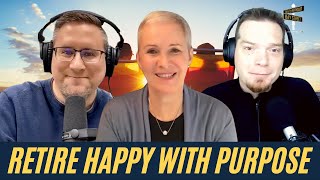
This is a Wealth Without Bay Street podcast episode (YouTube) featuring Susan Latrimoic discussing retirement transitions and a purpose-first approach to post-career life. Susan, a former wealth advisor of 35 years and author (first book published in 2006), argues that many retirees struggle despite financial security and proposes a five-step Next Chapter Lifestyle Game Plan that begins with a deep self-assessment and yields a documented "happiness portfolio" (eight non-financial asset classes) to guide retirement choices. The program uses tools including the Success Finder assessment (measuring 85 traits) and roughly 60 discovery exercises, and is aimed at both individuals and financial advisors to integrate lifestyle planning with financial advice. Key claims: 79% of people struggle with the transition to retirement; the approach reframes financial products as byproducts of lifestyle-driven planning.
Questions this video answers
35 years.
2006.
79% of people struggle with the transition to retirement.
85 traits.
Eight asset classes.
Chapters
Everyone knows that's what you expect. 0 to 30, 30 to 60, you're paying down your debt, you're raising your kids, building your career. It's prescribed as well. Then you get to 60 or 65 and then it's like, well, now what? Where's the chart? Where's the roadmap for this stage? That's why I think people fall into either the doom and gloom or in the Hollywood version, really, this is carving new territory for a lot of baby boomers who don't have that track record or the history or the role models of those that have gone behind them to plan this life. So that's where we come in.
Welcome to another edition of the Wealth Without Bay street podcast. We are excited today to be joined by Susan Latrimoic who is going to talk to us all about retirement thinking and how we can extend longevity mindset and how we can maximize the joy that exists for you the day you decide to leave your career and start a new journey in a retirement world. So Susan, we're excited to have you here. And a little bit about Susan is that she is the author of the Rich Life Managing wealth and Purpose. It's not just About Money, the Whole Life Approach to Wealth Management. She's been a successful wealth Advisor for over 35 years and now she's moved into a role where she's really helping people expand their thinking and their thinking horizons about what kind of joys you can create in a lifestyle that you want in a post career world in a retirement scenario. And so we're, we're very excited to have you with us today, Susan, and thank you so much for joining us on the Wealth Club History podcast today.
Thanks for that intro and it's great to be here with you.
Well, I thought we would begin. You know, Susan, you and I had an opportunity to, to connect with one another a few weeks ago in preparation for just getting acquainted and looking forward to this particular episode. And sincerely grateful to Richard for thinking well enough of us to suggest that we be introduced. And I loved how you talked about what inspired you to do what you're doing today and I'd love for you to share that with our listeners and viewers. So what was your inspiration?
Yeah, that's a really good place to start. I was a wealth advisor, as you mentioned, for 35 years and a lot of my clients had, were with me for a couple of decades or more as they moved from mid career into that planning for retirement stage and on into retirement. And my clients were all affluent enough that they didn't have to worry about having enough money for retirement. But one by one, I watched them make this transition, and a number of them that did not do well personally. And it started to really bother me because as a wealth advisor, I thought my job was, well, if you have enough money to retire and you might even have $10 million by the time you're a hundred, aren't you happy about that? And so I just thought, you know, my role as a. As a financial advisor needs to expand. I have to start looking at that integration between their life and their money and not just be so focused on the money. But the pain that I saw some of them experience was actually quite terrifying. One, one client had he sold his very successful company. He had many, many millions of dollars, and he thought that he could buy happiness. So he first tore down a perfectly good house, built another one, bought another cottage, bought a family compound in the Bahamas, and he was just spending money right, left and center. Then he, after he ran out of things to buy, he thought, well, maybe if I go on the board of some venture companies, that'll make me happy. And what he realized was that when he ran his own company, he was in control. When he was on the board, he was just an advisor, and it was actually frustrating for him. Then it reminds me of another client that I had who also left his family business, and he was a golfer, and his goal was to move to his gated community in Florida and play golf all the time because he was frustrated that he never had really enough time to get really good at the game. So I said goodbye to him at a meeting in November. He went to Florida. He came back in April. We had another meeting, and I was expecting him to tell me his golf game had improved and he had so much fun. And instead he said, I injured my shoulder from too much golf. I'm so frustrated with the game. The more intense I get about it, the worse my game is. And I, quite frankly, am sick of that course and seeing the same old people as we go round and round that golf course. There's gotta be more to it than this. Meanwhile, when he was back in the city, he realized how much he was missing his work, his colleagues, the people that he served, his clients, and so on. So these are just two examples that stick out in my mind of clients that didn't fare well in this transition. It's not, however, everybody's problem. I had another client, a female corporate executive, and she had this ambition that when she retired, she wanted to raise companion dogs. And use companion dogs to go into hospitals and long term care homes to cheer people up. And she followed that dream and it was very, very satisfying for her. So we know from statistics, the study that Ameriprise Financial did a few years ago, that 79% of people struggle with the transition to retirement. So I've given you two examples of people that did struggle. And one example is someone who got it right, was successful first time around. But with that kind of statistic, with almost 80% of people struggling as they transition to retirement and the great number of people that are retiring, selling their businesses, stepping away from their professions or having to do mandatory retirement for different reasons, this is really a tsunami that's happening right now and it's not something the financial community really talks about. So my goal, my ambition is to bring awareness to this issue for financial advisors and their clients and then to do something about it.
That's, it's exactly what's needed at exactly the right time and for, for anyone who's tuning in. Because we do have a number of people in the financial sector, whether it's certified financial planners, chartered life underwriter, you know, mutual fund representatives, you know, number of people that are advising people as it relates to money. And what I'm hearing and what's coming up for me, as I heard you describe these scenarios with your clients, is that and rich, you can attest to this too. We describe, we talk about, you know, money. Money really just, it amplifies more of who you already are. If you're a very generous, giving person and then you're flush with money, you're going to be more generous and more giving. And if you approach that phase in your lifetime where you're ready to retire, don't lose your purpose or get clearer on what your purpose is at that phase in your life. Because I've met a lot of very wealthy people that are miserable and it's a lack of purpose. And the force that people have to fight against is gravity. When you hear the word retirement, you think of being taken out of service. I, I'm an aviation nut. When you hear about a plane being taken out of service, it's being retired. Well, it's no longer transporting passengers all over the world. It's no longer, it's just out of service, sitting there in a field, rusting away. And if you stop moving, if you stop being in motion, mentally, physically, in that phase in your life, you become low hanging fruit for gravity. And gravity wants to pull you back into the ground.
Yeah, about six feet or so, yeah.
And so advisors, we implore you, consume Susan's resources, get connected with her, because she's. She's on to something very, very relevant at the right time. Yes. You're having discussions with clients about all of that stuff, rates of return and where your money's being invested. Take a look at this big stockpile of cash that you're going to have 25 years down the road. But nobody's opening the discussion to say, let's talk a little bit more about purpose, about what you want to do, to be in service of others, or to do things that fascinate you and bring you energy in that phase in your life. The money component will be taken care of. But let's talk about these other things that are going to keep you around to enjoy that money.
Absolutely. And that's so true. And that's really why I wrote the book. It was way back in 2006 that I wrote the first book, the Rich Life Managing wealth and Purpose. And at that point, I was truly in the height of my career as a financial advisor. And I just thought money without purpose is hollow. And the goal of just acquiring more money for the sake of more money is a pretty hollow goal. So purpose is absolutely critical to the whole thing. And it doesn't have to be a grand purpose like funding the wing of the hospital that's being built. It can be tiny purposes, like helping a neighbor, you know, volunteering a few hours a week. So there are many ways to find purpose. And, you know, as a financial advisor, your goal isn't to sort of get deep into a purpose discussion with your client, but it certainly is a good idea to do that. And so what we do with nextchapter Lifestyle Advisors is that we have programs for financial advisors to start to educate themselves first about this area, educate their clients, and then be able to integrate some of our tools and resources into the conversations and planning that they do with their clients. In a way, the industry has it a bit upside down. I know as a financial advisor, my goal was, first, acquire the assets, get them invested, do a financial plan, and then maybe say to the clients, what are you going to do when you retire? Or, you know, what, what are your dreams? What are your goals? And you get very cursory answers, really. We need to turn that whole model upside down and start with the lifestyle plan. And so for that, we've developed a scorecard that we train advisors on how to use to go deeper into those conversations with their clients so they can get the information that they need. Which then informs the financial plan, which ultimately then informs the investment plan. And the pinnacle of all of that, once you've done the lifestyle, the financial, the investment plan is then the opportunity to live the rich life, which is, to me, the ultimate of that integration between money, purpose and happiness.
I love it.
Well, it's interesting. Earlier you'd indicated a tsunami, a wave really, of, of this, this challenge that's facing people. And what comes up for me, Susan, when you said that is, you know, the baby boom trend, the generation, you know, the, the, our mentor Nelson Nash would say the pig in the python that's moving through time. And, and we're, we're at that stage where the baby boom generation is at this retirement age. And, and each and every year that transpires, there's more and more people, hundreds of thousands of people, millions of them, that are entering a, a phase, an age phase, where they've been told their entire life that this is the age that you're striving for to be able to stop everything that you've been doing for your life and basically hang up your, you know, hang your jacket up and your keys and kind of unplug. And so I feel like the, you know, the, the typical financial world and, and the marketing of banking institutions, the bay streets and the wall streets of the world are driving everyone down this path of, of, of, of, of picking an end date for them versus them picking the end date. And, and it creates a bit of a mental barrier, mental blockage on what's possible after that. Is that something that you're finding as you're having these discussions and you're talking to advisors who are embracing this, this, this, this coaching methodology that you, you're doing with the next chapter, right?
Absolutely. There is a tsunami happening, as you, as you well, point out. And in some ways it's being accelerated by Covid because we've seen a lot of people re evaluating their lives and say, wow, I watched a loved one die during this, and is this how I want to spend the rest of my life? And we all know the old adage, no one on their deathbed ever says they wish they'd spent more time at the office, right? So there is this time of life, this next chapter, and people have various, let's say, visions of what this next chapter looks like. Some people immediately think, oh, I'm over the hill, I'm passe. It's all doom and gloom and down here, downhill from here. Kind of like what you were saying, Jason, with that gravity pulling you towards the six feet under Richard. So you, you know, there is that scenario and that vision that some people have, but there's also the other side of that coin, which is what we call the Hollywood version of retirement, which is I won't have to get up by the alarm clock, I can avoid the commute, I don't have to put on a suit and tie, I can just take it easy and then I can play golf all day, I can sail on my boat, I can indulge my passion for bridge, for tennis, whatever it is. And neither one of these visions is correct, either the doom and gloom scenario or the Hollywood version of retirement, which is sort of like the hold hands and walk down the beach into the sunset and all your problems will be solved. But like any journey, and let's face it, this stage of life is part of a life journey for everyone. Like every journey, it needs to be planned. You wouldn't embark on around the world trip without some idea of your itinerary and your having your tickets and passport. That's if you could do that trip these days. But just like, like this, there's, this is a journey. And when we think about life in terms of, let's say a 90 year lifespan, which is really kind of the first generation, these baby boomers today that have had that opportunity to live that long, the first 30 years of life are pretty well prescribed. You're a kid, you go to school, you get your education, you maybe start your career. By then you have to get married, start a family. Everyone knows that's what to expect. 0 to 30, 30 to 60, you're paying down your debt, you're raising your kids, building your career. It's kind of prescribed as well. Then you get to 60 or 65 and then it's like, well, now what? Where's the chart? Where's the roadmap for this stage? And that's what I think people fall into either the doom and gloom or in the Hollywood version. So really this is carving new territory for a lot of baby boomers who don't have that track record or the history or the role models of those that have gone behind them to plan this life. So that's where we come in. First of all, as I mentioned, we work with financial advisors to help them actually know their clients better and do better financial work for them. But the other part of what we do is work with either financial advisors, clients or the public at large to take them through our five step process, to actually have them build that plan for the next phase of the Journey. And we call that our next chapter Lifestyle game Plan. So it consists of five steps. The first is a deep dive in knowing yourself, because we all were raised and educated to be a certain thing. A doctor, a lawyer, a dentist, a podcaster, whatever. But do you really know what your DNA is? How you. How you're wired, what's best for you at this stage?
Do you see a lot of revelation in that step?
Tremendous revelation, in fact. It used to be an optional part of our process when we did the Success Finder assessments, and then we made it mandatory because it short circuits so much discussion and, you know, aiming into the dark kind of thing. So it's absolutely clarifying. And when we do it with couples, it's even more illuminating as it's a language to better discuss their lives with each other. And it's. It's a vocabulary that they can relate to that other people that haven't done it can't relate to as well.
And do you incorporate other tools in part of that process? Do you work with, you know, as an example, like a Colby Coldex, that sort of thing?
Yeah. The Success Finder is our main tool. I love Colby, but I think it really only looks at your modus operandi for four different things. Success Finder measures 85 traits, 85 of them. And then it distills them into competencies. And why we like it, using it for the retirement age or people planning for retirement or in retirement is it uncovers the lifestyle priorities and motivations. So lifestyle priorities are different at this stage of life than they were when you had to earn a living or raise your kids. So things like, is career still important to you? And a high percentage of people want to continue to work or do some work in their retirement, especially professionals and senior people. Then we have the lifestyle priority of health. Maybe people have neglected their health, you know, and gained extra weight and not been to the gym. So health becomes a bigger priority if they have a focus on longevity. What about humanitarianism? We have so many incredible causes that the world needs to be focused on right now. So is that one of their lifestyle priorities? So the Success Finder does a deep dive on what their lifestyle priorities are and what motivates them to take action.
We'll have to do this. We'll have to do that. Yeah. In our. In our quarterly group client coaching, we'll have to do a dedicated session and get that set up. And so for all of our clients who are tuning in, who binge our podcast, firstly, thank you, we appreciate you. And secondly, we're going to plan something pretty special in 2022 to, to go through what Susan's describing here firsthand. And so yeah, that I, I would say that first step that has got to be a big eye opener because for so many people that, that we work with on a day to day basis, they're so immersed in the here and now and you know, focused on that, all the priorities that are competing with one another in their lives and to look ahead to that next part of their journey. Been there, done that, got the T shirt. There's all kinds of retirement this, retirement that out there. But to really dive a little deeper into what you just described, I think that sets the stage obviously for the, for the remaining four steps in the process. But that's gotta be a big eye opener.
Yeah, exactly. It really is. And it, we come back to it. So after we've done the success finder assessment, the next step two is, is what we call the deep dive discovery. And in that regard, my business partner Marianne, over the decade that she's been doing this work, has developed a menu and inventory of about 60 exercises that we pick and choose from, depending on the client and their situation. After we've done the deep dive and the success finder, then we can start to set the stage for creating that purpose statement, that vision statement. Then how we actually translate that is by building what we call your happiness portfolio for retirement. And your happiness portfolio. We play on the word portfolio because it has different asset classes. Just like your financial portfolio would have cash, stocks, bonds, insurance, real estate, and so on. The happiness portfolio has eight asset classes and money is not one of them. That's your job as financial people to deal with the money piece. But there are eight areas and it's important to somehow get clear on what those eight areas are, how much you want to equal weight them or overweight them. Certainly in professionals, business people, we see professional as one of the eight categories as a huge part of their portfolio. But in retirement or semiretirement, it may be non existent or it may be partial. So professional is one of them. Primary relationship. And the reason we go there is that gray divorce is on the rise. The largest cohort of people getting divorced are in this retirement age phase. So if you don't think about your primary relationship, you could be a victim of gray divorce. Just.
And you know, and you know that the root cause of that was, was rooted many years before.
Correct, it can.
Many years before.
You know, when two people have their own lives, career, professional lives, and they only see each other for dinner and, you know, weekends and travel. You mask a lot of issues that may be underlying in the relationship. The other. So that's part of it. Which then when you're home 24 7, you know, and we've seen Covid kind of as that bit of a dress rehearsal.
You're in the pressure cooker. The relationship pressure cooker.
Yeah, exact.
Well, we, yeah, we've heard even in good Humor, you know, we've heard several clients who have said, oh gosh, like I can't wait until, you know, my spouse is able to return to work. Or I was so used to routines in the home and, you know, that's all been turned upside down as a result.
Exactly.
But it's like, okay, you know, if you're really listening to what's being said, it's, you know, there, there may be something else going on there that yeah.
For sure be explored and it may not have started. Might've been a perfectly good relationship up till now. But then people make certain assumptions about retirement. For example, I remember one client we worked with, he wanted nothing more. He was living in the Upper east of, of the U.S. so you know, Washington, D.C. maryland, that area. And he just wanted to escape winters and be in Florida. His wife of two years, who he'd married when his first wife passed away said, I used to live in Florida. I don't want to go near the place. I had skin cancer. I'm. I have to stay out of the sun. I thought we'd go to Colorado in the. And have a retirement place there. So both of them had assumptions about where they wanted to live and where they'd be in retirement. And they never really talked about it. They just had these assumptions. So that can be a real contributor to that whole going on different paths and ultimately ending in great divorce. And there are many other catalysts that can prompt that. I have other stories I could tell you about that, but that is one of the, that. So that's an important area of the happiness portfolio is to get on the same track. If you're in a. If you know, you do have a spouse or partner that you plan with, then there's a whole issue of family and friends. A lot of people when they retire, their kids assume that they're going to baby the built in babysitters. And while that might be wonderful to be a grandparent babysitting, it isn't necessarily what you signed up for when you retired was to be there as the 247 nanny. So, you know, that's an important area Then we have. One of the areas that I touch on is that one of the tenets really of the rich life philosophy is giving back, which is, you know, how do you want to do that? You could do it financially and doesn't have to be. You can, you can give back with your time, you can give back with your talents. There are many ways to do that, but I think we all feel better when we give and it's just a matter of finding what that vehicle is for it. So that's another one of the, the areas of the happiness portfolio for retirement.
What's interesting about that one, Susan too, is that the skill sets that a person's developed over their career, their innate skill sets, there's a way that they can channel that skill set energy into their giving. And whether it's like maybe they have a skill set of relationship building, so maybe rather than giving, they're giving time, but they're also giving to a charitable cause that they care about by helping to bridge the gap of key relationships. So like, there's a way to channel their skill set energy and something they're naturally good at, their instinctual, you know, modus operandi into that giving component, which I think is very interesting also. I really like that.
And it doesn't have to be. It can be something very career related. The other day I met a man whose father was one of the. He was an original stock picker. He made a lot of money in the stock pick market by picking stocks, studying stocks, doing analysis and so on. And that is kind of a dying art as we move into the world of ETFs and mutual funds and robo advisor portfolios and so on. So that's a talent that many young people would really like to learn about. And he's, you know, he's well into his 70, late 70s, so even that, which is a passion for him still, but something that he can give back and pass on to the next generation. That or people that are any age but that are interested in learning. And I'm sure there are many, many skills that people have. When we think about woodworking or tile setting or, you know, different forms of creation that we don't have anymore because they've gone by the board because of technology or because of, you know, everything being disposable or whatever. So giving back can take many, many forms. Then we have the, the area of spiritual and emotional health. And this is not one where we'd expect any financial advisor to start talking to their client. But a lot of people at middle Age and beyond. Start to think about these more esoteric philosophical questions like, why am I here? What's the purpose of my life? And so, you know, it's really, it comes into focus then at this stage and something that does bear needing attention. We can't forget about leisure. Like some people have this feeling that, you know, they can just do play all day or they can go from, you know, the tennis court to the golf course to the bridge game and that it's just all a life of leisure. But really it gets pretty, wears pretty thin pretty quickly. So that for us is one area, an important area, but not the whole picture by any means.
And people forget that, that, that, that would tire you out as a kid as well, right? You couldn't just play.
You can't just play all the time.
All day, get, you get bored and you get tired. And so what, what would make one think that it would be any different, you know, 60 years down the road.
Yeah, exactly. So true. So true. And then we have the area of self development that oftentimes this is things that people are interested in learning about. And by the way, learning is one of the lifestyle priorities. So are you one of those curious perpetual learners that loves to delve into all sorts of things? Well, self development could be, you know, signing up at your local college for a course in ancient history, if that's always fascinated you or whatever, but something that keeps you learning, exploring, developing that sense of curiosity. So that's an important piece of it. And then finally is health and aging. And really, when we think about what's possible today in terms of longevity and all the tools and resources and knowledge that we now have about how to stay healthy, how to get healthy if you're not, and putting all that, because if you're going to fulfill your purpose and enjoy a happy life, health is really the underpinning of it. So that's a brief overview of the eight areas of the happiness portfolio. And once we finish working with the client, they really have a clear, documented plan for what this portfolio looks like. Now, like any portfolio, it does need. Just like any financial plan, it does need review and updating once in a while. So that's no different. You know, as things change in life, you may need to revisit the happiness portfolio. The fifth step of our process is what we call the rewirement check in. So after someone has transitioned from career, profession, business into their happiness portfolio, their rewirement phase, we check in with them to make sure they are on track. You said you were going to Volunteer your services? Did you actually make contact with the organization? Did you sign up for that course? Did you pursue that business idea that you had a thought that you might want to start something new? So we actually, we're like personal trainers that way, you know, everyone knows how to do a sit up. But do you actually do it is the other question.
So, and the operative word being you, you, you know, we, we, we tell people all the time. I mean, as a coach, we're responsible to you, not for you.
Exactly. Yeah.
And so having a plan is one thing, executing it is another. No different than your gym analogy. Getting a membership at a gym is much different than actually going and working out there.
That's right. So we want to make sure people actually implement some of the things they get excited about and do. So that's the five steps of this next chapter, lifestyle game plan. So people can either work with us directly. And I also put financial advisors in this category. We did a webinar a few months ago and the audience was pretty much fully advisors of some stripe, many of them financial advisors. And it was all about exit planning and the like. We could tell the advisors had one year for their clients, like, how am I going to get, get my clients to sell their business and free up all that capital that I want to invest? And the other year was, well, what about me? I've got these, I'm 57 years old and I don't want to work forever. How am I going to make this transition? So we've realized that financial advisors have the same issues as their clients. So we work with just people in general that come to us. We work with financial advisors on their own happiness portfolio plan and then we give the advisors a lot of the tools and resources so they can start to open this conversation. And then we partner with them to help them build this into their practice. And why it's important for financial advisors to do this, I think is important on several fronts. First of all, these days, every financial advisor needs to add more value to the relationship than just doing a financial plan, selling an insurance policy, or managing a portfolio. They need to add more value. Why? Because the clients need it, demand it, and they need to differentiate themselves. So not every advisor is going to start working with this demographic, although it is the wealthiest one, I should say. And not everyone will be an early adopter of this approach. So this is a huge differentiator for any forward thinking financial advisor to start to incorporate this. And finally, I think it provides referral opportunities for advisors in that if they've gone if their client has actually had these conversations with their advisor and they're at a Christmas party and they tell their friends, oh, I just had this most amazing discussion with my advisor and he or she is really helping me. And their friend hears that and they say, well my advisor only talks about the market and where the interest rates and economy is going and it's so boring, I couldn't care less. But this is really interesting because I'm facing these challenges. So then pretty soon that there's a referral opportunity there from the client who becomes your best advocate. So there's benefits all around, there's benefits for the advisor from a business perspective, there's benefits personally and definitely it's a benefit to clients who otherwise are taking this journey pretty much on their own, isolated, going through it. And the pinnacle of it all is the integration. For a really good advisor that wants to integrate the lifestyle plan with the financial plan, with the investment plan. Putting this all together is really the best form of financial planning that I can ever imagine.
Well, you know what comes up for me, Richard, in hearing what Susan was sharing, it's all about who, not how right and having the right who with the capabilities to get these hows done. And you know, my question for our viewers and our listeners is what's in your happiness portfolio? And going through a process like this is only going to create an advantage and it's also going to help you to, to a large degree to rethink your thinking. And the, the one thing that the three of us can relate to with having had experience in our case for a number of years, you know, with Dan Sullivan in the Strategic Coach program is he, he goes on to talk about how you've got to rethink your thinking and that your eyes only see and your ears only hear what your brain is looking for. And so through this process of developing a happiness portfolio, it's going to get re you use the term rewiring, it's going to get your brain immediately working on making those things real and they'll be at the forefront versus like we talked about earlier, these very surface level, shallow conversations about, hey, now that we've talked to you about all the different products that your money's going to be invested in, can we take two minutes and talk about what your long term goals are and your retirement objectives after we've spent 12 days talking about products and rates of return and all that other stuff. It's just noise if you don't get to. I love the happiness portfolio. Let's build a portfolio.
Well, the products should be a byproduct of the discussion and the results. For example, in one of our training case studies that we use with advisors when they get this, the license, the scorecard and we train them on it is this. It's a case of a Lady Mary, she's 60 years old, she inherited business years ago from her father and she's ready now to look at selling that business. So you go through as an advisor, you go through the scorecard with her and she says, you know, I really don't have any heirs or beneficiaries. I want to leave my estate after I sell my company to charity. Click. Is that an insurance policy right there? Is that the best way to fund this? So there's so many clues that come out of it from the standpoint of the financial product being a result, not something you lead with. And of course instead of, you know, feeling like she's being sold a product, you're going to explore all the options for how she can leave her estate to charity. And she'll pick the best, choose a solution, just to choose a solution. So it's not an a sale, it's a, it's a true advisory role that the advisor is in to say here are all the options, let's pick the best one for you. And then it's not so self serving as I'm going to earn a big commission so you better buy this kind of thing. It's really. And this. And the clients pick this up. They know who's got their best interests at heart. And the scorecard, when they have this conversation, it shows the client or prospect that the advisor cares more about them, the person, than just their money. Because so many advisors, they see a client and they just see the dollar sign printed on their forehead. Oh my 500 million, you know, my $50 million client, my $2 million client. Well you know, what about the name, the person, the their life? So it does take a bit of a holistic mindset for an advisor. But I think more and more advisors are coming around to realizing that that is where it's at and that's the future of the industry is to be more holistic.
Oh, that's definitely the future for sure. And, and so speaking of future, here's something that comes up for me because you know Susan, in our previous chat, and again the connection of Strategic Coach just woven through our conversation here a little bit, one thing that Dan Sullivan and Strategic Coach has helped me see and really opened my eyes to just the possibility around longevity, human. The human capacity to live beyond that which we currently recognize as the ability to live. And I'm curious how conversations around longevity, how do you see them shift with people that come through your process? You know, did they, did they have kind of a maybe anticipated best before date in their head prior to entering a conversation, you know, through going through the process? And are they walking out that door now with a new lease on life, on how many more years of, you know, possible extension and, and possible happiness that they can live in their new happiness portfolio because of it? That's a curiosity I've had and I'm just wondering if you can speak to that and how longevity is coming up in conversation as, as people are coming through your, your process.
Yeah, no, that's a very good point. And we have had people. I remember talking to a man the other day and he said, you know, my grant, my parents both died, both sets of parents died in their 60s, late 60s. So my outlook for longevity isn't that great. And his assumption was, because his parents died fairly young, that he was going to as well. And I just thought, isn't that sad that he has to think that way and he's doing everything right. He eats well, he exercises. So there's no reason unless there's some hidden disease which he did not allude to and which I don't think was the case. So when people don't have a purpose, they, you know, life, the gravity pulls them down and life ends kind of unhappily. But I think of my, my 97 year old aunt who, who just died a couple of years ago. She started a new career in her 70s, she got remarried in her 80s and you know, she lived to 97 and just got every, you know, she squeezed the, all the juice out of that orange that she could get. And in a way that's my role model too for, for what I'm doing. And I think when you have a purpose and a passion around what you're doing, then you know, you, you get to live those extra years filled with let's say, the joy and the happiness and the, and the meaning that, that all of us need to find and that's not easy for everyone to find. I feel very grateful that my career led me to finding meaning in doing this. But it's not always easy to connect the dots. And that's where our process really helps people to find that for themselves. And it's just so wonderful when we work with clients and when one client said this is the best money I've ever spent. Hard to believe when he had to think twice about signing up for it in the beginning. But, yeah, we get. We get great feedback, and that makes it really all the more rewarding that we see the difference in people as they come into the program. Tentative, hesitant, negative sometimes, and then they. They exit the other side and they can't wait to, you know, get up and go and. And start on all these activities and things that they. They've discovered are with us.
Awesome.
Get them out, Susan.
Love it.
Susan, that was. That was amazing. We. We really, really, really thoroughly enjoyed having you on our show, and we will have you back not only on the show, but also in 2022 to meet with and we'll put together an event, we'll get together, we'll talk about that. And so speaking of purpose and speaking of, you know, creating a happiness portfolio, I just love that I'm going to be saying that all day now.
The.
I think what guests, People who are tuning in, guests who have been on the show previously who are, you know, picking up future episodes. Be sure to check out Susan's material. We'll provide all of the links in the show, notes on how you can get connected with Susan and her team. And Rich with that. Take us home, my friend.
Well, Susan, we really appreciated this, and you've shared so much value with our listeners today. You know, you may not recognize yourself as a hero in everything that you do, but when you show up and you. You live through this new purpose that you have, and you're helping people discover how they can create their own happiness portfolio. You're helping them by. By the. The. The sheer capacity of giving them a new vision. You're giving them a new lease on life. You're adding potential years into their own lifespan that they didn't know they had. You really, truly are showing up as a hero, not just for them, but for the people who are connected to their lives, their relationships, their most powerful relationships that they get the ability to have that extended life, enjoy with that individual based on the work that you're doing. So our question for you is, who do you most want to be a hero to?
I want to be a hero to. I'd say two different groups. One is to financial advisors, because I know how challenging it is to be one, having walked in those shoes. And I'd love nothing more than to see some really hardworking, diligent advisors take their businesses to a different level of productivity as well as satisfaction, that they can derive real satisfaction from helping their clients not just gain a extra return or save some tax, but really help their clients live a better life. So I want to be a hero to financial advisors and to their clients and other people that find us that need our help. So if I can be a hero to those two audiences, I'm a happy lady.
Well, I think you showed up as a hero for our audience today as well. And there you have it. Susan Latrimoy, thank you so much for being a guest on our show. To all our viewers and listeners, you're going to see a playlist that just popped up courtesy of our amazing editing team. We want to continue a journey of learning. There's no such thing as having arrived in knowledge. There's always something new to learn. So please continue to browse through the playlist that we've recommended to you to continue your journey of learning. And our hope is that you're able to develop and create your own happiness portfolio. So, Susan, thank you so much again. Richard, always a pleasure. And to all of our listeners and viewers, make the rest of your week great. Thanks so much.
More from Richard





How Do You Use a Policy Loan to Buy Dividend Stocks? #dividendstocks #infinitebanking #shorts


Can Compounding Dividends Pay Your Bills? #wealthbuilding #investment #financeeducation


Should a Corporate Policy Offset Your Personal Coverage? #shorts #insurancetips

What Is Human Life Value? #shorts #insurancetips #dividend #wholelifeinsurance