Why 50% of Business Owners Are Forced to Sell (And How to Be Ready)
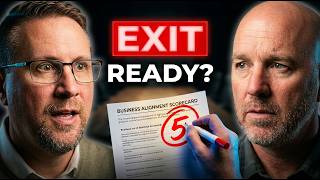
In this interview, certified exit planner Pete Moore and host Richard Canfield discuss why half of small‑to‑medium business owners end up selling under pressure and how owners can prepare to maximize value and avoid a forced exit. Moore introduces the "5 D's" (death, divorce, disability, disagreement, distress) that trigger premature exits and explains his Business Alignment Scorecard, a ten‑point framework (communication, structure, accountability, promise, product, process, people, promotion, profit, overall alignment) that owners can use to self‑assess and improve the aspects buyers evaluate. The conversation emphasizes the critical role of clean, audited financials and clear documentation (SDOPs) to build buyer confidence, and highlights the need for confidence, clarity, and communication during due diligence. They also cover practical financial safeguards such as a continuing capital surplus reserve, tax and insurance planning, and the emotional and mental readiness required for a successful exit. Throughout, Moore stresses the importance of family legacy, using AI tools and Loom to capture and share SOPs, and the value of coaching to reduce owner dependence. The episode provides a roadmap—strategic, operational, financial, and personal—for owners to become exit‑ready over a 3‑5‑year horizon.
Chapters
When a potential buyer is asking you and you can't answer the questions because you really don't understand your books, it doesn't give that new potential owner very much confidence.
Today we're joined by Pete Moore. Pete is a certified exit planner. He's a business coach, he's a speaker, and he's a fellow Colby Certified Consultant.
Most deals that go bad often happen because the owner isn't mentally ready, and it's a big, big piece. To be mentally ready. So if one of these 5 D's happens to you and you have to exit your business before you want to exit your business, you're going to leave value on the table. It doesn't matter what the multiple is, because what's 10 times 0? 0.
So what exactly are some of the biggest reasons that a business loses value or flat out fails? When is it time to sell? You know, when you see that time come up, how can you prepare properly? For a lot of owners, the moment that they go to market is a real kick in the teeth. Assumptions get challenged, numbers don't always hold up, and they learn some pretty hard lessons that they wish they'd known a few years earlier. So today we're joined by Pete Moore. Pete is a certified exit planner. He's a business coach, he's a speaker, and he's a fellow Colby Certified Consultant. So Pete and I actually met at the 50th anniversary of ColbyCon, being Colby Certified Coaches, and we had some amazing conversations since then. So I'm excited because today we're going to dig into what it actually means to be exit ready. And how much preparation is really involved in your business and making that happen. And what do owners often overlook? The reality is it takes a couple of years to properly prepare. So Pete, he's been in business for over 3 decades. He knows the ropes inside and out. And we're happy to have you on the program today.
Thanks so much for having me. I'm excited. I'm excited to be here with you guys. Excited to be with your listeners. I think we're going to have a good chat.
Oh, yes.
I want to kick it off with, you know, thinking about, again, you've got a ton of retail experience, a lot of your early start really happened in the retail space. And we'll certainly have some people who have retail businesses listening in. Now, you're based in Canada as we are, but you help people all over North America. So how did you come to realize that there was a need even for people to start planning proper exits? What was the domino effect for you to recognize, man, we really gotta help people in this space?
It was probably my own business. Like, I mean, I'm talking, you know, I wanted to sell my own business years ago, the first business that I sold, and I realized I wasn't ready. I realized I didn't have things in order. I probably didn't maximize the value that I should have maximized. I probably didn't have my deal set up properly. I didn't have the things in alignment that I needed to have in alignment to really reap the benefits of at that time, the 15 years that I had put in. And, you know, so just going back, the first 15 years of my career, I had a couple of different businesses and one was this— well, they were both service businesses. One was a franchise that we ended up de-franchising and then ran it as a independent business for about another 10 years and then we sold it. And I had another franchise that I ran simultaneously there, and it was a cleaning company that we 10x over the years and then sold it. But once I was— this is 2010 and I was sort of ready to exit both of these businesses, kind of been there, done that, and looking for something different. Went back to school, took my MBA, and at the same time I said, by the time I finished my executive MBA, I want to be out of these businesses. So, you know, through the MBA process, my major project was for Sunbelt Business Brokers. And, and, you know, I'm working for Greg, who owns the master franchise for all Sunbelt at the time. We're doing this big project for him as he's trying to grow Sunbelt Business Brokers. And for those of you that don't know, Sunbelt Business Brokers is similar to like a Royal LePage or a Coldwell Banker. But what they do is they sell businesses, not homes. So I ended up using him for using, you know, their, their service for one of our businesses. I sold my other one independently and Greg says, why don't you come work for me? And I'm like, hmm, that sounds pretty interesting. So I became a licensed realtor and I became a part of the International Business or International Board of Business Advisors and Brokers, IBBA. And sold businesses for a while, which is where I found my shoe stores, which I still own 15 years later. And we, we are shoe retailers today. You mentioned in the intro that I do some retail work, but we still own and operate shoe stores too. So I'm looking through all this stuff at the time and saying, kind of looking back now, saying, if I would have done this and I would have done that, I probably could have maximized my value at the time, even though I was fairly, you know, been in business a long time and understand some stuff. There are certain tweaks and things that I needed and should have done that I didn't do. So, you know, you kind of look back at all of this stuff. And through the last 15 years in retail, I've, as you mentioned, ended up coaching and speaking and doing a variety of other things with a lot of other business owners. And I became a Certified Exit Planning Associate a couple of years ago. So I'm what they call a CPA. So I'm no longer licensed to sell businesses, but I am basically setting up businesses to be sold these days and helping people through that journey. And sometimes it's for family transition. Because I do a lot of family transition work. I run a family transition group in the internet or in the National Shoe Retailers Association, and I have been asked to do another one in a different association too. We'll see where that goes. But it's, it's a really interesting group for all of these parents and kids. And how do we do this? And what do we know? What do we need to do? How do we need to set it up? How do we transfer it? There's so many different things that are involved around family business. That's a piece of the exit planning side of things that I do. The other side is literally, I don't have any family to exit to, so I got to sell this thing or I have to close it or I have to do whatever I need to do. There are several different ways of leaving your business. But obviously, and you guys are in the financial world, we want to be maximizing our value. And what does it take? How long does it take? All of these different things sort of fall into, you know, whether you're Ready here within the next year. Well, if it's the next year, hopefully you've done this work because there's a lot to do. More typically, it's sort of that 3 to 5 year span where people are starting to say, hmm, I think I got to start looking at this. And then we, then we've got a bit of time to work things. There's taxable areas that you got to look at. There's different transitions. And sometimes it just takes time to set up the right people, place, all of the different things, the process and everything so that it can be transferred. Properly.
Look, we all think that we should be paying only your fair share in taxes. Just so happens I think your fair share is lower than probably what you're paying now. Well, we talk a little bit about that in our book, Keep Taxes Away from Your Wealth. You can get a copy and access to the bonuses by going to keeptaxesaway.com.
That's keeptaxesaway.com.
Head on over there and pick up a copy today.
That is so good. And like, in your experience, what, um, What are the real drivers of valuation that buyers care about the most?
Well, I came up with my own. There's so many different ways of looking at it and a lot of them are sort of similar in nature. But essentially, I came up with this thing called the Business Alignment Scorecard. And it outlines and you kind of self-assess essentially where you're sitting and what you think you need to do the work on. I'll tell you what the 10 points are and we won't have time to get into all 10, but I'll tell you what all 10 are. And then we can expand on ones that you think might be most interesting to your listener. And so, here they are. In my opinion, these are the things that offer the most value in a business. Number 1 is communication. Is there proper communication inside and outside your business? Each one of these, by the way, could be its own podcast episode and has been. But structure. So what kind of structure? What are the roles and responsibilities defined and aligned within your decision-making within the organization? Accountability. This is one that everybody says they have, but they generally don't in their business. Most often the business owner is the only one that's truly accountable. So What, what is the follow-through? What's the expectation, the performance, and the results? And then we get into, uh, I wrote a little book a few years ago and all around these 6 Ps. And these 6 Ps are what's the promise that you offer. And the promise is basically not, um, the promise really revolves around what you're promising to your client because they have a problem if they're going to spend money with you, and you need to get them to the proper solution. And that's your promise, right? And we can dive into that. What's the product? And for those that are in service businesses, well, service starts with an S and product starts with a P, but it's basically the same thing. What are you selling? Process. Process is a little different than structure. Structure is what I call, you know, the accountability chart and alignments and how does everybody align when you look at it physically on that chart. Process is the actual step-by-step of how do you get your promise to fruition? How does it— what happens from when the customer touches you, the first touch, whether it's by email, by phone, whatever the case is, all the way through till it's completed? And then what happens after it's completed to make sure that everything is good? So that's your process, right? How detailed is it? Can it be followed by others? All that kind of stuff. Your people. And, you know, Jason, you were asking what's, what's one of the most important things? Well, people generally is the one of the biggest things that people are looking for, that, you know, potential buyers are looking for. What's the people? You know, who have you got? How long have they been there? Are they trained? Are they accountable? All these things are in alignment, right? Promotion. How are you actually promoting your business? And is it easy to get the next client? Profit. And there's all kinds of stuff on profit, obviously, but profit's important. And it's really important if it's unprofitable. It doesn't matter what the multiple is, because what's 10 times 0? 0. Everything times 0— 10 million times 0 is 0. So, you know, people talk multiple all the time, but if there's no profit, the multiple doesn't matter. And then we have, at the end of it all, the alignment. And the alignment of all the things we just talked about— communication, structure, accountability, promise, product, process, people, promotion, profit. And when we have that alignment and often different businesses, and if you're a business owner listening, you know this, you know, one of those couple of areas where you probably have some work to do. Are you aligned? Are your people in the know of what they're accountable for? Are your people— do they understand the structure? Do they understand how to communicate? Do they really understand your promise and how we can actually help someone? Like all of these different things, when you outline them and you scorecard them, It basically gives you your homework that you need to do in the next whatever it is, 1, 2, 3, 5, 10 years, or even for people that are looking 20 years out, they should be able to scorecard themselves in this and they should be able to say, you know what, in 2000, whatever, '26, as we're recording this, this is what I want to work on this year, because if I work on this and we nail this, we're going to increase our value because these are the things that people, when they're— when they put their lens on. And I've just wrapped up a little PDF book. It's not out yet, but If anybody wants to, I'll give you a thing. It's called— it's simplifyingentrepreneurship.com/lens, and it'll probably be there by the time this goes live. It's just not there yet. But this idea that business owners, the people that are looking to buy businesses, look at things with a different lens than you do as the business owner. So, I've called the book The Buyer's Lens, and it outlines this business alignment scorecard in a way that the buyer would look at your business, not the way that you look at the business. And I think that's an interesting thing to think about because we all put on our rose-colored glasses as business owners.
Look, we want your family to have more money. That's our goal. That's our job at Wealth on Main Street. Our goal is to have you keep as much of that hard-earned capital where it belongs with the people you love and care about. Easy way to do that, pick up a copy of this book, Don't Spread the wealth. This book is all about keeping the money in the family. Think of it like an aquarium. The money never leaves and you can use it and reuse it as many times as possible. Go ahead and pick up a copy today at dontspreadwealth.com.
Right.
Yeah, very true.
When they pick you apart in due diligence, it's a different story. It's like, whoo.
And so what would be like if you could, if you could boil it down to like one thing that is just so recurring, like what would the one thing be that you wished every business owner understood before about an exit before it's too late?
It's bad books, Jason. Yeah, it's bad books.
Yeah.
So many business owners don't understand their books and they don't, they don't have good questions. And, and when somebody, when a potential buyer's asking you and you can't answer the questions because you really don't understand your books, it doesn't give that new potential owner very much confidence. 100% confidence and clarity. Those are two, you know, C's, let's call it, as opposed to the P's we just went through. Communication, confidence, and clarity really are a nice little trifecta of what you want a deal, how a deal can happen. And good communication, clarity in all, all of the things, clarity in the process, clarity in the accountability, clarity in those numbers, all of these different things. And that's why sometimes it takes a couple of years to get clarity in your numbers because as people look back, they're always going to look at the last 1, 2, 3, and up to 5 years. The first— the last year is going to be the most important, but 1, 2, and 3 are quite important on structure of a deal. And if you can't answer the questions when they start going into the due diligence and you say, oh, you know, I'll get back to you on that, or, oh, I'll get back to you on that, and all this kind of stuff, and like, how come the motorhome How come you have a motorhome on, on the balance sheet of your financial services company? And you're like, yeah, you know, or what's this $23,000 expense that in travel, like, what, where did you guys, what did you guys do? And you're like, yeah, yeah, yeah. I actually went to Italy for a financial services convention. Oh, okay. So, you know, the recasting of earnings and the recasting of your income statement, the recasting of your balance sheet, the recasting of those cash flows, often a very important piece of starting to set this up so that we have clarity in the numbers, so that the new potential owner would have confidence in those numbers and that they could recreate those numbers in order to generate the income that they're expecting to generate from the business that they're going to buy, hopefully from you.
Yeah. One of the things that we do in our companies is we go through, and this I think will be really helpful for listeners too, is we consider that an annual chartered business valuation as an investment that is already built into what we budget in the business. And when the business achieves a very specific set of milestones, we move to audited financial statements. And so, When you get to a point where you're ready for an exit event and you can supply 3, 4, 5 years of chartered business valuations accompanied by 3, 4, 5 years of audited financials, it takes the quality of the earnings value process, it takes all that due diligence and it compresses it significantly. I've shared with Richard, if and when we ever decide to sell one of our businesses, the buyer is going to be informed they have 45 days to complete their due diligence. Not 46, not 47, not 52. 45 days. And all of the supporting documentation will be right there, packaged perfectly for them to review.
We talked about clarity and confidence. I mean, if, if we're starting off with this, think of how much easier the deal's going to be.
100%.
I mean, these are the things when we start looking at exit planning. So, you know, if those financials— and we've already kind of hit it here— that financials are predominantly the biggest issue because nobody trusts them.
Yeah.
Well, so if we can build the trust, then—
is the examples you already gave, Pete. It's the motorhome, it's the Italy trip, and Each of those examples is something that the reference point I run it through is, of course, our guidebook, which is Becoming Your Own Banker. And Nelson Nash says in here, you know, it's the example of stealing the piece. And so it's one other element of, okay, hey, this business owes me, or, you know, you're always kind of playing some tax game like, oh, I want to take this out as revenue, I want to get the deduction. And so every business owner is playing that to some degree.
For sure.
Degree to which you're doing that has a direct impact on that valuation element. So, so you have to be mindful if you get the habit of doing that early on in your business life, well, then that habit's gonna continue. And then only, not only that, similar to what Nelson talks about in the grocery store, it's a, it's an element of going out the back door and the, all the employees see that too. So there, there becomes a buy-in accountability element that's a top-down measure, which goes right to the top 10 things you identified at the beginning.
I love that. I'll give you an, I'll give you an example. It's from my own business. And when I took over our shoe store at the time, it was one of the shoe stores that we buy. When I took over the shoe store, that particular owner was in the shoe stores all the time, and it's either him or his partner. And they did cash business. They did like— and they would pocket it in their pocket and all of this stuff. And at the same time, they, you know, their teams there, as you mentioned, seeing it right in front of them. And, and they're saying, well, integrity and all this sort of stuff, like rah rah rah, and we're— but let alone we're, we're cheating things on the, on the back end ourselves, and we're the owners. And they, they didn't want to leave the store unattended without either of the partners in the store because they thought they would be cheated themselves. And they probably would have been with the team that they had at the time because they saw the owners doing it all the time. And so why wouldn't I do it? If somebody came in and said, hey, you know, so-and-so isn't here today, would you— he, you know, he or she always does this cash deal for me. Would you do that? Sure, I'll do it.
Boom.
Right. And they didn't have any inventory control, so it didn't really, you know, be hard to find out. So these kind of things, like if I'm buying that business now, which I was buying that business and it didn't have inventory control and I knew that buying it. So, you know, we looked at a variety of different things when we were doing our due diligence. And, you know, it was— it ended up that we ended up getting about an $80,000 discount on the business because the owner thought he had $80,000 more inventory than he actually did.
Okay, so you want to keep the wealth in the family.
I get it, I hear you, me too. That's why we wrote this book, Don't Spread the Wealth. Everyone tells you that you want to spread the money, spread the wealth around. No, no, no, you don't want to do that. You want to keep the money in the family with the people you love and care about where it belongs for as many generations as possible. That's what we talk about in this book. In this book, we have an incredible 15-page bonus you can download which instructs you on how to start the conversation with your family on annual family banking meetings, how to host them, some sample exercises and a sample agenda, tons of amazing, great benefits. Go ahead, get a copy right now. Head on over to don'tspreadwealth.com.
don'tspreadwealth.com.
You're going to love it.
So like, but had he had inventory controls in place, had he had all these different things in place, he would have known that, right? And so what can you do? And I'm talking to you, the listener, to set your business up. Well, you can be clear about things. You can have the process in place. You can have that structure. You can have your people that are accountable, that actually do things and you can trust. And you have your backup ways of checking to make sure that everything is being done so that you can trust the numbers. And if you trust the numbers, the numbers are good. The confidence is there, the clarity is there. The new owner's coming in saying, oh, this is a really well-run business. It spits off this. I think I could probably— because here's the other thing. Generally, nobody ever buys a business to keep it the same. They buy a business because they have in their head, I'm going to take this and do whatever I want to, to grow it, to spin it, to, you know, expand it in some given way. Most people don't buy a business just to say, oh, I'm going to run it the way it was and we'll just kind of like coast. You're putting it down a significant amount of money. You've got your ideas, but you want to have the bedrock there to make sure that the nut gets paid, right?
Oh, 100%. Yeah. And I think that one of the, I guess the other side of the coin that comes up for me, just having thought about this myself is So there's a lot of great discussion around preparing a business to be sold and checking the box on all of the things that would likely prevent a deal from falling apart late in the process and all that. But it's also having a really good pre-planning exercise in preparing emotionally for life after the business has sold. And a lot of entrepreneurs in our circle that have gone through an exit event, that was one thing that they wished they would've done in preparation for it because getting that check and handing the keys over to the ice cream shop, there's there's some emotional sensitivity to that, understandably so, because it's something that the founder, the entrepreneur had a significant role in building. And so, I think that there's a lot of advantage for anybody who's listening as an existing business owner if you're contemplating preparing your business for an exit is doing some of that pre-planning around the emotional side of things in terms of what your life is going to be like after The business is sold.
Imagine cutting off one of your limbs. How do you expect life to go afterwards?
I don't know that a buyer would ask you to do that.
You never know. There's some big asks sometimes, you know, from, from the exit planning side of things. There's stats out there in the Exit Planning Institute around the fact that 70%, that's 7-0, 70% of owners are upset with the fact that they sold their business within the first year. Yeah, because they aren't prepared, Jason. We call it three legs of the stool. So one, is your business ready? Which is what we're talking about here, the exit-ready business. Two, are you financially ready? Personally, financially ready? And whether that's retirement or whether it's financially ready to go on to the next step of life, whatever it is, are you financially ready for exiting this business personally? Because there won't be any more money coming in after that day. From this business? And 3, are you ready? And for those of you that aren't watching, I'm pointing to my head in this sort of mentally ready. And it's a big, big piece to be mentally ready. And most deals that go bad often happen because the owner isn't mentally ready and in some sort of back-end way sabotages the deal.
How would you like to see a 91-year case study that we put together to explain how this infinite banking thing can work for a family over 2 generations? Well, you know what? Real easy to do that. We have that right in our second book, Cash Follows the Leader. You can get a copy for free delivered right to your inbox. Head on over to CashFollows.com. That's CashFollows.com, and pick up a copy right now.
That's interesting. It's crazy, but you see it happen.
So true.
Similar to that, I would imagine, and I can think through some experiences like this, Pete, but in that 1-year, 2-year, call it honeymoon period after the business is sold, there's a high potential of some aimlessness, you know, a rudderless ship, you know, coasting along, you know, the waters in a fog. And, you know, I think that some people make additional rash decisions and they may say, oh geez, you know, I need to go buy a business right now so I can replace that thing that I had. And then they may not make a very good buying decision either. So like, I think there's a combination, a trickle-down effect of all of it. And that mental component in the three-pronged stool, as you identified, is really key. There's just so many elements to being exit ready. And I think the brain hears that word and they think, oh, I gotta have my books done. Like the brain wants to simplify to this thing that is the core element. But the reality is it's not one thing. It's a whole host of things that have to be tackled. And that's why you need a scorecard. That's why you need to probably have good coaching. That's why you need someone who's maybe gone through the process before to help you navigate it. You know, you might not, you're not gonna see every pitfall out into the future, but if you can walk the path that someone else has walked, maybe in shoes that they bought from your store, then you're in a position where you, you can, you can have the proper guidance to know what, even what questions to ask.
Yeah. Yeah, I mean, it's, it's really an interesting thing. Like, we have all sorts of, let's call them survey type things that we put our clients through off the bat to get them in the headspace and make sure that they're in the headspace of, of the things they need to be thinking about.
Right.
But one thing that I think is interesting is that not everybody wants to sell to retire. A lot of people want to sell their business. Like, for example, the two businesses that I sold in 2010, I had no intention on retiring when I'm 30 years old. After whatever, 35 years old, you know, I wasn't ready, but I did want to exit the business. So, people have different reasons for exiting a business. And the sad thing about it is that stats prove that only about 50% of people exit their business when they want to exit their business. The other 50% exit because they have to. And, you know, for those of you that are listening here today, I'm going to give— because you probably, if you're a business owner in business, this has probably happened to somebody you know. And we call them the 5 Ds. The first one is death, premature death. Not everybody's planning on dying. So, but it does happen and it can cause a wrinkle to the point where your business needs to be exited? Well, you're from your side, you would exit, but maybe your family and they might have to and all that. Is the business ready to go? Number 2 is divorce. Divorce causes an extreme amount of early business exits because when you're divvying everything up, how does the business get divvied up? Sometimes one partner will take it, and if both, both are partners, sometimes it gets transferred. Well, that's still an exit to the other partner. Because one of them partners has to exit, you know, so death, divorce, disability. If you're a small shop, you know, 3 stonemasons and you fall off the ladder and you're out because you broke your back for 8 months, is that an exit? Maybe, depending on the health of your business. You might have to sell that business for a heavily discounted rate because you might not get back on your feet for really 2 more years. Is it ready to go?
I don't know.
Partnership disagreement. It's the business divorce, right? You have your personal divorce, but you also have the business divorce, and it causes all kinds of problems with maximizing value of your business when one partner wants out and the other doesn't. And then the last one is distress. So, we got death, divorce, disability, disagreement, and distress. And distress is, think 5 years ago, COVID is distress. It's stuff that happens that is completely out of your control. One these days is tariffs, right? We have no control as business owners if a 50% tariff is going to get slapped on us from one of our main countries that we do business with. Can't control it, but can it cause the— can it cause a valuation and potentially a business exit for you? Could. Do you have enough profit? We talked about the 5 Ps, you know, and promotion on top of that. Do you have enough profit in your business that you can withhold a certain amount of time? Like, all of these different things are the reasons why you need to look through those 10 items in the business alignment scorecard to make sure that things are set up. Because if one of these 5 Ds happens to you and you you have to exit your business before you want to exit your business, which is one out of every two business owners in North America, you're going to leave value on the table.
We want you to understand the 5 strategies that you can use to reduce taxes now and in the future. In fact, we wrote about them in our book, Keep Taxes Away from Your Wealth. You can get a copy of Keep Taxes Away from Your Wealth by going to keeptaxesaway.com. That's keep taxesaway.com. Ease on over there, get a copy today.
I agree with you completely. When you think of tariffs as an example, so in one of the companies that I own, so we ship product across the border to be sold. And when tariffs came into play, this is one reason why Rich and I, we emphasize with business owners, something that may sound so ridiculously simple, but it's proven to be so incredibly effective is having and setting aside an ongoing or continuing surplus reserve, a continuing capital surplus reserve. And we went through this in our e-commerce business. In 2025. We ended up paying more than $320,000 in tariffs that we obviously didn't plan for. We had more than enough continuing capital surplus reserve, still finished the year with multi-six-figure positive net income. Many other businesses, that would kill— that would kill literally not only your income statement, but likely do significant damage and potentially kill your business. And so you have to prepare and you have to be very intentional around setting aside a portion of every dollar that your business earns, whatever that portion is, and setting it aside as a continuing capital surplus reserve so that you can not only address what I just described or a similar scenario, but when you have a potential buyer and a potential buyer is going through the quality of your earnings and that buyer says, "What is this minimum continuing capital surplus reserve? What is that? Walk me through that." Well, we take a portion of every dollar and we set it aside and we address things like, let me give you an example of how we had to address tariffs in 2025 that we weren't anticipating. And that is immediately going to be a signal to that potential buyer that they're dealing with a very responsible business owner.
I couldn't agree more. And, you know, I think on top of that, when we go— because we did this, a lot of, a lot of industries were affected through the COVID years and, and are now being affected. Some different ones and some of the same ones by tariffs. And what did that do back then and probably is doing right now is it weeded out those that weren't strong, right? And, and you may be seeing this, Jason, in that, in your competitive industry within that particular business that you own, that some of them are gone. And what does that do to the ones that still stay? It makes them generally even better.
It does.
So not only are you weathering the storm, but probably by weathering the storm, you're increasing your market. You're increasing all of the stuff from the other ones that have been let go and left off because they can't supply anymore and they can't pay their bills and they can't do their stuff. And those customers need somewhere to get their things, whether it's a service, whether it's a product, whatever the case is. So where do they do? They look for the next person and the next person is you. I'm still standing. I'm going. I'm ready to go. We're still marketing. We're still doing everything. And now you're Your business looks even better for a potential buyer because there's less competition. You're doing probably more volume because you've picked up their volume and things roll along. Like, that's the way things happen when, you know, through whether it's any sort of attrition, but these moments of distress cause a drip. They magnify attrition. And by doing that, the healthy get healthier. All day. And the business becomes better and it's even better at the end of a distress event typically.
And if you've got a great network, then hopefully these other businesses feel compelled to reach out and say, "Hey, we're in a real bind here and can we look at potentially the opportunity of merging?" of, you know, combining resources and joining forces and just to potentially save what would otherwise be a viable business and people who are gainfully employed who rely on the business to provide for their families. And so it's— this game of business is, is so much more. It's so much more than, than just a medium of exchange. You give me a problem, I give you a solution. The exchange is money. There's so much more to this game of business than that.
Well, in all the 5 things that you mentioned too, Pete, you know, these different things that force an exit or cause an exit to happen, you know, several of them obviously, you know, our focal point is in the world of insurance. And so, you can quite literally protect against some of those risks by planning properly, setting aside a little piece of that dollar to basically hire a fictional employee on the books of the business that is fundamentally an insurance contract, whether it's a disability, critical illness event, a, you know, a premature death. And that's why buy-sell arrangements, and I'm sure you've seen a ton of partnership documents and shareholder agreements,, and they all talk about the importance of having something in place to make sure that there's a, there's a financial capacity to solve the transaction in that disagreement situation or an early, you know, death or whatever. But then people sign those documents and then they do nothing with them. Very few are actually going and doing the appropriate planning to put those structures in place so that they have the thing that's necessary based on the agreement that they signed. They, they look really good in the lawyer's office and in the filing cabinet. But they don't action any of the things because they're just too, too busy running around trying to get the business off the ground and focusing on, you know, trying to generate revenue that they're not thinking, okay, how do I protect the revenue that we generate?
Look, we all think that we should be paying only your fair share in taxes. Just so happens, I think your fair share is lower than probably what you're paying now. Well, we talk a little bit about that in our book, Keep Taxes Away from Your Wealth. You can get a copy and access to the bonuses by going to keeptaxesaway.com. That's keeptaxesaway.com. Head on over there and pick up a copy today.
You have to. It's just part of business, right? And those that don't suffer typically.
So true. And if you think of that, that left me thinking around owner dependence, right? On what degree of dependence does the business have on the owner? And that could really either unwind a lot of risk or it could present a lot of risk dependent upon the makeup of the business. And that's something that existing owners out there who are listening and watching should really be putting a lot of thought into is asking yourself that question. To what degree does the business depend on me? If I stepped away for 90 days, What would a potential buyer be watching most closely? I know what I would be looking at if I was considering buying a business and the owner stepped away for 3 months. But that type of thing is so important to process in your mind because buyers really zoom in on what is the risk here and can it be unwound or does it present in such a way where it just makes the deal unviable?
I mean, I think that's, that those, that's why I start the buyers, um, or the, uh, business alignment scorecard with those three: communication, structure, and accountability. Because the structure lays out who's accountable and the communication happens within it, right? So when we look at communication, structure, and accountability, accountability is, is exactly that, Jason. Like, does your account— is your accountability chart flat, which means that you're in charge of all of the 10 people that work for you? Like, does everything go through you? And if it does, that's a problem. We need to work on that. We need to build the structure. We need to build the process. We need to have the right people. We need to align and assign the accountability within the organization so that things happen without you. And I always like to say, you know, when I'm first talking about, you know, business, because I do a lot of business coaching too. And on the business coaching side of things, people will say to me, you know, they should know how to do this stuff. Like, they've been with me for 7 years. Why do they keep asking me this question? I'm like, because you allow it. You allow them to ask the question. You haven't aligned and assigned the conversation. And really what happens is they're going to keep asking until you actually let them own it. And so, I often will say, I love this because this really works well. Whenever, and for you, the listener, whenever somebody asks you a question and you're thinking to yourself, they should know this answer, your question back to them should be, what would you do if I wasn't here? And they kind of like, especially if it's a question they've asked you 100 times, they're not expecting this because they're just expecting you to give them the answer you always give them. So, in other words, you're giving them the authority then, right? But if you say, well, what would you do, Jim, if I wasn't here? And here's the hardest thing for somebody that's always used to answering the question. You have to sit in uncomfortable silence until they actually answer. And they answer and they, well, I would do it. I'd probably do it like this, this, and this. And now you're saying, exactly. Go for it, Jim. You've now handed off the accountability and they're like, oh. Yeah. Okay. So, they're not going to come to you after that. It's almost like a transference happens with that question almost every time. And if you do need some coaching and if they give you, you know, they say, I do this, this, this, and this, and you're like, well, I'd probably change that last one or whatever the case is, or, you know, we might want to negotiate this part or whatever the case is, that's your coaching moment. Right? And if they've got it down to a pat, Give them the authority. Absolutely, Jim. That's exactly what I do. Go ahead. Now they're not going to come ask you anymore. And it gets addictive because every time they start coming, you're going to just ask that question. Well, what would you do if I wasn't here, Janet? What would you do if I wasn't here, Phil? And now everybody's starting to— you're— and they're telling you what they would do, which is the system and process you probably don't have outlined as well as you should. Which gets back to the process piece. And we need to make sure that processes are communicable, that they're laid out there, follow— you can follow them, all of these different things. Right. But that's part of the piece that we'll work on to make sure that everybody knows, even if you're not there to answer the question, where to find it, how the communication's there, they know how to get it, they know how to read it. It's going to be there from a Colby perspective. We're all Colby people here. They, they're going to be reading it. They're going to be listening to it. They're going to be seeing it. They're going to be doing it with their hands. All of these different things. We need to have process in a way that people understand it, not in the way that we want to think they understand it as their boss or leader or whatever the case is, because not everybody sees things and does things the way we do. So, we need to set it up so that they can absorb the information that they need to absorb in a way that they absorb it. So that they can tackle what we're asking them to tackle on the accountability side of things so that we could potentially be free.
Yeah, I agree. Any business owner that I connect with who reaches out, I ask them if, if they have— everybody's heard this term. If you haven't, here it is. SOPs, standard operating procedures. And the business owners most often say, "Yeah, we've got some standard operating procedures." Do you have any SDOPs? And the business owner looks at you like, "What are you talking about?" There's a distinction between a standard operating procedure and a standard documented operating procedure. And so, most business owners forget the documentation piece of it. And that's usually when you experience or you encounter, if you're looking at a business, and I love the title of your book, by the way, because the buyer's lens, if I'm looking inside of a business and I know that there's opportunity to engineer process or to optimize process, I'm asking some probing questions that I know are going to lead me to the owner describing an issue with a process. And it's, um, it's so vital, and it's the one step that gets skipped the most, is to document it. And it's a lot of work, so it doesn't get done because it's a lot of work, and, and the business is focused on growing the business, developing the business. And there's got to be standard documented operating procedures because that is much more valuable to a potential buyer than a standard operating procedure that is just verbally understood by the existing organization. And, um, so I think that's just something important to pass along. Document everything like a Wall Street or a Bay Street lawyer. And that takes the value of your company and increases it incrementally.
There's never been easier to do than it is right now with the advantage of having all these AI tools and agents. I mean, every, every team member could literally walk around if they're on a shop floor and they've got a phone in their pocket or a voice memo device, and they could just literally— I want you to take today and I want speak to this thing about every single thing you're doing for the rest of the day and then let AI clean it up and turn it into that procedure. I mean, there's so many opportunities to, to take that and turn it into something truly actionable with very little real effort today.
So true. From a screen perspective, I mean, a lot of people work on their computers today. Well, turn on record and record the video. We use Loom a lot for all of our procedures. I mean, but I'm sort of tool agnostic. I mean, it doesn't really matter which tool it is. We just do use Loom. So we'll turn on screen record and we'll talk through and mouse over what we need to mouse. Go here, click here, go down, click this, go into this box, type in here. And then you've got your 3-minute video which is automatically transcribed. You throw it into an AI, whatever your AI of choice is, and you have your checklist and you have all of the different things that create it, clean it up and make it look good. So now getting back to people learn in different ways, they can listen to it. They can watch it, they can read it, they can checklist it. And is it searchable and findable? Right. Where does it live? Where does the process live is another issue that we see a lot in businesses. If a process lives in the backseat of somebody's car in a manual that's 30 years old, yeah. But if it's in some sort of drive that's searchable and accessible, that when I need what I need and the process that I need, I can literally search and it says sales procedure. Boom, there it is. Oh, do I want to watch it? Oh, I could watch it. Oh, do I want to read it because I'm a reader? Oh, do I? I'm a checklist. I really like my checklist. I want to follow my checklist. It's there to pick it the way you want to absorb it because it's all the same and you're going to get to the end result that we need to in the procedure so that the accountability can happen without us. And when those things happen in your business, that's when your business is valuable. That's when things happen without you. That's when you're starting to say, hmm, this is interesting. And that's when other people look at your business and say, man, this is a really well-run business.
I love the shout out for Loom. I was, according to my 2025 rewind, I was in the top 3% of Loom users last year with 381 meetings eliminated. With all my recordings.
So I did get one of those too. I don't think I'm quite as high as you.
I thought you'd be number one globally, Rich. Anyone that knows Richard has definitely received a Loom from Richard at some point in time.
But I mean, I respond to people, people's emails with a Loom half the time. Oh, you know, it's just, it's a great, it's a great tool. But again, it's just this idea that some people are video-based, right? Some people are audio-based. Some people are, you know, want, want the great big long email, whatever the case is. But we have to give information the way that people absorb it, not the way that we want it.
Yeah, totally. Pete, this has been absolutely amazing. We, we so love you coming on the program and joining us here today. You know, one of the things that we like to do, uh, to kind of close out our program is we always like to find out a little bit more about our guests. And so, uh, while you have this really awesome blue shirt on, it does not have a cape attached to it, but you've really helped maximize the sale advantage and fundamentally the, the, the exit potential of so many businesses already. And there's so many more to come. I'm sure many of our listeners will have experienced that for from our chat today. Our question for you is, who do you most want to be a hero to?
Well, you know, I'm a family man, so it's my kids. I mean, what, what I do, everything I do is, is really around, um, helping my family do better and hoping that they can, um, have a really good life. So, um, yes, I want to help business owners. It's a big piece of the puzzle, of course, and I love doing it. It's a big part, but there's nothing more important to me than family.
That's incredible, Peter. This was great. And let us know the moment that that book is in the PDF and everything is ready, because we're happy to circulate that to business owners in our database.
And, well, I'll tell you what, I'll send you a copy. It's, it's ready to go. I can send you— I just don't have it up, but I will put it up. And I'm not sure when this will go live, but it'll be up within the next couple of weeks. Sounds good. And And it'll be at simplifyingentrepreneurship.com/lens, L-E-N-S.
Awesome. Excellent. Thanks for doing this, Pete. For those of you watching, of course, on YouTube, check it out. There's a new request right there for an amazing video. You should click on it because it's good stuff. Talk to you later.
More from Richard





How Do You Use a Policy Loan to Buy Dividend Stocks? #dividendstocks #infinitebanking #shorts


Can Compounding Dividends Pay Your Bills? #wealthbuilding #investment #financeeducation


Should a Corporate Policy Offset Your Personal Coverage? #shorts #insurancetips

What Is Human Life Value? #shorts #insurancetips #dividend #wholelifeinsurance