Why You Suck at Selling Your Business
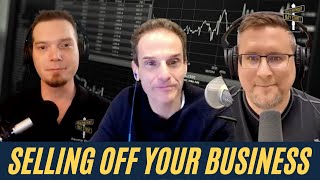
Jeffrey Feldberg turned down a seven-figure offer for his e-learning company, then sold it for nine figures. He says 90% of liquidity events fail and unprepared sellers leave 50% to over 100% of deal value on the table. His firm Deep Wealth uses a 90-day roadmap to help entrepreneurs prepare for exits and plan what comes after.
Questions this video answers
A 90-day system.
Nine (a nine-step roadmap).
Up to 90% of liquidity events will fail (he cites 90%).
Sellers often leave anywhere from 50% to over 100% of the deal value in the buyer's pocket.
An e-learning company named Embenet.
Chapters
No person is an island unto him or herself. And we have blind spots because they're blind spots. We can't see them. But when you work with advisors who are in your court, you know, your success is really their mission. That's their agenda. They can see things that you can't see. And that's why when you surround yourself with the right people and that's where the saying comes in. When the team works, the dream works. And the other way around.
Don'T believe for a moment, not a moment, that the skills that you mastered to build your business are the same ones that you're going to need to sell it. We are honored today to be joined by very special guest Jeffrey Feldberg of Deep Wealth. We are so excited to have you here with us. Our listeners, our viewers are going to get a ton of value out of today's show. And Jeff, I want to take a moment to sincerely thank you for being here. We had some great conversation before we actually started recording today's episode. Welcome to Wealth Without Bay Street.
Well, hey Jason, Richard, and all you listeners out there in listener land, it's an absolute honor and privilege to be here. Thank you so much.
Tell us a little bit about Deep Wealth. What inspired you to create it? Because on your website, which we're going to include links to the website, you've got an abundance of resources available on the website as well. You've got your own podcast which we're going to talk about today. But share with us what inspired you to start this organization. Why Deep Wealth?
Great question. And let's, let's go down that rabbit hole right off the bat. I love you jc. You don't mess around. So I need to go back so we can come back to present day forward. And what happened was right in my MBA program, I started an E learning company. And this is the mid-90s so the Internet was still considered a fad. And maybe it was going to be here and not be here back in.
Those Netscape, I think if anyone remembers right.
Oh yeah, Netscape dial up modems, you know, AOL, CompuServe, all, all that.
Now this is Embenet, right?
Is that, this is Embenet. So the company name is Embenet. And the truth is failure became my best friend. I was failing forward, living out of the parents attic and not knowing one day to the next what the heck was going to happen. But grit and passion kept me in the game long enough that the company became successful. And with success, I had the proverbial knock at the Door. Very smart and sophisticated buyer who said, hey, here's a seven figure offer. Friends, family were ecstatic. Hey, Jeffrey, you did this. You can move out of the attic. Look at this. It was worth it. And to everyone's dismay, I said no. I said no to the seven figure offer, and I said yes to mastering the art and the science of a liquidity event. While running the company full time, I dove into the world of mergers and acquisitions and spoke to anyone and everyone that's been bankers, M and A, lawyers, strategists, buyers, sellers, you name it. Two years later, different buyer, different offers, said yes to a nine figure offer. And very fortunate. Myself and my partners were blessed, had a terrific team around us. And really, Jason and Richard, that's where the story should have ended right there and then. But, you know, we're all business owners and entrepreneurs. It's a small community, and when someone asks for help, we help. And people said, hey, can you help me? And I was very empathetic to that because that could have been me making a very different decision. And listen, nothing wrong with a seven figure offer. Nothing wrong at all. But it's completely wrong when you have a better offer around the corner, over the bend, it's just out of sight. You can't see it. But you deserve that. You've earned that. And that's all there. And what I later learned. And Jason, to your point, 90% of liquidity events will fail. Up to 90%. Why don't you think about all that time, all that effort, all that money. And I jokingly say, it's not really a joke, I suppose, but you'd be better off with all that money that you're spending. Just go to Vegas. It'll happen quicker, you'll have more fun, and you'll just be done with it.
A lot of liquidity events happen.
There's a lot of liquidity events happening there. But, you know, insult to injury of the quote unquote, successful liquidity events, business owners don't realize that most of them are leaving anywhere from 50% to over 100% of the deal value in the buyer's pocket.
I want our listeners and viewers to pause and reflect on what Jeffrey just said. That is remarkable. Absolutely remarkable.
So, you know, the next time a friend or colleague said, hey, Richard, Jason, I hit it out of the park, I got XY dollars for doing this. Well, they got XY dollars, but they probably left that and much more on the table and they'll never know. And that's the irony of it. So the Whole idea behind deep wealth is we don't want to level the playing field. We want to tilt the playing field to the business owner's advantage, to the entrepreneur's advantage, to the founders, to all of us doing startups and businesses like, look, business owners, we make the world go round. We find painful problems, we solve it, we create jobs and opportunities. It's not, I'll use the F word. Can I use the F word? It's not fair. It's not fair that we get the short end of the stick. Because mergers and acquisitions, it doesn't have to be this way, but it typically is a zero sum game. I win, you lose, you win, I lose. And how can you master, to your point, Jason, how do you master something you've never done before? And that's where most business owners get it wrong. Just because you've built a successful business doesn't mean you have the skills to sell it. And in fact, you don't have the skills to sell it. So the quicker we can understand that, the better off you are. And so deep wealth, we have a 90 day system. It's a nine step roadmap of preparation where you learn to master all the steps of preparation. You do that online with strategies, you do that through a mastermind group and then you have success coaching along the way. Way. And the combination of that really does two things. You, you walk away with the blueprint of how to increase the value of your business. And you also have certainty. You can't believe this is the best deal. You have to know, hey, this is the absolute best deal today that, that I could ever do. Because for most, most people, most business owners, a liquidity event, the sale of the business is the largest and most important financial decision of a lifetime. And so that's, I, I mean I can go on and on, but that's really the, the long and short of deep wealth.
It's also your baby too. For most people, yeah, their baby. So you're not just selling the business and it's the relationships with the staff and the employees and all the people and the vendors and everyone that you've built up over time. There's, there's so, so many ancillary things that aren't directly monetarily related, but they're emotionally connected to the business owner's decision. And so it makes the decision harder. Not just from a is this the right deal for me dollars perspective but like what else is ancillary to this, this, this decision that's going on that I have to contend with?
You know, Richard, yes, yes, you, you are so right with that. And, and really what we're talking about now is often overlooked. I call it the art side of a liquidity event. Your emotions, you're attached to it, you have a history. It's like a child, like you're saying. And it, it's just so important. It's just not any kind of transaction. It's the most important transaction. So let's, let's get the best deal and let's get the best buyer to then take your business to the next level, create a legacy and do some wonderful things.
Oh, that is so awesome. And to have a program, you know, it's not a nine year program, it's a 90 day process. And to have coaching, have a mastermind, have some advice that, where you're not worried about bias, you're not worried about conflicting interests, you've got experts, you've got a process to follow to increase the value of your business. If you're sitting down as a business owner right now and you're thinking to yourself, okay, I think that my business is worth X, my question to you would be, how do you know? You're right, how do you know? And for most folks, right, they, they, they really limit it to, oh, it's a, it's an asset valuation or it's a multiple of revenue or whatever. Those, those basic calculations or formulas that they found searching around on Uncle Google. Working with an organization like yours is paramount to making sure that you maximize the value of that event. And what business owner wouldn't want to maximize the value of that liquidity event? And so having a process, it's an absolute necessity. And business owners are busy operating their businesses, but business owners make time for things that they think are important. And so why, why would this be important to a business owner?
It's, you know, it's such a fundamental question. It really gets at the heart of everything. And you know, let's be selfish and we'll think as business owners and then we're going to go big picture and then we'll do a few things in between.
Okay.
You know, so for business owners, most business owners, you get one shot, that's it, you get one kick at the can. You better make sure it counts, you better make sure that you get it right. Because what's going to happen is if you're not prepared, if you don't do it right, something called deal fatigue will set in. And by the way, your future buyer hope some praise that deal fatigue will set in and not all buyers. There's some terrific buyers out there, but some buyers will go out of their way to make you jump through extra hoops to give you deal fatigue. So imagine you're going through the process. You don't have the right advisors around you. You're really not prepared. You're running the business full time. Congratulations. You now have a second full time job, otherwise known as a liquidity event. Things are falling apart and in the back of your mind you're saying, I can't go through this again, I can't do this. You know, I'm already here. You know what, let's, let's just, that's not what I wanted, but it's good enough. Let's just do it and be done with it. And oh, by the way, next time around I'll just make it bigger and better. Well, there is no next time around. Statistics show that the likelihood of having a second successful business, maybe you can do it and there are people that do. They're more the exceptions than the rule. But you want to get it right out of the gates because this is your future, it's your financial future. It's the certainty for you, your family, your loved ones, for your employees, for the business. There's so much riding on the line. And you know, Jason, one of the things that you learn and that we're big, big advocates on at liquidity event isn't a one person show. A business owner can't and should not do this on his or her own terms. You need people so wealth without Bay street, you guys are advisors, you have investment bankers, M and A lawyers, you know, the whole kid and caboodle. You learn what to look for, the questions to ask, the scorecard that you should be looking at of okay, you know, Richard and Jason are great professionals or great advisors. I'm going to put them onto the team because I want to be successful. I have one chance to get this right. That's where that certainty comes in that you're able to do that. But big picture wise, I'm going to throw a challenge out to the listeners. And here's the thing. When you're prepared, when you're working with Jason, when you're working with Richard, when you're working with deep wealth, you will have a better liquidity event. So I'm being politically correct, I'm going to veer off of that. I'm just going to be blunt. You'll be richer, you'll get a better deal, you'll have a higher enterprise value. And so when you Know, you have more money in the bank, you have a higher enterprise value. You've done well, you've taken care of yourself, your family, your friends, your loved ones. You're set financially. You cannot spend that money. We're big proponents of, hey, why don't you take an allocation of that, all that capital, pay it forward, set up a foundation, find a social cause, do some impact investing, whatever the case may be. And we like to say at Deep wealth, we can change the social fabric of society one liquidity event at a time.
Oh, that's awesome.
That's the big picture for us.
That is awesome. And for people, you know, business owners who are just wanting to know, you know, more about the Deep wealth experience. And now there is a call that can be booked to see if a person would be a good fit and, you know, qualify for the experience. And we'll include a link if folks want to go to that next step in their journey. And you know, what's, what's exciting too is that podcasts are, you know, all so many different topics. People can really learn and research anything. And we want to inspire people who are tuning into this episode to continue their journey of learning. And you've got a podcast about to Sell My Business podcast. Tell us a little bit about that.
Yeah, so you know the Sell My Business podcast, and Jason, we're honored to have you on that. And really we take a holistic approach in viewpoint. We don't just talk about the liquidity event itself. We talk pre exit, we talk post exit and everything else in between. Because let's be honest, as business owners, the thought of, to your point earlier, Richard, you know, the thought of, hey, I'm going to sell my baby. What does life look like without this? You know, I'm the business, the business is me. What am I going to do? I don't know anything else. And so we begin the process through education of giving you access to advisors, to professionals, to other business owners that you probably wouldn't have access to otherwise. And you get the inside scoop on what to do, what not to do. You know, back in the day when I was failing in embed at my elearning company in the very early days, I learned that as hard as failure is, we often learn more from failure than we do from success. And as sweetest success is, the irony is that within the seeds of success is also failure if you don't keep on innovating and doing and learning. And so the Sell My Business podcast is really, it's a tool set for you of strategies that are revealed you're not going to hear elsewhere that you can begin to implement today in your business to grow it. And as I like to say, a thriving, profitable, incredible business. Keep it forever or sell it tomorrow. But the point is you have a choice. You can do either or, and they're both great opportunities and choices.
You've done the hard work to set it up, to create the environment so that you're the, you know, either outcome is available for you. It's just a matter of which door you want to walk through. And one thing that's really interesting that you said, Jeffrey, I really appreciate is you, you mentioned, hey, take some of that money from your exit, that great exit, Set it aside. Go, go get busy with a cause, a foundation, something that's important to you and to me. What I hear in that is through your podcast and discovery and discussions about the post sale of the business. There's a lot of work there for, you know, it's, it's almost what, what does a business owner do? Like, how do they, how do they fill their time? They're going to have all this time now because every waking minute of the day that they weren't with their family, went into the business, now that business is no longer there, what are they doing with those waking moments and how are they creating fulfillment? And so I would imagine in your discussions with many of the business owners that you've had over the years, you've seen a bit of a trend that people become a bit aimless. They're, they're, they're rudderless, not knowing what to do with their day and their time. And by, by preempting that idea of create a foundation, do this work, social cause, whatever that's going to be, you're, you're already providing them the launching pad for how they can fill that void and that time and be fulfilled in their life moving forward. Post business.
Richard, you're spot on. And look, I'll put myself under the microscope. Some of the biggest mistakes that I've made came after my liquidity event. And it was a terrific liquidity event, but I wasn't prepared. You don't read about this, they don't teach you this. And look, if I'm really honest about it, I had too much time on my hands and had an ego that was just bigger than the universe. I thought I could do anything and I had access to capital. Not a good combination. Some not so good things that came out of that. But it was interesting. I had another business owner who also had a liquidity event and did very well. And he said, jeffrey, I didn't know what to do. And he said, let's be honest, all my friends weren't feeling sorry for me. To them, I was this rich guy at home in his pajamas with nothing to do that nobody wanted to go to the playground and play with. And that's often the case. So we give you the tools and the strategies of, hey, okay, yes, liquidity event's important, but Richard, to your point, what is life after the liquidity event? What does that look like? And how do I optimize my life for happiness?
Do you find too, Jeffrey, that there's a little bit of, I guess go and blow off a little bit of steam. So here's your, you know, your check for $130 million and slice a half a million right off the top and just go have fun for a weekend in Vegas and get it off your chest because we gotta do some planning and make sure that we preserve things. Because, you know, we've, we've heard stories too where, you know, a person can be separated from their capital relatively quickly if they're not well advised and if they're not having those, those interactions with professionals who can say, okay, look, here are some things that you're definitely going to want to do to make sure that you're not only in a position where you never have a bad financial day for the rest of your lifetime, but you're also, to coin your phrase, around impact investing and getting yourself busy doing some things that are going to be high impact and create a legacy. And because as an entrepreneur, it's a serial characteristic, you know, if you have a liquidity event, I couldn't imagine most entrepreneurs just saying, well, that's, I guess that's it for me. You know, they're excited, they're inspired about that next idea or that, that next chapter and what they, they want to, you know, go out and pursue. But what's your experience been like, you know, after these events and what these, you know, former business owners are doing?
Well, let's talk about what they're not doing and then we can go to the other side and, you know, really what everyone should be doing. I mean, just like you start a business, you need help, you need a good team around you. So you have a liquidity event. You know, Jason, Richard, you're professionals, you're amazing at what you do and you're really there to protect the individual, the family, the whole lifestyle that goes along with that. And so business owners don't have people like you as advisors that they should have on the team after the liquidity event. I mean, they should have you before, ideally, but it's never too late. And so life after the liquidity event, it's really what you want it to be. But you can't have it what you want it to be if you don't have the people around you. So it's like driving a car that doesn't have wheels. You're going to have a bit of a problem getting it out of the driveway at that point, and that's really where things go off the rails. So, Jason, yes, to your point, after the liquidity event, do one thing crazy. You know, just do one thing crazy, get it out of the system, but then be really smart about everything else and really plan and sit down with the right professionals and with their assistance, you can then look at how you'll invest, how you'll deploy, how you'll protect yourself.
Love it.
And being advised is critical because again, you know, they find themselves in a situation where, okay, what's next? You know, I've got all this money, so money's not a concern. I've got all the time in the world on my hands. Every day can begin to feel like a Saturday in a real hurry.
Yeah, yeah, for sure. Without purpose, without fulfillment, it. It becomes really a big issue. And so it's when you have a direction and when you have peace of mind, a lot of people say, oh, it must be nice to have rich people's problems. Well, maybe, but they are problems and they're different kinds of problems. And you haven't had them before. And because you haven't had them before, how do you know what to do? Well, advisors know what to do. Because, Jason, Richard, you're doing this all day long, every day, and you're helping countless people and you're making a difference. And so in that kind of environment, it's hard to go wrong.
That's a very good point.
One thing I'm interested to Jeffrey, is just to talk about the prep work leading up to the exit, the work that you do with your 90 day program and with the deep wealth. You've got your mastermind groups, you've encountered and had discussions with so many entrepreneurs going through this stage. And as you identified, some may not end up having that exit, but they might go through the program or go, go get prepared. And then they, maybe they make the decision, hey, you know what? Now that this business is rock and rolling the way that I want, with all this prep work I might just keep it. Maybe I don't want that liquidity event. So there's still that preparation there. But what I'm curious is you have people who, buyers are looking at businesses or looking at acquisition. Their first thing they're looking to do, of course, is they're looking at what's on the page. On the page. What are the numbers? What's the balance sheet, you know, what does the income statement look like? They're looking at these kinds of things. But when you really get into the deep negotiations and discussions, what are the things that are off the page that are really making a huge impact in a buyer's decision of value? That's something I'm really curious to discuss with our listeners. So when, once you get past the what's on the page situation, now we're getting into what's off the page, how are those deal breakers or deal closers?
Wow, Richard, what a terrific question. And I call that the art side of a liquidity event. And so we have the saying that beauty is in the eye of the beholder. And nothing frustrates me more when a business owner says, well, my industry comparables are this and my business is worth that. And I say, nonsense. Absolutely not. The buyer will want you to think that. Maybe even an investment banker will want you to think that. But Richard, to your point, part of preparation, it's all around creating a narrative. And so in the nine step roadmap we look at in step number one, it's all about what we call X factors and Rembrandts. What are the areas that you're world class in? What are areas that maybe you're world class in, but you don't think you're world class? And let's talk about that. Let's take that to the world. And what preparation does is preparation. It effectively does two things. Number one, we're finding those nasty skeletons in the closet and we're removing them. And these are the things where the buyer and we don't have. This E word is not allowed in deep wealth. And the E word is an earn out. You know, you have skeletons. The buyer saying, okay, now you have to have an earn out when you remove the skeletons. You can remove the earn out, you can reduce the escrow, you have a quicker deal. But the second thing that you're doing through preparation is you're going up in the attic and you're finding all these hidden Rembrandts that you have. You never knew you had them, and you're putting them out for public display. And so big picture wise, that's what the preparation is going to do. You learn to think like a buyer. Because most business owners are selfish. We just think of the liquidity event from our perspective. Well, how do you think like a buyer? How do you talk in a buyer's language? How do you get a buyer excited and hopeful? And you know what? This is the best thing since sliced bread. Forget the industry comparables. I want this business. It solves my problem. I don't care what I'm going to pay. I just want to get it. And so it's through that kind of storytelling, that kind of strategy and what people don't realize. And Richard, you, you mentioned this at the start. You're absolutely right. The preparation strategies are the same as the strategies for growth. They're really one and the same. So while you're preparing for a liquidity event, which we recommend could be a year, it could be three years, whatever you want it to be, you're growing the business. And so really it's a win, win all the way.
That's great. And to bring even more value, we've got a downloadable ebook and we'll provide a link to listeners and viewers to be able to get their hands on that. And now the title. The title's interesting, Jeffrey, and it reads why you suck at selling your business and what you can do about it today.
You know, just, I think we need to be a little bit more direct and tell people how we really feel on that one. What do you think?
Yeah, no, this is perfect. It's, it's excellent. And we would absolutely encourage, of course, our listeners and viewers to, to, to visit the website as well, because there, there are articles, there are resources there and to, to schedule a call. And if you think about, with all of your experience, Jeffrey, up, up to this point, you know, a question could be, hey, what, what do the business owners typically get wrong, you know, leading up to a possible liquidity event? But we just want to flip that coin. What, what are business owners doing really well that you would recognize and say, listen, keep doing these things. As you continue to think about a prospective liquidity event, what are you seeing in your experience and, and with all the business owners that you've worked with?
You know, Jason, it, it's another great question, such great questions from both of you. And it's interesting. When we run the deep wealth experience and business owners come through and they finished it, the first thing that they say is, you know, I went through this. I, I know I'm having a liquidity event, maybe in three years or five years. And, and I thought, okay, maybe in three or five years, that's when I'm going to benefit. But no, I started benefiting day one. You know, I started learning these things. I rejigged the business, I changed my strategy, and I had immediate ROI on what I'm doing. So what business owners are doing right, it's right in front of us. Often we don't see it. Look at what makes you special, what is making you successful, and do more of it. And it sounds so simple. I know, but don't confuse simple with simplicity. How do you just become better and stronger? What's that next painful problem that you can identify that you're passionate to solve, that you solve it and you create another market disruption. And that's really, as business owners, it's just building success after success after success. That's what we're really doing, right. And that's how we can increase the enterprise value, change lives, and really make a difference.
Richard, you can attest to this because to Jeffrey's point, I mean, a business owner can often find themselves where, you know, and we've, we are guilty as charged. We've been through this over the years where we say, wow, you know, that, that works so well. We stopped doing it.
Yeah.
We've gone back and looked at a lot of things like, yeah, don't you remember we used to do something like that?
And it worked so well.
It's like, it's, it's in some Dropbox treasure trove of things that haven't been open since like 2012 or whatever. Like, oh, yeah, yeah, here it is. I remember I spent a lot of time building this slide.
Well, but it's the bright shiny object syndrome that I, I think.
I wouldn't know anything about that.
Yeah, I haven't met an entrepreneur yet who hasn't, you know, been exposed to that and with, with great coaching and, and being, you know, surrounded by a great network of entrepreneurs who can help you with those early warning signals to say, hey, look, you know, do the things that work well, multiply that, keep it going, keep doing it, as Jeffrey mentioned, and you, you develop a bit of a, a barrier to, you know, this, this bright shiny object syndrome where you're just getting pulled in a million different directions because, let's face it, I mean, solving problems, taking something from a lower level of productivity to a higher level of productivity, creating, innovating, those are all the things that really inspire entrepreneurs and drive their ambitions and drive their energy, and it's it can be easy to, to be pulled in a million different directions. And so the, the deep wealth experience, you know, being able to, to, to go through that, I think that's something that we're going to do and learn because it's not a matter. We talk to business owners all the time in the life insurance planning element of what we do and we share with business owners. Look, you're going to exit your business one of a few ways you're going to sell it. You're going to, heaven forbid if the unthinkable happened and you passed away prematurely and, or you get sick or become totally and permanently disabled someday, you're going to exit the business. And do you have a plan in place to take it with the. With you favorably? And so if the liquidity event is something that you're thinking, hey, this is the ideal exit strategy for me versus the other three that I mentioned, then going through this experience and making sure that you're well prepared to maximize the value of your business, what downside is there to that?
You're absolutely right. And Jason and Richard, what's so critical, and you referenced this earlier, is no person is an island unto him or herself. And we have blind spots because they're blind spots. We can't see them. But when you work with advisors who are in your court, your success is really their mission. That's their agenda. They can see things that you can't see. And that's why when you surround yourself with the right people and that's where the saying comes in. When the team works, the dream works and not the other way around. And so you need the right team who have the right motivations, and everything begins to fall into place.
That's awesome. Richard, take us home. Take us home, my friend.
Well, Jeffrey, one of the things that we always like to inquire with our guests is just trying to figure out what are the kind of things that make them tick and what really gets them out of bed in the morning. Now, you, you yourself may not have a cape hidden behind your microphone somewhere there that you wear as soon as we end this podcast. And you may not think of yourself as a superhero, but every time that you go through the deep wealth experience with an entrepreneur, you show them how to make that profitable exit, you teach them and coach them on how to continue the gift of giving and innovation and helping others with the exit that's created so that it provides a social impact. All these things have a measurable impact in the world, and often they're unseen. So you may not recognize yourself as a superhero, but when you do these things, that's how you're showing up. Our question for you is who do you want to be a superhero to?
Who do I want to be a superhero to? What a great question. Full of great questions for this podcast. You know, for, for me, I am through and through an entrepreneur, and that's that. That's. It just runs through the blood, runs through my veins, and that's where I'm at. And I just consider myself so fortunate to be surrounded by smart, innovative, driven people. And so if in any small way I can help an entrepreneur become inspired or get that next idea or just become better at what they're doing or perfect what they're doing and take it to the next level, I'm smiling and I'm happy because every entrepreneur impacts, if you think about this, in some cases 10 or in some cases a hundred or thousands or tens of thousands or millions of people and just through that one point of contact. So love to be a superhero for entrepreneurs and make that difference and be the change maker and help them really realize their potential and welcome their destiny.
That's awesome. Jeffrey, thank you so much to all our viewers and to all of our listeners. Thank you. And now you will see on the YouTubes that a playlist has just shown up. Isn't that incredible? Our editing team is amazing. We say this all the time. It's magic. And we want to encourage you to continue your journey of learning. But most important, please take advantage of the resources that we are going to provide. Links to Jeffrey Feldberg of Deep Wealth. Such an incredible experience having you on our show. And thank you, thank you for the resources that you've made available on your website. The program that we undoubtedly, we know that some of our viewers and listeners are going to be booking a call to see if they, if they qualify, if they're the right fit. And we just want to sincerely say thank you and we'd love to have you back on the show. And for any of our viewers and listeners who go through the program, we'd love to interview you. So please reach out to us if you go through the program. We'd love to have you on the show and we'd love to hear all about your experience. Gentlemen, today was awesome. Make the rest of your week great. I appreciate you both so much. Have an awesome rest of your day.
Thanks so much and an absolute pleasure and privilege to be here. Take care and stay healthy and safe.
More from Richard





How Do You Use a Policy Loan to Buy Dividend Stocks? #dividendstocks #infinitebanking #shorts


Can Compounding Dividends Pay Your Bills? #wealthbuilding #investment #financeeducation


Should a Corporate Policy Offset Your Personal Coverage? #shorts #insurancetips

What Is Human Life Value? #shorts #insurancetips #dividend #wholelifeinsurance