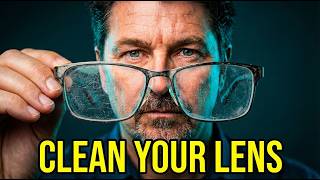
In this interview, host Richard Canfield talks with performance coach and author Rick Torrison about how unexamined past experiences act like "scratched lenses" that blur our view of future possibilities. Torrison explains that the past is raw material that should inform, not define, our future, and that many people are held back by limiting beliefs and vague goals that the brain cannot act on. He contrasts "success"—a self‑oriented, metric‑driven pursuit that ends with death—with "significance," which is about the lasting impact and ripples we leave behind. The conversation introduces a coaching framework used in Torrison’s Elite Advisor Network, emphasizing the need for specific, measurable actions to rewrite one’s future. Throughout, they reference practical resources, including Torrison’s books, the "Keep Taxes Away" guide, and the "Cash Follows the Leader" program, positioning financial literacy as a component of building a significant life. The dialogue blends metaphor, personal anecdotes, and actionable advice to encourage listeners to clean their mental lenses, set concrete goals, and shift focus from fleeting achievements to enduring influence.
Chapters
It is that base instinct that says, I want to be successful. But I think success is limited because it dies when we die.
We're joined by Rick Torrison, an international speaker, bestselling author, and a performance coach. He helps leaders and entrepreneurs crush their limiting beliefs and step into their true potential.
Your past was never meant to define your future. Significance can't be measured by achievement and accomplishment in numbers. The significance is about what ripples after my life is over. What's the lie they're telling themselves around capability, do you think? What is that narrative that's going on in their heads if you were having to guess?
This is a lot more complicated than I'm, you know, capable of doing.
Yeah. Or I just don't understand this stuff, or it's too much information, or—
I'm not good with money. I've never been good with my finances. I've never had a budget and I can't budget very well. I've always had this lack I mean, it's a scarcity thing, a lack thing, right? So, they feel the longing for something more like we all do. Like, I know there's more. I can do this. I want this. But then, when they got to go get it, that narrative comes up and they're like, where did that come from? And it shuts them down.
And their brain doesn't know what to get working on making an achievable reality because we talk about this all the time that the human brain is incapable of dealing with vagary or generalities. So, when somebody says, I want to be wealthier. I want to be more financially abundant. Or in, in this case, I want to be more significant. Well, the human brain goes, I don't need to do anything with that. There isn't anything specific there because the brain responds best to events, dates, and numbers. And so when, when we're working with people in that scenario, and even when we're working with— through our Elite Advisor Network, we coach advisors to grow their capability, to build a future that's bigger than their past. And the only way to do that is to determine first and foremost that you truly understand that your future is entirely your property. It hasn't happened yet. And so, let's map this out with specificity. And that's where you talk about— I had seen like a roadmap to significance. And so, like, what is the difference between being successful and being significant? And why do so many people confuse the two?
And that's so good. What a great question. Thank you for asking that. I got to say one thing that you mentioned that I say all the time as well, that you kind of put in a different way, and I loved it. I say this all the time. Your past was never meant to define your future.
Right. It's raw material.
It's meant to inform it, refine it, but not define it. And when you let your past define your future, you limit your future. Through the lens of a broken past. And so sometimes we've got to clean our lenses, right? We've got to realize there are things from our past that we are holding on to that are actually becoming the lenses by which we see our potential, the possibility, you know, everything. And, and until we understand that, we can't really break free and sustain it. So, so, man, thank you, thank you for that, because that— I just believe that so strongly.
Um, I like the visual of that, by the way, Rick, because it makes me think of those, uh, you know if, you know, the, when the, the police come to the, the kids' school to do like a little, you know, what do we do? And that sort of thing. And they, they talk about like drunk driving and they put on the, the goggles that you can't see anything out of. Yeah. That, that's the framework that I see visually as you're explaining the past coming forward and having to clean the lens.
Man, I love that. I haven't used that. I never even thought about that one, but you're right. Cuz Jason, you and I wear glasses, right? And so that's right. If you don't clean your glasses after a while, They're foggy. I've got in my drawer here— so I'm sorry, I'm just going to show you guys. I'm going to start showing you glass cases, right? These are all glass cases.
Why?
Because each of these are the same prescription, but inside here they're all scratched up. I, I don't know if anyone watches this, if this is a visual podcast or not.
Oh yeah.
But what I just showed people is I've got so many sets of glasses, and these are 2 weeks old because they're so scarred and messed up and damage that I couldn't see clearly out of them anymore, right? It's like, so that's, that's a great image, right? That we want to be able to clean the lenses to give ourselves a fresh opportunity, but we've got to realize that they're scratched up in the first place. So I didn't mean to chase that rabbit, but when you said that, I thought, man, that is so— it's so right on, you know? But you asked about success and significance, and this is a pretty big thing that I talk about.
Look, we We all think that we should be paying only your fair share in taxes. Just so happens, I think your fair share is lower than probably what you're paying now. Well, we talk a little bit about that in our book, Keep Taxes Away from Your Wealth. You can get a copy and access to the bonuses by going to keeptaxesaway.com. That's keeptaxesaway.com. Head on over there and pick up a copy today.
And for me, the difference, I guess when I think about it, is success. If I was simplifying it, Success is something that I think we should all strive for, achieve, desire. There's nothing wrong with success. It is that base instinct that says, I want to be successful. But I think success is limited because it dies when we die. Success is all about me. It's about what I can achieve and accomplish, what I can build and what I can grow, and what measures I can hit. We typically measure success by finances, markers, houses, cars, relationships. There is something that says, oh, you're successful. Here's the thing about that. Most of those metrics are things outside of us. There's something someone else sets and say, hey, you're only successful if you reach X or if you build Y or if you can do, right? And I'm like, oh, that is a vicious cycle or circle to be on. Now, I think there are metrics we should set and what does success look for me? And those are positive questions that I think are important to answer. The difference is significance is about what ripples after my life is over. It's the thing that's left when I'm no longer here. The material things are gonna go. The house will go, the cars will go. All of that stuff is, is gonna become dust, right? Like we will, right? It just becomes dust. So what stays? Relationship, right? What stays? My impact and influence I have on the lives of the people and the world around me. How I lived my life, my character, the stories. I don't want my kids telling stories about me that says, oh, Dad had a cool car and he got a best-selling book and he had— we had this huge house. Okay, great. But if that's the narrative of my life, that wasn't successful. I want my children and the people around me to say, you know, I remember Rick and I remember the difference. He always challenged me to be better. He helped me clean the lenses of my life to see the possibility. And I took chances and risks I never would have taken in my life changed because he was in it. Significance is the pebble in the pond that ripples long after we're gone. See, success is about me. Significance is about we. It's, it's that thing that, that is not as tangible but has meaning beyond our fleshly, earthly bodies. And that's what I want to be after. Significance can't be measured by achievement and accomplishment and numbers, right? And buildings and structures. Significance is measured by the impact into a life. And it doesn't have to be a billion lives. It could just be one life. That goes and changes. And there's so many stories about that that, you know, that you could tell, you know, the story of the, the people that are so famous, but what was the ripple in their lives? What was that one person that talked to one person that changed 1,000 people or 1 million people, right? And that's, that's my goal and my desire. And so what does it look like to build a roadmap in your life that has the focus of significance, not just success? And that, that's a big part of what I, I love to try to do and help people do.
Go ahead, take a look at the next episode down below, and make sure you get a copy of our book Cash Follows the Leader. Go to cashfollows.com and get a free copy right to your inbox.