Your Guide To Self Discovery and Clarity of Direction
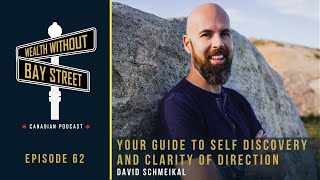
Richard Canfield, Jason Lowe, and David Schmankel walk through a two-part visioning process: a 10-year exercise with a graphic recorder creating a source document, then a deep-dive into organizational essence and culture. The goal is authentic culture and shared ownership, not manufactured values.
Chapters
You know, what a funny thing about culture, we think that we can manufacture culture. It can't be manufactured. It can be nurtured. And what is there at its roots will grow what is inherently in the DNA of the organization and it can be supported. We want to grow and nurture the right things, but we need to be mindful of what those things are. And if we've not been aware and we've been growing and nurturing unintentionally in most cases, a certain type of culture, and now we're trying to get it to do something else, it ain't gonna work. It's not possible.
Welcome everybody. We are joined together with a very special guest, of course. We have my co host Jason Lowe here and we have David Schmankel with us today. David, David is an amazing guy. You're getting a ton of value out of this podcast. He is a brand strategist and he has a vision guide. And I don't say that lightly, that is the truth. This man is a storyteller. He's a podcast host. He has a great podcast called Just Life and he really, really helps people go through self discovery and clarity on the direction, especially in an organizational format, using visual aids and visual tools and really drawing out the best of what you want to do and accomplish and create and co create as a company, as an organization. It's a phenomenal process. We've experienced it. We're living, breathing advocates of this incredible journey, this work that he provides. And so we're just excited, David, to have you with us today and to connect with you and talk a little bit about what you've been doing and some of the fun you've been having in these discovery sessions as you pull out the inner deep workings of a company, culture and corporation working with their team members. So where do you want to start?
Well, to start, I think I just love to have you in my pocket to introduce me to people because it's perfect a lot of times. And I actually had this conversation not too long ago with, I can't remember who it was, but at times when I get asked the question, what do you do? I'm like, I don't even know where to start with that. Where are you at? What do you want? Because if I come at it from the traditional, yeah, the role, people collapse me with what they think they know what that is and I'm doomed to fail right from that point. It's like, no, that's not it. It's where it came from. But there's so Much more to it. So you can accompany me to all my meetings and you can do the introduction, and that would be great.
It would be really interesting if you just showed up at the meeting. There's this guy kind of hunched over, kind of walking in. He's like, is it my time yet? Can I do it now?
Introducing that would be hilariously awkward for everybody involved.
I think it would be memorable. And that's for sure.
Absolutely.
Well, and David, take us through using our own experience. Walk us through the framework of.
Of what you do.
Because I really believe that it's important for listeners to really get a good grasp of that because it really was an incredible experience. Now we can share it from our vantage point. But walk us through your framework and the value that you create in that process.
Yeah, sounds good. So the very first step that I take my clients through is a visioning exercise. We go 10 years into the future and I guide them through. It's almost like a meditative setting up of. So that everybody's at the same spot as in ten years from now. And then we explore through a variety of areas what's been going on. Like, there is a celebration that's going on and there's things that have happened and. And it's all coming from the context of what, in your guys's case, what you guys have come together as and have achieved as a group of people in an organization up to big things. And what was that 10 years from now? What sort of milestones did you experience? So I cover areas like communications. What are people saying about you as an organization? And. And then there's this experience of being at a conference or an event, and it's something actually that is hosted by you guys. And there's an acknowledgement that you get at this event. And what is the acknowledgement? Like, what's the social impact that you've had on the world around you? And then we talk about the culture of the organization and what it's like to work there and what are people doing and what is that experience like? If you were to put us there, what are you seeing? And then the last one is inside of the success of the business. There's an impact that you're making in the world as an organization, and it is past just making money. And so what is it that you guys are doing as a group, coming together? And these aren't questions that we get asked. We are go, go, go. Right? Do the work. Crank it out, do another one. We were just talking about it, right? Full week, flat out Friday comes around. And this is not to say that we're not excited and fulfilled in the work that we do, but Friday comes around, it's like, holy crap. Like, I need a vacation badly. Right. So we, we need that, that time to be able to slow things down and, and spend, spend the time thinking about the big picture and then have it echoed back to you. So the other really great thing about the work that, that I do and who I work with is there's a graphic recorder. I call him the Mind Blower because he is, as you're speaking, writing it, documenting it in little visuals and graphics that are representative of whatever that moment is. And then it gets shared back as a mounted piece. Right. It's something to actually have physically, tangibly in front of you in this digital world. We need that. We need to be able to hold on to something, because you can't hold on to digital stuff. I've tried. I lose my USB sticks all the time. And they're really not that personal to me. Right. Like, I just get another one. So, yeah, so that's the first part. The second part is a deep dive. So it's a. An intense exercise. We, we uncover and lift all the rocks of the organization. And. And I just challenge all those things that you might believe are, like, set and this is how it goes. And I just get you to think about it a little bit further, a little bit deeper, expanded. Getting to the essence, the core of what's actually important to you as an organization, not necessarily about what it is that you are doing in the game that is business. What you are making available as a service is kind of table stakes. We're all in business, we're all making something available. But why are you doing that? Why does it matter? And sometimes we think we've got the answer. You usually need someone like me to go, is that the answer? Let's explore a little bit.
Well, once you define it, you have to constantly remember it.
It's got to be real for you. And I think this is the problem with some of this work. And I come from a marketing communications background. I thought many times over that this was the game that I was destined to play. But there was always something off about it. We gotta get more sales, you know, we gotta convince them that this is the thing that they need to buy. Be like, but what if it's not? What if it's not the thing that they need to buy? Where's the integrity of that? And I was always challenged by that. And that's where the Opportunity presented itself. It's like, okay, we'll get to the heart of it. Why is this important?
Well, in those exercises, both the visual. By the way, your description of your graphic recorder is amazing because it's, it's literally a mind blowing experience as he's, he's drawing and capturing live on the fly in color, what is being spoken to, what's being shared and these, these visual representations. But you know that second component, when you're in the group environment, you're in the, you're in with the team members who are part of that discussion, who, who have a vested stake and an interest of stakeholders. And you're, it's, it's both thinking work, but it's group work and it's physically engaging as well because you're jotting things down. There's a lot of post it notes. It's not like a, like a scri. From situation where you're kind of doing a project, except the project is your business and it's what you want your business to look like. And you're really putting that to work. And then you're, you're standing back, you're reflecting, you're talking about as a group. Does this really land for us? Does this really work here? Hey, I think this goes better over on this side. And, and it's that, that it's not just a, it's capturing things, but it's also a co. Work at the same time where you're, you're all kind of, you know, driving forward in that same direction that the work itself that is being created, it brings people to that, that, that point of cohesiveness. Just by design.
Yeah, it has to. Because if you're, if you're not creating cohesion, it's not going to work. It's not long lasting. It's just another strategy session that will. Might be effective for, for a certain amount of time, but is, is not going to keep everybody going. There's no ownership there. Right inside of that convers. You said it really well when we were talking about this experience. And that was your need as the one, the captain. Right. Steering the vessel is like I need to know that they own the vision as well for themselves.
Definitely.
It's not my vision. It's not your vision, it's our vision.
That's right.
Right. And that changes everything.
It really does. Because when you, when you involve everyone in that process, you get to see what they're seeing. Talk to us about what you're seeing 10 years from now. Walk us through that and Everybody had that input. How do we want clients to describe us? How do we want our team members to describe this organization? When you have a voice and you can be a part of that process, you immediately feel ownership of it versus what many companies do, as we all know. We can think of several, I'm sure, where, if you have the newest team member who comes into an organization where they've had no say in the creation of that vision, and then you've got the most tenured member of the organization who had no say in their creation of the vision because somebody sitting in the captain's chair said, I've got it all figured out. Here's the vision, here's the values, here's the purpose, here's the mission. Well, you put it right next to an organization that did it, the way that you lead an organization through building it. And we can compare any element of that organization ten years from now.
Absolutely. Well, even.
And it's going to be night and day. It's going to be like polar opposites. The culture. I could walk into a company and I'll know within 30 seconds if they're good operators. But I don't know anything about the culture. And in our organization, what we've done and the exercise that we went through. Everybody has ownership of it. You can just. I don't know, it's intangible. You can sense it. You feel that it's really authentic because of how people show up.
You know, what a funny thing about culture. We think that we can manufacture culture. It can't be manufactured. It can be nurtured. And what is there at its roots will grow what is inherently in the DNA of the organization, and it can be supported. We want to grow and nurture the right things, but we need to be mindful of what those things are. If we've not been aware and we've been growing and nurturing unintentionally in most cases, a certain type of culture. And now we're trying to. Trying to get it to do something else. It ain't going to work. It's not possible.
It's very true.
Yeah.
That's why there aren't many. There are a lot of stories out there about mergers that don't go well and very few stories about mergers that do go well. So you've got Company A. Wonderful culture. It's totally ingrained in the organization. Company B has a culture, but the two don't mesh with one another. And decisions were made about merging the two businesses from the financial advantage. You're in for a lot of stress and a lot of problems.
Soil and water.
Yeah, absolutely. And so I think for people who are watching and people who are listening, especially those who are business owners, whether you're in the incubation stage or maybe you're a smaller, tight knit organization, a handful of people, or you're a growing, scaling organization and you haven't quite gotten this pinned down yet or figured it out, you'd be very well served to get together with David and to have that initial discussion to see where his process can be an amazing advantage for your organization. We would wholeheartedly recommend him, of course, because we've been through the process firsthand. We can speak from a place of authenticity and say it works.
Yeah, yeah, I appreciate that.
There.
There's another really great thing to just keep top of mind when as we're, I mean, look at where, what we're dealing with right now. Right. Nothing is typical. Everything has been turned upside down. We don't know who to look to anymore. I don't know if you're aware of the Edelman PR Agency. They've been measuring the state of trust in the world for over 20 years. And this actually became part of the catalyst for us to explore this work. Because when, like now, five years ago, we asked the question, there was a we at one point, now it's just a me. That's a whole other story. There was a real desire to reevaluate. How do we do brand like, what is it? Right. It's an intangible. We get it and people don't necessarily understand it. We want to connect it to things that we can understand. Right. And in that exploration, the Edelman PR agency came up and their trust barometer came up. And if you haven't ever looked at their trust barometers, they just released their 2021. It's no surprise where we're at and what's happened over the course of the last 20 years that we do not trust very easily anymore, if at all. And the recent pandemic has us now even more swayed to being on the fence. I don't even know who to believe anymore. Can't count on the government, can't count on the big organizations, and the institutions don't know who to count on. And we need someone that we can count on. Right. The cool thing about this is that we're actually, this is the opportunity. We're actually seeing people looking towards our business leaders for answers to drive the societal change, to address the inequalities and to be the Advocate to know that I can get behind these guys because they are proactively vocal about. And this is not political. Okay. This, there's a distinction there. That's part of the problem that doesn't work is getting overly political. No, there's just work to be done. Right. When I think about you guys, there is a big objective, right. In shifting and moving and transforming what people's relationships are to finances.
That's right.
And the politics are irrelevant. You know, what's going on. There is just the what so. And then there's the thing that you're doing about it and the conversations that you're having with people and the way you're empowering, empowering others to take action and own their part in their future, building their future. And this is the thing that's distinct. I don't want those that I admire and respect to now turn political on me. I want them to keep doing the thing that they're doing and let us know what's going on and let us know how we can contribute. How can I contribute in the best way that I can?
Right.
That's the opportunity right now. And you can look at it. It's happening everywhere. If you're paying attention, it's really great.
Wow. You touch on a number of things there. And what stands out for me too is the personal accountability side is a big focus of our. What we're doing with the podcast, what we're doing in Ascendant and our focus on Nelson's message of becoming your own banker. Because Nelson himself was the advocate of. He called it a peaceful, stress free way of life when you get the banks out of your life. What he meant is like, you can succeed personally at the you and me level. You and me, the individual level, you can just secede from someone else's way of thinking. That means the way of thinking that I got to go and anytime I want to go get something, I got to go to the bank to do it. Well, you can secede from that one piece at a time. And as you continue to do it over a period of time, you're just out. You just, you separated yourself from that environment. If you choose to go back in, you do so of your own volition, but you actually have a choice. And so it's really about enhancing the individual choice by taking that responsibility back where it's always actually been. And it's on your shoulders. It's just that we've had a societal trend to get people to abdicate responsibility onto the shoulders of someone else. The Banking institutions, the financial institutions, the financial entertainers on the radio and all those kind of things. And so we're really just trying to bring it back home where we think it belongs. And that's right here, where the buck stops.
Absolutely. Hands down, you're empowering people.
So what would you share, David, with entrepreneurs, business leaders, what would you share with them about when you talk about brand strategy and you talk about guiding to vision and what advice would you give to entrepreneurs and business leaders who don't have these elements in place, where do they begin? Outside of, of course, consulting with you and going through a process. But what advice can you give?
There's a simplicity to all of this. And human beings, we have a tendency to really complicate the shit out of stuff.
Very true.
Yeah, I know. I experience it on a daily basis, like, wow, why? Why did you have to do it that way? It was so not necessary. And then I get to unravel it all again. Right. There's an awareness of it that, that's important. You need to be aware of what you're doing and what is causing you to take those types of actions first and foremost. If you're not aware of it, there's not a whole lot anybody can do for you until you are. Right. So let's assume that you are aware and you know that there's something to be done. The other thing that I've experienced for myself is this personal alignment. We can tell when something is not in alignment with us as individuals.
Right.
It's a feeling of being off. It's like, yeah, it doesn't feel right. Right. We can't explain it, but we know that there's something off with that, yet we decide to do it anyways. Right. It's typically how we do it. Well, you know, you know, don't worry about that. That quiet little voice, they don't know what they're talking about. I don't even know where the hell that voice came from. I'm just going to do this thing anyways. And then we find ourselves in a spot of even. Even more lost and confused and uncertain. Uncertain, Right. Well, the next step after having the awareness that there is things to be more aware of personally, is to test, to trust in your gut. Right. This intuitive play. And as leaders, what's so fascinating about, about leaders in particular those who don't consider themselves leaders. And I've fallen myself in that category for a very long time. And only over the course of the last few years have I started to really own who I am. In the world. Not from a place of ego, but from just a matter of fact. Like no, man, everybody keeps telling me this, like, dude, when are you going to start owning it?
Right?
And to be aware of what's true for you, what just makes sense for you and remove all the rest of it and then you get to begin building from a place of. It's a blank slate. Anything's possible at that point. What would make the difference? What would support what you know to be true? This is not absolute truth either. The word true truth is a loaded word. I know I was born and raised with that word for all sorts of reasons. It was absolute. Nothing wrong with that, just how it was. But what's true for me can also shift and change. It's a fascinating thing. Right. You know, as I grow and mature and I'm 42 now, I've got twin nine year olds, my 20 year old self. What was true for him was, is not true for me anymore. From the truth, right? Yeah. So we just need to embrace that. We get to embrace that and, and embrace the. It's a very chaotic process. The, the process of creation. It's unpredictable. It's not how it's going to go. And it might actually turn out to be quite incredible if you just let it go. Right. Just allowed it to take its course and that. And you want to have a few guardrails to, to guide and direct it, but you don't want to over overly strategize, overly structure and control and constrain because then it just dies off. You kill it.
Well, and you, you want to, you know, when you've created. So when you've gotten to that point where you have, for example, you know, you've got a vision, you've got this painted picture vision of where the business is going to go and everybody played a role in making that real. And you've got core values in your organization. One of the things that I always advise business owners to do, or entrepreneurs who are using that language and saying, oh, we're building our core values and we're putting this together for our team. When you construct it, don't etch it in stone. Take some time to actually observe that it is authentic. If your core values are truly authentic, you're going to recognize the behaviors and see them repeatedly. Whereas if you just create platitudes and you want people to buy into them, then they're not showing up as their true authentic selves because they're feeling like they have to conform versus be themselves. And so we really went through that by design for almost a year to actually observe that these values were authentic. And it's such a different because I've been in organizations where it was just platitudes and you just, I don't know, it was almost like you walked into the building and before you got there, somebody scattered eggshells all over the place. And so you're constantly walking on them and it just doesn't feel right. And when you go through this process and it's really genuine and it's coming from a place of authenticity and you give and empower your people to, to share what they see. Oh, I can't describe. Just feels right. It feels natural. Everybody's comfortable in the sense that it's okay for me to show up and be my unique me.
Now, here's what's interesting about that, Jason, as you state these things and going back to one of David's starting opening comments, is that the times that we're in, so we have this work from home situation across most of the plan planet, really, it's pretty crazy. Like that's never, to my knowledge, never happened before. We also didn't have the technology to support doing that, which we do now. So, yeah, it's, it's, I mean, what, what an amazing, wondrous world that we live in where we have the potential and possibility of even doing this. I mean, wow, incredible. But taking everything you just shared about when you, you know, you're using the physical example of walking into the building and, and the seeing and the connecting with people. But what, as people are listening in, what you should recognize and understand what Jason's referencing through the work that's been done by David is that this is happening with people who are working from home. So you're not walking into anything because there's nobody there. That's right. Like Jason's the only guy in the office. And so that is still taking place at distance where people are not physically connected, but they are connected to that which is taking place. What we're building, what's being built. And so understand in the world that we live in, as we're changing the working model from where people used to work to where they have to work today. Well, the likelihood and probability is that there's going to be more of that in the future. I personally don't see a way it could go back the other direction. I could be wrong. I mean, the Internet could stop working, I guess. I mean, somebody should call the mayor of the Internet and ask them if they're going to pay their bill. But if we reasonably think, and we think it through, that we're going to see a continued trajectory to more of this work from home model. You've got a company, you've already made the big transition. You've got people, people working at distance. How do you maintain keeping them connected to what you're doing? And it's through the type of work that David's talking about that you're able to make that transition happen effectively.
Definitely.
Well, in having now something that is physical, that you can access at any time, I call it a number of things. I call it a source document. That is what it's called because it is what sources you. And it's what's at the source of your organization. And full disclosure, people. I've done this with independent professionals as well. I've done it for myself. Like, who am I? What's at the source of me as a person in this world? But to have it as a document, to now serve as a guide for you during those moments where the inevitability of a conflict, of a situation, of a choice that needs to be made or something that you're grappling with, you need something to be able to reference to get you back on track again.
Show them. Show the camera the copy of the one that you had close by there.
Yeah.
For YouTube watchers.
There we go.
The source.
Nice.
And financial source.
Love it.
And it's not, you know, it's not. It's not anything that is, you know, put into a. Put into a vault, no pun intended, and stored away, you know, for posterity. I mean, it's something to reference, you know, always. And like you said, if you're struggling or if you're grappling with something, you can go back to the source document and say, Right, okay, I remember. I'm reconnected now to why and to everyone's collective vision, you know, and it's pretty awesome.
Yeah.
When you have a conversation now where everybody's coming from the same spot. I had a client, they're a young digital marketing agency and they actually went through some really interesting transitions, unexpected places of expansion, like new opportunities. And when I say it's going to reveal hidden opportunities, I'm not kidding. Right. When you. When you're so clear about what it is that you are out to do in the world, all that. And you guys have talked about this before and Nelson has talked about this as well, the opportunities present themselves because you're ready for them, you could never have taken that opportunity Otherwise, because you were not ready. You were not paying attention. And now in the conversation that we have with our colleagues and peers, what they've been able to do, what they brought their coach in and said, okay, here's our guiding document here. Like, use this when. When you're guiding us through whatever it is that we're going through, and they actually reference that stuff is like, okay, so who can tell me some examples? Share with me some examples of. Of this core statement alive in action. Like, what, What. What did it look like? Right. Because again, this is not. Did it done. Really great exercise. We'll. We'll do that again in a few years. Like, no, that's part of the problem. You're not referencing it anymore. But when you do, man, oh, man, like, you see it, it becomes so obvious, like, wow. I, of course we're going to do it that way. Of course we're going to engage with that person like that. Why? We wouldn't do it any other way. Well, you did before.
Yeah.
Didn't realize so good.
And what we're describing here, again, is, and for all of our business owners and entrepreneurs who are listening, you'll be very glad. Creating a time, connecting with David and just getting, you know, having a personalized conversation, I think is.
It is very personal.
Yeah. And you'll be glad you did it. And we'll, obviously, we'll provide all of the contact information so that you can get in touch with David and arrange a time and connect with him, and you'll be very, very, very happy going through this process. So, David, thank you. Thank you. Sincerely. Are there any parting remarks that you'd love to share with our listeners?
I'm just excited to have been part of your journey, like, where it's at right now, where you're going, and to have been able to provide this to you and your team. You guys got a dynamite group of people coming together, and it's almost like a surrogate father.
Right.
As I witness it from far, I'm like, wow. Like, they are just being who they know themselves to be in this bigger picture. And that part is very fulfilling for me. So thanks for taking it on and giving it a shot. It was awesome to work with you guys.
Likewise, and we appreciate you very much. Rich, take us home.
Well, you know, David, not all superheroes wear capes. And. But, you know, you may not be familiar with this, not all brand strategists wear colorful hats, but turns out David normally does. And, you know, when you're. When you're doing these crafting exercises. You're really getting to the heart of things in an organization. And not just there. I know you do it with. You also do this with nonprofit organizations and many other types of organizations to really help help them out as well. You're creating tremendous value for others. And so the question that we're always curious to know is who would you like to be a hero to?
Who would I like to be a hero to? Well, the obvious is a hero to my twins and to my wife. And they are. They are a constant reminder of who I need to be because this world is crazy and they need stability and certainty. And I can only give that to them if I'm certain about what it is that I'm doing and where I'm going. So, yeah, them for sure.
Wow. There you have it. David, thank you, sincerely, for joining us. This is another episode of Wealth Without Bay street. And for anybody who's watching on the YouTubes, if you just look right up here, there's going to be a recommended playlist and we can absolutely encourage you to continue your journey of learning. And stay tuned. Of course, we have many more amazing guests among the likes of David joining us on future episodes. So have a great rest of your day wherever you are. And thank you again for joining us on Wealth Without Bay Street. Thanks, David. Always a pleasure, and we hope we can have you back.
Absolutely.
More from Richard





How Do You Use a Policy Loan to Buy Dividend Stocks? #dividendstocks #infinitebanking #shorts


Can Compounding Dividends Pay Your Bills? #wealthbuilding #investment #financeeducation


Should a Corporate Policy Offset Your Personal Coverage? #shorts #insurancetips

What Is Human Life Value? #shorts #insurancetips #dividend #wholelifeinsurance