Rita Hogan - Cancer Free Canine Victory Stories
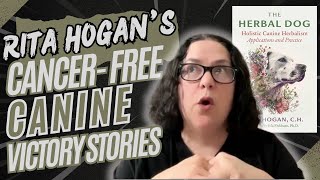
This is a YouTube video titled "Rita Hogan - Cancer Free Canine Victory Stories" created in July 2025. It features a detailed conversation between Poppy Pearson and Rita Hogan discussing holistic approaches to canine cancer treatment, including herbalism, homeopathy, emotional and environmental factors, and innovative therapies. The discussion covers personal experiences, cancer support protocols, and advice for dog owners dealing with cancer diagnoses, emphasizing a holistic and preventative mindset.
Today I am so excited. We haven't been live in the cancer free canine page in a long time, you guys, since Facebook kind of changed their way to go live. And I wanted to share with you Rita Hogan's cancer free canine stories, which we've never talked to her about. Cancer free canine stories. And she has a canine cancer webinar on Saturday. So read it, share with us your stories because everyone I've, I've interviewed on this has a different approach, has great outcomes with a lot of different angles. There's more than one way to cure a dog or a cat.
Hi. So, yeah, and you know, we were talking about that there's, there's more than one way to reach cure or to have longevity or extent. I mean obviously we're talking about extending a dog's life under a cancer diagnosis. Right? There's so many ways. And when I like, I've been practicing herbalism with dogs for over 20 years and I've had, let's see, I think I've like my own dogs. I've had about 16 of them in the last 20 years. I did some rescue too, so. And I think I've only had, I don't think I've, I don't think I've ever had a dog with cancer. Which, you know, I, you know, I've had, my dogs have passed away. Yes, but I've had to put them down. But I've, I've never really had a dog with cancer. I currently have a dog with anal gland cancer. Currently. Her name's Lola. She's not my dog. I've only had her for a couple of years. She's my partner's dog and we are. Last year we were told that she was not going to live. You know, do what you can, that whole thing. And she's still here. She goes, she ebbs and flows. You know, I kind of go with diet like, you know, she goes through her days where she'll eat a ton and then she goes through days where she won't eat that much. And, but, and like she, because it's anal cleanser, she'll get really bad diarrhea. But we control that diarrhea with BlackBerry leaf tincture. And it works so great. It, I mean, BlackBerry leaf tincture just. Everyone should have some. It, it firms up her stool because it's an astringent. And so it, it just, so it makes her stool have form and so she, and she can hold it then. And, and she doesn't poop all over the house. We've had some dark days in that department. But she, you know, she's doing really well and her protocol is pretty simple. So it is sweet chestnut phytoembryonic therapy, thymus gland. A very large amount of thymus gland. She is having calendula. She has four types of mushrooms and BlackBerry leaf tincture. And then we changed her diet to a prey model. She was eating commercial raw and now she just eats bone in chicken pastured chicken bone in. And then we give her a little a bit of raw milk with her supplements and her greens in. That's it. That's what she's got. And she's doing really well. I'm really happy to see it. And she's getting a new treatment in December. It's a new technology called. I don't know if you know what it's called Anisl Biotech.
Tell me about it.
It is amazing. And they there, you know, I don't know what they know what the impact for cancer is right. It's, it does other really amazing things but, but it can really help the immune system. You have to stop all supplements when you're on it all like things that anti inflammatories. You have to stop anti inflammatories with the process. But it's amnio tissue. So what they do is when a mare is foaling, okay, this is just blow your mind. When a mare is foaling they usually throw out the sack.
Okay the placenta.
Right. The amnios, amnio tissue, they throw it out. Well some bright minds, I don't, I don't know the whole story on how they figured this out but because it wasn't, it hasn't been a really long time. That tissue can be freeze dried into these little things that can like heal wounds that horses are put down for. The mares are not hurt. It's a total like program where you can just go in there and he pays for all the vet care. They get cuddled and cared for for at least a week or more. The tissue is brought to a lab, kind of like an organ transplant. It's tested to make sure to get a treatment just to give it a try. I'm just going to give it a try and I'll report back.
Oh my God.
They've used it for like stage four kidney disease. They, they use it to heal wounds that again animals are put. They have helped some dogs walk again after being paralyzed in the spine. So like there's everything for life in that tissue like every building block, you know Because a lot of times the problem that we're not healing, and sometimes this doesn't apply to cancer, but the problem that we don't heal is that we're missing one of those blocks, you know, and like, if you're building a foundation of the house, if you're missing a few blocks, we're going to have problems. We can't get. It won't be sound. Right. So. Fascinating. Fascinating.
That is so crazy. I have to tell you a quirky little story. I am an AI tech through Colorado State University. AI meaning artificial insemination, not artificial intelligence. And so I worked as a breeding manager at a significantly decent sized breeding farm. And when the mares would fall and drop their Santa, I was covered in placenta juice. And I would take that placenta and let the mayor next door that was due to full in a couple days, smell it. And the other mares that were kind of close to falling, all those mares would fall in one night. It stimulated them.
It doesn't, it doesn't. It does not surprise me at all. So, you know, there's some really fun things on the horizon, as you know, for me, as long as other animals aren't hurt in the process and Stem cell, basically. Yeah. And it's thrown out, which is just crazy, right?
Or the dog eat it, you know.
Yes, it's true. And, and it's also cross species. So the, the best one that they have found that works is from horses because it's clear and like the dog is much darker and people didn't like using it because the liquid was really, really dark.
Well, in Rita, horses don't get a whole lot of cancer. They're actually using horse serum and some breast cancer studies.
Yes, exactly. So it just really interesting stuff. Okay, so let's talk about successful cancer stories. Yeah, I've been, I've been doing this for, like I said, Over 20 years. Hardcore. For 15 in the, I would say, consultation process. Right. So when I get a cancer dog, you know, one of the biggest issues with cancer is you don't know how big your window is. You know, unless you subject your dog to some really invasive procedures, which I am not a big fan of, but you can do you and I'll do me, but you know, you don't know how big your window is. And even as a person, I'm a cancer survivor, so I'm my own cancer survival story of ovarian cancer. So I definitely can speak from experience of having cancer and all the stuff that goes along with it. But you know, you don't know how, like, big your window is. And here's my thing, never believe anyone who tells you what the window is. Don't do it. Just be like, okay, yeah, you know, or I don't want to know. I don't want to know is a great, great answer to that. Don't tell me. Because once you put that in your brain for yourself or for your animals, you start resonating that vibration. You start resonating it, you're like, oh, you know, and you start talking about it. Oh, she only has a couple months. She only has a couple months. Oh, she only has a couple. Then you'll, you know, the family will call, ask you how they do. Well, they said she only had a couple months. You want to, you want to not do that. They have done studies where you can tell a cancer patient pretty much they will die on the date to the day if you have a year to live to the day. And the thing is, is that, you know, you want, for me, and I find this very successful in cancer, in cancer treatment. When your dog gets a cancer diagnosis, you want to acknowledge that this is happening. You want to take a long, deep breath and you want to enjoy the dog in front of you. Try not. Depending on how severe it is. Try not to, you know, every day is not a cancer day. Every day is not a time to go down the rabbit hole of research, trying to cure them, trying to do all that stuff. You want to get your protocol, your cancer support protocol in place, and then you want to work your protocol adjusting. But don't do it every day. You know, do it twice a week. You're going to do twice a week. You're going to spend a while researching and talking to people or, you know, but people will go down the rabbit hole so that you're an absolute stressed out mess, right? And your dog spends most of their time worried about you because they can smell your adrenaline and smell the cortisol. Your dog knows there's something going on with them for sure. But you're smelling like cortisol and adrenaline. They're not. So we want to, you know, there's a huge emotional component. So people who like, who change that vibration, they have much better outcomes, in my opinion. Another thing that I really like with the dogs that have done really well on my protocols is it for supporting cancer is flower essences, also for that emotional component for the dog. And usually the person ends up taking the same essences, not all the time, but a lot of the times. So there's so many ways to support cancer in herbalism and also in homeopathy. So, you know, I have a dog that I worked with. Mom came in just of course beside herself about it. They've given my dog a year to live. Dog is still living. It's been like five years, my dog a year to live. Oh my God. You know, it's. This is happening. One thing is we stabilize their nervous system, right? The nervous system has to be stabilized. It has to be supported. Your nervous system and your dog's nervous system. Very, very important. Number two, we worked with homeopathy to find the right remedy. And we gave it a try along with other herbs. So when we took the homeopathy away, dog didn't do as well. We added it back in and a lot of homeopathic remedies are not to be given forever. But in this case, dog is still taking them, still doing very, very well. We adjust it every now and then. Just. Mom is beyond happy, right. She has forgotten all about her dog having cancer. The vet still says they have cancer. But for me, like with a dog, it's the day to day. And the life quality, right? Your dog will let you know when it's time. And the life quality is so important. And she doesn't focus on the cancer anymore. She focuses on are we having a good day? And it's been many, many years still having a good day and just doesn't focus on it. But the homeopathic remedies that we chose for the dog, I believe it's. And these are not for your dog. Homeopathic pathics are very dog individual symptom specific. Okay. But it was carcinocin, lychesis. I have a card downstairs. I can't remember the third one. It might be arsenicum.
I've had success with arsenicum. Belladonna carcinosum and latissis. I know, are really great remedies, Ponum.
They really are. I mean there, there's there's so many that, you know, I. Phosphorus.
I've had great success with phosphorus.
Yes. And you know, you want to work like you said.
Thank you for saying that. It is symptom specific, you guys. Yeah, I do do homeopathy a little different because I try to hit the. The root cause of the cancer or the malfunction, let's call it that. So if you like think backwards to like the insults upon the body even though they don't express the symptoms, if they've been over vaccinated with no symptom expressions, I'll still use vaccine Detox protocol.
Oh, absolutely. You know, that's really great for you to say. Vaccine detox protocol. So cancer is toxicity. It's plain and simple. Now, you know, looking at the root of cancers is what kind of toxicity? Or is it a blend? Is it emotionally toxicity? Is it emotional toxicity? Because the issue is the nervous system can tank the immune system so badly, which I will go over on Saturday. I mean, if you look at cancer researchers and they. There's a researcher in British Columbia. She's amazing. Her name is. I always mess. I mess with her name. Chen call. Chen call. Or Chan called Cabrera. She is an herbalist that is a medical herbalist. And all she does is cancer. Right. That's all she works with all day long, 365 days a year. And she is just awesome. But, you know, she talks about how the nervous system controls the immune system. And, you know, I don't even know for the last 10 years. You know, one of my sayings is there's always an emotional component to every disease, you know, and that includes cancer. So is it emotional toxicity? Is it your toxicity? Is it your dog's toxicity? You know, how stressed is the household? Stress is a huge component. People overlook it because you can't see it. It's like the wind. Right? You can see if you pay attention. But it's a big deal. And. And then environmental toxicity. But again, you know, how we react to a cancer diagnosis can really have an effect on how the liver is functioning, how our organs are functioning, how our lymphatic system is functioning. And the lymphatic system, which Poppy and I have talked about before, the lymphatic system is the vehicle in which the immune system acts. That is from my mentor, Matthew Wood, and it changed my life like that one sentence. The lymphatic system is the vehicle in which the immune system acts. Huge, huge.
I love that you brought that up. So. So the. The detox pathways.
Yes.
So lymphatic is one of the detox pathways. And then we've got liver, kidney, stomach, skin. What else? I'm missing one. There's six lungs. But also, nobody talks about blood detoxes.
Yes.
And I was just thinking about that the other day. That is not on anybody's radar.
It's part of the liver, but also the.
The nervous system. We. I mean, you could literally detox the nervous system.
Yeah, everything's connected. That's the thing. Like, everything's connected. A lot of. We've been conditioned to think about, you know, compartmentalize everything, you know, but the liver detox, this is lymphatic detox, is the skin detox. It's all one thing. Brain, our brains are, you know, our dog's brains are filled with toxins. So you know, how the body rids itself of toxins. So cancer is just toxicity. And it's also, like, I was talking today to a group of people and you know, some people have an attitude and you can do whatever you want on your cancer journey because it's yours, you know, or your dogs, and totally get that. However, from my experience, your cells are listening. Just like everything that we say about ourselves, everything that we do really depicts how the next day and the next day and the next day is going to be, you know, and it's very, very important to look at cancer not as something that needs to be beat down, killed, maimed, and, and, and there's some choice words for it in a lot of cases, right? It's the body's way of protecting the host in many ways. Even blood cancers, you know, it gets out of hand and it's allowed to proliferate. The issue is, is that because we're not doing these maintenance things, you know, like, I love seasonal healing because seasonal healing helps prevent disease and treat a dog or a person like they have issues because you're dealing with different organs, with the flow of nature all year long. And I can tell you, like, when I was diagnosed with cancer, my life was completely out of control. I wasn't taking care of myself. I was stressed out of my mind. I worked 16 hour days and I was caretaking at the same time. And I knew something was wrong. I ignored it. I just ignored it. I'm like, I'm going to ignore this. It'll go away. Didn't go away. I was very fortunate. But you know, cancers are in the body way, way longer than when you get the diagnosis. And if we learn and teach each other the symptoms to look for and the pathologies and how it expresses in the body, and holistic medicine can really teach a lot of that. And like homeopathy works on symptoms, right? And a lot of times if, like, if we. The interesting thing about cancer, if we were to take our dogs or ourselves and test ourselves for cancer every single day for a year and just agree that we weren't going to freak out about nothing, right? We're just going to do it and we're never ever thinking about the freaking out part. You would most likely notice that tumors come and they go and they come and they go and they come and they go, we all have cancer cells in us, in us. We all, our dogs have them as well. Animals have them in general. Horses are starting to show more because we're vaccinating them like crazy when they don't need it. And we're feeding them just to our diet. But, but you know, they are because of their, because they're, they're vegans. They don't tend to have the cancers that that other animals do in human care. So like the issue is, is that we really want to look at the body as self healing, but working to it, we, you know, instead always having a plan. Right. Instead of reacting to something, just looking at how we can support our dogs every single day. And like I said, if we took, took a test, if there was a test, we would not, we would see the ebb and flow of tumors getting bigger, getting smaller, getting bigger, going away, coming back, you know, because our bodies are constantly adjusting to our environment. And so that's a big, I think that's a big issue is looking at, I think now in, now in our reality right now, in how stressed out we are. And I think the stress and the toxicity in general in pollution, you know. Yes, pollution.
Ptsd. Dog owners. Like there's this whole new era of dog owners that have PTSD for failing their dogs.
Yes. Guilt and shame. Yes. And that's an. I have actually quite a few clients that have PTSD over their previous dog. You know, and that's the emotional component. We have to learn how to let that go and be kind to ourselves. Because none of our dogs that passed away would ever want us to treat ourselves the way that we treat ourselves. You know, they, they just don't. And I think that, you know, when we look at ourselves and we deal with our own stress and anxiety, we heal not only ourselves, we heal our, our dogs in any organism that shares their home with us. Bird, cat, dog, fish, the whole thing. So I think that it, sometimes it's not pretty to look at ourselves. And I'm not saying it's your fault your dog has cancer. No way. But subliminally we take on these energies and we don't forgive ourselves. We don't allow forgiveness in our lives. We get caught up in all of the stress that our lives, things that are beyond our control. And sometimes if you're a person that can't deal with that, you got to scale back, stop watching the news, stop going on the Internet for a while. You know, take care of yourself, get yourself some peace, learn how to breathe and, and Your dog will follow suit. So another cancer success story. Oh, go ahead, Poppy.
I was going to say. Recently we had a guest on about quantum biology and the WI fi effects. And I started shutting off the WI fi at night. I can set it on my modem so it shuts off at like midnight and goes back on at like 7 in the morning. And then removing my cell phone. And then I lost my cell phone in a lift. I. I just left it there. And they didn't return it right away. So I went like 60 hours with no cell phone. Tons of headache, eye issues, heart flutter. All gone with the.
Absolutely.
Yeah. And my dog is from. From the small changes that I've done within the household. My dog is acting more like a puppy.
Yeah. So I'm really glad you brought that one up too. So we haven't had our cell phones very long and our bodies haven't been able to adjust to them. I think our bodies will. Will be able to in the future. I'm having a hot. Sorry. We'll be able to do it in the future. But the thing is, is that if you are sleeping with your WI FI on, turn it off. Oh, but our security system is on it. Get a new one. That's my theory on that one. You know, the issue is, is that if you're sleeping and not only WI fi, some people sleep with Bluetooth on. Some people sleep with their phones right next to them. You know, my mother's 94 and she, she survived and she had a great life. And she's 94 and she's cell phone for, you know, not very long. Maybe eight years. Eight or nine years of that life. If, you know, this is old school, but, you know, you can always get a pager if you really want someone.
Think you're a terrorist.
Yeah, yeah, you can always get a pager. But people have a lot of like, excuses of why. But. But the issue that with WI fi is that cells cannot divide. I would say cell replication. Healthy cell replication is very important. And they have a hard time replicating. You want your cells to replicate exact duplicates of healthy cells. Right. So WI FI can interrupt that process. And when we do the most of that is at night when we're sleeping. Right. That's why humans sleep to repair. And they don't repair. Well, in the. The effects of WI fi and the effects of Internet, there's the signal and then there's the router. You need to get rid of both of them. And. And then there's your cell phone. And then turn off Your Bluetooth. And you. You really will feel the difference. And your dogs will feel the difference. You know, I want my dogs to have at least 10 hours a day of no WI fi. And, like, when you leave the house, turn it off.
Yeah, why not? Why not unplug it.
WI fi. There's a lot of convenience things that the world has created and they fall into. Just because you can doesn't mean you should. And they're affecting our lives in a negative way because they belong to that thing where in 2002, I had never met anyone with cancer, and I never had a dog, never been around a dog with cancer, and I boarded dogs. I remember 2002 because that's when I opened up Almost Home Pet Farm. And I remember in 2004, I met this little wiener dog that had cancer that stayed with me. And I was like, oh, my God, it's the first dog I've ever met with cancer. That's 20 years ago. And now one in two dogs will die of cancer. One in four people will get a diagnosis this year. That is scary statistics. And what has changed? What has changed? WI fi in homes, Smart meters, smart bulbs, smart homes. They're not smart, they're dumb. And they affect. I mean, they are. They're not smart, they're dumb.
Yeah.
You know, the marketing is smart. And, you know, the thing is, is I wish that all of this tech that we have didn't hurt the human and. And, well, the organism. Right. I wish they didn't. But unfortunately, it's not the case right now. So, you know, I think less isn't. Less is more. I'm not saying you need to live in a cave. You know, we're talking here on the zoom, right? We're talking here on the zoom, right?
There's benefits.
Yeah. But you need. You need time away. And the phone thing is your biggest thing. And those little earbuds you stick in your ear and you leave them in there forever. Brain cancer statistics. I mean, brain cancer is through the roof right now. It's not something they're talking about, but it is happening. And so we want to protect our bodies and our dog's bodies as much as we can. Again, we don't want to go down the rabbit hole and get crazy about it, but the little things that we can do, and you don't need to do it, like, right away, but like, for instance, if you're in the. If you're in the store and you're going to buy a new appliance, right? One has WI fi The oven has WI fi. The oven, Right. And one doesn't buy the one that doesn't.
It's so ridiculous how all my appliances have WI fi hookups.
And you can turn that off. You can turn that off. It's for smart homes and for the future. But our bodies haven't caught up to technology. And then you know what else this has in common? Our food has gotten worse. Our. The pollution. You know, people talk about climate change. No climate change. I wish they would just stop saying all of that and just talk about pollution. Because pollution is real. You can't deny pollution. There's very few sources of water that are clean anymore. Pollution is real, okay? We all are responsible for pollution. And pollution is a big part of cancer. Again, emotional toxicity and environmental toxicity. And the good thing about plants is they can heal on an emotional level and a physical level. Right. So there's quite a few dogs that I've had over the years that have lived, you know, two, three, four years. I had a hermangiosarcoma dog live four extra years. Four extra years. Right on the right. Herbal protocol. One of my things with hermangiosarcoma is I use what's called plant stem cells. And ever since I was introduced to them, I've been using them in cases of cancer. And like lymphoma. Right. Which is a blood cancer, there's a phytoembryonic therapy called tamarisk. I love tamarisk for lymphoma. But when you combine it with sweet chestnut, which is a lymphatic, and remember B cells. Well, you may not know this, but the. The lymphatic system is highly regulated by B cells, which are bone marrow cells. Right. And what is sweet chestnut good at? It's good at moving the lymphatic and healing the lymphatic system.
And.
And it's great at hermangiosarcoma because of its influence on the bones and kidneys. So that one's a good one. I'm going to do some more like intensives. Like Saturday I'm doing an intensive, a general intensive, and then I'm going to get, like, do a hermangiosarcoma intensive, A lymphoma, mammary cancer. You know, the different types of things that dogs struggle with the most.
And I'll drop the link for that.
Yeah. And then, you know, they're really having great, great results for lymphoma and ivermectin.
As long as it's not a herding dog. Yes, or that, that. And I've had That question asked so many times. Can I use ivermectin on my dog for cancer? I'm like, is it. Is it a hurting dog? And they're like, well, yeah. I'm like, don't do that.
No, that's a genetic problem. I. Are there people with herding dogs that don't know that?
Yeah, there's some people who bought cute little miniature Australian shepherds and keep them in their homes and stuff. And they just. So the MDR Dash 1, the methylated drug resistant one, you guys, if your dog has that, you cannot give ivermectin. So. So I guess the rule of thumb is, like, if your dog has white legs, stay away.
Oh, I like that.
Yeah.
White legs, stay away. I like that. If your dog has white legs, don't take the chance.
Yes, Love that.
I love. I love little things like that to help you remember things. Right. But I don't know the research in dogs, but the research in humans with ivermectin and lymphoma is quite good. You know, there's so many different ways, I think that, you know, when you look at herbs for cancer, Right. When we look at herbs for cancer, there are some ones that, you know, different herbs that really stand out. Okay. So one of them, astragalus, is a very good, like cancer herb for different types of cancer. And it also can help protect the body against chemotherapy for. For anyone that uses chemotherapy on their dogs, or it protects the immune system, which is, which is really great. Right. I think that, you know, milk thistle is another one. Ashwagandha is very anti cancer. You know, we have our, our whole slew of. Of mushrooms. Right.
And I love mushrooms because mushrooms actually look like cancer. So it fits in that doctrine of signature, doctor signatures.
Yeah, yeah. A lot of them will look really funky.
Yeah. Like mutations, right?
Yes. And. And the, the newsflash is that mushrooms are not herbs.
They're fun.
So a lot of people just, like dogs are not cats. Mushrooms are not herbs, and they need to be used differently. They need to be used in very, very large amounts when it comes to cancer. So, you know, you cannot skimp on it. So if you're using like just a tincture of mushrooms, then add a powder. If you're using just a powder, I would add a tincture. I like to use both, like shiitake. I like to use some mycelium when I'm dealing with cancer as well as the fruiting body. But mushrooms are you. You have to use like, what's called a material dose. You Know different types of. And we've heard before, you know, green tea is excellent. It's anti cancer. I think I mentioned milk thistle, turmeric, ginger, you know, burdock, Burdock root is awesome for cancer, especially blood cancer. You know, that's a really good one for blood cancer. You know, and a lot of, and some of the like, holy basil is a wonderful anti cancer. But some of these remedies that deal with the nervous system are also very good with cancer because when you stabilize the heart and nervous system and get your body out of fight or flight and your dog's body out of fight or flight, and I guarantee you, if you are in fight or flight, so is your dog because of their interaction with you. So if you can get your dog or yourself out of fight or flight and stabilize the nervous system, you're going to have access to, to the liver, you're going to have access to the lymphatics. Your organs are going to work better because in fight or flight, you're just working with the cardiac system and the musculature, and that's not going to do much for cancer. Mistletoe, like, there is a stem cell of mistletoe that I use with dogs, some dogs with cancer, if they fit the profile of mistletoe. I had a mistletoe dog. It was just two remedies. It was a lymphatic. And mistletoe did absolutely wonderful as a support protocol. Raw, fed, and I'm. Well, I haven't heard that they passed on, so they might be still alive. Some people, like, go out of your life and they just, you know, you hear back from like six years later, oh, my God. Yeah, My dog lived an extra five years.
Yeah.
And I was like, God, it would have been really nice to know, you know.
And you guys remember that. Tell, tell your practitioners on your wins as well as your woes, please, we need to hear those stories.
Absolutely. You know, absolutely. And you know, and then you, you really want to, to deal with the, the dog in front of you. And you know, I've seen dogs go into remission just by giving them things for their nervous system. Right.
Like, do you do skull cap with dogs?
Yes, I love skull cap.
I do too.
I love Passion Flower. I use rhodiola, but I only use the phytoembryonic because rhodiola is endangered. But the phytoembryonic allows the plant to reproduce. So I really love the phytoembryonica of rhodiola, but giving it an adaptogenic for some dogs can just help them stop reacting so much. And it's really how we react to the things in our life. You know, there's huge correlation between unmanaged stress. So a life event that the. The stress remains high for a long period of time, and then four, three, four, six months later, there's a cancer diagnosis. Right. And cancer researchers really are seeing that correlation between that emotional upset and then the cancer diagnosis and what happens there, you know, and the issue is, is that a high level of unmanaged stress, it tanks the immune system. It messes with us physically, because in the last hundred years, we've been conditioned that the brain is completely cut off from the body. Right. If you have a problem emotionally, they're going to send you to a therapist or a psychiatrist or a psychologist.
Or drugs.
Or drugs. But you're not going to get those drugs until you go see the psychiatrist. And the thing is, is that it's not separate. A lot of times our emotional upheaval is. Can be a vitamin deficiency. Vitamin D. Vitamin D is so important. Test your dogs, test yourself. You need to be in the 100 percentile. Women need to be between 70 and 100% of vitamin D saturation. When I got cancer, my vitamin D was 18%. Wow. And stress depletes vitamin D. Now, for.
Your dogs, who do you use for testing vitamin D?
A parsley pet, I believe. Not for my dogs. No. I order my own testing.
Okay.
Yeah. So I have my own. Like, I can order my own testing. Long story.
You do that for clients, too, or.
I just do it for.
Okay. Because there. I know VDI Labs also.
Yeah, VDI labs is great. I think that. What is the other one?
I know Rx Pet does it.
Aging vitamin D. Yeah.
I think they have a collaborative test with their product.
There's one on Dr. Judy's website that does vitamin D as well. I like to test for vitamin D and heavy metals. Those are two that I really like to test for. Parsley pet's good for that.
Okay. I've never used them.
Yeah, it's Chelsea from Solutions. And there's lots of other ones. Dr. Debias does the hair testing, but, you know, heavy metal exposure. And one of the things that a lot of people don't realize is that, that when there is yeast overgrowth, nine times out of 10, you're going to have heavy metal.
I learned that from you. Yeah, it. It's pretty profound. Like, that changed everything for me. Thank you for sharing that.
Well, and that's the thing. Like, like I said, you know, cancer is in the body for a long time, and we don't see these little tiny things that happen to our dog as cancer. Right. But it's building an environment in which cancer can thrive. And what's in an environment in which cancer can thrive is just an environment where organ health is declining. Okay. Organ health is declining. You know, I would much rather my. My dog get cancer when he's 17 years old than when he's 10. Okay, right.
Or even two.
Yes, or even two. So that's the thing. Like, we want to work in a preventative mindset so that we're not reacting, that we work our plan. Will the plan work? Don't know. But I know that I'm not going to obsess about it, but I'm definitely going to try. And I can tell you, you know, again, this is my first dog that's ever had cancer. I've only had her two years, and she's 15. The bass. Wow. Well, she'll be 15 in January, so she's almost 15. And, you know, I've had other things happen. Of course, I had. I've had benign tumors in a dog.
You know, and I've never had a cancer dog either.
Yeah, I've had. But I think benign tumors killed my heart dog. They were not cancerous, but they were benign in the lungs. And so, you know, and there's things that are worse than cancer, right? There are things that are worse than cancer. Some weird, rare autoimmune diseases can be worse than cancer. You know, Dobermans drop dead of a heart attack all the time. You know, that's wobbler.
Neurologic.
So, yeah, I mean, you know, there's all these things, but we're talking about cancer and.
But interesting I wanted to mention the benign tumor factor.
Yeah.
Yes. Benign tumors can be totally life ending, you guys. Even though they don't metastasize through the body, they can destroy the organ that they might be hosting in. So. And they don't respond to cancer treatments like normal. So I had a dog with a Meng meningioma, and it was benign. And everything I knew to do on other people's cancer dogs, nothing did not respond to it. It drove me crazy.
Oh, absolutely. Like, you're like, oh, my God, my horse died of an infiltrating lipoma in the intestines. I didn't even know that was a thing. I've been out of the horse world for a long time. You know, he was pretty woke up, thought he was colicking and dead by 3 o'.
Clock.
You know, I'm laying in a hump just crying, you know. And it was an infiltrating lipoma. They give you a chance of, you know, surgery or no surgery. The guy's like, I don't think he's going to survive it. So we made the choice of doing no surgery. He did a, an autopsy or necropsy and, and sure enough, there's no way he would have survived. So at least I, I got to know that. I, you know, because you, you can church the left door, you can turn the right door and so the irises.
Mark on those lipomas.
Well, see, I would love to know that.
Yeah, well, we, we have done enough dissections now that we are very consistent resistant on those lipoma marks. In fact, the horse that we dissected last week, we marked Strangul, not strangulating, but they were necrotic calcified lipomas. And I had that written on my assessment before we cut her open. And there were five of them.
See, and that, you know, and that's another thing. Like, you know, using iridology and other methods to read the body are huge and they're ways to know that something is going on and prevent it and, you know, heal it before it gets out of hand. I have a up close picture of my horse's eye. Who.
Oh, cool.
Maybe we could see something. That would be, that would be fun.
Yeah. Submit your horse's eye. We'll go through it. We have December 2nd if you want to come to our iridology practice class.
I have to, I have to hold off on all of that stuff because of my book. But I am going to get, I'm going to. After this tour is over, I'm going to find the time to, to crack down on the iridology study. I'm, you know, I've done a little bit of it before and then, you know, herbs took over. But, well, and you are going on tour.
So you guys, Rita, if you don't know already, Rita has this amazing book that is coming out in Febr. It is available at every. Look at that. It's so beautiful. And she has the T shirt to match. I'm gonna dump the links in all your live streams because we're live streaming on three different platforms actually today. And she is. It will be available, my little friend. But it's a pre sale across Barnes and Noble, Amazon, all, all retail book.
Sources anywhere, Target, Bam Bookshop, all the Amazons, wherever, like uk, Australia, Canada. It's everywhere. My publisher made sure it's distributed by Simon and Schuster. So it's, it has good, good distribution and pre orders help me so much. And just a little soapbox on the pre order. The reason why pre orders, this is another one of those things. You know, I wish things that weren't like this, but turns out pre orders are so important for the success of a book and the distribution of a book when they come out. It pretty much tells you if you're going to get any type of press, any type of recognition, be up for any type of awards. You know, these are all things that are based on your first day sales. So any type of pre order counts as the first day. So that's why it's so important. And for me, it's so important for me to get the information out there so that people can use the book and see the book. Like I have, like for instance, Poppy, we were talking, I mean, I have a vaccine detox in here. I've got pre and post surgery prep and care. You know, a lot of the things that people have asked me for, how to heal leaky gut, how to deal with a dog who's taking antibiotics or has taken antibiotics because antibiotics is a huge factor in cancer.
You know, my sister believes that too. My sister is a researcher. Yes, she wrote the Plastic Ocean actually. And yeah, and she believes that antibiotics is a big source of decline.
It destroys, well, it declines the body. And, and, and you know, a lot of clients will say to me, well, he, he had antibiotics two years ago.
It's depressive, it's all depression.
It shouldn't be affecting him. Now if you do nothing, okay, you can ask your sister this. If you do one single round of antibiotics and do nothing to heal the body, it takes two years for the microbiome to recover. And I don't know if it recovers fully, but if you do absolutely nothing. So I, you know, I see dogs that have seven rounds of antibiotics as some dogs are on antibiotics for 30 days. I'm talking about a seven day round, right? It annihilates for two years. So in order for you, your dog to recover from antibiotics, you need intense therapy. I will tell you right now, I know that antibiotics were a big contributor to me getting cancer. My whole life changed after I took Cipro and Flagyl in a hospital without permission. Right. I was, I was passed out. So, you know, I didn't have a choice. You need intense therapy. I will tell you right now, I know that antibiotics were a big contributor to me getting cancer. My whole life changed after I took Cipro and Flagyl in a hospital without permission. Right? I was, I was passed out. So, you know, I didn't have a choice in the matter. Right. I didn't have a choice in the matter. But then came thyroid disease, then came Hashimoto's disease, you know, then came food allergies and food sensitivities. I was more sensitive to electricity, more sensitive to EMFs. The more inflammation you have, the higher level of sensitivity you will have to electromagnetic frequencies. Isn't that fun?
That is so crazy. And I just am in awe over all of this information. It's mind blowing. Just inflammation in general. All this metabolic issue, it's on the rise in horses, dogs, cats, humans. Everything's inflammation, inflammatory responses. But I love that you. I never credited the nervous system to that degree and I really appreciate you bringing that up because nobody's talked about that.
I talk about it in, in, in depth in my book. And, and I also teach you how to, to make a protocol, like what needs to be in that protocol and in what order for almost every dog. You know, you got the nervous system, then the lymphatics, then the liver, and then give herbs to support whatever, whatever disease you're trying to work on. You know, I will tell you right now, the sweet chestnut. And the sweet chestnut for hemangiosarcoma and the tamarisk. Another remedy that's really great for bleeding, internal bleeding is yarrow. Yarrow is an excellent alternative to Yunnan Bio, however you pronounce that. You know, I'm not good at pronunciation. Poppy.
No, you did it good.
You did it good. Thank you. Thank you. Well, we gotta win. We have a win. Like, yarrow is excellent, excellent for hemangiosarcoma. I use it a lot in dogs. You know, people that are afraid their dogs are going to bleed out. And, you know, a lot of times the way that, the way that an herb works on the outside is definitely another way that it works on the inside. And. And like, recently my basset hound got bit. Lola, you know, obviously she's having a month, but she has these huge ears. She's a basset hound. And my big bulldog decided to haul off and clock her one in the ear. Oh, well, it turns out there was like a chewy buried in the yard. So my bulldog was guarding the yard and Lola was about to walk out the front door to go to the bathroom and Gertie hauled off and ripped her ear. And, you know, she had a gash about that long in the ear. And, you know, ears bleed like crazy.
Well, and they get those big swollen.
And it was almost. Yeah, like a big. Like it was almost a through and through when. So all I did is I went and got powdered. Yarrow, right? Blood's coming out everywhere. I took it. I took her ear, I poured it in, and then I patted it down into the wound, right? Bam. Blood stopped. Just completely. Never bled again. No pain. She was out digging in the yard. That's how we found out. We thought Gertie was just being mean, but she wasn't. She was guarding whatever. Lola went out and got it. Came in with like a. A face full of dirt, and her ear is just sitting there doing whatever. Two days it was. It was healed up.
That's amazing. I've never.
You could barely see that. Could barely see that there was a gash. I mean, you could see that she had something going on, but there was nothing going on. And we just kept packing the yarrow and then we clean it out and pack the arrow. You just pack. You don't really need to even clean the wound because yarrow will clean the wound, it will stop the. The bleeding, and it will heal it from the inside.
Natural astringent in it, and it's a hormone factor. I've used it in horses with hormone issues, but not for bleeding. That's so cool.
It's great. So it does act on the inside the way that you can use it on the outside. And so it's a great hemangiosarcoma remedy to keep from bleeding out. And there's just so many herbs that you can use with cancer, depending on what you feel the toxicity is. Know, is it more pollution? Is it more emotional? Is it a, you know, a blend of the two? I've had just success after success in dealing with that because I'm not. I don't necessarily think of the cancer itself unless it's like hermangiosarcoma or osteosarcoma, where it's. It's been allowed to proliferate. Then, you know, you really have to take some speedy action to try to elongate because the window just keeps closing really quickly. And, and, and osteosarcoma is very painful. So very, very painful. And so you need to get pain. Pain relief on board, and you need to get anti inflammatories on board. And then you need to stop, you know, you need to. To stop the cancer from proliferating.
So.
But normally, if we can get a good window, we can get things on board that start Making systemic differences where we're not necessarily trying to heal the cancer. Because I can't practice medicine without a license. We are supporting the dog for longevity. And I only go by symptoms like, how are we doing today? You know, are we playing? Are we eating? Are we pooping? Are we peeing? Are we happy? You know, are we enjoying our dog? If all of those things are, yes, we're going to live to another day, we're going to go to the next day, you know, and sometimes we forget all about it. And that's where the. I think the gold is, you know, is where you can just be like, well, they say she has cancer, but I'm not sure because we stopped testing and we're just going by quality of life. And sometimes you can get years out of that.
I love that. Angel Jones is asking, is there. Can you get cancer from chronic pain?
No. But you have to ask yourself why you have chronic pain.
Right?
Because that's. Yeah. Can you get. Can you get cancer from chronic inflammation? And the answer is yes. But the body usually starts deteriorating in its weakest point, you know, where, you know, we're the. Where you've had the most issues. And diet, I mean, as we can all say, I'm sure you've talked to this in nauseum, in the, in your groups. Diet is everything. You know, we have to. As humans, we have to clean up our diet. It helps us deal with stress. You know, people are focused on adaptogens. Well, our food can help us deal with stress more than anything. Sugar, right? And sugar is creeping. It's so rampant in the horse world, but, yeah, sugar is creeping into our dog. Our all natural dog foods, our all natural dog treats. We've got honey now that's coming in there, and molasses. Yeah. And now there's like, meat jerkies that are made traditionally with sugar. Um, you know, you want to get. You want to get all forms of added sugar out of your dog's diet. I'm not talking about fruit. I'm talking about added sugars.
You know, how do you feel about glycerin?
Glycerin does not spike blood sugar.
Awesome. Thank you.
Yeah, it does not. I talk about that in the herbal doc, but yeah, glycerin does not spike blood sugar, so I'm not worried about glycerin. You know, glycerin has its own issues with the stomach and nausea and, and decreasing appetite and certain things like that.
It's an odd warming sensation, too.
On your hands, too. Yeah, it does. Like, I do not like the feel like when I do a glycerin or like when I'm using glycerin. I try at all costs not to get it on my hands. I'll put gloves on and everything. I can't, I can't, I can't handle it. It does have a odd warm sticky sensation for sure. I don't personally like it in my body as well unless it's highly diluted, but dogs seem to tolerate it. But a lot of times dogs will have symptoms and glycerin will be the culprit. So I'm not, you know, I try to balance out any type of glycerin usage. So. But yeah, I mean, you know, there's just so many ways to, to deal with cancer, you know, and there's lots of healing modalities that I've had luck with. Not, not for my, like I don't do them myself, but like frequency specific microcurrent that is very promising. Red light therapy is also very nice. Acupuncture, you know, meridian therapy is just great too. Iridology to help you look at the body, on the inside of the body. You know, as. You know, it can be as effective as an MRI for someone who knows what they're doing. You know, there's so many things and I, and we're so privileged to be privy to all of these things now that we desperately, I mean desperately do need in lieu of, I would say, what the normal medical establishment is offering for cases where they can't be helped. You know, there's lots of people that are sent home, sorry, we can't help you. You know, my partner was one, so my late partner, she did die of breast cancer, but they told her she would be dead in a year, less than a year. She died of a pharmaceutical interaction in year six.
You're kidding me.
From singular.
From.
So an allergy medicine. I didn't know she was on it, but yeah, an allergy medicine. It shut her pancreas down. She's just one of those people. She probably had a double MTHFR mutation, I'm guessing because she was one of those people that reacted that had the rare symptom of almost everything she ever took, that kind of thing. So. Yeah, but she, she lived for six years. She. And she was on very varied protocols. But I believe that her protocols were like a firewall. They never cured her cancer. It was super aggressive. They never cured her cancer. And there was a huge emotional component. Right. We're not going to get into that. But there was A huge emotional component there, but it was like a firewall and it was low THC, cannabis, high CBD, less than 10% THC. She went, took that Rick soil. Basically, you know, it's like sludge. She took a gram a day, which is.
Okay, so brick soil. Nobody. I, I've heard the term. I'm, I'm familiar with it. But let our viewers know.
Rick's oil is a concentrated cannabis oil. It looks like tar and you have to be really careful with it. Like a dog would. A dog. And a person would start out at like a quarter of a size of a piece of rice. Maureen had been smoking marijuana most of her life and had a high tolerance already. So she, she worked up to a gram a day. It took her about three months not to be like completely incapacitated. Like she could function and she had to stay below 10%. Maximum was 14% THC. Otherwise it would actually make her tumors grow. She had estrogen.
Say that again.
Yeah. So estrogen based cancers, you need to be careful. Not all the time, but a lot of women, when I was caring for her during that time, I spoke to a lot of women with estrogen based cancers, and they couldn't use like normal Rick's oil. Super high in thc. Right. We had to find strains that were super high in CBD and low in thc. Otherwise her tumors would grow like a wildfire.
THC has estrogen or an estrogen mimicker it.
Well, I don't know the mechanism, but a lot of women have had their tumors grow very fast on high levels of thc.
Oh my God.
Estrogen based cancer. There might, There must be some estrogenic something mechanism that goes on there. But it's not for everyone. But actually, I mean, I could definitely say that I met more than 10 woman, 10 women online where. Yeah, no, I can't take THC at all. It makes my. It makes my tumors grow.
Do you think it's testosterone suppressive?
It could be, yeah.
Interesting.
I just don't, like, I just take that as a, as a straight up guideline, you know, and you'll know it right away. And when you stop, like when we figured it out and she stopped, she stopped with the high thc. Her tumors went down just like that. Right. I mean, really quickly because she had one in her choroid tissue over here and she couldn't see out of her eye when it would get bigger. And then as soon as it starts shrinking, she. Her sight in her right eye would come back. So it's like. But she did tons of mushrooms. Tons of mushrooms. And high volumes, like 6 to 20 grams a day when she could stomach it.
Let me ask you, did she lose her hair doing that?
No.
Okay. The reason why I'm asking you is my sister had lymphoma, and she pretty much did tons of cat's claw and matake, and she actually created, like, her own chemo and started losing her hair. She got. She ended up doing one round of chemo because the doctors couldn't figure it out, but the tumor vanished. We. The tumor was totally gone by the time they cut into her. But, yeah, she took so much of it, her hair started falling out. I was like, shelly, that might be a little too much.
Yeah, it might be a little too much. But, you know, when you're. When you're dealing with that, and especially you're a human, I think we always think more is better, right? And. And you. You don't have access to a scan all the time, right? You don't have access to. To seeing. Well, is this working? Is this working? But if you know how to read the body, right, if you know how to look at the body and look for symptoms and the body will talk, then you can tell if you're doing better. You know, Maureen flourished for six years, and she got to do everything on her bucket list. And we spent, like, two years doing everything on the bucket list. It was awesome. And, you know, but her basic regimen was cannabis and mushrooms and herbs. So it.
And I love that you. You elaborate on the amount, because nobody really specifies the net amount. And in a crisis situation, you could do quite a bit. It sounds like you're doing a lot of mushrooms, and I wouldn't. I wouldn't have thought of that.
And the way that she got them in her was in a smoothie. So we would put the powders in there. And she did the tinctures, too. And you can't measure the. The grams in a tincture. So she would do a little bit of the tincture, and we would do the powders, the real mushrooms powders, and she did really good at that. And some days she could stomach like 6 to 8 grams. We would do little smoothies throughout the day, and it'd be like up to 20 grams a day. Usually she was around 10 to 12, just depending on what she could do because her stomach was a little wonky. But would you do that with a dog, Rita?
Because I. I talked to Kelly Marin, who created green juju, and she created green juju because for a cancer dog, the. The Green, like smoothie thing that she does. Would you just do multiple doses on an extreme dog?
Yeah. So, you know, you can titrate the dose throughout the day, you know, and, and the other thing is, even if you have to give a dog something like cottage cheese or something that you wouldn't normally do with a cancer dog. Right. But if you're getting it into them, I think the benefit outweighs the cost. Right. You know, if you're something really good into them. Because the issue with cancer dogs and people, they lose their appetite. And I will tell you, a great appetite stimulant is about 150 milligrams of CBD. Okay. Most people are just putting tons of CBD. Right. If your dog has a problem with appetite, start out the morning with a, just a really low dose between 50 to 150 milligrams. And that's. So you get. Okay, so I said that wrong. What I mean is get a bottle that has a total of 150 milligrams. Okay. And then just give them a little bit. So like I would say 10 to 20 milligrams of CBD. Just little, a small little dose. And that's a big dog. So like a little dog would be like just one or two milligrams.
What about ginger, Rita? I love to use ginger for quality. Yeah. Calling the appetite. And then arsenicum also.
Ginger is fine for most dogs, but it's going to be really good for dogs that are cool. Right. You know, choosing, using energetics to choose your regimen is so important because there's certain herbs that aren't going to work for your dog. They're going to actually work at a detriment. You know, everybody wants to give turmeric, but it doesn't work for all dogs, especially dogs that are already warm to hot. You're not going to get that benefit. I might get it short term for two weeks, but then it's going to turn around and, and make your dog miserable and it's going to cause more inflammation. So dealing with energetics is, is very important learning if your dog is warm and cool or damp or dry, you know, that's, I think one of the things that people should learn in their toolbox. As you know, Poppy, I'm very big on that, but yes, I know.
So. And also, turmeric is heavy in testosterone. So if you have a prostate type of issue, turmeric can aggravate that. So any testosterone based cancers is a bad idea too. So because of a hot dog, would you use like cooling stuff like peppermint.
I would use like rose hips. There's a lot of plantain there. There's lots of cooling and slight nettles. Nettles are really good, in my opinion, for dogs that are compromised in general.
Just the nutritional punch that it packs.
And it has an entire systemic effect on the, on the dog, you know, very, very systemic effect. And I love that about nettles. Nettles are just awesome. There's, you know, there's a ton of warming herbs, there's a ton of cooling herbs and there's some in between. And you just want to make sure that your dog, when they have cancer, isn't really consuming things that just are not appropriate for them. I think someone's got the.
And you guys, if you want to learn more, Rita has a whole classroom full of courses. She's got her basic short courses and then she actually has a herbal one and herbal two course, right?
No, the herbal two is not here yet. The herbal one is finishing. It's. It'll be done in a few months and then you can start that any time. And then I'll be doing the herbal to. I have a Lyme and tick tick borne disease course coming out in the spring. I do deal with energetics in my book, so I teach you energetics in this book and I also have an energetics course and the level one deals a little more in depth on energetics, dealing with your dog as a ecosystem. So yeah, I do. And I also have a podcast for those that.
Yeah, we love your podcast.
Yeah, you can listen to my podcast. I talk about energetics in my podcast. You can search Energetics on my podcast and, and find an episode that I have. I think I'm on my 100, like 105th episode of my podcast.
And you're going to be on tour across.
Across the west? Yes.
Are you going to UK too?
Yes, I am going to the UK next October, but I will be February. I'll be all down the west coast. Then I'm going to be around home in March and then most likely I'll be in Michigan, Illinois. God, I'm going to be so all up the east coast. New York, Indiana. I might even be in Kentucky. You never know. God, there's so many places I'm going to be. Wisconsin.
How do we find out? Do you have calendar formal?
Yes. So I'm gonna. Once I get my schedule out, I'm going to list it on my dog website. Herbal dog. The herbal dog has a website.
Oh, it has its own website. Okay, great. And then these will be book. Book tours. And you'll be doing a book signing.
Yes.
So we bring our pre purchase books to your book signing.
Yes, and you can bring that to the book signing. And.
And then you'll do a presentation, right? A little.
I'm gonna do a reading and I'm also gonna do a presentation. We're going to talk about something from the book and kind of elaborate on it and then always Q and you know, Q and A is my favorite. So we're gonna do Q and A. And it'll be fun. It'll be solely fun. And my next book is almost 60% written and it's a canine cancer book, so.
Oh, my gosh, that's so exciting. I cannot wait.
Yeah. And I. Poppy, I'm going to interview for the book. You for the book, so.
Oh, okay.
I have a hit list of people I'm going to interview for the. The next. Like I've written half. Half needs to be written. It'll be written over the next, like, year and a half and then probably come out in about two years from now, so.
Hey, I wanted to ask you about suppositories. Do you do herbal suppositories in cancer dogs?
No.
No. I was wondering with the. The anal gland tumors.
No, I don't, but I have been. I have taken plastic syringes and squirted things up the.
Yeah. And I think that's like. I would think, like that I've done that before and I've done.
I think about the little ones that girls make for their periods, you know, that they make them out of glycerin and some other things. Some. I can't. Coconut oil and so that's what I think. I. I've never made those for dogs, but I have. I have definitely used a syringe.
So a rectal treatment.
Yeah.
Is great. And you could rectal t. Rectal ozone.
I don't work with ozone.
Okay.
So, I mean, I. I'm not against it at all. It's not my jam. I tend to focus on something I'm really good at. And I'm good at herbs. I'm not good at ozone. But, you know, Margot Roman is. I just don't. I don't know about it. And I heard that rectal ozone is good. And a few of my clients have machines that I personally do it to myself.
And I feel so much better when I do it. I have to say I'm a tiny bit addicted to it, but it will kind of rip you a New one. So you don't want to do it very often. Yeah.
Know anything about it?
Yeah. It's kind of worth a try, let me tell you.
Okay.
Take my word for it. Makes you feel younger. It's a gas.
Yeah. I remember because my. My hot tub had an ozonator.
Huh?
Not my current hot tub, the one I had in Tennessee had an ozonator. And, you know, you could. You could smell it, and you were supposed to turn it off before you got into the hot tub, but then turn it back on. Sometimes I'd forget, and I'm like, oh, ozone's on. You know, I can smell it. I remember what it smells like. Has that unique smell. But I do use. I did use ozone for all of my mouth work that I've had.
Oh, that's awesome. Yeah. Yeah. Very cool. All right, you guys. Anything else you want to share with us before we say good night? Am I missing something, Rita? I feel like I am.
What do you mean, missing something?
I don't know. I just feel like I'm missing something that we should have talked about, but we didn't.
So you could talk for hours on cancer.
I know my biggest.
My biggest thing is, again, from what I said in the beginning, you know, our automatic way of being. A lot of times when we get a cancer diagnosis ourselves or when our dogs get our cancer diagnosis is to freak out and to make decisions based on fear. Your dog is not going to explode. Not in that moment. Go home. Take a breath. Have a moment. Breathe and make choices based on, you know, guidance that you can get from someone you trust and not from just white fear. Okay? Because, you know, that's. Those are the type of things that really bring our immune systems down. And your dog can smell you. That's the biggest thing, you know, when your dog smells like. When your dog smells adrenaline and cortisol all the time. Because you're up here worrying about them. You know, you lose out so much time enjoying the dog that you have in the moments that you have left with them and by being obsessed. Just like I said, cancer doesn't need to happen every day. You know, if you're working on your dog and you're trying to save their life or you're, you know, working on your. Whatever you're working on, it doesn't need to happen every single day. Have days when cancer is not a subject, and you just have to stop thinking about that and enjoy your. Enjoy your dog. Enjoy the dog that you have in front of you. I think that's the biggest Takeaway for me, you know, because cancer gives us like this. It gives us this like, definition of that death is coming, right. But every single person and animal on this planet is going to die. Right.
Thank you.
Death is life and life is death. Right? And it's. Death is a part of life. It's just not the part that we want to look at. Right. And everyone's journey is different and we need to support people in their journeys of the way that they want it to be. There's no wrong answer. But I think that we lose a lot of time by being just overcome by fear. And it. Cancer again gives us that definition of death. Like, okay, and when we beat cancer, right? Which I don't. Not A. I don't like the B word. But when our dog lives longer than what someone said they're going to do, we feel good about that. And it's good as long as their life quality is good, but they're still gonna die, you know, and how you want that to be, do we want it to be enjoy and we want to really enjoy themselves, or do we want it to be in daily fret and feeling horrible and guilty and shameful and all that stuff, you know, like, like I said with the. My pug's eye, right. You know, there's technology now. There's a medicine out there that could have saved her eye. And every time I look at her, I wish, like, I wish she had her eye. But you know what? She doesn't have her eye. I didn't have the medicine and we're moving on. I. I'm a proud owner of a one eyed pug and she, she does it very well. And you know, and we make one eyed pub jokes with her. We call her a little pirate, right? She's. She's my lover. So. But like, you know, you gotta let that go because you didn't have that information then. You didn't have it. You gotta be kind to yourself. Be kind to yourself, you know, because your dog wants you to.
Yeah. And I don't think your dog ever holds it against you, ever.
Your dog is there. Your. Your. Your dog is there. And. Oh, I wanted to close. Let me close with something, Poppy.
Okay. But I wanted to say something before you close.
Yeah.
I think the benefit of cancer, if there is a benefit, is the fact that you get to do your bucket list. So it is not like a car accident or a heart attack or something like that. You have like, Rita, you said it. You got to do everything your partner wanted to do in that time Frame. And it's a huge priority change. I had dreams and goals for my dog that I always wanted to do. The dog that ended up with the meningioma, and he ended up paralyzed. But by golly, we did the bucket list. And we lived out that last year walking in his wheelchair through the mountains and through the snow and everywhere we could go, and just lived out and had the greatest memories. And he, like, loved people in his wheelchair. He would run up to them and people would hug him and pat him, and they just. It was a great experience.
Yeah. And you're right, you know, like, there's that one song. Live like you're dying. Right. You know, we all are. We just forget about it. And cancer. You know, there are some things I remember when I was doing some emotional work when I got diagnosed, I didn't do chemo, radiation. I had surgery. And I remember when I was doing some emotional work around having had cancer, you know, I mean, after I got through the surgery and the. The. The, like, the rehab and things like that, I had a radical hysterectomy. Like, after I got over that, I had to sit and look at, like, okay. Because I'm an analytical person, right? Okay. I never thought I would ever get cancer. Just wasn't in my mind. I'll never get cancer. You know, I did, and it was an eye opener for me, and I had to look at myself and go, okay, we need to make some changes, girl. You need to take care of yourself. Like, you're ignoring yourself. You knew this was coming, you know, You. You ignored it. I ignored it. I did. There's a great book by. By Gabor Mate called When the Body says no. There's a part in that book he might as well be writing about me. Like, oh, God, my body said no so many times. So many times. And I just was too busy. I was too busy to care. Right? I. Oh, this. That's not a convenient time to go see the doc, you know, I just can't. I can't do it. And someone asked me what I got out of cancer. And I was like, how dare you ask me that question? You know, I did. I mean, at first, yeah. Then I had to come to Jesus with myself, and I was like, oh, you know what I did get a lot out of was interesting because I. I was in a situation. My partner had cancer too, right? So there's no way I could ever say no to my partner because they had cancer. And my body said, well, I know something that they could say no to, right? Okay, you can have cancer. And that's. That's going to be equal. Right. One thing, which. It sounds weird, but, you know, when I think about it, I'm like, yeah. And Gabor Mate talks about that, and it. It just was like, he's talking to me. But number two, I got to rest for a long period of time, and I was so exhausted. I was so. I was such an exhausted person. You know, I'm a busy person. I'm not exhausted anymore, ever. You know, I quit. I stop working. I don't work at night. I barely work on the weekends, except when I'm like, I can't find a date in a. A month with Thanksgiving that I can do alive, right? So I work, like, two hours on a weekend. That's it. You know, I take vacations even when it's inconvenience. I take a month off almost every year.
Well, and you're a party princess.
What?
You're a party princess.
That's exactly right. I'm a party princess. And I'm a person that I wasn't before. You know, I go on trips now. I. I take vacations now. I take care of myself. I say no. Like, I could. I didn't even know how to. That word wasn't even in my vocabulary before I got cancer. And so, like, yes, like, as a human, sometimes when we're given the opportunity to be introspective and deal with our emotional baggage that, you know, I definitely had some emotional baggage around it. I also was a person that couldn't ask for help. So, you know, and cancer taught me how to ask for help. I had to ask for help. I didn't have income for two months and, like, nothing. And I wasn't prepared for it. And it was. It was humiliating. But it was also. It was only humiliating because I didn't know how to ask for help. Right? And people came and helped me, and it was hard to take the help. And then I realized, okay, I need to. I need to be okay with asking for help and being okay with receiving help, and a lot of women aren't. And. And so I think that, yes, there can be lessons from cancer, and there also can be lessons from when our animals get cancer. And that's what I wanted to read to you out of my book. So I included in part one, dogs and plants are individuals. I included this. This quote from Tismal Crow. He is a Cherokee medicine man that one of my mentors learned from him. And he. He's an amazing man. He's no longer with Us, but he's an amazing man. And he said, we believe that the domestic animals were sent here to accept the diseases of humans and to show them how to heal these diseases. And I wholeheartedly believe that our dogs are our mirrors. You know, our animals are our mirrors. And if we look and can listen, they're talking. And sometimes that's hard to accept. But, I mean, look at how much our animals. For those of you that have had multiple animals, I mean, just think about how much we've learned from them. And I would do it all over again with every single animal that I've ever lost. There's. It's not. You know, yes, that week that they pass on is hard. Sometimes it's a month, Sometimes it's six months. You know, I. If I talk about Frances too much right now, I'd start crying, because she was my heart dog and just loved her, and. But it's not the amount of time that you have with them. It's the quality of time. You know, one thing that I can say is I spent two weeks with a dog. His name was Liam. And maybe some people that are listening have heard this from me, but it. You know, it really helped me understand that it is not the quantity, it's the quality. Because, like, when I was doing pug rescue, this little pug who had pug dog encephalitis, and his parents couldn't deal with it. They just couldn't deal with the fact that he was going to die, right? So he came into our care, and I brought him home. I'm a. I'm a foster failure, Poppy. Horrible. I don't ever let me foster anything because it's not coming out of my house. And I brought him home, and we spent two weeks having the best time. And he was. All my other pugs loved him. All my dogs loved him. He was the sweetest, kindest little soul I think I've ever, ever experienced, ever. And I remember. I still remember. I mean, I still remember him. And he's a. He was a rescue dog. And my memory isn't that grand in that department. And it was one of the best two weeks of my life. I was forever changed by his presence. And he was in there. It was less than 14 days. It was probably about 12 and a half, 13 days. And I do it again. Do you know what I mean? Like, he didn't have cancer. He. You know, he had cluster seizures, and he got to a point where they. They couldn't stop him. So it. You know, I only had two Weeks with that little dog. Right. I would have kept him forever, but I only had two weeks with him. And we made it the best two weeks. We had such a great time. And it was. We didn't go anywhere special. We just spent the time at home cuddling. He was a cuddler. Cuddling. You know, hanging out. Doing, you know, hanging out with the other pugs and just, you know, he would sit on my lap. I mean, but it was only. It was less than 14 days.
Wow. Gosh, I've learned so much today, Rita. Thank you. And hopefully I'll be there on Saturday. I did book some appointments prior.
Like, you'll get the video and the transcript, so.
Okay.
Groovy.
Oh, that's such a nice gift. You're so generous.
Thank you. Yeah, no, you get the transcript and the video, and I also will send out a cl. Like, you get the transcript. But then I take the transcript, and I. I don't know if you know what transcripts are, but it's like a written thing of the whole thing that writes out. Yeah. So I take it, and then I put it through this program that cleans it up and takes all the numbers out and all the craziness out. So it's just. And then I. I put it through another program that kind of just organizes it and cleans it up. So.
That's amazing.
Yeah.
AI is cool, isn't it? When it's.
I really like it a lot. Yeah. I don't have a problem with AI, so it really helps you organize things pretty quickly.
And you guys, that course is 15. It's Saturday morning, 9:00am Pacific Standard, correct?
Yeah, standard.
Be there guilt in your life for not being there.
What'd you say?
Be there or be guilty for the rest of your life for not.
Right. Right.
No pressure, no stress.
Please don't. Please don't feel guilty. But, yeah, you. You do get the video and the transcript if you are not. If you're not around. But it will be about two hours long, if not two and a half hours. I usually like to give a lot of time for Q A, too. And we take a little break in the middle.
All right. Rita, you're such a gift to all of us. Thank you so much. You and your plant medicine and your wisdom. We're all blessed by you.
Thank you so much, Poppy.
We love you.
More from Rita





Food Energetics for Dogs & Cats - Sept. AJA with Canine Herbalist Rita Hogan & Julie Anne Lee DCH





NATURAL DETOX FOR DOGS: Which herbs to use and how to use them with Canine Herbalist Rita Hogan
