Using herbs, hugging trees, and a natural approach to GERD with Rita Hogan
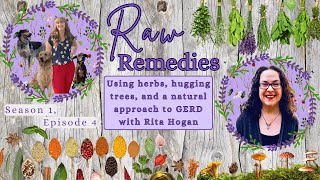
Rita Hogan, a clinical canine herbalist, discusses natural approaches to GERD using herbs and lifestyle changes. She explains how herbalism and nature connection support wellness for both people and pets, drawing on her experience treating digestive issues and promoting holistic health practices.
Hello and thank you so much for tuning in to my podcast. My name is Kara and I'm a holistic health practitioner for both people and pets. After working for years in the conventional medicine field, I realized that while our lifespans may be getting longer, our health spans are rapidly shrinking. And when it comes to our pets, both their length and quality of life are decreasing. When I turn to functional medicine in a more holistic approach to health, I saw dramatic improvements for my pets, myself and my patients. Join me each week as I merge natural health for people and pets by focusing on the root cause of disease and applying raw, real remedies that you can use to improve overall wellness for every member of your family, including the furry ones. Hi everybody. Welcome back to my podcast Raw Remedies where we talk about natural health for people and pets. Today, I am so excited to have Rita Hogan on. She is a clinical canine herbalist with over 20 years of experience speaking in holistic canine herbalism. She is an educator, a speaker, a writer, formulator and herbal medicine maker. Rita uses a combination of diet, flower essences, herbs, mushrooms and phytoembryonic therapies addressing dog's mind, body and spirit. Her full time practice is based in Olympia, Washington where she lives with her partner, five dogs and two cats. We have the same amount of pets. She's an accomplished writer and speaker and I personally am eagerly anticipating and counting down by the day the release of her upcoming book, the Herbal Dog, which will be released on February 4th. Rita, welcome. I'm so excited that you're here today.
I'm super excited. I'm just having fun over here. I have recently acquired two chickens and most likely I'm going to get two more.
Oh my gosh. I've heard that it's an addiction. Once you get one chicken, you just keep going and going and going.
It's true. I adopted chickens from my neighbor and they consume their chickens and we bond with their chickens a lot. When they get new chickens every year or they have new chickens, the chickens have chickens, you know, and two of them started following us around like, hey lady. Had to say to my neighbor, hey Mark, can we have those chickens? He's like, sure. We gave him some chicken organic chicken feed and that was the, the transaction. But now there's a little spotted rooster. He has lots of roosters. There's a little spotted rooster that comes over and checks on the girls every day. And along with this potted rooster who I've named Gilbert, along with Gilbert comes this other little lady who I've named Josephine. And she comes over. Gilbert and Josephine come over and stare at the. The little chickens who are in the chicken condo. Now they've really went up in the world.
Oh, it's not even a coop. It's a condo.
It's a condo. The chicken condo. Now they went to their chicken condo and they're like, are you okay? Are you okay? So now we're going to have to call Mark and say, mark, we're going to have to adopt Gilbert and Josephine. So.
And then.
That's amazing. We only have accommodation for four chickens. But the, the. But Gilbert the rooster is actually for a rooster. He is very affectionate and will let you kind of. Kind of pet him. And I think that with time and a lot of grubs or mealworms, he will let me pick him up. But he will have to come and go as he please. But right now, we literally take our little girls. It's Henrietta and Netta. We take them and we walk them through the house to the other side and then put them in the chicken sitter during the day when we can't be out in the yard with them.
That's so cute. It's so funny. My first job When I was 16, I worked at the Buffalo Zoo. And. And we. I did birthday parties for kids and we had small animals. And I would get to bring the small animals into the room and teach the kids about them. And if they were friendly, they could pet them. And we had two chickens. And I recall that one of them was named Ethel. And from that moment, I wanted a chicken so badly. And I still desperately want chickens. And my husband knows that as soon as we move ourselves back to New York and get a big enough property, the first thing that's getting installed outside is a chicken coop.
It's true. And I really want to add, like, two pygmy, pygmy goats and then one of those little miniature Highland cows. Like, I think my life that in a large rabbit, like one of those really big ones that are like as big as a small dog or like a big as a plug or maybe bigger, like a corgi. Yeah. Then my life would be complete. I mean, it's just like. But I can't do that to myself right now. However I see it in my future, I see it.
I also see it in your fe. Yeah. We went to Scotland last year, and my one thing that I wanted to do on that entire trip was pet a Highland coup. And it was on the last day that we finally came across some that Were within. Like, we just parked on the side of the road and walked up to the fence. They are gigantic. Their horns are humongous, but so docile. They just.
They're so sweet and they're so cool. I don't know if you notice, they drool.
They drool. Well, so does my dog.
So, yeah, I, I. What? I pet them in. Well, I paid $5 to pet them at this coffee shop in Scotland outside of Loch Ness. And yeah, because I had to go to Loch Ness. I had to because I grew up.
Of course, we went, too.
And yeah, I had to. And oh, my God, that. I have pictures of me with them. They're just the best. And they have miniature ones. And I'm adopting anything that doesn't eat meat. So I can only deal with feeding my dogs meat. So I'm like, if it doesn't eat another animal, I'm in. I'm in. I am in. So chickens, pygmy goats, Highland little baby cows, and preferably a rabbit.
Oh, my gosh. All right, I'm going to be waiting for the invitation to your farm as soon as it's more robust.
Thank you. Thank you. Okay, let's talk about herbs. Yes, yes.
Let's dive in. So I would. I know a little bit about how you kind of came into the holistic space, but I would love for you to tell our audience. Can you tell us just how you started?
Very reclusively. I. Let's see. I had a dog boarding kennel. It was kennel free. So just imagine me with about 30 dogs all over, all the time. It was heaven for a while. You know, it was heaven for about 11 years. And then it wasn't like, you know, like, oh, my God, it's like heaven. Yeah, heaven on a good day. But then you have, you know, pee, poop fighting, you know, all that kind of stuff. But I mean, it was awesome, and it really was awesome, and I had a blast. But I just noticed how sick dogs were and how we would just be given like, a bag of. Of just nasty kibble. This was in the first year. And a bag of pills. So then I installed a feeding requirement. So I looked at kibble, and there is a kibble hierarchy, right? You know, at the low end there's stuff like attaboy. And then at the high end, there's stuff like Carnivore or. Or like now or Go, or sometimes some of the wellness and, you know, open farm and things like that. I'm not a kibble expert anymore, but. But at that time, There wasn't a lot of freeze dried or raw. I had a couple raw clients, that's it. And so I just said, you know, here's a list of 15 Kibbles. And they were all local people. And so well within an hour. And I said, and here are some stores where you can get them. I can't board your dog until you change and they need to be on the food all year if you're going to board with me more than once a year. And people thought that it wouldn't work, but it did and it did. And people were like, oh my God, my dog is so more. Well, you know, well behaved my dog, oh my God, it's not shedding like it is. Its poop isn't smelling as bad. It, you know, its coat looks so much better. It doesn't look as mottled like, like, like, I don't know, like when you feed a really nasty kibble, like it looks like there's little like hard balls underneath their skin and, and that would all go away. And so like there is, you know, a definite benefit there. I definitely saw that in my, in my. And people, the dogs wouldn't fight as much or, you know, and it was just awesome. And then I decided to take my human herbalism and just start mapping it onto dogs. And at that time the Internet was not robust. There was no information you could find. You could find someone's business website if they had one, but that's about it. You could search for like businesses on the Internet, but the information that you can find now what's not there in 2000? And I think I, like, I quit in 2012. So I started in. No, I quit in 2013. And so I started in like 2002, I believe and was interesting. There was hardly any books. And so I found some books that changed my life. And I realized that, okay, someone somewhere, someone somewhere is doing something with animals and plants. So I started mapping herbalism onto canine physiology. And here I am. But my first thing was I. I wrote an article for dogs naturally and sent it in, thinking I would never hear back from them. Like I'm not going to hear back from them. And I did. And I got my first like official check for my writing, which was just exciting. Yeah, I still have a picture of that somewhere. And I was very reclusive and I stopped being reclusive. I started writing. I was still reclusive, but just writing. And then, you know, I moved to the Pacific Northwest and then things just kind of opened up from there. I started Teaching. And I wrote for dogs naturally, for, like, four and a half years every other. Like, every other month. And that really helped open. Like, people started following me and noticing me and. And liking what I wrote. Because when you write something, you just kind of hoping, like a podcast, you know, you. You put all this information, you're like, well, I hope someone's listening. You know?
Like, I hope.
I don't know if anyone's listening, but I'm gonna keep on showing up. And that's the key. Like, I think it's the key to almost anything you want to do. You have to show up, right? Yeah. And you have to keep on showing up even when the conditions aren't perfect, as long as it's serving you, as long as you're having a good time and you feel like you're. You're adding to. You know, you're adding to your life, not chipping away at it. So that's what kind of happened to me. And someone asked me one day, you know, people like, well, how do you become a canine herbalist? Well, that's kind of my making in that department when. When people are associating me, there's people out there in the world that are doing animal herbalism. And. And they're awesome. But, like, someone asked me one day, like, what do you do? And I was like, what do I do? I don't. How do I explain this? I'm like, I'm a canine herbalist.
What?
And I'm like, well, I do herbalism for dogs. And they're like, oh. And then I just kind of stepped into that role, and like, oh, well, I guess that is what I'm doing. I'm doing herbalism for dogs. And I. And so I just created that for myself. And now, I don't know how many years it's been like, 12, 13 years later, I'm working on certifying other people in canine herbalism.
So that's amazing. I mean, you have to start somewhere, right? An industry. It doesn't just, poof, appear, Right.
I mean, there wasn't anything for canine herbal, like, like, here's how to become a kid. Like, there was nothing there. There was Veterinary Herbalism by Susan Wynn and Barbara Fergua. That was a book that I had to save my money and purchase. That filled in a lot of gaps for me. Then there was. Before that, there was Cheryl Schwartz's book four Paws, Five Directions, which every single person should have. It's just a great, great book. Yeah, that book changed my life. There it is.
I Love this book.
Yeah, mine looks a lot different than yours. It looks like mine was run over by a car. It's. Everyone should have that book. It's just a wonderful book. And what's great is that book changed my life. I don't even know how long ago. Almost 20 years ago. And then she wrote. Cheryl wrote me a. A thing for the back of my book, which, you know, you have that full circle moment. Yeah. And then there was Greg Tilford, Herbs for Pets. And then Greg wrote me the first endorsement there for my book. So, like a lot of full circle moments for me as far as, you know, getting to know the people that inspired me the most. And not even by pursuit of them, just them coming into my life, you know, 20 years later or, you know, 17, 20 years later. It. It's fascinating how, how life works that way. Right?
Yeah.
You know, you're just. And now I'm helping Cheryl with her cat. Like, it's, it's so bizarre, like, and, you know, like hugging Greg every time I see him a couple times a year. And just, you know, and Greg is just amazing. And his book, Herbs for Pets is wonderful. Julia Debarkly Leve, you know, she has since passed and she was a big influence on me as well. She's an English herbalist that wrote the handbook for farm and stable and then the dog and cat herbal. Those are old books written in the 40s. But there's a woman in Germany, her name is Swanny Simon. And I'm, you know, I just pray all the time that she gets her work translated into English. Like, please translate your stuff into English, Swanning. But she actually worked with Juliet and, and there are some wonderful people, you know, doing really good work all around the world in the animal department. I just specifically started out focusing on dogs and dogs only. Now I dabble in some cats and a little bit of horses, but I have a horse, so I have to dabble. And I have two lovely fluffies kitties. And so the. And I've turned into a crazy cat lady for sure because I have these two cats now that I just am obsessed with. So, you know, things happen.
Same, same. I was a crazy cat lady before. I was a crazy dog lady. I mean, now I'm just. Now I'm just great.
Just now that you're just a crazy lady.
Crazy. Yeah. I'm just blanket crazy. Yeah. But, oh, my gosh. So, okay, so I love what you said about kind of coming full circle. I think that the. Yeah. I'm not a particularly religious person or really. I don't even know that I would consider myself spiritual, but I do feel like the universe kind of puts you on the path that you're meant to. To take. And I remember for years I felt very regretful because I was going to go to school for veterinary medicine, and I actually had applied to Cornell University in New York, and I was in school getting my prereqs. I was. I started college when I was 17, so I had just turned 18. I was my. Had my first year under my belt, and my childhood cat suddenly. I mean, it probably wasn't sudden, but it felt like it to me. She had to be euthanized, unfortunately. She went into kidney failure. And the signs were all there. She had recurrent uti. She was on only dry food. She had had many, many rounds of antibiotics, you know, and. And then one day, you know, something was wrong. We took her up. We were presented with this gigantic bill from the vet saying, like, well, we could do all these things. Here's what it would cost. Here's the breakdown. And, you know, my grandparents were on Social Security. They were already retired by that time. We couldn't afford that, so we had to euthanize her. And I was so devastated that I went to my school counselor three days later, once I was done crying, and I said, I can't do this career. What can I do with my credits? And she plugs some stuff into the computer and she goes, well, you could do nursing. And somehow the thought of dealing with sick people was less horrifying to me than it was dealing with sick animals.
Oh, yeah, absolutely.
And yet somehow, now, here I am a decade later, finding myself doing canine nutrition and holistic pet health coaching and getting my functional medicine certification for people. And it really. That full circle moment, it kind of hits you like the light bulb in a cartoon going off over the cartoon character's head, like, oh, my gosh, this was the path that I was supposed to walk the entire time. I just didn't know it when it.
Happened, and it wasn't the time. That's, you know, I do really. I really do believe in divine timing and whatever. Whatever that is, right? It's not the time. Like, if you, you know, if you could kind of go up in the plane and look at your life from above, right? And see, oh, oh, oh, I'm supposed, okay, well. And I wouldn't get there if I went that. Like, I had the same thing with being a veterinarian, you know, oh, you should be a veterinarian or you should Be a veterinarian. You should be a veterinarian. One, I could, I would. I don't have the courage to euthanize an animal, number two, unless they were like writhing in pain, I could do it. But if it wasn't that circumstance. No. Number two, I, I'm not good with blood and guts and I'm not good with any of that. Right. I'm just not good at it. And I pass out and I have a lot of drama and. Yeah, that didn't work out. You know, my father, if my father told me, he's like, yeah, no, that, no, no. From growing up on our farm. Like, no, no, honey, that's. You're thinking about the, the unicorns, the rainbows and unicorns of being a vet. Yeah, exactly. Most of the, what the days are being a vet, right? Like dealing with people, dealing with trauma and the worst case scenarios of everything. You know, people always get down on vets. Like, well, they came out and told me that it could. This could happen and that could happen and this could happen. That's because that's what they see. Like. Yeah, all the time. And, and I always tell people, just remember they're gonna tell you the worst case scenario, like the worst thing and. Because, you know, this is what they do. This is how they live. This is what happens. They see the worst thing and I don't, I don't, I don't have it. I don't have that type of thing in me, so.
Well, but you. But they have to, right? Because, you know, otherwise. And it's the same thing for human medicine, because otherwise you, you could end up being negligent. So, for example, let's say somebody comes into my hospital and they have some lower GI bleeding. They pooped and there was a little bit of blood in there. Well, it could be anything from hemorrhoids to diverticulosis to colon cancer. Right. One is ridiculously benign. The other one is incredibly, incredibly terrifying.
Yeah.
You have to rule those things out because otherwise if, you know, if you don't say it because you don't want to scare someone and then that turns out to be it.
You're there. It is.
Exactly. So you have to explore the options and, you know, come up with a, A plan of attack. And, you know, but I get. It's really hard to hear it. It's hard to hear it from a pep.
Do you have a hemorrhoid? You know, like, do you have a hemorrhoid? Yeah, I have one. Well, then most likely it is your hemorrhoid probably hemorrhoid. Yeah, the an. No, we have a problem. And the fun thing about dogs versus people is that when dogs have bleeding from the rectum, it's almost always inflammation. Right. You don't have to worry, like, when you see blood in the dog's stool, it's really bright red blood. It's really nothing to worry about. We've got inflammation going in now. If you see bright red blood in a human's poo, because our gastrointestinal tracts are so long, it's not always just inflammation. So, you know, that is one of the biggest. The biggest differences in. In human and dog. I was on Facebook and I. I accidentally said stomach. You know, when you're making comments on Facebook, I'm doing them so quickly because I don't have a lot of time for that. I said stomach and came back and said, stomach isn't, as, you know, isn't that different from human. I'm like. I meant the gastrointestinal tract. I apologize. But, yeah, the GI tract, you know, is so much longer in humans that when you get blood, there's an issue now in a dog, if you get black, dried blood. You know, if you get dried blood in the poo, you need to go to the vet, and you need to go now, you know, could be an ulcer. It's just. It's just interesting. You know, all that stuff is so interesting. I absolutely love it. But I do not treat disease because I am not a medical doctor.
Right. That's right. But you do apply herbs and oils and all kinds of different things. And I know that you see both people and pets, right?
Yes, I see people. I see dogs, cats. And the majority, 99.9% of all my clients are dogs. And then sometimes people like, can you help me? And then I've got a kitty, you know, and then there we are. So, yeah.
So tell me. Tell me a little bit then about how herbs and oils can make a difference in our people and our pets. You know, helping them with chronic conditions, helping to just improve their health overall.
Well, for me, you know, every dog is an individual, so you kind of have to put a little work in to figure out, like, what herbs you're looking at and if they're. If they are more, you know, well indicated for your pup. But herbs, the interesting thing about herbs is they can go inside the body and do things that you aren't even aware of or privy to, like, and they work. They balance the body out and the systems out, and they help the Ecosystem work as a whole. I recently was working with some regenerative medicine that I've been interested in and looking at and kind of experimenting with. And the man that, the man that has his company called Anacel, you know, he said I can give a treatment and sometimes it doesn't work on what you came to me for, but what it does is, is it goes to where they're the most inflammation in the body. And a lot of times we don't know where that is. Right. We're not privy to that information. And then it will start working on whatever there is, or we may have to give a second treatment and then you'll see the result of what you came to me for. But, and herbs are like that, right? You can start working with an herb and say that you're like, say that for humans, like say that you're working with eczema, right? And you give something for the gut and the immune system and all of a sudden there was a wart on your face that disappeared, just she gone, right? And you know, and it's the, it's the herbs and the same thing for dogs. Like you know, you, you help a dog with mast cell tumor and then all of a sudden all of it, all of his growth and skin warts and everything are gone. And it, it's, it's very interesting in that they have an intelligence of all their own. Like we try to pretend that we're talking about that we have control over that and we really have their own intelligence. Plants are, you know, plants open up with the sun. They cl. Like flowers, they open up with the sun, they close when the sun goes down. They have their own intelligence, their own ways of interacting with the environment. And when you put them in the body, they interact as well. So I love them, I just adore how they work. And there's, and the, the, the plants that I recommend, almost all of them are pretty safe and non toxic. Toxicity comes with dosage. So. And toxicity doesn't need, A lot of people think toxicity means death. It doesn't. Toxicity can mean vomiting, diarrhea, feeling puny, you know, kind of like not feeling well, digestive upset.
Those can be an undesirable side effect.
Yes, undesirable side effects. It doesn't mean death. Okay. Not all the time. And it can. You just need to know what type of toxicity you're talking about. But for most herbs, non toxic herbs, now there's other herbs like aconite or belladonna or hellebore, you know, these types of herbs can extinguish life. And you know, we don't want that, right. So we use homeopathic versions, those types of plants. You know, homeopathy is another modality that involves herbs and some non toxic herbs. Like there's a homeopathic remedy for calendula and Euphrasia which is eye bright and you know, nettles. But a lot of our poisonous plants are used in homeopathic dosages so that they're so diluted that they're not toxic anymore. And you can get some of the benefit there. So fun.
I wish I knew more about homeopathy. It kind of, it intimidates me a bit. I just haven't really approached it with a lot of confidence. I was just talking with Chelsea Kent, you know, from Solutions and Parsley Pet. She's, she's such a genius. And I had done a, I'll have her on the show. But I had done a HTMA test for myself and it was very suggestive of actually mercury toxicity. So we're going to be working on that. But she started, she was talking to me a little bit about homeopathics and I think she could tell that I was immediately intimidated. And she was like, email me if you want to talk more about home. We were getting to the end of our consult. She's like, email me and we'll talk more about homeopathics. I don't know, they just, for some reason they just intimidate me. I have a few, I have some Arnica, I have Califos, I have.
Well, you know the biggest thing with.
Homeopathy but I mean, I don't know beyond that. I'm just like, I'm not sure what I should use and I don't know what the right dose is for my dog or versus for me. So. Yeah.
Well, I think the biggest thing with that is that it's the same as like learning a foreign language, right? So let's just say Spanish, okay? So if you try to translate all of your English into the exact words in Spanish, you're not going to get anywhere. It's not going to happen. Spanish isn't even set up like the English language, right? So you put the quantifier after the noun where you don't do that in English. So if you just stop that and try to learn Spanish the way that it's set up without comparing it to English, you have much more success. And that's how homeopathy is. You know, you have to come to it. Looking at the principles of homeopathy like, cures like, okay, and accept it. And once you. And don't go, no, no, because in functional medicine, you're going to have. It works on a system of opposites for the most part. Unless you're, you know, doing gut treatments and stuff, it works as a system of opposites. And even in the gut, you know, you have pathogenic bacteria, you're going to help, you know, inoculate, inoculate with commensal bacteria, and hopefully we're going to get in a better place. Right. But homeopathy is like, treat like, treats like. So you just have to come to it, as I completely accept that concept. Now where are we going? And.
And that makes sense to me because, like, a lot of times, even with food therapy, like, treats, like, if you have a dog with kidney disease, you want to feed them some more kidney. If you have a dog with maybe dementia, you might want to include some brain in the diet. Right. So that. That. That makes sense to me that this is another modality where it's similar.
Yeah, yeah. And you just have to, like, get out of your current way of thinking, get into a. Like, treats, like. And then, you know, I think the best place to start using homeopathy is just acutely, you know, like, last night my partner had some. Some soup, followed with a beer, and the beer was frozen, and when she opened, started put, you know, and so she was, like, drinking it super quick, and it was super cold. And she is a cool person. She's a very cool person. She, you know, gets cold very easily. So she's just slamming this frozen beer because it's going all over the place. And a half hour later, she's like, oh, oh, my God, my stomach hurts so bad. Do you have any arsenicum? And I was like, yeah. So I went and got the arsenicum. It took three doses, and then she felt great. And she was like, yeah, oh, my God, I don't know what I'd do without that. And acutely, arsenicum is amazing for anything that you consume that makes your stomach feel off, you know, and then, you know, as you look at chronic disease, it gets much more complicated. So. I love Chelsea, by the way. She's great. She is a genius, especially when it comes to vitamins, minerals, toxicities and things like that. Yeah, I. Absolutely. I love that. What test did you get?
I did her. I did the hair tissue mineral analysis where you send in the hair sample and.
Oh, I didn't know it was for people.
She. Yeah, so you can do it for pets and. And for people oh, my God.
I'm gonna go get it done. Yeah, I'm gonna go get.
I was. I was very impressed. I can't wait to have her on. And you'll have to listen to the episode. But she's. I mean, and if you do it for multiple members of your household, she includes, like, a comprehensive summary because, you know, if you're exposed to the same things, for example, then you could have some similar things show up on the test. So she'll be like, you know, this showed up for all three of them. Consider environmental exposure as opposed to, like, a food problem.
So, yeah, yeah, I'm totally going to do that. I'm going to make my partner do it to do it. Do it.
So, okay, so we mentioned chronic conditions. We mentioned acute conditions. What. What would you say are the top. I almost feel like I want to guess your answer, but what would you say are the top three conditions that people come to you for their dog? They say, rita, please help me with this. My dog is suffering and I can't find any relief. Nobody can help me.
Okay. Arthritis.
Yeah.
Itching, scratching, biting, licking, food sense.
Okay. Those all make sense.
Yeah, those are the top three. Then we have acid reflux.
Yes.
You know, yeah. And cancer, of course. But those. Those are definitely the. The top three for mobility, food sensitivity, and, you know, the itching, biting, scratching, allergies. So those are the ones that are. Are like the biggest issues for so many people.
It's so prevalent now everywhere you turn, you're on an online forum or you're just seeing people post and, oh, we're in such a health. Well, there's the dogs. We're in such a health crisis centered podcast.
Right? People and dogs. That's what we're doing right now, bro.
Yep. Who knows who's at the door? It could be my husband. Could be the male person. Yeah, it's. If the dogs aren't barking, then I have a cat walking across the screen. The other day, they knocked my microphone. I was like, it's fine. This is fine. But, yeah, I feel like we're in such a health crisis and, you know, people are. People are living longer, but my God, they're sicker. Earlier, I'm so. I just keep seeing, you know, people in their 30s, 40s, 50s coming in with strokes and heart attacks and kidney disease, and it is so bad. But when you look at our pets, it is. It's so much. It's. I feel like it's. It's. It seems worse because they live for less time, you know, and, and we're seeing animals get, you know, cancers, malignancies at 18 months of age, one year of age. I just the other day I came across a posted dog, 18 months old, got diagnosed with hemangiosarcoma. I was like, what?
Yeah, but look what we're doing to our animals before the 18 months are up. Like, if you were to put all of the chemicals and medicine and pharmaceuticals and vaccines, if you were to put them all on a table for the first 18 months of their life, if you do follow standard care, if you were to put them all on a table and say, okay, I want you to give this all to your dog, you'd be like, no way. Right?
Yeah.
It's insane. And then if you were to take those medicines and then break them down into their individual components and put it all on the table, you would see very quickly what is wrong. Like, this is wrong. Like, we stop it. Like, stop doing that. You know, like, we're just overwhelming their system. Yeah. None of. None of my. My dog Susie lived to between 24 and 27. And it's an argument in our family, but we know it's at least 24. And, you know, she was there before I was born, but we didn't do anything with her. She was unspayed. She never went to the vet. She was unvaccinated. She ate like scraps from our table, Raw meat, cooked meat, raw milk, sometimes cooked milk, depending on what my mom was doing. Like, everything would go into Susie's bowl and our other dog's bowl and we had a few of them. And that's what you did on the farm. Right. And she would eat berries and she would eat herbs and she would eat.
Yeah, like self selecting out of the garden and.
Yeah, made me cry when she would eat a bunny and stuff like that, but she would just. She. And she spent so much time living and breathing outside.
Yes.
A lot of our animals are inside, and we're not making the necessary changes so that dogs can thrive inside. You know, a lot of people don't look at that, but we're not that far down the timeline where dogs have come inside. I know that. And I'm not saying, you know, my pug's not living outside. Okay. But dogs need a lot more time outside. They need more time outside. And so do you. Like, so do we. We need much more time outside. We need more time breathing fresh air. And if you can't be fresh air, you need to do something about the air in your house. Because we live with all this furniture and these resins and these coatings and these polyester blankets and all of the stuff that's polluting our air on the inside. And so yeah, it makes logical sense for me because the, the, you know, there's this thing called the. Well, it's kind of, it's bored. Baseline theory, basically. And the baseline theory for dogs aging when I was young, let's say when I was 10 with. So that's 1981, dogs lived well over the age of 20. And it was expected. Okay, expected. I am 53 years old. Okay. So we, the baseline theory has moved forward and forward and forward and forward. Now we have all of this rhetoric, all this language around the normalcy of a dog being geriatric when it's eight.
Yeah.
Okay, so we have.
Really my heart.
Yeah, but you're starting to see, it means you're starting to see it when people talk like it's all, it's, that's that, that baseline theory where okay, oh, my dog lived until they were 10. Woohoo. You know, and no, that's, no, for me, dogs are geriatric. When they are like 17 and 15 and 17, they're starting to move into being geriatric. But it depends on how they were raised. You know, they can be geriatric when they are 10. Yes, they can. Because of the excessive aging that is caused by so much oxidative stress and that comes from the liver and toxins and organ function and all that good stuff. Right. So it is a travesty when you get a dog that's 18 months and has hemangiosarcoma. And that can be some genetics. It can. From a very poorly cared for breeding dog. You know, there's so many, there's so many factors that go in and I'm just really glad that plants in many forms. I work with a form of plant, plant therapy called phytoembryonic therapy, which is using plant stem cells. And you know, plants in their correct form can epigenetically, which means changing the DNA expression that we have going on now can turn that around for both people and animals. That's the kind of nerdy stuff I'm into right now. And I think we have all the answers we need here on the planet. We as humans need to start saying no to all of these chemicals and fertilizers and all of the nasty ways that we have ruined our natural environment. Right. It can, it can be turned around. I'm not a pessimist. So if it could happen, we can turn it Around, Right. And getting back to nature. Getting back connected with plants. Not being afraid to go into the woods, not being afraid to sit on the grass, you know, not sprayed. Right.
Well, right. Yeah.
A bug might crawl on me, you know.
Good. I hope it does.
Yeah. 99% of all bugs are non, non toxic. They're just. Yeah, a bug trying to get to a place.
Although I will tell you, last week I lifted up a dog bed that we have in the backyard because we were like sweeping and kind of cleaning up and a, A black widow spider crawled out from underneath it and. Oh, did I jump five feet into the air?
Well, you got to know where you are. Usually those black widow spiders are attached to something dark that they don't think is going to be disturbed.
Yeah, yeah, it just scuttled away. But I, I let out a shriek. I think the whole.
Yeah, I would have, I would have. I picked up a trash. I opened up my trash bin when I lived in Tennessee and there one was sitting right underneath the lid and I was like, ah. And I, I shot it and I was like, oh, God. And she wasn't there. She wasn't there the next day. She was like, oh, my home has been invaded. I'm out. But they're not normally walking through the grass, but depending on where you live, you need to take precautions. Right, Right. But luckily I, I don't live in.
Australia where everything's trying to kill me. But I will say that one of my favorite things to do, honestly, is just forest bathing. I will go out into the woods and I'll be wearing like, my, you know, whatever workout gear, like a, you know, what are those things called? Like the sports bra and like the spandex bottoms or whatever. And like, I'll try and have like my arms bare so that I can feel like any sunlight coming through. And I. My husband laughs at me. I hug every time. I have to hug at least one tree. At least one tree. And I just, I hug this tree and I close my eyes and I just breathe and I swear, Rita, I feel my cortisol levels dropping.
Oh, yeah. Can you imagine what our planet would be like if people hug trees every day? I mean, it is. You know, people laugh about the term tree hugger, but I will tell you right now, hugging trees is amazing. Bucket list. Go up to the Great Sequoia National Forest and hug a giant sequoia. You won't get your arms very far.
But yeah, I have, we live right by, right by a big trees state park. And I have some photos of Me hugging the sequoias.
It will change your life. It will change your life. It changes. Altered my existence. If anyone ever tries to cut those beautiful giants down, I'm chain. I'm chaining myself to the tree.
Have you. So have you been. Okay, I know we're getting a little off topic and the reason I say it was naughty that I'm hugging the trees is because you're not supposed to actually walk up and hug them in the park because they have like little plaques and there's a fence and. But I snuck over and I hugged one anyways. But there's one tree there and they have this like the whole story up. It's called the Mother of the Forest. And years ago, people came and they were so impressed by this gigantic, beautiful tree that they stripped the outer bark and that opened it up to. It actually ended up dying by fire. Because sequoias are some of the few, few trees that are actually really. They proliferate with fire. It makes them release their. The seeds, they drop them and then you'll find like groves afterwards. But this one couldn't survive because they stole her outer bark and the Mother of the Forest. So she' still standing, just a husk. But they have a big, like, laminated plaque beside the tree and my God, it breaks my heart.
Yeah, yeah. But it is still a plant. We're talking about plants, so. Still a plant.
We're still talking about plants. Yeah.
So.
So let's talk about. I want, I really want to kind of focus in on gerd, if you don't mind, because I have seen so many posts and so many people needing help with gerd, including friends of mine, actually, who one of which worked with you, and you made an amazing graphic a couple of weeks ago about like, different causes and different, like, approaches to. Because I think people. This really grinds my gears, Rita. But so in the hospital and in human medicine in general, if you complain of heartburn a single time, you are slapped with a PPI before you can take your next breath. Oh, take Protonix, take Omeprazole Nexium, you know, whatever. Take some Tums, take some Maalox, and all that's doing is suppressing the symptom. It's not getting to the heart of the problem. And oftentimes the reason why you have gerd, you have heartburn is not because you have too much acid, it's because you don't have enough. And it's just being created at inappropriate times. So hypochlorhydria. So I See, like a lot of people suffer with that and they come in, they're on a ppi, they're not getting better, and they, their eyes bulge when I say, all right, well, the first thing we have to do is take you off your ppi. They're like, what, what kind of herbal approaches do you take to gerd?
Well, I'm really glad that you said that. You know, the issue is, is that you don't have enough. And that is the biggest misnomer in. And I think the whole treatment of any type of acid reflux or GERD is that people think, oh, I need one of those medicines and you don't. And the issue is, is that it can help temporarily, but it helps it get more deep seated in the body and harder to treat because of the fact that we need our stomach acid and it's just in the wrong place and it's being excreted at the wrong time. And that's exactly it. So one of the things that like, doesn't really have anything to do with plants is that is stress. And yes, a lot of people with GERD have a lot of stress. They're not taking care of themselves. They're eating a lot of processed food. And you know, dogs can have a lot of snacks that are inappropriate. Cooked dairy, cooked dairy, you know, heated dairy, regular dairy is hard on gerd. But like when you are stressed and your dog is stressed, you don't have access to your stomach acid. You, you don't have access to your gastrointestinal tract because it's all in the heart and the musculoskeletal system. You know, when you're in fight or flight. And then for you can, it can have a negative effect on the gastrointestinal tract. So you want to get your stress levels down. That means for a lot of people, put your phone down because phone set up to put us in fight or flight. The bells, the whistles, the checking, the endless checking. Oh God. And then you react to it and you know, oh, it. So we need to do that. But like, for helping with GERD in general, you know, the first step is to one, you want to support the liver and you want to support the gastrointestinal tract. So, you know, the biggest ones is marshmallow root. Marshmallow root can help a lot with gerd. Meadow sweet, small amounts of bitters, like burdock root, little small amounts. And those burdock root doesn't work for like a deep seated gerd. Sometimes, like really chronic, chronic gerd. It can Aggravate it. So you want to do small amounts and just see if there's some improvement there. Slippery elm can help. Those are the ones that like, you know, aloe larch. Larch can be of benefit. There are so many. A lot of herbs that help with stress can help. Tremella mushroom is wonderful for gerd, but a lot of herbs that can help that help with stress actually end up helping with gerd. Digestive enzymes, big one. So like if you have a person with gerd, you want one, you want to look at stress and diet right away. Usually it's diet. I remember when my partner had GERD and I, we weren't together at the time, but they called me and I was like, well, what are you eating? And you know, they're a vegetarian.
Crap.
I was eating crap. Okay, so you're a vegetarian, You've always been a vegetarian. I don't think, you know, have you tried anything new? They're like, no, not really. And I'm like, okay, well go down your day. And sure as enough there it was like a big beacon in the night. I get up first and I crack a Coke. Yep, yep. And I swig it down and I love the way it tastes. It feels on my throat. Who doesn't, right? But, well, it's a Mexican Coke. It has just sugar. And I said, I don't care. Yeah. I said, you have to stop the Coke. That and the rest of their diet was fine. And I was like, it's the Coke, it can't be. It is. And they're like, well, I'm not stopping. I said, well, you enjoy your gerd. I didn't hear from them for a long time and then they called me up one day and they said, it's gone, it's gone. I stopped the Coke and it's gone. You were right. I'm sorry. I'm like, yeah, no, you can't drink coke every single day. First thing in the morning you've just gotten over like a 10 hour fast or, you know, sometimes a 12 hour fast and the first thing you're going to give your body is a Coke. And I was like, it's gonna set you up for just a horrible digestive day all day long. And yeah, so yeah, I mean, a diet, diet and stress levels are a big deal. And then with dogs still diet, stress levels, digestive enzymes. And if people and dogs took digestive enzymes on a continuous basis, this means that it's going to take more than seven days to see a difference. You didn't get To GERD right away. GERD is like an erosion of function. Right. So you have to get that function back. It's like if you have eczema, Right. A person that I'm working with has eczema, so this is very relevant. It's like if you have eczema. Yeah. You want the eczema to go away if it's in a flare. Right. You want that eczema to go away. Because dry skin is never fun. And, you know, it's super dry. It's like the driest of the dry. Right. But it's not going to go away in a week. Like, well, the herbs aren't working. That. What you're saying is you didn't get to eczema overnight?
Overnight, yeah.
Yeah. And herbs are not pharmaceuticals. They're not going to knock that out in 30 minutes. You know, pharmaceuticals are a hammer, and they save lives every day. Because they work so quickly, right? Because they work so quickly. If someone has a panic attack and they have all that tension and they're writhing in pain because they can't get their attention down, you give them a Xanax and 20 minutes later they're asking what happened.
Yeah. Yeah.
Well, that's because it's a hammer. Yeah. It can get that gaba into the cell right away. And it's like, here it is, you know, here's your gaba. Have fun. I'm going to last for about four hours. But they're probably not going to go back into a panic attack. They're going to be nice and calm and you can help them then. Right. We need hammers every now and then for sure. But the issue is your stomach acid needs help. So if you take. Start taking a good digestive enzyme that works for you every single day for the next few months, most likely your girdles go. Go away. And then look at the processed foods you're eating. Look at what you're drinking. You know, in this country, we drink so much of our calories. I don't. I drink water, and I mainly drink water, and I drink things made with water and water.
This. I have my green. My organic green tea in here with a squeeze of lemon. I mean, it's. It's water tea. Or I have, like, an adaptogenic coffee alternative that I drink in the morning that has cacao and mushrooms. That's literally all I drink.
Yeah. And. And we have to look at what are we drinking and so what are we eating? And it's the same for our dogs. How. What. What is their water like? What are they eating? Do they need a digestive enzyme? If you have them on any type of acid reducer, they need a digestive enzyme. You know, we could go on for two hours what enzymes do in the body, what digestive enzymes do in the body. But when you are messing with your digestive enzyme level, you're messing with so much. So dogs with GERD will usually lead to food sensitivities because they're not breaking their food down when they eat and.
That larger protein molecules can. Yeah.
Because of our digestive enzyme levels. So I would recommend just starting out with stress and diet, quality of water. Then you can work in things like slippery elm, marshmallow root, meadow sweet, a little bit of burdock root, maybe some. A little bit of calendula. Trying to figure out, you know, in my new book, I have a whole section on acid reflux and what herbs are good for what. But you just have to. You have to. I really think that GERD is a. I mean, it's, it's usually a blend of modalities. You know, looking at enzyme health, looking at stress, looking at what you're eating, and then adding something that can help while the body resets itself.
And I think there's so many things, you know, like the, there's so many factors that you can change without needing to add anything yet. So I love that you emphasize those. Right. So, you know, stress, the times that you're eating, the things that you're eating, if you can change those first, you always should. My opinion is that you should always look and see if there's a lifestyle modification you can do before you jump to using a pharmaceutical or, you know, because you don't want to have to depend. You don't want to have to have that hammer every time, because if you always reach for the hammer, then everything's going to start looking like a nail, you know, and that's. That is not how you should approach health. That's not how you approach health naturally, you know, or holistically. Wow, I just completely lost the word there. But I know my reasons for gerd. I work night shift. I have a stressful job. And, you know, so when I night shift and it's 3 o' clock in the morning and my cortisol levels are going crazy and I haven't eaten yet, and I had a patient that I coded and now finally I sit down to eat and I heat up my food and I take my first bite and it feels like there's something stuck in the back of my throat. Well, Kara, what happened? I know it could be a little bit harder, I think, for our pets to figure out because they can't tell us the symptoms and the correlation. But if you just observe, observe, you'll. You'll figure it out. And sometimes it's trial and error and time, time, time, time.
Yeah, it takes time. It takes time. You got to reset. Yeah, for sure.
Awesome. Well, I can't wait to get my hands on your book. My greedy little hands. They want it so bad. And I'm gonna. I'm gonna blast through that thing and then I'll start over again and read even slower so that I can really absorb everything. But I. I'm really excited to be able to take that and use the knowledge to apply, you know, additional things to my people. You know, my. My people, patients, and then my. My animal clients, too, because you're such a wealth of knowledge. So thank you. I'm gonna be waiting. I'm gonna be waiting for it, Rita.
Yeah. And you know, you can. I don't know. When is this episode coming out?
Not this Thursday, but next Thursday. So let's see, Today is Sunday. If anybody couldn't tell, I'm in my football gear. So I think the 24th.
Yeah. So you can pre order my book. It comes out on the 4th, but you can pre order it anytime, anywhere. You buy books anywhere?
Yes, pre orders are important. Everybody make sure you pre order Amazon. You can do it on Amazon. And then your website. Right, and the Herbal Dog has its own website. Can you tell us the website?
Yeah, herbaldog.com theherbaldog.com and then I have. I have canine herbalism.com which is my teaching platform. I have a lot of great courses on that. I have a subscription, like advisory where I ask, I answer questions all the, you know, all week long. And it's the best place to get a hold of me because I'm booked out for many months. And then I have a store and consultancy@k nineherbalist.com and then you can find me on Facebook and Instagram at Canine Herbalist as well.
So perfect. And I'll link all of the socials. I have a podcast called Dogs are Individuals.
I have a podcast. So you know what, if you are a podcast person or you are on a budget, all of the stuff that I teach and talk about can be found on that podcast as well.
And they are awesome episodes, people. They are. They're short, they're succinct. I just listened to your one about, you know, like winter and kidneys. And I hope your kitty's doing okay. But. Yeah, so they're. They're perfect for, like, a drive. It takes me about 25 minutes to get to work, and that's, like the perfect. The perfect amount of time for an episode. So I usually catch two episodes in a day because one on the way in and one on the way home.
Yeah, I try not to make them too long. Some. Every now and then it gets long, but I try not to make them too long.
Yeah, yeah. So definitely follow. I'll link all of your. I'll link your socials, I'll link your websites. I'll put the name of your podcast. Definitely follow Rita's podcast. She's a wealth of knowledge. So thank you so much for being here. This was amazing. I could have you back 10 million times because I feel like we. We could talk until we are blue in the face and the cows come home. But this was an excellent hour. Yes, the Highland goes. I can't wait. Oh, my gosh. All right, well, I will be seeing you in a couple of weeks at.
Thriving, So, yes, I will see you then. And if you. Oh, I have a book tour as well. You can go to theherbaldog.com and start looking at the dates of the book tour. If you want to visit with me somewhere in the United States, I'm adding. There's. I think there's. Well, the. The California dates are there and some other dates throughout the year, but I'm going to be adding probably like another 30 stops, so just keep on checking and.
Excellent. Oh, that's so exciting. I hope you'll be near me. So, yeah, definitely check out. Check out her book tour and then check out Thriving Pet Expo as well. I'm not sure if Carrie has. I don't know how many people she is actually having, but it's in Los Angeles. She's doing an expo, and it's mostly for. For the. Your average pet parent, you know, people who are listening to this, people who are trying to elevate their pet's health. So I would check that out as well, because Rita will be there and so will I. All right, bye, everybody. We'll see you next week.
Take care. Bye.
Thank you for listening. Please remember that you, yes, you, are the driving that helps keep small businesses and platforms like mine running. So if you liked what you heard, please, like, share and most importantly, rate this podcast. It's the only way we can reach more people and spread the word about natural health. None of the conditions discussed or recommendations given are meant to replace the advice of your health provider. So if you have concerns about yourself or your pets, please confer with a human or animal health practitioner. Have a super fantastic day and I'll see you next week.
More from Rita





Food Energetics for Dogs & Cats - Sept. AJA with Canine Herbalist Rita Hogan & Julie Anne Lee DCH





NATURAL DETOX FOR DOGS: Which herbs to use and how to use them with Canine Herbalist Rita Hogan
