The path to PMF demystified (finally) | w/ Rob Snyder
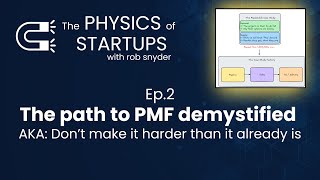
Rob Snyder breaks down product-market fit into two parts: finding one customer who says "hell-yes" and building a repeatable system to do it again. He maps the bottleneck through pipeline, sales, and delivery, using real startups like Prelude and Jump to show how founders fix the wrong problem first.
Chapters
All right, Rob, excited to be back. What's, what's been on your mind?
Round 2, I'm ready to rock. Let's talk product market fit.
Rave, rave reviews from nobody, but they were, they were thinking great things about the first one.
That's exactly right. The 78 viewers were like, they're like, this is what I've been missing out on.
So tens of viewers who accidentally clicked on the video while trying to view cats on YouTube.
Yep.
Um, all right, cool. I'm pumped to jump in today. Uh, I think it's a really very meaty, uh, blog post that we have this week. It is the deep dive, The Path to PMF. Uh, first, maybe like what's been on your mind lately that led you to write like more of a long-form piece that just like breaks down the whole process?
Yeah, I mean, I think two things. I've gotten a couple messages recently that have really pissed me off. From founders. One was from a founder, HPS founder, super smart, who shut down her company recently. And the reason was that she didn't know she should have been pushing harder on sales earlier. And it just like comes down to that. They had a real company idea. They really had a direction. They had expertise and they just like wasted a bunch of time. Not pushing forward on that. And the second one was, again, I was at HBS last week and had a second-time founder come up to me through his first year at HBS and say, I've taken all— I've done all the entrepreneurship things I can at HBS. And honestly, I can't define product-market fit. I have no idea how to define it or what I'm actually looking for. And it's like, are you kidding me? This is insane. And looking back at my journey, I felt the exact same way at that stage, even after I'd raised money. And so I don't know, I just, I usually write a lot after I get pissed. And so these things pissed me off. And it's just, it's, uh, we, we basically have a bunch of stories that we are told about companies that seemed like overnight successes. And there are a lot of stories out there of like, they were 2 seconds away from running out of money. And then a billion people signed up immediately. And they had product market fit and now they're worth $20 trillion. And you're just like, and so if that's your mental model for how this works, you're just going to kind of wait and you're not going to go all in on it. It's, it's, it's, you know, we're basically just steered into the iceberg at this stage.
And why does, why does that happen? Like, I'm reading, you know, a bio of like a, you know, a huge company or autobiography. And as he's telling it, I'm like, I don't know what I take away from any of this other than like, be a good storyteller after you're a billionaire. But like, what? Why? Why hasn't it been properly chronicled? Or, you know, like, what's going on?
I mean, this is a question I've been asking myself for like 10 years. I have no idea. I can't figure it out. I can't— maybe it's hard. Maybe it's just like a difficult topic. Maybe it's something you can't figure out outside in. You kind of have to hit your head against the wall in the pain cave for a while. I have no idea, but it just feels like malpractice at this point on behalf of the business world to like not dig into this.
Yeah. Yeah. And are there specific parts of like you call it revisionist history in your like, are there specific parts of that that jump out? You mentioned one with like all of a sudden demand just happened and like the company exploded. Are there other, you know, other elements of that that like really grind your gears?
Yeah, I think so. What actually happens is the second a founder finds really intense demand, And they just forget that demand exists as a thing. It just, it just ceases. And so we, we play it in our minds as if people want our product and it's our product genius. And so then it's all about, right, then sales gets easy and we think we're experts at sales, but really it's that we found really intense demand. And so all of the advice we give and the way that we see the world after we've found intense demand makes no sense before.
I like that divide. That actually helps clarify a lot of it in my mind. We'll dig in a little bit into like what changes in the business before you have product market fit and after and how the personnel, like the way that you structure organization, where you're spending your time. But I like that divide on like, man, it just doesn't make sense. Like the lessons are basically non-transferable. They're different skills. They're different things you're focused on. But let's jump into the framework that you present. And that really, it's like the foundation for what you've developed over the last couple of years. Factory plus case study, why don't you just give us the overview?
So most definitions of product market fit are like, you'll know it when you have it, which is cool, not helpful, but cool. And so it does describe like, after you have product market fit, you you definitely do know it, right? That's, that's great. That's useful, but that's not useful in advance. And so I tried to figure out just what is product market fit and how does it work? And then like, how do you get from not product market fit to product market fit? And so the, yeah, so most of my thinking can come down to two models, the repeatable case study and the case study factory. The repeatable case study. So let's zoom out. Like, what is a startup? A startup is just a system that repeats one single case study. So we find one customer, we make them say hell yes, they rip the product out of our hands. That's one example. And if we just do that a million times, that's what a startup is. And, and so the path to figuring out a startup is figuring out what that one hell yes customer case study is where they pull more than we push, where they're satisfied pre and post-sale. And then the way that we repeat that is through the factory.
Yeah. Let's jump into the case study real quick because for a while, you know, we both went to HBS. When I heard case study, I thought like a study of a business that, you know, you look at in a classroom or something like that. You're referring to something different and specific in this case. Like what's the, what's a case study in this context?
Yeah, the book, my publisher wouldn't let me use the term case study in the book. So it's technically called a success story. Think of on a website, like a B2B website, you have your case studies section or your success stories section. In that section, you have, here's the story of Jim at HubSpot who was trying to accomplish this. Didn't find anything that fit his needs, heard about us, bought our product, and says, "Hell yes," afterwards and achieves XYZ results. That's one case study. It's the story of one customer before and after they find you.
Yeah. And I, and, you know, having been in these sales conversations, for me, the important element of the case study is that everybody always wants to see at least one of them and they want to identify with it. Because otherwise, especially when you're early, they're not going to believe anything that you promise.
Yeah, I think, I think the, that's, that was one of the insights I had like later, which was I had this mental model for repeating a case study is, is the way to think about a business. Just you find one, you just repeat that a bunch of times. Then I realized you could just use the case study to sell. And it was a way more effective structure of a conversation and confidence building thing in the sales process. I was like, oh, well, that's, that's quite nice. You can just use that on your, on your website. You can use it to kind of like create everything else that you need.
Yeah. Um, all right. Let's get, let's get back into, we've talked a little bit about case study. We can get into those elements, but give us the, the 3-sentence version of the factory here.
Yeah, so there's basically the case study, which is who do we serve? What do we help them accomplish? We have to repeat that a bunch of times. And the way that we repeat that is through what I think of as like the case study factory. So our business is just a system that repeats case studies. And if we think of that as a factory with 3 steps, pipeline where we talk to people, sales where we turn them into customers, delivery where we turn them into satisfied customers who won't churn. If we look at that like a factory, one, that's just like a useful framework to have in our heads. But second, we can apply a lot of manufacturing thinking to figuring out what matters in our business at any one point in time and what to solve.
Yeah. And let's, let's make this like tangible here. Like what does each step of like pipeline sales and delivery, like what are those, what do those look like tactically?
Yeah. So like I'll just give an example for, for one of my businesses, which is I do a bunch of LinkedIn outreach to get people to talk to me. That's pipeline, right? It's how do I get 10 sales conversations per week scheduled. Another version of pipeline could be, I write a lot of LinkedIn content and people come inbound from that. I get hundreds of website viewers per week based on that, right? That's pipeline. How do we get people into the sales process, whether that's a meeting with us, whether that's to try, you know, to trial the product or whatever, whatever the, the thing winds up being, how do we get people in? Sales is how do we convert them to customers? So I have a conversation with somebody and they say, listen, I have no idea what the hell you're talking about. Right? That is an ineffective sales process. The goal is to turn them into an actual customer. And so whether that is a sales call, whether that's product-led growth with like onboarding them into the product and turning them in a conversion event into a customer, like whatever that is. Then there's the third step, which is customer success or delivery, which is the moment, like the goal of that is the moment that they're using my product and they're like, holy shit, I'm never going to stop using this. When they kind of like, that's the leading indicator of them renewing and continuing to use it.
Yeah, I love that. A couple of things that have resonated with me on this that we need to dive into in a future video, the toll booth idea and the pipeline, because it can be, it It can be LinkedIn, it can be cold calls or cold emails, it can be going to conferences. But basically it's like the path to get somebody from like a name on a spreadsheet or a theoretical human being into like a phone call or a, you know, a Zoom call or whatever with you in the sales call. Well, let's— oh, there's one other concept I wanted to like get into because I think it's going to be important is you mentioned systems theory. Let's get into the concept of the bottleneck and how that plays in here.
Yeah, yeah. So really good book called The Goal, which is a novel, a business novel about manufacturing theory, which is just amazing. But there's a— it's based on this theory of constraints, which is that at any one point in time in a production system, there is one bottleneck. And if you improve anything other than that bottleneck, it does not lead to any change in output of the factory. And so at any one point in time, there is one part— maybe it's pipeline, maybe you're not— maybe you're having one sales call a month, right? If you're having one sales call a month, it does not matter how your kind of like onboarding process looks because you have no chance of onboarding any customers. You can improve that You know, in a variety of different ways and you're just wasting your time. Your bottleneck is on pipeline. And so the way to think about the bottleneck is that it tends to move downstream. So your bottleneck is pipeline. And then once you have 10 sales conversations a week, your bottleneck is no longer pipeline, but you're converting like 1 of those people. It's like, okay, now my bottleneck is the sales process. Cool. Now I'm converting 5 of those people or 7 of those people or whatever it is. But like most of them are very angry after they buy. Our bottleneck is now delivery.
Yeah. And the, you know, the one thing that's not explicitly on here, obviously it's, I think implicitly in all of it is the product like itself. And, and, you know, kind of implicitly the way founders often approach this is obsess over the product as if the product were the bottleneck when really the product is very very far from that.
Yeah, product is supportive. It's basically, it supports them accomplishing whatever they're trying to accomplish in their lives. And so it sits between sales and delivery here and it enables those things. But it's not, yeah, like you do obviously need to have a good product. It's hard to build a good product, but a good product is in reference to demand, in reference to what they are trying to accomplish in their lives and businesses. And so, right, it could be super easy to onboard, seamless, or could be super clunky, and they're still happy in either direction because it fits what they're trying to do.
Yeah, I love that. And we'll get more into the power of demand here in a little bit. Let's jump into what it looks like when there's problems along each step. You've hinted at this, but maybe if we were to start with pipeline, like what is, what is, what goes wrong in pipeline that leads to not having 10 calls a week or 5 calls a week or 15 calls a week, like not having your calendar like annoyingly full with, um, with conversations with potential customers.
Yeah. So I think like, let's, uh, what I want to do first is I want to like zoom out and say your job as a founder is to figure out the case study and the factory. And to make both of them work. And by work, it means we're generating repeatedly successful case studies. We're turning people into successful customers. And so the problem is, one, we're never taught that's what we're supposed to do. And so we just go flailing about for a while. So, you know, usually in every startup journey, there's like 6 to 12 months of we've raised money. Maybe we should go to conferences and do pitch competitions and do a bunch of bullshit. Maybe we should just like spend a bunch of money on our website because who, like, why not, right? And we're not trying to figure this out. At some point, reality hits and you're like, okay, I need revenue in order to survive or to raise my next round. How do we get there? How do we start figuring out sales and getting people on board? And at that point, what people tend to do is they're like, all right, cool. How do we figure out sales? Blast out a bunch of cold emails. And so what we do is we go and look at HubSpot's 2017 article of, you know, here's the sales email sequence that works. Load that into some sort of a sequencer, blast it out, and get zero responses except for a couple middle fingers. Or maybe we get a demo or two or something like that. And that's the point at which pipeline is the bottleneck. We have grand theories about our product. We've probably built way too much already. We're like, all right, time to figure out sales. We've nailed the product side, time to figure out sales. Go and we hear crickets or we have like 1 or 2 demos in a month and it's like, I have no idea what to do. And so at that point, pipeline is the bottleneck and nothing else matters unless we can figure out pipeline. What people are usually doing wrong at this stage is we're sending that HubSpot email sequence and not to beat up on HubSpot, but they just have a bunch of terrible email sequences that are like the greatest thing ever.
It might, might have, might have worked originally, but now that they made it like democratize it, everybody uses it. Everybody now it's like there's probably an AI version of that, which is generic, semi-personalized message about what your business might or might not do. Plus I can fix this problem that you probably don't have.
Yeah, exactly. Yeah, it's like, how do I use AI to send things that are annoying to you? Like, that's not helpful to you, right? Like, super power that. So, so yeah, like the core problem at this stage is we have, we don't really actually know what our case study is. And we don't know what messaging we can send outbound to get people to talk to us. And we're trying to sell our product in that outreach. And so that basically never works. Like, you might, like one in a thousand startups might just like make it work like that. I've actually seen a couple where it has worked and they've just kind of like gotten it right through some stroke of luck. So, you know, worth trying.
But it feels like that might be the consequence of having solved a problem that they personally experienced, like that happens to be the same problem that everybody else who works in supply chain and XYZ industry experiences. And so they, they know the words to use because they're talking to a different version of themselves.
Yeah, totally. Totally. Yeah. So like that, like that's awesome when it happens. Very rarely happens. What usually happens is just middle fingers. And so what do you do in that? Well, you stop trying to sell your product in your outreach and instead you just start trying to sell the conversation with you as like, hey, I'm an interesting person. Let's talk. That usually solves pipeline in that it gets you 5, 10, 15 conversations per week. But it's not really solving, it's like temporarily getting you meetings. It's not solving the whole problem. So we'll, we'll move like, that's when the bottleneck moves to the sales process. So I don't know if you want to go there next.
Let's, yeah, let's pause up maybe one more, try to make this super like tactical about the pipeline. I, and I like how we're moving through this from your first time developing your pipeline, this is what's going to happen. We'll get into the first time that you're trying to scale the first time you're— and then we'll think about how the system works, like on repeat when you're trying to build it and scale it. But let's think about, is there an example of a company that was going through this first time? What did that look like? What did— what were they tactically doing for to develop their pipeline? What didn't work? And what did?
Yeah, I mean, what I mostly see— so actually, my favorite example is a company called Prelude. They're a company that does dispensary software for procurement or something. And they were sending this like super formal email. It's like, dear sir, madam, I would like to show you that, like, I'm beating up on them. But, but it was something like that. And they'll make, they'll laugh about it now. And so they were sending that and obviously it wasn't working. Well, it turns out they have Snoop Dogg as an investor. And so their message just became, hey, Snoop Dogg invested in us. We'd love to show you what we're working on. Right. And, and obviously that worked.
And that worked. I mean, one, that's incredible. I knew that Snoop Dogg was an investor for one of the startups you'd worked with. I didn't realize it was the dispensary company, which is just like the whole thing that comes together there. That's incredible. But what's the— I mean, you get an email that's, or a LinkedIn, whatever it is, that's like Snoop Dogg invested. What are they trying to accomplish with, with that message?
Yeah, it's like the only goal with these messages to start is to just get a volume of people to talk to you who are possibly your potential customers. That's the only thing that matters early on. And it's going to be a dirty pipeline. We'll get into that in a sec. And by dirty, I mean like not everybody has demand.
Should you feel bad about that? Like, you're, you're asking for people's time. 50%, 30%, 70%, something greater than zero is going to be like, uh, we're on a call right now that you— I asked for, and you are not the person that I need to be talking to.
I don't think that's a problem at all. It's like, you're gonna get annoyed because you're wasting some of your time on calls with people who seem interested but don't have demand and you can't figure— and they're not converting and you're not quite sure why. And that's, that just, that's a signal that your sales process is broken, is now the bottleneck. And okay, it's time to fix that. And part of fixing that might be going back and changing your targeting.
Gotcha. Let's jump into the sales. How does that look? First time through, you fixed, fixed your bottleneck at pipeline. You've got a bunch of calls. What's going on?
What are you trying to do? So you get a bunch of calls and like usually what happens is you show up and you're like, cool, we've solved this. And then you have a bunch of calls and people are like, wow, this is awesome. And then they just kind of like disappear. And so you wind up getting nobody converting to a customer or like very few. You have 10 calls a week and like maybe one actually wants a second call. And I was like, okay, this doesn't feel good. And it's like, the calls are good. I'm like, I feel like I'm doing a lot of work, but like not, not a ton is coming out of this. And so, you know, it's like, there are a bunch of reasons that could be happening. And so what you need to do is you have to record your calls. You structure them in a certain way to try to figure out, does this person actually have any demand? If they don't have demands, they're not going to buy. Like, that's just, it would be weird if they bought. So we're trying to figure out, does this person have demand? If so, what is their demand? What are they trying to accomplish in their lives? And okay, if they do have demand, does what we're trying to sell fit? Do they get it? And is it real? And like, that's all we're trying to figure out with the kind of sales process here. As we have these conversations, we're gonna have people who are gonna be like, yeah, I have no demand. Like, what the hell are you talking about? Like, none of this makes any sense. And that is useful information. And then you have to kind of decide what to do about that. Okay. Yeah, you could change the questions you're asking. You could change your case study a bit. You could change who you're targeting or when you're targeting them, right? What tends to happen is it's a mix of a bunch of things. We realize that, okay, it's, it's I'm talking to this kind of person. I'm talking to the head of HR and guess what? Head of HR doesn't really want to do anything, doesn't have any projects on their to-do list. So instead I need to target this other person in the company, this other title in the same company. And when I target this other title in the company, I need to position what I'm talking about differently because they have a different project on their to-do list. So I've changed my targeting. Probably haven't changed my outbound messaging a ton if it works, you know, or, you know, maybe it'll break, who knows, then you fix it. Then in these calls, you're structuring the calls similarly, but you're using different words to try to like resonate and understand what this person's demand is. And then once you kind of like figure that out, once you find real demand, then there are other like bottlenecks that emerge after that.
Yeah. And one of the tools that you consistently use with, with founders is like, just keep a simple spreadsheet. Like, here's, here was the company, here was their— I mean, what are some of the, you know, you mentioned title. What are some of the things that you, that most founders find useful to be like tracking to see, okay, these are some of the traits that I'll eventually be wanting to target or avoid?
Yeah, title is useful. Kind of like stage of company is often useful. It's gonna totally depend on what demand is. So like, An example of this recently is somebody was trying to sell an AI tool to heads of engineering, and the AI tool basically enabled them to better evaluate the quality of their AI models. Cool. Like way better. Turns out head of engineering only cares about that when forced by sales, founder, or product leader. And so the kind of like better path in the company would be to go to those people first. And that's an example of something you're going to find. And you find that by just like comparing and contrasting a bunch of the conversations you've had and saying, this person should have had demand. They're like, yeah, we have like low quality output. Customers are complaining. It's like, okay, well, like, what are you doing about it? Eh, nothing. We got our roadmap. Wait, what? Like, what are you talking about? And then, and then you find the companies that have, like, not just said, yeah, we have this problem, we're trying to accomplish this, but they pull and they're like, yeah, no, we need a next step tomorrow. Like, that's where the signal is. And all of those people are product leaders or all of those people are founders or whatever, whatever it winds up being. And you're like, oh, okay. Now the patterns make sense to me. The pull is actually located in this part of the organization.
And it feels based on, based on that, it feels like the sales process is, it's not just like, who am I targeting? It's what is the case study that I'm showing them? There's a really strong connection between the case study and this step in particular. And then a bunch of founders come to you with is, all right, sale, like call 2, what do I do? Like, how do you think about advising on like the selling process and people who need to be involved?
Yeah, it totally ranges, right? If you're selling enterprise. You have to genuflect between, you know, 20 different group demos and do a bunch of nonsense for that. If you're selling something SMB, you can just generally send a contract and a Stripe link right after call 1. And so it generally depends, and it depends not based on what you want to be true. It depends based on what the buyer needs to do to evaluate this and make sure that it's the right fit for what they're trying to accomplish. And actually buy. Like sometimes they have to go through a procurement process internally. Sometimes they need to get somebody else's sign-off. It just, it just totally, and sometimes they don't need to do any of that and they just buy.
Yeah. Okay. Let's talk about that. And they just buy part. So you, you've done 100 calls, 80 of them were irrelevant. 20 of them had promise. 2 of them buy something like that. I don't know what that's probably, I don't know if that's a great breakdown. But let's talk about the movement from sales to delivery. Like what's, what's going on there?
Yeah. So, so yeah, the, like, again, the whole goal here is it doesn't matter necessarily where you start on this. You could start with a just 2% conversion rate to customer from, from first conversation. And that sucks. But the point is you're trying to iterate on that and learn based on those 2 people. And iterate on everything before. But the most important thing is, as you're turning people into customers, what we tend to do, and I'm guilty of this too, is you're like, sweet, like, let's celebrate. We got the customer. They're on an annual contract. I'm just going to send them the login credentials and like wish them farewell. And then, you know, that sucks, right? They, they, they don't get onboarded. And it just, it just doesn't, they don't, they never get successful and it would be weird if they renewed in that context. And if you're in B2B, recurring revenue is kind of like the name of the game. And so you need people to renew and you don't want to be just praying for them to renew. And so what we have to do is we have to figure out what's the moment, what's the sequence of events, what's the, what's the thing that happens where this light in their, their, this light in their brain that's like, I'm going to cancel this because it's not working, where that turns off. And so the way we have to think about onboarding and success is how do we, first of all, figure out what that moment is, who gets there, and how do we design the onboarding process as a bullet train to that moment where it would be weird if they didn't get there. And that tends to take a couple different shapes. Like, one is, oh, we realize that every kind of customer who buys really fast churns really fast too and can't be successful with our product. So we need to change targeting to target this other kind of customer. Or we realize, you know what, the customers who are most successful with our product have these things going on in their organization. And so let's just change our case study so that that kind of person sees this and says, hell yes. Right. And so it's, you're playing with all of the different pieces of the case study and the factory to optimize for the volume of people who are hitting that hell yes moment post-sale.
And you know, you've mentioned how it ties to pipeline, how it ties to like putting the right thing in front of them, the case study, so that they, the right people are saying yes. One of the examples from your startup and your inflection point that I've always appreciated to think about often is like, whatever it takes, you, the founder, are in the product. You were working out of like Google Sheets and doing like one— I think it was like personally doing onboarding calls with all of your customers.
Like you're—
you talk about how your day was blown up, but that's how you figure out like the connection between the person buying their pre- purchase demand, and then they're like the delivery element that ensures that they're— that the right customers are satisfied, not that all customers are satisfied, but the ones that, you know, you're building this around are satisfied. Is that, is that a fair distillation?
Yeah, there's, there's like the classic Y Combinator term, do things that don't scale, which like, that needs to be pointed in a specific direction for a specific reason. And so the case study and factory model tell you where to point the do things that don't scale. What I'm trying to do as I'm onboarding customers and make them successful is I'm trying to figure out the moment they are successful and why. And I want to do that, like, by any means necessary. If I need to fly out to personally onboard somebody, in their home or whatever it is. Like, like, whatever it takes. That's what's worth doing. Not because I'm going to do that forever, but because this is the bottleneck. I need to figure out— I need to fix this bottleneck as fast as humanly possible. And so it is worth doing whatever it takes to figure that out as quickly as possible. What I see is a lot of people are just like, well, maybe we'll have a couple of meetings about this. Maybe we'll brainstorm this. Maybe we'll be consultants about this and have a steerco meeting in a couple of weeks or whatever. And it's like, no, this is the bottleneck. Nothing else in the business works unless we solve this and we are default dead. So all in on this.
I love your— the closest thing I think you have to a Mungerism is It would be weird if, um, like, and in this case, the, like, it would be weird is, weird if is if you were personally leading like the delivery and you didn't discover the most important elements of the product for the customer to be satisfied. It's like you would almost have to be like intentionally blind.
Yeah. Yeah, totally.
Totally.
Like you want to make sure that there is no chance that you don't figure this out. Yeah. And like the challenge, like just zooming back out to the state of startup advice, we're just like not told to do this. This isn't a relevant thing. So yeah, obviously everyone throws off like a, the login code and says good luck. Or they do, you know, like an optional onboarding meeting. It's like, no, maybe eventually that's how you do it. And maybe that's, that's how other companies do it long after they have product market fit and they've figured this stuff out. In this stage, when we're figuring out the factory in the case study, we need that information and we need that in as high fidelity as possible, as quickly as possible.
Yeah. Yeah. Let's talk about, um, you know, like one of the deceiving parts of this is you're like, okay, like you just told me how this factory works. There's a case study. I figure out pipeline, then I got to nail sales and then I got to make sure my customers are happy. It's like, Duh, like that seems logical when you lay it out like that. It's not that simple. Like you've hinted at a couple points on, all right, while you're in sales, you're actually going to figure out that pipeline's broken. When you're in delivery, you also might figure out that pipeline's broken. And then, and product is like mixed into this. Where, where do you see like the complexity and what takes this, you know, you say give yourself 12 to 18 months to figure this out. Why does it take that long? Like what's going on?
Yeah. Like I've tried to simplify the models to the like most simple components possible. There's only two elements, the case study and the three-step factory. And even then this is like monstrously complex because all of these pieces are linked to each other. The case study links to who are you targeting? The sales process, when that doesn't work, it could be for a variety of reasons that range from the case study to pipeline approach to just pure execution in the sales process to something downstream too. Like it could be just people don't understand what the product actually does or what, what they're going to get out of it. Right. And so there's so many different things that it could be that while there is one bottleneck, there are a variety of ways to debug that bottleneck. Most of which won't work. And so the hard part is, one, do we know what our bottleneck is? Two, have we figured out what's actually going to fix that bottleneck? What's going to remove that bottleneck? And so usually there's like, all right, we try something for 2 weeks, it doesn't work. Then we try something else and oh wait, shit, we realize that it's Actually, it's actually targeting. It's actually this other thing. And it's a bunch of variables that you don't necessarily know to look for necessarily. Like it could be, oh, we're not talking to, we're talking to heads of engineering and it's actually heads of product who care about this. Right? Wow. Super simple after we figured that out, but before it could have been a thousand other things. And so that's why it takes so long. And then, you know, sales processes aren't necessarily fast. So it, you kind of have a lag between making a change. You know, you'd make a change in pipeline and you learn that you just ruined your, like, your churn numbers. You learn that like 2 months later, 3 months later. It's like, oh gosh, we made 15 other changes in the meantime. Now we have to go back and like figure out all these other things.
Yeah. And then add on to that the difficulty of getting real feedback from customers and like people that are being culturally nice, but saying words to you and looking at you and saying something and really thinking and meaning or showing with their actions a different thing, which is like a total like mind-exploding experience.
Yeah, you, I mean, you sell into like universities and nonprofits, so like, how do you even— what I like is whenever you're, whenever you're selling, like always add in a German or an Israeli to your target list and like have a couple conversations with them because They don't know how to tell it nice and it's refreshing.
Let's maybe let's make some of this like real. Are there jump or wayside? Like let's bring in an example of a company that was, or a startup that was progressing that it needed to go back and fix things. What's a good example that will bring that to life?
We'll just start with Jump. They are an AI note-taker for financial advisors, but they started as an AI note-taker for salespeople. And so they had basically spent, I don't know, 6 months plus working in design partnerships with salespeople to like build the product, but people really weren't converting. Some people were kind of using it. And then they figured out, wait a second, I think someone's neighbor was a financial advisor and was like, Holy cow, I desperately need this. And that person pulled. And so it was like, okay, cool. They found really intense demand, but they have to figure out everything else after this. And so they then had to figure out pipeline. How do we get people to talk to us? Well, we do some outbound. Oh wait, a lot of financial advisors go to conferences. Let's do that. There's a lot of referrals. How do we incentivize, like, how do we, how do we drive more of that? Cool. Now there's the sales process. How do we structure a case study in the sales process? Where people look at it and say, oh my gosh, it's like you've been listening in on our meetings. The first version of their sales pitch was not that. They like did not get there. They got, you know, someone objected on pricing in the first sales conversation. I would never pay this much for your product. I would only pay this much if it did XYZ. All right, cool. Well, we'll do XYZ. Change pitch. Do it again, and then that part starts working. Then how do you onboard and get customers successful? And so for that, it's, you know, there's a lot of different elements, but turns out that, you know, you have to onboard customers and I don't know, set up custom, like set up their integrations into their CRM for, for this note taker, or you have to set up custom meeting or whatever, whatever it winds up being. But there's a couple of things that cause a financial advisor to say, 'Oh my gosh, this is like the greatest thing that's ever been invented.' I think one of them actually like said after using it, after they figured out this bullet train, like, 'This must have been what Alexander Graham Bell felt like when he invented the telephone,' right? Like, that's— and like, that's the end goal of this, is you get people to that moment as fast as possible.
And, you know, in some sense, like, Jump solved a really big question early, which is like after they figured out it was financial advisors, they focused there. Let's, let's get into like a problem that I think some of the startups you've worked with, which is they actually sell through a couple times. There's some demand. It's not the bullet train. It's people aren't ripping it out. And then actually they stumble upon a different demand after they're delivering a different, you know, to a different type of customer, like What happens in that circumstance?
Yeah, so like example there is companies selling to HR executives and turns out HR executives don't really have urgent projects on their to-do list. So they don't really pull very hard. Okay, cool. Company's trying to sell to them, getting a lot of sales meetings, having a lot of good conversations, but deals are kind of stalling out in the proposal stage. Then they have a conversation. This is like actually quite frequent of something like this happening. They have a conversation with the CEO of an outsourced HR provider who looks at the product and is like, okay, HR is my whole business. I'm the CEO. You can actually help me accomplish this? Are you kidding me? And buys immediately. And they like, oh, okay. So we've been targeting people who have, we'll say, lukewarm demand. By changing our targeting and finding the person where this is on their to-do list at all times, we find intense demand and that person pulls the product out of our hands. And that's the highest leverage change that a startup can make. Like generally is how do you find people with very intense demand and very bad options? And so we're like, every, if you're not doing that, you kind of have to be perfect. If they have lukewarm demand, you have to have the perfect pipeline process. You have to have really good salespeople or you have to be a really good salesperson. And then you have to have like magical onboarding. If you find really intense demand, the whole factory can kind of be a piece of garbage, like not necessarily a piece of garbage, but it doesn't have to be perfect.
Another, you know, thing that you talk about is like nothing is solved until everything is solved. Maybe with the exception of after, after you find demand that corrects for like a bunch of these small problems that might happen along the way. But what does that, like, what does it mean, you know, thinking about zooming out to the case study factory? Yeah. Nothing is solved until everything is solved.
Yeah. This is where, like, this is why I call this stage the pain cave, because it doesn't really feel like you're making a ton of progress as you're doing, like you're having, you're doing a bunch of work. And so you're like, oh, finally, we're having 5, 10 sales conversations per week. We're having 10, 15 sales conversations a week. And it's like, nobody's converting. It's like, what are we doing? And then we pour so much effort into fixing the sales bottleneck. And it's like, okay, cool. We finally have people converting and then we get punched in the face by our next existential crisis, which people aren't using the product. It's not generating value. They're not, they're not like renewing right away. They're dropping off. It's like, and at every point in time, it's like, This pipeline process kind of works, but does it really? Like, it's generating a lot of conversations, but is it generating a lot of customers? Well, okay, it's generating customers, but is it turning into retained customers who are getting a lot of value? And so basically, until you have the entire system and the case study working, nothing actually works, or you don't know that anything actually works. And this is that kind of like existential product-market fit dread that we all have where it's, you know, yeah, all of this could be gone tomorrow because the whole system doesn't repeatedly work. And that's the right kind of fear to have. It's the right level of obsession to have because this is, right, like, you don't get paid for having 5 sales conversations a week. You don't get paid for converting people into customers who churn in a month. You don't get like The business doesn't work until everything works.
Yeah, that's interesting. And the, like, the way that demand plays into this, like, the— it feels like a lot of the early searches for signal of demand, like, there's, there's only a signal of demand if they're willing to talk to you. There's only, like, real demand if they're willing to buy from you. And that demand is only valuable if they're willing to stay with you. Like, demand is kind of like the through line of this, like that. How do you, how do you want, you know, you've hinted at this a little bit. You can get like kind of demand. And it's like there's this weird kind of intermediate feeling of, okay, people are buying from me. Is this demand? How sure? Like, what does it feel like when you've really got demand? And do you always know you've got demand? Is sometimes it's actually not clear? Or is it always like, okay, I found something here and it's time to go?
Yeah, there's, there's, see, it's pretty clear when you have like lukewarm demand, because people will be saying, wow, congratulations on what you've built. This is really impressive. Right, which is code words for I'm never going to buy this thing. And, and so you can kind of read through the lines there. But then when people are like, oh, I can see this being useful in our company, you know, Let's schedule a group demo. Let's do XYZ. Right? That's when it starts to kind of like feel like there is some amount of pull. When there is real pull, and once you're kind of like designed around that, what you hear is like, it's either something like, I literally don't believe this is possible, but if it is, I'm buying it right now. Prove it to me. Right? I need this. I need to, like, I need these people to make a decision on this. But first you have to prove to me that this actually works. Like, I don't believe it. Or it's, you know, they don't even need that proof point. They see some sort of proof point and it's like, cool. Here's what's literally going to happen from here. I'm scheduling an onboarding call with you. Wait, how do I buy this? I would actually get phone calls from people from unknown numbers, from people who said, I heard about, I heard I need to buy your product. How do I sign up? Where do I pay? And how exactly does it work? And they would ask me in that order, which is like they had made the decision to buy. Someone had told them they needed this to solve X thing in their business, but they didn't even know the details of the product and they were trying to buy it. And that's when it, that's what it feels like when there's pull. And you can kind of envision this if you imagine a factory, right? The case study factory. Question is, are you pushing the person, the potential customer, through that factory against their will, or are they pulling themselves through the factory? And so that's the kind of physics of the case study factory and demand. The goal is for them to want the next step more, for them to want to get onboarded, and for them to exert the energy, which means you have to do less. And you have to, you don't have to try as hard and you don't have to be as perfect.
Hmm. That's interesting on them pulling, pulling through. It's like that there's like a suction at the end of the line that's like dragging you through it and your team may or may not be actually ready for that. That's like the, you know what, my favorite example of the strong demand was like one of your startups that they had an AI product that people didn't believe it could do the thing. Because it was priced too low. And so same product, 10x the price, people started believing that it was legit. And like that actually kind of answered the one of the concerns that customers would have before they buy, like how can you do all of these things for that price?
Yeah, it's just like funny how this stuff works sometimes.
Why don't we jump into implications? There's a couple that you, you call out in the in the blog post, and we'll put the link in the description. But one of them is Simplicity. Another one is when to use sales coaches. Are there a couple of the, you know, implications for founders that you'd like to shed light on?
Yeah, the main one is get started now. This clock, this 12 to 18 month clock to kind of figure out all this stuff, it could take longer, it could take less time. I've seen startups go way faster and take way longer. This start— this clock only starts when you start trying to figure out sales. That's like the trigger point. Everything before that is just stretching before a race, right? And the clock only starts then. Second piece is hopefully like we've conveyed in this and in the post, just how complex it is to figure this out, how all these different pieces are interconnected. And how you might have one bottleneck, but there are, there are like many different paths to solve the bottleneck, to fix the bottleneck, to remove the bottleneck. And because of that, everyone wants to like test 2 or 20 different ideas at once. It is base— this is why it's so hard to test multiple things at once. And instead, why you tend to want to do things sequentially and go all in on them. It just requires a full brain effort on, on one One thing, each of the bottlenecks are fatal by default, is what I call them. Like, if you don't solve them, companies die there. The alternative is death to solving these. That's why I talk about you have to go all in on solving this particular bottleneck, whatever it takes. Fly out, go to the conference, do whatever, do whatever it takes. And the last thing is like, say, so in our minds we're like, okay, I've figured out the product. Now it's time to figure out sales. And we tend to try to go and get a sales coach who is someone who has helped startups after they have found product market fit to, to turn their kind of like janky factory into a factory that's like humming, that you can plug salespeople in, that can scale. And so those sales coaches are excellent at that shape of a problem. And I found that like a lot of founders get annoyed because sales coaches won't coach them at the stage before that. And it's for a specific reason because this isn't this, it's, you have a goal to figure out sales, but this is not a sales problem. This is a broader problem. And so this is why a lot of founders get annoyed that sales coaches are like, yeah, I only work with founders. After a million ARR or after 500K ARR. It's like, yeah, because they are excellent at taking a factory, especially the sales part of the factory and maybe the pipeline part of the factory and turning that into a high volume factory that you can kind of like scale. Tend not to be good at that. Like it's just not, it's a different skill set. It's a founder skill set to do the What is the case study and what is the factory?
Yeah, rather than here's a product that I want you to go find the people that want the product that I want to build and deliver, which I'm sure those sales coaches have run into enough times to be like, yeah, I'm not doing that for you. I can't do that. You're not going to be happy. It's going to be a waste of my time. And, and yeah, I need to focus on like where there's actually a product that I have professionalized the process of delivering.
Yeah. Or selling that. Sales coach, by the way, I 100% recommend a sales coach. For after that stage because there's so much nuance. There's so much additional things you can do to make your kind of case study factory high volume and like excellent. And so totally worth doing.
Sweet. I think that's most of what we wanted to get through with this one. Rob, any, any last thoughts?
No, this is hard. Hopefully it's a little less hard. It's hard even when you know how the factory and the case study work. In the path there. But hopefully it's less hard than when nobody was taught this at all. And so that's the hope for this, this post and for most of what I do.
Awesome. Um, well, leave a comment or drop Rob an email. You can just reply to his, uh, Substack with, um, your extensive list of critiques and how this could be better hosted and better delivered and more interesting. If you've got a question for upcoming newsletters or that you want us to take on, like drop it in the comments. Maybe, maybe we'll get to it if we like it. If we don't like it, we'll probably just ignore it. Yeah.
Um, yeah. Or, or don't give us any feedback and we're just gonna keep recording whatever we think is, is useful and not checking the stats. Well, I'm—
for all 11 of you who forgot that this was on and you just came back to your computer and now, uh, now it's finishing. Thanks for hanging in there. And, uh, we'll be back with, uh, more of Rob's thoughts. Cool.
Thanks, Rob.










