George Ewer Evans documented rural England a century ago. The speaker traces how tractors evolved from horse-drawn to GPS-guided, then asks you to pick any object, research its past, describe it now, and imagine it 50 years ahead in a 300-word essay.
Chapters
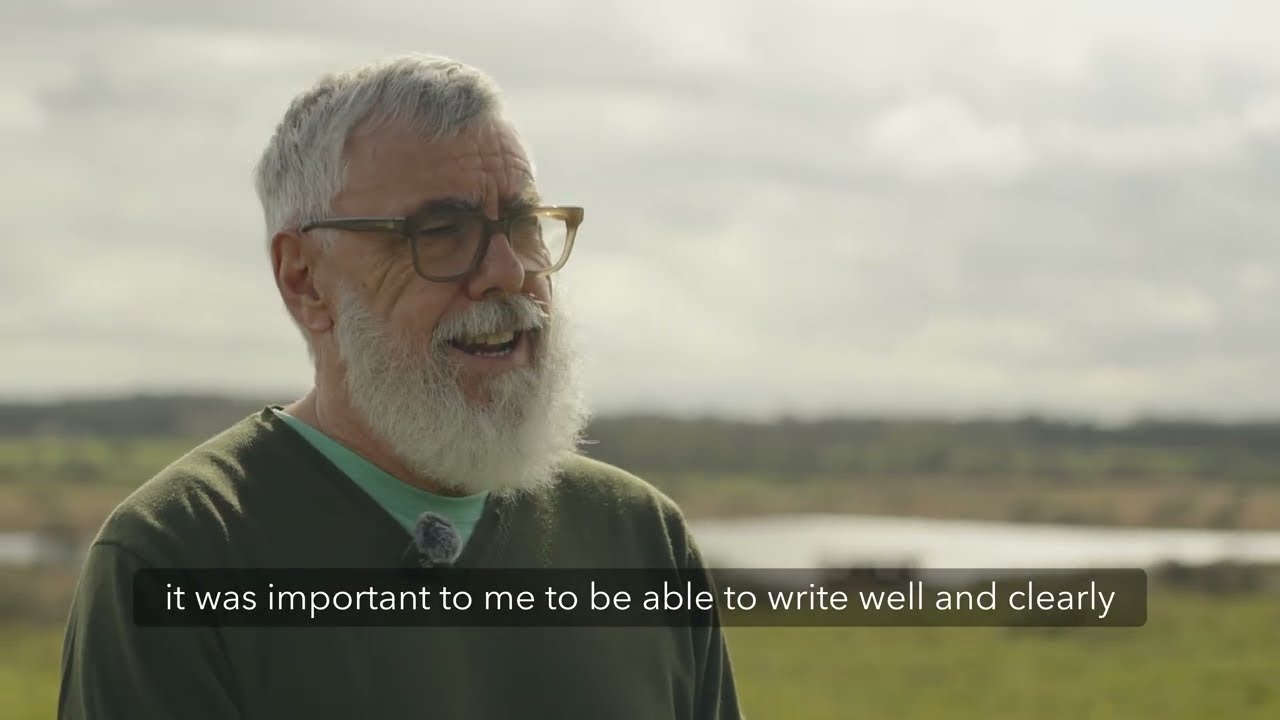
When I was in my early teens, my parents gave me a copy of this book by George Ewer Evans. George Ewer Evans had been a teacher, as was his wife, and they were living at Blackshall in Suffolk when they wrote this book. Evans couldn't teach anymore because he was deaf. So he would stay at home and look after the children while his wife worked. And his next-door neighbour was a man called Robert Savage, who'd been born in 1880 and had been a shepherd all his life, as had his father and his father before him. Robert Savage told Evans about how he'd worn a smock, how he had carried a costrel on his belt to carry his water to work, and Evans realised that costrel was a medieval word that had been used continuously until the 1950s when he interviewed Savage. This led to him interviewing more local people and writing that and a number of other books about rural life and how it was changing. At around that time, I had a weekend job on a nearby farm, and I too was hearing those words being used. I too was working alongside people that were related to those that Evans had interviewed. I decided then that one day I would research how rural life was changing. particularly in rural England, and wrote my own book. There has probably been more change in the last 50 years than in the 50 years before that Evans wrote about. I can remember visiting a farm in North Norfolk and being amazed that the farmer had a telephone connected to his house wirelessly so that he could stand outside and talk to people. Another farm, I was offered a baked potato for lunch And was amazed to see it being cooked in 3 minutes in a microwave because I'd never seen one before. But of course, some of the change we're seeing today involves returning to ways that were almost forgotten. We're seeing village shops opening again after years of closing, but they're now in community ownership where the local people get together, raise the money, and open the shop and run it themselves. We're seeing farmers farm without fertilizer because fertilizer has become phenomenally expensive in the last few years. There's a blacksmith I met when I was writing my book in a village where there'd been a blacksmith for centuries until about 1920, and he sells blacksmithing experience days online. Lots of old ways are coming back, but with a contemporary twist. That is fascinating. Evans wrote about how horses were replaced by steam tractors like this one, later by diesel tractors, and of course now we see tractors steered by GPS, and they're developing tractors that don't even need a driver. That's the change that's happened over the last 100 years. What will happen in the next 100 years? Think about how you communicate. Think about how your grandparents would use a telephone. Perhaps it sat on the— on a table in the hall by the front door. And today you have a mobile phone. What will you be using to communicate in 50 years' time? Just think about that. So I'd like you to take something that you're familiar with, something you know really well, something personal to you, write 300 words about its past, its present, and its future. Research the history of the object or the item or the subject you're interested in. Look at how you engage with it today and try and imagine how it will be used in 50 years' time. When you write your piece, try and make it clear and easy to read. Don't use big words that you have to look up. Try to have a beginning, a A middle, and an end. And if you can, try and link the end to the beginning. So you might ask a question at the beginning and answer it at the end. Think about the structure of your piece. Think about how you put your sentences together. Try reading it out loud. Do you pause for breath too often, or do you need more punctuation? And think about whether you're writing it as you, so it's my My whatever it is, or are you writing about something somebody else has, perhaps a family member or a friend, in which case you're talking about them in the third person. And remember that writing 300 words is much harder than writing 500 or 1,000. You might find that the first paragraph, when you read it back later on, you want to take out and start again with more impact. That's quite normal. So remember that When you start to think about what life will be like in 50 years' time, the people that might have an opinion on it today won't be here when you get there. You have to imagine the future for yourself. You'll create the future yourself. And your challenge now is to write 300 words that looks at the past, present, and future of something you're familiar with. And I'm looking forward to reading what you write.