80M Business and 2,5M YT Subscribers | Chris Do From The Futur
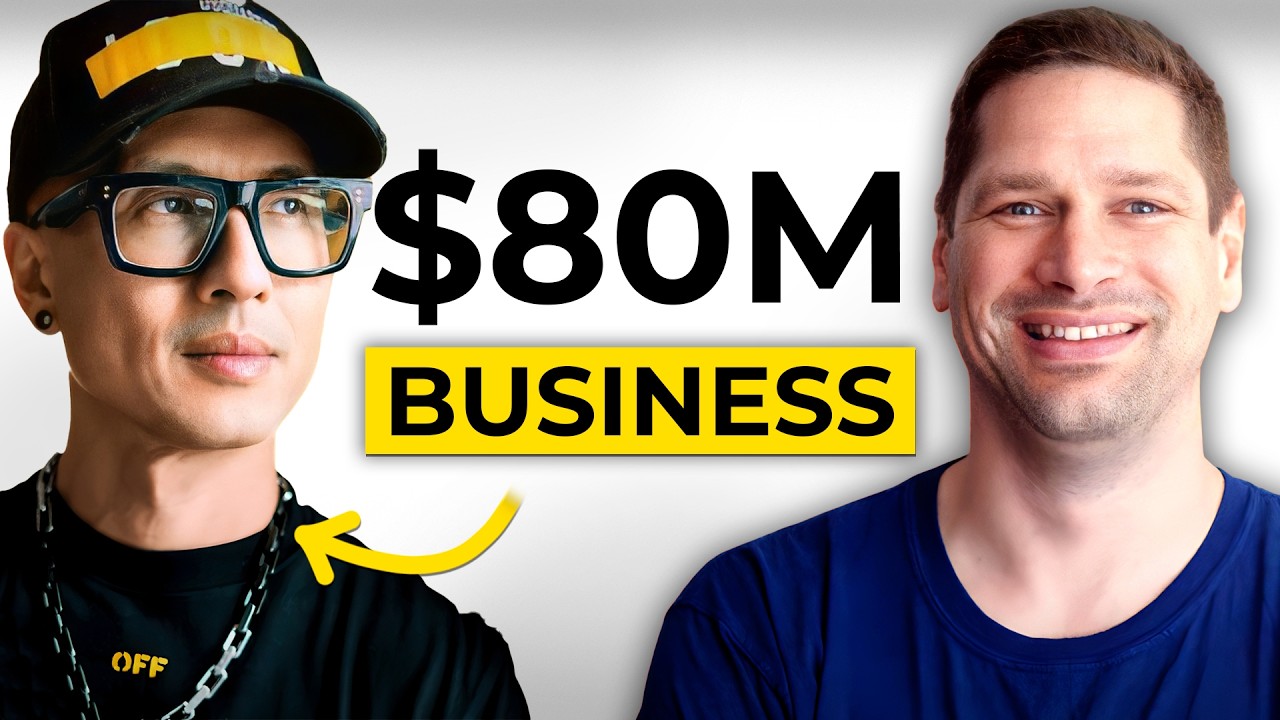
In this long‑form interview, host Robin Waite talks with Chris Do, founder of The Futur and former agency Blind, about the evolution of his career, the concept of a personal "superpower," and the importance of authentic personal branding. Chris shares stories from his early agency days, including a law‑firm coaching stint where a tennis‑ball signal sparked his shift to a "Fearless" brand that aligns with his love of surfing and adventure, ultimately doubling his revenue. They discuss the psychological underpinnings of showing up as your true self versus a curated persona, using pop‑culture analogies (Superman/Clark Kent) to illustrate integration of identity. The conversation then moves to concrete business tactics: price bracketing, incremental "go‑higher" pricing, value‑based versus hourly pricing, negotiation techniques inspired by Chris Voss, and the role of guarantees and uncertainty discounts. Chris also emphasizes outcome‑focused selling, the need for confidence in delivering results, and the practice of self‑gratitude letters. Throughout, the tone is conversational, anecdotal, and coaching‑oriented, with a supportive and enthusiastic sentiment toward authentic entrepreneurship.
Chapters
Welcome back everybody to the next episode of the Fearless Business Podcast. As you can see, I've got an incredible guest in front of me. Chris has been in my world, albeit he doesn't know it, for a good— well, it's around about lockdown where I first discovered the YouTube channel The Futur through a mutual friend of ours, Matt Esson. But Chris has some fantastic accolades. So you've been running businesses now for— or your agency you're running for 22 years, built over $80 million worth of value throughout those 22 years in that business, which I think is utterly epic. You've got a fantastic book, which you can see that I've put little flags in there for the bits of content, A Pocketful of Dough, which is one of my favorite books. And I do need to talk to you about getting some copies of this for my clients as well at some point, Chris. And then obviously you've got the future, your YouTube channel, which now I think has just ticked over 2.5 million subscribers, which again is like absolutely huge. So welcome to the Fearless Business Podcast, Chris.
Thank you, Robin. Thanks for hosting this. And I'm I— it's one of these ones where it's super cool to have a conversation with somebody that you've actually met in real life first. And I think I've met you at least 2 times now, right, in person?
Yeah, that's right. So London, we met when you were, um, hosting an event, I think, uh, with that alongside Dan Priestley. And then also I had the pleasure of having supper with you and Matt as well, um, in Newcastle up at Atomic Con when you, you keynoted there, which was like an absolutely epic talk if people can get hold of the recordings for that. Um, I want to open things up actually, Chris, because, um, uh, you— one of the things you talked about in your book was around finding your superpower. And of course, like, fearless, I've decided, is my superpower— fearing the things in life and business ever so slightly less that hold you back from achieving your dreams and goals. So what, what is your superpower, and what does having a superpower mean to the, the people that come into your world?
Here's the weird thing. I have a strange belief in this, that I believe everyone has a superpower. And it's when they live in this kind of unified self that they can actually realize this, that we don't just show with parts of ourselves, but our whole self. And so I can just tell you my story about how I came about finding my own superpower. And perhaps then our audience can, who are listening to this, can then start to map it out in their own minds. I think initially in our lives, we have a professional pursuit. We do the things that we're supposed to. We go to a university, we study something fairly safe, conservative, and we do that for a while because we need to prove that, A, we're adults. We can take care of ourselves and we can ease in the, ease the fears of our parents. Like, oh my gosh, you're gonna be living at home forever. And you do that for a while and you find success, uh, commercial success, professional success. You might win some accolades and be featured in magazines and books and things of that nature.
Cool.
But then there's this child in you that has always wanted to do something that has loved, maybe it's sports, it could be the outdoors, it could be a lot of different things, drawing, some weird stuff that you kind of had to bury and you've left dormant for a really long time. My feeling is the more integrated you can become, where you bring in all these parts and pieces of who you are, your passion, the things that you find interesting, where you are super curious and you'll let the time kind of disappear doing, the more you can integrate that into what you do every single day, the more you're in alignment with that superpower.
Do you find, because I noticed this a lot in people, that they Uh, showing up mostly for other people, especially in business. They kind of show up in a way online how they think they should show up, whereas actually they're not being their authentic self. And I, I, you know, I mean, I have my views on what I feel is kind of driving that, in that obviously they— it's a natural human instinct that they don't want to be rejected by their tribe, by their people out there. But what would you say to somebody who's maybe struggling a little bit with kind of, you know, putting their brand out there in a really authentic way, that actually, you know, that if they did that, it would really accelerate their business growth?
I think there are a bunch of social norms that are good for us. For example, if you go to church, you shouldn't be yelling. You shouldn't come in with t-shirt and flip-flops and shorts. It's a place of reverence and worship for a lot of people, and I think that makes a lot of sense. If you go to some cultures, they have rules. Like in Japan, they ask you not to eat on the, on the subway. They— and they ask you not to use your cell phone because they want to respect the individual right for each person to kind of be in their own space. And I think that's pretty cool.
Mm-hmm.
And I think that's fine. I'm not talking about those kinds of things that we need to buck against, but unless there is a rule or a mandate that makes sense to you, especially if you have the freedom to do whatever it is that you want, that you start to explore and express that. Here's what I think about a lot. When you go into a store, there's a bunch of competing products from shampoo, detergents, to rice, to cereal. There's a bunch of competing products that for the most part are almost all the same if you break down the ingredients. But they command different, literally, presence on the shelf. Some of them are eyeline, and those are the most premium spots. The ones that are high and low, they're not really for adults. And so, it's kind of interesting, like, who commands that space? What catches your eye as you're going down the aisleway? And especially if you go into a very curated supermarket where they don't just let any product or brand enter their store, and something's going to speak to you. Maybe it's the language, the color. the, the name of it, like Liquid Death, might be like, oh, what is that? Okay. And then you're drawn to it mostly because of the packaging. And we can understand that some bottles of water look more tempting than others. Some command a premium. Some, some brands of alcohol, it's like, this is worth $10. The other one's only worth $3. And what we're looking for is to define our own identity and everything that we do. So when you see something that resonates with you, you're like, That's who I am. That's what I stand for. Makes sense, right? This also works with people. So when you're out there looking like, like let's say a Gap ad where you're wearing a buttoned up white shirt, Oxford shirt with khakis, you're kind of vanilla.
Mm-hmm.
Like, I don't know what you stand for. I don't know if I'm attracted to your values, your beliefs. But the minute you wear a rock concert t-shirt, all of a sudden it's like, I hate that band or I love that band. When did you go and what's your favorite song? So, you're inviting people into your world and it feels the most natural way to have a connection with someone. So, I want people to try to be a little bit more intentional with their beliefs, their values, and how they package themselves in the world because by decision or indecision, we're communicating something to others. We're really safe, we're boring, we're really exciting, we're dangerous, we're rebellious, or we're very empathetic. All those things are kind of being invisibly communicated to others. I'm curious, Robin, from your perspective, what has been your experience with the concepts I'm sharing?
Yeah. So, I mean, straight away when I first started my coaching practice after selling the agency, I went for the button-down shirt. I dressed how I thought people would expect a coach to dress. And I ended up working with a law firm. This is— I'm obviously not going to name and shame them. I remember going into this law firm, starting on my coaching journey as a 160-person law firm, and they had a really high staff turnover rate. I'm in there with my smart shirt on and my chinos and my nice shiny leather shoes. But I still had my coaching method. My coaching was still like the fearless version of my coaching, but it was now dressed up in this shirt, like constricted. And I remember the way that they treated me was quite interesting. So we did a couple of quite left-field things in that. organization. Uh, one of them, for example, was about, um, because it was an open-plan office, the partners were complaining because they kept on getting interrupted. You know that, oh, have you just got 5 minutes? And that was happening to them like 20, 30 times a day. So what, what we— what I invited them to do, I was like, you need to come up with something so that when— so that other people on your team know when you're busy, when you're doing your deep work. And they— what they came up with this, they said they would put a tennis ball on their desk. I got called up to the chairman's office that when I came back to do the review. And by the way, the team— we did a pilot program. There were 12 teams in that company, and my team was the only team in this law firm that most of their team took holiday in the 11th month of the financial year, which is unheard of in law because everybody is normally making up billable hours. Um, and they called me into the board meetings, like a fully blown board meeting. And at this point, I was back in my t-shirt and jeans because I realized that that's where I was most comfortable. I felt really uncomfortable first time I was in there. I'm in this board meeting, t-shirt and jeans, and the chairman's like, who is this guy? Um, what's this whole tennis ball thing about? He was like really off with like— and I was there just going, trying to be professional, like, hey, look, I don't think this is the time or place to discuss this. Like, let's have a— John, let's have a meeting afterwards, you know, and let's debrief so that we can actually talk about this professionally. Um, he tore me to shreds. And, you know, but it was that comment of, who's this guy with the t-shirt and jeans? That was like, you know, Uh, that I was like, right, these aren't my people. I need to go and find my people who get like t-shirt and jeans business coaching, uh, you know, the Fearless way. And the whole— the way the brand came about, for example, is because my back— what I love in my spare time is surfing. Surfing, cycling, put me in the water or going down a hill really fast, love it. And I've noticed that all of my clients since I introduced the Fearless brand about 2 years after that incident, um, all of my clients have this really cool edge to them. So they're all, you know, they'll go off wild camping on like Dartmoor, for which is this completely sparse place out in the middle of nowhere in Wales, um, you know, or they do— I've got a couple of clients who do ultramarathons and things like that. So that embracing that brand is like, and that identity is, was massively important to like the transition. My revenue when I went for my Fearless t-shirts and my, um, I like to wear DC like trainers, when I went to that brand, my revenue doubled the following year.
So it's kind of interesting. The thing that we worry about in our professional experience is showing up the way other people want us to show up, thinking that that's the ticket to our success and ultimately our happiness. But it's counterintuitive. When you lean into who you are, you naturally create filters, filters to let positive things through and to keep negative things out. So clearly this person who, who ripped you to shreds for your attire couldn't look past that, was a person that you would probably be pretty miserable working with. Because the whole time you're like, hey, how about we try this? Like, no, I don't want to do that. I want to do this other thing. And that's not of interest to you. So this is kind of the balance. So I, I feel like this: the, the more you show up as yourself, the, the happier you're going to be because we don't have to pretend. The less you have to remember about what it is that you're supposed to be doing. But I think what happens is when people are at ease with who they are, it's a very attractive combination uh, that, that people are just drawn to. Like, wow, what is it about you that seems so at peace, so grounded in this moment? Because I want a little piece of that. And they'll just gather around you just to be hopefully soaking in through, like, via osmosis, some of the energy that you're putting out.
Yeah, 100%. It's, um, it's one of the things actually— so our mutual friend, um, Dan Priestley, I think he does it like so incredibly well. I've— he's been in my world for like 10 years now, and no matter where I see him, whether it's a social occasion, he's talking on the stage, he's got a small group of people like you said around him, wherever he shows up in the world, um, he's the same Dan. Like, through— you get the same Dan in every single different scenario pretty much. And it's so— as somebody on, you know, around him, it's like very grounding. You always know, you know you're going to get that same Dan and that same experience, and it's very familiar, and it breeds like a huge amount of trust as well. Um, and I, I I remember when I was with that version of me that was showing up how I thought other people should— I should show up for, uh, there was very much like I was very much up in my own head, not really concentrating on what they were saying or what, you know, the, the work that necessarily I was doing. I wasn't 100% in that. And I think, I think when you can kind of push your own stuff to one side and just be that, that authentic version of you, um, you don't, you don't have to think about anything else except for the person who's sat in front of you that you're having a conversation with. Mm-hmm. I, I was, um, part of that as well. I think a lot of people, they, when it comes to being that authentic version of themselves though, like, they, I, I do think a lot of people struggle to figure out who that version of them is. They, they're trying to solve it, I think, intellectually, right? They, they think that branding, for example, or personal branding is like an intellectual problem they've got to solve. They don't realize actually it's a heartfelt thing. Who are you at your heart, your core?
That's right. You know, I'm, I'm a big fan of like pop culture. I'm not a highbrow art guy, I'm a lowbrow art guy. When I, I'm gonna talk about pop culture, I mean like graphic novels, comic books, skate culture, things like that. And there's this exercise that I do when I do personal branding. I ask people in the audience, is this the real you that's showing up here? And raise your hands if you think this is the real you. And of course everybody raises their hand because no one wants to be like, this is inauthentically me right now. I said, well, I have a theory, and the theory is that we're all wearing masks right now, that this, this is not the real you. The real you is much more interesting. And if I draw the parallel to the world of graphic novels and comic books, the DCU, the MCU, we, we know that heroes have an alter ego. And it's a question that I, I kind of have been recently exploring, is who's the real person and, and who's the mask? So if we look at Superman, And Clark Kent. Is Superman the alter ego, or is Clark Kent the alter ego? Who's the real person? And a lot of people are like, wait a minute, okay, so he shows up on Earth, he hides in plain sight as an alien, uh, like in Missouri, and goes to work at the Daily Planet, and then he is really Kal-El from Krypton, and that's who he really is. So most of the time he's hiding. And when he's hiding, he has to pretend to be weak, nearsighted, fumbling, bumbling, and kind of useless in most cases, and a coward sometimes. But when he is truly himself as Kal-El showing up as Superman, he's the world's strongest superhero. Heat vision, flying, super strength, cold breath, faster than the Flash. So that's his real self. So I'd bring that up because I think a lot of people think, oh my God, I am the Superman or Superwoman, and actually you're not. You're being Clark Kent or Lois Kent or something, and you're hiding. It's because you haven't fully integrated who you are just yet.
How does that show up for you?
What do you mean?
Well, which— so, so was there a— which version of you now shows up? Are you, are you Superman or Clark Kent? Which version of you kind of like shows up on a daily basis?
Very good question. That was an extreme example of someone who has a duality to them. In the universe, uh, the, the, the, the Marvel Universe, there are other characters who have only one persona. There's Doctor Strange, Stephen Strange. He is a magician, the world's greatest sorcerer, and that's it. There is no other version. The, the team from the Fantastic Four— Reed Richards, Ben Grimm, the Human Torch, Johnny Storm, and Sue Storm— There is no version. And here's the interesting thing. In the comic universe, at least, maybe in that world, that fictional world, the ones who are fully integrated are successful. They're respected. The Baxter Building is their entire building. They're geniuses and they're celebrated. There are parades. People do not fear them. It's the ones who are like Peter Parker and Spider-Man where they're barely able to make rent. They're struggling in school. They're struggling in their personal relationships. because they have a strong alter ego. So when you ask me which one am I, I'm doing my very best to show up as the integrated self. There's only one version of me. Now, there are different temperatures of me, but really just one version.
Yeah, I love that. Well, I went— this is probably about 6 years ago now. It's the one and only time I've seen Gary Vee speak live, but he came to the Old York Hall in London and did a talk with one of the guys who I mentored under. And The one of the questions that somebody asked him, so you know his format when he talks now. It's like it's no more like doing a keynote presentation or anything like that. It's like ten minutes of like inspirational stuff and then fifty minutes of Q and A basically. So so this person asked him a really great question. They said, "How do you sustain the energy which you put out there? Not just on social, but we can clearly see now like you've got this like great energy and you're just like on it and you know and you know you like you like this at home. It's like Mrs. V like getting like this." version of Gary like all the time? He's like, no, of course not. Um, when I show up outside of home, I'm like a 10% exaggerated version of myself. So I am kind of like this, but I just dial it up because I know that that's what people— not what people want to see, I can't remember how he phrased it, but he was just like, for my brand, this is what people expect. So, and if I want to get my message across, sometimes I have to punch people on the nose with stuff, you know. I have to be quite aggressive or forceful with my message that I'm putting out. I, I love— but I love the tone of phrase, like, or the turn of phrase, sorry, I'm a 10% exaggerated version of myself. And I, I took that into, um, because I was very much— when I, again, imagine me button-down shirt doing like— because when you coach, right, you've got to do speaking gigs because that's what you have to do, right? PowerPoint presentations. So I'm there with my little clicker and my button-down shirt, and I'm like following this script And it was when I, when I, I did one day, I just got so fed up with it and somebody asked me a question in the middle of my, my talk and I literally, I switched the presentation off and I was like, that's far more interesting than anything I was going to talk about. So let's talk about that. And we had a coaching conversation, but much like what you do when you, you know, go and work with, um, when you deliver a talk, you know, and you, I think the workshop in London you did ended up being about 4 hours of you just like, you know, the 3 people that you worked with, like just going through a process with them with the questions. Um, so I've, I've discovered my superpower, as it were.
All—
I don't want to call it that. I just love coaching. I just love having conversations about business. Throw away the script, just ask somebody about the business. But the challenge is it's quite unpredictable. You don't quite know where it's going to go, how well it's going to be received. You know this like more than any— anybody else, because that's a lot of your content on the future is sort of that, um, uh, live coaching and asking questions. Um, so yeah, so it's a really— but that took a lot of like bit of guts, bit of like, right, I'm just going to throw away the script. But, um, no, no, this— I'm just leaning into this. Like, I enjoy coaching, so let's do more of it.
Yeah, I, I think when, when we're able to— let me, let me phrase this this way. I think we are all in different cycles or phases on a, on a, in this timeline, right, where At the beginning of that timeline, we kind of have to just prove ourselves. We have to be able to make some money to survive. And then once we start to hit this, this kind of optimal level where we're doing things almost on an automatic level, like this kind of unconscious competence level, we start to search in our brain like, what else is there for me to do? Is there more? And it's that question that begins the second journey where it's a journey inward where the first journey was the journey outward. So we start to explore like, what else is it my life was meant to be? What kind of impact do I wanna leave behind? How do I wanna make a dent in the universe? Then all of a sudden we start asking the harder questions and we start to discover this other version of ourselves, this one that's been long forgotten and buried deep in our subconscious. And I think when we bring those parts together, we have to make a pretty hard decision. Do we wanna go down the path of pitching or talking to a boardroom or working with people who are Embracing this concept of being fearless and being comfortable in who we are, in our own skin, in our own clothes. That's the hard decision because you leave behind the world of security, predictability, and then you enter into the world of the unknown, and that's going to require an act of faith.
So, I'm glad you mentioned the word fearless there because this obviously is the Fearless Business Podcast. Was there a point when you were really hyper-aware that you were kind of making that going across that bridge and making that transition for yourself?
Yeah, I'm pretty much aware of it every time that we have to do this. In the, in the time in which I started my other company, Blind, in 1995, I think every 3 to 5 years we had to reinvent ourselves because we knew the speed of change or technology or design or whatever else was happening in the world was going to be such that if we didn't evolve and disrupt ourselves, someone else would. And it's one of those internal beliefs that if we're going to get disrupted, why not disrupt ourselves and reinvent our business? And so every 3 to 5 years, a moment comes and we have to make a big decision, and we keep doing that. But the jump from doing a service design company blind to the future as a content company was very clear. I'm clearly not working on client work. I'm going to start recording and producing content for some strangers on the internet. with no clear roadmap for how this is supposed to work. It's not like you could call up 10 influencers and say, hey, how'd you do it? Is it working? Are you making money? Are you happy? We don't know, it's still relatively new. And so that was a pretty big jump into the unknown to embrace this other itch that I wanted to scratch.
So that was the driver, it was kind of an itch you wanted to scratch, but was there also a natural sort of, you know, did you lose interest in Blind or what was going on? 'Cause obviously you kind of have to say no to something order to kind of say yes to the new thing, you know, the YouTube channel?
There are 2 things that happened there. Number one is we, we built a company, a team, and a culture that was fairly autonomous, that could run itself. And so I had a lot of free time to think and wonder about where this is all going. And I could look at certain patterns and see something emerge that I was not super thrilled about. We see that there are many more people entering into the field competing. We can see the trend in terms of the budgets going down. We can see that the need for commercials and music videos is going away. And it might be tomorrow, it might be 2 years, 10 years, we don't know, but it's not trending in the right direction. And we want to be at the front of the wave, not behind the wave in these things, because we want to ride it. So seeing that, I knew that the timeline in which we could pivot and do something else was going to be shrinking. So this is when I started to explore something else and say, okay, It's clear to me, this is not where my future is going to be. And then the big question mark is, what is that future going to be? And there's a lot of unknowns.
Yeah, I get that. And there was something as well which you mentioned about sort of like the end, having that goal in mind, the end picture. And I think a lot of people get very focused on what the end should look like, and then they kind of get there and it's a bit disappointing. And actually, there's that, you know, when you've spent years like building something, How much, how much time of, you know, during that building phase were you actually consciously there in the moment, like, taking, like, looking at what you created and going, this is amazing? Or were you like, got there, then pivoted, then kind of looked back?
That's a good question, Robin. I, I, let me think about that. I think it's when, when I make things, I don't spend a lot of time thinking about what I just made, like, oh my God, This is pretty cool. I'm always thinking like, what are the next 3 or 4 steps? And kind of casting the line out and then, or casting the buoy out and then swimming to that next marker and always doing that versus looking back. And at some point, it seems like there's enough evidence that says this is working and you can get real excited. Then you start to look back and go, huh, it's interesting the path that it took here. It's not a straight line. It's not linear. It's zigzagging. It's like double backing and then Turning on something. That's usually how it is. It's super messy in the moment. It's only looking back that it becomes clear, like, how you get here.
Yeah. And there was— you've, um, there was something as well, like, when probably about— well, it was, uh, in fact, I can remember the specific date. It was between Christmas and New Year in 20— um, it's January 2022. So the start of 2023, the 1st of Jan. And it wasn't designed to be a New Year's resolution. It coincidentally happened to— I was like, right, I'm going to make a change now because I'd been grinding out like the social media thing to grow the coaching practice, bearing in mind I ran a marketing agency. So I kind of did all the stuff that I'd learned in the 12 years running that agency. Um, and I had a successful coach. I've, you know, I have obviously still got a successful coaching practice, but then I was like very focused on this isn't quite where I want it to be. I was spending 80% of my time marketing and not doing the actual coaching work, which is what I get like— it's where my real passion is, like having these types of conversations, uh, with, you know, and the clients that I get to work with and just anybody interesting that's happy to sit and talk to me about business. And, and the first of January, I was like, screw, screw like the status quo because all of the social stuff, like again, I think there was a bit of people pleasing and trying to get the likes and the shares and comments and stuff like that to build my personal brand wasn't working. And I got a couple of really nice surprises handed to me in 2023, but I think it was because I made this decision to stop doing all of that stuff. And I used the word intentional later on in the conversation, but I got hyper-intentional about who I wanted to be hanging out with. And I realized that likes of yourself, Ali Abdaal, Daniel Priestley, um, uh, Colin and Samir, uh, the, the guys from Atomic as well, Andrew and Pete, you know, they're all just like brilliant people, fun to hang out with. And I just wasn't hanging out with them. So I, I made a really just a clear distinction of like the stuff that I'd enjoy doing, I'll just do more of that, hang out with these really cool people. But then what I did is I, part of that process, decided, right, I'm not just going to be intentional, I'm going to make sure I get in the room with these people. Um, get to know them. So I'm not just going to sit at the back of the room, I'm going to sit in the front row. And if I get the opportunity, I'm going to take a selfie with them and shake their hand and tell them how— what amazing work they're doing. And I, again, I don't know if you remember, you know, when you came to London and I was sort of busy faffing around, probably causing a disturbance, handing the microphone out to people. Again, that was intentional. I was just like, no, I'm here, I want to add value, I want to do something like be useful. And how that showed up in that moment was handing out the microphone. And I think most people, they kind of stop themselves from doing weird stuff like that because they're worried about what other people would think. And I'm like, look at the opportunities which it's created for me. We've had supper together. Now that was a real joy, you, me, and Matt having supper. I've seen you speak. We're having this conversation now. Like, who knows what cool stuff could happen in the future, right? But, um, that process also bagged me deep dive on, you know, with Ali Abdaal. And again, like, what that did for my business because I said no to so much stuff. Like, don't get me wrong as well, Chris, the first Uh, 8 months of 2023, I enrolled grand sum of 3 clients, right? Hey, successful Fearless Business Coach, I can only enroll 3 clients. I'd actually had 25 sales conversations in that first part of that year, and I turned down a vast majority of the 22 people I didn't take on because they just didn't fit the vibe of what the Fearless Crew was all about. Um, but, and then, and then it kind of all comes together in that crescendo of getting that one interview and that you know, the, the leads that came from that, the new business, which the new cool people I've met as a result of that, and now some of the other partnerships which I'm able to create off the back of that. And I think it was, um, I, I let go of the goal and I just focused on the journey, like hanging out with cool people. That was my one agenda. And that, and again, that was much more about that just self-acceptance. This is, it's, it's not about the money, it's not about the sales and the clients and things like that. It's actually just about building a business the way that I want to build it, and I don't think enough business owners do that.
I think the thing that you're talking about, and I think there's a line, and we have to be careful here. If your natural orientation is to be helpful and to participate, then you're doing exactly what you're supposed to be doing. You're letting go of fear of judgment, or you don't even care what other people are thinking. But then there's the other side to this, which is, what do I need to do to get noticed?
Yeah.
That's a little bit different. So, we kind of just make sure— like, for example, I like to draw. I like to work with whiteboards. And there was an opportunity when I was doing some speaking that there was a break period and somebody came up to me and said, hey, can I ask you a question? I'm like, sure, what is it? And they asked me the question. And then I said, hey, is there like, is there a paper or something? And then paper materializes and I start drawing. And then as soon as people see that drawing happening, a larger crowd gathered and we, we did this thing. I wasn't doing this to be performative, like, hey everybody, I know some of you are on break, but I, the wizard with the marker and the whiteboard, are going to cast a spell on these people. It's just like, I'm trying to explain it, but I know that some people learn best by listening, some people learn best by seeing, and some people are right in the middle. So, if I can draw diagrams, a picture's worth a thousand words, we can make the most of this one little moment. And it became a highlight for some of the people who went just like, wow, that was it. That was it for me. Just to see you do that and to have my question answered that way made it so, so clear. So, I want to make sure that people don't look at it as a performative thing to draw the spotlight to you, but it's naturally your ethos, how you're hardwired to be of service to others.
Yeah. It's active participation, isn't it? And I think even in your book, you talk about the the best way to learn something is to teach it. And, you know, I think even as a, as a coach, you going through that process of whiteboarding stuff out, you're actually kind of learning through that yourself. And I think you probably get a great deal of joy from that as well, um, you know, which, which clearly sort of shines through. Um, I'm wary of, wary of time because it's already marching on. Um, I'm gonna, um, we'll shift gears a little bit because I did have a couple of questions on pricing. So we'll maybe try and make this like rapid-fire, a bit of quick sort of back and forth on pricing. Because I'd love just to get a few highlights for, um, around that. But, um, the first thing I wanted to— that struck me when I was reading through the book, and I know you've talked about this on the YouTube channel, um, was price bracketing. Because this is something like people feel like— think quite often they have to go in at a specific price, especially when they're like writing proposals and things like that. And price bracketing is actually on a sales call is quite— people's— it's quite risky, or can be quite risky. Uh, talk me through your thought process around that.
It's a game, a dance that we play with clients that they don't want to reveal their budget, and you don't want to overbid a project, and you definitely don't want to underbid a project. So when they're reluctant to tell you, it's because they think they have the upper hand by withholding the budget. It's a game we play, and it's fine. Those are the rules of the engagement. But if you say, I don't know what this is going to cost yet because we don't understand the scope or the outcome that you're looking for, But just based on the little information I've gotten, it could be anywhere between $30,000 and $200,000. And you just kind of let that sit for a little bit so that the client's like, okay, I kind of see where you're going with this. And now they're going to feel a little bit more confident to reveal a piece of information to you. So they're going to say something like, well, we can't do $200,000. And the mistake that you would do is like, so it's $50,000? You don't want to do that. So you just let them process it and you're like, okay, so where are you? They're like, well, I think it's more like $175,000. And then you confirm with them because it's still a game and you say, well, is $175,000 the maximum? Meaning if we came up with an idea that warranted a bigger budget, would you say like you would— that's movable or that's immovable? You just find out and then they'll tell you usually, and that's how you arrive at a number.
Yeah, I did a workshop a couple of weeks ago, and one of the guys on there is a really like talented videographer but massively underselling himself, and he's only recently come into my world. So his average order value was about £2,500, so about $3,000, which is really low. And yeah, I can see you're already like, yeah, I can tell that's low. And I just said to him, well, listen, where would you like it to get to? And there's a process which I go through when I'm establishing somebody's price. So I It's a bit like Derren Brown. I don't know if you're familiar with him. So it's like a— so I basically, I start at their number and then I start incrementing the number until I can see them wince a bit. And then they're like, oh, so okay, that's the bit where you're uncomfortable and that's your unconscious, like showing how much, what, you know, what your real value is. So I went through that process and we ended up at £4,500, so about $6,000. And I said, right, next time you go and pitch, or the next 10 pitches you do, that's the minimum number that you're allowed to say. You can't say anything below that. But what I want you to do is don't even say your price. Have the budget conversation first. It's, you know, it's really important. Like Chris Voss, you know, don't play your— like, don't show your hand. Um, for my, my reference there, for those who don't know, the book's called Never Split the Difference by Chris Voss, which is one of the best books on negotiation. Anyway, I get a message, uh, on the Friday. So I did the workshop Wednesday. Friday comes around. Rob, you'll never guess what their budget was. Twenty K, and I I could have said two and a half. And he said he was like so grateful. I haven't heard back yet whether he's got the the gig or not, or for how much. But it's like Christ, you could have left seventeen and a half thousand pounds on the table there, you know, without realizing it. So, but he went with the price bracketing option when he was in there. So he had the budget conversation. He said, "Well, we could start at four and a half K, but it could go up to thirty K." which showed there was some anchoring going on as well. Um, and that worked incredibly well. Um, another thing you talk about as well, there's a chapter about go higher. So, and I, I qualify this as like incremental pricing. Um, so for me, um, I never encourage people just like double their price and not stack any extra value in there because that gives you extra bandwidth to be able to do more and like get better results. Um, what, what, what's incremental? What's, what What does go hire mean for you? What's the process there?
Okay. This, I must say this, it's built on a premise that you actually know what you're doing. You know how to craft things in copywriting. You know how to build websites. You know how to design a beautiful identity system that's going to be used and useful for years to come. It has to be built on that because if you don't know what you're doing, don't even listen to this. Work on something else. Now, here's the thing. I think we have limiting beliefs as to what something is worth. And we're using our own worldview to determine what it's worth. And for you, creating something, like if you're an expert wood carver, I don't know what the— woodworker, you would carve something. You're like, ah, I just do this, it's so easy. And someone else will look at you and say, that's magical. I didn't know how you could take a raw piece of wood and turn it into this beautiful handle or pot or something like that. They're like, wow. So if you impose your worldview on value into the world, it's a very self-centered point of view. So what we need to do is we need to allow the market or the world to determine the price. And the price is never truly fixed. It's always flexible. Sometimes it goes up, sometimes it goes down. So what we want to do is every time you get 3 yeses for a project, you have to sit there and think, am I artificially capping my ceiling on this? And what does that look like? And so when I tell people to change their price, to up it, don't make a slightly incremental increase in price. It's super annoying. So if you used to charge $50 an hour, you shouldn't charge $52 an hour. It makes no sense. Go to $60, $75 an hour so you're really tested. Here's the really cool part. Some people will say yes, awesome. Some people will say no, that's okay. And if a lot of people say no, it means that the perception from the market is that you don't quite— you haven't earned that just yet. And so what now? You have a marker. You can start to close the skill gap. You can say, well, Who else in my industry or my market is doing work at that level? What do I need to do? What is the difference between what they're doing and what I'm doing? And you just need to close that gap. And I'm just using dollars per hour as a reference point. I don't encourage people to charge hourly, but that's a simple way to understand this. Yeah.
I remember having a conversation with my business partner in my agency and we were having the annual conversation about increasing the prices and we were quibbling between, quarreling between the two of us over 5% or 10%. And I was like, which idiot made this rule that we could only put our prices up once a year, and by only 5% or 10% if we were feeling really brave. I was like, but, but price is literally like, if Doris like agrees that she'll pay $10 for something yesterday, you can still agree with Dave tomorrow that it could be $15. Same product. It's just like whatever that, you know, product-market fit is, that fair market value is in that moment with that particular person. Um, I think it can get confusing though if you're adjusting your prices like way too often.
I think there's a balance to be had around Hourly rates are good for freelancers who work in an office somewhere where your time is being tracked, and that is a pretty standard practice. There are certain unskilled jobs that do work on an hourly basis. But when you ask people, what do you really care about? Is it the time that somebody spends on something or the output of what it is that they've made? And most people say, well, the output. I don't really want you to clean my house for a longer period of time. I want it to be clean. I don't want it to take longer to get to a destination. I just want to get there safely and that's the most important thing. So, you need to shift away from thinking about selling your time because if you measure the units of time, then that's what matters. How long did you work on something?
Yeah.
Shift it towards at least the outcome or the output. Output being a tangible thing, an identity system, or the outcome meaning what difference did it make for my business? How did you transform my business in a way that's positive and something that I look forward to?
So it's more, more value-based than it is, you know, results-based than it is anything else.
Yeah.
And it was a really valuable lesson. Again, it's like when you get 2 web designers, you know, together and they're both charging $50 an hour, but one's just starting out, so he's not particularly good, right? He, um, you know, he takes twice as long as the other one. He doesn't put the blog or the shopping cart on there, kind of doesn't look great because he hasn't been doing it for particularly long and hasn't honed his design skills. And then you get the other one who doesn't know what Chris and Robin know about pricing, still charging $50 now, but he's been doing it for 20 years, right? So he does like knocks the design out of the park. He got the blog and the shopping cart on there, so it's really productive. He's great with lead gen and copy because he's been you know so experienced and honed his craft, but he does it in half the time. And that's what that's the example I always use of like well it's just not fair that the guy who's more experienced and does a better job gets paid less than the one who's got, got less experience. So hourly rates don't really work. It should be based on like solely what the results are. Um, I think too many, too many business owners, so in the service space especially and creatives, they get very hung up on— or when you ask them like how much something costs, they kind of have to justify their existence in terms of what they do. And they find it really hard to come out of their shell and express and articulate their value around like what results they actually get for their clients. So what would you suggest to somebody who's in that sort of state where they need to focus more on the other person and what results they do? How would you kind of shift them?
Yeah. First thing is I would probably not try to convince anyone to change their business model. If it's working for you, keep doing it. For those of you that are curious, like, hmm, I see the logic in what Robin is saying in that if If I'm more efficient and I charge an hourly rate, then I'm getting punished for my efficiency or my innovation. That doesn't make sense. What is the better model? So here's the better model. You have to realize what you make is not what you're selling. The outcome or the transformation that you create is really what you're selling. So in order for you to be able to do that, you have to have a dialogue with the client to say, well, we're building you a website, but what result is it that you want? And then we're now beginning the conversation and focusing the lens on the correct component of it, which is what is the result? Is it to get more customers? Is it to have people spend longer periods of time on the site? To get people enrolled in a campaign? What is it? And then say, okay, well, based on that objective, now I have a pretty clear idea as to what it is that you want. Well, how will this materially impact your business? Will it move the needle? Because if it won't, Even though we fix this problem, maybe there's something else that's more important for us to work on. So you get the clients to then frame it for you: what's worth it to them, what they what they're going to get out of this whole thing, both from an emotional, psychological, as well as a business outcome that they're looking for. So when you have that kind of conversation, now all of a sudden they will frame it for you such that this, if done right, is worth at least twenty grand. Some percentage. of the value you create, you should be able to capture.
And I, I think that's where maybe a bit of the fear starts to creep in for people, because they're like, they make that promise and that have that agreement, that contract with the client, and next thing you know, they're second-guessing themselves. Oh, can I actually deliver that result or not? And I think that, you know, that's where people then start to doubt themselves in terms of their value and things like that. And I always say to people, you guarant— you shouldn't offer guarantees because I think they can be gimmicky and they, you know, people can kind of see through that. It can be used as a convincer to get the sale. So I'm very anti, like, gimmicks and things like that. Um, but what you should be able to say to a client is, you know, listen, if we get to the end of this engagement and you genuinely feel you haven't received value for money from this, then let's have a grown-up conversation about how we compensate you for that. Do we continue to work until we get you that result? And we'll do that for free? Do we give you a partial or full refund because we haven't done what we promised? And I, I think a lot of business owners just really lack that core belief in the thing which they're doing. And she'll probably be slightly mortified, but equally we've had a good conversation about this. Um, I had a client on a, on one of my coaching calls recently. She, she's so talented at what she does, like it's unreal. She does personal branding via LinkedIn, um, and she's just incredible at what she does. Um, and then just on a call, she just, we kept on going on this loop. She couldn't sell it. She couldn't like get clients over the line. Lots of conversations but just couldn't close them. And I said to her, because I genuinely believe in her product, I was like, I'll buy it. I said, I've got $5K in my bank account, I'll transfer it right now. This is live on a call. I'll buy it. I'll be your customer for this. Let's go. And she went blank. She couldn't— it wasn't like, yay, this sounds great, Rob, let's go for it. She just blanked out because she didn't have enough belief in her ability to get those results. It was clear, and like I could see it because I could see the amazing work she was doing for the clients she did So it's really fascinating when you challenge people on like the ability to be able to get results or not.
There's a line from Blair Enns that he uses and I love it. It's brilliant. He says, we will charge you this amount discounted for uncertainty. So the client's like, well, we're getting $1 million worth of new business. Well, if I generate you $1 million of new business, I should be paid $1 million for some high percentage of that, like 80 to 90%, because it's such a guarantee. But if I'm only going to charge you $100,000, which is 10% of the value created, there is some uncertainty and there's things that are out of my control. So, it's discounted for uncertainty. And if you want a stronger guarantee, you'll have to pay me a much higher percentage, which I'm okay taking on.
I love that. Absolutely love that. Right. We're at time, Chris. This has been such a pleasure. I actually wanted to finish off with something and I did warn you about this. So, are you happy for me to read out your letter of gratitude that you wrote to yourself? Because I think it's quite powerful. I'd encourage everybody to get hold of a copy of Chris's book, Pocketful of Dough. And in it, there's a section about writing a letter of appreciation. And again, I think this was— who was it who wrote that? Where is it? Robert Emmons, I think it was, and Michael McCullough suggested every day writing a letter, like thinking of somebody that's important to you and then writing a letter of gratitude. So you wrote one to yourself.
Yeah.
I see you, the real you, and I accept and appreciate all of who you are. You don't need to be any more or any less to be enough for me. Just wanted to remind you in case you get lost or forget. I'm your number one fan and will always be here for you. I think that's such a powerful message.
Yeah, you know, when we think about appreciating others and pouring into others, the last person we think of is ourselves. I have this idea that a person who has this big hole inside of them needs other— they need other people to fill that hole, that void, such that they start to consume everyone else's energy.
Mm-hmm.
And there are probably people in your life right now that do this, and you're like, God, why is it I'm so drained by hanging out with Bob or Mary or Kate? It's just like I have nothing left for myself, and it's always like me, me, me. You need to lift me up. I'm not feeling good. Tell me how I look. Tell me that I'm successful. Give me another compliment. And it becomes super draining. But I also find that people who are, who are filled, who are complete, who have a strong sense of self, self-acceptance, self-awareness, self-confidence, that they don't need anything from me anymore. So they just show up as themselves and they create space for you. And those people tend to be much more interesting and attractive to us. And I'll end it on this one thing. I get messages from the internet all the time. This is years ago, and it's still relatively new, this whole kind of like, oh, I think I'm having some fans, I don't know. So I show my wife, I hold up my phone, I'm like, babe, check this out. And this, this woman said, hey, I'm your number one fan, thank you for doing this. And then my wife's like, she's not your number one fan. I'm like, no. She goes, I'm your number one fan. And we all laugh. That's great. And I say to her, thanks, babe. And I kissed her and I said, babe, you're not my number one fan. She goes, what do you mean I'm not your number one fan? I said, I am my number one fan because I have to love me the most because a person who doesn't love themselves is not easy to love.
Yeah. Love that. So powerful. Awesome, Chris. It's been an absolute pleasure. Thank you so much for coming onto the show. We'll share links to the YouTube channel and link to the book and anything else which you've got which you'd like us to link to. We'll make sure we get those in the show notes, um, and then the description for the video as well. But thank you, I appreciate you.
Thanks, Robin. Thanks for holding the space for us.
Thank you.
More from Robin



Surviving Entrepreneur Burnout - Why I Nearly Quit My Business (And How I Got Through It)

Freelancer vs Business Coach: How to Build a Profitable 6-Figure Creative Business



How Timothy Armoo Finds A-Players Nobody Else Can #recruiting #scaling #business
