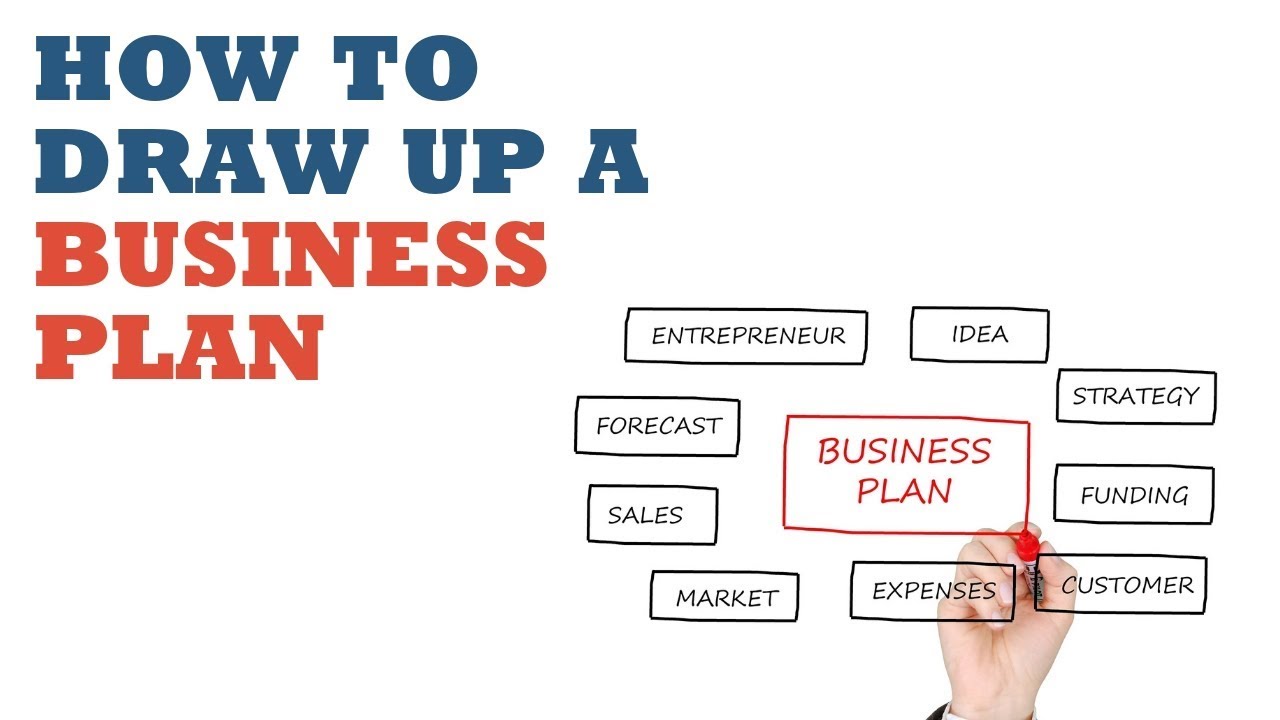
In this instructional video, business coach Robin Waite shares findings from over 200 surveys showing that most small‑business owners rate their own business plans poorly or have none at all. He argues that a business plan need not be a massive document aimed at investors; a concise, 4‑5‑page “lean” plan is sufficient for tracking progress and setting goals. Waite outlines the exact sections to include: a brief credibility and personal intro; a outcomes‑focused description of products or services; a granular target‑market persona (including demographics, location, and media habits); an analysis of where that audience hangs out; a realistic client‑number target based on niche focus; and simple, goal‑based financial projections. He stresses the importance of branding the document, keeping language clear, and constantly sense‑checking the realism of goals. The video concludes with a step‑by‑step checklist and an invitation to contact him via robinwaite.com for further help.
Chapters
Let me just show you some stats. I've sent out over 200 surveys, my assessment forms, to businesses who've wanted to work with me, and typically I see that a vast proportion of them, 76% in fact, score themselves 5 or less on how they rate their business plan, and 0 being that they don't actually have one. So that's 43% of people— sorry, 43 people out of 200-odd who don't have a business plan. So, and I bet probably if you're watching this, then it's more than likely that that's you. So, yeah, so we're going to quickly go through what actually constitutes a business plan and how you can create a very lean business plan. And this isn't about attracting investment or getting bank loans or anything silly like that. This is literally just about having a document that you can look back on over, you know, in a year's time or probably every month and make sure that you're on track. I also noticed that it wasn't quite as high as 76%, but there was some— well over 50% of people also were struggling in terms of their goal setting. Business plan, goal setting, both go hand in hand. So I bet probably if you're struggling with your business plan, you're also struggling with this. So what goes into creating a lean business plan? Okay, so the first thing is, one of the biggest mistakes people make with a business plan is they create these great big tomes of information that basically, you know, they're looking, you know, potentially would be useful if you're going to get investment or trade on the FTSE 100 or something like that. But the reality is we don't need hundreds of pages of content to go into a basic business plan. It needs to be literally just like 4 or 5 pages. So we just want to keep it short initially, and it's as simple as that. So I'm going to tell you what you've got to put into those 4 or 5 pages. In the next sort of 7 or 8 minutes. But it does make it look a little bit nicer if your documents, no matter what they are, you've got some kind of branding in place, that the colours are right. It's not just something that you've chucked out into the ether from a Word document and one of the terrible templates which they've got in there. So you just need to make sure that your branding is on there, and it's just for you so you don't look at it and go, oh my God, that looks like a terrible document. So do make sure you put some branding in there. The first piece of actual content which you need to put in there is obviously a little bit of information about you. And what you want to do is demonstrate your authority, your credibility, and why people should buy from you in terms of like, it could be your experience, whether that's corporate or running your own businesses, maybe some clients you've worked with or books that you've written, podcasts that you've been a guest on, how long have you been working within the industry, what do you specialize in, all sorts of fun stuff like that. I said clients that you've maybe done a bit of work with. Also, some people are quite, like, especially in the small business community, we want to know a little bit about the person who we're working with. So do drop a little bit of information in there about you because, and I'll explain why, like, some people are really worried about putting personal stuff in there. And it's actually not a bad thing to put some personal information in there because we want to build a tribe, we want to build a group of people who love what we do. So, give them a few personal facts about yourself, because that will, it just humanises you, basically. Next up, so that first piece about you just needs like half a page, maybe. Maybe a little bit more, maybe a page. Second page then is a bit about your products and services. Now, this is another big mistake I see people making. They go through and they put these massive long feature lists in there, and they try and get their pricing absolutely nailed, and all sorts of fun stuff like that. But actually, that's not the right approach. The right approach actually is to talk more about, like, in human terms, like, very basic terms. So, for example, I'm a business coach. I offer group coaching and one-to-one coaching for small business owners. The outcome of coaching with me is that we will double your turnover within 6 months, okay? So, what we want is, you know, common mistake, people want to buy the drill. And they look at the features that they're buying, but actually the reality, the reason why we want a drill is very different to the reason why we think we want a drill. So, we look for the benefit behind the benefit, basically. And actually, the drill will drill a hole in the wall that we'll then put a wall plug in and a bracket up, and so we can hang a picture on it, and the picture was given to us by a dead relative or something along those lines. Okay. So, we've got to go— we've got to stop thinking features, and we've got to think of the outcomes that our products and services deliver. So, hopefully that's kind of made it clear, and literally you only need sort of, again, half a page or a page to describe your products and services, and what outcomes, what benefits they produce. And then this is the next section. So, you've got to identify who is your target market. Now, just a little clue, the world is not your target market, okay? The internet has created this global marketplace where there's a lot of opportunity, but the reality is, Most small business owners in Gloucestershire don't need to have clients from all around the world, basically. We can survive quite well and quite nicely with 10 to 20 local clients who are very loyal. Yes, there are some enigmas out there who have global businesses, worldwide businesses. The reality is, for most of us, that's not the case. So, we don't need the world to be our target market, okay? So, SMEs, big bugbear of mine, SMEs, small to medium enterprises, are not a target market. There are 3.9 million small businesses in the UK— sorry, there are 3.9 businesses registered in the UK at the moment. 9,000 of them are considered to be large businesses, okay? That means that all of the businesses are pretty much SM. So SMEs are not our target market. It is still too broad. So, our target market is actually Bianca, who is 48, recently waved goodbye to her 2 grown-up twin daughters who have just started Having recently been made redundant from a fast-paced marketing career in London, Bianca moved to the Cotswolds and opened a coffee shop in Chipping Camden, et cetera, et cetera. So we've got to have a really clear idea about who our target market is. You can then start to go a little bit deeper. So these are all sections of content you need to put into your business plan, okay? Half a page to a page on each one of these things that I'm talking about. So where do they hang out? So Alex loves listening to Gary Vaynerchuk podcast and recently attended an event run by Tony Robbins. At the weekends, He secretly plays Fortnite, and seems to like every single post that's appearing on LinkedIn relating to marketing. So now we can start to get an idea about how we can target marketing advertising at Alex, if we so wish. How many clients do you really need? Okay, this is another section that goes into the business plan. So, we have 2 choices here. Now, again, if you're saying you need all of the clients, you are. Indeed wrong. If you're saying, definitely not all of the clients, you are indeed right. And if you're thinking, well, I have a very specific niche, so I, I do business coaching for massage therapists, then you are definitely in the right ballpark, because the reality is, if you help massage therapy businesses to double their turnover in 6 months, you can probably get a really nice business going with just 10 to 20 clients running concurrently at any one particular point in of the year. So, we don't need to market to everybody. We just need to find the 10 or 20 massage therapists locally to us who could do with our help, okay? So, we don't need that many clients. Next up, so, and this is kind of coming towards the end of your lean business plan now, we just need to get some basic projections. Like, I see people with these really complicated, like, 3-year cash flow forecasts with all of the overheads broken down into minute detail, with these really complicated, like, formulas built into their spreadsheet, and the reality is, like, we don't need to do anything like that whatsoever in a lean business plan, okay? If we just focus on, like, really specific goals, if our goal is basically just to get, to create £100,000 a year's worth of revenue, if our perfect client is worth £1,000 a year, therefore, we need 100 clients in the next 12 months, and then we can sense-check that. We can say, is this number realistic? Yeah. Now, if managing 100 clients and marketing to 100 clients is going to be really, really difficult, then we need to up our price potentially, and then market test it. Is this— is the price realistic? Is the number of clients we can get realistic? Can we get all of those clients in the next 12 months? We can sense-check it, okay? So, put these into your lean business plan, and then at the end of it, ask the question, is this realistic or not? Okay? So, just to summarize, the lean lean business plan. Keep it short, no more than 4 to 5 sides of A4. Make sure that you use your branding and that it looks pretty. Then we move into the sections of content. So, put half a page, a little bit about you and about your company. Next page, a little bit about your products and your services. Remember, it's about the outcomes and not the features. In the next page, identify who your target market is. Be granular, go into like all the demographics, male, female, are they 45 to 54, do they live in the local area, or are they further afield than that? Start asking the question of where do they hang out, what sort of things are they reading, who are they following, what podcasts are they listening to, all of that sort of thing. Ask the question of yourself, how many clients do we need? And the answer is not everyone, let's niche. And then finally, just put together some very simple forecasts based on your goals. So if you want 100 grand a year, how many clients do you need in order to earn 100 grand a year? Now, I focus very heavily on client businesses, okay? If you want to know more, then go and tap me up, Just jump onto robinwaite.com.