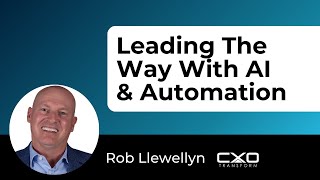
This is a YouTube video titled "AI & Automation: The Enterprise Shift Leaders Can’t Ignore" created in January 2025. It features a monologue by Rob Llewellyn discussing how large organizations can adapt to AI and automation in the future of work. The content covers workforce transformation, technology integration, change management, evolving organizational structures, and the cultural and social impacts of automation, aimed at leaders preparing for these changes.
Are you struggling to understand how AI and automation will change the future of work? Let me break it down for you. I'm Rob Lewellet, and today we'll explore how large organizations can adapt to these powerful technologies to really thrive in an evolving world. Now, AI and automation, of course, are reshaping industries faster than most of us can keep up. But they don't just replace tasks. They redefine how work gets done and create opportunities for those ready to adapt. Now, the future of work isn't about humans versus machines. It's about collaboration. The question is, how do we prepare? So workforce transformation is the first step. Organizations must identify which roles will be impacted and then develop strategies to reskill and redeploy their workforce. This isn't just about protecting jobs. It's about equipping people with uniquely human skills like creativity, emotional intelligence and strategic thinking. Clear communication and support during these transitions are vital for maintaining morale and engagement. Next comes technology integration. The focus shouldn't just be on replacing human tasks, but on thoughtfully augmenting them. Robust data infrastructure, strong governance and cybersecurity are non negotiables for successful AI implementation. And let's not forget change management. Smooth adoption of these tools requires leadership that really inspires confidence and a plan that aligns with business goals. Organizational structures are also evolving. Agile flatter models are emerging to adapt to technological changes really quickly. And at the same time, human judgment remains critical. AI can make processes more efficient, but leaders need to balance that with oversight in areas where automation isn't enough. And this shift is creating entirely new roles focused on AI and automation. Governance skills and training are the backbone of this transformation. You know employees, they need continuous learning opportunities to develop AI related skills and hybrid expertise that combines technical and domain knowledge. Organizations really need to invest in training, infrastructure, perhaps even partnering with educational institutions to make lifelong learning the norm. But transformation isn't just technical, it's cultural. A culture that really embraces change while preserving core human values is essential. Collaboration between humans and AI systems really is the future. But it can only succeed if employees trust the organization's plans and see the benefits very clearly. And leadership plays a crucial role here. The best leaders really understand both technology and people. They provide a clear vision for how AI supports broader business objectives while balancing short term efficiency gains with long term workforce sustainability. We can't ignore the social impact either. Organizations have a responsibility to consider how automation affects society at large. Supporting displaced workers through retraining and transition assistance isn't just ethical. It's essential for maintaining trust and reputation. Ultimately, adapting to AI and automation is isn't just a requirement, it's a real opportunity to innovate. These technologies can really improve customer experiences, create new products, and give your organization that competitive edge it wants. The key is staying adaptable, forward thinking, and prepared to respond to emerging trends. Now, if you're ready to develop the skills to lead in this evolving landscape, check out the resources in in the links below. Thanks for watching and I'll see you in another video.