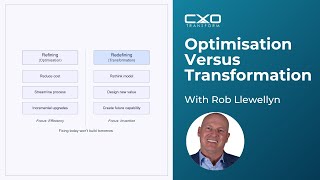
This is a YouTube video titled "The Truth About AI Transformation No One’s Telling You" created in September 2025. The content features a single speaker, likely Rob Llewellyn, delivering a detailed talk on distinguishing between AI-driven business change and true AI transformation. The speaker outlines ten elements of business models affected by AI and advises leaders on how to lead deliberate transformation efforts to avoid ineffective investments. The video is educational and aimed at business leaders seeking to leverage AI strategically.
Last month, a FTSE 100 CEO told me, Rob, we've spent £50 million on AI upgrades. The teams are really engaged and excited, but it's barely moved the needle. Now that's not unusual across many industries. Leaders are proudly claiming that they're doing transformation, especially now with AI in the mix. But peel back the label and much of it is just good old fashioned business change with new technology layered on top. Now, there's nothing wrong with change. It's good and necessary. It keeps you competitive. It drives efficiency and can pay for itself quickly. But it's not transformation. Change improves what exists. Transformation creates one what's never been to make that distinction, concrete adding AI to speed up call center handling times is change. Building an AI retail assistant that not only recommends products, but manages an entire shopping mission. Ordering, delivery and post purchase support is transformation. The first keeps you in the game and the second changes the rules of the game entirely. So start with your value proposition. In change, AI enhances the current offer. Recommendation engines, predictive search, automated assistance. It's better, but still fundamentally the same offer. In transformation, AI enables propositions that couldn't exist before. That retail assistant isn't a bolt on feature. It's a redefinition of what your company now delivers. It changes not just the experience, but the promise you make to your customers. And when the value proposition changes that dramatically, everything else in the business model can shift with it. Now, once your value proposition evolves, your revenue model is the next natural pivot in the change camp. AI boosts monetization, sharper pricing, better conversions, increased upselling. These are valuable, but they're still flowing through the old pipes. Transformation opens entirely new revenue streams. Selling AI generated insights directly to clients. Introducing outcome based contracts, Launching global subscription services managed by AI. These are new pipes altogether. And often they're higher margin and more defensible than the old ones. Now more revenue usually comes from knowing your customers more deeply. AI change lets you target current segments with precision. Resegmenting, personalizing and predicting. But you're still talking to the same audience. Transformation allows you to reach customers you've never served before. AI credit scoring can open new lending markets. Real time translation can break language barriers instantly. Suddenly your potential market isn't just bigger, it's fundamentally different. Now, once you have new customers, you'll want new ways to reach them. Change means optimizing the channels you already run. Faster contact center responses, smarter email campaigns and higher converting websites. Transformation creates new routes entirely AI driven self service marketplaces, autonomous sales agents that operate 24, seven new digital touchpoints you couldn't previously sustain. These aren't tweaks. They're entirely new highways to your customer base. Now every channel runs on a cost model. Change trims that model. Automating back office processes, reducing admin time, cutting operational waste. The structure stays the same, just leaner. Transformation rewrites it. AI LED inside sales, replacing a costly field force. Autonomous document processing, eliminating entire cost layers. And when you reinvest those savings into more transformation bets, you create a self funding loop of reinvention. Now shifts in cost flow through to your core activities. AI change speeds up what you already do. Faster design cycles, quicker forecasting and shorter approval processes. Transformation changes the work itself. Predictive AI moves you from reactive maintenance to proactive prevention. Continuous optimization replaces fixed planning cycles. The activity isn't just faster, it's fundamentally different. Now activities depend on resources. In the change camp, AI gives your teams better tools, dashboards, copilots, automation scripts, etc. In the transformation camp, the resources themselves change. Proprietary data sets, unique algorithms, AI models tuned to your context. These become your crown jewels. They're not just aids to the business, they are the business. Now resources extend way beyond your four walls into your partnerships. Change improves existing relationships, better forecasting, smoother collaboration, tighter supply chain integration. Whereas transformation builds new ecosystems. Industry wide AI platforms, secure federated data hubs, partnerships that create entirely new value pools. These aren't just stronger ties, they're new networks with new rules. Now partnerships feed directly into customer relationships. Change personalizes, tailored offers, better service scripts, relevant messaging. It's still largely on your schedule. Transformation creates real time engagement. AI account managers that anticipate needs act instantly and bring in humans only when it adds genuine value. The relationship is no longer transactional, it's adaptive and continuous. And all this ultimately shapes your market position. Change keeps you level with the competitors, maybe slightly ahead. But transformation lets you define the category to set the pace, standards and direction that others will need to follow. In this position, the market adapts to you, not the other way around. You become the reference point that others measure themselves against. The brand that shapes conversation rather than reacting to it. Competitors can copy features, but they can't easily replicate the position you've carved out because it's built on a fundamentally different way of creating and capturing value. It's the difference between playing to stay in the game and playing to change the game entirely. Now just look across all 10 elements and the pattern is clear. Change keeps you strong today. Transformation ensures you matter tomorrow. Neglect either and you'll either lose relevance or lose operational strength. So here's your move. Before the quarter ends, audit your business model against these 10 elements, and for each one, identify whether you're delivering change, transformation, or neither. Pick one bold transformation and one critical change to launch now. Fund them, govern them, and track results. And relentlessly. That's how you avoid the 50 million pound trap that I spoke about at the start, the trap where you spend big, energize the team, but ultimately still stand still. Because with AI, the line between change and transformation is very thin. Your job as a leader is to know exactly which side you're on and lead your organization deliberately across it. Now, if you want to strengthen your AI transformation capabilities, check out the links below. Thanks for watching and I'll see you in another video.