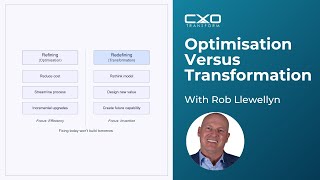
Optimizing what you already do won't save you when the game changes. Blockbuster optimized video rental; Netflix transformed it. Kodak optimized film; Apple moved to digital. Real change requires building something new, not just doing the old thing better.
Are you refining what's already there or building what comes next? Because here's the truth. Fixing today won't build tomorrow. Most leaders I speak with say they're driving transformation. But when you dig into what's actually happening, a lot of it is just optimization. Making things faster, cheaper, more efficient. Now, don't get me wrong. That's useful. It's really important. But let's not pretend it's transformation. That label can give the illusion of significant progress without genuine transformation. Now, here's the critical distinction. Optimization fine tunes what already exists. Transformation changes the whole model and asks what? What should we build instead? Two very different outcomes. One sharpens the system, and the other questions whether the system still makes sense. So let's put it simply. Optimization upgrades the engine and transformation changes the vehicle. And in today's climate, knowing which one you're doing isn't optional. It's absolutely essential. So let me explain why this matters. Because when we call something transformation that isn't, it creates a false sense of momentum. It reassures people that change is underway, that we're heading somewhere new. But are we really? Or are we just upgrading a model that's slowly becoming obsolete? Now? That's the danger. We end up heavily investing in the past instead of the future. Think about it. Blockbuster, they didn't ignore innovation. They made their stores more efficient. But Netflix rewrote the rules. Kodak, they didn't fall asleep. They kept perfecting film. Meanwhile, Apple reimagined the camera as part of the phone. Both incumbents were really busy optimizing. And both were overtaken by those bold enough to actually transform. And that same shift is happening across every industry, just a lot faster. Now, AI is redefining how value is created. Platforms are reshaping customer expectations, talent models are shifting. And competitors, well, they're popping up without the baggage of legacy systems. So here's the key question. Are you upgrading your system or designing a new one for this new reality? Because as Peter Drucker warned us, the greatest danger in times of turbulence is to act with yesterday's logic. And many organizations.