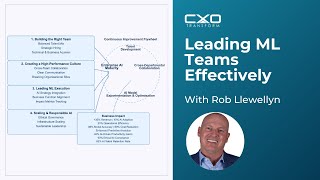
A guide to building ML teams that actually drive business results. Hire for both technical skills and business sense, run hypothesis-driven projects instead of endless experiments, and measure what matters: revenue and impact, not just model accuracy.
In today's medium to large organizations, machine learning isn't just another technology, it's a strategic differentiator. But technology alone doesn't create value, teams do. Now many organizations invest heavily in AI, yet their machine learning teams fail to deliver meaningful business impact. The problem isn't the algorithms or the computing power. It's the lack of leadership, strategy and collaboration needed to turn technical capability into enterprise wide transformation. Building and leading a high performance ML team requires more than just hiring a few data scientists. It's about creating an ecosystem where technical expertise, business strategy and collaboration really thrive. Without this, even the most advanced AI models will remain nothing more than expensive experiments. To succeed, leaders need to structure their ML teams in a way that maximizes both innovation and business alignment. This means focusing on four critical hiring the right talent, fostering collaboration, executing with agility and scaling responsibly. Recruiting top machine learning talent is really essential. But hiring brilliant data scientists alone isn't enough. The most effective ML teams are made up of individuals with both technical expertise and business acumen. These are people who understand machine learning, but can also articulate its business impact. Now, the ideal team is really diverse. You need data scientists, engineers and machine learning specialists. But you also need domain experts who understand the company's core challenges. Without this mix, ML projects risk becoming isolated technical exercises rather than strategic enablers of business growth. Building robust talent pipelines is really crucial. Establish partnerships with universities, engage with industry communities and create internal upskilling programs to cultivate talent from within. A strong ML team isn't just recruited, it's developed over time. Machine learning teams can't work in isolation. Successful AI driven organizations ensure really strong collaboration between ML teams and business units, product teams and technical departments. For example, if a manufacturing company wants to use ML for predictive maintenance, its engineers, analysts and supply chain teams must closely work together. The data scientists alone can't make the system effective without deep input from those who really understand the real world operational challenges. This level of collaboration requires clear communication channels and shared objectives. Leaders need to set up structured touch points between AI teams and key business stakeholders, ensuring that ML initiatives align with broader company goals. Now, if your organization spans multiple locations or as remote teams, you you should invest in collaboration tools and regular check ins to maintain alignment. The best ML teams really thrive when there's transparency, shared learning and a unified vision of success. Machine learning projects. They differ from traditional software development. They are inherently experimental, meaning that some initiatives will succeed others while others will fail. The key is to adopt a hypothesis driven approach. Rather than viewing ML initiatives As projects with fixed outputs, teams should test, iterate and refine their models based on real world performance. And this requires defining clear success metrics. Not just technical accuracy, but business outcomes like cost savings, efficiency gains and improved customer retention. Now, a major pitfall is failing to integrate ML solutions into core business processes. AI models that perform well in testing environments but don't translate into real world impact are of little value, of course. So leaders must ensure that models move beyond experimentation into scalable solutions that drive tangible benefits. Encouraging continuous learning within ML teams is really essential too. Set aside dedicated time for knowledge sharing sessions, mentorship programs and industry research organizations that prioritize ongoing learning build teams that stay ahead of industry shifts rather than reacting to them. As machine learning capabilities expand within an organization, so too do the challenges of governance and ethics and long term sustainability. Responsible AI isn't optional, it's vital, and leaders need to implement frameworks that mitigate bias, ensure data privacy and promote transparency in AI decision making. Without these safeguards, ML projects face regulatory challenges and damage organizational trust. Scaling AI also requires the right infrastructure. Investing in scalable cloud computing resources, robust machine learning platforms and experiment tracking tools all enable teams to focus on innovation rather than overcoming technical bottlenecks. Measuring success is different from from traditional IT projects. Instead of looking solely at model accuracy, track innovation velocity how quickly ideas move from concept to deployment. Evaluate the real business impact of ML initiatives by measuring operational cost reductions, increased revenue or improved customer experiences. As organizations push AI forward, challenges like talent shortages, resistance to change and integration complexities will of course arise. The best ML leaders anticipate these obstacles and they create strategies to overcome them before they stall progress. Leading a machine learning team isn't just about building models, it's about creating meaningful business impact. And this requires aligning technology with business objectives, fostering a culture of collaboration, and managing AI projects with with both agility and responsibility. At the highest level, AI leadership isn't just about technical execution. It's about bridging the gap between innovation and strategy, ensuring that ML solutions don't just work technically, but that they drive real competitive advantage. So if you're leading an ML driven team or preparing to build one, your success will come from more than just hiring skilled professionals. It'll depend on how well you connect machine learning capabilities to real business value. If you're ready to take your AI leadership skills to the next level, check out the resources in the description below. Thanks for watching and I'll see you in another video.