Digital Transformation in Construction: A Strategic Guide for Leaders
Construction leaders need strategic digital transformation, not just new software. The BTM Squared framework uses four phases and nine disciplines to implement tools like BIM and AI scheduling, with case studies showing gains in efficiency, safety, and revenue.
Questions this video answers
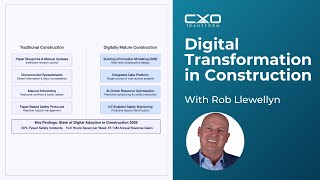
50% more likely
10.5 hours per week
$1.14 million
32% cite lack of digital skills; 31% cite technologies being too expensive
70% of digital transformations fail
The construction industry is undergoing rapid digital transformation, yet a stark divide remains between companies that embrace technology and those that lag behind. On one site, teams might be struggling with outdated blueprints, disconnected spreadsheets and miscommunications that cause costly delays. On another, the company might be using building information modeling, AI driven scheduling and digital project management tools to reduce rework and keep projects on track. This gap is really growing. According to the State of Digital adoption in construction 2025 report from Deloitte, companies with greater digital maturity are 50% more likely to see a reduction in safety incidents and save an average of 10 and a half hours per week by streamlining data environments. The report also highlights that firms adopting even one additional technology can expect an annual revenue increase of $1.14 million. Despite these benefits, barriers still remain. 32% of companies cite a lack of digital skills among employees and 31% say technologies are too expensive to implement. At SC, the challenge isn't just adopting technology, it's using it strategically to transform operations and really drive measurable business value. Companies that fail to act risk falling behind as industry leaders really harness AI, automation and data driven decision making to streamline projects, reduce risks and really boost risk profitability. The question isn't whether digital transformation is necessary, it's whether your company can afford to wait. This video is going to explore how construction firms can successfully navigate digital transformation using BTM Squared, bridging the gap between traditional operations and the future of this industry. Digital transformation isn't just about technology adoption. It's about ensuring that technology enables business objectives, not the other way around. Business transformation is a fundamental shift in how an organization operates its processes, structure and culture so it can remain competitive and deliver better business outcomes. Digital transformation supports business transformation by integrating technologies that improve efficiency, productivity and and decision making. But technology alone doesn't drive transformation, strategy does. Now, a lot of companies mistake digital transformation for an IT upgrade. They invest in AI, BIM or IoT sensors without a structured plan and this leads to fragmented adoption, resistance and limited return on investment. That's why companies need a structured framework like BTM Squared, the business transformation management methodology. Without a structured approach, companies risk implementing digital tools in silos leading to wasted investment and operational inefficiencies. This is why construction firms need a proven framework to guide transformation from strategy to to execution. And that's where BTM Squared comes in. IT provides a structured four phase approach. Envision, engage, transform and optimize. Supported by nine transformation management disciplines. IT ensures that digital transformation is integrated into business operations not just layered on top of BTM squared is designed to ensure that digital transformation is structured, repeatable and effective. So those four phases envision is the first one that is what defines the strategy in business case, then we have Engage, which is where we align leadership teams and stakeholders. Then comes transform, which is where we implement technologies and business processes and optimize, which is where we measure, refine and scale. The four phases are supported by those nine transformation management disciplines I just mentioned. And they ensure the transformation is strategic, structured and sustainable. Digital transformation isn't an IT project, it's a business transformation strategy. Now the first step is isn't selecting technology, it's defining a clear vision and aligning leadership with long term business goals. A lot of construction executives excel at operational efficiency. But transformation is not about optimizing existing workflows. It requires rethinking how the business operates, how decisions are made and how teams collaborate. In a digital first environment, managing projects is about efficiency. Leading transformation is about vision, agility and driving change. And a common mistake is assuming technical expertise alone is enough to lead digital transformation. McKinsey research shows us that 70% of digital transformations fail, often due to leadership gaps. Now transformation leaders need to go beyond execution and develop new capabilities. Change leadership for overcoming resistance and guiding teams through uncertainty. Strategic vision, aligning digital initiatives with long term business goals, an innovation mindset, challenging traditional ways of working and embracing new technologies and adaptive learning, which is where you're refining strategies based on data and feedback. Now a mid sized construction firm realized that technical expertise alone wasn't enough to drive transformation. So instead of assigning their most experienced project managers, they formed a dedicated transformation team with internal change leaders, external digital transformation specialists and other experts. And the result? 40% faster digital adoption reduced employee resistance and increased efficiency across multiple projects. By investing in leadership first, they ensured transformation was driven by strategy, not just technology adoption. Every digital transformation must be anchored in business objectives. Ensuring technology investments really drive measurable value. For example, if the goal is reducing project delays by 20%, transformation should prioritize AI driven scheduling and predictive analytics. If you're expanding into new markets, efforts could be to focus on cloud based collaboration and digital project management. Without strategic alignment, companies risk adopting technology without purpose and that can lead to really fragmented initiatives and wasted investment. The BTM Squared strategy management discipline ensures digital transformation supports long term business success, not just IT upgrades. By ensuring digital initiatives align with strategic priorities, construction firms position themselves for long term growth and and competitive advantage. Before companies begin their transformation journey, they need to understand their current level of digital maturity. Now there are several models available to assess digital maturity and organizations should pick the one that suits them best. One such model is the Digital Construction Company Maturity Model, which evaluates organizations based on five dimensions and 28 parameters, mapping them across six maturity levels. Another widely used framework is the Digital Maturity Index, or the dmi, which helps organizations assess their technological capabilities, workforce readiness, and digital leadership maturity. A digital maturity assessment helps companies identify their gaps and prioritize initiatives. Without this structured approach, digital transformation becomes an unfocused experiment instead of a business driven shift. Now a leading infrastructure firm assessed its digital maturity and found that its biggest weaknesses was coordination between design and construction teams. So by fully integrating BIM and 3D clash detection, they reduced rework by 27% and saved millions in unnecessary material costs. At this stage, the first three BTM squared management disciplines, strategy management, value management and risk management are critical. Not every company needs every technology. Digital investments should be selected based on real business challenges. So if communication and coordination between project teams are slow, tools like Procore or PlanGrid can streamline collaboration. If scheduling inefficiencies cause delays, AI driven solutions like Alice Technologies can optimize project timelines. If safety compliance is a key concern, IoT enabled sensors can monitor site conditions and prevent accidents. A multinational construction firm implemented IoT based safety monitoring to track real time working conditions on on site. The result? A 40% reduction in safety incidents and improved regulatory compliance, reducing legal costs by 15%. 87% of construction firms cite digital skill shortages as a barrier to transformation and resistance to change is one of the biggest obstacles, not because workers don't want to innovate, but because they fear uncertainty. A major construction company introduced VR based training to upskill workers on digital tools. Adoption rates improved by 60% and productivity increased because workers could train on realistic virtual job sites before implementing changes in the field. Now, at this stage, BTM squared disciplines such as organizational change management, program and project management and competence and training management play a crucial role. For digital transformation to succeed, each stakeholder group must see tangible benefits. For executives, digital transformation is about reducing project delays, improving risk management and boosting profitability through real time insights. Project managers benefit from seamless coordination across teams, eliminating costly miscommunication and inefficiencies. Field supervisors experience fewer safety risks and faster issue resolution, ensuring compliance and worker well being. And subcontractors gain smoother approval processes and digital integration into workflows, cutting project delays by as much as 18%. Now a construction firm handling multiple international projects struggled with slow approval processes by shifting to cloud based project management, they reduced approval time from five days to under 24 hours, cutting project delays by 18%. Rolling out digital tools too quickly can overwhelm teams and disrupt operations. So the key is a phased approach prioritizing BIM, AI driven scheduling and IoT sensors to enhance efficiency and reduce risks. Ensuring alignment with business objectives prevents wasted investments and maximizes impact. Successful transformation requires structured implementation, training and change management. By focusing on adoption, companies can avoid failure and ensure long term success. An international contractor reduced project delays by 25% by using AI driven scheduling. The system predicted resource bottlenecks, allowing adjustments before the issues actually escalated. Now this proactive approach improved client satisfaction and reduced penalties, ensuring more predictable project outcomes. And with AI analytics continuously learning from past projects, their scheduling efficiency kept improving leading to a 15% increase in profit margins over two years. Executing transformation effectively requires structured project and program management. Without it, digital initiatives can become disorganized causing cost overruns and resistance. BTM Squared ensures a phased approach allowing teams to refine processes before full implementation. Now, this structured rollout maximizes success and mitigates risk. Now, a phased approach to deployment could be phase one pilot on a small project to test and refine things. Phase two expanding to mid sized projects for broader adoption and phase three scaling enterprise wide for full transformation. Now, in another case, a construction firm phased AI adoption across procurement, risk management and scheduling. This structured approach minimized disruption, increased efficiency by 22% and ensured seamless integration. Now of course, without measurement, digital transformation lacks direction and companies really must track cost savings, efficiency gains and safety improvements to validate their success. Regular performance reviews allow refinements and scalability. A data driven approach ensures ongoing optimization and maximizes return on investment. So some key performance indicators for construction could be reduced project delays and overruns, improved cost control through automation and enhanced safety with AI monitoring. One firm used AI and IoT tracking to cut project costs by 15% and and improve completion times by 10%. Real Time Insights enabled faster decision making and increased profitability. The construction industry is at a turning point now and companies that embrace digital transformation today will gain a competitive edge, improve efficiency and reduce their costs. Those that delay risk falling behind as industry leaders harness AI, automation and data driven decision making to streamline projects, mitigate risks and boost profitability. But transformation isn't just about adopting technology. It's about ensuring every digital initiative aligns with business objectives and delivers measurable impact. A structured approach like BTM Squared ensures that digital transformation is strategic, scalable and sustainable rather than just a collection of disconnected technology investments. So where does your company stand today? The first step is assessing your organization's capabilities, understanding your strengths, identifying gaps in evaluating readiness across leadership, workforce skills, data strategy and technology adoption. From there, conduct a digital maturity assessment using a framework like dcc, MM or the Digital Maturity Index to establish a starting point and define your next steps. If you're just getting started, focus on leadership alignment, strategic planning and pilot projects before scaling transformation company wide. If you've already begun, the priority should be to track progress, refine your strategies and drive adoption across teams. The future of construction belongs to those who act now. Digital transformation isn't something to push to the next year. It's already reshaping the industry. So will your company lead the way or will it struggle to keep up? The choice is yours. If you're ready to take your transformation capabilities to the next level, check out the links in the description below. Thanks for watching and I'll see you in another video.










