Enterprise Data Strategy: How to Turn Data into Business Value
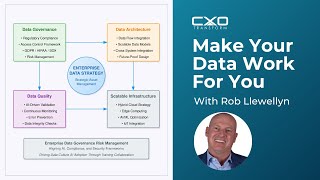
Rob Llewellyn walks through enterprise data strategy across governance, architecture, and quality. He shows how finance, manufacturing, retail, healthcare, and telecom companies turn data into competitive advantage.
Imagine managing the world's largest library, where instead of shelves full of books, you're overseeing billions of pieces of digital information that change constantly. Now imagine that your organization's success or failure depends on how well you organize, secure and use that information. That's the challenge of enterprise data strategy and management. I'm Rob Llewellyn, and today we're diving into how successful organizations turn data chaos into strategic advantage. So if you're ready to move beyond spreadsheets and reports and start leveraging data as a true asset, stick around. Enterprise data has come a long way from simple record keeping to being a critical driver of business success. When done right, it can reduce operational costs by streamlining processes, increase revenue through better customer insights, and improve overall business agility. But with that evolution comes complexity. In a lot of organizations, data exists in silos spread across different departments, systems and platforms. Now, this fragmented data landscape slows decision making, increases costs and creates risks. Because if your data isn't clean, accessible or secure, you'll struggle to keep up with your competitors. On the other hand, organizations that get it right, those that use data to optimize operations, personalize customer experience and predict trends, gain a real competitive edge. For example, in the financial services industry, data driven firms are increasingly adopting real time analytics to personalize customer interactions. By integrating emerging technologies like AI powered customer insights platforms and edge computing, they're able to offer dynamic personalized financial products in real time, improving both customer experience and conversion rates. In manufacturing, predictive maintenance powered by IoT sensors is helping companies reduce downtime and increase asset longevity. By integrating IoT data streams with AI models, manufacturers can predict failures before they happen, reducing costly disruptions and improving over operational efficiency. So how do you move from chaos to clarity? Well, it starts with having the right data strategy in place. So let's break this down into three key pillars of an effective data strategy, and they are governance, architecture and quality. So first off, let's talk about governance. Think of data governance like city planning. Without clear rules and policies, a city becomes chaotic. And the same is true for your data governance establishes the rules of engagement, who can access what data, how it should be used, and how you ensure compliance with regulations like gdpr. In industries like healthcare, where patient data privacy is critical, strict governance frameworks ensure compliance with regulations like hipaa, while enabling secure data sharing for clinical research and personalized medicine. When governance is weak, organizations end up with inconsistent data, duplicated efforts and security risks. A robust governance framework ensures that your data is trustworthy, compliant and used in a way that drives Business value. So the second pillar is data architecture. While governance sets the rules, architecture provides the blueprint. And a well designed data architecture ensures that data flows seamlessly across your organization, supporting everything from day to day operations to long term strategic goals. So whether you're centralizing data in a warehouse or leveraging a more modern data lake house approach, your architecture must be scalable, flexible and future proof. Now this doesn't mean adopting the latest tech buzzwords for the sake of it. It's about building a foundation that supports your current needs while being adaptable to future innovations like real time analytics, machine learning and blockchain based data sharing. For instance, in the retail sector, companies are integrating AI driven recommendation engines with real time sales data and this allows them to provide personalized product suggestions. At the moment, a customer interacts with their platform and this increases both engagement and sales. Now in the energy industry, smart grids are leveraging scalable data architectures combined with edge computing to process data closer to the source. This reduces latency and improves real time decision making for grid management. Now the third pillar is data quality. No matter how well you design your architecture or how strict your governance is, poor data quality will undermine everything. Imagine trying to build a predictive model using outdated or incomplete data. It's like trying to navigate with a faulty gps. So ensuring data quality means validating inputs, cleaning up inconsistencies and monitoring for errors over time. This is especially important in industries where precision is non negotiable, such as healthcare, where diagnostic errors caused by poor data can have life or death consequences. Or finance, where inaccurate data can lead to regulatory penalties and reputational damage. So high quality data enables better decisions, reduces risks and ultimately drives better outcomes. So once you have these pillars in place, the next step is implementation. A successful data strategy isn't something you roll out overnight, it's a journey. So start by assessing where your organization can currently stands. What's your level of data maturity? Are your teams data driven or are they still relying on gut instinct? From there, define a clear vision of what success looks like. Is it faster decision making, improved customer insights or reduced operational costs? Then build a roadmap that balances quick wins with with longer term goals. Focus on initiatives that deliver immediate value like automating, manual reporting or improving data visibility across teams. This not only proves the value of your strategy early, but it also builds momentum for larger, more complex changes later down the line. Now one of the biggest challenges you'll face is resistance. Not just from outdated systems, but of course from people cultural resistance to becoming a Data driven organization is a real thing, so you'll need to invest in change management training and clear communication. Help your teams really understand how better data supports their goals, whether that's making smarter marketing decisions or reducing supply chain costs. Now, how do you measure success? Well, start by defining clear performance indicators that align with your goals. For example, if improving data accessibility is a priority, track how long it takes teams to retrieve and analyze information. If reducing errors is a focus, monitor data accuracy rates over time. Now, beyond operational metrics, also track the business impact. Are your data initiatives really driving revenue? Are they reducing costs or improving customer satisfaction? In telecommunications companies, track metrics such as network optimization improvements and customer churn reduction. Directly linking data strategy improvements to business outcomes. That's the real measure of success. So as we wrap up, let's talk about what's next. The future of enterprise data is really exciting, with trends like real time processing, edge computing and AI driven insights really reshaping what's possible. In industries like automotive, connected vehicles are generating huge amounts of real time data and this is being processed at the edge to enable safer, smarter driving experience. But no matter how advanced the technology gets, the fundamentals remain the same. A solid strategy built on governance, architecture and quality is what separates those who succeed from those who get left behind. Now, if you're ready to take your data strategy to the next level, check out the links below for more resources, templates and tools that can help you get started. Thanks for watching and I'll see you in another video.










