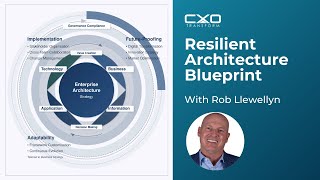
Rob Llewellyn walks through building enterprise architecture frameworks that align business strategy, processes, and technology. He covers how robust frameworks improve agility, cut costs, and speed up time to market for organizations aiming to scale and transform.
Imagine being asked to design a master plan for an entire city. You'd have to account for roads, power lines, residential areas, businesses, and future expansions. That's not unlike what enterprise architects face when they're tasked with building robust architecture frameworks for large organizations. They're not just creating a blueprint for today. They're designing something that must support growth, innovation, innovation and transformation for years to come. I'm Rob Llewellyn and today we'll dive into how you can build enterprise architecture frameworks that not only guide your operations, but also empower long term success. So whether you're leading transformation in a corporation or consulting with large enterprises, mastering this is really critical. Enterprise architecture isn't just a technical exercise. It's about aligning business strategies, processes and technology to ensure everything works together smoothly. Now, unlike traditional IT architecture, which primarily focuses on systems and infrastructure, enterprise architecture looks at the whole organization. It connects how value is created, how decisions are made, and how technology supports every function. Think of it as the organization's nervous system, coordinating all the moving parts. Now, when done right, a robust enterprise architecture framework can reduce costs by eliminating redundant systems, improve agility by streamlining decision making, and really accelerate time to market for new products and services. Now, let's break this down into three key elements you need to get right. First, there's the foundation of your framework. Every robust enterprise architecture framework rests on four business information, application and technology architecture. Business architecture defines how the organization delivers value and what processes support that. Information architects.