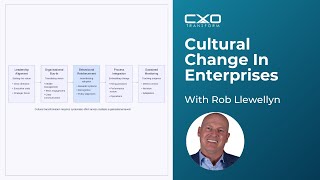
This is a YouTube video titled "Leading Cultural Change in Large Enterprises: A CEO’s Guide" created in April 2025. The content is a detailed monologue or presentation focused on strategies for driving lasting cultural transformation within large organizations. It covers topics such as diagnosing current culture, aligning leadership and employee behaviors, empowering change ambassadors, embedding culture into systems, and measuring progress. The speaker provides practical exercises and emphasizes leadership's role in modeling and reinforcing culture. There is no indication of multiple speakers or a conversational format.
Leading cultural change in a large organization is like steering an ocean liner complex, slow and requiring alignment across the entire crew. Now, a lot of leaders, they assume that a new strategy, vision, statement or restructuring effort will automatically shift the organization's culture. But in reality, cultural change isn't dictated from the top. It's embedded in behaviors, processes, and daily interactions right across the company. Now, if you're leading transformation, you need to ensure that cultural change isn't just a slogan, but something that's lived and reinforced throughout the entire organization. Cultural shifts, they don't happen overnight. They require sustained effort, a clear roadmap, and buy in at every level. And without these, even the best intentioned initiatives risk fading into the background. So how do you drive lasting cultural change? Well, let's break it down into a structured approach that works. One of the biggest reasons that cultural change fails is misalignment between leadership's vision and how employees experience it day to day. Executives, they often announce cultural shifts, but without reinforcement Employees, they just revert to their old ways. Here's what typically happens. You've got senior leaders, they set a bold cultural vision, but they fail to operationalize it. Middle management prioritizes short term KPIs over cultural initiatives. Frontline employees see little change in behavior or incentives. And the result, Well, a disconnect between strategy and reality. Leaders assume that communication equals transformation. But just because something is announced doesn't mean it's understood or even embraced. Cultural change requires clarity, repetition and action. To close this gap, leaders, they really need to start by diagnosing their current culture. Not just at the surface level, but at its core. Most organizations rely on employee surveys to assess culture. But surveys, they only capture what people say, not what they actually do. To get a true picture of your culture, conduct deep dive interviews with key teams to uncover real challenges. Use focus groups to gather insights on values, frustrations and aspirations. Observe actual workplace behaviors. Are your employees collaborating or are they working in silos? Are risk taking and innovation encouraged or they punished? Culture is shaped by what people do when no one's watching. And leaders who diagnose it properly will make far better informed decisions about what needs to change. Now. Beyond observation, external benchmarking can also help provide an objective view. Comparing cultural strengths and weaknesses against competitors or industry best practices ensures that transformation efforts are both realistic and ambitious. Defining a target culture isn't about imposing new values. It's about creating a guiding north star that aligns across different business units while allowing local flexibility. A strong cultural vision answers the question, what are our non Negotiable values. What mindsets and behaviors do we expect at all levels? How do we balance central consistency with local adaptation? For example, a multinational firm may set a global cultural vision around customer centricity, but allow different regional offices to adapt execution based on local market needs. Cultural change succeeds when employees at all levels can see how it applies to their day to day work. Without relevance, even the most well crafted vision statements remain quite theoretical. Cultural transformation doesn't just come from the top. It spreads through networks of influential employees. So rather than relying solely on executive messaging, you need to identify change ambassadors. These are employees respected by their peers who can demonstrate new cultural behaviors in action. Influence teams organically rather than through corporate mandates. Provide real time feedback on what's working and what's not. You know, when change ambassadors lead by example, cultural transformation gains momentum from within, not just from leadership directives. Successful organizations really empower these ambassadors with the tools, recognition and influence needed to sustain change. Without this, enthusiasm fades and transformation stalls. Culture isn't what leaders say, it's what they do. And you know, many cultural transformations fail because leaders send mixed signals. Promoting innovation, but punishing mistakes or encouraging collaboration but rewarding individual achievements. Leaders at every level must model cultural behaviors in everyday interactions. They need to ensure policies and rewards reinforce the target culture. Hold each other accountable for consistency in messaging and actions. And employees? They look for signals in leadership behavior. So if leaders aren't aligned employees, they won't take cultural change seriously. Beyond modeling, leadership teams should also self audit, regularly reviewing whether their decisions align with the cultural priorities they promote. To make cultural change stick, you must integrate it into core systems. And this means embedding cultural priorities into hiring processes by recruiting talent that aligns with cultural values. Performance management. Evaluating employees not just on results, but on how they achieve them. And compensation and rewards. Which means recognizing cultural role models, not just top performers. Culture isn't built on posters or slogans. It's reinforced through what gets rewarded and recognized in the organization. When new behaviors are celebrated and embedded into the company, processes change transitions from an initiative to an organizational norm. Cultural transformation isn't a one time event. It's a continuous process. And you can measure progress using employee sentiment and engagement scores. But don't rely on surveys alone. Behavioral tracking Are employees demonstrating new cultural norms? Employees Business impact analysis Is the culture shift improving retention, collaboration or innovation? You know, if cultural change isn't delivering results, you need to adjust the strategy rather than just blaming employees for non adoption. Continuous feedback loops allow organizations to refine cultural transformation efforts in real time. Culture either evolves by design or deteriorates by default. And leaders must decide Are they going to steer the culture by actively shaping behaviors, reinforcing principles, and aligning incentives? Or are they going to allow a drifting culture, letting old habits persist, and hoping for change without structured reinforcement? The most successful organizations they steer cultural change proactively, ensuring it aligns with business goals. Change without direction, it just leads to fragmentation. And leaders must be the architects of culture, not just observers of it. If you're leading cultural transformation, here are two quick exercises to to assess your approach. The first exercise is called the Leadership Reflection Test, and this is where you ask yourself and your leadership team, are we personally modeling the cultural values we expect from our employees? Do our performance incentives reinforce the desired cultural behaviors? The the second exercise is the Employee Perspective Check. This is where you ask frontline employees what's the biggest disconnect between leadership's culture message and daily reality? And the answer will reveal your organization's cultural gaps. Cultural change isn't about forcing new behaviors. It's about aligning people, processes, and incentives to create an environment where those behaviors really thrive. The organizations that master cultural transformation, they don't just adapt to change they really drive it. Leaders who prioritize culture as a strategic advantage will not only foster higher engagement, but they'll also drive stronger business performance, innovation, and resilience. So how are you steering your organization's cultural shift? If you want to take your transformation and AI capabilities to the next level, check out the links in the description below. Thanks for watching, and I'll see you in another video.