The Transformation Office: Why Your Organisation Needs One Now
Organizations need a dedicated Transformation Office separate from traditional project management to handle enterprise-wide change. It provides governance, accountability, and sustained capability that prevent transformation initiatives from failing and give companies competitive advantage.
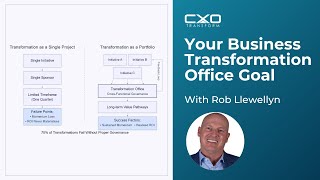
If organizations without project offices once seemed unstructured and unprepared, then those without transformation offices today are facing the same fate, just at a higher altitude. Because transformation isn't a project, it's a portfolio of them. Interconnected, high risk, cross functional and far too important to be improvised. The research is clear. 70% of transformations fail. Yet many still treat transformation like one project assigned to a single sponsor, tied to one initiative, confined to one quarter. And the result? Well, momentum often fades, impact stalls and return on investment never materializes. So are you still expecting transformation success with just a pmo? That's like running a modern supply chain on a spreadsheet. It might have worked once in simpler times, but this is 2025. It can't handle the complexity, the scale or the speed that's required today. Or consider this. It's also like a global airline using a whiteboard and post it notes. It might have worked for one route, one aircraft, one crew, but not with dozens of moving parts across time zones. Under constant pressure, leaders can't afford makeshift solutions when transformation success determines competitive survival. And here's the truth. A PMO is built for project delivery. A transformation office is built for enterprise transformation. At one North American company we saw a key executive announce. We can't move the data center because we haven't gotten the server list from it. And the conversation stopped. That's PMO thinking. Ticking boxes, generating reports, deflecting delays. The transformation office breaks this mould. It drives a different pace and rhythm, changing the metabolic rate of your organization. And the best deliver measurable results. 40% faster adoption rates, consistent execution across business units and clear visibility into portfolio level value creation. With that one, you'll witness predictable patterns, strategy drifts without clear direction. Execution fragments across different departments. Change doesn't stick because there's no sustained focus. Ownership blurs as responsibility becomes everyone's and no one's and accountability weakens. Without proper governance structures, a transformation office isn't just coordination. It's the engine room of execution. Where with the rhythm, the mandate and the visibility to make strategy real, it creates a single source of truth across initiatives and owners. No more conflicting spreadsheets or contradictory reports. It holds everyone to account, up, down and across. From board level to operational teams, everyone and understands their role in transformation success. It raises the pace and it embeds a culture of action. Moving from quarterly check ins to continuous momentum. This is the difference between transformation that merely creates activity and transformation that delivers results. The best performing organizations have already moved. They've established their transformation office. They've appointed chief transformation officers. They understand that a transformation isn't ad hoc, it's disciplined. And it isn't a project, it's sustained capability. Now these organizations recognize something crucial. Transformation doesn't start and end like a project. It's an ongoing cycle of renewal, adaptation and reinvention. And it demands systems built for continuity, not just delivery. Meanwhile, others delegate transformation to operational leaders already stretched running the business without the time, the capabilities or the systems to lead transformation at scale. Consider project offices themselves. They became essential once the cost of not having one was too high. And organizations realized that without proper project governance initiatives failed, budgets spiraled and strategic goals remained unmet. And the same logic applies today. But the stakes are exponentially higher. Research across over 1,000 transformations reveals an alarming pattern. Companies consistently underestimate by two to three times what's actually achievable. Just ask Amazon, who built their transformation capabilities into a sustained competitive advantage, constantly reinventing whilst competitors struggled with one off initiatives. Transformation impacts every aspect of your organization, from customer experience and to operational efficiency, from cultural change to technological advancement. The cost of failure isn't just a missed deadline. It's competitive irrelevance in an increasingly dynamic marketplace where transformation capability determines your survival. That's exactly where transformation stands today. But too many leaders haven't yet learned the lesson. We're witnessing a split between organizations accelerating transformation success and those that are really struggling with fragmented efforts. And the difference? Well, those succeeding have recognized that transformation requires dedicated infrastructure, specialized expertise and sustained governance. They've moved beyond hoping that transformation will emerge from good intentions and busy project managers. They've invested in the systems, the processes and the people that are necessary to turn strategic ambition into operational reality. The choice between transformation success and failure is yours to make. And the window for making it is narrowing. Ten years from now, many people will look back and wonder why they waited so long to build a transformation office. And by then, it won't be debated. It'll be expected. Just as we now expect organizations to have proper financial controls and IT governance, transformation offices will become standard infrastructure. The question won't be whether to establish one, but how quickly you can deploy it. Early adopters won't just survive. They'll shape the industry standards that others will scramble to match. They'll have gained years of competitive advantage, refined their transformation capabilities and developed the muscle memory that comes from sustained practice. Because transformation doesn't fail from lack of ambition, but from a lack of accountability and system support. Research reveals that failed transformations share common problems. Insufficient aspirations, lack of conviction among teams, Missing capabilities and Poor change Infrastructure Most organizations have plenty of vision and a desire for change. It fails when no one is truly equipped with the systems and capabilities to deliver the outcomes the CEO is counting on. This is the heart of the matter. Transformation requires sophisticated governance structures, cross functional coordination capabilities, change management expertise, and sustained executive commitment. Without a Transformation Office, these elements remain dispersed, diluted, and often duplicated across the organization. So this is your opportunity to lead with the clarity, structure, and systems that your transformation deserves. You can continue operating with fragmented transformation efforts, hoping that somehow this time things will be different. Or you can embrace sustainable transformation success through dedicated infrastructure and professional capability. At its core, the Transformation Office is about setting a relentless cadence, weekly meetings, clear rules of the game, and a single source of truth for every initiative. The Transformation Office reinforces transformation culture at all times, celebrating successes and holding people accountable for results. It isn't just another organizational unit. It's your competitive advantage in an era where change is the only constant. So don't let your organization become another 70% failure statistic. Give your transformation efforts the professional governance they deserve. Your shareholders, customers and employees are counting on your transformation success. But more importantly, you'll create the kind of organization that people truly want to work for. The time for improvisation is over. The era of professional Transformation governance has begun. If you're ready to take your transformation capabilities to the next level, check out the links below. Thanks for watching and I'll see you in another video.










