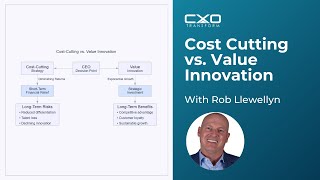
A CEO faces a choice: cut costs for quick gains or invest in innovation for lasting value. Apple, Tesla, Ikea, Amazon, Netflix, and Southwest Airlines show what value innovation looks like when you refuse to compete on price alone.
Let's start with a question that every CEO has faced. @ some point when your company is under pressure. Do you cut costs to protect short term margins or do you invest in innovation to create long term value? It's a difficult decision, and it's one that many leaders struggle with. The temptation to cut costs is really strong. After all, it offers an immediate boost to profitability. But does it come at a cost? For many, cost cutting feels like the safer option. It's measurable, it delivers quick results, and it reassures investors. But if a company cuts in the wrong places, it risks eroding its competitive edge. Now, for many organizations, cost cutting feels like the most logical response. When. When times get tough. Maybe revenue is declining, market conditions may be uncertain, or investors are demanding higher margins. And in the short term, cost cutting can work, but only to a point. The problem is it often leads to a cycle of continuous cuts. First you reduce operational expenses, then you scale back innovation. And before long, you're left with a business that's lean but not competitive. The challenge with this approach is that once you cut too deep, it becomes very difficult to recover. You end up with fewer resources to invest in R and D, talent, development and customer experience, the very things that drive sustainable growth. And that brings us to a crucial Is cost cutting actually helping your business? Or is it slowly eroding its future potential? Let's look at a simple trade off. On one side, you have short term gains from cutting expenses. On the other, you have long term risks like lower innovation, weaker customer experience, and lack of differentiation. Companies that rely too heavily on cost cutting often find themselves in a race to the bottom, where they keep lowering costs just to stay competitive. But without differentiation, they end up competing on price alone. And in most industries, that's a losing game. Instead of simply cutting costs, what if we focused on creating more value while reducing unnecessary expenses? This is what we call value innovation, where businesses find ways to enhance customer value while improving efficiency. The difference between cost cutting and value innovation is really huge. Cost cutting focuses on shrinking the business to save money, while value innovation focuses on growing the business in a way that makes cost cutting unnecessary. Now, the most successful companies don't just compete on price. They compete on value. And here's the key. The best companies don't choose between cost cutting and innovation. They do both in a way that strengthens their business model. Let's take Apple for example. Instead of reducing costs by using cheaper materials, they focus on superior design, seamless ecosystem integration and customer experience, allowing them to charge a premium and dominate the market. Or consider Tesla. Instead of trying to make the cheapest electric vehicle, they invested in performance, AI driven automation and battery technology, creating value that customers are willing to pay for. Another great example is Ikea. They found a way to reduce costs without sacrificing customer experience. Flat pack furniture and self storage logistics companies get lower prices, but Ikea doesn't compromise on value. So how do you actually make the shift from cost cutting to value innovation? Well, it starts of course, with a structured approach. Step one is to identify unnecessary costs that don't add value. Instead of blindly cutting expenses, focus on eliminating wasteful spending while protecting strategic investments. Step two is to invest in areas that drive real differentiation. This could be customer experience, technology or operational efficiency. Anything that makes you stand out from the competition. Step three is to align your strategy with long term growth. Instead of just trying to survive the next quarter, build a model that allows your company to thrive for the next decade. Now we've seen this approach work in companies like Amazon, Netflix and Southwest Airlines. Amazon reinvests profits into logistics and customer experience, reducing costs while creating more convenience. Netflix eliminated costly physical distribution by shifting to streaming, offering greater value with fewer costs. And Southwest Airlines focused on cost efficiency in operations while maintaining a strong customer experience, leading to industry leadership. So what does this mean for you? The key takeaway is very simple. Cost cutting can keep you in the game, but only innovation will help you win it. And if you're in a leadership position, here's what you need to do next. You should first evaluate your current cost cutting measures. Are they protecting your company's future or just giving you short term relief? Next, identify two to three areas where you can create more value. This could be through product innovation, customer experience or operational improvements. Then invest in efficiency without sacrificing differentiation. Use AI, automation and process improvements to free up resources for growth. And finally, remember this, the best companies, they don't just reduce costs, they create new value. So the real question is, where will you focus your strategy now? If you want to take your transformation capabilities to the next level, check out the links in the description below. Thanks for watching and I'll see you in another video.