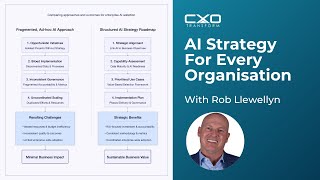
Rob Llewellyn walks through building an AI strategy roadmap for medium to large organizations. He covers aligning AI initiatives with business goals, prioritizing investments, and getting executive support to drive transformation.
Are you struggling to make sense of AI strategy and wondering how to actually put it all together for your organization? Well, you're not alone. I'm Rob Llewellyn and today I'll guide you step by step through building an AI Strategy Roadmap specifically for medium to large organizations. If you're a manager, leader or consultant focused on transformation, you know that AI isn't just something you can leave to chance. You need a clear, structured approach that delivers real business value, not just scattered projects or empty promises. So let's explore how the most successful organizations do exactly that, and how you can do it too. Without a solid roadmap, it's all too easy for AI efforts to get lost in experimentation, burning through resources without ever delivering any impact at scale. A comprehensive AI Strategy Roadmap brings order, accountability and focus, ensuring every initiative aligns to genuine business objectives and drives value where it matters most. It helps turn AI from an interesting experiment into a consistent driver of organizational change and and growth. To build this kind of roadmap, there are several essential sections to get right. So let's start right at the top. The first step is a powerful executive introduction. This does more than set the scene. It signals visible commitment from leadership and frames AI as a true strategic priority. And when you get this right, you give everyone clarity about why AI matters to your business and how it supports your biggest objectives. From operational efficiency to customer experience and innovation. This section ensures everyone's on the same page, sets expectations for disciplined delivery, and avoids the confusion of AI as just another technical fad. Skip this and you risk fragmented efforts, lack of buy in and AI drifting off into side projects that never move the dial. With executive intent firmly established, the next step is to turn that intent into a shared vision direction. A compelling vision is your organization's North Star. It's essential for giving your entire workforce a sense of purpose and clarity around what you want AI to achieve. When your vision is supported by clear objectives and a corporate business impact analysis, you energize every team and ensure AI isn't just another IT initiative. It becomes everyone's business. By weaving AI into every department, you foster cross functional collaboration and you prevent isolated pockets of innovation. When you highlight potential risks and sources of resistance early on, you set yourself up to overcome them before they can derail your plans. A well crafted high level roadmap brings structure to your journey, providing clear milestones and a shared sense of progress. If you don't do this, you'll see departments moving off in all different directions. Limited adoption and missed Opportunities to Scale Successful Pilots Once your vision and alignment are crystal clear, you're ready to look outward and see where you stand in the wider competitive landscape. So now it's time to benchmark your ambitions against the market. This section lets you see where your industry is heading, what competitors are achieving and what's really working in the real world. By analyzing the market and your competitors AI capabilities, you can identify both gaps and opportunities that might otherwise have been missed. And this is where you spot potential areas for differentiation. How your organization can use AI in a way that others can't. So if you ignore this step, you really risk investing in projects that don't deliver a real edge, falling behind faster moving rivals, or even missing opportunities to partner, acquire or innovate. Done well, this keeps you competitive, relevant and ready for what's next. Once you understand the competitive landscape, you're in a far better position to focus your investments for maximum impact. With your external context in place, it's time to get strategic about your investments. Prioritizing the right projects ensures your limited resources go towards the biggest business outcomes. By taking the time to map out your investments, budget carefully and build a clear business case, you give your board and CFO the confidence to support you for the long haul. Effective financial planning also allows you to manage risks and avoid the trap of overspending on flashy pilots, which give you little in return. Miss this step and you could face wasted spend, underfunded projects or initiatives that lose momentum before they ever deliver any value. A robust investment and risk plan keeps your program resilient even when the business climate changes. Now, once the investments are secured, the focus shifts to making things happen on the ground. Turning strategy into results means getting the delivery right. Here's where your detailed roadmap comes to life, showing how you'll move from initial pilots to scaling and enterprise wide adoption. The benefit of this section is smooth, coordinated execution, clear milestones, accountable owners and regular leadership engagement. Engaged stakeholders and empowered teams are essential to keep projects moving forward and maintain enthusiasm across the organization. By planning for workforce transformation and upskilling, you build a culture that's ready to adopt and adapt to AI instead of resisting change. If you neglect this part, you can expect stalled projects, frustrated teams and what I call AI fatigue, where energy fades before outcomes are ever realized. Strong governance, risk management and compliance practices here protect your investments and make sure nothing derails your progress now. Having reached this point, your strategy now needs to be turned into a real world success story, one that's actually signed off by your executive stakeholders. But A roadmap only works if you bring it all to life and win support across the business. This is where you move from planning to actual execution with practical validation, workshops, executive sign off and the kind of momentum that leads to lasting transformation. The benefit is empowerment, knowing you're not just ticking boxes, but you're actually driving results and embedding new capabilities. By using proven frameworks, templates and expert support, you avoid common mistakes and speed up your journey from concept to execution. And if you skip this kind of hands on, validated approach, your AI plans may get stuck at the nice idea stage, struggling to win any buy in or show measurable outcomes. Now, one of the systems we use is designed to help you bridge this gap, supporting you from first draft all the way to board approval and beyond. So what's the best way to move forward and bring your own roadmap to life? Well, every section of your AI strategy roadmap delivers essential benefits to your organization and skipping any step can seriously limit your success. Get it right and you can enjoy stronger alignment, smarter investments, faster execution and real competitive advantage. So if you're ready to go further learning how to create your own AI strategy roadmap, run effective workshops and get executive sign off. Just follow the link below to access the tools and expert guidance you need to do that. Thanks for watching and I'll see you in another video. Thanks.