bitcoin is in for a LOT of manipulation this week (be careful!)

In this video, Xuan provides a weekly market outlook for Bitcoin, beginning with a personal introduction and a claim of a 75% win‑rate on his trade calls. He explains his primary method for setting a weekly directional bias—using the close of the previous weekly candle—to decide whether to look for shorts or longs, noting its historical 70‑80% success but also its occasional failures. Xuan then shifts to a discussion of cognitive flexibility, drawing an analogy to high‑elo League of Legends players, and argues that mental adaptability is more crucial than technical skill for trading success. He describes the current market’s unusually low volatility, how this affects his trend‑focused trading system, and why range‑bound conditions lower the system’s win rate. The video introduces the “Power of 3” concept, emphasizing the need for alignment across weekly, daily, hourly, and 5‑minute timeframes, and warns against trading on Mondays due to typical lack of news. Xuan outlines his analysis of liquidity concepts such as fair‑value gaps, inducement, order blocks, and volume‑profile value areas, suggesting potential support zones around $57,700 and $63,200. He details a step‑by‑step trade execution framework: wait for confirmation signals (e.g., bullish CSD on the 5‑minute chart), respect order‑block breaks, place entries, stop‑losses, and targets, and avoid pre‑emptive entries. Finally, he promotes a one‑on‑one coaching program aimed at helping traders achieve a full‑time income within 90 days, directing viewers to links in the description.
Chapters
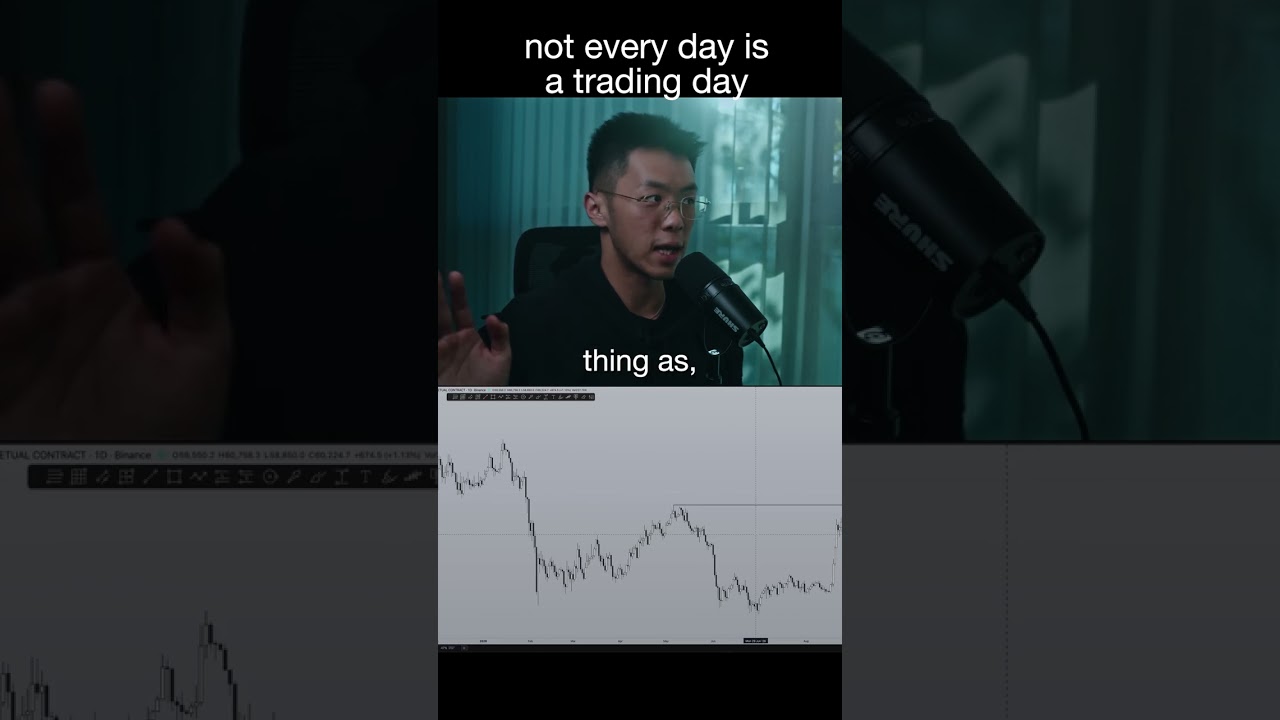
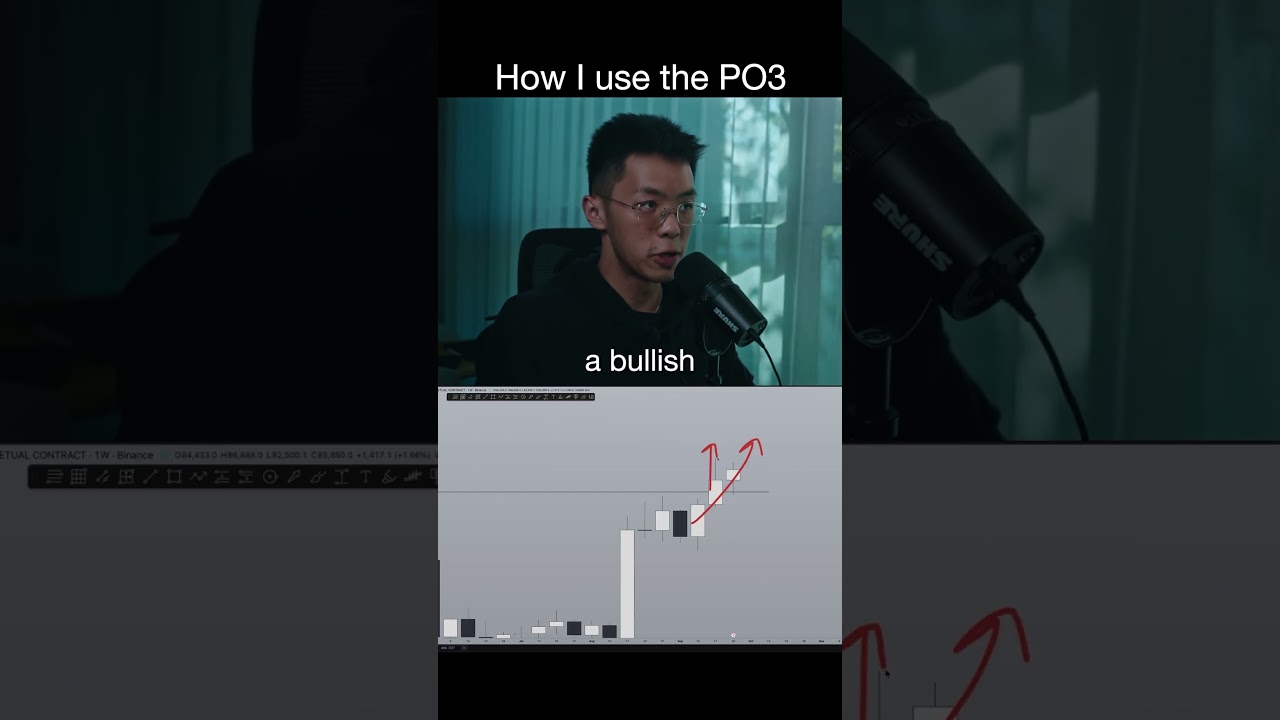
What's good guys, welcome back to another video. It's a new week and you know what that means, we're gonna get new opportunities here on Bitcoin. Last week was a fantastic week overall for like our trading, not just on Bitcoin but throughout many other assets. Hopefully this week is going to be quite similar to last week. But before we get into it, if you're new here, welcome, my name is Xuan. I've been publicly documenting the success rate of all of these trade calls that I've been making here on YouTube over the last year and a half or so, and I'm currently at about a 75% win rate. So all that means is that I tend to be right just a tiny bit more compared to when I'm wrong. So yeah, now that I've given you a good reason to listen to me, let's get into the video. So Overall, real quick, right? We're going to start off on the weekly chart because it's important to start things off by getting a bigger picture perspective. The trouble that a lot of people run into is that they start their analysis off directly on the lower timeframes and they wonder why they keep getting chopped up. So in terms of the higher timeframe, what I'm looking for specifically is to understand what is the overall direction that I can expect for the week. Now, while the method that I'm going to use is not always successful, as is with any other method, right? You're never going to have 100% success rate. More times than not, right? 70 to 80% of the time it has allowed to capture the right side of the move. Now, the reason why I mentioned this is because last week was an example. In fact, if you look at the last 4 weeks in a row, this kind of method would've failed. Now, does this mean that this method is trash? No, it just means that we, for a very short, you know, kind of sample size out of very, very many sample sizes, it's just not as consistent, which is fine, right? Every strategy, every concept will have its rough period. And the correct thing to do is to not panic and start looking for a different strategy once you are in a bit of a rough period. Because the fact is, It's always going to come. Now, just to explain what I mean. Now, the method that I use to identify the overall direction of this week's move is the weekly bias. And it's purely looking at the previous week's candle close. Now, last week we ended up closing bearish, which means this week we're going to be looking for shorts. I know, very simple. Seems very unsophisticated. And yet you'll be surprised at the success rate. Again, I've been doing this for years at this point. And it's like, yeah, this rarely fails me. Proof is in the pudding. You don't get to like 75% win rate. With something that doesn't work, right? And as simple as this is, it tends to point you in the right direction more times than not. Except for the last 3 weeks, of course, because like, yeah, here you have a bullish candle close, but then you close bearish, right? And next week we're looking for shorts. And then this week we ended up closing— well, we ended up doing nothing really, because the weekly candle did not go above the previous weekly high or the previous weekly low. And like last Monday, initially I was like, yeah, you know, we're going to look for longs. And then throughout the rest of the week, I was literally like, all right boys, time to go short, time to go short, because things change in the markets, which is another thing to kind of understand, right? Now, recently I actually had the opportunity of doomscrolling YouTube for a bit, and I came across this video that studied, right, the most successful traits or like the most common traits amongst like high-ranked League of Legends players versus low-rank hardstuck bronze people. What was super interesting is that the, you know, kind of higher-level players or like the higher elo players, they did not have, you know, better— like, yes, sure, they had better technical skill and they had better mechanics or like they had better IQ or, you know, ability to manage tilt. But surprisingly, no, they didn't. So what was interesting about this study is that you would have thought that, you know, the higher elo players would be, you know, they might have better technical skill or they might have a better kind of emotional control so that they don't go on tilt as often. If any of you play League of Legends, you know, just because it's high elo doesn't mean it's any less toxic. So it wasn't technical skill, it wasn't IQ, it wasn't anything special even. And they realized there was only one really, like, one common trait. that separated like tens of different traits that they were kind of measuring. Granted, it's not a big sample size, but the most successful, the thing that separates the top ELO players from people that are hard stuck, you know, bronze, is this thing called cognitive flexibility. Now it's essentially referring to how well you're able to kind of remain flexible and adapt to different kind of game states, right? League of Legends, it's like every game, it's, you know, lasting anywhere between 30 minutes to 40 minutes. But still, now within those 30 minutes, a lot of things are happening and you've gotta be able, like you might come into the game with like, you know, okay, this is your plan, right? A, B, C, but then depending on how the game state progresses, you have to make some adjustments to, you know, you either need to play a little bit more safer or you need to be, all right, just because your, like, your plan coming in was supposed to be playing safe, but because now you have a lead, you need to be more aggressive, right? That's what the high elo players are able to do, right? They're able to adjust their strategy accordingly. Now, the way this relates to trading is that, well, every single day, like our, what we do for a living here is to literally deal with changing market conditions. It's not that, okay, now you watch this video, All right, I'm gonna map out the trade ABC, and it doesn't mean that that's gonna happen. So in the event where, you know, your plan A fails, all right, now you gotta reconsider. Is this still a market condition worth kind of like pursuing, or is it time for a no trade, or is it time to, you know, go for, you know, kind of like plan B? Like for example, price, you are expecting it to retrace into a certain area. Guess what? It's no longer retracing back to that area. Guess what? Now you have to kind of adapt, right? Maybe do some momentum trading or something. It's something that I always preach on, you know, every single day on these videos. It's like so much of trading success boils down to more of the mental side of things, rather than like pure technical ability. Like the truth is you have tons of YouTubers out there that are way more technically skilled than me. They may be able to do things that I cannot and I'm perfectly fine with that. But at the end of the day, like am I profitable? Yes. Are they profitable? Maybe. I don't know. I like, I genuinely don't know. But you do not need a like genius level of technical skill to be able to be successful in trading. So remain cognitively flexible. And last week was a case study live of me doing just that. Because like, yeah, just because we had a game plan coming into it, like, okay, yeah, bullish, doesn't matter. If the market kind of starts giving you different signals, you've got to be able to adapt and react accordingly. Otherwise, you're just going to be, you know, stubbornly sticking to whatever idea you had about the markets, and then you're going to trade that idea. Meanwhile, it's like completely wrong, right? Not a lot of people are able to do this, but if you're able to train and hone the skill of cognitive flexibility, That's how you ultimately get success in trading. But, you know, with that out of the way though, this week we're still going to be looking for bearish daily bias. Now, we are coming into a bunch of relatively equal lows here. I think it's going to be a given. I think doesn't mean it's going to come true. But the fact that we're so close to this bunch of relatively equal lows here, which it will be illuminated further once we go into the daily chart. But yeah, the fact that we're so close to here means that it's very likely that this is going to get tapped. The only question is, where is it going to stop? Because so far on the weekly chart, we have this liquidity level over here. At $57,700. Now, the thing that, you know, kind of leads me to believe that we are not going to go all the way down here is because of 2 things. One, we have a fair value gap over here on the weekly chart. Now, secondly, we have a couple of relatively equal highs right before this bearish fair value gap, which means if you know anything about smart money concepts or liquidity concepts, this could be known as a concept known as inducement, where basically the market stops just short of taking out previous liquidity. You chop around for a bit, trick everyone into thinking that, okay, you're no longer gonna revisit this. But the truth is like you're looking at a higher timeframe chart here, which means things tend to take some time to play out. So when most of the retail traders are thinking, okay, price is gonna start dumping, then the market aggressively goes back into this level, right? Basically stops everyone out who went short early, who were impatient and went short early. And then once they come here, well, these same retail traders are gonna be like, oh yeah, resistance is broken or whatever. And they're gonna start going long on the breakout or whatever. And that is when they get you because the truth is this was the key level that we have been targeting For basically, what is this, since the mid of June. So basically for 2 months now. Is this normal in the market where, you know, we're gonna spend 2 months just chopping around? Absolutely not. If anything, like if you take a look at the weekly volatility so far that we've got, on average, right, we can expect, reasonably expect $6,000, right? From the high to the low of every single weekly candle on average over the last 14 weeks. On average, we can get $6,000 from high to low. Now, the last time we had something like this was literally back in The end of June, right? Basically, ever since then, if you take a look at here, the first week of July, we this is around three thousand dollars. Yeah, three thousand dollars, three thousand dollars, less than three thousand dollars, less than three thousand dollars. Like yeah, we've just been going. We've just been having less than half of the amount of usual kind of weekly volatility we can expect. Now, do I know the reason why this is happening? I have no clue. Could be summer holidays or whatever. The banks are taking a break. Whatever doesn't matter. What it what does matter though is understanding that we are currently dealing. With very low volatility conditions right here. So there are 2 things that you need to understand when we're in these low probability conditions— sorry, low volatility conditions. One, the system that I trade right here is primarily a trend trading system, which means it thrives when the market is moving aggressively and moving in one direction. It's part of the reason why we were so successful last week compared to almost any other week from the past. We had 1, 2, 3, 4, 5 days straight of dumps. And that is what you love to see on the system because you just literally momentum, momentum, momentum, momentum, momentum trade and all the way down to the target. Now, this was the target for me last week. Unfortunately, it didn't hit it. But still, the fact that you're in ranging conditions means that the overall success rate that you're going to have with this system is going to be slightly lower. That's a feature of the system, right? It's not a bug, not that the system sucks or whatever. It's just that when you optimize for trends, naturally, you are going to suck at ranges. It's like there is no system out there that's going to successfully, like, be very profitable in both trends and ranges because the very nature of optimizing towards one means that you are going to be You know, slightly more sucky on the other one. So, you know, with that out of the way though, not to say that we're going to play it super safe, but like just looking at the targets, like there is a reason for me to believe that the weekly bias is probably going to go towards the upside. However, like that is just my opinion. We're still going to trade what the market's telling us, which at the moment is bearish. So in terms of the bearish weekly bias, then we come down into the daily chart to identify the power of 3. Now for those of you who do not know what the power of 3 is, essentially this is a way for me to kind of get an understanding as to when the high or low of the week is likely to come. Now, when you have a bearish weekly bias, you actually anticipate the first couple of days of the week to trade higher, right? Assuming this is the weekly open, which it is the weekly open, anytime you go above the weekly open is an opportunity for you to sell high before a true expansion move towards the downside. So for example, Monday pumping right now is actually a really positive sign for us because this gives us an opportunity to sell high before the market eventually heads to its true direction. And again, the way we know that you know, this is likely the true direction is because we have a bias, right? We have a higher time frame bias. Now, it may not always be right, but at least we have a bias that tends to be more right than it's wrong. Monday, Tuesday, I wouldn't be surprised if we just continue dumping from this point on. So just to add further kind of like, you know, success rate to this kind of theory right here, it's important that we look at news. So news is basically telling us that, okay, when is the true move, right? When is the true expansion going to be happening, or at least likely to be happening? And it usually comes on USD red folder newsdays. So the only one that we have this week is going to be on Wednesday and it's going to be FOMC, which is not great. But it also tells us that chances are Monday and Tuesday, if we see any moves towards the upside, it's probably going to be a false move. And then Wednesday we may see the top of the week and then we're going to start reversing. Now, this is not always going to come true, but it is a playbook that we have seen happen time and time again. For today and tomorrow, if we start pumping, I wouldn't be surprised. But just understand that it's not the True move of the week. Going down into the daily chart though, just to understand the daily bias for today. Technically, it is bearish. Not only last Friday is bearish, but you know Sunday is bearish as well. So technically speaking, we should be looking for shorts today. However, the moment we go down into the one-hourly time frame, we immediately see that we have double bullish CSDs. So overall, like the shorts are definitely taken off the table here. And basically, the reason why I'm mentioning this is because one of the core tenets that we want to have when we're trading the system is something known as time frame alignment. Basically, we want to be trading only when the daily time frame. The hourly timeframe and the 5-minute timeframe are all pointing in the same direction. At the moment, the daily is pointing down, the hourly is pointing up, and the 5-minute is— chances are it's going to be pointing up for the rest of the day as well. Now, does that mean— so this is basically one of those days where we have timeframe misalignment, which you already know what my answer is going to be. Like, I have always been a firm believer that Monday is basically an extended weekend for traders. Like, even though a lot of the times, right, you get moves that look amazing in terms of price action on Mondays, but just because it's a Monday, and there is no news on Monday, you tend to get that trade just basically failing, even though the price action looks amazing. So you already know what my stance on this is, right? This is just going to be an extended weekend for me. Now, in the event that you do want to trade, because not everyone is trading the same system as I am, there's a couple of ways to approach this. So the first of which is that because the 1-hourly is bullish, it's not like you're just going to be starting to short the 1-hourly, right? Because you're just going to come back into this big block of You know, support right here. And this support also is— I'm going to bring up this concept known as volume profiling real quick. But basically, this is your value area, right? Throughout the weekends, this is what the market agreed that, okay, this is the kind of area where it's fairly priced, where Bitcoin's fairly priced. So you can see that price has already swept above the value area and has swept below the value area, which means there is no longer liquidity within the value area. So when you retrace back into the value area, you're actually looking for price to get support. From this area, so not only is this an order block, but you have a value area where the low has already been swept, which means like the discount positions are already filled. So as you come back into here, right between the hours of 7 a.m. to 10 a.m. New York, which is basically the New York kill zone, if you want to dive into a trade, I would personally look for some sort of bullish five-minute CSD. Basically, you come back into this area starting at 63,200, going down into the five-minute chart. You want to see a CSD. The way that this is going to come is like let's assume something like that, right? If that could draw. So basically, what I want to see is. Is a break above a previous bearish order block, and ideally an undeniable one. So for example, this is a bearish order block, right? Price came back into it and you continued heading lower. Now what you want to see is for price to come back into the bearish order block and then disrespect it. This tells you that, okay, the trend is now— or rather, the order flow is now starting to shift towards a bullish direction. Just because I think that this is likely going to be support does not mean that it is going to be support, because this is just what I think, and you don't want to be trading What I think. I don't even trade what I think. I trade what the market's showing me. So once you have an opinion, you've got to wait for the market to give you proof, all right? To give you confirmation that, okay, it agrees with whatever you think. I think that if this is going to be support, then from here you're going to see some sort of change in state of delivery or some sort of break of structure or some sort of market structure shift, whatever trading system you're using. But you've got to see that. Now once it comes back, right, once you get the CSD, then you go long, right? You place your entry there, you place your stop loss down below, and you target for whatever you're targeting. But The key thing here is to not jump in preemptively, right? That's how you risk getting into a lot of false trades. Now, I've seen time and time again, like there is a reason why I mentioned these confirmation signals. As painful as it is to wait, you know, an hour or 2 for these confirmation signals to print, I guarantee you it will at the very minimum increase your win rate by at least a solid 20%, just by the very nature that you're not going to be jumping into these trades preemptively while, you know, like you're literally going to be going long. Like if you just place an order over here, right? You just go long there. The market is clearly showing you that it's going down and you jumping in at that point is like, oh yeah, the market's clearly showing me it's bearish. Instead of following the trend and going short, I'm just gonna, you know, catch some falling knives. Doesn't take a genius to understand that it's not a very high probability play. But also like just to talk about like higher probability plays, if you've been trading for a while and you have not yet often the success that you know you can achieve from trading, and if you like the way that I think about the markets and just a general philosophy that I have about the markets, and if you think that stuff like this could really help you, what we do inside our program is that we work with you basically one-on-one to get you from where you are now to being able to make a full-time living from trading within about 90 days. So basically it's not just going to be like, hey, we're throwing you a program, like here's some videos, go watch it, all right, leave you alone. Like we're actually going to be working with you every single step of the way, personally reviewing your trades and reviewing your practices and even just, yeah, like just hopping on some weekly calls. Now if that sounds like something that could get you from where you are right now, To being able to, you know, just make a full-time living from trading, then click the first link in the description box below. But otherwise, I'm gonna see you in tomorrow's video or later on X. If I do get into any trades, you already know I'm gonna be posting all of my trades on there. But with that out of the way though, take care. Ciao, ciao.