In this solo crypto‑education video, the presenter draws on four years of teaching experience and two personal bull‑run cycles to pinpoint a single, pervasive mistake that beginner traders make: taking profit at static support or resistance levels instead of at market‑structure‑driven expansions. He explains why, in a bullish environment, direction is already known and traders should focus on time, using the market’s natural tendency to create higher highs and higher lows. The core solution is to set take‑profit targets at Fibonacci‑style standard‑deviation expansions (e.g., -0.5, -1, -1.618, -2) derived from a fib retracement drawn from the recent swing low to high. He details how to configure these levels on TradingView, the mathematical rationale behind them, and how they reflect institutional order‑flow patterns. The video then adds layers of refinement: using daily market‑structure breaks (lower lows/highs) as exit cues, aligning exits with seasonal timing and psychological price levels, and adjusting risk exposure (partial exits at different expansion levels) based on trader temperament. He warns against the perfection‑seeking trap of trying to catch tops, advocating instead for a disciplined plan execution. Throughout, he promotes a private “alpha” group that provides curated trade setups. The overall message is a practical, math‑based framework for maximizing profits during crypto bull markets while avoiding early‑profit taking.
Chapters
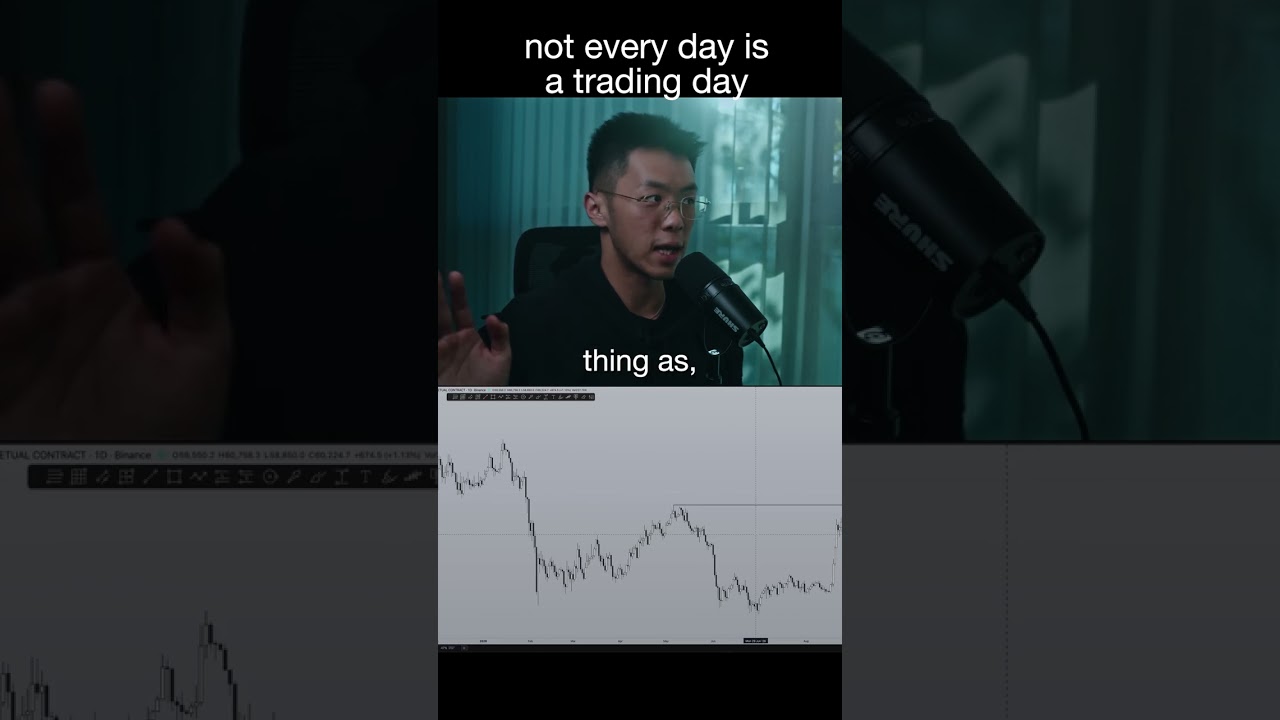
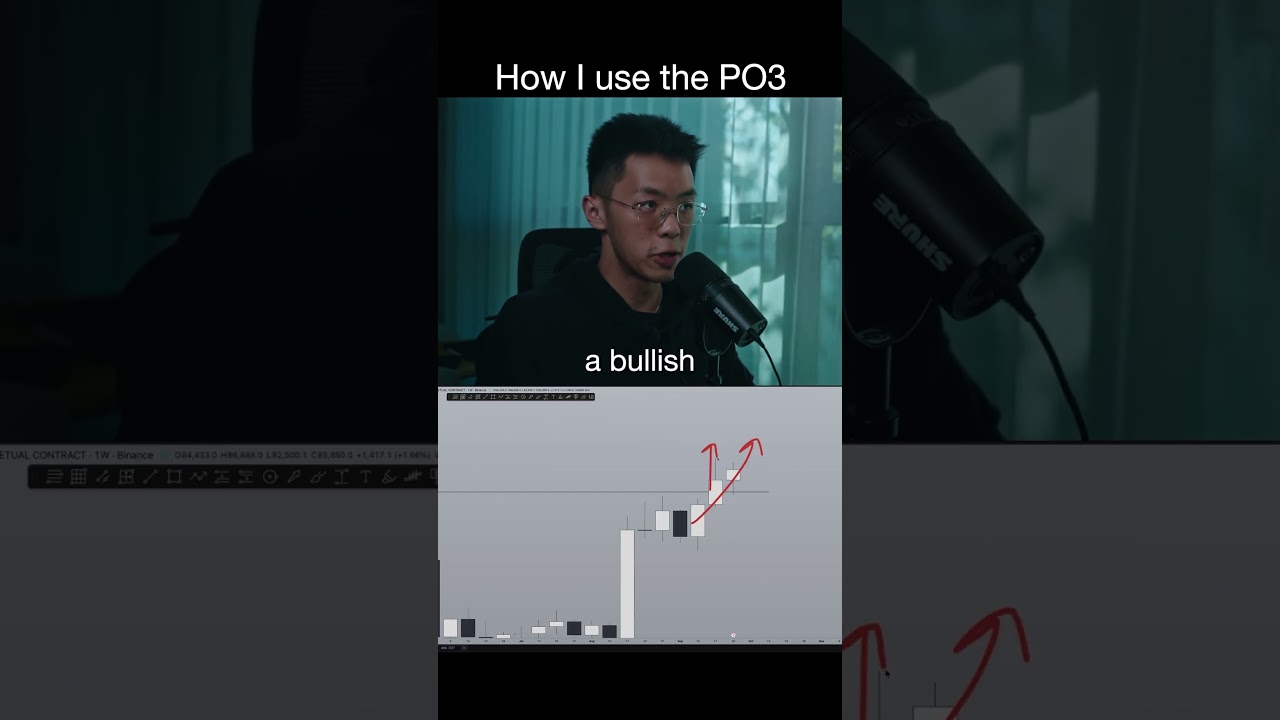
After working with hundreds of students over the last 4 years and having been through 2 bull runs myself, time and time again I have come to realize that there is one big problem that plagues the majority of beginner market participants into crypto, or even just traders in general. This single reason alone is responsible for the majority of your lost gains and honestly just sabotages you. This thing that I'm going to talk about as well feels like the right thing to do, but in fact is absolutely the opposite of what you want to do during a bull run. And hopefully after watching this video, you will be able to learn from this mistake, not make it again, so that you can the type of money that you're supposed to make during a bull run. So what exactly is it that everyone is messing up? Well, this is a very simple concept known as taking profit at expansions. So one thing I realize a lot of people tend to do is, for example, let's take a look at this Bitcoin range right here. If you are like most people, you will undoubtedly start drawing support resistance lines. For example, here I've already drawn some support resistance. Now there is absolutely nothing wrong with support resistance unless you're using them as like a take profit style target. So for example, let's say you bought the dip here, right? You caught the bottom, you bought it at support at $54K, and you will take it at the next resistance level. Now here's the problem with doing this. Other than the fact that Bitcoin has since went up by almost 2x from this bottom here, the major problem is that you're missing out on all of this. And the way that you do not miss out on all of this is to target expansions. And what do I mean by expansions? First of all, if you are in a bullish market, it makes sense that, you know, your highs tend to keep getting attacked. Or in layman's terms, You keep forming new higher highs and the lows tend to be protected, meaning higher lows. So just purely based off of this, what do you think is the logical thing to do when you are taking profit? Would it make sense for you to take your profit here just because it's some kind of resistance, or maybe take it here? No, because you know that the trend is up, right? We're in a bull market. Like, I always like to say this, but in trading there are always 2 variables. One is direction and the other one is time. When you are in a bull market, One of those variables is already removed in the sense that you already know the direction. You already know which way the market is heading in, which is up. And if the market is going to go up, it means that you're going to form new highs. And so one of the worst things that you can do in a market such as a crypto bull market where not only is, you know, it's in an uptrend, but this uptrend tends to yield 1,000, 2,000, 10,000% gains. Worst thing you can do is to, oh, you never go broke taking profit. Well, guess what? You do because by taking profit here, you miss out on all of this, and Bitcoin only went up by 100%. You can look at, let's say, Popcat, right? This has been one of the biggest runners of this entire cycle, right? I can draw support resistance right here, and problem with taking profit anywhere other than forming a new high is that you're going to miss out on the run from— like, this is— this chart doesn't even show the full extent of Popcat, but it used to be much lower. You would have missed out on potentially 20 to 50x gains if you were to have just taken profit like that. So what is the solution? The solution is very straightforward. It comes back to how market structure works. It comes back to how order flow works, which is you want to take your profit at expansions. And the way you do this is every time you get some kind of a move, take a fib, right? This is just a fib retracement. You can find this fib retracement on the left-hand side of your TradingView. Draw A fib from this low to this high. And what you're going to do is you want to take profit at minimum a -1 standard deviation expansion, ideally -1.618, and even better yet, if you can get a -2 expansion, that is wonderful. That is going to be a wonderful trade. So the first question you might have is, hey, how do I set up these numbers? Feel free to take a screenshot of my TradingView settings for the fib retracement and just copy and paste it onto your own chart, and you will get something like this. Number 2, Yes, you draw from low to high. Whichever direction you want to look for the expansion in, that is where you draw it. For example, if I am taking a short and I want to find an expansion level for a short, I would draw it from top to bottom. So nothing too difficult. Now, what is the magic behind these numbers? Well, numbers that I have drawn here are not actually Fibonacci numbers, but rather they are standard deviation numbers. And essentially, this is the range that I drew the fib, right? And the standard deviation expansion is simply one. You know, that's -2, right? It's just the range expanded outwards. And the beauty of this is that this is based off of mathematics. And we all know by now, especially if you've been watching my channel for a little bit of time, most of the major movements in the markets are run by the market makers and the institutional money because they're the only ones who have the tens and tens or hundreds of billions of dollars capable of moving the markets significantly. For example, Bitcoin going from, you know, $70K to $100K in pretty much the last 2 to 3 weeks is not the result of retail traders, because this is a move that requires quite literally hundreds of billions of dollars to pull off. That is just in the buy side, right? You also have all of the sell pressure that you need to overcome in order to get there. So the beautiful thing about knowing the fact that the market is run by the smart money, the institutional money, the whales, is that they have certain ways of doing things. And as long as we can figure out the patterns that they do things in, we can try to follow along. And this is where standard deviation numbers come in because it's based on math. For those of you who are familiar with Wall Street trading, quant trading, or any sort of the highest level of trading, is that they don't use technical analysis, they're using math. And when it comes to the algorithms that are delivering price on a second-to-second, heck, even millisecond-to-millisecond basis, placing in orders, hundreds of thousands of orders per second, they're doing this based on math. And what you will come to realize is that a lot of the calculated expansion Expansions in the market tend to follow standard deviation numbers. For example, if you draw a fib from this low to this high here— oh wait, no, sorry, from this low to this high here— you see that the top comes at the -0.5 standard deviation expansion, which is simply just one half of a standard deviation outside of this. So this is one way that you can use to— when you draw standard deviation numbers, no matter what, you are going to be taking profit at some kind of an expansion level, right? Whether or not you're going to catch the top of this expansion level That depends on your system. Are you more of a risk taker? Are you— do you have less of a risk appetite? Of course, if you're more, you know, risk friendly, then maybe go for a -1, aim for a -1.618, 2, heck, 2.618, right? And that's as far as I would go, by the way. But if you are a little bit more conservative, even though it's a bull run, you don't want to risk— maybe you have some PTSD from the past bear market and the bull market, and you don't want to risk losing your profits or whatever, then fine, you know, take profit, take a partial at -0.5, take a partial at -1, right? There are many different ways that you can do this, but this is one of the best ways to ensure that at least you are taking profit at expansions, not at some kind of support resistance. This is not how the markets work. By nature, an expanding market means that you will form new highs, and so it makes sense that you wanna take profit at new highs. Now, before I move on to giving you a couple of bonus points to help maximize your profits, if you've been in crypto and you are struggling to make the kind of money that you think crypto should be making you, maybe you see all of these other people catching coins that move by a lot, and yet you're stuck holding bags that are not doing anything, feel free to join my private alpha group. This is nothing fancy. All we do is we gather the information for you because we have many pairs of eyes watching the markets. We distill them into neat trade setups complete with entries, stop losses, and take profits so that you are able to catch the right moves and be on the right side of the moves and just remove some of the overwhelm that you feel when it comes to trying to make it in a bull market. Because let's face it, trading is hard, but we do try to make it easy. If you're interested, it's the first link in the description box below. But otherwise, let's move on to just a couple of bonus tips that I can give you when it comes to maximizing your profit. And the first one is going to be market structure. Basically, you do not take your profit until you see some kind of daily market structure break. Let's take a look at Bitcoin. So if we go back to the previous bull market back in 2021, you will see that the majority of the move starting from 2019 You can see that it's pretty clean, right? You have high, low, high, low, high, low, and gets very, very clean until basically this point here where you have high, high, high, low, high, high, high, low, and then boom, right? That's your first lower low. Come back, that's your low high. That's your cue to take your profit and run, and boom, right? The market dumps. Same thing once more. From this low here, you form higher highs, higher lows, higher highs until eventually boom, right? You get a lower high— sorry, you get a lower low, and then boom, lower high. That's your cue to get out. And this is going to apply very similarly for this run as well. If you use Just this one little concept, you go from, for example, taking profit at standard deviation numbers. Maybe you would have got out here if you use this method. So boom, that is your market structure break. Obviously, with hindsight, we know that this was a liquidity sweep, but otherwise, take profit at the next lower high and you're out, right? You go from capturing from here to here to capturing from here to there. Obviously, this is just one little factor. You want to ideally time this with many other confluences. For example, timing. We all knew that we were in the middle of a bear market at this period of time. Like we wouldn't have wanted to take profit buying Bitcoin at 15. and selling it at 20. That's not what buying in a bear market is for. Obviously we know this in hindsight, but even at the time, the people who were in crypto, this is a bear market. And so you do not sell for a 20% gain in a bear market. That's not how it works. So obviously you wanna time this. So maybe you want to look for some kind of a top formation to form maybe in January, February, which is when the pump from this year ended, by the way. Like notice how the top of the market came at around March and we've been on an uptrend since September. This time around, very similar. We've been on an uptrend since September, and so reasonably we can expect the market to stop going straight up, maybe at around January, February, or even March. So of course you want to time it right, apply some seasonality to it, apply some psychological levels to it, apply the whatever I taught you in terms of standard deviation expansions, and boom, right? You all of a sudden you have a really solid system for ensuring you cash out very close to the top Now, do not try to aim for the top. Probably the second biggest problem that plagues most beginner investors and traders is that they try to be perfect, right? They try to catch the top. And the fact of the matter is that the only real form of perfection when it comes to trading is that if you have a plan and you execute that plan, everything plays out wonderfully. Boom, that, that's perfection because you had a plan and everything played out according to your plan. That's perfect. The more you try to chase perfection in the traditional sense, the more you're gonna get burned because you're very likely going to sell the top too early, right? You're gonna In your attempt to catch the top, you're gonna sell too early, and in your attempt to buy the bottom, you're gonna be catching a lot of falling knives, right? It's not a sustainable way to do it. If you haven't already been through that, this is the warning: don't try. And if you have been through that, you'll know exactly what I mean. But hopefully with this video, you will be able to keep more of your money and stop taking profit way too early because we're in a bull market. This is where 10x gains are possible. If you enjoy content like this, talking about crypto from more of a smart money perspective, make sure you subscribe to this channel because I will be posting multiple videos per week just on topics like this. But otherwise, have a good day. Trade safe.