In this segment Roman Ceccardi emphasizes that successful trading hinges on making the best possible decision using the data available at the moment, not on hindsight. He stresses the need for clear rules and guardrails to keep emotions out of the process, and the importance of being quick to adapt when new information emerges. Traders must stay flexible, objectively assess facts, and be willing to close a position even after investing time or risking loss, because the market is indifferent to personal effort. Accepting both right and wrong outcomes without self‑criticism is presented as a healthy mindset for consistent performance.
Chapters
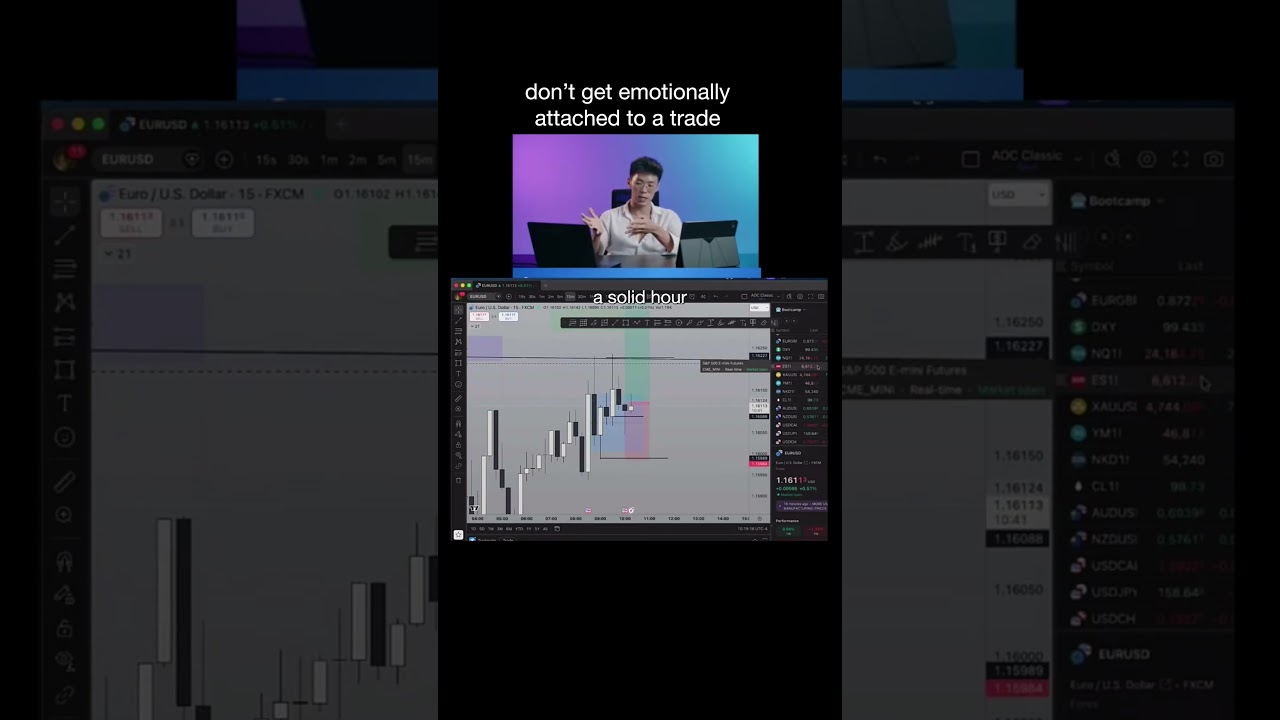
That's a very important lesson again with trading, is that in hindsight everything always looks easy. Outside of like executing your system, one of the other like core philosophies that you do want to implement is simply you make the best decision that you can based on the data that you have at the very moment. Which means that at any point if that data or like that information happens to change, like you need to be quick to adapt. And obviously you need to have rules, you need to have, you know, certain kind of like guardrails to keep you objective so So that you're not just making these decisions based on emotion or based on feel, or like, I feel like, you know, euro is going to go down and that's why I'm doing it. A lot of the times it's like, to be a good trader, you also need to be able to kind of like remain flexible and just to, you know, be able to objectively look at the facts and like, okay, is there a reason why I should close this? Yes, then I should do it. Even if I have spent a solid hour waiting for that trade to play out, or if I could potentially lose money, like, it doesn't matter. At the end of the day, the market doesn't care that you've put in time to look at the chart. The market doesn't care if you've potentially lost money, right? Market's going to do what the market's going to do. It's our job to simply read it and to, you know, make the best decision that we possibly can, right, with the information that we have at the time. Sometimes you're going to be right and you're going to be thankful for it. Sometimes you're going to be wrong and that's also perfectly fine. Like, you don't need to beat yourself up over it.