
In this video Roman Ceccardi addresses the common trader problem of premature profit‑taking or holding losing positions, attributing it to cognitive dissonance – the mental discomfort caused by conflicting beliefs. He explains how this psychological bias leads to irrational, emotion‑driven decisions and why recognizing it is the first step toward disciplined trading. Ceccardi then shares a practical, three‑pronged framework for cultivating patience: (1) Occupying one’s time with other stimulating activities (gaming, content creation, business work) to reduce the urge to micromanage trades; (2) Defining clear exit criteria – a fixed risk‑to‑reward ratio (minimum 3R), range‑expansion targets using Fibonacci extensions or daily‑range benchmarks (‑0.5 or ‑1 standard deviations, ~50 pips for forex); and (3) Time‑based exits, closing positions before known low‑volatility windows (e.g., before 12 PM New York for forex/crypto). He illustrates each rule with real trade examples, including a 16R crypto trade and typical daily range behavior. The video emphasizes systematic adherence, data‑driven testing (FX Replay, TradingView), and the mindset that patience is essentially disciplined waiting. Finally, he invites viewers to join a free daily newsletter for actionable trading tips.
Chapters
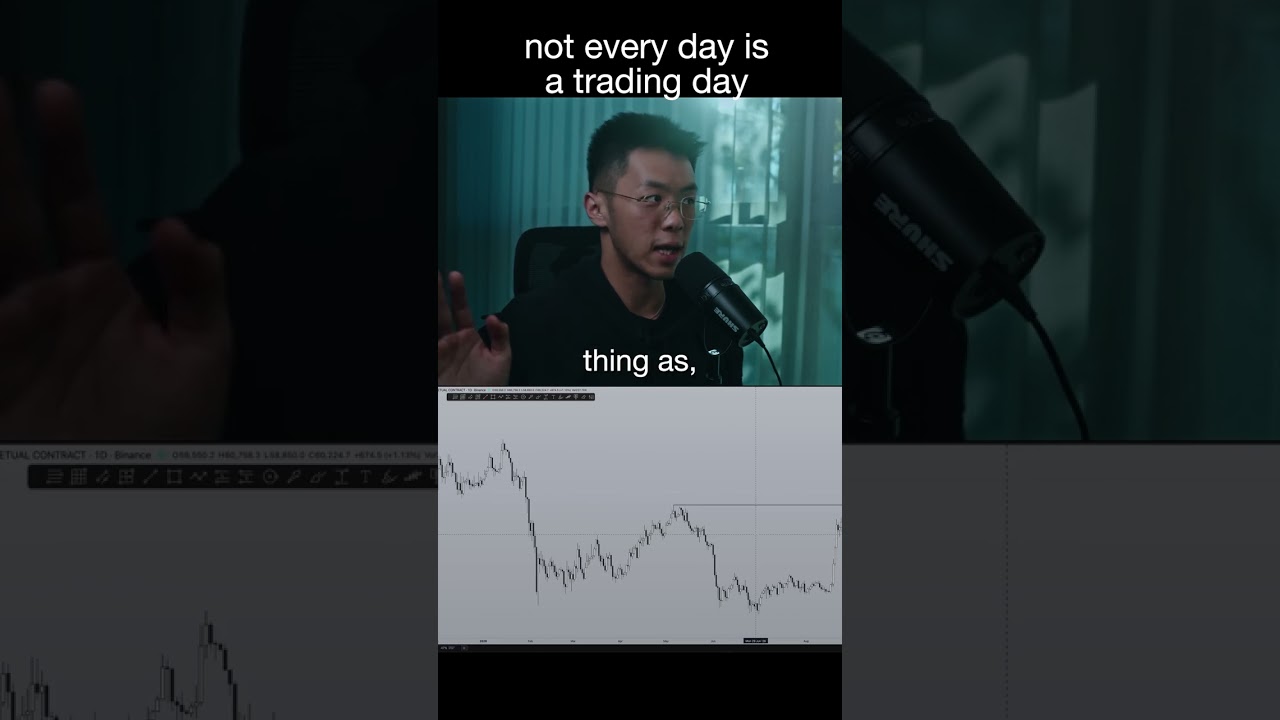
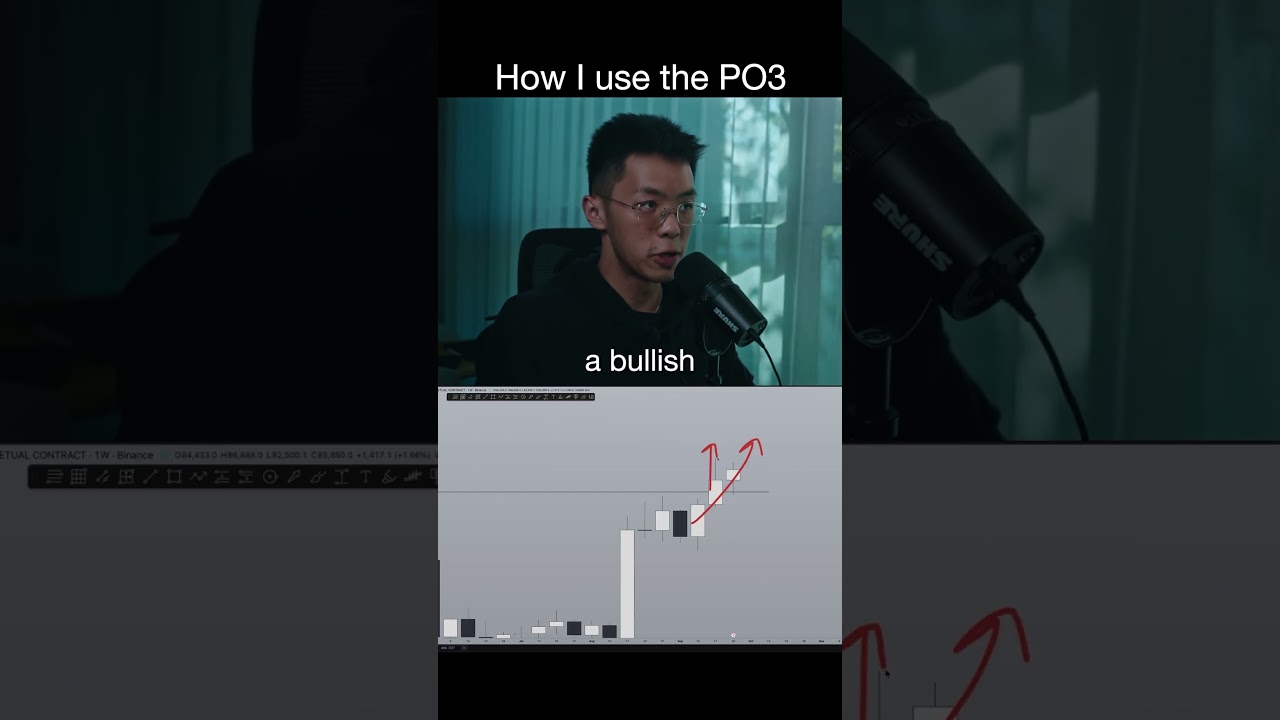
As investors and traders, especially in the crypto market, we understand that we need to remain patient to let our investments or trades play out. How many times have you taken profit on a coin just to see it run another 200% or even 1,000% without you? 99% of the time, simply remaining patient will solve that. But have you ever gotten annoyed when somebody tells you to be patient? I know I have. No shit, I know I have to be patient to let my trades play out, but it sure is easier said than done. So to help solve that, in this video I'll be I'm gonna be teaching you a practical method to remaining patient that's helped me completely overcome my need to take profit on trades too soon. Let's first understand why we feel the need to mess with our trades in the first place, because understanding this will help you make better decisions in all of your future trades. And it all starts from a psychological concept known as cognitive dissonance. Cognitive dissonance is the mental discomfort or psychological stress caused by having 2 conflicting beliefs or ideas. Now, when confronted with facts that contradict these beliefs, we will try to find a way to resolve the contradiction To reduce our discomfort, and in doing so, we start making irrational decisions. Let's give you an example in the trading sense. How many times have you been in a situation where the moment your trade goes in the green, you start looking to take profit because you can't bear the psychological stress that comes if the trade were to come back down to break even and you lose all of that unrealized profit and loss? Or let's flip the script. When your trade goes into the red, you just keep holding on to it or even add to that losing position because you can't bear the stress that comes from losing money. And the reason why you make these has nothing to do with the signals that the markets are sending you objectively. Let me give you another example. How many times have you been in a situation where you've just lost a couple of trades, or maybe you just lost one big trade, and the very next trade, the moment your trade goes into the green, you start thinking about closing the trade right away because, well, the trade is green and you're able to recover some of your losses that you incurred yesterday. But that's not the way that you want to think about trading because at this point, this decision, as well as the decisions that I talked about before in the last example, they're no longer made logically. But rather emotionally, which is not what we want to do in trading. What happened yesterday has zero bearing on the events that happen today. Sure, you might have lost a trade yesterday, but everybody loses. There is no strategy that has a 100% win rate. In the book A Theory of Cognitive Dissonance, the author proposed that human beings strive to have consistent thoughts to feel mentally stable. When someone has conflicting thoughts, they feel uncomfortable and want to fix this by either changing their beliefs, adding new— this is the keyword— unsubstantiated or irrelevant information to justify their stressful behavior, Or just straight up avoiding the issue completely because otherwise it's going to make that internal conflict worse. So how can you use this information to your advantage? And it's simply by realizing that every time you feel discomfort from active positions, whether it's from the fact that you really just want to take profit right away or that you wanna add to your losing trades, it's all just cognitive dissonance. It's all in your head and you just need to get out of your own head to start reading the signs the market is showing you objectively. Otherwise you risk making irrational decisions. Of course, this is also easier said than done. So now let's get into some practical tips. Practical tips on how to actually do this. How to be patient. Now, I'm an impatient person by nature. I love myself tons of stimulus. I like to make money fast, and I like to do exciting things, which isn't really the best trait to have for trading because stimulus applied to a trading sense means taking tons of low-quality trades at random times just to feel some excitement from pushing buttons. I mess with my stop loss every 5 to 15 minutes because, well, I'm looking at the markets and like I'm overthinking every little move and taking partial profits at every little resistance or quote-unquote support point that I see, which is obviously not good for making money trading. So how did I overcome this? And telling myself to simply be patient and to wait definitely didn't work. So I gave myself a new definition to the phrase be patient, which for me is to simply occupy your time with something else. In the past, I played games while my trades were active. I didn't even think about closing the trade early or messing with the trade because I was simply absorbed by the gameplay. And heck, today I still play games while my trades are active. Recently, the one that I've been absorbed in is this one called Darkest Dungeon, but I also work on The Art of Crypto, which comes in the form of writing the script that you're listening to right now, making videos that you're watching right now, creating new course material for my program, posting trade ideas, and engaging with the community. By occupying myself, in fact, you watching this video right now is already you being patient because you spending your time watching this video means that you're probably not thinking about the trades that you have going on right now. And just by virtue of that, you're already being patient. See where I'm getting at? By occupying myself with other activities, I satisfy 3 main things. My need for stimulus. Because I'm doing other mentally or physically stimulating activities in the meantime while my trades are going, I don't feel the need to acquire stimulus from trading because I'm already getting it somewhere else. My need for making money now. Again, I'm a very impatient person. I like to make money now, not later, which is not the best kind of mindset for trading or investing. And I solve this by working on the business of The Art of Crypto, by creating more videos, by making a better product, and just generally working on the business. By occupying myself with other activities. I don't get any cognitive dissonance because I'm simply not thinking about the trade. Nowadays, most of the time, I take a trade at 3 AM New York and I go on to work on my business, go smoke a cigar, go play basketball, have dinner. And by the time I come back to the charts, it's 11 PM New York, most of the daily move is already over, and I'm up by a lot of profit. In fact, I just got one of those trades yesterday. Notice how I took the trade at around 8 AM London and closed the trade at around 2 PM London. In about 6 hours that I just disappeared, the price went up by a ton and I closed out a 16R winner. And honestly, these kinds of trades is like once a week is all you need to just make— imagine if you made 16R this week by just occupying yourself with other things, by just letting the trade do what it needs to do while you go do what you need to do. Now let's finally get into a systematic way to be patient. And the way I systemize being patient is to have clear exit criteria. For me, it usually boils down to 3 things. Number 1, fix reward. Number 2, set expansion. And Number 3, time. Let's break each of those down one by one. Number 1, fixed reward. This is when you simply set a take profit at a fixed risk to reward ratio for every trade that you take. For me, it has to be a minimum of 3R. You can decide what that number is for yourself, but I wouldn't recommend anything less than 2R for most people. By having that hard rule in mind, I don't close any trades until it either hits 3R in profit or it hits my stop loss. And the moment it hits 3R, I close it. Simple as that. Clear exit criteria. And even in the event that it runs further than 3R, I'm perfectly comfortable with that because it was all part of My plan and it's part of my system. And as long as you're executing your plan and your system to perfection, then in your book, in your book specifically, that should already be a perfect trade. And that is a good mindset to have. And the second exit criteria that I use is a set expansion. Now, over the years, I've come to understand that the markets move very systematically. After something pumps or dumps for a set percentage, it pulls down. For example, in most crypto pairs, you can use a -0.5 or -1 Fib extension to predictably determine tops and bottoms. Now, if we look at the trade that I took yesterday on the euro. I just want to show you how systematic the markets are. Number one, I took the trade at the 0.705 retracement from this range to this range. Price retraces to form a new high, but exactly where do I predict the high to come at? Well, if you draw a fib from here to here and you extend it by -0.5 standard deviations, you can see that the temporary top at 7:00 AM does come right at the -0.5. Now of course the day continues to move higher and higher, but for me, in most days, if I hit a -0.5 range expansion That is a good exit criteria already. But yesterday we hit a -1 range expansion, which is where I took the majority of my profits. Of course, it still continued higher than that, but that's perfectly fine because I already caught a very decent range expansion. And I'll just show you what I mean yesterday when I said I caught a, well, pretty much 16R trade right there. That's 16. That means that for every dollar that I risked, I made $16 back. And you can imagine this for yourself. If you were to be risking $100, you would've made $1,600 a single day. And every single day this pattern repeats itself over And over and over and over again. The algorithms that deliver price do it in a very systematic process. All of these moves that you see in the market can always be traced back to just Fibonacci extensions. All of these moves that you see in the markets can be traced back to simply range expansions. Now I'll just pull up a random area and show you what I mean. Notice how from the range expansion from this high to this low here, the moment it expands, where does it end up at? Look at the candle body, -0.5, and then starts retracing. Now, even on the daily chart, this works wonders. On Bitcoin, if we draw a Fib from here to here and we extrapolate that, that's a -0.5. Look at where price starts to top out at, and then eventually it hits the 1 negative standard deviation and it starts to reverse, right? Price is delivered in a very systematic way because the algorithms that are programmed to deliver the price is programmed on set criteria. Most times you can use a -0.5 or a -1 Fib extension to predictably determine intraday tops and bottoms. So my rule is that I simply do not take profit until price hits either a -0.5 or a -1 range expansion. And when it does hit a -0.5 or a -1, whatever I determined for myself, I'm just gonna take profit and be comfortable with that because that's a part of my system, that is a part of my plan. And as long as I execute my plan perfectly, that is a win. And that is the mindset that you need to have in order to succeed in trading. Now, in terms of Forex, this is a little bit different. What I found over the years is that most pairs, at least most currency pairs, usually move around 50 pips per day as their daily range. Sometimes it can be more, but sometimes it can be less. But 50 pips a day is very standard. So I simply do not take profit until the pair has formed at least a 50-pip range. And if it goes beyond that, like, that's just a cherry on top. But understanding the daily range allows me to extract the maximum amount of profit out of every single daily move rather than cutting myself short. And even if it were to go further than that, I know that that long-term data averages out to about 50 pips a day. So that's the second exit criteria that you can use, which is set expansions, either using a standard deviation expansion or simply by understanding your daily range. And the last exit criteria that I use is in fact my favorite, and it is time-based exits. Now, what you need to understand Again, once more about the algorithms that deliver price is that they do not just do so on price action. They also deliver price based on timings. There's a reason why some people say that, oh, sell it in May and walk away, or bullish Octobers, or don't trade Decembers. Or maybe you've heard other people talk about, oh, you should only trade the New York open kill zone, or the London open kill zone, or you should only trade the London session, whatever. Now, all of these people are onto something, but they just don't understand that this is all being manipulated by the algorithms that the market makers have. If I were to put it into an intraday I'll give you an example. Most forex pairs have the highest volatility sessions between New York 2 AM to New York 12 PM. Usually after 12 PM, the pairs don't really move much anymore, and in fact, they start to retrace. By having this knowledge in mind, I know that if I am an intraday trader, I just simply wanna close out all of my forex trades before 12 PM New York. And if it is too early, let's say that it's 9 AM or it's 10 AM, then I simply just let the trade run until, say, until 11:30 AM, and then Then I consider closing it, but not before then. This has worked the best for myself because sometimes it can be hard to determine if price is just going to go for a, you know, a standard deviation expansion, or if it's just going to go for, let's say, 3R or 5R. It's sometimes hard to tell. But when you use time-based exits, you simply stay in the trade until it's time to get out. And doing so, by understanding how the market likes to move from an hour-to-hour basis, it gives you so much clarity. It gives you the ability to extract the maximum possible move out of every single day without needing to second-guess yourself. Now, in a crypto sense, you can also use time-based exits for yourself. Exiting before 12 PM New York most days does work well in most cases. I can only speak from the experience of Bitcoin, ETH, and the other large-cap coins, as I haven't tested this out on the smaller caps or the mid-caps yet. But this is where you come in. Test it out using FX Replay or test it out using TradingView. Remember, you need data in order to make informed decisions in trading. What gets measured gets improved, and what doesn't get measured, well, simply you don't know what the hell is going on and you just taking guesses and gambling your money away. So test it out for yourself based on whatever strategy that you use. But if you were to just pick one of these exit criteria that speaks the most to you and just follow that, then you will have no problem being patient. Because, well, the rule is you can't exit until one of these exit criteria have been met. Either that or you get stopped out, which is perfectly fine, because as a trader, you need to accept the fact that you will take on losses in the markets, and you need to be comfortable with that. In trading, patience is really only behind discipline as the most valuable skill that you can acquire. In fact, one of my favorite sayings of all time is there are There are only 3 things that you can do in the markets: buy, sell, or wait. 90% of your time should be spent waiting. Now think back to your past experiences. How much more money would you have made if you were simply more patient? Quite a lot, I bet. Being patient is a simple thing to do, just not easy. But if you apply the things taught in this guide, you'll find it much easier to just be patient, bro. By the way, if you enjoyed all of the practical advice that was given in this video, you are really going to want to join the newsletter because, because every weekday I send you one email with a trading tip that you can apply to your trading right away to start making more money trading. It's completely free and it's a ton of value. You're not gonna wanna miss out. Link in the description box below. Bye-bye.