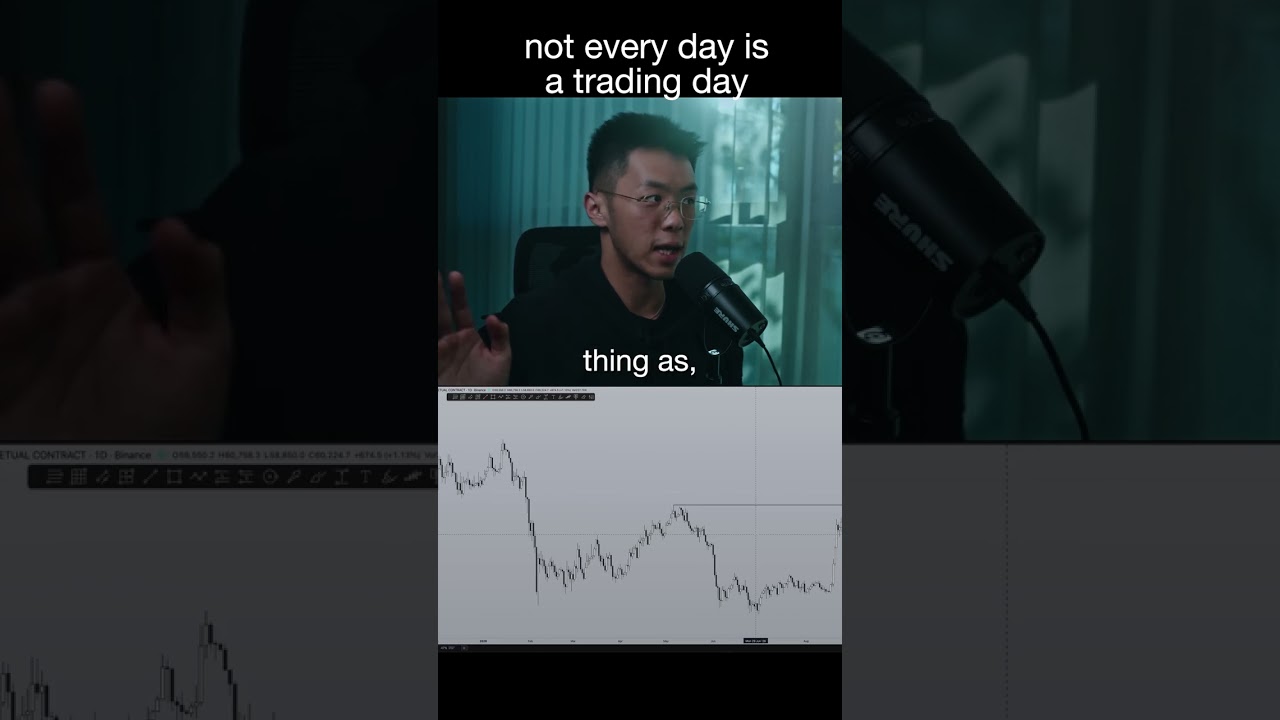
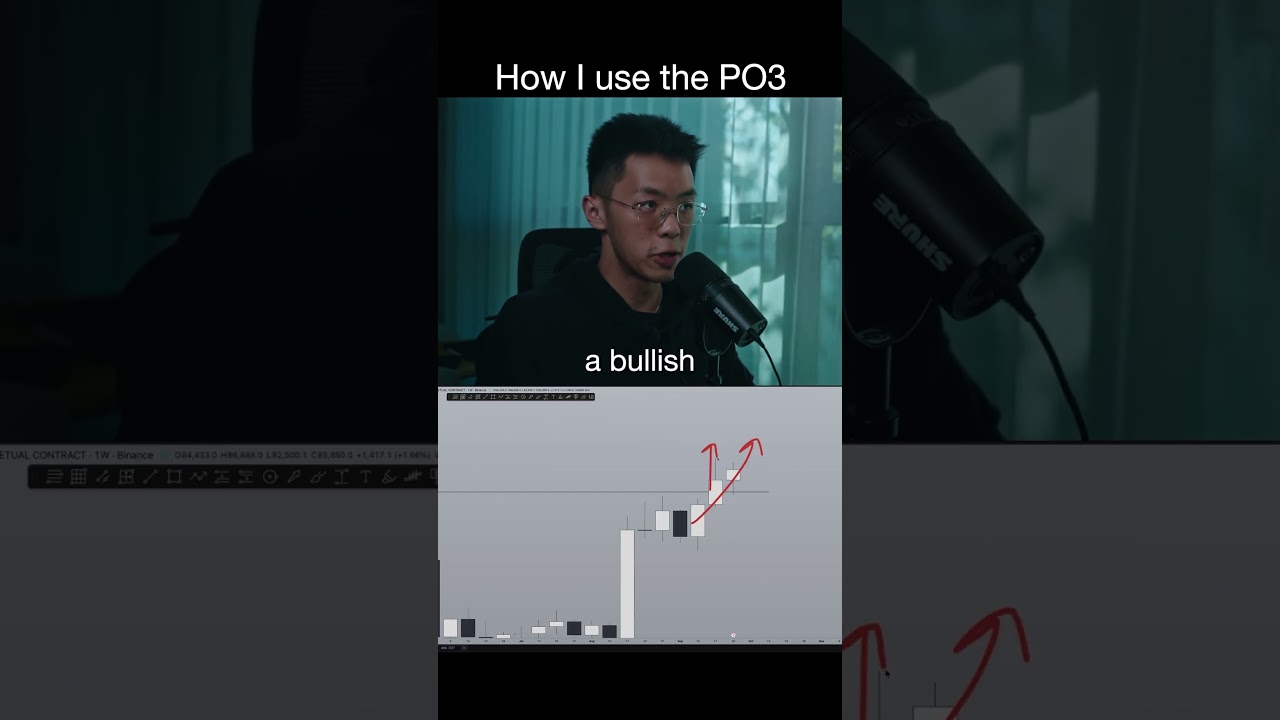
In this second installment of the "Bread and Butter" trading series, the presenter walks through a live short‑selling day‑trade example to illustrate the exact setup he uses daily to generate consistent profits. He begins by reminding viewers to watch Part 1, which defines the core concept of waiting for a key level to be broken before hunting for entries. Using a 1‑minute chart (and occasionally a 30‑second chart), he demonstrates how to identify a break of market structure, locate the resulting fair‑value gap (FVG), and place a trade entry at the gap. He explains stop‑loss placement just above the broken swing high, sets a profit target at the 0.5 Fibonacci retracement of the recent swing, and calculates a typical 1:4 risk‑to‑reward ratio (e.g., risking 1 % of a $10 k account to earn $4 %). The video includes real‑time alerts he set at price levels 3,430–3,550, shows why a particular trade was missed due to being asleep, and then re‑creates the entry on a later move that meets all criteria. He emphasizes that the setup repeats daily, is his "bread and butter," and warns against trading on weekends due to low volume. The presenter also references a separate risk‑management video, promotes his private Discord community, and announces an upcoming paid course for deeper instruction. The overall tone is instructional with confident enthusiasm, aiming to convince viewers of the reliability of the method while providing concrete, actionable rules.
Chapters
What's up everybody, this is sort of like a part 2 or just another example of my trade setup that I take on a day-to-day basis that makes me a lot of money on a very consistent basis. And if you have not learned exactly what this trade setup is, I'm not going to be talking about that. Make sure you watch the first video before you come and watch this one. So I would highly suggest you click off this video if you do not know exactly, just ideal trade setup that I always look for on a day-to-day basis that makes me really good money. So Yesterday in the private group, I mentioned that I was going to hunt trades once the price hit about between 3,400 to 3,550, and there were 2 levels that I gave, which is right there and right there. So you can see based on the chart at the moment that I had set alerts on both of these levels, and one of these levels had been hit right there. So that is where I would have started hunting the trade. Now Full disclosure, I did not manage to take this trade because at the time that this was happening, it was like really early in the morning for me, so I was not awake, so I could not hunt this trade. But the premise of this video is simply to show you that this works. And in the first video, I mentioned that you only start looking for these entries whenever you take out a key level. So you took out that key level right there at 30430, and that is when you start hunting for the setup. Now After that level has been taken out, you always wanna hop into a 1-minute chart or a 2-minute chart. So for the purpose of this video, I'm just gonna hop into a 1-minute chart. So notice how that is the first time that you took out that level, right, with this wick right here, and then you retraced. But on that retrace, remember in the first video when I mentioned that you always wanna look for a break of market structure before you even consider an entry? So there was no break of market structure here, which means everything that happens here is noise essentially. So then you want to wait for the second time, right? And indeed you did get the second time. Now you either want to wait for the second time or you're going to wait until price violates this level right there. Once price takes out that level— mind you, I'm on the 1-minute chart here— you can still go lower, right? For example, if you go to the 30-second chart, maybe you would have broke structure. You can see that indeed you did break structure. So let me just zoom in on that one right there. You can see that that is a swing low right there, right on the 30-second. So you did break market structure on this move right here, and then afterwards you retraced back into the fair value gap and went down. But that is not the type of setup that we're going to be looking for. Remember, the rules that I stated was, you know, between 1 to 2 minutes. So this is the time frame that we're going to use. So now that we failed to break structure with this move downwards here, we're going to look for this move right here to, you know, give us some kind of confirmation or some kind of entry signal. And you can see that on this move right here we did indeed get a break of market structure. So that is sort of the low that you want to look for. That is another low, but more importantly, that is a low as well. So that counts as a swing low. And on this move right here, you broke the swing low. Now I want you to visualize this as this is happening in real time. Once you break the low here, there is a fair value gap that is in between these 2 levels right here. And notice how price came here And bam, right, just dumped. It did not really come back to this level, or it did not really come back to the fair value gap. So that is sort of like the entry that I would go for, because you broke market structure. In fact, you broke market structure on right after this retrace, right? You broke market structure again. So then you want to start looking for another fair value gap that you can take advantage of, and there would not have been any. Now, if you just followed the guidelines that I laid out in the first video, then you can also see that So this is— this right here is a really aggressive entry. If you want to follow the exact guidelines that I laid out in the video, in the first part of this video, then this would have been the fair value gap that you were targeting, right? So this would have been the FVG right there. So this would have been the fair value gap that you targeted. Now notice how when the price came back up to here, immediately gets rejected, right? Your stop loss would have been here, by the way, because if you followed the rules there, that's where the stop loss would have been. So After you fill in the fair value gap, you would have had a second chance for an entry before you know price really took it down. And I want you to try to pay attention here. If I say go on to the five minute, you can see this structure a lot more clearer. So the level that I was looking at was right there. So kind of right, kind of this is sort of kind of like a heads and shoulders pattern, right? To retail traders, this is what they would be looking like. And I don't know if you remember. But in the first video, I sort of set out a guideline that states once this low has been broken, right? Once this low has been broken, as you can see from this move right here, you did break that low. When you enter into trade like this, again, this is a short example, right? This is an example of a selling type of setup. And when you enter into the fair value gap, I want you to see how similar the structure is to the first video. And this is happening one day after I filmed that, you know, two days after I filmed that video. So This happens and this repeats on a basically daily basis, and you can see how much good money that you can make simply trading this exact setup right here. Like, once you get good at this, you know, this is pretty much going to be your bread and butter. So on this move, once you break it, when you enter into the trade on the fair value gap, you do not expect price to violate this high, right? If price violates this high, then you know you're wrong, and that's why risk management comes into play. And if you haven't checked out the video that I made on risk management, you're going to want to do so because it is one of the only things that is going to separate you from a failing trader, right? It's one of the only things that's going to separate a losing trader from a successful trader. So make sure you check that one out. But otherwise, you do not expect this high to be violated, and look what happens, right? Perfect textbook setup that happens on a key level, which is my recommendation to you. You only start looking for this setup at a key level, right? And then we talk about the target. Remember in the first video when I talked about the profit target, I told you to identify sort of like The, the, a very key swing low and a very key swing high, right? But pretty much let's just name that as a long-term low and a long-term high. So you can see that within this range right here, I immediately, my eyes are drawn to this low right here, to that high right there, and the target would be the 0.5 fib. And I want you to notice how like these things add up, by the way. If I go back onto the 1-minute, like check it out, you have a swing low right there. Which stands for what? It stands for liquidity. So price is attracted to this level, and once you take out this level, you reverse, right? Or you could continue downwards, but you always secure some profit at the 0.5. In fact, even if you just secure all of your profit at the 0.5— let's say you enter at that FBG right there, stop over there, target at the 0.5, right? Even if you just target it like this, you would have gotten a full risk-to-reward trade. Which means that if you risk 1% of your account, assuming you had a $10,000 account, and if you risk 1% of your account, that would be $100, right? You would have made $400 in this singular trade here that took from the point of entry to when it hit the target about 2 hours, right? Now imagine if you had $100,000, right? Of course, I don't know how many people with $100,000 would be watching my videos, but I'm going to assume that a lot of people here have 10 grand in their account. 2 hours, $400. Voilà. And basically at this point you're done with this trade. You know, you simply wait until the next setup shows itself to you. But hopefully this gives you a solid, like a more solid understanding of this setup and you know why I love it so much. It's very consistent, it happens on a daily basis, and you make really good money. This is a forward risk-to-reward trade. The other day I traded on the weekends, right? And trading on the weekends is kind of like sacrilege for me because I'm not a big proponent of trading on the weekends because there is no volume. You simply tend to get screwed up. For example, on the weekends, I was expecting price to actually go back to 28,600 instead of 3,500, but look where that ended up. So things can be really just confusing during the weekends, and that's why I don't recommend trading on the weekends. But still, even if that is the case, I want you to remember here, this is where we got into the trade, right, right there. And this is our profit target, right? It hit exactly our profit target. Now, if you go watch the first video, or if you were in the private Discord group, then you know where my target was, right? This is where I took my first profit, and that was indeed the bottom. And then price simply reversed and stopped me out breakeven. So you can see how powerful this is. You don't need very big moves to make a lot of money. Of course, big moves are going to make you more money, but it's not necessary if you want to make really good money. So Now, if you're not already in the private group yet, I'm going to be releasing the full trading course that will go much more in depth into this exact setup. And you know, at the same time, you're going to be able to follow along with the market updates and the trades from me and my moderators. So check it out, link will be in the description box below. Make sure you drop a like on this video if you want to see more videos like this, and drop a comment if this has helped you out in any way. For now, may the gains be with you. Make sure you watch part 1.