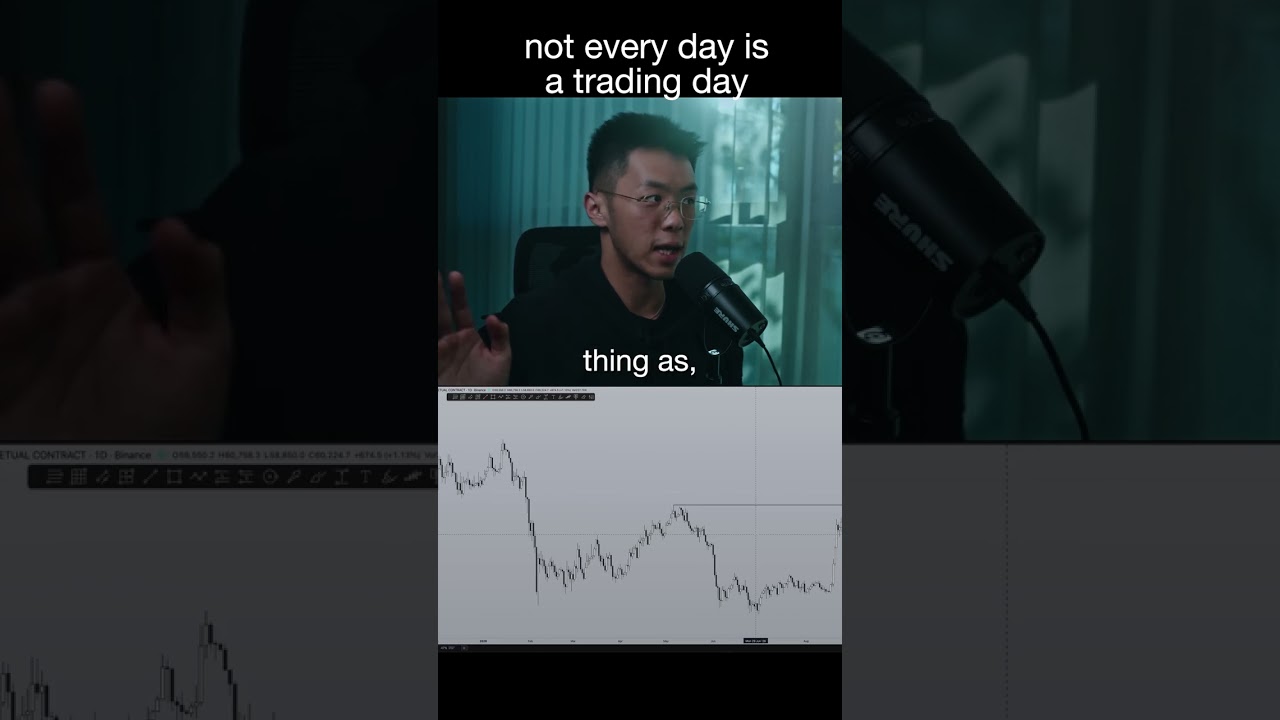
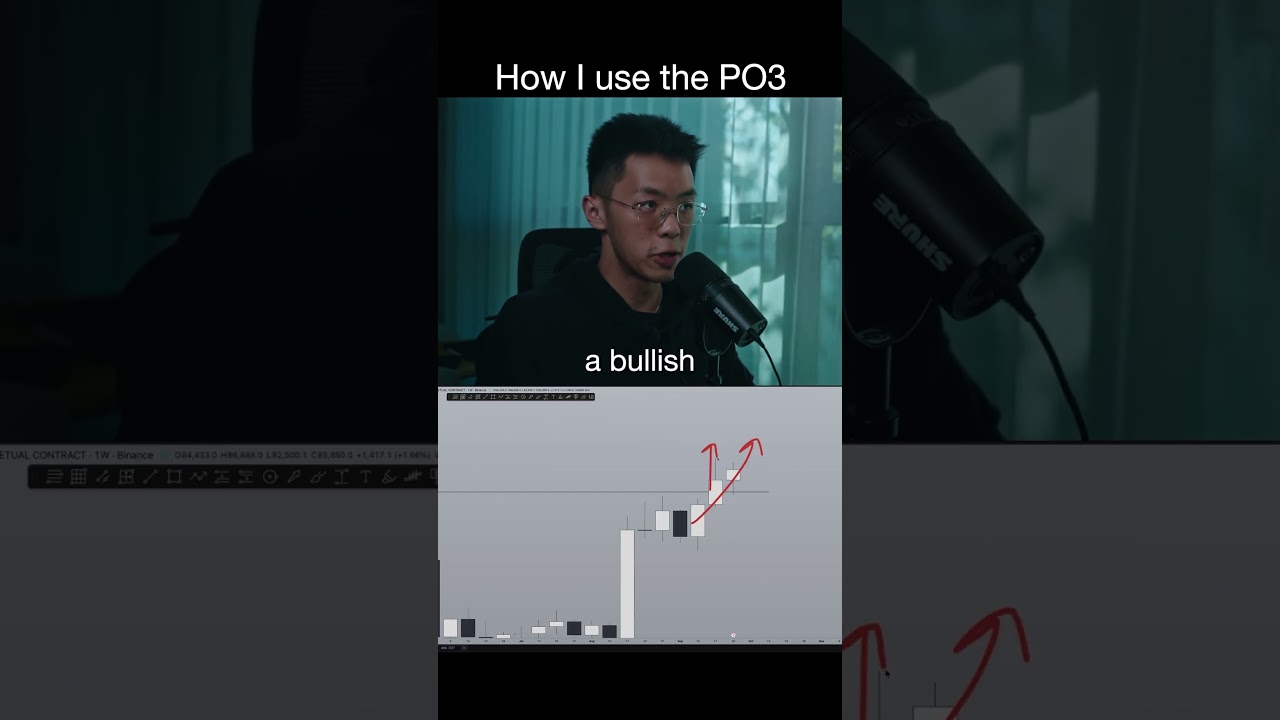
In this YouTube video, Roman Ceccardi addresses widespread misconceptions about leverage and risk in cryptocurrency trading. He begins by highlighting common misunderstandings seen in social media comments, such as equating high percentage gains with greater profit and confusing leverage levels with risk exposure. Ceccardi explains that the fundamental metric traders should focus on is the risk‑to‑reward ratio (R), illustrating how a 2R target means risking a set dollar amount to potentially earn twice that amount. He walks through a step‑by‑step calculation of position size using TradingView’s long‑short tool, showing how account size, a chosen risk percentage (e.g., 1% of $100k = $1,000), stop‑loss distance, and desired R determine the exact number of contracts or Bitcoin to trade. The video emphasizes that leverage merely provides a means to achieve a desired position size without requiring the full capital; whether a trader uses 1×, 10×, or 100× leverage, the dollar risk remains the same if the position size is identical. Ceccardi also notes that exchanges cap maximum position sizes at higher leverage levels to protect traders. He uses a cup‑holder analogy to illustrate that leverage is a neutral tool whose outcome depends on user intent—responsible use enables small accounts to trade meaningful sizes, while reckless use leads to unnecessary risk. Throughout, he stresses that risk management, not leverage magnitude, determines trade success, and he invites viewers to seek one‑on‑one coaching or funding opportunities.
Chapters
In this video, I'm going to talk about risk, and I'm going to talk about leverage. And the reason why I'm making this video is because I have seen way too many times people get the absolutely wrong misconception about what is leverage, why it isn't that bad, or when it comes to risk, right? For example, in just yesterday's tweet, right, yesterday we won this trade on Bitcoin right here. I posted my entry on X. I've called the, you know, the move overall on YouTube before it even happened. And now I'm going to kind of break down a couple of questions, right? I don't get How is 3.93% 2R? Because 2R, by the way, is what I target for. Like, for example, here, this is the risk-reward ratio. Means that for every $1,000 that I risk on here, right, this is the risk, and then I'm getting 2 times the reward back. But either way, this is like question number one, right? Which is, oh, how is 4% 2R? I'm gonna get into that in a bit, right? This clearly shows that this person does not understand leverage at all. And by the way, no hate to you. Like, I've seen many of your comments before. I really appreciate the support. This kind of like general frustration is not really directed at you, but just more so The overall kind of industry, because I don't know how it is possible that you know crypto has been around for so long, and yet leverage is still such a wildly misunderstood thing. And risk, right? Two R, one R, five R. Like it doesn't have to be five hundred percent. Like yeah, this is just such a widely misunderstood thing, but it does not need to be. And I'm going to break it down in this video, and it's going to be quick as well. And and this the other one is going to be on Akash, right? He says, "Oh WTF! 200x gamble. The next 200x will be a loss." Because by the way, shout out to you, Justin. You've been absolutely killing it on the system, even though you're just watching the. YouTube videos. And yeah, again, like, system's simple and it works. And yeah, the results show for— like, the results speak for themselves. This is not his first rodeo posting a profit here. In fact, I can count at least 3 to 4 times just in the last week where he's dropped a comment on how he's made money with the system. This comment here is also a problem because, like, the amount of leverage that you are using does not matter at all as long as you understand risk. And this is such a big problem that I'm seeing. Like, if you take a look here, I've literally just woke up, took a shower, And here I am, 'cause like I basically woke up to these tweets and I'm like, this cannot go on. I've made several videos before about leverage and risk. Like, yeah, this is just gonna be more of a raw kind of breakdown. And you know, with that said, now that I've set the stage, let's actually break it down, right? And we're gonna start things off with like, okay, first question, right? I don't get how is 3, like 4% too high? I have the feeling that when most people come into, you know, crypto and they, you know, they look at leverage, it's almost like, okay, if it's 500% gains, oh, that's good. Like, oh, this guy made generational wealth. Oh, but if it's 5% gains, Oh, that's nothing. He made $5. But that's not true. And just to give you an idea here, if I were to use a position size of like, I don't know, like 0.01 Bitcoin, but I go on 500x leverage and I get a trade and I end up with a final percentage of like 5,000%, does that make me more money compared to, let's say, if I open up a position size of 5 Bitcoin, right? 5 whole Bitcoins, but I only make 5%, right? The math is not mathing, right? Bigger leverage does not equal more money. And in fact, if you look at most crypto exchanges, the higher the leverage that you go on, The maximum position size is actually capped. So, for example, on 5x leverage, I can open a position size of up to millions of dollars. But if I'm using, let's say, something like 100x, maybe the most that I can open up is $50,000. And that's for good reason, right? It's to protect you. But either way, the amount, like the percentage amount, does not dictate how much money I'm making. All falls down to R. And in fact, R is also like the risk to reward is also a very widely misunderstood concept. Like The reason why this is 2R for me, right? I want you to notice the entry price and I want you to notice the current price. Obviously, I closed the trade out lower. Like this was a screenshot that I was taking, like saying we're getting close to 2R. But either way, right? Let's break it down. So this is the entry, right? 64,100-ish. This is the entry. I placed my stop above this level and my target was around here for about 2.2 or 2.3R. So essentially, for now, right? If we just kind of like start here, you can see that the The visualization of risk to reward is quite clear. You're— this is your risk, then you have 2 times the amount of reward. Makes sense so far? Now, this is the part that most people don't understand. This number right here, that 3.1, right? That is position size. And let me explain what that means. This means that if I want to lose— and by the way, I think it's important to talk about the account size first. Like, the first thing that you do when you come onto TradingView, you open— like, you double tap, right? Double click Your short or long position tool, right? You have to do this twice, like double tap, right? And you'll see that there is an account size. This, change it to whatever your account size is, but most importantly, set your risk to 1%. Now, what is 1% of $100K, right? Drum roll, it's $1,000. So if I want to— this basically dictates that, okay, if I hit my stop loss based on my entry, based on my position size, I will lose $1,000 here. Now, just to even do a little bit more math, this— my entry is at $64,100, my stop is at $64,400. That is about $300. That means that, okay, if I have 3 Bitcoin on this, price moves $300, that will be minus $900 to about minus $1,000, right? You understand now, this is my risk. So when I am going for 2R, This number here matters a lot, right? This is the number, like for example, if I now were to change the account size to half, right? Let's say I only want to risk $500 on this trade. Well, that means the position size that I should open on this trade is only 1.5 Bitcoin because, well, you know, you— and similarly, likewise, if I were to move my stop tighter, let's say I move it all the way down to here because now the relative distance, right? The dollar value is not, is no longer as close. For example, now it's only $70 away from my entry to my stop loss. And let's say I still want to risk $1,000 on this trade, which means I would need to enter 13.7 Bitcoin here in order to lose $1,000 if the stop loss gets hit. On the bright side, now the flip side of the equation, it also means that if my TP is hit, if you take a look here, now the risk to reward is 10, right? If I risk $1,000 on this trade, it means I'll make $10,000 if price were to hit this point. So you get the idea now about how risk works. Now, Let's get into the second kind of like part of the equation, which is this number right here matters a lot when it comes to leverage. Like let's use this number here, right? 3 Bitcoin is the amount that I— like 3 Bitcoin is the position size that I ended up taking yesterday. Now when it comes to leverage, right, here's going to be the mind-blowing part. Does not matter if you go 1x leverage and put in 3 Bitcoin worth of your own capital, like 3 Bitcoin just for context right now is around $200,000. $200,000. Now It doesn't matter if I just throw, like if I just spot and just throw in 3 Bitcoin worth, it will be the exact same thing as if I only throw in, let's say, $20,000 of my own capital, but I use 10x leverage to achieve that same position size. It's also the exact same thing if I throw in $2,000 and put in 100x leverage in order to achieve that same position size. At the end of the day, my risk number, right? The amount of money that I'm risking on this trade does not change. It is only the kind of like the means to get to that position size. So the be-all end-all, Of all trading starts with your risk. You do, you, and you calculate your risk based on your long-short position tool. Once you have this number set, just follow this number, right? And so yes, like regardless of it's 1% or 5% or 500%, as long as my risk and my position sizing is correct and my risk reward, I am getting 2R on this. Now, for example, on Justin, right? He has, he made 200% on this. Does that mean he's making, I don't know, like 2 Bitcoins worth? No, it doesn't tell you anything about how much money he's risking. It only tells you the amount of leverage that he used, which And the way that I want to break down leverage is that this is a tool. Now, just to give you an example, this is a cup holder. I literally just took it off my desk. I can use this cup holder to put a cup so that, you know, the ice as it's melting, it's not going to spill all over the table. But I could also use this, throw it at the camera right now, at the lens, bang, and I would break the lens, right? Malicious intent, good intent, right? It's the same tool regardless, but depending on how it's used, it could generate wildly different results. Same thing with leverage, right? At the end of the day, Like if I am a very irresponsible person and I put, like I go full pot and I put on max leverage because I wanna make money fast, obviously that's a bad use case of leverage. So then what is the good use case of leverage? Well, leverage is just a tool that allows you to achieve a meaningful position size without needing to have either a lot of capital or a lot of capital on the account that you're using. Like for example, let's say that I only have $5,000 to my name, but in order to achieve this position size, I need 3 Bitcoin, right? But like if I ended up taking this trade, but there is no way humanly possible that I would be able to achieve $200,000 worth of position size with only $5,000, right? That's where leverage comes in. I could go on 40x leverage. Now, just because I'm doing this does not mean it's irresponsible. Why? Because like, let's say, like, let's say I have $5,000 and I want to risk $500, right? So let me just turn this to $50K. So I have $5,000 and I want to risk $500, right? If I throw in like full pot and like go on 20x leverage in order to achieve a position size of 1.6 Bitcoin, Is that irresponsible? That's the question. No, it's not, because I'm only going to lose $500 if this trade ends up getting stopped out. Now compare this to somebody else who's like only on 2x leverage but is risking the same amount. Is this a different trade? Absolutely not. It's the same thing. Leverage just allows you to achieve more with less. And of course, use it responsibly. Kind of what I mentioned earlier, right? Leverage allows you to be much— like if you don't have much capital, period, It allows you to still trade with a meaningful amount of size as long as you understand your risk parameters. And second, just because I have a lot of money does not mean I want to throw it all on the exchange or in the wallet or whatever, right? If I have $5 million, I'm not going to want to keep all $5 million on a centralized exchange, but I still want to be able to trade as though I had $5 million, right? If the position size demands that I need to throw in a position size of 100 Bitcoin, I want to still be able to do that. How? Leverage. So at the end of the day, leverage is just a tool and it all comes down to risk. Like, It's just about the amount of money that you're risking and the position size that you know comes with it. So the next time you see someone, right, say, "Oh, you got you're on 200x leverage, you're gambling," and that's the time when you should point them to this video because the amount of times that I've seen this question asked over and over and over again, like I don't get it. How is this not yet clarified? Like yeah, that's um what a way to start the morning. Like look, the moment I saw this, I literally got out of bed. I'm like, "Ah, and I really need to address this." So hopefully that makes sense. And by the way, if you watch until this point in the video so far, and if you. You'd like to work with me one-on-one to get funded in the next 90 to 120 days, feel free to click the first link in the description box below. But otherwise, no pressure. And I hope this clears things up. All right, time to go get a coffee and start my day. Ciao.