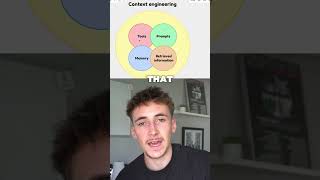
Building AI agents in 2025 requires mastering context engineering: how you structure all the data your agent sees, from memory to tool specs to prompts. Four techniques work immediately: write context, select context, compress context, and isolate context. Proper structure keeps agents from hitting context limits and getting confused.
Chapters
If you're building AI agents, then you need to learn context engineering. If you don't know what context engineering is, basically in simple terms, it means the orchestration of all of the data inputs that an agent gets in its lifetime. And this could be long-term memory, short-term memory, retrieved information. It could be information on the tools that it has. It could be its user prompts or the system prompts. Basically structuring all of this data in a way that the agent doesn't hit context window limits and doesn't get confused. There's 4 main context engineering methods you can implement today in your AI agent systems. Those are write context, select context, compress context, and isolate context. And if you want to learn exactly how these methods look and how they would look in NaAN, I've just made a full video breaking down each method, and you can start implementing context engineering into your AI agent systems today. So make sure you check out the full video on my channel.