Eclectic Convergence 2021: A Fireside Chat with Ryan Hudson '02, Co-Founder, Honey
Ryan Hudson co-founded Honey, a coupon browser extension that sold to PayPal for $4 billion. He started it to automate coupon entry, survived years of near-zero runway, and grew through Facebook ads and influencer deals while staying quiet to avoid competitors. PayPal acquired Honey during a Series E fundraise.
Chapters
Okay, now that we got travel logistics out of the way. No, this is great, and so I'm excited. Now, for those of you that, you know, not many people know that actually Ryan and I were classmates at Cornell, graduated in 2002. And we both had very different entrepreneurial journeys, but it's just been so awesome to see yours, Ryan, and we're excited to have you here.
Likewise, watching yours. People don't know Scott was the head of the Entrepreneurship Club. He did all the work and I was on the board and just attended a couple meetings.
I'm like starting to forget all this.
I know.
I just remember, yeah, I remember the club. I remember the club. I remember you at the board meetings. Anyway, so let's talk about a little bit about your experience as a Cornell student. And then we'll get into Honey and all the stories that have happened since. But I'll ask a question that I know the answer to, but Did you know you wanted to be an entrepreneur?
Apparently I did. Yeah, no. We both grew up on the back of the original dot-com bubble. So there was a lot of excitement and activity building companies. There was a couple of companies started by students a couple of years ahead of us that sold to Microsoft for what at the time was—
Jump, right?
—was an absurd amount of money. And so we saw that it was possible and got the bug. And so it took a while before I got to a thing that started to work out, but always knew that I wanted to build, and it felt like the biggest way to have an impact is to build a company, 'cause you get to feed back everything that you do into the company and try harder and harder things.
Yeah, it was a special time, because it was right after that boom. So in some ways we had the benefit of both the stories of grandeur as well as the, realities, practical realities of actually having to build a business. And I guess you could argue that those are the two kind of threads you need to make this work.
Yeah, I think seeing what not good times look like, I think, is an important part of knowing how to survive as an entrepreneur. Yeah. I think the last 10 years has been interesting in that we haven't really had that dip. And it'll be interesting to see what happens the next time we have something like that.
Well, likely great companies will be born when that happens, which brings us to Honey. So for context, for those of you that don't know, so we're talking about a company that you co-founded. You raised a total of around, I think, $50 million, something like that, and ultimately sold to PayPal for about $4 billion. No doubt your investors were very happy, just such an incredible journey. So maybe you could give us a sense of like, why'd you start Honey in the first place? When did the idea strike, and what happened next?
Yeah, so it turns out that being a lazy person in general worked out for me. I was playing around with what at the time was a very overlooked platform, browser extensions. And Google had done a lot of things to clean up the ecosystem. And so as a developer, I did a computer science minor at Cornell, but kept my skills good enough to tinker. And so I was playing around with the browser extension platform thinking about, what you might be able to do. And I was feeling cheap and lazy and decided to use the platform to automatically apply all the coupons out there to my cart to save a buck. And it turns out that I'm not the only person in the world with these characteristics. And so it's been a pretty wild ride.
I mean, listen, whenever you see a coupon code box at checkout, like you always want to just go to Google super quickly, right? It's like, you know, love every coupon code or whatever it is and find one. So you were like, okay, why— that should be happening automatically.
Yeah, it's like to take that labor out of it. Yeah. It's because it's almost challenging your intelligence as a shopper right at the moment you're about to buy something. If you see this box and it's asking you, are you going to be the sucker that doesn't go do this coupon search or not? And you're doing a trade-off in your head of Do I think there's going to be one out there that's going to work? Maybe I start looking. And what happens a lot of the time is you actually just abandon the cart. Right. And so we've made it easier to get consumers to that confidence that, yes, now is the time to check out. You're not a sucker. If there's a deal, you're getting it. And it's been a cool journey to go from— I think when we first launched the company, we talked to investors. this might be leading to some other questions you have, but— was told by a prominent VC who had founded an e-commerce company that the first thing he would do if he saw this as a retailer— and he used to be one— would be to write code to break everything that we did and he would open source it and give it to everybody. So we didn't raise money from him. But it turns out that there's actually a lot of value for the retailer and what we do. It just took us a really long time to learn how to communicate that story and led to a real grind phase for the company.
Yeah, there's a theme emerging here, which is that when VCs tell you something is really crazy and you shouldn't do it, a number of speakers have said today that that's exactly what they did, and that's why they were successful.
Yeah, we believed that what we were doing was important at the time. So we didn't raise any money from anybody outside the company. Or we basically just didn't pay ourselves and threw a couple thousand bucks in the server bills, kind of ran the company for 2 years. And the thing that gave us confidence to keep pushing on it was, and I told people, we are the last button that people are clicking before they decide to buy anything online. If I can't figure out how to make a business out of that, I need to go back to that other school that gave me a business degree and tell them I don't know what I'm doing. Yeah. And so it took us a while to figure it out, but once things clicked, it started feeling good.
And what was that moment? Do you remember that moment when you saw some graph or some chart and you're like, oh wait, this is working?
I do. So we couldn't raise money at all. Pitched everybody on Sand Hill Road, because that's where the center of gravity was then. We drive up from LA, literally driving in a car because we didn't have any money. Every week, just go up, meet some investors, no, no, no, no, drive back down. And we went, after not being able to raise money, went heads down on just, we're just gonna build this product. We're excited about it as people. On the consumer side, the traction was incredible. It was spreading virally, word of mouth. People were like, this is an amazing product, I love it. And so it was working. And we just couldn't get people excited about it because everybody was looking for the next big thing to be on a mobile app. Fred Wilson had just written a piece about how everything should be mobile first, and investors are pointing at that and like, "What's your mobile strategy?" And like, our mobile strategy is to build a really good desktop experience, and maybe someday we'll build something for mobile. And so it was impossible to raise, or else we're just really bad at fundraising, one of the two. And the moment when it started to work, we finally got somebody to make a small bet on us in LA locally. We had just enough money to hire somebody to run our partnership sales team. And he had relationship credibility with potential customers where for the first time we could crack through into the affiliate marketing space, which part of the reason we couldn't raise money is we're like, hey, maybe we can monetize through affiliate.
VCs are like, "Yeah, they don't like that." Desktop, eh.
Affiliate, eh. And so it was bringing in somebody who we could lean into his personal reputation to demonstrate what we were doing to retailers. And once we did that, it started monetizing immediately well, because we already had a couple hundred thousand consumers using the product because they loved it. and it flipped the numbers. So first, wow, we're making money, we can keep doing this forever. That feeling as an entrepreneur when you become like, I can pay my own salary, I can do this for real. Like, look, mom and dad, I'm not wasting my time. Like that moment, and then we started doing experimentation and paid acquisition on Facebook. The payback periods were less than 2 months. And we're just like, holy shit, just toss every dollar we get onto that thing. And that's what we did for the next 3, 4, 5 years.
And what was the value proposition for the companies? Because you're going to them and you're basically saying, hey, let's have every customer that hits your web page automatically get a coupon and get a discount. There must have been some lead gen you were providing. What was the value prop?
There are pieces that are counterintuitive. It's a portfolio of things. Ultimately, a lot of it comes down to conversion rate optimization. It's similar to— we were able to sell it by analogy of they're already paying coupon code websites to do a very similar thing, except the coupon code sites are extracting you out of the cart to go search for a coupon on their site and then maybe come back. We simplified that process. And then with the— a cashback program, those two things kind of were something they already understood. So that helped. The second piece is really driving that consumer behavior to be confident that you should check out right now. And the number of cycles where we could see, because we're a browser extension, where people would leave and abandon a cart, which is still a huge source of issue for retailers. If instead we give you the answer to buy right now, and our answer is yes every single time. Yeah. You click on the button, I would like permission to buy. It's like, oh, you get a coupon code, sweet. Or no, there's no coupons. And our audience is not people that are hyper-optimizing discount seekers. It's people that don't want to feel like they're getting had. Right. And so as we got better and better at telling that story, it worked well.
So, so maybe talk to us a little bit about, I mean, you mentioned the fundraising and how investors were, were not really, you know, it's, it's funny because if you can really make a material impact in a commoditized workflow or a commodity, you can have a huge business, right? But it's still, everyone's looking for the edge, everyone feels like if it's, you know, if it's commoditized at all, it's not a good business sometimes. And then of course investors get stuck on these sound bites of it has to be mobile, it has to be this, it has to be that. Now it's probably has to be crypto or whatever the case may be. But what did help you get through and what did you learn from kind of the earlier investors that got it?
To be fair, we tried to look like whatever the flavor of the day was for multiple years. Right. Literally throwing stuff at the wall that wasn't the core to try to look different. And that didn't work either. But we built a product where you could pay with Bitcoin. We bought a pizza with Bitcoin. Honey, the company, is actually a creditor in the Mt. Gox bankruptcy situation, for those of you that were in crypto back in 2013 or so. So we were experimenting with whatever we thought might make the story look a little bit different. But deep down, we knew that our business was building better shopping experiences for consumers. And if we made it better, easier, save money. We'd be able to bring together a lot of consumers. And if you have a lot of consumers that are doing the most valuable thing they do on the internet, there's a lot of ways to extend the product suite to add a lot of value to retailers too. And so concerns people have around how their data is using and Facebook's tracking me everywhere and things like that, we thought there was better ways to build efficient advertising products for retailers to reach consumers. But doing it around the context of an offer. Yeah. So that you as a consumer are getting value directly. Yep.
For that. You know, another question that I think a lot of entrepreneurs will get in here or have gotten is, you know, you go and you pitch a product you're trying to build, and then there's always the question of, well, why wouldn't Google just do that? Or why wouldn't PayPal just do that? Now, as we have now are also in big companies, we actually know the answer to that question, which we'll get to later on. But, um, But how did you— Google could have just shipped the extension in their browser by default and save everyone a fortune, and everyone would go off and be merry and happy. How did you confront that?
They still could. And I think every company that's building on somebody else's platform has some degree of platform risk. Even Facebook has platform risk that Apple is changing how ad tracking is working, and it has a material impact on their business. That's something that we were always aware of. For us, it was less likely that we thought Google was going to build something like this. But as the purveyor of the platform, it was massive platform risk every step of the way. Microsoft, for a while, we actually did partner with them to build a mobile browser extension into their Edge browser. And they subsequently now have a competing product that they built. Internally. So could the big guy do this? In some cases, yes. For us, it's really about delivering to the consumer that value proposition and staying focused on that, because the central piece of our thesis was always that there's a lot of really cool new technology tools out there, and there aren't a lot of companies that are using them to build better consumer experiences. And that was like core foundational principle. Yep. And I think that's true in a lot of contexts. It's a dominant strategy of retail is be the most consumer-friendly. It worked for Sears, it worked for Walmart, it's working for Amazon. It will always be true. And so, I think that's one of the things getting to your question on like VCs are looking for some new mega trend to hop onto and technology-driven thing. But at the end of the day, people have a lot of the same needs over time. I guarantee you right now somebody's creating a new dating app situation, and it's going to become a very big business because it solves for a different moment in time for a different cohort of users. We did it for coupons. I think a lot of the categories that exist will continue to exist. They're ripe for reinvention.
And it kind of goes back to where you started around kind of the laziness as the frustration or the inspiration point because it seems like the best consumer experiences and products, they kind of tune into the fact that every one of us is, in the first 30 seconds of any product we're using, we're all lazy, vain, and selfish, right? I mean, we don't have the tolerance to read things, to do research, to watch tours, to learn and onboard and whatever else because we're too busy. We have our work, our families, and other things that are important to us. Of course, we'll invest in a product further down the road, right? If it gives us value. I'm sure some people would get Honey and just get a discount, and then after 4 or 5 discounts, they're like, "Okay, now what is this thing?" Then they kind of go and start to explore and learn.
Yeah, I mean, we have a whole cohort of users that they install it because they hear about it once, and then their first product experience isn't for a month or two later. And so that really helped with, or hurt the speed of viral growth, because a lot of viral products, it's loaded with a message from your friend forcing you to use it, the engagement loop, the cycle time is really compressed. For us, the cycle time of viral distribution was literally measured in months. And so we were slowly, steadily growing over time. And it just, that compounding effect was similar to what you'd see in like a social app product. It's just massively stretched out in time. So we had to solve for growth otherwise.
[Speaker:RYAN HUSON] Yep, and just make it super simple and value immediately. So maybe talk to us a little about the team. So I know you had a co-founder, George. How did you guys meet? How did you decide to work together?
So George and I met at a networking event on a Saturday morning at Caltech in sunny Pasadena, California. Started at 8 AM. Neither of us had any reason to be there, but we happened to be. I was working for a venture firm at the time in Boston. Semi-commuting to LA, making the case that there might be something interesting happening in LA. But so I met George at the event. We show up and it's nothing but relatively older than us people who all seem to know each other, talking to each other, and we're standing by the fruit plotter with nobody else like us. So we started talking to each other.
They should have all just written a $10,000 check.
That would have saved so so much agony for us. So we didn't have the business idea. He was running some other companies, had a few smaller exits, and had— actually, prior to selling the company later, he had never had a boss in his entire life, which is kind of cool, I think. But so we hit it off, stayed in touch, worked on a few other things on the side. Like, I brought him in to help when I was at the LA Times for a little bit. And then I got laid off by the LA Times and we decided to work on startups together. But Honey didn't happen for another year plus after that of just trying lots of things that didn't work.
Yeah, well, it's, you know, that persistence and that very like messy, volatile starting stages are typically obfuscated in the stories. All the news that came out around Honey is like, oh, you know, Ryan Jordan meet idea, $50 million in funding, $4 billion acquisition. It's like, oh, it just seemed like a linear, you know, progressive, but it wasn't that way. And in fact, you were the original CEO, right? I was. Tell us about what happened and then how that changed and what you learned in that early stage.
If you started the company, and we started doing this when we pitched it later, like if you started in 2015, it looks awesome. Like everything's great, we started making money, like great unit economics. The company actually started in 2012, and we were working on stuff starting in 2011 together. And so, yeah, that first phase, I built the original product, coded it in the middle of the night a few times, and because of that was the CEO. I had an MBA. It just made sense, although we did confuse a lot of investors when we were pitching. Because George was born in China. We walk in there and George is like a product, like, he's actually product mind person for the company and I was the guy that wrote the code and VCs were like, wait, the MBA wrote the code? Mmm. This is suspicious. So it probably didn't help that he had the white MBA guy was the one that was not the CEO.
Defying stereotypes from the get-go. That's good.
But yeah, so we ground, a lot of grind through that phase, pulling in anybody we could find to help out on the side. I had, so for the first year, basically 2 years I was working on startups full-time. After that first year of Honey, we were unable to raise money. I personally was burning through cash that I had. And the zero point was 2 months away, and I actually went to work at another company as a product manager because I needed the money through that grinding phase. And so at that point in time, George became the CEO because you can't have the CEO have another job. We were already unable to raise money. Now you've got the founder who has another job. Is the CEO, all of the negative signaling you could possibly have. And so he became CEO, kept the lights on, user growth still kept going with that long growth cycle time, and then we somehow scrapped together a couple bucks to start hiring, especially on the sales. That was— That was a special moment. That was a moment. And then I rejoined the company when we had like 6 people, 'cause put the money toward hiring other people before I was even in. It's like, I'm gonna work hard no matter what.
Yep, yeah, and I mean, I just think it's an amazing testament to the fact that it's like the greatest competitive advantage in Silicon Valley is like sticking together long enough to figure it out. And so it's so hard to do. I mean, it's easy to reflect now, but to go through 2 to 3 years to see a zero balance in your bank account 2 months out, to have to take another job, to switch the CEO roles, to then come back. I mean, to have all these nos. Just, you know, I guess everyone should know that when you go through that, it's essentially par for the course.
It's par for the course. People don't talk about that part. They don't talk about even in the good part. Like, I think your book does a good job talking about how even when things are going great, your job is to focus on the part that sucks. Sucks every day. And so you're constantly feeling like things aren't going how they should. And it's normal if you're starting a company to have challenges all of the time. That's by the definition of what the job is. And so having that experience, I think, on the plus side for me, has given me so much gratitude. And from there it's just been amazing. But without that context, I don't know if I would appreciate it the same way. Yeah.
So let's talk a little bit about marketing. You know, it's one thing to have a product that works. You know, it's even one thing to have customers that love the product. But still, you can die if you don't find a way of this spreading, right? And so what was the strategy to like just push the spread, and how did you build out the team to do that?
Yeah, so like everything we did, we were hands-on, way in the weeds on doing every piece of the business. I think I had every job as the primary individual contributor at some point in the company's path, just out of necessity. Very first principled approach to it. But yeah, we started making a little bit of revenue through some affiliate partnerships, and we started then, just me and George, experimenting. With buying Facebook ads. And we've got pictures of us like on a Friday night just sitting on the patio like cranking out Facebook ads, trying anything and everything, a lot of experimentation, reverse engineering how the platform actually works and did the targeting and did like allocation of where you get impressions and learning a lot about how it worked for communicating our value proposition. And finding things that worked. So a lot of trial and error, but we found like in the earliest days, one of our most successful landing pages was actually driving people to a Business Insider article. Hm. Of which it wasn't even about us. We were one of 10 things on a list. Wow. So it was like a listicle article from Business Insider. We did paid promotion at that and probably drove over time millions of people to that page, which is kind of crazy. And so we found things like that that worked for us. And then we started to really try to understand why they were working. And one of the things that became a core observation for us is we have a product that's almost too good to be true. It's like a free tool that gives you free money for doing less work. Like, holy— that's pretty cool. Sounds like a scam. Like, you're gonna charge me for it, or what's the catch? And there isn't a catch. And so one of the things that we found is that by leaning into credibility of other people and other channels, we were able to overcome that credibility gap. And so fast forward a couple years from early days of Facebook working, we learned how to work with influencers, in particular on YouTube, to lean into the credibility that they have with their audiences, the ability to speak the language of their audience, And it's been incredible for us. And so we've done, if you watch YouTube or you have kids that watch YouTube, they have seen, if you watch MrBeast. It's a lot of honey. A lot of honey. So that's worked really well for us and continued to be good partnerships. And so it's really finding like the first principle on why things are working on top of the experimentation. I think there's a lot of marketers that are inclined, A/B test the shit out of everything and just throw things at the wall. That's one piece of it, but then when you figure it out, like figure out how it— what worked, and you can repeat it more effectively.
I think that that's a great takeaway, and I think that— so it's almost like we should all have— we should have a spaghetti on the wall phase, right? Where you just try lots of stuff but tune into the data deeply, and then find pockets that work, start to like really iterate and do more testing within those pockets, and then find your like And then when you find the strategies that really work, it sounds like you sort of throw dollars into it as fast as you can.
Throw dollars in it, and yeah, we, and then also something we did that was maybe counterintuitive and kept us lower profile than we could have been is once we figured it out, we kept our mouths shut. The last thing we wanted was to go tell TechCrunch that we found the gold mine. It's like, I don't need every company that is struggling to pivot into my business. Right. We kept it as like, no, this is just— it's a browser extension on the desktop, not sexy at all, nothing to see here. And that helped reduce the amount of competition that came into the market.
Got it. So last question, and then I'll turn it over to the floor. Talk to us about the exit. So I know it's always an emotional journey. I remember the amount of years that led up to it in my world. I mean, I'm sure you have— what's that? Crazy story that yielded this outcome?
So if you had asked us 2 days prior to it escalating if we would ever sell the company, the answer would be no. George and I built the ultimate dream company working with some of the best, smartest, coolest people that we ever have known. It wasn't a job. It was the dream. And so we planned to eventually take the company public and have 100-year product vision on what this thing that we can do to build better and better tools for consumers to shop and do all sorts of things. So no plan to sell. We, at various points in time, as we scaled— we scaled basically taking every dollar that we got and putting it back into the business. And so we effectively ran at cash flow break even for the the entire growth phase of the company. But even doing that, you start to run into needing to have enough cash on the balance sheet to support the risk profile that you have, where if we're doing $50 million a year in revenue, you need to have, you got 100 people, you need to have some cash on hand, you can't just run it at zero. And in growing a company, you're also giving people equity and talking about communicating the value of that. And so we did a series of, fundraisers that were largely designed to reprice the equity so that we could communicate the value of an offer to new hires. So we were in the process of doing something like that. It would have been our Series E, but totaling $50 million, whatever. And we started talking to PayPal Ventures, and all of a sudden, instead of it being just PayPal Ventures, there's like 40 people in the room. For a meeting. Like, uh, okay. This is accelerating quickly. And it became clear that they were interested in doing something more. I think for us, we still had no intention of selling, and it wasn't until we really dug in with the team and with Dan, the CEO, and there's a shared vision and way of thinking about the world that we saw that, hey, maybe this actually would be kind of cool. PayPal is this great tech company that a lot of people don't think about. It's one of the biggest tech companies in the world. People don't really think about it in the tech giant class. It's one of the biggest financial services institutions in the world. People don't think of it as a bank. And so it's a really interesting set of company assets that we thought would pair interestingly with our vision for what we could do together. And so that was one piece. And then the second piece is they came to— the table with an offer that was paying ahead of where we actually were at that point in time. And we were sitting on enough risk factors, like platform risk and things like that, transition to our mobile experience, what that was going to look like, that it kind of made sense to team up with Team PayPal and see what we could do with the combined entity.
Oh, what a story. Thanks for also sharing a lot of the nuances and lessons learned along the way. So I think we have some time for questions, right? It is. It is. Unfortunately, we only have time for one or two tops, and the reason for that is that Monique, our next speaker, has to get on an airplane back to Miami for her daughter's birthday party. Oh, we're gonna get, okay. Which we are not gonna get in the way of.
Okay, so I will take a question.
Which is dead nuts. He's got the mic, go ahead. Hi Ryan, Jamie Berniker. Fascinating story, and we see the value of what you've done, especially with PayPal and their super app aspirations. As the co-founder, and as you said, you were an overnight success, that took a decade. Can you explain some of the fast— we believe in pivoting and failing fast. Can you give an example of where you failed fast and pivoted, and one where you're like, oh well, we should have done that failure and moved off of that a lot quicker?
I think in the version where we were trying a lot of different things like crypto payments and stuff like that, experiment, see if it works, see if it's going to solve for the problems that we have. There we iterated quickly, tried different things. We launched a grocery app at some point. It was kind of like Honey for clipping grocery coupons. It was awesome. We got sued, so we shut down the product. That accelerated the cycle time on that. But with the core product, we always had conviction that what we were doing was important, and we could see that it was working on how consumers were responding to it. Great. OK, one more in the back. Hi. Thanks for coming to talk to us.
How did you deal with companies like Ebates giving the exact service that you give after you've already given it for so long for free? And also, just a quick one, how did you come up with the name Honey?
Just interested. Yeah, so with competitors like Ebates, we actually have partnered with Rakuten, which owns Ebates, for a long time. They're one of the big affiliate networks. And so I have an interesting relationship with them. Ultimately, having more people doing similar products to us actually reinforced the message that we were already going out into the market with on the merchant side. And then on the consumer side, we always had confidence that we could build better consumer experiences than anybody else and had a lot of unique capabilities and insights sites that would be hard to copy, and they'd be copying where we were a couple years ago. So we didn't really ever worry about competition like that. For the name Honey, we actually— the origin of the seed of the name was we were watching a viral YouTube video about the honey badger. Honey badger don't care. And we thought that that was pretty funny with what we were doing, bashing coupons at websites. We don't care. And we thought maybe that would be a little adversarial and dated as a viral video meme. And so, like, what about just honey? And we loved it. And it basically just stuck immediately. One of the things we really liked about it was it comes up in everyday conversation in a lot of different contexts, which plants the seeds for people to tell each other about the product. You see something that reminds you of this thing. It's like, oh yeah, honey. And so that extra benefit in real-world viral word of mouth.
That's great. Thank you. Awesome. Ryan, thanks for making the time.
More from Ryan
Ryan Hudson, Founder of Pie, building the Honey coupon & launching a new AdBlock rewards platform!
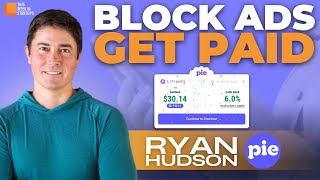
How Pie's 'Block Ads, Get Paid' Model Is Giving Users Control of Ads & Privacy | E2012