How Pie's 'Block Ads, Get Paid' Model Is Giving Users Control of Ads & Privacy | E2012
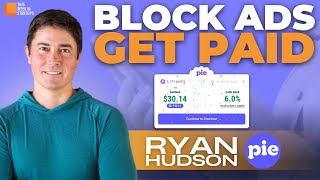
Ryan Hudson, who sold Honey to PayPal, is launching Pi, an ad-blocking extension that pays users to see ads instead of blocking them. Users can opt in to ads and earn a share of revenue, or get instant rewards through a digital currency. Hudson argues this "fair ads" model fixes what's broken for consumers, advertisers, and publishers.
Chapters
The world is created by people that decide to build. You can sit back and you can have the scrolling passive consumption version of life, and then don't complain when you don't like how it is because you can actually go out there and do it. The only people that decide to change the world are the ones that do. And so I'd say just give it a shot. Be a builder. And the reward that you get from that experience, even if it doesn't work out, and the things that you learn and The character of the people that are attracted to that mission is what, is what I love about entrepreneurs.
This Week in Startups is brought to you by OpenPhone. Create business phone numbers for you and your team that work through an app on your smartphone or desktop. TWIST listeners can get an extra 20% off any plan for your first 6 months at openphone.com/twist. LinkedIn Jobs. A business is only as strong as its people, and every hire matters. Go to linkedin.com/twist to post your first job for free. Terms and conditions apply. And Beehive— power your newsletters with AI tools, referral programs, and ad network features all in one platform. Get 30 days free and 20% off your first 3 months at beehive.com/twist. All right, everybody, welcome back to This Week in Startups. Uh, you may or may not know that the browser business The Chrome extension business is huge. Why is it huge? Well, there's billions of people on the planet who interface with the world through a browser. That's why Google got into the business by creating Chrome. And our guest today is a master, a master of the browser and the Chrome extension. His name is Ryan Hudson, and he was the founder or co-founder, I'll find out in a second, of Honey. Honey was like a really interesting, uh, Chrome extension and business that helped people with online shopping. It became a phenomenon. It was one of those businesses that everybody kind of, let's be honest, laughed at and said, that'll never be anything, it's too simple. But what I've learned is elegantly simple is complex in our business. It is really hard to make something simple. And when you do, you have a greater chance of it breaking out. And welcome to the program, Ryan Hudson.
Thanks, Jason. Glad to be here.
You heard my little intro there. Let's go back to memory lane. Talk to everybody about what Honey was. I know you sold it for a couple bill to the fine folks at PayPal. And I remember when you were raising money and we were at one of the LA-based accelerators. I forgot the name of it.
Uh, Mucker was one of them.
Mucker.
Our first investor that wasn't, uh, related to me or my co-founder George. So you had it right. Yeah. Co-founder of Honey.
And so tell us, what was it? What was your insight back then? And how did you get it to catch fire the way it did to having tens of millions of people download this extension and use it every day?
Well, it was a long and painful journey. The first few years, people, I've erased from my memory bank for the most part, but it's because we launched a browser extension in 2012. It was a time when everybody in Silicon Valley was looking for the hot new thing on mobile, and we went up there literally driving from LA up to San Francisco week after week after week, meeting with anybody that would take a meeting. And got 100% nos on this new browser extension that automatically applied coupons for people when they were shopping online. And it was pretty clear from the beginning, it was like gonna be an interesting consumer thing. We had a lot of fairly explosive viral consumer growth right out of the gate. But the questions we got are, what's your mobile strategy? And how are you gonna make money? And isn't this just a toolbar? And nobody's ever made a real business with that. And I think for us that was certainly discouraging, but George and I had an insight that this platform was being overlooked by everybody.
How did you know that there was this opportunity that other people couldn't see, including the lemmings in the venture capital community who at the time were watching, you know, things like Uber or Thumbtack or Com or other mobile apps, Robinhood? it was a little before Robinhood— take off. So they were enamored with that, but that created a blind spot, which was the desktop. Explain how you were able to kind of understand the opportunity.
Well, the thing people overlooked fundamentally with extensions was the user behavior that everybody was looking for around— and there's books written about this— of building a habit loop to teach users how to know that they need to come back to your app in that moment in time. And for a lot of apps, for communications apps, that's great. You get message from your friend, you remember to open it and respond. For something like Uber, you know you need to get— go somewhere, so you've got this activation prime. For a lot of different apps, especially in shopping, that was never the case. Like, you don't— like, teaching a user to have a behavior to go to a mobile shopping app is actually really, really hard. And we saw with extensions, we got that habit out of the box with insane retention numbers. And so people would install Honey one time completely out of a shopping context, just like, hey, this might be a cool thing I'd try someday. They don't have to activate immediately. And just the next time they go shopping, we, through the interface, can actually pop up in front of them and offer to provide value. And so for us, that retention insight was like, hey, You're saying this is the real problem for mobile apps. We have this completely solved on the desktop. And it made me feel like, hey, this is probably something that we can make into a business. We were the last button people were clicking before they were choosing to buy anything online, and we should be able to turn that into a business. It took a lot longer than I wish it did to get there.
Well, I love this insight, you know, when you were evaluating apps back in that day, you know, founders would say, look, here's our total apps, here's our cumulative apps chart. And you like double-click on it and say, okay, show me the monthly, daily, weekly usage. And it would be like, wait a second, 1% of your total downloads use your app every day? What's going on here? And it was very simple at that period of time. And for about a decade, people were very promiscuous. It was a pastime to download apps. Then you got app fatigue. People don't remember which apps they have, they don't remember which ones they're using it for, and there is no hookup to say when you're in a mobile browser like Safari or Chrome on your Android, hey, remember back when we told you we'd help you save money? Now's that time. But on the desktop, you get to follow users around.
[Speaker:RYAN_HUDSON] Yep. And a data point that like reinforces the average time from install to actually saving money with a coupon code is measured in literally months for the average consumer, just because you're not necessarily shopping at a store that has an active coupon code at any point in time. And so for us, that made an interesting product with viral mechanics of growth, but it was actually a really extended time horizon. So you study growth of systems, that K-factor was greater than 1, but the time cycle was massive compared to a lot of other apps. And so we saw slow growth over time. And it wasn't until we figured out how to bolt the business part of it on that we could actually afford to do paid user acquisition. And then it was off to the races.
Yeah. And at that time, a lot of people were talking about loops like, hey, here's a trigger, here's the behavior. Oh, and here's your reward. It's literally, you know, something that Charles Duhigg put in that Power of Habit book and codified it. But a lot of people understood that before Charles did it and wrote that book because gamification was something they were studying at Berkeley and app developers and video game makers were using it. But you, you applied this to shopping. I think that's also like maybe underappreciated, right?
Yeah. I mean, it's, it would seem like an unsolved recurring need. I think a lot of the best business ideas out there are a new iteration of the better mousetrap. Human needs don't shift that dramatically over time. And so yes, there are some entirely new greenfield market opportunities like are happening with AI, but I would wager a lot of the winners in that actually are an improvement upon an existing market, whether that's using the technology for dating apps or shopping or a lot of the categories that exist. Um, I think that's probably where you see the impactful innovation that people actually incorporate into their life.
If you use multiple devices and apps to run your business, you need OpenPhone. OpenPhone simplifies your communications with one simple app, and OpenPhone has rethought what a modern business phone can be. What's magical about OpenPhone is that it works through a simple, elegant app right on your existing phone, or you can even use it on your desktop. I know because we use it here at Launch and our sales team loves it, and You know what? Those phone numbers, those discussions, all those text messages, we need those to be on launch phone numbers. We don't want those on people's personal phones where if they leave the company, it's distracting, it's annoying to your sales team as but one example. And we love having a shared number for customer support as well. We do a little round robin where different people can pick up the one phone number. So customers have one number, but we can have that phone call go to multiple people on the team. So we, you know, can just have somebody pick up the phone quicker. It's that simple. Answering the phone quickly is a best practice and it makes people love your product or service. OpenPhone is already super affordable at just $13 a month. My lord, that's affordable. But TWIST listeners can get an extra 20% off for any plan the first 6 months. That's incredibly generous. Just head over to openphone.com/twist. And what if you have an existing number with another service that you hate? Well, OpenPhone will port them over at no extra cost. Easy peasy lemon squeezy. So head over to openphone.com/twist and get a free trial and get 20% off. How did the merchants feel about Honey? Did, you know, the Amazons and the Targets of the world resist? Did they try to sue you or stop you from modifying their website, or did they look at this as an opportunity, or were they just kind of like maybe indifferent to it because ultimately people are just gonna shop?
The answer is all of the above from different people at different times. I'll never forget a, pretty high-profile investor in our pitching who had had success in e-commerce told me, I hate this. The first thing I would do if I was still running my company is write something to break it, and then I would open source it so everybody could have that. And like, oh, how do you really feel? Are you going to invest?
Alfred Lin from Sequoia running Zappos? I'm just taking a wild guess. I'm thinking about e-commerce people who are super talented.
No comment on who it is.
No comment? Okay, maybe I, maybe, maybe Jake, I'll just hit a bullseye. You never know.
You never know.
Shout out to Alfred, he's amazing.
Yeah, but the, uh, over time we learned how to communicate the value of what we were doing to retailers, and this is how we built the business side of it, is actually the consumers have a journey online where they're shopping at the store, looking for things that they're interested in, they add them to the cart, and then every UI essentially challenges the consumer at that point of decision with a coupon code box saying, hey, are you going to check out and be a sucker without a coupon code, or are you going to abandon your cart right now and go out there and search to see if there's a code? And actually, by making that action into one click automatically, yes, the answer is always you should buy, because either we did an exhaustive search and there's no coupon code, don't worry about it, you're not a sucker, or we surprised you with savings. And both of those situations actually increase the conversion rate. Versus not having it. And so it took us a while to figure out how to communicate that because it's not intuitive to many people. And once we figured that out, we were able to explain to a lot of retail partners who—
How did you get to the "I'm not a sucker" insight? Because that is something that is so profound. I have that. I'm sure you still have it.
Yeah.
Even though like it might be something where I like it's inconsequential, And I know with my wife, we talk about this sometimes. I've been trying to get her to let other people shop, and sometimes she's like, yeah, but they bought this Greek yogurt from here, and they don't understand the Greek yogurt that you like from here is a dollar less, and this place is $2 more. And then like, she knew this stuff just from her memory, and I was like, wow, this is so weird. Like, you really— it feel— feel— it feels really bad to get taken for a ride. For sure. It's a really terrible feeling.
My co-founder George was incredible in like behavioral science and insights on what's causing people to, to do the things that they do. We had a lot of insights around presenting consumers with the opportunity to buy something cheaper somewhere else is actually in most cases a really terrible consumer experience because you don't want to have to do that work. You actually want permission to go ahead and buy where you are. As a shopper. And so actually we did very little what would be considered like conquest from one store to another because of that. It's actually not what the consumers want. The consumers want just to go and transact and they want to know that they're getting a fair deal. They don't always need to know that they're getting the best deal, but giving them the confidence that they're not the sucker is, I think, one of the key insights that we had with Honey that That let us scale on the merchant side. Yeah.
How come Amazon didn't just buy this? It seemed to me like what a perfect acquisition for them or Target.
Yeah. I mean, we never really tried to work too closely with Amazon.
Yeah.
In part because we were afraid of becoming captive to one very large partner in a way that handcuffs your ability to service consumers. Like, what we were really trying to do was advocate for consumers across their entire shopping experience, and I saw a lot of value in aggregating a bunch of consumers and truly acting on their best interest behalf. And partnering with Amazon felt like it might cause us to make different decisions than we would. And so we never even tried to partner with them.
My number one goal for Amazon is to create a Chrome extension that removes advertising specifically from Amazon, because when I do a search there, I cannot believe— and somebody clip this and send it to Andy Jassy. There, there are so many partner ad spots that I can't find the organic results. It's almost comical. If you said to somebody, ruin the Amazon experience as quickly as possible, they'd be like, sure, you search for a USB-C cable, let's show you 12 ads and then have you fight to find the 2 that aren't ads.
It's like, yeah, I mean I'm sure they understand their business as well as anybody having been running it for a decade and a half. So I think they're probably making good choices for the business. I do have questions if it goes too far on the consumer side where you stop trusting it the way that you did before. And yes, you can see that they have sponsored ads for most of the links.
I mean, it's interesting.
They're building a massive advertising business right now.
It's like $30 or $40 billion, I think, right now, their advertising business. And I am stunned, I think, you know, by this kind of idea of trust with Amazon because I trusted it for two decades and now I don't trust it. I'm like, I don't think I'm getting the right, the best cable. I don't think this is the best deal. I feel like I'm being manipulated and steered in ways I don't trust the reviews anymore. I feel like the whole thing is like, they're trading on past success.
I tried to back into the number of how much Amazon advertising business is making per shopping session that I have. And I think it's on the order of $7 plus per thing that you buy. As you click around, you're hitting a dollar, a dollar, a dollar, a dollar before you get to a checkout. And, um, never thought about that, right?
Because they're paying cost per click to each page.
And ultimately that gets passed through the consumer in the prices that you pay. Because the advertisers on Amazon are the sellers and they have to have that margin baked into the product. So Amazon is extracting more.
Yeah, I would double my Amazon Prime subscription to just have it be an organic marketplace. They really should do that. Let's talk about Pi. You've— I'm a big fan of the Brave browser. I like protecting my privacy. I have NordVPN, I have TunnelBear, I have Brave has its own VPN. I mean, I pay for all of this stuff. Just to try to protect myself, identity theft, whatever, and to, you know, maybe get rid of some of the tracking, which is creepy. Tell me, what is your insight with Pi and what are you building?
Yeah, so Pi is a new company I've launched with a bunch of the same people that we built Honey. The insight was really that consumers have lost control over their advertising and internet experience as a result. And that's fundamentally the economic engine of the internet. Advertising is broken for almost all of the key constituents. It's broken for consumers who are overloaded with an advertising experience or tracked all over the place, or a lot of the things pretty clear as a consumer. What people don't realize is it's just as broken for advertisers now. The efficiency of the advertising hesitate to call monopolies, but the very large big tech advertising platforms are so efficient that advertisers can't find consumers. And the direct-to-consumer brand wave of a decade ago just, it ran out of steam as everybody bid all of their marginal profit into these ad engines. And then it's also broken for publishers. So the, the open internet is under threat because the monetization channels available to publishers are increasingly controlled by the same companies on their, their platforms. And so the insight was like, hey, if we can rethink that piece of the internet starting from aggregating enough consumer power, I think we can reshape a lot of that in a way that ultimately indirectly goes after the $100 billion plus per year in margin that's flowing straight to the bottom line and as profit to Google, Facebook, Amazon of the world. And that's a tax on, on commerce. That's a tax on all of us. And I think there's— I mean, even Jeff Bezos said, your margin is my opportunity. There's a lot of margin there. And the core bet of the company is that, hey, maybe we can build a product that consumers love. That puts consumers at the top of the priority stack and builds delightful experiences that re-architect the open internet. That's— I could be doing a lot of things with my time, including nothing. And to me, that feels like a cause worth fighting for.
I like it. Yeah, a little purpose is always good. So you install this Chrome extension and instantly when you go to The New York Times, you don't see ads. And it tells you, it's really cool how it animates and just says, hey, you saved this much screen real estate. So let's do a little demo here. Remember, some people might be listening only, so we'll describe it. If you are listening, go to youtube.com and search for This Week in Startups.
[Speaker:RYAN_HUDSON] So describing the experience basically from a user point of view, you hear about Pi, we're at pi.org, and you install our browser extension, which is an ad blocker at the core, but really an ad manager. Or ad control. Essentially, it's a way to get control of your advertising experience. And basically today, the options as a consumer, absent Pi, are you use the internet and you get ads and you're tracked everywhere. Increasingly, consumers have been frustrated with that, and so they've turned to ad blocking as a solution. And Honey was a very successful business and grew to tens of millions of users of our browser extension. But ad blocking has order of magnitude more users without anybody really trying to get people to use it. It's close to a billion active users of ad blockers, and they're effectively saying, no, I want no ads, I want no tracking. And the problem with that is it breaks the incentive system of having a free, open internet and publishers can't make money, and so they have to resort to other ways to monetize, like paywalls that everybody runs into everywhere. And so our thought is that if you encourage consumers to opt back into a subset of advertising, that you can actually fix that equation where for the first time advertising's not just a negotiated situation between a publisher and an advertiser. It actually includes the user in that. Instead of it being something that's being regulated from governments around the world and it's coming top down that way, I think we can actually push a free market solution where capitalism actually solves the problems that it created. And I think that's better than if we had to break up these companies.
And these companies are, some of them, New York Times, et cetera, they have ways of thwarting the ad blocking companies, they have countermeasures. If you use an ad blocker, you might have seen them where like, um, there's one called AdDefend, I think, um, or maybe that's it. And they will, when you have your ad blocker on, say, hey, you got to turn off your ad blocker if you want to see this content. But you're proposing to publishers, hey, let's negotiate the settlement. You want to insert yourself into that and say, hey, just blocking blockers is missing the opportunity as well. Am I getting that correct?
Yeah. And at the core of that, our business model, and I've hesitated to commit to it day one, but I'm going to lock it in right here. For that, we want to pass all of that revenue through to the consumer. So whatever the amount that encourages the consumer to opt back into the ad transaction, that should flow straight through to the consumer. The same way that we operated a cashback points program with Honey. People don't— people know about the coupon feature a little bit more, but we had a cashback loyalty program where consumers earned Honey Gold as a digital currency, not crypto, because we kept it off those rails.
This was back in the e-cash days and the points system. It's more like airline points.
More like airline points. It gave us a lot of flexibility with it, but at the end of the day, it created this digital currency that we had with consumers and if we had kept running that business forever, we probably would have gotten to a lot of interesting features about how you can use those points. If you think about having an online digital wallet with the points currency that is not tied to a credit card network, you can start to do a lot of interesting things with micropayments and that sort of transaction. So with, with what we're doing with Pi, it's a similar sort of points program and we think that there's a way to actually empower consumers to earn while they're accepting ads and then potentially use that currency to unlock content and pay publishers for, for access to things. But the product's early for that. We're, we're trying to solve a multi-sided network effect problem.
And so I see YouTube here running. How does YouTube fit into this?
Yeah, so on YouTube, we block ads. I think we have one of the best Manifest V3 ad blockers. There's a transition in the technology that Google has begun to enforce where a lot of the ad blockers that people have historically used are on something called Manifest V2. It used a technology approach that Google has phased out for Manifest V3 to, to do the ad blocking, intercepting all of the network packets. And so we have a natively Manifest V3 version of ad blocking that we think can and will be the most effective one out there. Our team has spent a lot of time understanding the intricacies of how the internet works, including ad blocking, because a challenge we had as a cashback program is we were promising people cashback and they'd have an ad blocker or 2 or 3 or 4 that were blocking the tracking of the affiliate networks to actually reward the cashback. So we spent a lot of time in the weeds learning about how ad blocking works and Taken what we've learned there, and as you kind of saw with our visual mode of ad blocking, kind of bringing a more user-friendly mass market interface to it. If you've used ad blockers in the past, you see that there's, I think they're, you could argue they were designed by technical people for technical people. The stats on how many trackers you blocked and things like that, how many megabytes saved, like I haven't had to think about megabytes literally in decades. And so screen real estate's a great one, you know, like, yeah, what does a consumer actually experience? How do you show them that this is working? Because it's a unique product in that the successful working version is you see nothing, um, which is interesting. Like, you see that if you had ads and then you didn't, you would notice, notice that for maybe a day or two, and then you acclimate to it's just no more advertising. And so Creating an experience where consumers can see that has actually been very interesting to see how people react, including adblock users. You think, hey, I don't want this to be annoying, but there's actually like a satisfying dimension to it of like, totally, it's cleaning up my internet experience.
And, uh, I like the animation you do it when you install it. It's like, hey, do you want the animation or do you not want it? I would just do the animation. It's fun.
Start, start it off with the animation. You can always turn it off if it gets annoying. Um, But we've, we've tested it ourselves and like, actually, it's kind of fun.
I like it. Founders, I know that you're keeping a close eye on your burn rate. I am too. In today's venture market, every single hire you make has to be perfect, right? You can't make mistakes. You got to keep that runway as long as possible so that you can run more experiments. And you need talented people to run those experiments and figure out how you're going to get product-market fit, how you're going to scale. Your company. And that's why you need to use LinkedIn Jobs. As you know, LinkedIn brings you the candidates that you can't find anywhere else. LinkedIn passed the 1 billion member mark. Think about that, 1 billion members. And 70% of LinkedIn users don't visit the other leading job sites. This is a phenomenal statistic. They don't even go to the other job sites. Why? Because they might not be looking. And those are the best hires, but they're hanging out on LinkedIn doing professional development, checking in on their network, building their network, sharing content, finding leads, all that great stuff. Bottom line, there's amazing hires waiting for your company on LinkedIn and nowhere else. And they have a special deal right now. Post a job for free. What? Free? What a great price. LinkedIn.com/twist. That's right. LinkedIn.com/twist to post your job for free. Terms and conditions, of course, apply. All this ad blocking is legal now, right? Like, I mean, there have been multiple cases now. I know in France and Germany, the, uh, owner of Business Insider, Axel Springer, tried to stop this and they lost. And, and then in France, people lost. And so those are the most interesting jurisdictions, probably, because in those jurisdictions you have a little bit of socialism sprinkled in, and they probably are sympathetic to both user control and privacy, and sympathetic publishers because they believe like it's probably good for society and it's unfair to block them. But on balance, seems like the consumer, consumer advocacy won. Yeah, yeah.
I think, uh, ultimately consumers are running software on their computer, and I think giving them the options to do with it as they want is, uh, I think a net benefit. I do think there's challenges that creates in publisher monetization that we need to help be a part of the solution for. Um, but overall, if you can imagine a world where consumers don't have that right to do it, I think that would be— I wouldn't like that.
It's your desktop, you should be able to do what you want from it. We see what happens when Apple controls your phone and they don't let you use your own browser, which they blocked for a long time. They won't let you use your own app store. It just results in, in capture. So tell me about—
that's been the case on mobile. I mean, there's no browser extensions on Mobile Chrome. So, um, and only recently has there been browser extensions for mobile Safari, just in the past few years. Um, and so it— I think that's largely because Google controls the platform and they don't want ad blocking on Android.
Yeah. And tell me about, uh, yeah, tell me about Apple's approach, because we've all seen Apple, they share your sort of consumer-first approach, and they blocked a lot of tracking, randomized emails, all this kind of stuff to kind of protect their users. Has that been effective in, you know, protecting consumers?
I think it's been effective in making the ad monopolies stronger. Um, when you have first-party data within Facebook, they can do things that other ad networks and competitors couldn't do. So I think actually it's shifted more of the ad spend into those systems versus— I mean, 10 years ago in the early stages of Honey, I personally ran out of money and had to go work at another job, and I worked as a product manager at an ad tech company. There used to be a whole bunch of innovation in advertising, and at the time, people thought way too many smart people were going into like nanosecond scale auctioning off of every single ad impression. And like, it was an arms race to do innovation on the ad front, and you don't see that anymore. It's basically been captured by the big companies.
Um, with such a paradoxical effect, you, you used to be able to cookie people and then share, hey, I have users as a publisher. I remember when I had Engadget and the WeblogsInc collection of properties all these new companies were coming out and saying, hey, we're gonna put a cookie there, we'll just pay you for cooking your users. And then they would go sell, and I was like, wait a second, you're competing with us. You're selling Samsung ads of our users and you say, hey, anybody who's been to Engadget, we're gonna retarget them on other websites. And I said, hey, no way, you can't do this. And I blocked them. And then eventually the Samsungs of the world started enabling this kind of technology and I couldn't block them. And Samsung's like, hey, we're gonna advertise on Engadget, we want to be able to track them in other places.
Well, and I think people don't realize that all of the platforms are ad companies, even Apple. Apple has a $20+ billion a year advertising business just from selling the tool, the search to Google. Yeah. Google's paying for the right to be the search engine there because of their advertising revenue. So Apple's not getting it directly in that case, but they're getting it from Google and they have advertising in their app store. And so um, they're all in the advertising business. Uh, to me, that's where making sure there's a— it's— they're not— and they're not evil or bad for doing that, but having a strong consumer advocate in the equation to me seems like table stakes to not have this something where populist movements around the world and regulators come in there and say, you can't do that, you're acting like a monopoly. Um, And I think a counterweight from like a consumer group actually could make a difference. And they would— I think the big companies could be net benefit of the model that we're working toward.
What happens when I turn the ads back on? How does that piece work? I've seen— I've used it enough to have the apps turn off, but I haven't turned them back on yet. So how does that piece work?
And it is super immature in that part of the product. Like I mentioned, we're solving for multiple network effect things happening at once. We call it fair ads or ads that we would let through and pass through revenue to a consumer. We currently don't have any partners for that. So just full disclosure on that, we're testing and putting together the technical frameworks to be able to do that. Where we do have a different type of rewards for ads is with, we call it instant rewards, but instead of it being somebody pays $2 for a click and you as a consumer get that added onto your bill at checkout. We have a system to target consumers with an instant rewards offer where you're actually getting basically paid for your time. And so the cashback loyalty model that we, we participated in with Honey, I think is actually the perfect business model to align consumer interest with the advertisers. You basically have a system where you're passing advertising dollars through to the consumer to opt into this particular type of advertising. I think that model is perfect. Right now, that model today accounts for like 1 out of $100 spent in advertising. And so for us, the massive business opportunity and opportunity to give more value to our consumers is to, uh, move upstream into various other places where advertising happens. So instead of an advertiser getting that retargeting data so that they can pay an ad network and track you around the internet to do whatever, what if we just present you with an offer of, hey, click here, you can get 35 cents to go check out Macy's again because they're having a sale. That's cheaper for Macy's.
And that goes into your rewards locker.
It goes to your rewards locker. It's cheaper for Macy's and it's, the consumer gets an instant reward, not predicated on the advertiser delivering on their value proposition. So with a cashback program, they have to deliver all the way through to you find something and you want to buy it. Actually moving that upstream in making it something where basically they're buying your attention. Like, attention is a scarce thing. People will talk about for advertising it being about data and tracking and all of these things. That's the valuable commodity that we're off-gassing as consumers. It's actually not the data, it's your attention. Like, if If you're paying attention to something, that is the only thing that matters. I know it's cliché-ish from the AI world. Attention is all that matters. But as humans, what we pay attention to creates the world. And so that has extreme value. And so we're trying to build systems for advertisers to, to engage with consumers on their own terms.
Okay, everybody, you know, I love newsletters. I love sharing knowledge and what I'm up to through my newsletter and If you've got a newsletter, you got to check out Beehive. It's spelled B-E-E-H-I-I-V. I use it for the Twist Ticker and our Twist 500 newsletter. My team is raving about Beehive because it is an all-in-one platform that not only powers our newsletter, but it's got all these incredible platform features that are helping us grow our subscriber base, which is what these newsletters are about. Listen to this. Beehive's co-founder is the same person who helped Morning Brew reach millions of subscribers. In other words, they took all those tactics and they put it into a platform. They've got a great feature I just want to tell you about. It's called the AI Post Builder. This makes writing easy. As a great writer, sometimes I need inspiration. Well, they will get inputs for your ideas and then shape and optimize your content for the maximum impact. It's perfect for busy founders, right? And, uh, they're available 24 hours a day. They also have a referral program that turns your audience into ambassadors. It works great. Plus, hey, if you want to monetize, they got an ad network. And you know what? It's super affordable, starting just at $39 a month. So here's a great call to action: 30-day free trial plus 20% off your first 3 months. Go to beehive.com/twist. Beehive.com/twist. B-E-E-H-I-I-V.com. What a great product. Tell me about company building now, having had a massive success, and then you start another company like this. You obviously have your own chip stack. Do you think, I've gotta engage the venture community, have them on the board of the company, and, you know, use that infrastructure to kind of do company building and because there's some value there and it puts you on a great track? Or do you just think not worth it to interact and be distracted? I've got my own chip stack, I know what I want to do. I'm gonna put the first $10 million into this and just build it.
Well, I'm super lucky that we had great team and great investors for Honey, and I wanted to bring all of the same great people along for the ride again.
Okay.
And so I started off expecting that I was going to finance it, like you said. And as we reached out to friends and family and former investors, it turns out when you make people $4 billion, they want to let some of it ride. And so I got completely boxed out of our fundraising.
It's crazy how that happens.
Yeah.
When I started my second company, you know, Mark was like, yeah, let's roll some of what I made on Weblogs, Inc. into the next one, Mahalo, and we'll just keep going. And it's a nice, it's nice. It's a high-class problem to have. And it's nice to have people on the cap table who you trust and you want to build businesses with.
And so, yeah, absolutely. I mean, you, you know, you've seen how people act through time and having good people around, I think is priceless. And we've been, as I said, very lucky in the Honey journey that we were very well aligned with our investors. And then some of them have given us basically a blank check to go out and figure this thing out again. And like any startup, the chances that it succeeds are less than 50/50, even with a lot of the, a lot of the painful parts of the first go-round of fundraising and figuring out how to build a team and all of that. Even with that off the table, it's still a wild card on how these things shake out.
It is. And what have you learned entrepreneurially after like a big success with a lot of, you know, people telling you it wouldn't work and then staying focused? You know, markets go up and down, etc. VCs can get a little jittery at times and, you know, talent is hard and it's competitive. So what have you learned if you're There's a lot of young entrepreneurs listening here, first-timers, of course. What advice do you have for them?
For me, I've learned that I'm a builder. Like, when you sell a company for a bunch of money, you have a lot of angel investing opportunities. I'd previously worked briefly in venture and kind of saw that side of the table, and I realized that that's actually not for me. I like getting into the weeds with my friends, building something new, and seeing if we can build the impossible. And I think similar to like the, what I've heard of the original days of PayPal, how people made this thing that nobody kind of thought was going to work, work. It's given us like a perspective of like, oh, maybe you can actually just do that. And I think the biggest thing that I would say to people listening or watching is the world is created by people that decide to build. You can sit back and you can have the scrolling passive consumption version of life. And then don't complain when you don't like how it is because you can actually go out there and do it. And the only people that decide to change the world are the ones that do. And so I'd say just give it a shot, be a builder. And the reward that you get from that experience, even if it doesn't work out, and the things that you learn and the character of the people that are attracted to that mission is what, is what I love about entrepreneurs. So just a different group of people.
You know, once you start hanging out with builders and you're part of it, it's very hard to go back out of the matrix. It's like Neo, like, oh wait, we can control this, like the bullet speed, and we can fly and we can jump and we can learn kung fu in 10 seconds. Like, oh wait, we are not victims in some giant machine. We can control the machine. With just our skill and with a sheer force of will that we want to change something in the world. It's like it's sitting right there. And it's so weird that people don't have that experience. And I am— when I was in martial arts, I had a martial arts teacher show me something. If you fold your hands and fold your hands, you fold your hands. Now take your hands. That's the default position you always fold your hands in. Now just move it down one. How odd is that? Yeah, it's so weird, right? Now, what he said, what the martial arts instructor said to me was, that experience has been like one inch away your entire life. You've never experienced it. It's like, whoa, what else is like just one finger away from being experienced that would change your life? And it's like, there's a lot.
Yeah, there's a lot.
There's a lot.
There's a lot like that.
Yeah.
It's been fun for me to see some other people in my life also be empowered completely outside of the— we're in this tech bubble of like people that build within companies, but it's the same for the rest of the world. My brother decided to throw his hat into the political arena.
Love it.
Despite he— like, it's the worst job. Nobody should want to do this, but somebody's got to do it, right? Looking around, it's like, this is if you can't complain about this is the best we have and be frustrated with it if nobody's willing to step up. And so, I mean, talk about inspired by my brother doing that, stepping into it, and hopefully it works out for him. But you never know.
What is he running for? What is he running?
He's running for Congress in Michigan's 3rd Congressional District. So, right.
That's awesome. I mean, if you look at how toxic it is, it's like I've been thrown into— I hate politics. Not a fan of politicians, generally speaking. And a couple of my friends on the All In podcast are really into it.
They're quite into it, quite into it, to a level that I'm not.
And I'm like being forced to have these discussions. I'm like, yeah, I don't like socialism or authoritarianism. And they're like, no, pick one.
I'm like, it's not an either-or menu. I think it's— we need more, um, thoughtful, intelligent people stepping into these roles and approaching them from a position of like, what's actually best for the country and what's best for the world.
It seems so novel these days, but, um, it's like, where's the nuance in it too? You know, like, I'm watching this debate. I don't know if you saw it online or how much you're on the socials, but this whole like debate over Starlink for rural homes, and we're spending $42 billion. And I had one of the FCC chairs on this program to talk about it, and I was saying, friends with Elon, and there's other people doing low-Earth orbit satellites. He just happens to have a pretty sizable lead, but there's like 4 or 5 other projects, I understand, in the works. $42 billion to put some low number of homes online. Now I get we want to—
I think it's zero.
It should be zero. Like, the free market solved the problem. Now it may have taken the free market 20 years to do it after fiber and cable modems, But here we are. So why don't we give the $42 billion back to the taxpayers? Like, it's a pretty simple solution. Would be like somebody being like, hey, we're shipping water into your state because you don't have water. And then someone's like, you know, I drilled a well, we have water. You're like, yeah, no, we're still going to ship you water. It's like, no, no, we have a well. It's unlimited water.
I'd say I'm pretty apolitical too, but efficiency of large organizations is something that I wonder if there's a better way to create incentive structures where they don't scale over time. I think human organizations are naturally designed to try to grow and get bigger and bigger and bigger, and that's in many cases a good thing. But then there's an efficiency tipping point where actually at some point that topples over and doesn't work. So I think in many of our— the challenges we see in larger institutions, not just government, like, it's the same thing where it people are so far away from the actual doing of the thing. And this is where, for the new company, it's like one of our core values is builders, not managers. I want nothing but in the trenches, ICs doing every job. Even if you are capable of a lot of people management things, the way I've seen organizations fail is that the first sign of a problem is somebody thinks that the way to progress in their job is to hire somebody else to do their job for them. 80% as well. And manage them at it, and it just cascades from there. And there, the incentives are to do that in most orgs. So, um, removing the incentive where more people managed equals career advancement, I think, is absolutely an essential piece, but not the only piece.
I wrote a piece on my Substack. I stopped writing regularly because I do so many pods, but I just wrote a thing about like my operating principle around this, which is ADD: automate, deprecate, delegate. Like, if you can automate the task, just do it. Like, with AI, so much can be audited, you know, automated. Like transcripts for podcasts, like, why would you ever transcribe something? Or the show notes with like, here's what we talked about for 45 minutes. Like, AI can do a really good job of that today. And then there's like, you give somebody a test to do and there was a reason for it, and now we're in year 2 and they're still doing that task. You're like, uh, you spend 3 hours a week on this report. Nobody reads it. Nobody opened it for the last month. Why do we do it? Oh, somebody asked.
Somebody asked. And then it becomes that legacy bloat. At Honey, and then again with Pi, we have— I don't do goals. I've worked in large organizations before. I've worked in small organizations before. Every time as an employee, I've gotten quarterly goals or annual goals, but let's call it quarterly. You have 5 goals, you sit down with your manager, you spend a bunch of effort picking out what those 5 things are. By the time you got to the end of the quarter, literally only 3 months later, if I had done those 5 things, I should be fired. 3 of them were irrelevant. And actually there were 2 new ones that came up that you should have adapted to and done instead. And so I think it's like this anchoring on people wanting to feel a sense of progress by creating arbitrary milestones against the goal. But In practice, what all you really need is a direction. So set a direction and you work as hard and as fast in that direction as possible and maintain adaptiveness. Like, especially in a startup world, you're going to get new information every single day. We could be talking a year from now and be like, everything I said today was wrong and we ended up doing something completely different. And that's like—
and if you do that in startups, you win.
That's the most likely outcome. Yeah.
And if you do it in startups, you win. If you do that in government, you lose your job. Like you have to be dogmatic and keep— well, we still have to do fiber broadband to, you know, the boondocks, like, no, you don't. There's satellites.
The act of creating the report is the job, and therefore you want to keep doing it. And so you have a lot of entrenched interests around that paper pushing.
You believe in remote work, or I see you got an office there, a nice bow truss building, probably somewhere in Southern California, in those gorgeous birds.
We're downtown LA in the Arts District. We got a similarly cool in-person office in Santa Barbara. Nice. The two places that we had offices last time, we started off thinking that we were going to be remote and it turned out a lot of people wanted to come hang out in person together. And so there is the velocity of building with people right next to you.
Mm-hmm.
Can be a lot faster than remote. And for us, we were, we thought we were hacking the remote challenges by having a core of people that had already worked together and knew how to operate together and had trust that everybody was doing their work and crushing it. Yeah, it's, it's been a hack on that. But at the same time, these people are doing this because we like working together. And so, yes, let's, let's hang out.
Let's hang out and we can go, we'd have lunch together and we could chew the fat. And like, you know, my friend Tony Hsieh, rest in peace, was like really enamored with this concept of collisions. And you know, he did this Downtown LA project. I'm sorry, not Downtown LA, Downtown Vegas, where he bought all the buildings specifically to create collisions between artists, business people, entrepreneurs, investors, you know, restaurateurs, et cetera. And it really worked. You had this like really eclectic group of interesting people. And when you do that, you mentorship occurs, inspiration occurs. These are intangibles that will not happen on Zoom. Zoom's great. Yep. For, you know, certain things, but I'm moving back to in-person in a major way. And it's like, I think also young people, they got so weird during COVID right? That made everybody weird, especially kids who, like, I have kids who, you know, had to stay home for a year or two with a teacher. We were lucky enough to be able to hire a teacher ourselves, but, you know, it's like really sad. And then they go to the workforce and now they're at home and they don't have to go interact with other humans. And I'm like, where's the mentorship going to occur? Where's the inspiration going to occur?
You know, yeah, if I had any knock on those, so we're down here in Southern California and LA is amazing and people are building incredible things all over the place, but it is a city that's just geographically spread out by design. And so you get less of that other than you have some clustering happening. And compared to when I moved to LA 15 years ago or so, it's completely changed in the sense that a lot of the infrastructure to build companies actually is here, whereas it wasn't a decade ago.
So true. Yeah. I mean, you have investors there, you have talent, and, you know, it's really a function of our industry has gotten so big that Silicon Valley broke because California is very nimby. You can't build there, you know, Texas, Miami, other places, and you just build whatever you want to the point at which they go through boom-bust cycles because they just build too many apartments too fast. The whole thing, supply demand gets out of whack the opposite direction. And so for folks like if you build in downtown L.A., I mean, there are so many great neighborhoods around downtown L.A. for young people to live that you could have an apartment for $1,500 or $2,000, whereas in San Francisco or New York, if you had a roommate, right?
Yeah, it's creeping up in the same way as it is a lot of places because I mean, it's still California. So the building is just—
3 roommates could rent a house for $5,000 somewhere in Los Feliz or whatever. And, and, you know, in Silicon Valley it'd be $5,000 a person, you know? Yeah. Per, you know, $3,000, $4,000, $5,000 per bedroom. It's crazy. All right, listen, continue success with it. Everybody check out pi.org, be part of the revolution here. Try to change the paradigm. Maybe it works, maybe it doesn't, but it's worth trying. Ryan, I really appreciate you coming on here and sharing it early. I know like you were like, hey, I don't need to do this. And you know, you don't, but I appreciate you coming on here and sharing the wisdom with the audience and the other founders.
It's great to chat. Maybe I'll check back later.
Yeah, let's do it in a year. Let's see how you did. And I've got it on my browser. Everybody go download it, pi.org, and send Ryan your feedback. He wants feedback on his product. So give him some candid feedback and we'll see you all next time on This Week in Star News.
More from Ryan
Ryan Hudson, Founder of Pie, building the Honey coupon & launching a new AdBlock rewards platform!
Eclectic Convergence 2021: A Fireside Chat with Ryan Hudson '02, Co-Founder, Honey