Ryan Hudson, Founder of Pie, building the Honey coupon & launching a new AdBlock rewards platform!
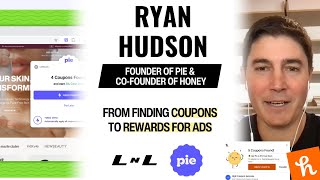
This content was created by Ryan Hudson. This content was uploaded by Ryan Hudson. This is a YouTube interview episode (Legends and Leaders) titled "Ryan Hudson, Founder of Pie, building the Honey coupon & launching a new AdBlock rewards platform!" (created 2025-01-24). The excerpt is a hosted conversation between the show host (Speaker A) and Ryan Hudson. They discuss Hudson’s entrepreneurship journey and technical background, the origin and growth of Honey (how the Chrome extension worked, coupon aggregation, affiliate monetization challenges and eventual PayPal acquisition), lessons from venture and investing, and his new startup Pie — an ad-block/rewards browser extension that shares ad revenue with users (500k+ active users at launch, long-term goal of broad adoption). The discussion covers product technical insights, business model and industry dynamics (affiliate networks, ad-block market, publisher/advertiser incentives), naming rationale, and short- and long-term goals for Pi.
Chapters
Okay, so we have a new episode of Legends and Leaders, and today it's great to have Ryan here. Ryan, you've been behind a bunch of different interesting companies. You've tried a lot of things and you've got some incredible success along the way with Honey, which has saved people a ton of money and given them the opportunity to take advantage of just the amount of coupons and savings that are out there that you were pretty much missing out on without that tool. And you did this for, I mean, I think around 10 years or so. You were able to get a great exit, and now you've got a new mission you're focused on with Pie, that's like an opportunity for people to, you know, really take advantage of the system that's been designed for ads, but for them to actually benefit from it. And that's kind of been the opposite situation today where, you know, you as a person are giving all this value with your time, but you're not really getting anything back for that besides what you're getting served from, you know, the companies that you're watching content or viewing it on. So I'm excited to have you here and to get into your story.
Well, thanks for having me on.
Awesome. So just going back to the beginning, like, how did your passion for entrepreneurship and starting tech companies and just wanting to build in that space, like, how did that interest begin, Ryan?
I think that last word is the key one for me. It's, I've always been a builder all the way back into my middle school and high school years, tinkering and building, was it roller skate jumps or bungee jump out of the backyard in college and tree forts and all sorts of stuff like that. And so For me, learning how to program computers was just another dimension of that. It was a way that an individual could just build something. And then the really cool part is if you build something that people like, you can put it in the hands of lots and lots of people and get benefit from that. And so always a tinkerer, still a builder. That's why I'm back at it even after we sold Honey for a substantial amount of money. Back in the game building with a lot of my favorite friends. And it's great to be doing that. But I think building companies is an artistic expression in a little bit. It's like you see something out there in the world that could be different, and if you are right about it, you can build a company that helps solve that problem.
So you tried building, I mean, multiple different companies between like 2010, 2012. I'm sure there was other areas too you were looking at even beforehand. What did you learn most from that experience of maybe not having the success yet, but trying a lot of different things to figure out the path you want to go on?
I think it was a lot about learning that building experimentation process and trying a bunch of things that didn't work along the way. I spent more time on some of the things trying to make them work than probably made sense. And it wasn't until Honey started taking off that I realized what that felt like. And looking back on it, there's a bunch of those projects that I should have torpedoed faster and moved on to the next thing. Once you start building a thing, you kind of want to see it through and it becomes your baby, baby in some way. And you really think you saw something there and to give up on that just feels wrong. And so a lot of projects just keep pounding your head into the wall over and over and over. But some of them aren't going to work and maybe it's time to move on to the next. But other times just hitting your head against the wall one more time is what it's going to take. And so knowing that difference is I think probably impossible to do, but as a builder and an entrepreneur, it's definitely a part of life.
So you built up the skill of resilience through that, basically.
Some degree of resilience, some degree of just, I guess, appreciation also. Like, if you— through enough resilience and trying things that don't work, it makes the gratitude and appreciation you have when it starts to work just You're anchored in a place of this is never going to happen, and then all of a sudden it starts working. And so for me, the second half of the Honey journey was that, and it was a lot of fun.
So you also had a bit of a background in the investing world. I mean, it seemed like you were involved in two different funds. You were involved in early-stage investing in space and then Fairhaven too. So that probably gave you, Ryan, a lot of insight into what it actually takes to make it in the startup world from being on the other side of things?
Yeah, it was the early days of people sharing information about how the whole ecosystem of startup investing works. I was fortunate enough to work on the other side in venture after business school for a little bit. That gave me a context of what that investing world was like. The interesting part is the time that I was in venture was in late 2008 when the markets basically seized up for most of the time I was in it. So my learnings were a little different than what people have been getting for the past 10 years. I learned that capital is scarce and you have to be very thoughtful about it. And there are these moments in time when it's not available. And I saw in my first week working at Fairhaven full-time, it was right after, I think fall 2008, and Sequoia had a famous deck at the time. It was RIP Good Times, and it was immediate triage of the portfolio. Which ones are dead, which ones are probably dead, and which ones do we think we're going to try to save? And in that process, who are the other investors around the table? Who's getting squeezed out because they don't have any funds left? And a lot of the, the anti-competitive behavior of VCs started to appear in that time. And so for me, uh, it painted a different view on how do you build a company? Uh, with, with what we did at Honey, it definitely informed how we thought about raising outside capital. We were very conservative compared to most of the companies of that same time period. In total, we raised less than $50 million. All of that money was still on the balance sheet when we sold the company. We were basically just raising working capital as we went. And it was because I had that experience in venture where I saw what happens if it comes to an end. And we didn't want to be in a bad position then. So we, we were pretty conservative.
I didn't realize how important that experience was. It seemed to be very important.
Yeah, there's a whole bunch of random experiences I've had that have all kind of contributed to a point of view. And I think a lot of people have this where the, the cumulative experience that you have at some point in hindsight, it makes a lot of sense. But at the time it's completely random. Like fast forwarding today to today, there was a time period when I worked at the Los Angeles Times. I was hired into a bankrupt version of the LA Times as a part of Tribune. I was laid off from a bankrupt version of the LA Times as a part of Tribune. I learned that it doesn't matter if the company's been around for 150 years, uh, they— that there's no such thing as a guarantee in a job. And that's what pushed me back into being— or pushed me into becoming like a full-time entrepreneur, was actually being laid off and having that experience. But it felt like a pretty random job at the time. And then fast forward to today, we're working on an ad blocking product and, uh, have a lot of thoughts about the publisher ecosystem and how we could be helpful there that I have a lot of firsthand experience seeing it, uh, from the inside. And so it's weird how you stitch these paintings back together in reverse and it starts to make sense. But, uh, the biggest thing is just keep doing things and putting yourself out there and being involved. And without having those experiences, I think you'll limit what you'll see out there in the world.
Definitely agree. So how did the idea for Honey happen? Like what led to that specific idea and how did you actually go about getting it built?
Yeah, that one, it was, I had been, I'm a builder and tinkerer. I was playing around with the fairly new Chrome Web Store. Extension concept, uh, at the time. It looked like it was a cleanup of a Wild West before that of toolbars and people doing weird bad stuff. And all of a sudden it had an App Store-like interface. And so I started poking around at what you could do and realized it was a really interesting platform that nobody was paying attention to at the time. People were all looking for what's the next great mobile app, and it was pretty early in the iPhone App Store days, and I was playing around just as for fun. I made some other extensions just for my own use. And then I realized that there was this workflow I didn't want to do, which was going to search for coupon codes where before Honey, and maybe still people still do this, but I'm not sure how many, you're like, you're in a checkout flow and you see a coupon code box and you go to Google in another tab and search for whatever site you're on coupon code. And then click on a bunch of links that don't work, try a bunch of codes that don't work, and ultimately get frustrated with that process. I thought to myself, what if I could automate this entire workflow? And the, the internet, Stack Overflow said you can't do it. There's like cross-site scripting restrictions. It's not technically possible. And I, for some reason, thought, well, what if you could? And started playing with how to make it work. And after After a couple days of late into the night coding, I had a working prototype of it. And that was the start to the Honey story. A few weeks later, we accidentally got pulled into market by a Redditor who he had paid like a dollar on Amazon Mechanical Turk to test it. And he posted it to Reddit saying, hey, check this thing out. And 1,000 people did. And then as happens on Reddit, other people posted it to other subreddits. We got thousands of more users. And from there it was like takeoff on the user side. So it was really fun. It was the first product I ever built that other people actually seemed to care about. So that's what I was saying before, like if I knew what that looked like where the market's actually pulling you forward versus slamming your head against the wall, I probably would have bailed on some of the other things I tried earlier. But yeah.
That's it.
Yeah.
It's definitely good to be aware of that now. So, so how did you actually, Ryan, like figure out how to build this? Because you mentioned that it seemed to be like a technical impossibility at the time, you know, was perceived like that. What did you do different to actually make Honeycomb?
Well, I realized that in a browser extension, you have a permission context that exists on the user's computer that's separate from the website's. And it seemed like it should be doable just based on where you're operating to run code on a computer's device that they want to run. And so that was just the technical insight was that it should maybe be doable. And all of the information on the internet was written for websites trying to do things, integrating somebody else's JavaScript from another site. And a lot of things there that you couldn't do the information exchange and the automation. But with an end-user client browser extension, you actually could. And Yeah, we did that and pretty powerful experience we created because of it.
Yeah, that's definitely different. So you start to like, you mentioned the organic traffic you got from it. Were you like, did you have a monetization strategy you figured out right away? Like how did that monetization strategy evolve?
Short answer, no. We thought maybe someday we, or we thought maybe we could monetize through affiliate. Affiliate marketing is like a commission on a sale. And we approached the networks that run these programs or facilitate these programs. And they told us to go away and that nobody wanted to work with a toolbar or downloadable software. And George and I listened and we went away for a couple of years and didn't monetize at all for that entire period. So we had user growth. Growing to hundreds of thousands of active users. People love the products. They were telling each other about it. They're saving money with coupons. And we weren't making any money and investors wouldn't give us any investment money despite me having worked in venture. For some reason, the optics of me, a former venture associate who also has an MBA, me walking in there telling them that I was the engineer and developer was not particularly believable for them, or are they combined with the market dynamics of no plan for mobile monetized, maybe through affiliate, except they told us no. And this history of everybody that ever built anything in with the toolbar was fairly malicious and there's no venture scale outcomes at all. The biggest thing anybody had ever done with it prior to us was StumbleUpon, which sold for not interesting numbers from a venture investor point of view. So we couldn't raise money, we couldn't make money. And it wasn't until 2+ years later that we happened to hire the right person to help us crack the affiliate marketing world. And what I hadn't realized, and George and I had no, no context on was that the way to partner in the affiliate space is actually to find somebody that has existing trusted relationships and lean into that. And so my advice to anybody that's thinking about affiliate marketing is you actually do need an insider. And the explanation for it is if you think about the times that people put a ton of money on the internet, the worst people in the world try to get their hands on it. So bad actors try to steal from the affiliate networks. It happened right before we launched and we had no idea. That there was this massive controversy of a toolbar that was doing some malicious stuff behind people's back and basically stealing money from the system. And the system not having good technical defenses, in part because these systems were built like years and years ago and a lot of the core engineering people have moved on to other stuff since then. But effectively, you don't have a technical solution to protect a pile of money on the internet. And so what do you do? You protect it with relationships and repeat. Repeating relationships where people learn to know and trust each other. And it's effectively, if you burn us once, you're out of the network. And so that's how it's evolved to protect the system, which is a very non-obvious insight that I don't think even today a lot of people understand that that's how it is. And when I talk to startup founders that are interested in working in and around the space, that's the first thing I tell them is Don't overthink this. Don't go in there thinking you're the smartest man in the room and you're going to persuade everybody that you have the best new mousetrap. You have to understand why it is how it is. And I think when people get that, they've had more success with it.
Yeah, that's an interesting point. I wasn't aware of that. It's still so low-tech in that sense.
Yeah, I mean, it's high-tech and low-tech at the same time. So it's like, it's not to downplay what they do, but the The challenge of protecting a multi-sided, multi-party system of value exchange, it's actually kind of a hard technical problem. What signals are you looking for that tell you that somebody's a bad actor versus just keeping an eye on everybody and making sure that you trust them?
So you were getting all these coupons basically from all around different websites, and you developed a system to just test if they were accurate or not. Like what went into creating that system?
Yeah, so we pulled coupons from all over. Fortunately, there's actually a company that has a coupon feed that most of the industry uses that has basically the baseline coupons. And so we subscribe to that and use that plus a lot of effectively testing coupons that submitted by our users. And so because we were the one that was trying them automatically, we could see if they were working or not and had a pretty strong signal of quality on which coupons you'd want to test again and which ones are no good. So that's the core of how we manage that. And then being the largest provider of that certainly helps get more of that data faster so you can provide a better and better experience.
So it's very much like the users were helping out. A lot.
Yeah, absolutely.
So how did the acquisition happen? Like, why was it the right time to sell? Why was PayPal the right company?
Well, we were moving towards a lot of interesting things around payments in general. So with our— we talked about the coupon side of it, but we had a cashback program with a digital currency called Honey Gold, and it was effectively a think of it like a crypto except no crypto. It's on our server and we're controlling it. But with that, we had ideas about how you might be able to use that in a way that would enable applications that you can't do with the, basically, the credit card payment network because of the fees, doing microtransactions, unlocking content, doing all sorts of that stuff. So we were kind of moving in that direction. We had some interesting financing products like buy now pay later sorts of things in the pipeline. And because of that, we were talking to PayPal generally, and it quickly became a bigger conversation than that. And the company was doing miraculously, insanely well, 9 figures in revenue, profitable, growing insanely fast. So it wasn't a, we need to sell it now, but George and I saw an opportunity to partner with one of the biggest tech companies in the world with an alignment on some of the things we were trying to do. And we thought a pretty high ceiling on what they still could, would, should be. I think a PayPal with a lot of fresh new ideas still has the potential to become as big and as important of a tech company as Google, Microsoft, companies like that. I think PayPal and payments naturally makes sense to be one of those mega tech companies. And so We thought it was an interesting chance to, to join that team, to shape the strategy, to bring a lot of fresh new ideas into the organization and see how far we could take it. And then they also were willing to pay a price that was a year or so ahead of the progress that we had demonstrated to date. And so more so than that being about the price, it was also about signaling commitment to understanding what we were trying to do. Through our entire journey, we had a lot of interactions with investors that still didn't get it all the way through the end. I think we shocked a lot of people when we sold for the price we did because they're like, this is an affiliate browser extension thing? What? I still don't get it. Like, why is this valuable? And so we thought that the PayPal team understood what we were doing and were willing to pay a price that signaled both the understanding and the commitment to making it successful going forward.
Yeah, it's interesting that the fit was— I mean, it was fit in multiple ways, but you really believe that they could take it to another level and they also had a lot of potential as a company.
Yeah, absolutely. And as part of the deal, George and I had pretty substantial holdback in PayPal shares, and we were pretty excited about the potential for what that piece could become, especially with not like the help from us, but injection of this whole new direction. For the company and the strategy, uh, felt— it felt like the right time for them.
So you finished that chapter at a point. What made you want to jump back in with something? And I mean, there's some similarities between Pi and Honey, you know, you— I mean, it's another extension, it serves a different purpose. I mean, the ad problem has been around for a long time where people don't want to watch a lot of these ads, but they have to watch the ads, then they just do ad block, and then the creator doesn't earn anything if it's on YouTube. You know, so this is a, it's a novel solution. Someone else built an entire browser to, you know, to fix it, but this is something that works within the existing system. So I see a lot, a lot of potential for Pi. What made you want to build this? How did it originate and why come back?
Yeah, I mean, the starting point honestly was the possible just working with the people. So a bunch of us former Honey people stayed in touch and were interested in working together again on something. Kind of the starting point was we didn't even care what. In my personal exploration before starting Pi, I thought I explored all sorts of the craziest hard tech things. My personal heuristic on what should I be doing as somebody who doesn't need money, doesn't have to do anything, I could just sit around, I could just invest or do things like that. In that journey, one, I realized that I'm a builder. I like making things and always have. And if I wasn't building a company, I'd be building something with wood or I don't know, just like with my hands and like playing around tinkering. But it would be missing that like fun scale part and it would be missing that fun with people and other people that I respect dimension to it. So I knew I wanted to do something. I thought I should do something like really hard that nobody else would be able to get funded because it's like a dumb idea or borderline like impossible technical challenge. So exploring the hardest of hard science problems, digging holes into the ground for energy, like doing all sorts of stuff in the ocean, like things like that. And I'm still really excited and passionate about those sorts of things. But I also realized I saw this other possibility of what we're doing now with Pi in the ad blocking space, where I think similarly, I'm the only— not to be— put myself on too high of a pedestal or anything, but I think I see an opportunity here that not a lot of other people would both see and be able to go after. It's a pretty big problem. In the sense that you sort of identified where the advertising ecosystem that powers the economics of the internet is basically broken for all of the major constituencies. It's broken for the users where you get bombarded with ads or you use an ad blocker and just cut it all off. Those are your only two binary choices. As a result of that, it's broken for publishers who can't monetize people that turn it all off with an ad blocker. And you might think that it's working great for advertisers, but it turns out it's not working well for them either because their only options for advertising to reach consumers are effectively these end-stage, very large tech platforms where it's an auction pricing mechanism and everybody's marginal profit or more is being bid into the system. And so there was like a direct-to-consumer wave of companies launched 10 years ago or so. That whole thing fizzled out as people realized that it's actually cheaper to reach consumers by having high-end real estate. They have stores now, and it's because acquiring customers became so expensive through the channels that exist. And so I saw this, this thing that was basically the backbone of the open internet being broken, and then the open internet shifting into closed platforms, and saw this is like kind of a problem for the future of things that could exist. There's a lot of interesting consumer products that I'm sure are not being brought to market right now just because there's no way to reach consumers, just as a starting point. And that— multiply that across the entire economy, that's pretty huge. And so effectively, I kind of realized, in part because we had this points program, this cashback program with Honey, that we had effectively one of the best business models ever to align the interests of our company with our users and with the advertisers and make sure everybody's getting a fair exchange of value. How come that cashback model can't extend to the rest of advertising? It's basically the, the insight. It's like, what if we gave consumers a way to earn rewards for seeing ads and for publishers to share some of the ad revenue with consumers so that they're incented to say yes instead of just using an ad blocker, and for advertisers to then be able to reach these consumers that are otherwise opting out of being addressable by any advertising. And so I thought that like, hey, this is the alignment that we're looking for. And that's basically what we're building with Pi, is an ad blocker that gives consumers full control over their online advertising experience with the hope and expectation that for a lot of people that will include advertising. So some people are ad block purists. I think we can build the best ad blocking solution for them too and block as good or better than any other ad blocker out there just because we have the technical expertise of a team that built Honey. We know how this stuff works. All the way through to people that are like, hey, I would love to see max advertising. Give me as many ads as makes sense economically to show me. And everything in between. And so I think that hopefully we're in the early days of seeing if people care about that, uh, or believe in that mission. But it felt like a very large, fun problem to solve with a team of people that also understand it, and I think are the best people in the world to try to solve it. So that's what we're doing, and it's, uh, it's been a lot of fun. We only launched it a few months ago. We just crossed 500,000 active users on our ad blocker yesterday. Um, so it's— it's going quick, and we're really excited about then unlocking the next levels of making a fair ads program that works for publishers and instant rewards for consumers for their attention, not just for transactions. So there's a lot of cool stuff that we're building.
How big do you think, Ryan Hudson Hudson, the audience of people who are currently blocking ads that will then opt in to having paid ads that they earn something on? It's like, do you think that's really a huge market that's just completely left out right now that advertisers have no reach to?
Yeah, it's, I mean, it's huge. So ad blocking, despite not having really anybody market or tell consumers about it, has order of magnitude more users than shopping tools like Honey as a category ever had. So peak Honey plus all of the competitors that copied some of the stuff we're doing, let's be generous and call it 50 million active users. Ad blocking has close to a billion active users globally without anybody pushing it that way and without a business model that really works the way I'm talking about. And so I think it can be a huge piece, just the existing ad block market. I know there's a lot of people that don't use ad blockers, and part of the reason for that as we've done research is that they don't know which one to trust. And that's actually a reasonable position to have. If you go to the Chrome Web Store and you search for AdBlock, you get— there's AdBlock, there's AdBlock Plus, there's uBlock Origin. Those are all great ones. Then there's also AdBlock for YouTube exclamation point. There's AdBlock for YouTube TM exclamation point. Like there's every variation on AdBlock, block, block, block. And if you look at where the developers of these products are, it's like, it's a random Gmail account or it's a company in a country that maybe you'd want to think twice about what they're doing just based on rule of law. And so I think consumers are right to be concerned about where, um, where they're downloading these tools. And I mentioned before, browser extensions have a lot of technical capability to do all sorts of things. Including very bad things. And so I think it's important to, to have consumers choose one that has, um, the right incentives in place. And I think consumers will accept the right amount of advertising for them. Two of the largest ad blockers are owned by a company that has an acceptable ads policy where advertisers pay them to let certain advertising through the ad blocker. The difference is they keep all of that money and don't give the consumer anything. And I think if you're going to be letting ads through, the consumer should get that. So the Fair Ads program that we're building into Pi, we're going to pass all of that revenue straight through to the consumer for fair ads that they let through.
Yeah, I like it. I like it how it's set up. I think it's fantastic. It's funny, Ryan, you know, all the companies You know, these recent companies you have, they're all named after something food-related, you know, Honey, Pie. Why do you always name your companies after food?
I mean, the Honey one was kind of the starting point for it where George and I were thinking of various ideas. And actually the Honey precursor name before we very quickly settled on Honey was we thought about Honey Badger as a name. I don't know if we've ever really told the story externally. We definitely told all the employees, but there was a viral meme about a honey badger at the time, and we thought it was kind of funny, and we're applying coupon codes and we don't care. And it's like honey badger, like, we can't call it that because that's pretty aggressive against the retailers. And that wasn't really what we were trying to do. And then we're like, what if it was just Honey? And I was like, that's the perfect name for that. It's a word that people use all the time in conversation. So it's got like a in the real world viral mechanic, where it's like you're talking about something or you see it at lunch or just around in the world, Honey comes up. And so it creates these moments for people to tell each other about the product. That insight kind of translated into, hey, maybe we should do something similar for the name of this company. And Pie for us is about sharing a slice of the pie. It's about that version of what if there's a way to align the user incentive with the company. When we first started it, I explored extensively, and we did not solve this. I'm not committing to ever doing this, but it was part of the original thought exploration is could we give ownership in the company to the users, not just the points program? And the lawyers told me that was illegal and I'd go to jail. And I decided that was probably the only bad outcome that could happen at this point. And so we backed off of that vision for now. But to me, like, the Pi name, it's a cool one. It stands for the People's Internet Experiment. And the experiment is, hey, can we do this? And it's any startup is an experiment and you never know if it's going to work. But hopefully we can do it and do it with lots and lots, order of magnitude more users than we had for Honey. I think we can make a pretty big impact on how the internet works and make it great again.
So is this like a Reddit? Now Reddit's kind of helped you again get that 500,000 users. Like what's led to this half a million users?
This time we're actually, this is the humorous part, we're actually running a lot of advertising. So we, because we have had success before, we're able to raise money unlike previously. A lot of the same investors that we were very aligned with before wanted to back us on doing this project too. And so we have copied a lot of the Honey playbook and Honey's playbook. We did a lot of direct marketing this time, despite being an ad blocker, we're still running advertising, which is which is fun. It's like an advertising advertisement for an ad blocker is, uh, makes you stop and think. And so far it's working pretty well. So we're having fun with it. Yeah.
It's like funny how ad, like ad block, like it's something that just everybody knows about. So many, you said a billion people are using it, but it's almost like a dirty thing, you know? And like now you're actually making this something that can work. Like the value, it's just not aligned on both sides. It's like probably the most of any industry where it's completely misaligned between the users and the companies.
That they want to effectively— like, it's— it dates back to the origin of the, the origin of advertising. It was always a deal between a publisher and an advertiser, and the consumer wasn't really factored into that. As that moved online, the experience trans— transferred over, and it became a deal between a publisher and an advertiser, and users became collateral damage. And in the data tracking and a lot of the stuff that has people pretty upset about the state of the advertising world right now, um, you have regulators in Europe and around the world that are trying to step in and try to put this back in the box. But to me, the fundamental problem is not lack of regulation, it's the incentive structures are just off. And so I think we can actually build a better version by just aligning the one remaining stakeholder with the economics of the whole deal. And then I think it'll actually work. But we're so early in that journey and I could be completely wrong. But I hope we're not.
Same. So just the last question I have, Ryan, you know, if you had to break down some short-term goals, some long-term goals, like what would those be that you have right now for Pi and just also for yourself?
I mean, I— the short— well, make it as short of a long-term goal as possible is I think we can be the default way that people control their advertising experience. And that translates to call it a billion users of our products. And maybe that's a long-term goal. Hopefully it's a short-term goal. But I think it's really about keeping that vision of what we're trying to do. I think it's one that people, as we're talking about it, respond well to. I think we are in a position to solve something important. And my commitment is to keep chipping away at it until we do, basically.
That's awesome. Well, I'm excited to see how you're going to fully bring this out. I mean, half a million people are already using it. There's clearly a lot of value that has been provided to people. And I think it's a huge problem that I haven't heard of any other solution like yours that's really targeting this, that's going to actually change the way ads are done. Because I don't know of anybody that really loves having the typical ad experience today, but we're all just forced to do it. So it's either you turn it off and, you know, don't give any value to the advertisers or you keep it on and you're frustrated at times. So this is like the perfect medium for a huge problem, and I think you're gonna do really great with it, Ryan. So appreciate you taking the time and doing this and wishing you much success.
Thank you. I appreciate it.
More from Ryan
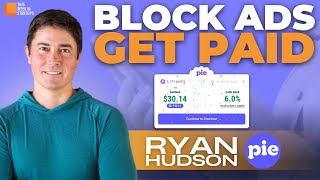
How Pie's 'Block Ads, Get Paid' Model Is Giving Users Control of Ads & Privacy | E2012
Eclectic Convergence 2021: A Fireside Chat with Ryan Hudson '02, Co-Founder, Honey