002: How Jacob Guttman Uses Direct Response and Branding Campaigns to Grow His Handyman Business
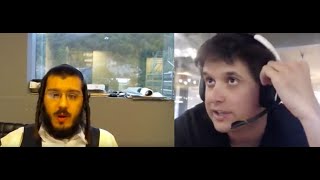
Jacob Gutman built Nail It Handyman by focusing on small jobs he could complete reliably. He splits his marketing between direct-response ads (postcards, Google, Facebook, van wraps) that track immediate leads and branding campaigns that build awareness, using PhoneWagon to measure cost-per-lead and negotiate better media rates.
Chapters
Alright guys, welcome to the second episode of Growing Your Agency. Today I am here with the founder and owner of Nail It Handyman. We're delighted to be joined by Jacob Gutman. Jacob, thank you so much for joining us.
Thank you for having me.
Absolutely, absolutely. So just give us a quick background. You know, I think you're unique in a sense that you do a lot of stuff in-house. So tell us a little bit about yourself, your business, how you got into this, so that we, you know, have an idea of what you're doing.
So I'll tell you a little bit about myself and how I got to this business. So I have, and I had, and I still have a contracting company called Home Plus where I needed handiwork. I needed a lot of handiwork, and I had a very hard time getting the handyman to do the work on time on budget and quality work. So then after a while, I realized that I'm not the only one, but basically every contractor and every homeowner, as well as stores and facility managers, um, have this problem. So I saw the, uh, need and the opportunity. So what we opened is a handyman company that does small handiwork, um, and small handiwork only. We don't do bigger renovations, and that allows us to be on time and every job. So, uh, that's, that's the idea of it.
Got it. Okay, awesome. So you started the handyman, you know, business from seeing a need in the market you were experiencing personally. Tell us a little bit about what you did to get started. I know a lot of people who are listening and then also who are following, you know, they, they want to start their own businesses. They want to start their own. How do you get it off the ground? How do you grow it? Tell us a little bit about what you did to, uh, just start.
First step was creating a plan. Which had two parts. It had an operational plan on how we will operate the business, and as well as a financial structure, like a budget and how we will operate and make money.
Got it. So when you say those two plans, I mean, are we talking— let's go a little bit deeper. Are you literally opening up Excel? Are you opening up—
One was a Word document and one was an Excel. Document.
Got it. And then how did you, how did you create the assumptions for the financial plan?
On research, based on research and existing data that I, that I had. So we made the numbers. Obviously the numbers are not 100% accurate, and we always, we keep on adjusting it and working according to that. But you need to start from somewhere. You need to have a foundation. So we did that. Once I had that Obviously, I went to raise capital, so we found an investor and we opened the company. We just started to— we bought vans, we did the shelvings and the wrap, we bought the tools, hired the right people, and we started working. And obviously the marketing campaign, and people start calling and we do the jobs for them.
So, so super excited to get into that, obviously, but let's, let's talk, um, going back to the beginning. How did— all right, so made the plan, you decided let's go forward with this, you got the investors. How did you get those initial customers? Because there's a lot of content out there. People talk about, you know, getting those first 10 customers, 100 customers, especially in your business where you're actually— and maybe correct me if I'm wrong, but I would assume that there's a lot of repeat. You know, someone needs a handyman not just one time, right? It's not like a deck remodel.
Very true. And, and, and I'll add to that, especially in my business where we go into people's homes that is worth sometimes a million or $2 million, and we fix stuff. So people, we need to have a lot of trust, and people need to have trust in us in order to book us. Sure. To use us. So that is a challenge when you start off and no one knows you, and you want to get into the market, it is a challenge, and that's why you do marketing. Marketing is basically a way of communicating with people.
Absolutely.
So you basically put out an ad that a few thousand people see, so you're basically talking to them.
So, so let's talk, let's talk about that. How did you talk to us about some channels? And again, um, you know, as much as you feel comfortable sharing, tell us about some channels, you know, that you're using. One, channels that you are having success with, but I also think it's interesting to talk about channels, you know, that aren't working, um, and And not to tee it up, but it's like, I'll go places and I'll see like diners that have like business cards on placemats. And I'm like, does that work? And like, maybe, maybe it's cheap enough that you do get an ROI on it. I don't know, but I'm just curious what channels are you using?
I'll answer the question. There's two things, two separate types of marketing. Okay. There's direct sales.
Yep.
And then there's branding. Branding means— and people, it's very important to know, whoever spends money in marketing, it's very important to know that branding means that you're paying money, you're spending money, you're paying for magazines or whatever, wherever you spend it, not to do a direct sale. You're not measuring your return on investment for that. You're just basically putting it out so people should see it again and again and again. So after a while you get the recognized brand. Then there is direct sales. Direct sales is an ad that converts into actual sales.
Got it.
To give you an example, sure, you go on the highway and you see a billboard and it says Coca-Cola or Geico Insurance.
Yep.
And nothing more than that, just the logo and a color. That's branding. There's no call to action on such an ad. But when you see an ad that says, "Call today, 25% off," or, you know, "Get the first month of your car free, you don't have a payment," that's a call to action. That says, "Hey, we have a sale this week, come buy." And usually these companies, they track those campaigns. So that's a call to action. So when you start a business, you don't have a lot of money.
Sure.
And the first thing obviously is start to advertise in a way that people— a direct sales campaign. So start doing sales. When you're at a certain level, depending on the company, but when you're at the point when you feel that you can spend money just to raise brand awareness, so people should start feeling comfortable with you and recognizing you as the brand, then you can spend some money on branding, but obviously you can't do that when you're starting off.
So start with direct sales, go after those intent-based buyers who are searching for you, seeking you out at that moment, kind of build the base up there, maybe get some happy customers, then go for the long play with the branding and the awareness and that sort of thing.
Exactly.
Awesome. What are some channels? Tell me about some channels.
Let me circle back. You asked me, you just saw that you're seeing placements and like other interesting stuff where companies advertise and does it work? If you look at, you'll see that most of these types of ads are not direct sales. These are branding sales, branding campaigns. So you're wondering, does it work? Will I go now to buy something? No, that was not the, you know, that was not the goal here. They didn't want you to buy. They just want you to think about the brand and You know, they wanted to remind you that they exist, and when you'll be at that point, uh, that you'll, you know, you'll need to buy that particular product, you'll go to that company.
Interesting. Um, it's funny, I actually see real— or not realtors, like insurance agents. One of my friend's moms has a billboard of her face on a billboard, and I always thought to myself, like, you know, the why. But it totally makes sense because I was like, man, if I, I don't— I how many people need insurance at that moment, but it's not that direct sales play like you're saying, it's that branding play. And then everyone in town, it was actually in a small town, and everyone, oh, you're the lady, you know, you're the woman who's on the billboard. Now everyone knows her. So, yeah, no, that's actually a great point. Because I think a lot of people see, or, you know, maybe myself, I see these ads and I'm like, does that work? But, you know, to your point, it's like, look, it's not working, doesn't mean it's driving a sale and there's direct correlated ROI to that ad spend or that ad necessarily. But it's coming down the line. And I would assume that it's hard to even attribute sales to a lot of those branding plays. Um, that's great. Yeah, so, so tell us, tell us about some of the, some of the channels. I know you, by the way, you have trucks. Tell us a little bit about that. I, I got to imagine that's a massive branding play.
The best branding because they call it a moving billboard. It's not just one billboard, but it's 4 billboards because it's both sides, front and back. Everyone sees you and it's moving.
And, uh, and I feel like even perception, not just seeing it like in person— when I saw it, to be honest, when I saw it, I was like, oh, did you see the—
did you see the van already or just some pictures?
But I'm saying when I saw the photos of them, I saw the pictures, it made me perceive you. I was like, whoa, they are super legit.
Yeah. And another point to it, when you arrive to a customer's house and the customer sees, wow, this is the van, It gives them a much better feeling.
Yep.
And the same is with the uniform and all of that. But let's go back regarding the marketing of the van wrap. If you think about it, it's the best advertising and it's the cheapest because a van that we have usually lasts about 10-15 years. Yeah, wrap such a vehicle is about $3,000 to $4,000. $3,000 to $4,000.
Yep.
So let's make the calculation. Let me do it right now. So let's say even you spend $4,000 for a wrap, it's $300 a year, 15 years, it's $266 per year divided in 365. You spend 73 cents a day for a moving billboard. I don't think there's any other marketing campaign that can be less expensive than this. Wow, 73 cents per day.
And I bet no one— and I bet a very small amount of people look at it that way, you know. They think the big, the big one-time expense, but like you got to look at it over so many years and then your, you know, costs appreciate it through the years that you're going to be using that.
Yeah, then it's the cheapest, the cheapest way of advertising.
Wow, uh, that's awesome. So, so what are you doing for direct? I know, you know, I'm familiar with, you know, the, the Home Advisors, pretty much everything.
But so there's many different things. Um, we do traditional, which is, uh, local papers, mailing campaigns. Okay, then we do, uh, TV ads.
Hold up, hold up, before, before you just go along, I'm just super interested in a lot of these. I went to a conference and, uh, tell— talk to me about the mailing because I'm really—
have you ever tried lumpy companies? There's a company called Postcard Mania.
Postcard Mania, yep.
They're in Florida.
Florida, yep.
Maybe you went to their event because they have a little, you know—
No, no, no, I just went to a conference and just one of the sessions was about direct mail, but they were just saying like all this cool stuff and tactics that you can do. So, and I was—
It really depends how you do it. The key to direct mail is to be consistent with Every marketing campaign, the key is to be consistent, but especially with direct mail. Yeah, basically what we did, we created two lists. Okay, and we send every second week to the, uh, to the other list. Okay, okay, so every person gets a mailer. Sure, every month, once a month. Okay, and we do that for 6 months, so a person gets a postcard 6 months in a row, every month a postcard.
Interesting.
And what we saw is that people— no one calls in the first month nor the second month. On the third call, we have a few people calling, but then the fourth and the fifth month, oh, we get huge return on investment.
Wow. And I would have to say too, you know, and again, I'm not super intimate into the space of like handyman, you know, but I would also imagine that maybe month 1, as you're like just thinking through it, they might not have anything, but now you hit them once, you hit them twice, and I feel like there's some psychology, there's some number where now they're like, all right, 5 times, then they're like, oh crap, like my door broke. Like, what's that company that's been sending us that stuff? You know, or maybe it's sitting around. I feel like, you know, those kinds of things have to play into it. Have you tracked like true return on investment? You know, like spent $2K on mailings and, you know—
Yeah, because on the mailer we put a like 5% discount or something like that. We always do it. So with the digital ads, it's much easier because you have the analytics, you can always see reports on that. But with the traditional ads, you always need to put something. So obviously with PhoneWagon, we track all of these, but you can also put promotions. A lot of different ways that you can track, but it's very important to try because we do a lot of marketing and we adjust it accordingly. If we see something doesn't work, we stop it, as well as we negotiate. The negotiation is based on our numbers. So when I get every day multiple people call me to put an ad in their paper or whatever, TV ads. So basically what I do is I tell them, look, I use a company PhoneWag, I track the return on investment, and I know my numbers, I know how much I can spend per lead or per call. So let's do this, let's start for one month, I will risk X amount of money, but then we'll circle around after the month and see the numbers. So what we do then is after the month they call, do you want to continue for another month? So I say, okay, hello, we advertise in this paper and we get this amount of leads per X amount of dollars, you do much less. If you want to match that, you can either give me more exposure for the same amount of money or charge me less, then I'm willing to go for another month. And usually they do so. So what happens is I'm stronger now and I can tell them how to charge me or what to deliver for that amount of money because you're not flying blind anymore. I'm sorry, I know, I know my numbers and They can't say, oh, you're missing out the best marketing and whatever. They're great salespeople, but they can't tell me anything anymore because I know my numbers. I say, well, it's maybe very good marketing, but look, the numbers doesn't work for me.
So absolutely. Um, awesome. So, so quickly, what are, what are some other, other, uh, channels that you're using for direct response? Um, and then after that, I'm curious just to get into like how you're— what kind of tools you're using for like just internal reporting and, you know, what you're using.
So let's, let's, let's, uh, create— let's discuss the categories.
Okay.
Okay, traditional marketing is local papers, which is newspapers, magazines, and all of that, and then mailing, mailings, and local events like shows. These things are traditional marketing.
I totally forgot. I don't know how I— you, you do a lot of that stuff, right?
The LinkedIn meetup, you do a ton of stuff with LinkedIn shows, events, networking events, which is huge, huge. It works the best. You see people in person, you talk to them, you connect with them. It's the best. They see you, they see who you are. It's much better.
So with those, are you organizing those? Like that LinkedIn meetup that I actually—
Yeah, I was involved. I get involved. I'm not, I'm not officially an event organizer, but I get involved a lot. I am a member of all these organizations.
There was a ton of people there. That was actually—
If you go on my YouTube channel, you'll see There's another big construction show coming up, November I think it is, or maybe still in October. I'm not sure when it's gonna be. I think in November. The OJBA Interstate Expo. So they did a whole promotion video from us. If you go on our website, you'll see Ryan Shank.
I think I saw a preview. I didn't click it yet though.
Yeah, so with that show, I'm not hosting that show, or, you know, but we get involved. Yeah, we help people, we inform people.
So, uh, amazing. Um, all right, so just, just kind of, uh, circling back. So what are you using? Talk to us about— I know you mentioned PhoneWagon, we don't have to do a plug here, but talk to us about what other tools are you using. You know, what are you using to, uh, maybe dispatch the jobs to your guys? Are you using some type of like field service software? What do you use for internal reporting? Are you using—
so So we do use, but that's in no way related to tracking the marketing. We do use a fleet management software. We use— it used to be called Fleetmatics, now it's called Verizon Connect. Verizon acquired it. So with the category of traditional marketing, there's two ways of tracking it. Either putting in different types of promotions and tracking that manually, or PhoneWagon. Okay, that's how I got to PhoneWagon. Then there's digital marketing, and then there's TV. Sure. I can't say it's digital, but it's not— it's like, you don't have— basically, it's TV. They give you reports on how many deliveries there were, but there's no real way of tracking it unless you do a promotion. Okay. So digital marketing includes Google Ads, AdWords, Facebook Ads, which is Facebook and Instagram, and all of these. And then banner ads and websites we do and all of that, which is much easier to track. You can't track how many, how much money you make, but you can track how much leads you got or the engagements and all of these.
Got it. Awesome. Um, all right, so just wrapping up, so we're just gonna do, you know, 3 final questions. 1, what is your morning routine?
I get up about 5 to 5:30 in the morning. As you can see, I'm Orthodox Hasidic Jew, so I go in synagogue and pray. So, okay, I'm in the office usually 7 o'clock.
7 o'clock.
Uh, the first thing I look on the social media and then I go to emails.
Got it. And then, uh, one piece of advice if someone was just starting out, what would you, uh, what would you say to do to, to get started, get the business off the ground?
Make sure you have your numbers, your plan, and discuss it with an advisor. Don't take the advisor as a babysitter for you in the business, but discuss it with the advisor to make sure you have the accurate numbers. If you have a good foundation then you're going to succeed.
Got it. Awesome. And, uh, cool. I appreciate it. Now tell everyone where we can find you and get in touch with you or your website.
Yes. So nailithandymen.com.
Okay.
Or 855-562-4548. Uh, we have talented people in our office that will be able to help you. And yeah, that's basically it.
Love it, love it. Thank you so much for, for being here, guys. Jacob Gutman, Nail It Handyman, crushing it right now, doing all of his marketing in-house. Really appreciate you, you being with us today.
Thank you so much, Ryan.
Thanks.
More from Ryan

We Analyzed 500+ Contractors. Here's What the Most Profitable Companies Do Differently.

Employee Incentive Programs That Drive Team Performance and Profitability with Ryan Shank


Stop Losing Money! Ryan Shank of ShareWillow on Using KPIs to Reward Field Teams






