003: Tim Pringle Partnered With Ex-Googler to Drive Phone Calls To SMBs
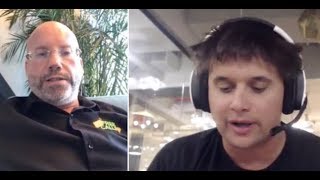
Tim Pringle built Performance Based Marketing with an ex-Googler, offering the first 50 recorded phone calls free to home-service businesses like roofers and plumbers. They charge a creation fee plus management fees, with clients typically spending $1,000 to $5,000 monthly on Google Ads. Tim's advice for new marketers: go to networking events and have the nerve to ask for the first client.
Chapters
Alright guys, episode 3, welcome back. Growing Your Agency, I'm your host Ryan Shank. Today, super excited, joining us today, Tim Pringle, 50 Free Calls. Tim, thank you so much for joining us.
Hey, thanks for having me, I appreciate it. It's pretty cool that we can do this while I'm sitting in Canada and you're sitting in New York.
Yeah, absolutely. Canada just had some big news happen the other day, right? Yesterday?
That's right, I'm a non-participant in that sport, but it is big news, very big news.
It was making the news waves. If you guys don't know about it, cannabis was just deemed recreational in Canada just yesterday. It's legal now. It is legal, and you have the big plant behind you, so maybe that reminded me. Tim, so guys, Tim has an agency, an amazing digital marketing agency, Performance Based Marketing. By the way, do you call it an agency? I've been talking to some people, they're like, I don't I don't really call it an agency, but essentially that's what we are.
We are an agency for sure.
Absolutely. So I want you to— so why don't you do this? Tell us how you got started. Why digital marketing? Why an agency? Um, you know, what's the story?
So let me explain to you a little bit about the name 50FreeCalls.com. When we got started, we're in our 5th year of business, and when we first got started, my partner worked at Google for 7 years.
Wow.
In Phoenix at an agency level, and he's like— we like to tease him and say he's like the Wayne Gretzky of Google, but he prefers Michael Jordan because he's American.
That's got to give you a huge edge over, you know, because there's marketers and agencies popping up all over the place, but having, you know, a partner on the team, 7 years at Google, that's— I mean, that's got to give you a leg up.
That's why I— that's one of the reasons why I started the company is because this guy is so good at what he does, and yeah, he knows the ins and outs and the secrets and I think he's even met the owners of Google. So I mean, it doesn't come any high level than that.
That's awesome. So when was that? That happened—
That was 5 years ago. We're in our 5th year, so that was about 7 years ago. I worked with him. I was working for another IT company doing some sales, and that's when I first met him. I sold a website to a lawyer, a law firm, and he said to me, yeah, we'll do the website, but I need to get on Google. And I was like, well, I don't know anything about it, but I'll find out. So I called Google and I met my now partner. and we just hit it off and made a big connection and off to the races we went. So 2 years later we worked together on a few projects here and there. And then once he left Google, we decided to start this agency.
That's amazing. I think it's so good to surround yourself with people that have their own strengths instead of having 2 of the same type of strength people side by side. I just brought on board a VP of engineering. I'm not technical at all. I'm like pure sales and I was like swinging way above my weight on engineering. Engineering and product stuff. So I think that makes sense, bringing the guy, you know, who was at Google for so long onto the team, especially in the partner capacity. So 5 years ago, why 50 free calls? Why?
So when he was first trying to explain the concept to me, he kept saying to me on the phone over and over, we'll give the client 50 free calls, we'll give them 50 free calls, we'll give them 50 free calls. And I was trained, I used to work for Royal Caribbean Cruise Lines for 10 years. I was trained to listen for auditory cues and he kept saying it over and over and over. So that was something I picked up on right away. So I checked the domain and it was available. So I said, well, I'm going to buy that domain. That's the name of the business. I'm not 100% sure why, but there's got to be something to it. So essentially how it works is it's all based around call recording because all these ads, online ads today can be tracked through your business and similar businesses, which is recording phone calls that come in via the digital ads. When I first learned of that, he kept trying to explain it to me. So what we do is we set up the call recording aspect of Google AdWords, say for instance. And just so everyone knows, you guys have your own system.
I just want everyone to know, not a PhoneWagon customer, you guys have your own proprietary system you guys are using. So I just want to throw that out there.
Yeah, I'm not a PhoneWagon customer yet, but that doesn't— that's not because of lack of effort due to Ryan Shank.
Yeah, yeah, yeah.
So we set up the call recording and we record the first 50 calls and we offer the 50 recordings for the customer to try out the call recording, uh, for free. And that's kind of how the name was born.
That's awesome. So, so they get, they get the 50 free call, 50 free call recordings. Um, who, who are your target clients? I, I just, um, interviewed a guy yesterday. Most of his clients actually don't get a lot of phone calls. Uh, he works with large like e-commerce brands, um, hospitals, things like that. So I would imagine you might have? What are the verticals, I guess, that you're kind of—
So we landed an association last year that's based out of Dallas, and they have about 1,000 members, and they're all in the trades. So they're roofers, plumbers, HVAC, and electricians.
Home services.
And they're all home service based, and they're all relying on Google AdWords, and they're all reliant on call recording. So those are— that's the biggest— those are the biggest verticals that we're focusing on. But we're kind of positioning the company so that we can actually offer our services to anybody.
That's amazing.
So what I want to be, essentially, I want to be the, the GoDaddy of online advertising. That's my vision for the business.
I love it. I, I absolutely love it. So, so these guys, do you know what percentage of their leads, I guess you would say, are phone? I mean, is it like, uh, is it like 50% or phone calls? Because they have to get some web forms, right?
Or yeah, they do get web forms as well, but I would say the majority, we optimize the campaigns to be strictly click-to-call. So when you optimize a mobile campaign that way, as you know, then the majority of the leads will be phone calls. But of course we can do extensions and we can do it so that they click on the headline and that goes right to the website. But I think these trades, they're looking for people that need answers immediately.
100%. You know, I've actually been working with these guys, I'm getting old now, for like almost 10 years, which is kind of crazy. But what I'm finding is, you know, they're going out into the field, like, you know, sometimes they're just mom-and-pop shop, right? They have the they don't, you know, if they get a web lead as we call it, you know, marketers, they might not get to it till later, right? But like they're always answering the phone, you know, so it's interesting that you say, you know, a lot of these home services and the trades because that's what we're hearing as well in terms of like that's what they want, they want the phone calls. I'm curious, are you finding anything, you know, with like missed calls and what can you do as an agency owner, you know, to maybe help or educate them?
So what we do is we do a weekly report for our clients and we actually do, we spot check 2 or 3 calls, usually 2 good calls, 1 bad call. Sure. And then we do a little weekly summary of the impressions, the clicks, and the action on the account. And we include, we attach those 3 recordings and we kind of give them a little guidance saying, hey, you know, this call could have been handled better, or these calls were great, these are higher potential revenue calls that came in and then at least the owner of the business knows that we're on top of the case and then he gets a little snapshot of what's going on with his AdWords every week.
Love it. I'm assuming you didn't always do that. Like, did you run into something where, you know, like when did you realize you needed to do that?
That was a nugget from my partner who worked at Google. That was his idea. But we were doing monthly reports, analytic reports before that. And just sending them to the client. But, and of course they get the call notifications as they come in, but we found it was beneficial that they know that we're kind of managing and monitoring their campaigns as we go. So then they can listen to one or two calls and they kind of have an idea what's going on on a weekly basis. We find that there's a lot of value in that.
And I gotta imagine, you know, that helps with retention and potentially even, you know, it helps you you know, show them that you're being a partner in their business versus, hey, I'm just, just here managing. Yeah, you're like, no, I'm proactive, I'm listening to the calls, I'm coaching you.
Exactly.
It's gonna help get them a higher return on their ad spend, right? Like if they—
Exactly. Well, they want to know that it's not just set it and forget it, right? They want to know that it's being— someone's actually taking care of it and taking care in it and looking after it for them on their behalf.
Got it.
So this stuff isn't cheap.
It's not, especially by the way, some of these industries like, like personal injury lawyer, dentist, I mean, these are like $50, $70 clicks, you know, by the time you get to— and maybe here, let me— you can talk about that. Do you, can you, do you have any ballpark, you know, cost per lead calls? I don't know if that's proprietary or not.
It's all, it's all depending. Like you said, it's like a lawyer could be, could be like $100 a click and a taxi cab could be a dollar a click. So it really based— it's really based on industry and how competitive that industry is on Google.
So are you— so when you report to them, are you tracking it past the call? Like, are you going into appointment booked or even sale and trying to like do any closed loop? Or you— okay, so you're managing it to the, to the lead or to the call as you would? Okay.
Yeah, 100%.
Got it, got it. And, uh, so, so what are these— what is everyone asking for? Is, you know, do they just want more volume? Do they want, you know, bigger jobs? I mean, everyone wants bigger jobs. I'm just curious, like, what was the feedback from the actual customers? You know, what's important to them?
Each customer in each vertical presents itself with its own set of challenges. We have customers that never call and never ask us anything. They're happy with what they're getting. And we have customers that are really high maintenance.
It's like DreamWorks, right?
Yeah, those are the dream clients, and they're like unicorns. They're hard to find.
Yeah.
But when you find one, you really appreciate them, that's for sure.
Yeah. Um, it's crazy to me, some industries too, it's like you'll get one conversion. Like, I was talking with someone, one of their clients is like a plastic surgeon, and plastic, it's like medical, but it's all out of pocket, so there's no insurance. Because a lot of times if you have an industry, you got to get the right insurance. It's hard to get the right lead type because people are doing just generic searches. But anyway, plastic surgery is like $10,000 clients, all cash. So it's like, you know, you can't— and that's why those clicks are so expensive, but it's—
That's right. And that's where my partner comes in. We do things like, we really focus on negative keywords, quality score. Those are the key metrics that we're looking at in order to try and give the most value for the client as possible and get them the most qualified curated leads as possible as well.
Got it. So talk to us a little bit about tactically, how are you going after new business and what does your own process look like? Like you get a prospect you think is good for you, do you set up, you know, meeting like with us, we do demos and then we try to, you know, we convert our demos into sales. But with you, I imagine similar thing, maybe you run through an existing AdWords account and you give them a presentation. What does that flow look like?
So a lot of times the customer kind of has an idea what we're doing. So we do go through a PowerPoint presentation with them and explain the product knowledge to them. We also have a questionnaire, a really Google Doc that we send over to the clients and they fill out all the questions that are curated to help us get the account up and running and point it in the right direction. And then of course we go through the billing and onboarding process and then once we turn it on, it's go and then we manage it on a weekly, monthly basis.
And talk to me about the relationship then with your clients. Is it a setup fee? Do you have retainers? Is it percentage of ad spend? Is there tiers? How do you model it?
So it's basically, it's based on the customer's budget, obviously. And we have a few different ways. So we do charge a creation fee, a one-time creation fee to set everything up and get it all going. And we quote about 2 weeks to get that done, no matter what they're doing, because there's a fair amount of work in setting it all up and getting it up and running.
Yeah, absolutely.
There's a lot of people that have to touch that project in order to get it optimized to where it needs to be before it's turned on. Then we have plans where we charge one price and we build in the ad spend and the management fee into that. Then of course for bigger clients, we can just go with a straight percentage of ad spend against their budget as a management fee.
Got it. So those smaller clients, is it based on scope of work a little bit? So it's, you know, you include the ad spend or you don't include the ad spend and then—
It's based on size of client and size of account basically. So if it's a real huge account, then they're obviously going to be pretty tuned in on what's going on.
And what's huge? Like $10K, $20K ad spend?
Yeah. $10K plus a month.
$10K.
Yeah. Got it. We're working with some clients that spend north of $25K a month.
Interesting. What's the average client spending in ad spend? You don't have to say management fees or anything. Yeah. $1,000 to $5,000 a month, I'd say.
$1,000 to $5,000.
And then do you have a minimum? Like what if someone wants to—
Yeah. So AdWords is a minimum of $1,000 a month.
$1,000 a month.
Okay. Yeah.
Got it.
Spend it.
Got it.
And then anything lower than that, anything lower than that is really small, small campaigns.
Yup. Interesting. All right. Awesome. This has been, this has been super great. A couple of questions just to close it out. First is what is your morning routine look like?
So I get up every morning at about 6:00 AM, set the alarm for 6:00 AM, get up, have a cup of coffee and hang out with my wife because we get up together.
Awesome.
And it depends on the day because of, as you know, in our business we have the flexibility to work from home. So for instance, this morning I worked from home until my first meeting was in the afternoon. And sometimes I come, when I meet my team, I come in straight in the morning at 8 o'clock. Usually we have breakfast around 7:30. I usually bring breakfast for the team and then we get cracking at 8. What's the breakfast? McDonald's.
Okay.
Mickey D's.
Love it.
Nice and healthy, nice and healthy.
Yeah, yeah. Um, second question: if you were to break in for someone, you know, I would imagine there's a lot of people listening or watching that want to get started in, in, you know, in the marketing world. They want to get some clients, maybe break out from their, their day job, their 9-to-5, or maybe they want to break away from a larger agency and start their own agency. What would you, what would you say to them to, to get started? How do you get your first client?
Do a lot, go to a lot of networking events.
Networking events.
Go out there and meet people, shake hands and kiss babies. Okay. Hand out business cards, like just get out there and get your name out there and have a bit of personality like you because I think that's how you land a lot of your clients is you got some chutzpah, you got some personality and you know, you're not afraid to put it out there and take some risks.
Love it. Awesome. And last thing, how do we find you? How do we find you? What's your website? Where are you?
So website is 50freecalls.com and that's kind of why I like I like the name as well.
50, right? 50.
50freecalls.com. It's easy to, it's easy to remember. It's easy to spell. It's short enough.
Yeah, we'll have the link in the description, in the show notes as well.
Yeah, and my email, and they can email me right from the website.
Okay.
And, uh, you know, we have all the social medias going, so you can reach out that way as well. Love it.
Awesome, Tim. Really appreciate you joining us, guys. This is the third episode. Tim Pringle, 50freecalls.com. Absolutely crushing it. Um, thank you, Tim, for being with us. This is episode 3 of Growing Your Agency.
Thank you so much, Ryan. Talk to you soon. Yep.
More from Ryan

We Analyzed 500+ Contractors. Here's What the Most Profitable Companies Do Differently.

Employee Incentive Programs That Drive Team Performance and Profitability with Ryan Shank


Stop Losing Money! Ryan Shank of ShareWillow on Using KPIs to Reward Field Teams






