Calli Cholodenko Turned Free Spin Classes Into a Full Social Media and Creative Agency
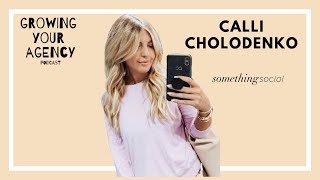
Callie Cholodenko started Something Social five years ago after a free consulting gig for a spin studio turned into agency work. Every client came through word-of-mouth with zero outbound sales. She handles social strategy, content, paid ads, and celebrity management for beauty, wellness, and lifestyle brands, tracking performance beyond likes to saves and user-generated content.
Chapters
Alright guys, welcome back to another episode of Growing Your Agency. Today, super excited, we have Callie Cholodenko from Something Social. Callie, thank you so much for joining us.
Thank you so much for having me.
Absolutely. So tell us, tell us about Something Social.
So we are a social media and creative agency based in Los Angeles, and we started a little over 5 years ago. And basically we work with brands on everything A to Z when it when it comes to social strategy, consulting, content, community management, platform management, influencer advertising, reporting, giveaways, takeovers, anything kind of in the A to Z of social media.
Love it. So talk to me, you know, 5 years ago, just getting started, like how did you get into this? And also how did you get your first client? Like how did you kick this off?
So the two things kind of happened simultaneously. I went to USC, I graduated in 2013, didn't really know what I wanted to do, ended up getting a job kind of through a friend of a friend, a little randomly, at a boutique social media agency. So at the time, that wasn't really a thing. I remember my first day on the job being sent to take photos of like a smoothie and a croissant, and I was like, what is this? How is this my job? And after working there for about 6 months, there's a spin studio in Los Angeles that asked me to do some consulting for them. And that turned into, hey, if we give you free spin, can you do a social media strategy for us? Which I hadn't really done at my other job, but I was like, sure, absolutely. So I made them a 6-month plan and I basically handed it to them to pass off to somebody internally on their team.
And this was on the side, this was not at the social media agency that you were— Correct. Got it.
Yes, correct. And they were like, this strategy is great, but now we have no one to actually do it and execute it for us. So they offered me a job in-house to do all of their social media and marketing. And at that point, kind of on a whim, I was like, rather than coming and working for you, I'll start my own business and you guys can be my first client. So that's how it all happened. Yeah.
And so the spin studio, I'm assuming you just like were going there. Like I'm always curious, like how you, like, why did they ask you? How do you know them? Like, how did that, like, what was that relationship?
Yeah, so I've been going there for a couple of, like a year maybe at that point, kind of obsessively. I was there pretty much every day. And they just heard that I was doing social media. And they brought in a new, an interim new CEO who met me. And when he found out that I did social, it was such a new industry at the time that there weren't as many people specializing in that as their career or as their day-to-day. And so I think when he heard, you know, social media expert, the light bulb went off and he knew that I was familiar with their brand, which I think was really important for them because it's so hard to come into a brand new business that you have no idea about and just, you know, get to know them, create their brand identity. So there was already a comfort level there with me really knowing their culture. And, um, you know, he played off of my spin obsession by offering me free classes and Of course they could have said, you know, no, I have to get paid. But I was like, great, this is awesome. This is good experience. And then look what it led to.
Yeah, that's so, that's so good. So fast forward now, uh, just keep continuing the conversation around customer acquisition. Obviously like that doesn't really scale, like going spinning at like a million different studios and hoping to get hired. So, so what are you doing now, uh, to acquire customers and clients?
Yeah. So fun fact for us, every single client we've ever got has been a word of mouth. A referral or somebody that has found us online and come to us. So we actually have never done any outbound marketing, any aggressive strategy, any sales. Really the only thing that we do from a marketing perspective is obviously our social media. We do have a blog, we put out a lot of educational social content. I also do various speaking engagements and workshops and things of that nature on the education lane. But outside of that, every client has always been a referral. It's always been word of mouth or somebody that found us on Instagram or found our website.
Got it. That's awesome. So, so what do you do? You know? All right. So they come inbound via referral, uh, whatever it is, what, you know, talk to me about your own, I guess, funnel, you know, are you, what is the next steps? Are you doing like an audit and kind of giving them, you know, a plan and then kind of saying, hey, do you want to engage us? Like, what is, what does your funnel look like?
Yeah. So I think, you know, this is something that's always been really interesting to me because I don't have a very, you know, corporate or strategic marketing background where you have sales funnels and you're doing webinars and then you're getting them in your course or, you know, whatever the thing might be.
Sure. Yeah.
It's always been a very organic process that at times I've questioned and said, should we be doing this a different way? But you know, it works for us. So typically whenever we get an inbound request, depending on the size of the business, it will kind of depend on you know, who internally handles that call. Typically it's myself or another member of my team. And we basically do an intro call. We set up a time to get to know them. We ask about their goals. We ask about what they're looking for. A really important question for us is, "What does success on social mean to you?" Because we could be speaking a totally different language and have no idea. So it's a really good way for us to align on expectations as well as the services that are going to get them there. And then of course the budgets. That's gonna get them there. So we'll do an intro call, we'll get to know them a little bit, we'll ask all of our fun questions, we'll let them ask us some questions, and then typically from there, it either is followed up by an in-person meeting with more members of the team, or we put together a tailored proposal for them based on the information that we gained during our initial intro call, and then we kinda walk through that proposal together. Make some adjustments as necessary. And then that's typically when we sign.
Got it. And then what are they, you know, what kind of services are they engaging you for? Is it like, I know you said it earlier, but like, you know, and let's say they're, you know, you're doing management and you're doing some ads and that sort of thing. Like, I guess, what do the services look like and how are you pricing those services? Is it flat fees? Is there, you know, is it based on number of hours spent and an hourly rate?
Yeah, so we do everything. We don't do packages or options. I tried to do those way in the beginning, and then I realized that every client and every brand really does need something different. So rather than doing, you know, gold, silver, bronze, whatever, we put together custom proposals for every client. Of course, internally we have a good idea and a good sense of, you know, based on the size of the business and also how aggressive they're trying to be with their social growth. What they're gonna need. And then budget plays a big piece into that. Are they at the level where they can afford all of our services? Do they need to start small because they're just starting out and they haven't gotten funding yet, or whatever the thing might be? So we do tailor our services to fit their needs, but most people come for strategy, content, day-to-day posting. Those are like, you know, the core, the meat of what we do, and then we get into advertising, influencer, brand activations, partnerships, collabs, things like that with our brands that are willing to be a little bit more creative.
Awesome. What, you know, so tell me a little bit about the types of clients you said, and I know you said some of them, you know, pre-funding. So are they, you know, startups? Are they direct-to-consumer? Are these like large, you know, large brands? Like what are the clients that typically are coming to you?
They really range all across primarily the lifestyle industries. So I think beauty, health and wellness, fitness, hospitality, hotels, restaurants. We have a nightlife group. We also do fashion brands and clothing. And then we also do everything to like a dermatology boutique. So it kind of ranges. And then we also have a talent side of our business where we rep celebrities and not really influencers because they kind of have a handle on what they're doing, but really just celebrities.
Got it. Awesome. And then, and then, so what do you do like for, for those celebrities? You're doing management and like posting, or are you doing more like brand deals and kind of that sort of thing?
So we're typically on the content and management side. So we're coming up with creative content ideas. We're working with them. You know, a lot of people I think come to us and say, you know, I have this big name, but I don't have a really consistent feed or consistent aesthetic. Meanwhile, That's on the celebrity side. Meanwhile, the influencers are coming in and they have beautiful content and stunning imagery and they're getting a lot of brand deals where the celebrity might have a bigger name, but their content doesn't tell the same story.
Sure.
Yeah. So a lot of them come to us to help develop what that story is. So we're doing content, we're doing the day-to-day posting. It's usually kind of a team effort when it comes to captions because obviously they're a person, they have their own voice, their own commentary on things. So we can kind of step in and supplement that. And then if and when the brand deal does come in, we're on the execution side of that. So they'll say, you know, this is the brand, these are the points, this is what we have to hit, and then we'll go ahead and execute that for them.
Awesome. So in terms of like engagement, I know you said, you know, you want to kind of like vet them just to make sure that they're able to like really engage you. So like in terms of that, are you, you know, are you guys requiring any types of like minimums or saying like, hey, you know, you need to sign, a 6-month contract, especially if you want to like see results on like the more organic and social side. I know that, you know, it's not like you're doing an ad buy and you can get instant traffic and conversions. So what type of, I guess, kind of like commitment slash, uh, you know, expectation management are you doing with your, with the clients?
Yeah. So we do work on a monthly retainer where we, again, we customize our fees and our fee structure, but we do work monthly. And then depending on, you know, if they decide to add services over time, then we can adjust for that as the scope changes. We don't do anything month to month because we put so much effort into the work that we do and we're typically working a month ahead and we just need to make sure that our resources are covered. So most clients sign an initial 6-month contract, sometimes it's a 1-year, it just depends. And then internally, again, you know, we know how many hours it takes to service a type of client. We know how many resources it takes on our end, what we're gonna be spending on content, on video, on bandwidth, on team members. So it's not that we have a minimum that if you don't pay us X, you know, you can't work with us, but it kind of is because based on the scope of work, you know, we know that it has to match.
Yeah, absolutely. And I think that's sort of like, again, kind of going back to what I was saying, like sort of like vets them and lets you know that like, hey, this, this client is in it for the long run and is willing to be able to like one, afford to, to kind of play it out. And also like has the time to enable it to actually like see results over, you you know, over a period, right? Because I think, you know, you would probably know obviously better than me, but like consistency and seeing that like, you know, consistent posting and consistent like, you know, aesthetic or whatever is key to a lot of the success here. What, so how are you reporting back to them? I mean, are you, do you have like reports? Are you sending weekly, monthly emails? Like, are you bringing in, you know, do you use like social tools that say like, How many impressions and page views things got? What does that look like?
Yeah, so we do send both weekly and monthly reports depending on, again, the client and what they care about. We do have clients that are like, we don't care, do your thing, you know, we'll, we'll talk to you in a month. And then we have others that I literally talk to every single day and it just depends. So we typically send smaller weekly recaps that's, you know, here are the stats from the week, here's the top performing post, here's a special call out, maybe an influencer post or a highlight of a key win that week. And then monthly we send more comprehensive reports. We utilize Sprout Social, we've used Iconosquare in the past, we also use the native analytics to each platform, and we put together essentially monthly reports that show growth, impressions, engagement. We also show any key user-generated content. We look at a lot of things that are kind of like reading between the lines. So, you know, there might not be a metric that says this is how many user-generated content pieces you got last month versus this month, but we internally are tracking all of that so that we're able to say, "Hey, a big win for us was that this many more people were posting about your brand," or "This many more people were using the right branded hashtags," or we also started looking at saves as a really key metric. How many people are saving the content that we're posting on Instagram to go back to it later? And if they're saving it, is there any consistency in what they're doing? So in addition to just breaking down the actual stats, we're then adding on our commentary, our findings, things that we did well, things we could have done better, and then recommendations for improvement for the next month. And I think that that's a really actually important piece of the social media management whole process, because at least from, you know, what I've experienced with clients, they really want to know that you're in there, that you're checking, that you're monitoring, that you're making adjustments. So it's, it's, it's an important piece for us.
That's awesome. Um, yeah, I've heard a bunch of people are using, you know, Sprout Social. It seems to be like a pretty, pretty popular tool. That a lot of people are using. And yeah, so in terms of like also just expectations with the client, like how do you kind of set those expectations so that, you know, they're not saying, hey, I want to grow, you know, this big or have this, you know, something kind of crazy, right? Like how do you manage those expectations?
Well, it's a conversation we literally have every day. It's one of the more ongoing, consistent, frequent pieces of my job, but I think There's a couple layers to it. Number one, it's ultimately what are your goals on social? Because yes, at the end of the day, everybody's trying to make more money. They're trying to book reservations or sell products or get their name out there, whatever the thing might be. But I think it's important for people to remember that social media is one piece of a marketing puzzle. So it's not going to be the end-all be-all. It is in certain circumstances, but for the most part it is one element of the overall approach. I also think it's something— social media is changing every single day. Like literally, if we were to have this call in a week, I would have different answers for you because there's so many things that change on the platform constantly. And I think people are really holding on to the growth that was experienced, you know, 3, 4, 5 years ago. Like, but that's been so— the only thing I had to do was post really good content and they grew, or do one giveaway here and there and they grew. And now it's just not the same. People aren't seeing the same likes, seeing the same impressions that they were 2, 3 years ago. So we're constantly having to manage this expectation of, listen, it's not that your content is getting worse or people don't care. It's just that there's hundreds of millions of people on this platform and other brands that have risen to the occasion and are doing a really good job too. So the competition is bigger. The audience pool is bigger. And of course there's so many wins to that and so many plus sides of this whole thing, but on the negative, we're managing the expectations of clients who aren't seeing growth as rapidly as they once were. So that's one piece of it. And then the other piece is just getting clear on what are the resources we're putting in to get what you're going to get out. So if you come to me and you're just starting off and you're starting from scratch and you have a little baby budget, The reality is you're not going to grow by hundreds of thousands of followers within a month. It's just never going to happen. No matter how active we are, how great the content is, how many partnerships and giveaways and collabs that we do.
What if you get married to Justin Bieber? Then will you?
Well, if you get married to Justin Bieber, you're probably, you know, set up. Probably good.
You don't care about the growth anyway. You're just good.
Right. So it gets tricky.
That's all. That's awesome. Um, all right, cool. So, so wrapping up, one of the, uh, so tell me, give us one thing. I mean, I'm asking you a question. What's one thing, you know, that you would say if someone's looking to kind of break into— you know, I know, I know you're really focused kind of in the social lane, but if you're just looking to break into sort of like an agency type model, like what's one thing that you say you have to do? It's, you know, it's no questions asked to, to be successful in, in this space, whether it's social or whether it's more general agency space.
I think in general, the first thing is to get really clear on what you offer and what you don't offer. We played a lot of this back and forth of, "Oh, well, we don't really do that, but sure, I guess we could add that as a service." And what ends up happening is you're kind of a jack of all trades and a master of none. And I think it's really important for agencies to get very, very clear on the 1, 2, 10 services that they offer. Know the ins and outs, the back and front of what those services are. Know how to clearly communicate them, and then get really clear on what you don't offer, and maybe you find a partner or referral source for those that you're getting asked, but just get very clear on what you're able to bring to your customers.
Got it, so stay focused. Don't say, hey, we're gonna do creatives, we're gonna do copywriting, we're gonna do social management, 'cause then you're just what, spread too thin, you're not a specialist. Spread too thin. Got it, got it, love that. Last question, we ask everyone this, what is your morning routine?
My morning routine. So I wake up pretty early, usually some days 5:30, some days 6:30, but in that, in that realm. I go work out and then when I get back from my workout, I do a meditation. I do a 20-minute meditation. I have lemon water and then after that I get myself ready for the day, hit my desk and I get going.
Awesome. Lemon water, like that. Lemon water. Are you still doing spin, spin as your, as your workout?
Not as frequently. I'm more on the Pilates train these days, but every once in a while.
Love that. Um, all right. Awesome. So where can people find you?
You can find me either my Instagram is @callie. You can find us @something.social and also on our website at somethingsocial-la.com.
I just, uh, stalked you for a second. I saw that you're followed by Olivia Culpo. So I'm really jealous about that. Um, but that's awesome. So Callie, thank you so much for joining us. Something Social, guys, another episode of Growing Your Agency. Callie, thank you so much for being with us today.
Thank you for having me.
All right.
More from Ryan

We Analyzed 500+ Contractors. Here's What the Most Profitable Companies Do Differently.

Employee Incentive Programs That Drive Team Performance and Profitability with Ryan Shank


Stop Losing Money! Ryan Shank of ShareWillow on Using KPIs to Reward Field Teams






