Cason Carter of Broughton Partners provides qualified claimants to lawyers nationwide
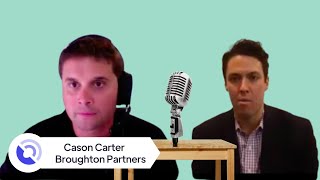
In this episode of the Growing Your Agency podcast, host Ryan Shank interviews Kason Carter, founder of Broughton Partners, a company that provides end‑to‑end marketing, intake, and case delivery services for mass‑tort law firms. Carter explains how Broughton evolved from a simple lead‑generation agency into a vertically integrated operation that owns the entire customer journey—from ad spend and call‑center intake to delivering a signed retainer to the law firm. The conversation covers the company’s risk‑sharing pricing model (law firms pay only for qualified cases), the importance of an in‑house call center and a 24/7 intake team, attribution and analytics (Salesforce as the core CRM, extensive call‑tracking, and a data‑driven pricing formula), automation tools (email, SMS, voicemail drips tailored to each case type), the shift from phone‑based leads to web‑form leads, and the organization’s scale (about 110 employees, 65‑68 call‑center reps, separate B2B sales, B2C intake, and QA teams). Carter also shares operational lessons, emphasizing culture, employee “energy,” and aligning compensation with upside, as well as his personal morning routine for productivity. The interview provides a detailed look at how a mass‑tort lead‑generation firm can mitigate risk for law‑firm clients while managing a large, people‑focused operation.
Chapters
All right guys, welcome back to another episode of Growing Your Agency. Today here with Kason Carter from Broughton Partners. Kason, thank you so much for joining us.
Yeah, man, thanks for having me. Glad to be here, brother.
Hey, super excited to, to have you on. So I know, I know you're running a pretty, pretty massive operation over there. Tell us a little bit about Broughton Partners and what you guys do.
Yeah, so Broughton Partners, we do marketing and advertising and intake for law firms, specifically mass tort law firms. So you see the commercials on television, Roundup, you know, if you have non-Hodgkin's lymphoma and use Roundup, you may be entitled to compensation. So we're in the mass tort space. We originally started off as just a marketing company, and in the very beginning, we were just trying to send leads to law firms. And I was working, moonlighting this project, and then I had a software company that I was really involved with that worked with personal injury law firms. And the whole idea behind this company was, had a buddy that was running a law firm and he knew how to market. And then I was working with law firms selling them, selling them case management software. And so it was kind of like a match made in heaven, you know, we were going to come together, I was going to use my customer base, he was going to use his marketing expertise, and we were going to take over that way. And of course everything takes 10x what you think it's going to take, right? You always think you're getting to something like, yeah, this will be easy, and it fucking— I mean, it was a colossal, um, colossal downtime, but we started getting revenue in the door. And, um, when we— I was living in Atlanta, he was living in Savannah, and at the point in time where he decided, or, um, we started sending leads to people, and we were sending good quality leads because we had phone tracking software on it, we could hear recordings. And people were just dropping the ball. Um, and at the end of the day, we realized that we're never going to be successful until we're actually taking the calls in-house. Um, and so right then I moved to Savannah. Um, we went all in on this project. We started a call center, had marketing in-house, had everything soup to nuts in-house. So our big thing is you never know how good a lead is until you can track that lead directly back to the source. Um, you spend, you know, 50% of your marketing dollars are wasted, probably more to be honest with you in most companies. And so until you can get that complete feedback loop going where you say, this keyword drove this case or, you know, this commercial drove this case, it's really pointless to do a ton of marketing because at the end of the day, which piece of your marketing dollars are wasted, right? Totally. I think that that's when we had the big shift in attitude. We went all in on building this infrastructure, and it was a lot more money than we expected. And of course, that's— it's 10x money that you expect to. And we went so hard in on that infrastructure though, and just hoping that it paid off. And when we finally got that infrastructure in place completely, and you know, we're still working on it, you know, between analytics and everything and getting that feedback loop perfect. But that's when everything really started to shift for us because we understood what was driving good quality cases. And so we're not just an agency in the sense that spend money with us and we drive marketing and leads to your company. Spend money with us, we go out and deliver a signed retainer for you. So as a law firm, you know, 3 or 4 person law firm that doesn't have the ability to take calls 24/7 or doesn't have the ability to have a full-blown marketing team, they don't have to worry about that. I'm going to spend $100,000, the agency is going to take 20%, 15%, whatever it is, and I'm going to get leads, and then it's my job to convert them. And so we really deliver that full package so that they don't have to worry about that. And they don't get a case until it is 100% a case, meets their criteria. And also, they only pay per case. So if we lose money on the marketing, they don't necessarily care because at the end of the day we agreed to this price per case and we deliver that.
So you guys— that's really interesting. So you guys are essentially taking the risk on the ad spend and on everything knowing that you're able to deliver a signed deal to the client and then they're only paying for that signed deal. So there's no downside for the clients?
For the client there's no downside and for us there's a ton of downside and we met that downside in the beginning, right? You get that until you get that right. And I think that's why, um, it's so hard to crack into the signed, um, case thing because you're taking all the risk on. And there was a lot of missteps we made along the way, and we still make a ton of missteps and learning from it every day. But at least those missteps, we could see and control what was going on. And so we just, you know, quickly learn from it and keep on moving. But, uh, the huge benefit to our clients is we take all the risk.
Yes, that's massive. You know, I talked to so many, so many marketing agencies, people doing lead gen that, you know, kind of stop at, hey, the lead was delivered to you, you know, now it's in your hands. And then there's like often, you know, a dispute between the— was it like, just like you were saying, was the lead good? It wasn't good. I couldn't reach them. You know, it wasn't qualified, that sort of thing. So you're taking all of that out of it, which is, which is really interesting. I want to shift—
and the hardest part about lead gen is converting the leads. I mean, I'll be— that is the by far the hardest part, um, because you got to be ready 24/7. You have to know when the leads are coming in, you have to know which leads to prioritize. So running the actual, um, the, the phones, the intake center, all that is by far the hardest part. If you're not tracking that, you're losing money left and right. I think— I know that's where you guys come in, and if people aren't doing that, they're making a massive, massive mistake.
Yeah, definitely, absolutely. So how do you train your, uh, your staff when they're, when they're coming, when the leads are coming in? You know, what kind of, uh, I guess, you know, special training do they need to know about like the space or about the cases that, you know, their, the clients are calling in about, the client's clients I guess are calling in about?
Yeah, so I mean, we do our, um, intake training program is 2 weeks long, um, and we make sure they understand everything, um, from start to finish because we're not just dealing with, you know, one single type of lead. We have different cases that we're working on, and a lot of times law firms come to us and they'll say, I want to work on this case. So we go massive undertaking to all the call centers to make sure that everybody's trained on that case. But that process is one of the hardest processes to get down because, you know, the person answering the phone is really the biggest piece of all this, making sure they're— they know what they're doing and they know how to take that call. Until you get to that point, it's really tough.
Talk to us about attribution. So, you know, these calls come in for particular cases and then, you know, you're answering them and then ultimately once you convert them, you're sending them to a client. How do you attribute the calls and the cases back to ad spend? What kind of tools are you using? What kind of systems do you have in place for that?
You know, there's a lot of our stack is so big, it's insane, but you have to have, you know—
So Salesforce is your core CRM that you're using?
It's our core hub and everything kind of is based off of that. But the, you know, at the end of the day, you know, the call tracking software is probably the most important piece so you can see where exactly each call is coming from.
So are most of the, are most of the leads coming in from calls, or do some people submit forms and then you guys are calling them back yourselves? How does that work?
Yeah, so we're about 60% web forms and 40% phone calls. That's taken a drastic turn over the last 3 years. When we first started, it was 80%. And it just shows where everyone's headed as far as where the market's headed as far as more automation, less interaction, that type of thing. And so we're starting to see that shift. And I think that over the next 3 or 4 years, you'll probably see it be 80% web forms, 20% calls.
Yeah, totally. Well, kind of talk to us about some of the automations. Are you using some texting drips? Or I know back in the day, I mean, you kind of worked together and you actually got me introduced to ActiveCampaign, which I think is really interesting. What kind of, uh, you know, automations and kind of tool sets do you use?
Yeah, I mean, um, emails, texting, voicemail drops, so your agent's gonna get off the phone quicker and move on to the next call. You know, as soon as, soon as a lead comes in, letting them know that you're gonna take care of them is always important through text and email. I'm getting to them right away. And so all that automation has to work together and figuring out that cadence of what works for what. Yep, it's so important. And, you know, on one case type, for us, it's not— we have different drips for every single case type because, um, there's some, some litigations we work on where people really respond well to, um, text and email, and there's some litigations that they don't. You really have to be able to pivot and understand that.
Yep, got it. Um, talk to us about customer acquisition. I know you guys have, have a pretty big— actually, tell us a little bit about how the size of the company, uh, just in terms of like headcount. I know you guys are are pretty big compared to a lot of the agencies that, you know, we're working with and we talk to. So tell us a little bit about, you know, team size, if you can share, and, uh, you know, kind of the breakdown of, you know, who's doing what in the company.
Yeah, so we have, um, I think we have around 110 right now, people. I think around, wow, 65 to 68 of those are call center, right? And so we're kind of unique because we built this all-in-one thing where we're, you know, we're taking the calls and we're also selling to law firms. So we're B2B and B2C. So we have an outside sales team that goes in, brings in the law firms, and then we have an inside sales team that closes the claimants to help send to the law firms. And so, you know, sales brings it in, sales brings in the deal, then marketing starts for that particular law firm. Start doing the marketing, leads go to the call center, call center closes, we call quality assurance and send them back to the law firm in one nice package with kind of, you know, a nice book, if you will, for the law firm to receive and know that that client's in good hands.
Awesome. Talk to me about pricing. You know, I know that you said it's based on the closed case. Is it, you know, a percentage of the deal? Is it a flat fee based on, you know, the cases? How does that work?
[Speaker:RYAN_SHANKER] So we do it at a flat fee based on the case, right? And so, you know, we're selling qualified retainers, qualified plaintiffs to these people. And so once they meet that qualification, we can sell them. And so our pricing is always up and down based off of the demand in the market for that particular litigation. But we have to be really on top of it in order to make sure that we're not putting ourselves out there for too big a deal. And then the price is going to go really wayward on us throughout that campaign. So, you know, it's— that is a very, very tough piece that you have to overcome.
Yeah, I know that. Look, I don't have a ton of knowledge about it, but I do know that, you know, personal injury law, tort law is some of the highest costing keywords and clicks that there are in all of Google. So I know that, you know, just for the clicks or to get from the click to the actual conversion of the lead and then to the case, you know, you're probably looking at a pretty penny for these converted cases. How do you predict it? You know, like let's say a new case is, you know, how are you able to see, hey, historically we've been converting at this rate? I would imagine there's a lot of data analytics that goes into pricing.
It's all data analytics that you're looking at. You're looking at what everything's trending. It's trending up at this percentage, and so we need to be here in order to make sure that we don't lose on this campaign. And there's been a lot of campaigns that we've lost on, to be completely honest with you. That's kind of how you learn and how you build out your analytics to be sharper and predict a little better and things like that. And so we have a formula that we run everything through to determine where we need to be at based off of the upward trend, the downward trend. All of those things take a play into it and we kind of just tweak this formula over time and it's taken a long time to get right. That's been the hardest piece to get right because there's still campaigns that we lose on but it's much less now than it was in the beginning and I think that's one of the hardest pills to swallow is getting to the end of the campaign and saying, "Holy shit, we're upside down on that." That's one of the biggest factors that you have to overcome in what we're doing.
You know what this reminds me of? It reminds me of the affiliate space actually. And you know, the interesting piece is that you guys own the customer and it sounds like you're doing all of the ad buying yourself. Whereas typically in the affiliate space, you know, the front-facing publisher is so far away from the end ad buyer, right? They're usually selling to affiliate networks and then there's a couple other middlemen and then they finally sell it to the end user. But it sounds like you're essentially doing it all from, from the beginning all the way to owning the customer. Is that right?
Yeah, yeah, exactly. And, you know, knock out a couple percentages along the way and things like that, which really helps us be competitive. But, you know, we're never going to be the— we're never going to be the lowest price person in the industry because we're actually selling a finished product or a finished— a client that's ready to talk to a lawyer. Whereas when you're working on leads and affiliates and things like that, You don't know how much you got to dig through. And so, you know, we're trying to bring a soup-to-nuts, ready-to-go retainer to our clients. And that's really important to us that they understand what kind of quality we're trying to drive.
What kind of education is involved in, you know, I would assume without price that it's a pretty easy sale to get a lawyer to come on board for, hey, I'm only going to deliver you a signed client, right? And then I guess price comes into play. So what kind of education do you have to do, you know, to the clients with the lawyers to show them that, hey, this price is worth the return on investment?
Yeah, a lot of it comes into play with them understanding the drop-off, and it took us a long time to overcome. Like, you know, we didn't have enough references and things like that. But once you build up that reference book and people understand that, um, you know, if you're gonna have a fall-off of 50% with an affiliate marketer, but you have fall-off with 10% with us, right? Um, you're never gonna be able to control fallout completely. But, you know, if you got 10% with us, then, you know, you're okay to spend, you know, 60% more, 40% more, whatever that is. And so that sale is really tough, but when they understand the quality, that's where you really, you really have to break down the quality and what it means with the follow-up.
Yeah, totally. All right, coming up on time here. A couple, couple final questions. What's one thing you know now, now that you're running, you know, 110-person company, 68 call center reps? You know, driving, driving closed cases essentially to legal firms. What's something you know now after running the business for a few years that you wish you knew when you were first getting started?
You know, I think the biggest thing is you got to be in the people business no matter what you're doing, and making sure that you have a happy team is really one of the most important things. At the end of the day, there's nothing that replaces culture in a business, and so losing that culture can be a slippery slope, and you really have to work hard on that. And so, you know, I tell people all the time that I'm not the chief executive officer, I'm the chief energy officer, because my job every day is to make sure that energy is right, that everybody's working together in cohesion, and really, you know, playing middleman between a lot of people a lot of times. And so, um, this old-school mentality of, uh, pay people and they'll show up and do their job, and I don't know why I can't get this person to do the same job that— or put the same effort in— because they don't have a piece of the business, dumbass. Like, you know what I mean?
Like, yeah.
They're not, they're not getting rewarded with the upside of the business. You have to understand who you're playing to, and you have to get to know them. You have to understand their wants, desires, and all those things. And so every business nowadays is the people business because the millennials will take $2, $3 less an hour to work someplace they're happy. And that's just the day and age we're in. And so this idea of I pay people an honest wage, I need them to show up for honest work, um, yes, there is some truth to you being honest with your employees and then being honest with you and then working hard. But you get that through culture. You don't get that through a paycheck.
Love it, love it. Uh, final question, we ask all of our guests this. What is your, uh, what is your morning routine?
Um, so it's not as good as what I'd like it to be, but, uh, I'm typically up at 6:30 and, um, I try to, you know, a perfect morning for me, and I'm always tweaking this to get better. I'm not perfect, but A perfect morning would be for me to be, would wake up, grab a shake and grab a, and read a chapter of a book or something, then hop in the shower and get to work. As busy as we've been lately and whatnot, I've been skipping all of that and just straight shower, straight to work. I try to listen to a podcast or a book on the way to the office. And when I get here, I try to get everything lined up from the day, from a meeting-wise or schedule-wise, and have my agenda set. And have my brain clear of all the to-do bullshit tasks. And that's a mixture of finishing it from, you know, 11 to midnight to 1 in the morning, and then knocking out the plan for the day a little bit the next day. If you don't get that 11 to 1 and you got a dinner meeting or something like that, then you better get to the office extra early. But my mindset is, by the time 9 o'clock hits and meetings start happening— because I'm in so many meetings throughout the day— I have to be clear-headed, level-headed, and know my plan for each meeting, um, because Meetings can be such a waste of time for people, and if you're going into it where you got 1,000 different things going on and you're not giving it full attention, it's a— you might as well not even have it. So I truly try to make sure by 9 o'clock when our meetings start, and, um, we don't have meetings before 9 o'clock, everybody kind of gets in and gets their day set. When 9 o'clock when our meetings start, I try to make sure there's nothing that's going to get in my way throughout the day, um, except for little fires that come up here and there, but nothing that I walked into the day with should be affecting my Love it.
You're just executing against the calendar. Awesome. Awesome. That's great. Case and Carter, where can everyone find you?
Uh, Broughton Partners. Casein@getcases.com. That's G-E-T-C-A-S-E-S.com. Um, and yeah, anybody hit me up on an email or whatever, I'll make sure to get back to you for sure.
Awesome. Thank you so much for joining us, guys. It's another episode of Growing Your Agency. Case and Carter, Broughton Partners. Casein, thank you so much for joining us.
Thanks, man. Appreciate it. Good time.
Yep. See ya.
More from Ryan

We Analyzed 500+ Contractors. Here's What the Most Profitable Companies Do Differently.

Employee Incentive Programs That Drive Team Performance and Profitability with Ryan Shank


Stop Losing Money! Ryan Shank of ShareWillow on Using KPIs to Reward Field Teams






