Ep 001: How Will Deane is Driving Millions in Sales For Clients
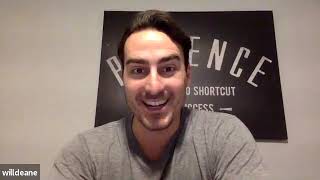
Will Deane, founder of Unstoppable, an Austin performance-marketing agency, built millions in client sales by tying every marketing action to profit and customer lifetime value. He rejects traditional agency pricing, uses closed-loop attribution across tools like Klaviyo and Criteo, and advises new agencies to start with free work in a single niche to build references.
Chapters
Alright guys, welcome to Growing Your Agency with Ryan Shank. Today, this is our first ever episode. I am delighted to be joined by the one and only founder and CEO of an agency in Austin, Texas called Unstoppable, Will. Thanks for being with us today.
Hey Ryan, thanks for having me. Super excited, heard a lot about it and you of course, and let's do it.
Yeah, man, let's dive in. So I want to just kind of give everyone a quick background of yourself. And before you give your own background, I just want to give everyone, you know, Will and I actually used to work together almost 10 years ago at a marketing company, SaaS company. And so we've known each other a long time and I've seen Will kind of progress throughout his career, go to some cool e-commerce companies. But Will, tell everyone, you know, I just wanted to kind of set the stage that You know, we, we've known each other for a while, but tell everyone, uh, you know, about the background and what you're up to now. Sure.
So yeah, Ryan and I have known each other for a long time. I'll mention the first company that we met, which is Yext, which is destroying it right now.
Crushing it, right?
Yeah, just crushing it. So we had a really good group of people that all went out and kind of did their own thing and became, um, kind of, uh, you know, unique in their own way and all in different markets. And so since then as taking this entrepreneurial journey, I launched a company in the e-commerce space. I ended up selling that company in 2014. What it, you know, we had 16 employees. What it got to take us there was digital marketing. So I really didn't want to become a marketer, but we've ventured.
And by the way, not to cut you off, but I remember when you were doing that, I used to tell everyone, I was like, man, my buddy found this niche, right? Emergency lights, exit lights, right? Selling direct-to-consumer emergency lights online. And I remember you were showing me I mean, when you first were starting at the SEO game that you were doing with the descriptions and stuff, and it's genius, right? And everyone talks about now about, hey, find your niche. People are selling even niche products. But I mean, like, that's a massive business though.
Yeah, man. I mean, every single building in the United States needs them. It was very weird how I fell into it. It's a whole nother story for another day. But everybody's going after this big pie in the sky, and what we forget to realize is that if you just own one thing If you become— try to become the top in one thing, you're going to be successful. And so many people are moving, you know, horizontally, not vertically. And by doing that, they want to be good at this, they want to be good at this. And what ends up happening is you turn, you know, 40 and you haven't dominated one thing. And the people that I know that are the most successful, whether they're brilliant, book smart, or come from a good family or not, the people that are the most successful have focused on one thing. And so, for me in particular, it was like, I had a buddy who kind of opened this world up to the lighting game. I went into it and we crushed it. Ended up selling it in 2014. And when I was building it, I figured, you know, the best skill for me to hone while going through this process is going to be marketing because that's something I can take with me after this. And, you know, obviously the environment's changed in the marketing world, but it's allowed me to kind of take that and help other companies grow their businesses. And just a lot of opportunities have opened up because I think we're at the forefront of the marketing space, whether it's paid traffic or it's, you know, influencer, whatever it is, data science. All of these things matter now. And because I— because of my past experiences, I was really able to take that, hone it, and start growing other people's companies.
So when you were at the emergency light business, you were basically the marketing guy there, right? You learned the game before that, and there I would say that's where you got your MBA in digital marketing. And then you were able to say like, look, what I'm doing here, I can apply to all these other businesses. And now you've created a company around just applying those marketing tactics. Is that right?
Yeah, I mean, very close. I would say when building the company, there was a lot of facets. So I trained the sales—
I don't wanna take it away. I wasn't saying you're just—
No, no, no, no, not at all. I mean, what I like to take away from that question is more so like, I hate the term agency just in general. Like I don't like that 'cause I think that it's more than just driving traffic. And a lot of people get this in their mindset that an agency just drives traffic. And what I learned in the past was more so building a business from the ground floor. So even when we talk to clients now, I don't just go, hey, I can drive you great traffic from Facebook or AdWords. AdWords or Bing or Gemini or whatever it is, I literally go like, what's your gross profit? Like, what do your margins look like? You know, what's your P&L look like? How's your business operating? Where are you putting your own money? Because that all ties into how we do it on the marketing side. And so I really take a holistic approach of why, why is your business successful? How could it become more successful? And then take that and use that as the feed into how we do our marketing, right? Because, because marketing is a chess game. You don't just move your best pieces right away. You actually have to strategically understand why you're going to go into a situation and then use the best tools at your disposal to make sure you succeed in that situation. So knowing every single part of the equation before you take your move is very important. And a lot of times a business owner actually doesn't know these things. So a business owner is so good at what they do, they might be product-focused, they might be service-focused. They just a lot of times don't have the know-how or don't, or just so tunnel vision that they don't look at things that every marketer or business owner should be looking at, like the P&L or like, you know, gross profit or talking down the margins to the manufacturer or whatever the case may be. And so, yeah, so I mean, the company that I built and ended up selling, there was a lot of learning experiences, but towards the middle end of it, it was really like, what's moving the needle? Sales, what drives sales? Marketing. And then I said, this applies to every business. There's not a business out there where sales doesn't drive the growth of the company. And then alternatively, marketing feeds sales. Not all the time for every company, but pretty much. And so I decided that's what I'm gonna focus on and that's what I'm gonna become the best at.
[Speaker] So you're focusing on the closed loop, right? All the way from top of funnel marketing to the sale, to the revenue, and then tying back, you know, the attribution and really the return on the ad spend to revenue though. It's so funny. I talk to so many marketers. It's also interesting that you say you don't like the term agency. I am starting to notice that you can be a marketer, you can drive traffic, you can do brand stuff, and you're like a marketer. You don't want to call yourself an agency, right? Agency has that stigma to it. And you know, you find a lot— I'm starting to see a lot of just even like freelance agencies, but they're just marketing guys, right? And they're able to use the tools that are out there, but so many people aren't tracking it to the sale. And I think that's what kind of gives some people, you know, some people in the industry a bad rep because they, you know, they're tracking it to top of funnel and they can kind of give these fluff, fluff numbers, you know. Talk to me, I guess, a little bit about, you know, so you work with what, e-commerce? What type of clients are you working with? E-commerce? Okay. Yeah.
So, so, and that's a part— that's a really good point. So I would consider myself a performance marketer only because I think churn, unless you're dealing with like a brand like Adidas or Red Bull where you're not going direct to consumer, you're kind of just doing brand awareness plays, which are great. Have that client, more power to you. Like you don't have to worry about the sales bottom line and you just have to tell someone a number and they pay you every month and all you have to do is improve click-through rates. Great, you did a good job getting a great client. But my whole thing is you gotta be able to show your value or you're gonna have a fast churn. Like my relationships, sure, people love me, that's great. My relationships are wholeheartedly dependent on what I can do. And the way I say is I'm your best salesman. My team is your best salesman. And so we track all the way from top of funnel to the bottom and then even lifetime value. And there's times, this goes for a lot, a lot of people only think about front end sales right now. They're like, oh, Facebook, oh, Google, like how much did you make on this much spent? Great, but we need to—
for sale number one, you mean for sale number one?
For sale number one. A lot of people, business owners, are not even looking at what's their lifetime value, what's their repeat customer rate. And, um, it's funny because we eventually are like running their business for them. Now again, I'm not, I'm not trying to say, oh, we, we run the businesses better, but we start to have to look at all these numbers to prove our worth or our value when we're destroying it. And not because they don't think we are, but because They're not looking at it holistically like, hey, even if we're just doing 2x ROAS across the board on marketing spend and maybe we have like 10% or 20% left in net profit, which is great. And what truly is the net profit of the customer of the lifetime value, right? People aren't looking at that.
And it's interesting. It's fun. It's— so one of the things too, it's not just reorder rates, right? So it kind of depends again what industry, product, that sort of thing, but like, so that customer customer, let's say just for instance, they buy a ticket from your website, it's a ticketing website. They might go to 3 games that year, 3 concerts that year. But the other thing that we're starting to see is people either using assumptions or if you can get the data saying like, what if that happy customer, like how many people do they refer? And that all ultimately should get attributed back to you, the marketer.
It should.
Yeah.
We're like, again, business owners are looking at it from one dimensionally when they really shouldn't. They should really look at like the starting attribution. Touch, whether that's, you know, we're even sending postcards out automatically now in our drip sequence. So like, we're literally, someone purchases, like someone will purchase one of these canvases, and then in the drip sequence—
Is that a client of yours?
Yeah, so that's one of our clients, that's Iconic. I'm not sure if you're familiar with them.
The one that they just, I see them on Instagram all the time with the motivational canvas art. Yeah, they just— didn't they just raise, uh, um, some money from Gary Vee and Scooter Braun?
Yeah, so they're, they're dialed in with those guys. Um, you know, and Mark, he's one of the owners. He's been my best friend since college. So like, yeah, I don't consider them a client. I just consider them like we're, we're a team with them because we've been collaborating for years. And so sure, they got to a point where they were doing so well, they really wanted somebody call it in-house, which is basically what we are for them. We're basically all a team. My team is their team, vice versa. They're actually coming out to Austin this weekend. And, um, you know, having an agency can get you so far, but I think when you have your team dialed in and super focused, um, it just takes it that much further. And with these guys in particular, uh, it's a very interesting life cycle, very interesting customer life cycle, um, return customer rate.
You got— that's what I was going to say. You got to think with that, that the, uh, that, you know, there's gonna be repeat purchases. I can't imagine someone who's a happy customer buys just one piece of canvas in their entire, you know, one piece of art, um, in their entire life, right? There has to be, you know, additional. By the way, um, what are you talking— talk to me though about, you know, how you're doing it. I know a lot of agency owners are going to be listening to this and wanted to know like what tools. You said you're sending postcards. I actually heard about some pebble posts and some programmatic, you know, sending of cards. Talk to me about tools you're using. How are you reporting to them? Because it sounds like this is a major pain point, by the way. Again, I talk with a lot of agency marketers and like, how are you proving to them what you're, what you're getting for them?
So, so first and foremost, I like educating the business owner as much as possible. I think that, um, a lot of agencies or marketers, they stop after they get the deal and they just go and execute. And I think that part of your job as a marketer is to also educate the business owner to help him grow. Like, help him grow. He doesn't need to know how to use Facebook ads or Google, but he needs to understand why they're important. And he needs to understand that there's like times you're gonna have non-attributed revenue, that he needs to look at like the whole accounts as a whole versus just one channel, because Facebook might feed AdWords brand lift, right?
Yeah. So education, totally get it. How are you doing it tactically? Is this a deck you're sending someone? Is it— Yeah, so it's—
It's a large conversation that we have openly. I'm very, very transparent in like what I'm seeing, what they should or shouldn't be doing, tying into their bottom line, what type of revenue they're bringing in and how to fix certain equations. Once we establish like what needs to be done and what was working in the past, then we typically just start on Facebook. Facebook, if it's a consumer product, Facebook is our best. We'll start buying our brand keywords and terms to make sure that we're capturing traffic that's going back and searching.
And as you're buying brand, so doing a brand campaign on AdWords.
Yeah, exactly. So like, right, I don't use AdWords right away because AdWords is going to be a higher cost per click, even though it's intent-based. Yeah, it's super expensive, but like, I'll use them as an example.
I would never search for that, but I would buy that.
Well, you don't know what you're searching for. That's it. So like, you might search dorm room art, but then you see 50 pieces, you don't know what you want. And so Facebook is a perfect platform for a company like this because you're doing a lot of intent-based searching, or sorry, interest-based searching. And then you take that out and use lookalikes, but then past Facebook, there's other platforms like Taboola and Outbrain and some content marketing channels that we utilize. And then making sure that you're tracking the attribution properly. So we use Klipfolio for reporting, for our reporting. So basically, we use Tableau for our internal reporting.
Sure.
Yeah. Um, like for our client, we're tracking everything from our email marketing, all social channels, uh, all paid acquisition channels.
Are you using ActiveCampaign for email marketing still?
No, we're using Klaviyo.
Uh, so, so interesting. Okay, cool.
Klaviyo is more so the e-commerce, uh, platform. And then we are doing some personalization as well as some super high-level segmentation. I think that that's actually something people really miss right now. Everybody, and actually I'm in the process of writing something about how no one knows what the fuck they would do if Facebook died.
Yeah.
So like, everybody's so used to Facebook's algorithm actually making the decisions for them and finding the customers, no one actually, people start forgetting like what true marketing is.
Yeah.
And because they forget what true marketing is, they stop utilizing all these other platforms. And they just, a lot of these marketers actually wouldn't know you know, their right arm from their left arm if they actually tried to start driving traffic from Traffic Junkie or driving traffic from Nativo or any of these other places. And they forget how to do really good marketing. And so, yep, that's kind of the point is that you need to establish where your lowest-hanging fruit is and then you need to see what's working and then you need to extrapolate that across channels that you know your audience is living on. And then try to heighten the brand as much as possible while taking the conversation offline. When you take the conversation offline, you own the customer base, like whether it's email, whether it's SMS, whether it's postcards, or any of these things, and then you can create personalization. So what I mean by personalization is that you're different than me in the sense of what you want and what you're going to buy, and I need to figure that out, whether that's in the form of an ad or that's a form of a landing page I bring you to. I need to start segmenting out that audience, really figuring out who they are, creating subsets in our email capture so that I have 400 segments in my email. And when I send a blast, it's not going to everybody.
So, and you're moving customers. So they'll start off in one, if they like, you know, buys one, they'll purchase one time. Then you can send it to like greater than one purchase but less than two. So you can start to do kind of move people into like buckets like that. Yeah, that's awesome.
Like, all like auto segmenting is— I'll give you an example. So call it lead scoring, call it auto segmenting. Let's say I send a post out that has 4 images, and I know— and we tag those images with different demos that we understand: men, women, likes beauty, you know, working out, whatever it is. And they click through one of them. Well, I'm adding auto tagging them with that. And so I can create these buckets on the back end to know what what they like over time. And I create a very robust picture of who our audience is, and then we speak to them directly. And the click-through rate, the conversions, the overall acquisition, how we marketed them, just, I mean, the return on ad spend and the return on marketing is just 10x versus just doing it the old school way. Now, it's interesting to me. I think there's so much opportunity out there because people are just used to, if you have a good product and a good company and you send an email blast out and you do 10K, you're happy. Nothing wrong with that, you're happy. But what people don't realize is that you could probably be doing 30 or 40K. You just haven't taken the time or the know-how to really deep dive into who your audience is, survey them, and really get to know them. And so that's kind of the next level at what we do, that's what we do with Iconiq. As I said before, they're more of like a, You know, we're more of a one team than the, uh, relationship. But that's kind of my world and how I report on everything and how I kind of help scale up clients.
Love it, love it. Um, so, so just quickly, uh, tell me a little bit about, um, how you charge your clients. Um, you know, are you doing percentage of ad spend, retainers? Is there tiers? Talk to us about that. I think a lot of, you know, pricing is, is a huge conversation that I see all the time. I'm in a lot of groups with marketers and agencies, and I think, you know, they're all trying to figure out pricing. So talk to me a little bit about that.
Yeah, so first and foremost, even before pricing, I establish a personal relationship with them, and I'm also very transparent. I pretend like I'm the business owner, so I actually understand what they're going through, and I understand that a lot of people have been burned, and it's not my intention to burn anybody, and we never do because I approach the situation like this, like, hey, look, If it doesn't make sense and it's not working, like, we'll part ways amicably, right? But that's never been the case because I always do my research. I always do everything to make sure that we execute on the top level. And so when it comes to pricing, you can't fit everybody into the same box. Just like the second that I hear an agency go, here are our rates and our services, I'd walk out the door because we're not the same company as the company before. Different market, we have different CPCs, we have different cost per thousand impressions. So like you can't just bundle your pricing. You should have a good idea of what it costs to operate your business so that you can price accordingly and you don't spend money on— you don't lose money on your time. But you need to price based on what you're going after and you can't give a price before you get a full deep dive on the business and look under the hood. And so in terms of pricing, we range anywhere from $5K a month to $20K to $30K a month, honestly.
But is it all retainer-based though, or is it— so it's a percentage sometimes?
I don't do percentage of spend. I know there's a lot of companies out there that do percentage of spend. I just don't think that makes any sense. Like, it's great for the business— I mean, sorry, it's great for the agency, but it doesn't make any logical sense to me.
Like, got it, got it.
Like, yeah, I mean, you could work with a venture-backed company that's willing to spend $100,000 a month and you get percentage of spend, but if that $100,000 isn't profitable, like what the fuck are you doing?
You know what's funny? Like, that's actually like, and I just thought about this, it actually is more beneficial to the agency if you spend more because they just get more data, they can optimize better. It's not like it's extra work, it's actually like easier for them, arguably.
I mean, maybe I'm wrong. No, you're right. I just think that you're absolutely right, the more data the better, but I don't understand percentage of spend and maybe I'm just seeing this the wrong way because I pretend like I'm the business owner. I don't care if you have $20 million in your bank and you're giving it to me to spend. I know one thing, that you're gonna have a perception based on results. It doesn't matter how much money you have in the bank, you're still going to have a perception based on the amount of revenue I'm driving to the company. And so my goal, my goal is to alleviate that by not just doing percentage of spend. I mean, literally I could go and do a broad targeting and I could just spend all of your money And that would be— obviously people are working hard for it, but I actually think it disincentivizes the agency to get results or be in the trenches. Got it. So I don't do a percentage of spend. I will do several different things. So flat fees for some that just want flat fees. We do flat plus a percentage of sales, top line sales.
We do. That's great.
Um, some are, some are big sticklers and they want to see like actually attributed sales, which depending on the client sometimes we'll do. But the problem with that is that there's a lot of non-attributed sales that happen. Like we'll drive tons of traffic on Facebook and then all of a sudden we'll only be able to track, you know, $200K to Facebook, but there's an extra $100,000 that came in that month. They'll be like, well, you know, you're not tracking it back to Facebook, but I know that.
Yeah, or they see desktop Facebook, they search on their phone, you lose the tracking.
Yeah, we literally were at Facebook, um, 2 weeks ago we had a meeting for Q4 with them in their offices and they were like, you know, it's funny, the majority of our marketers' revenue actually comes from not from Facebook. It comes, it starts on Facebook, they see an ad, but most people are actually, they'll see it, if they don't click, they will come back and search somehow and that becomes revenue. And so, you know, so there's flat fee plus percentage of sales, flat fee plus percentage of attributed sales. And then we're very interesting in the sense that we're always open for other opportunities. If we see a product that works really, really well, you know, there's just a lot of ways to slice it. So number one, we always value our time internally. So we have to have some sort of a base to make sure that my team is available to work and do things. But then we really like to align ourselves with the company's best interest if we think we can crush it. And then that makes them feel better. It helps them know there's an incentive on our side, and that's kind of how typically we structure our rates.
Awesome. So a lot of it is based on scope of work. It's not just flat fee. It's not just— there's a lot more that goes into it in terms of like the actual work that you're going to be doing. A lot of times though, you will tie it into sales and it'll be performance-based, as you said about the agency or your marketing company in the beginning. All right, so just 3 questions at the end. First question, Couple tools, what are some tools that you just started using that you're in love with?
Let's see, so Tableau, Tabula, Tableau, it's a marketing reporting tool that my data science guy uses. It's really, really powerful, allows us to really chop up some of the data that we're seeing on the backend, make some informed decisions. Klaviyo is awesome. If you're in the Shopify game and you're not using Klaviyo, you should, Plan Traffic because it's a really good email marketing tool. However, we're using, we're looking at some other stuff for personalization like Drip, very similar to ActiveCampaign. And then let me give you one more tool. Criteo. I play around with Criteo a little bit. It's a marketing advertising platform. I wouldn't call it a tool, but it's one of those things that does a really, really good job of picking up some of the, um, the, the leftovers, um, around the internet. It's really good for brand lift as well. So those are 3 tools or 4 tools that I would recommend to anybody.
Love it. Second question, talk to me, what's your morning routine?
Morning routine, wake up at 6, um, I try to get my energy going right away because I think creating some form of positive element in your world establishes the day. I know Jocko Willink says like make your bed because make your bed, you accomplished one thing. Once you have a sense of accomplishment, you're like in a whole different mind frame. So, um, I like to get up, either go to the gym or run real quick. Um, that just like puts me in a mode of like positivity versus like, you know, just kind of lingering. So that, that's, that's my first step in my morning routine. And then I just literally go right to work. So I just got it.
I literally just work up at 6, do a workout, go right to work.
Well, right there, there's no like meditation or any of that.
I just watched, uh, Casey Neistat just, uh, released a video like 2 days ago on like why you should wake up at 4:30, but he wakes up between 5 and 7 AM every single day. Does something similar, uh, puts his kid— kid goes to school, then he runs, runs and goes to work. He runs like 15 miles a day though.
But dude, I mean, I'm telling you this, like, it's, it's so cliché because everybody says it, right? Like, oh, you read about Bill Gates, you read about these You know, everybody says it, but one of the best quotes I ever heard— I don't even know, it's a quote a buddy of mine said. He's like, you never meet an unsuccessful person at the gym at 5 AM.
Right, exactly, because it translates over. You're not just successful in one area of your life, or, you know, you're not just killing it at the gym at 5 and then like a piece of shit all day.
It's discipline, right? Yeah, it's like discipline equals freedom. So it would— it's so resonated with me.
It's like, I've never heard that. That's good.
It's like, holy shit, like, you're right. Why would— how could you meet an unsuccessful person at 5 AM at the gym? So yes, that's good.
I might, I might dice that for some micro content. And then last question, if you were just starting out, how would you break into the marketing scene?
How—
what would you do if you wanted to, to break in, get clients, and just start off?
If I already have my skill sets and you're saying to get clients—
already have— I'm not saying a course. Yeah, exactly.
What would you do? Yeah, um, I would do it for free. I would do it for free or, or just percentage of sales.
Or an agency— contact an agency and work for them for free.
Either an agency or a customer, a client or customer. Literally, that's how I built it.
I love it.
That's how I built mine. I mean, I had people coming to me and working with me, but they weren't big people. And then one came to me and I was like, I'm just gonna destroy it for you and give you everything I have. That led to an intro, that led to another intro. I've never prospected for a single client. It's It's all been personal reference, and it's because I busted my ass. I think this goes back to something I said at the very beginning. A lot of people move horizontally versus vertically. A lot of people are afraid to put all their eggs in one basket or to go all in on something, or just kind of like, I don't wanna work that hard, but it frickin' pays off. There's no easy way to do things, and if you keep looking for the easy way, you eventually won't have accomplished anything. So at the very beginning, it was like, fuck it, like, I'm just gonna grind this shit out and I'm gonna do everything in my power because if I'm not successful, they're gonna see that my work ethic was something that they liked. And that turned into my first best client, which turned into everything else, which I use as a framework to build my agency.
That's amazing, love it. Will, thank you so much, uh, for being with us, guys. Will Dean, Unstoppable Agency, Austin, Texas, performance-based marketing agency. Uh, if you want to check him out, link to his website is going to be in the description. Thanks, man. Appreciate it.
Absolutely, Ryan. Thank you.
All right, later.
More from Ryan

We Analyzed 500+ Contractors. Here's What the Most Profitable Companies Do Differently.

Employee Incentive Programs That Drive Team Performance and Profitability with Ryan Shank


Stop Losing Money! Ryan Shank of ShareWillow on Using KPIs to Reward Field Teams






