Ep 015: Joel Black Sold His First Agency And Is Back At It With L7 Creative
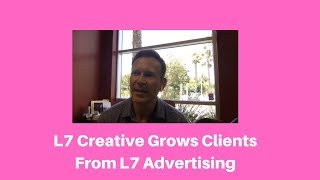
Joel Black sold his first agency and launched L7 Creative with a two-tier model: L7 Advertising charges $800/month flat-rate for small businesses, while L7 Creative handles larger brands with strategy-driven retainers. He uses automated Google Data Studio dashboards for weekly KPI reporting and SharpSpring for CRM instead of HubSpot.
Chapters
Alright guys, welcome back to another episode of Growing Your Agency. I'm your host Ryan Shank. Today, super excited to be joined by Joel Black, L7 Creative. Joel, how's it going?
Oh great, yeah, thanks for having me, Ryan. Appreciate it.
Yeah, absolutely, absolutely. So talk to us about your role at L7 Creative. From my understanding, you had another agency before this and you sort of like, you know, got brought in to help them grow the business. I'm curious to hear hear your story and what you did in your previous role and then how you kind of parlayed that into your current role.
Yeah, absolutely. So, you know, out of college I started a— oh geez, back then it was just a graphic design agency, printing, you know, designing flyers for real estate agents. Pretty much owned the Atlanta region. You know, I would design flyers, print them out, go stick them around those little boxes for the real estate agents. And that was, that was going great. And then, you know, the 2007-2008 hit, the whole real estate mortgage industry got crushed. I kind of got crushed with that. And from there, I had to figure out, hey, you know, things are kind of going digital. Nobody's printing, nobody's Nobody's valuing creative like they used to. Yeah, everyone's trying to go online. So, um, you know, we had to adapt. We had to learn web, we had to learn social media, we had to learn content creation, you know, all the, all the things that came out of that. And we kind of morphed into this full-service digital agency in Atlanta and kept growing, brought on marketing automation, made partnerships. With all kinds of software providers, kept growing our client base, and there was a bigger company out of Florida that was coming into the Atlanta area, and they were kind of looking for a strong agency presence in Atlanta, and kind of approached us and asked if we were interested in being acquired, and we kind of looked at everything, and it all made sense. And so, kind of stepped out of that role, stepped out of that company, and started looking for the next thing, you know, another company that I could walk in the door and help grow with all the experience I had with the agency in Atlanta. And I found that one of the great places of Southern California, you know, sunny and 72 every day. And, um, L7. Yeah.
Where are you guys at in California?
Uh, San Diego, San Diego, Southern California. Uh, weather's awesome. Um, you know, people are really great out here.
Yeah.
Um, you know, found L7 and it aligned with everything that I've been doing in the past, uh, full-service digital agency. Um, and I thought that I could walk in the door and make a difference. And that's, you know, that's what I've been doing since I've been here.
That's all. Have you found that you were able to apply a lot of the learnings from, you know, the previous agency? To L7, or, you know, and the reason I ask that, I guess the alternative would be that, you know, things are changing so fast, a lot of the tactics, tools used have evolved, or has it been kind of a pretty seamless transition into applying the same playbook?
No, it was really great, 'cause we've combined our playbook. You know, they were really great at, you know, half of the things, and I was really great at half of the things, and it was so awesome to put two agency owners together for one common goal and kind of mesh those playbooks and mesh the softwares. We got to build off of each other's experience. Tom, the CEO, and I kind of got to build off of each other's strengths and experiences, kind of create this one strong presence and have everybody going in the same direction here. So it's been really awesome.
And how big are you guys today in terms of number of employees?
Around 15 people.
15 people?
Yeah.
And is that mainly, you know, sales account managers, or is that people that are doing copywriting and design and kind of like fulfilling creatives?
Yeah, we have everybody here in-house. We've got the sales team, we've got the project management team, uh, we've got the creative team, we've got the web development, the paid search, the, uh, the copywriters. So we have the whole team, right? Even video. We have a whole video arm. So, we've got everything right here and that's one of the cool things is that the agency in Atlanta, we did a lot of things but we didn't have the video piece and that was always one of the pieces that I was missing there.
I love video, by the way. I think it's so fun, it's so— everyone's watching video. You know what's funny? I'm in New York, I saw this homeless guy today laying on the sidewalk just watching a video on his iPhone. Just like laying down watching video. I'm like, everyone's watching video.
Everybody loves video.
But yeah, I think it's like, I believe a couple years ago it kind of crossed as like the most consumed, you know, medium is on mobile is video now.
Yeah, yeah, absolutely. And it's— video is hard, you know, I mean, for me anyway, it's hard. There's a lot of people out there that It's easy for it. For me, it's hard. I know, and I preach every day in the agency, we need to be creating more video, and then we all get together and say, "Let's do a video," and then it's like we freeze up. So that's one of the things that, you know, I've always— that we're always working on as an agency because it's time-consuming, you know, to put together a script for everybody, kind of practice, do the production of it, and do the post-production of it. So it's, you know, it's tough, but it's one of those things that makes a difference.
Absolutely, absolutely. So I want to kind of dive into sort of the, you know, the operations around, you know, acquiring clients all the way through retaining and, you know, expanding and getting referrals and stuff. So when you guys, you know, how are you guys acquiring clients today?
So it's really, we use every channel. We've got kind of a 360 Holistic view. So, you know, we're using every channel available. We're using social media, we're using content creation, we're using SEO, you know, we're using paid media, we're using LinkedIn a lot, just kind of connecting with the right people that, you know, to start conversations. We're out kind of networking, just getting plugged into all the local business people. Sure. It's using everything available.
And then what is, you know, what is the hook, I guess? So like, let's say you kind of like can get to someone. All right, I got your attention. Is it a site audit? Is it, you know, a full kind of holistic audit? Like what I guess is the magnet that kind of gets you to deliver something of value to them that kind of would, I guess, you know, push them onto the next stage, if you will, in the sales cycle.
Yeah, so it's research, you know, if they're doing paid media, it's, you know, getting them to let you take a look inside.
Do like an audit of their Google Ads campaign?
Kind of look at the Google Ads, see what's happening, if they have conversion tracking, if they have analytics. It's kind of peeking in, looking, and kind of seeing what we can do to help, you know, get a better ROI, to get a better conversion. You know, figuring out the goals, what they're looking for, and just figuring out how we fit in to help them. If it's a website, you know, it's just taking a look at the website, looking at the competitors. You know, if, if they're searching for one thing and they're finding your site, what do the next 3 options look like and how do they function? And coming up with kind of a strategy and a plan. So I would say our hook here is really the strategy. It's how are we going to do it, and, um, you know, what's that going to look like. And so just kind of putting out a plan in front of the person, in front of the prospect, in front of the client. Sometimes they'll take that and they'll go off and they'll find someone that'll do it cheaper. But, you know, the people that really appreciate what we've done for them, as far as doing the research and, you know, putting out a kind of a baseline of a strategy. Those are the ones that we want to work with, and, you know, sometimes it makes all the difference.
Yeah, we say that, you know, the ones that go and find it, find it, find a cheaper provider for the plan that you put in place, it's like they're not going to be good clients anyway. Most of the time, you know, they're going to be time-consuming and then most likely churn. So it's almost like kind of eliminates that upfront. They almost like, you know, just qualify themselves as being that, like, good long-term client in the first place. So what's your pricing pricing model? I know I talk to a lot of agencies, they'll do retainers, percentage of ad spend, a combination, project-based. I'm curious, how do you guys price?
Yes, so we have a few different ways we price. So, we have another sister company called L7 Advertising, and it's kind of flat rate, month to month. I wouldn't say retainer, but it's a retainer model. It's a flat monthly rate. Per month, and we're going to do the paid search, the paid social, manage the paid channels, and that's for more of the kind of small business client.
Service-based businesses, HVAC, plumbing, pest control.
Yeah, absolutely. The main company, L7 Creative, is more or less that strategy top-down type, you know, we're going to put together this strategy first, and then we're going to do all the thing— all the production work to work the strategy.
Yeah.
And that's, you know, retainer type, um, monthly retainer. Or if it's just a website project, or if it's a branding project, or a creative project, then it's just kind of, uh, you know, project-based work. So we kind of hit all the models.
Yeah, yeah, yeah. And then, um, does it kind of vary based on, like, let's say someone's spending, you know, $30K a month in ad spend, like do you sort of have, uh, do you just kind of, do you have like tiers essentially? Um, or is it still just based on like services provided regardless of spend?
No, I think, you know, we kind of look at that $5,000 a month spend. If it's under that, then we feel like that's a great L7 advertising client, flat monthly rate. Um, because we're going to get in there and the main goal is to use that budget as wisely as possible and get the best results for it. Over a $5,000 monthly ad spend, then we think we can really help with strategy, with creative, kind of building out campaigns that are more long-term focused. So we kind of use the two companies together to kind of segment our prospects and our clients.
Got it. And then when someone does come on board for kind of whichever arrangement, what is You know, what are the deliverables— not deliverables necessarily, because that obviously is based on, you know, whatever, you know, services that they get, but more of like the metrics, you know, are they looking at a total lead count or web leads, calls, you know, total leads and then like a spend and then kind of back solving into a cost per lead? Or do you give them the nitty gritty, like, you know, cost per click and, you know, conversion, you know, uh, conversion rate, uh, uh, on site? What is the deliverable, I guess, to them in terms of KPIs?
Yeah, you know, it's different for everybody. Yeah. But, you know, it all really is kind of the same for everybody. You know, everybody wants to know how much they're spending.
Yep.
And how much they're making off of that spend. You know, a lot of times we just like to ask clients, you know, what's— if it's— if you're selling a bottle, you know, what's the all-day number for that, for, you know, your spend on that bottle? If the bottle is, you know, water bottles, you know, there's some really cool water bottles out there. Yeah, there are. I'll say one in mind, you know, kind of Bluetooth, all the bells and whistles, it's $80. You know, what's the all-day number on that bottle? If I had somebody right now that would pay you $80 for that bottle, but you need to pay me $10 to bring you that person, would you do that? And some people will say, "Oh no, no, I would never do that. I could only spend $5." Well, then you know, all right, that's our goal. We need to bring you people for $5 that will buy that $80 bottle.
So you back solve into a target cost per lead kind of before, before really even like running the campaigns, just to say like, hey, what's our, what's our target? Or is that more, is that kind of like a little bit further down the road once you started to like see what, what the results come in at?
No, we try to figure out what the target is right up front. Yeah, so we build campaigns trying to hit that target, and then once we figure out, well, how much traffic do we need to send to the site, what kind of conversion rates are we getting, and then we figure out what the actual is, then we can start, you know, making database decisions and setting expectations with the client that, hey, it's just not going to happen where you're going to sell this bottle with a $5 acquisition cost, you know, it's more like $15. So is $15 worth it for you to sell this $80 bottle?
Yeah. And, and, uh, how much education are you doing, you know, to the client or with the client in terms of, you know, hey, acquisition costs versus like what's the true lifetime value? Like if that bottle, you know, is $80 and we bring you a customer, is that really just one customer or do they buy a bottle every 2 years? You know, are you kind of doing any of that? With the clients?
Absolutely. You just did that right before I walked in here. Okay. Just going through that same exercise, and, and our target was $8. I said, yeah, but what if that person— and this person, this product, they are gonna buy a second. So now the $8 just dropped to $4. And come the holidays, they're probably gonna order this for some of their friends too. So that $8 just kind of dropped to $1. So do we really have $8 to get you this client?
Yep, yep, totally. I, I, uh, I see it happen. I know a lot of times, especially with like dental client, like dental companies, you know, it's like they'll, you know, they'll think of like, you know, at first, hey, you know, a visit's like $200, you know, so I can't— I can only pay, you know, $40, whatever it is, right? $40 for, for a client. But it's like, no, no, that's like a first-time visit, you know, dental, like LTV of, uh you know, dental customer is actually like, you know, 10 years or something like that. And same thing with like even recurring, you know, subscription businesses or recurring visits like a pool, right? Like a lot of times people will get someone, you know, that comes out to their house to like clean their pool, but then it becomes like a recurring thing, you know? So I think, yeah, the education piece feels like it's really important, and I'm always curious, you know, like what everyone's relationship is with their clients and how do you, you know, like educate them on that.
Yeah, especially in that dental kind of example because you lose all the people that that dental client is, that client is going to tell about, that customer. So they're going to tell their friends down the street, hey, you need to go use my dentist.
Yeah.
And they're going to tell, you know, people at school, what dentist do you use? Their kids are going to tell other people. And so that one person, yeah, they're not going to come just that one time. They may come 10 years, which is maybe 20 times. And then they're also going to tell 20 of their friends that might come 20 times.
Yeah.
So you just lose all of that in any kind of analytics, and it becomes just education to the client and them trusting you.
Yeah, exactly. I feel like they, uh, kind of like that Attribution for referral, you know, and kind of this like offline is still like difficult to predict. You almost have to like model it out and say like, we know with, you know, X percentage of certainty that, you know, you're going to get, you know, these kind of like these drips that come from the original source. Which could be, look, you could bring someone like that in from, you know, Google Ads and then you're going to want to still attribute all of the referrals back to ultimately back to Google Ad Spend. So when you're reporting to your clients, what kind of tools are you using? Are you sending them a Google Sheet? What do you— do you have it going into a reporting platform like Ninja Cat or any of those? What does that look like?
Mostly we're trying to automate everything through Google Data Studio. So, you know, we're— oh cool, yeah, cross-platform data into one report that's easy to understand. And then, uh, just we automate that to go out every week to clients, just so they're looking at it. They can bring up questions on a weekly basis, and we're not waiting, you know, like to the end of the month and have some bad number that all of a sudden now everyone's not happy about. You'd rather have micro not happies on a weekly basis.
Yeah, exactly. Instead of a massive blindside. At the end where it's like all hands on deck. What are you plugging into your Google Data Studio report? Like what kind of metrics and like what kind of tools are you plugging in?
Yeah, so if you know, we do a lot of ads, Google Ads, Bing, Facebook, Instagram, LinkedIn. So we're just pulling in, you know, what are we spending. We have our targets and we kind of outline those at the top of the report and kind of pulling in our spend, the traffic, the conversions, the cost per lead, and kind of matching all those up to—
You pull in like calls and then like web forms. Do you guys use live chats on landing pages and pull those in?
Yes, some live chat. Um, yeah, live chat, phone calls, uh, form fills. Um, you know, for doing a video type, you know, YouTube campaign or something. Kind of just video views, things like that.
Yep. That's awesome. And then, so you— and then, so what's the cadence of the reporting to the clients? You said it was monthly, but you try to have like a lot of like touch points that send out like recurring, or do you have like a monthly meeting set up but then still send out weekly reports?
Yeah, we send out weekly reports. We're trying to at least touch base every week. Yeah. Because, you know, it's expensive and it's hard to get a new client. So we want to keep the ones that we have. So we're working really hard to make sure they're happy. And, uh, you know, if anything's going wrong, we want to know as soon as possible so, you know, we can make adjustments and fix that.
Yep. What's the cost? Uh, what does it cost you to acquire a new client?
I would probably estimate it at, you know, around $1,500 to acquire a new client.
And then what is the minimum? Do you guys have a minimum, uh, or do you publish the minimum retainer or minimum monthly fee to work with you guys?
Yeah, you know, on our— we have some cool plans for the L7 Advertising for Small Business, and it kind of starts at, you know, if they just come on and did like ad work, Google Ads with us, for example, that we just have a flat rate of $800 a month.
Got it.
But what we want to do is we kind of tier this to where they bring on more channels and it kind of builds out. We start offerings, some, some CRMs and things like that. So the more channels we can get in to fill the top of that funnel and then plug in the CRM to do some marketing automation, email marketing, things like that, we always see that there's a better result at the end.
And are you using HubSpot for CRM and email automation?
No, we're using SharpSpring. SharpSpring is a lot more economical for clients.
Sure.
I've been a partner with them for, for years. I mean, the platform was just— seemed like it was barely online when I started working with them, and they've really grown and have some really cool stuff going on.
And use that for CRM and email?
Uh, yeah, uh, email marketing and, and, um, marketing automation and CRM.
Awesome. Um, what is, uh, so just kind of wrapping it up, what is, uh How many clients, I guess, are you guys, you know, do you work with at one time? And is your goal to just kind of, like you said, kind of grow into these clients? Or you look into, you know, I just talked to someone actually that hired 100 people at their agency, so they're sort of this like mass kind of volume agency. But, you know, it sounds like you guys are a little bit more, you want to go deeper with your clients instead of the high-volume play. But just curious, you know, like, how, you know, how do you guys expand? Are you looking to kind of grow by adding like massive amounts of clients, or do you want to kind of like work and go like super, super deep with the existing clients.
Yeah, so our goal is— so L7 Creative, the big, the full service, to work with a lot of big brands, some great strategy, and have a great production team execute everything. L7 Advertising, a lot of, a lot of small businesses can't afford that big agency experience.
Totally.
That's when we created L7 Advertising. We get them in and we have an affordable, you know, monthly plan to start generating business for them using paid channels and CRM and everything. Our goal is to grow those into bigger companies and then move them into— graduate to L7 Creative and move over to L7 Creative where we're talking about, you know, longer-term things and more strategy and, you know, help really helping them grow into in much larger companies. So that's the goal.
Love it. So it's sort of like a feeder program that kind of takes them, hey, you know, you can start here and then boom, we're going to get you to a point where you can move into, you know, a larger scope of services.
Yeah, absolutely.
All right, awesome. Final question I ask everyone: what is your morning routine?
Morning routine? I get up, I get up early. Well, actually, you know, and I moved to California, a 3-hour difference now, so I was getting up at 4 in the morning.
Oh my God.
So, you know, I get up, head to the gym, do some Orange Theory, get the blood flowing, and I get into work early before anybody else, and I just try to first get through email and knock out anything that's important, and then kind of get a little plan to start the morning off, and then we kick off with a strategy meeting every morning. Stand-up meeting that's 15 minutes long. We set a timer, everybody gets it out there, and after that we break and kind of go in our offices or kind of go in our secondary meetings and kind of get the day kicked off. But that's it, you know. I start with the gym because it's got to get things going.
Got to get things going. Is the strategy meeting all hands, or is that just like your executive team?
No, that's everybody. We just go into the middle. If you have a big open workspace, we just go all stand in a circle. Yeah, got anything that's important that's got to get out that day, we just get it out and get everybody headed in the right direction.
Love it, love it. Joel Black, L7 Creative, thank you so much for joining us today.
Yeah, Ryan, thanks a lot. I appreciate it.
Absolutely. We're gonna have the link to your website and all of your socials in the show description, and then we'll publish it on our blog and push it out. But thank you so much, and, uh, we'll see you later.
All right, awesome. Thanks.
More from Ryan

We Analyzed 500+ Contractors. Here's What the Most Profitable Companies Do Differently.

Employee Incentive Programs That Drive Team Performance and Profitability with Ryan Shank


Stop Losing Money! Ryan Shank of ShareWillow on Using KPIs to Reward Field Teams






