Full Interview With Billy McFarland of Fyre Festival
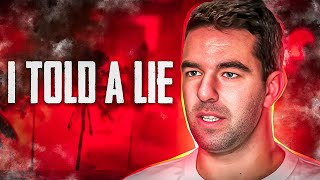
Billy McFarland, Fyre Festival founder, says desperation and social media envy drove him to fraud, not born criminality. He describes a relentless negative self-talk loop and preference for shallow connections that left him isolated. Now in therapy, he's developing Fire 2 and working on a Broadway musical while consulting for startups.
Chapters
already committed the crime though, right?
Yeah.
Stop. What do you mean you need to give him that money?
What does that mean? Ultimately, I was going to jail regardless. Ultimately, I was going to jail regardless. Hey, how's it going?
Hey, what's up?
Hey, man.
Guys, what's up? This is Billy McFarland, founder and CEO of Fyre Festival.
Yes.
Introduce yourself really quickly.
Founder of Fyre. I've been working in the tech and entertainment space for, what, 15 years now? Excited to dive in.
Yeah, absolutely. So my biggest question is, Do you think people are born fraudsters?
Uh, I would have said yes 5 years ago, but after going to jail and going in with this conception there are good guys and bad guys in the world, I think that notion is totally false. Interesting. Probably 5% of the people in there were truly bad, and the other 95% fall somewhere in the spectrum that the rest of the world does. And desperation and need leads to fraudulent decisions, whether that's selling drugs or committing a financial crime. Desperation ultimately results in the act, but a small number of people probably are bad.
Yeah. So one of the things that I've been thinking about recently is like, do you think people who commit fraud, that that's just sort of what they know? So there's like an exposure environment element. And I'll expand on that. You know, I think kids back in the day in the ghetto, they see drug dealers, right? And they wanted to be drug dealers. Now they see Kai Senna and they see streamers. They want to be streamers. So do you think it's a factor of their environment and their element?
I think humans have always wanted a shortcut to success. And people who jump on that shortcut train are more apt to commit fraud. And social media has almost exacerbated this problem because we see all these celebrities.
Yeah.
We see all these business people who have the life we wanna have and we feel like we deserve it. And it's like, why can this streamer live like this and I can't when I'm just as smart as him and I work just as hard? I think that almost contributes to people wanting to commit fraud to take that shortcut.
Yeah, do you think like with Fyre, for instance, do you think there was an element of misaligned incentives? Like for instance, you know, you were on the VC treadmill early. Like, do you think it was so, you know, zero-sum game? You're like, I gotta do whatever it takes right now to make this happen?
I was really scared of letting my investors down. So my mentality was my investors want two things. One, they wanna make money. And two, they wanna have fun through Fyre and Fyre Festival. And if Fyre Festival doesn't succeed, both of those objects fail, so I need to make this work at all costs. I think ultimately my like shortcut decision-making behavior attracted other people who want to take shortcuts too. Yeah, I believe that like the negative energy I was putting out there and the bad decisions were attracting hundreds of employees who also share that same mentality, which led to a colossal failure. Yeah.
Do you do therapy?
Uh, I do now.
Yeah, because the one thing I was wondering, I was like, what do you think your underlying negative self-talk is?
That's a good question. Yeah, I think I really want to move fast and I want to keep proving.
No, that's not negative self-talk.
It kind of is. It's like you're not doing enough, you're not going fast enough, and wherever you are today is like sucks, you're a fucking loser, like you need to do more to push it to the next step.
Yeah, one of my therapists said my negative self-talk was that I am not wanted, so I would do all these things to like prove to the world that I'm worthy and I'm wanted. Like, all right, if my family doesn't want me, well, I'm gonna make you need me, and then I would like do those things, you know. No, I think— well, I don't know, but I thought it was interesting, you know. So the thing that I was getting at is like, do you think you're doing or were doing these things because you had this kind of like childhood trauma, whatever you want to call it, and then like maybe this Nick— that was actually driving it?
I said 4 years in prison to think about all this, and this is probably the one question I can't answer still. So yeah, I think it's really hard to understand like why and what actually drives us.
Yeah.
And the little surface level things are pretty easy, like yeah, it's great to push boundaries, it's great to take people to places they've never been, but ultimately, like, I think it's hard to pinpoint what that one internal drive or desire really is.
Alright, my one question, I forgot about this. So you get out, you're out on bail, you have this email list, people who have a lot of discretionary income, they bought a trip to the Bahamas for a music festival. You send them emails to go to these exclusive events, the Met Gala, Victoria's Secret fashion show, that's a quick cash grab. Do you think it's a compulsion to like do that or is that all you knew? Like I'm curious like the why behind that.
It was purely living out of fear. I had an investor tell me I need to give him X dollars or else I was going to go to jail. So I was so like one-track mind. I need to give him this money and it turned out not to be true.
What do you mean you need to give him that money?
What does that mean? It wasn't true. Yeah. He called—
Like his LP is like I need a return. Like they— Sorry.
It was an individual angel. So it's a guy who brought in a group of friends and like Yeah, they were well-connected guys, but ultimately I was going to jail regardless. So he called me and said, "I need X millions of dollars or else you're fucked." And the call had already been made and I was already fucked. I committed a crime and I was scared and delusional thinking I could still pull things off. And yeah, it was totally wrong.
So you needed the cash, you're in a bind, and that's the only way you're able to do it. So you're like, "I'm willing to do this because it's the only thing I know." Yeah, I think it's hard.
Like, you wake up one day and you had 700 employees the day before, now you have nothing. And you have an investor who's incredibly powerful who calls you and says, "If you don't give me X millions of dollars," you're gonna be on the COVID of the Wall Street Journal in handcuffs. And you're 25 years old and trying to realize all of that, like, I think it's like, yeah, it led to irrational behavior.
And you had already committed the crime though, right?
I had already committed the crime, yeah.
'Cause I was gonna say, I feel like if I hadn't committed the crime, it depends where I was at in my life, but if I was confident enough, I would've told him to kick rocks. You know? And—
It's hard to say when the FBI's beating down your door.
Yeah, yeah, I mean, if you already committed the crime, that's just not great.
I don't know what you would do. It's not great.
I think I would use his money and charter a jet and go somewhere else.
But anyway, I don't know.
You don't have your balls then. So, all right, so do you, okay, so I'm, all right, so back to the question. Do you think it is like a compulsion? And I said to someone yesterday, I was like, do you think it's, I almost was thinking of it like addiction. I don't know if you have any experience with addiction or recovery like I do. And I was wondering, do you think it's kind of like that, like this gambling fraud compulsion? Or is it really just, that's all I knew?
I think there's like a compulsion against being bored. And I think we all kind of different levels of boredom, but one of my biggest flaws is that I would have a dream or have a goal and I would get there, I'd be like, oh, this kind of sucks, like, what's the next thing? And instead of taking a level-headed approach to finding what the next thing is, it's like jumping off a higher diving board right away. Yeah, get that next thrill or like try to push a level to the next, next crazy milestone.
Yeah, do you think, uh, that's interesting. Um, why do you think you, you can't sit still?
I don't know. I wish I could figure it out.
But what are some potential ideas if you're whiteboarding why Billy can't sit still?
I think we are— I personally believe that different goals or outcomes or level of success comes with various things that I desire. And once you get there, you realize life isn't all that different.
Why do you desire those things?
I think I just desire the challenge, right? And saying like, why could I sit around when I can try to reach this level? Then you get to that level in some capacity, you're like, oh wait, this isn't giving me what I thought it would give me. So yeah, I need to do more to get there, and ultimately that's like a never-ending path and doesn't end well.
What's your attachment style?
What does that mean?
Like insecure attachment? Are you like secure attachment? Are you anxious attachment?
I don't know, is it like an adrenaline attachment?
No, like, like one of the things— again, I've only, only recently been doing a lot of like therapy, that's why I'm curious in asking these questions. But you know, like for instance, with anxious attachment, it's like you, you think people are gonna leave you, so like you want the connection to them, but you're actually not able to connect because you're like, you push them away, you keep them at a distance. And I was actually curious if that was kind of like playing into a lot of this stuff, you know. You're like, I don't— I'm not going to let people fully in. Maybe you let people kind of in, but you still keep everyone at a distance. And then when you're not actually like connecting with them and like getting the like chemicals, you know, released, you actually feel alone.
Interesting. I definitely think that was a factor. I think I was craving a large number of relationships and ultimately had very few real relationships. So I was looking for numbers, like quantity over quality.
Yeah.
And I didn't know that was a problem.
Yeah, I think that's actually super interesting right there.
It's like, why could I bring 5 people when I could bring 50 people? But then ultimately they're all empty and everybody's there for nefarious reasons.
It's like that saying, it's like there's all these people around, but I feel alone.
Yeah, I still have no friends. Yeah, yeah. No true connections. Yeah, that sucks.
Yeah. So do you think this is a problem? Not necessarily fraud like this, but again, I'm kind of getting back and obviously I want to tie it back into like Share Willow stuff, but when incentives are misaligned, you know, it's like, what can companies do to make sure— and definitely don't plug any of our shit— but like, it's like, what can companies do to kind of ensure that this doesn't happen, incentives are aligned? For instance, right now, like, we integrate into a platform where we show our bank account to all of our investors, you know, we show our like Stripe account, like they can see everything, right? And then like our employees, I'm pretty transparent about sort of everything. Like, what do you think can be done now to sort of like, make sure this doesn't happen.
I mean, that's great. And like, yeah, I think it's the biggest first step. I think number 2 is if someone is always only telling you positive news and everything is always rosy, that person is hiding something. Yeah, pretty bad. I was really bad.
Every investor update, this was our best one ever.
Yeah, it's not possible. And I was really bad at delivering bad news, and it led me to start lying about how great things were going. Yeah, I think one, I was committing fraud, but two, I was also scaring away the help that I needed to succeed. Because smart people who didn't know me would see this and be like, hey, this is not possible.
100%. That's whenever someone like— whenever I feel like someone's not being like authentic with me, I'm like, I can't connect with them because like I don't feel like they're being honest. Yeah. And it's like, why would I want to be— how can I help them, you know, if they're not doing that? Interesting. So, so what are you up to now?
Yeah, working on Fire 2.
Stop.
Yeah, stop.
It's gonna be a hit. I'm sure it is. Yeah, yeah. So, uh, so what else?
So doing a lot of marketing work for other venture-backed startups to kind of keep the lights on. But yeah, yeah, main focus is on Fire 2 and a lot of ancillary projects. We're doing a Broadway musical, doing a couple of TV shows. So had products around Fire 2, but ultimately like executing Fire 2 is the, is the goal.
Nice, man. Well, I wish you, I wish you the best. Thank you so much for doing this interview.
Thank you. Of course.
Yeah. Thanks, guys.
More from Ryan

We Analyzed 500+ Contractors. Here's What the Most Profitable Companies Do Differently.

Employee Incentive Programs That Drive Team Performance and Profitability with Ryan Shank


Stop Losing Money! Ryan Shank of ShareWillow on Using KPIs to Reward Field Teams






