How Zack Bowlby of ROI Amplified Uses Reverse IP Lookup to Determine If His Content Is Effective
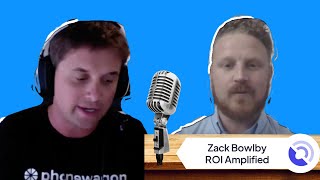
In this episode of Growing Your Agency, host Ryan Shank interviews Zach Bowlby, founder of ROI Amplified, a full‑service digital‑marketing agency launched in 2017. Zach explains why he left a previous agency to "jump" into his own business, describing the early risk, the co‑founder partnership, and the first revenue from side‑client work and a franchise‑level marketing‑automation contract. He outlines ROI Amplified’s service model – an in‑house, retainer‑based approach that avoids percentage‑of‑ad‑spend pricing, with non‑negotiable components such as website management and call‑tracking (using CallRail). Reporting is delivered via a live 24/7 dashboard, monthly (or bi‑weekly for larger accounts) review calls, and KPI focus that varies per client. Zach shares the research tools he relies on (SpyFu, Google Keyword Planner) and how he uses search‑term data to educate clients about market trends. Client acquisition is an omnichannel mix: LinkedIn outreach, Google Ads, SEO‑driven content, and referrals (over 50% of new business). He describes a referral‑incentive program and a streamlined proposal workflow that pulls competitor data automatically, uses DocuSign, and emphasizes goal‑clarification during sales calls. The conversation turns to knowledge transfer, emphasizing the importance of understanding public perception of industry terminology. Zach highlights a “secret sauce” stack: Slack for internal communication and Leadfeeder (reverse IP lookup) integrated via Zapier to capture 30‑40% of anonymous website visitors, enabling better content targeting. Finally, he shares a brief morning routine inspired by Mark Cuban. The interview provides practical insights into agency founding, pricing, reporting, client acquisition, tooling, and growth strategies.
Chapters
Alright guys, welcome back to another episode Growing Your Agency. I'm your host Ryan Shank. Today, super excited, we have Zach Bolby, ROI Amplified. Zach, thanks for joining us today.
Thanks for having me, appreciate it.
Yeah man, so I was on your site. It looks like you guys are doing, you know, full range of marketing services. Tell us a little bit about the company, scope of work that you do, why you're involved with this. Yeah, tell us about it.
Yeah, so we're a full-service digital marketing agency. We do everything in-house, you know, I mean, essentially kind of our sales pitch to people is that we act as an internal marketing department for companies that don't want to, you know, hire that in-house. Maybe we fill in the gap for them, you know, there's a lot of PPC experts out there, but maybe they need help with the marketing automation or something like that. We can come in and kind of help facilitate that. We've been around since 2017. The main reason I started the agency was tired of working for other agencies and that dreaded question, "What are we getting for our money reporting?" Right? It just— the song and dance was just getting kind of old. And so I knew there was a gap.
You were at another agency? You were at an agency?
Yeah, yeah. It was actually a startup, which I learned a lot of lessons from. What to do and what not to do, right?
Yep.
And I wouldn't be where I was, where I am today without them, without learning those lessons for sure. But that's kind of the main reason why we want to start it. Transparency, no more song and dance, educating the client along the way, kind of our big factors, our big things we want to focus on.
Cool, awesome. So talk to me about that. You're at the other agency, you know, obviously you're probably thinking about it for a little bit. And I know a lot of people like watching this, they want, they're kind of probably in those shoes when you were at the other agency or they're like sort of learning about it, first steps, like how do you, like what do you do? Do you get a client first? Do you kind of stay at the agency? Talk to me about like that transition process.
Yeah, so I'm not the entrepreneur actually. I had a co-founder with me and he was, he was a lifelong entrepreneur.
Sure.
And so the company, you know, I definitely feel what most people are feeling out there, you know, for me to jump was probably the biggest risk I've ever taken in my life. Yeah, and I think that's the word that I'd like to really focus on is jump, right? I mean, if you're really passionate and believe in what you're doing, you really can't do it part-time, right? I mean, you gotta jump. That safety net, yeah, when you remove it, it's kind of amazing what happens. The sink or swim kind of mentality, and most of you will actually swim, you know, instead of sink. So you definitely gotta jump, you You know, that's a big deal. Uh, it is scary, right? Of course.
Yeah. Okay. So you guys, you broke, you know, you broke away, you had a co-founder, uh, he was the entrepreneur. Like, how did you get those first, like, what was the first thing you guys did? Like, how'd you get the clients? Um, I'm assuming if he was the entrepreneur, maybe he was selling to the clients. Um, yeah, I guess kind of take us through like just getting it really off the ground. So now you jumped and what do you do next?
Yeah. So we got lucky over and over again in full transparency. Um, he already had some side clients that we could bring in. So day one, we started with a little bit of revenue, which is always a good thing.
Were you guys at the same agency?
We were, yeah.
So you left and kind of pulled some clients with you?
Well, not from the agency, um, he actually—
his side clients. Got it.
Some side clients. And the agency knew there was nothing weird about it, or, uh, you know, um, by any means. But, um, so we started with a little bit of revenue. But really what jump-started our agency was a franchise needed some marketing automation and the agency we actually still work with today on multiple accounts, but they didn't have that expertise in-house. And so they came to us and said, hey, I know you guys, with the permission of the other agency, do know this thing, you guys are on your way out, could we speak with you? So we landed one of our, you know, biggest contracts right out of the gate. Yeah, which is really lucky, you know, really, really fortunate.
Were you able to kind of spread that? Was that a whole franchisor deal or was that an individual location and maybe able to like penetrate into the other franchisees?
We were actually started at the corporate level, which is way easier to do. Wow, that's good. Yeah, yeah, yeah. So, it's been, you know, we still have that client today.
Got it. And were you able to expand the services? 'Cause I've seen that a lot, right? And you guys, by the way, you know, I work with a ton of agencies, a lot of them will be a little bit more specialized. Seems like you do kind of full service. Were you able to go in at the marketing automation and then sort of like expand out into other services?
Yeah, so what's interesting about that is we actually— there's other agencies in the account already, so that's kind of awkward, right? You got to learn to play nice in the sandbox is kind of how we describe it. Yeah, everybody's pretty good about staying in their lane in that, but what it has done is across other contracts, right, if that need arises, they can outsource to us, or we don't necessarily outsource too much to them in full transparency, but, you know, we can play nice.
Yeah, absolutely. How do you, um, so talk to me, I guess, about since you are full service right now, how do you price your services? I know a lot of people who are doing just, you know, ad spend will be, you know, retainer or percentage of ad spend, but seems like you will do everything from start to finish. So talk to me, I guess, about, you know, pricing out the services and what that like proposal process looks like for new clients now.
Yeah, yeah, definitely. So, um, uh, retainer-based, right? It's the same motion that everybody kind of— I fully do believe in that, that When you take a percentage of that, then you are incentivizing more humans to kind of encourage more spend. I don't like that. The big thing for us is that we sell results, right? So we are retainer-based depending on what they want to, what service they need. I will tell you, whenever we take on a PPC client, there are two things that are non-negotiable with us. We do take over website management and as well as call tracking. Non-negotiable with us. What we found over time is that, you know, if we're going to be held to the standard of what are they getting, right?
Yeah.
We control the click on Google and don't have any control after that. We're not comfortable taking on that responsibility without that.
I don't under— so I agree 100%. And like, also in full transparency, you're not— you're not even us, so we can talk just like openly about it. But the thing is, it's like, I don't understand agencies or people who are managing ad spend that are like, yeah, like, The client's using call tracking or if they're using that, we'll just do whatever they're using. I'm like, how do you not say like, this is our stack that we use and you have to get plugged into our system because it's like, I don't understand how you have visibility into what's happening, right? Like how are you managing ad spend if you're flying blind on calls or live chats or whatever it is as conversions?
And as we both know, right, 90% of the business is done on the phone.
Yeah.
I mean, it's just, it's just how it is. I mean, even I run a full service digital marketing agency. I'm on the phone way more than I'm on the internet, right?
Yeah, exactly.
You got to be able to track that. Actually, what we do as well is we have clients that, um, we put, uh, tracking numbers on every marketing material they have— TV ads, bus routes, right, brochures, business cards— so that when we really look at it, a CallRail, of course, who we use, um, yeah, you know, um, there's nowhere to hide. It's kind of—
you see all the different, all the different, you know, conversions, calls.
Chat word sometimes, right? I mean, you know, capture that, you know. Of course, recording sometimes. Like, I was listening to another podcast where a guy said they actually go back through— that you had on— that they actually listened to the calls. Um, we don't go that far, you know.
But I think— not to cut you off— I think the benefit of that sometimes with some, some clients, you know, is that like there's just such huge areas of improvement. Even I, you know, I was like driving calls just in a pay-per-call model for a client on the side. It's like I would listen, he was getting all these awesome calls and he wasn't booking the calls because he was like, you know, he was asking for like a $300 payment over the phone for them to even come out for the service call to even look at it. And I'm like, you know, switch that up. Or if you look at the calls, maybe you'll see a call report and it's like, you'll notice, you know, 30% of the calls go unanswered or whatever it is, you know. So I just think that like diving into some of that does have value and the content of the call sometimes.
It definitely does. What we always say and is You know, a CTO that I work with is kind of famous for saying, you know, marketing is responsible for making the phones ring and the doors swing. And then kind of outside of that, you know, we're not really responsible for the selling. We actually do encourage and almost force our clients to go and listen to the calls. Yeah, feedback. So we do have a lot of HIPAA-compliant clients, right?
Yeah.
Where it would make, you know, it just doesn't make sense for us to put ourselves at risk or the client at risk to listen to those. But I totally believe in recording the call. Yeah, you know, that's— it's, it's something that, uh, you learn a lot about your business from doing that. I think we both agree.
Yeah, from, from listening, um, and seeing what's happening. So in terms of like reporting, so you're driving them calls, you're driving them web leads, what does your reporting process cadence like? What does that look like? And then also like, what are the key, I guess, kind of like the KPIs or deliverables? Do they just care about total lead count, total amount spent, cost per lead, or your clients looking into deeper metrics?
Yeah, it just really depends on the client. So to start off, we have a 24/7 live reporting dashboard where there's nowhere to hide for us as well. The client can get in there and see down to the penny, you know, keywords, what we're going after, which ads are performing the best.
And that's custom built, like they have their own login?
Yeah, it's actually just a link for them. Literally, it's just a button for them. And what we do is on the onboarding process is have them bookmark it typically. But we do send an email, automated email as well, once a month with the login— I mean, with the link attached with some insights from our team, that, you know, some insights from the report, because they're not experts at reading data, obviously. Sure. You know, so, but to answer your question, the big thing that we're judged on are our customers, to be completely honest with you. Um, uh, we do, uh, sit down with our clients at least once a month, either via phone or in person. Some of the bigger enterprise-level clients, it's biweekly.
Yep.
Um, and just so they can get a full view of what's going on, what's going in, what's coming out. Um, the KPIs You know what's interesting about that? Even, it's probably been a really long time since someone's asked me about cost per acquisition.
Really?
Really weird. Yeah. The main reason being in our sales process in the beginning, we kind of filter that out. So, you know, when we really dig into a client before we onboard them, we use, you know, data like everybody else, Google data. Competitors' data to kind of get an idea.
What kind of tools are you using for those? Like SEMrush?
Yeah, SpyFu is one of my favorite ones to use. And then obviously just the Google Keyword Planner, you know, good old-fashioned, good, you know, Keyword Planner for search volume. They do a really good job of forecasting right now too. And I can give you an example. We have a flooring company that we work with and the data almost always matches up to the search volume. So I recently had a meeting with them and I said, you guys are selling a lot more carpet recently. And we hadn't even maybe talked to them probably about a quarter. And they said, how'd you know that? And I said, well, I just saw the search volume. We saw the searches coming through that. We forecasted it and told you guys about that. And they said, for the first time in maybe 3 years, it finally flatlined as far as carpet sales going down. And so it's about to rebound and kind of go back up. So we've kind of let them know that in Q4, Probably going to sell a lot of carpet.
Yeah, because it's trailing, right? Like the sales are going to be trailing on search volume. So it's like you have the volume spike or decrease and then it kind of like, it comes a few months later, a little bit delayed. That's interesting.
Yeah. Yeah. Use some data, you know, to kind of coach our clients up on that. You know, what it's got.
So it's all retainer based. They're not necessarily looking for cost per lead. Do you think that's more so because you are full service versus like, hey, we're just managing ad spend for you guys?
Yeah, absolutely. So honestly, it's that whole internal marketing department feel. Yeah, that we're actually making decisions together.
Sure, sure.
Um, the one thing that we always talk about with our clients is that like whatever they do, they can't expect me to be an expert in. Yeah, so I'm never gonna be a flooring expert.
Yeah, knowledge transfer, because that, that happens. I was, um, there's a ton of like kind of these niche industries, right, where it's like maybe in flooring, like, you know, there's certain words that are stated. Like, how do they tell you kind of like the inside, I guess, lingo. Or maybe it's even better though that you're not, because you're more of like the consumer and you're not saying maybe like these super like, you know, niche keywords. But yeah, I'm curious, like, how do you kind of like knowledge transfer from business owner to, you know, marketer, marketing agency to be able to like, you know, express that?
Yeah, so using the actual search terms, right? So, um, what ends up happening is when you actually look at the real search terms coming into the website, whether that be organic or through ads or whatever, it's really kind of interesting because a prime example I usually like to give is in our industry, right? This is a little tip for marketing owners out there. I would tell you that I'm a full-service digital marketing agency. I can tell you that most people search for SEO agency and call us an SEO agency.
Agency. They just think SEO is marketing.
It's exactly right, right? It's all—
it's interesting.
It's really about the perception outside of the building, and that's what we talk to clients all the time. So another example is we work with a lot of psychologists, and the difference between psychiatrists and psychologists is that one can prescribe medicine. Most psychologists obviously would understand that, but people outside don't.
They don't. Yep.
So even though they're searching for psychiatrists, they're actually sometimes looking for a psychologist.
Wow.
Right, so it's not always what we think we are, but more of what the public thinks we are, and finding those kind of high-intent words, right?
I was talking to someone that has a bunch of chiropractor clients, and they said they had— they put in a bunch of like physical therapy keywords, like exercises, and even like I forget like what the terms were, but a lot of people like kind of don't know like that type of service that they need, you know, like, oh, back hurt, you know, or whatever it is. And yeah, so they kind of have to cross, you know, like cross-reference into those other industries to sort of get those people that like don't really know exactly what they're searching for, but the keywords are there.
Yeah. Yeah. And I mean, that's, it's really interesting. I mean, self-diagnosis, right? Industry, it's really no different. I mean, most of the times people type in like, once again, SEO agency or, you know, SEO help, and then you'll get on the phone with them and they'll say, well, we want to do some ads, right? I mean, and so it's like kind of a self-diagnose, you know? I mean, it's really interesting. It's across all industries, right? I mean, that's definitely something that you can kind of see across the board.
Yeah, absolutely. Um, all right, so talk to me now, how do you get clients? So back in the day, you guys, you know, spun out, you got the, uh, you know, you took a couple side clients with you, you got the, the franchise client. How does it work today? Like, how are you getting clients today? Um, and then again, what is that like bidding process once you maybe jump on a call with them to like from, you know, intro to like actually signing a contract?
Yeah, so omnichannel, right? I know that's kind of cliché to say, but A healthy mix, you know, we do a lot of outreach on LinkedIn. We run Google Ads. We produce a lot of content for SEO purposes. Referrals are probably overall our best, and I know people hate to hear it, but it's—
no, I mean, you know, they want it, they want it. That's what everyone— that's the dream. But what percentage of new business do you think comes from referrals now?
Over 50%.
Over 50. Okay.
Oh yeah, yeah, easily. And, and honestly, what's interesting is, um, what I would encourage people to do is incentivize your clients, right? I mean, I mean, we do have champions out there that like don't ask anything from us. Like they're out every day. Like I'll get at least 3 or 4 different calls from, I was referred by X, and it's always kind of the same person, right? And, and they're amazing for our business. But the thing is, we'll give our clients a break on their bill. Right? I mean, if they're going to refer us to 3 or 4 people, like, they should fill that too.
Yeah.
And so, like, that's a little tip that we've recently implemented that's made a big difference for us. But of course, you've got to get results, right? I mean, you have to get results. You've got to be responsive. They've got to really like you. That's how you earn referrals. And I will tell you that it probably takes about a good 2 years.
Right, before you're able to, because then they become a true case study. What, when you're, when you're, um, talking to new clients like and you're sending them a proposal, are you guys, do you have a template that you use? Do you use software to like bid it out? Like what, or not to bid it out, but to like send an actual proposal?
Yeah, so we actually just recently kind of got into some new softwares where we can like a DocuSign, right, where people can actually remotely, um, in the past we've actually just been doing old school PDFs. Yeah, but we've recently just kind of done that, um Usually just, you know, by the time proposal, it's kind of like semantics at that point. They're just signing a piece of paper.
Yes.
You know, I mean, and the main reason being is the data that we give them and the amount of research we do in the front end of the sales process. Like you asked, like when someone gets in contact with me. So after I got off the phone with you here, like I have a sales call. This person automatically got on my schedule, on our automatic scheduler on my site. She told me exactly who they are, what exactly they want, etc. So by the time, you know, I get on the phone with them, I've already pulled off her data, I've pulled competitors' data, you know, and I've got to run that audit.
So then you're able to talk to them.
Yeah, and share that data, right? I mean, you just have a conversation. And the big thing is, is really identifying the goal because, like, you know, once again, self-diagnose, right? I mean, they might call and say, we need SEO, and then you get in and you're like, well Like your SEO is doing really, really well. You've got this email list of 500,000 people, but you're not doing any email marketing. Yeah. I mean, it just kind of—
You want more customers, right?
All right.
Where's the low-hanging fruit? Where can we go that we can knock off some here and there? Awesome. Just wrapping it up. One of the final things I ask everyone— actually, before I ask that, what is your favorite What is your favorite like tool to use? Um, online tool can be internal communication tool, external, like what's, what's something that's kind of like a little secret sauce that you, that you have?
I'll give you two. I'll give you a bonus one. So the first one, the first one Slack. Okay. Um, I can tell you that when we implemented Slack about a year ago, I would say productivity went up about 300% minimum. Wow. Um, It's really amazing. Like, I can be in this meeting with you right now, right, and still be on my phone giving my team direction when they ask me questions.
Sure.
Yeah, invaluable. The next one would be, um, and they actually did a case study on this, uh, Leadfeeder, which is a reverse IP lookup software.
Interesting. Okay, and that's what you use for leads to, to like capture leads from people that come to your site?
Yeah, so, and I actually have that plugged automatically with Zapier into my CRM. So what's really, really cool is, you know, we're capturing probably 30 to 40% of people that come to our website, right? I mean, without even filling out a form. We get a good amount of people that call, that get on my schedule, they fill out a form, but maybe an extra 20 to 30%, um, we still identify.
That's massive. LeadFeed, I'm gonna check that out.
Yeah, it's really, really cool. And so the real cool part for me is You know, you can kind of find these people, right, about who's on there. I mean, depending on what content they're actually, you know, ingesting. So I'll tell you that, you know, I had a sneaky suspicion that the content we were producing 2 years ago was actually reaching college kids, and we were just educating digital marketers, not reaching the people that I really wanted to reach. And sure enough, Versa IP to all these big colleges, and what are they reading? Our guides. Right? And so we switched that up and that's kind of what their case study was about with us is that we switched up our content and now I'm seeing Boeing, big companies reading our blog. Now, does that turn into a customer today? No, but at least I can try to facilitate a relationship with them at that point.
Dude, I am so in agreement with that. I feel like even like, you know, because I'll do this, we used to do videos every single day, almost like vlog style videos and it's like everyone's like, Why are you doing that? You're probably not reaching the right people. It's like, yeah, but every single person is like one degree away from someone that could be a customer for you. Like everyone knows someone that could potentially hire a marketing agency if they can't themselves. Right. And you know, for us, everyone knows someone that like needs to like track phone calls or whatever it is. Right. So it's like, even if you're not reaching, you know, your direct audience, which you probably are with some of it, you're, you're like one degree away from reaching them. You're staying top of mind. And it's like, they're going to have a need eventually and they're going to, you know, refer to you, choose you, whatever it is.
Yeah, the one thing that I will say to that too is, you know, don't spam people, guys. Like, like, right, you know, I mean, like, you know, when somebody adds you on LinkedIn and then you instantly get like the automated message, like, don't do that.
I hate that. I hate LinkedIn because of that, you know.
And I think what ends up happening is a lot of people expect that from us and then it never comes, right? So then they're like, why didn't Why didn't you spam me? And it's kind of like, we don't have to, you know, like we work with people that want to work with us. Like, here's the content, right, that we're producing in here from, you know, the shows, like a case study from your industry. Like, we're here when you're, when you're ready to work with us. Um, that's the right way to do it.
Love it, love it. All right, final question. What is your morning routine?
Um, so I stole this from Mark Cuban. Um, I'll tell you that the first thing that I do in the morning is open up the inbox and knock out any problems that have occurred overnight right off the top before I'm even out of bed. If my dog allows me to do that, which is sometimes kind of—
What kind of dog?
He's a pit bull boxer mix. He's a rescue.
Nice. Awesome.
He's a lot of work, so, but, but yeah, so, you know, knock that out, hit the gym some days more than others or some weeks more than others, right? Come back and be in the office by 8.
So In the office by 8.
Yeah. Yeah.
Awesome, man. Awesome. Well, thank you so much for joining us, Zach Bowlby, ROI Amplified. Where can we find you?
Yeah, so a couple places, ROIamplified.com, and as well as LinkedIn, it's Zach, backslash Zach Bowlby SEO.
Awesome. All right. Thank you, Zach. Thanks so much for joining us on Growing Your Agency. Zach Bowlby, ROI Amplified.
More from Ryan

We Analyzed 500+ Contractors. Here's What the Most Profitable Companies Do Differently.

Employee Incentive Programs That Drive Team Performance and Profitability with Ryan Shank


Stop Losing Money! Ryan Shank of ShareWillow on Using KPIs to Reward Field Teams






