Lobster Marketing Is The First Agency To Allow Consumers To Purchase Pest Control Online
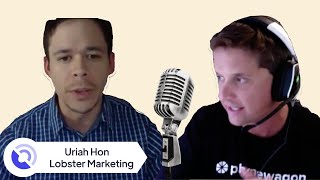
In this episode of Growing Your Agency, host Ryan Shank interviews Uriah Han, co‑founder of Lobster Marketing Group, a full‑service marketing agency that specializes in pest‑control businesses. The conversation covers the agency’s origins, team size, and service suite (SEO, custom website builds, print collateral). A key focus is the partnership and acquisition that enabled Lobster to launch a unique product allowing consumers to purchase pest‑control services online, effectively turning the service into an e‑commerce transaction with routing algorithms that match customers to technicians. They discuss tiered membership pricing—from $100/month basic sites to $30,000 custom builds—and the inclusion of the online‑purchase capability. Lobster uses a proprietary CRM/CMS built in Maine and NinjaCat for reporting, delivering monthly dashboards and periodic deep‑dive reviews. Lead generation is dominated by phone calls (≈70%), with chat and forms contributing the remainder. The agency listens to client calls to provide coaching and feedback. Project management and client account handling rely on Salesforce, with a large implementation team and a dedicated customer‑success manager per client. Retention is high (≈90% historically, now mid‑80% after expanding membership options). The interview closes with Uriah’s personal morning routine (cold shower, coffee, team greetings) and location in coastal Ellsworth, Maine, with a call‑to‑action to visit lobstermarketinggroup.com.
Chapters
Alright guys, welcome back to another episode of Growing Your Agency. I'm your host Ryan Shank. Today, super excited, we have Uriah Han, Lobster Marketing Group. Uriah, thanks for joining us.
Thank you guys.
Yeah, so tell us a little bit about Lobster Marketing Group, kind of services you guys provide.
Yeah, awesome. So ultimately, we're a full-service marketing group at this point. So SEO is our big thing, naturally. And custom websites from the ground up. So all the HTML and all. Naturally we do all our print collateral design, so you name it, we can probably take care of it. But as far as Lobster goes, great story really. Started in a basement a little over 8 years ago with somebody that was in the industry that we primarily market for. So we primarily focus on pest control across the country. And he was in pest control and realized that the marketing there just wasn't niched enough yet and decided to take it from there. And here we are a handful of years later with, you know, a sister store in Dallas and, and, you know, many more employees than we started with.
So that's awesome. How big, how big is your guys' team now?
So we have a little over 30 in the office that I'm located in on the main coast, and then we have a sister store that has a little more than that in Dallas.
Oh wow. And what's the makeup? Is it, do you guys, uh, is it, you know, mostly sales engineering people? Do you have the creatives in-house?
Um, yeah, absolutely. Uh, actually in Dallas is all the software. Um, we were able to, by partnering with a software company and ourselves, we were both kind of acquired together to create a product that had yet to be offered. And so they work on the software and, uh, on our end is going to be all the websites, the SEO, the actual marketing value of that product.
Interesting. So let's talk about, you know, when you, when you bring on a new client. So first I'm curious to hear, you know, how do you guys go after and acquire new clients today? What does that process look like? And kind of like, you know, what's the hook, I guess, that you're using when you want to like then go in for like a proposal potentially?
Sure. So to start, it's really simple. We've been really lucky and blessed to— we've been blessed to work with some of the bigger pest control companies across the country. Word of mouth ultimately got us to where we are now. And in fact, you know, marketing for ourselves wasn't something that we had done up until the recent years. Ultimately, when the software company and ourselves were acquired together, that provided a giant portfolio of business. So we get to the product that we're able to offer, which is a very simple idea of Purchasing pest control online had never been offered before. As simple as that sounds, we were able to do that for the very first time. And so that pitch going into it is very simple. We can give that to you and nobody else can. Ideally, you have to work with Lobster and PestRelief, which would be our sister company. You would have to have that relationship together as a whole in order to achieve that buying pest control online.
So basically buying pest control services similar to like you would buy like an e-commerce, like similar like an e-commerce transaction, right?
Very much so. So in the past, the problem with pest control is it's all defined by routes that the service techs have to achieve throughout the day.
Yep, yep.
Making a purchase and a scheduling online a bit intricate. And so we were able to combine that and correlate systems, and so we can, we can book that and assign that to a certain route and a certain person and become pretty buttoned down with that sale.
Got it. And you have kind of like the algorithm behind, you know, it'll like know where availability is based on the route of the tech.
Absolutely. It's going to take your address, it's going to associate it to a 20-mile radius, and that technician's route is going to be included in there. It'll automatically assign them to a free time slot that they have. You know, they give them a 2-hour, a user a 2-hour time slot online. They pick that and it's going to go ahead and give that to the tech to complete. So ideally The user themselves, the customer, they never have to speak with anybody. Much like a pair of shoes, you make the purchase, it shows up on your door. The technicians for these companies are going to do the same. When they leave, your house will be treated and you'll never see them.
Got it, got it. Alright, so you guys are working with pest control companies right now. Talk to me about your pricing model. Do you, you know, percentage of ad spend? Because you did say you're full service, or you're charging them for the build-out. Like, what does that look like?
Yeah, so all depends. So we have multiple tiers of memberships. A premium membership, as we might call it, that includes a custom build from the ground up. Most people are gonna be looking at that, bigger companies, over a couple million, and that probably, that's close to about $30,000, could be much more depending on what they'd like a year. We have options down to $100 a month for very simply just your base website, and we kinda go up from there and we have some tiers, naturally including bypass control online throughout that. But ultimately, if you were a full membership and you were paying a few thousand a month, you get a full custom design website, you get inbound marketing content, you know, usually 4 pieces a month, the blog posts, whatnot. We take care of all those. We write them, we would edit them, post them.
You guys use HubSpot for online or for the inbound marketing, or do you use like another CRM?
Yeah, so we have a proprietary CRM or CMS more so. So, it's kind of built around us, located in Maine, so we have direct access to that architect. So, we're fairly lucky that way.
Got it. Awesome. And then in terms— so you bring them on board, depending on scope of services, it's either a couple thousand or whatever it is. If they're just, you know, maybe it goes up from there if they want to do the online booking or buy pest control online. And then as far as reporting, what is the cadence of reporting? What are like some of the KPIs that you're actually giving to the client? Do they care about impressions and things like that, or do they only care about leads?
Yeah, so what we find on the customer end is lead is the focus, and how many leads and how much am I paying? And that's the biggest thing that everybody's really going to focus on. Naturally, on our end, we're going to look at impressions. If we're looking at the paid side, click-through rates, we're looking at time on page, all the metrics naturally because we build those websites custom and from the ground up. We're constantly changing them and we're compiling elements from other websites that are far different and seeing what works. But from a user side, it is leads and how much am I paying for them.
Got it. And do you find that most pest control leads are people filling out forms, people buying pest control online, phone calls? Like, what is the mix of conversion types, conversion actions?
Yes. So, implementing chat's been huge. Once we've— what we've seen with chat is— so to back up, phone calls are by far, I would say 70% of leads. And Install and Chat cuts that in half but makes up for them there. Forms kind of make up the rest, but ultimately we see the majority of our leads come through on the phone.
Got it. And then, so then you're forwarding those calls, you know, directly to, directly to the clients. Do you ever, do you ever like listen to the calls to sort of like guide the clients on like, hey, you know, or, or even look at the metrics, like, hey, you're missing 30% of the phone calls, or, hey, you know, I listened to this call and the customer said that they had to wait like, you know, 2 minutes for you to like finally pick up, or when an agent finally pick up. Do you ever kind of like dive in and sort of like coach, coach them on, on those sorts of things, or is it like, hey, we delivered it, it's like kind of out of our hands?
Yeah, so backing up to when I first meet my client, uh, and they're new to me, I'm going to talk to them about how they want to be communicated with and what they want for investment out of me. What we found, some people don't want all of that. They like to do things the way they like to do it, and some are open to say, please share more knowledge with me. If they're open to that, the first thing I'm going to do after the first month is I'm going to listen to a majority of their calls. Realistically, with, with a lot of our companies, there's not a ton. You might end up with 100 or so. I'm going to listen to most of those and provide some feedback at that first reporting call. We're going to go over the website as well. So You know, we definitely do listen to them. We do find discrepancies. They're great to be able to reference. If a customer says, you know, one of my customers says, we're not sure how our, you know, CSR handled this, can you help me out? We're gonna provide honest feedback about what we hear.
So, got it. Um, that's awesome. That's incredible. What's, uh, and then when you report to them, is it, you know, weekly, monthly? Do you use a reporting tool? You know, Maybe it's in-house, I'm assuming, but you know, what does that like actually look like, like tactically?
Yes, so, um, you know, currently we're utilizing NinjaCat for our reporting. Yeah, yeah, so, um, and that seems to work well with all the other data sources that we have naturally. And so, um, yeah, we're using NinjaCat. We're gonna go ahead and send them a report every month. Yeah, we provide them with an open dashboard they can access at any time, and they can set their date range to reflect today or any day in the past. I'm gonna send that report every month, beginning of the next month, of course, and give them an opportunity to go over that. Now, it differs a little bit by your membership level. I spend more time actively with some members than I do others, of course. But, and then every, every 3 months, every half year, and every year, we'll do overall reviews. But we, we are in there twice a month and with the member themselves, the actual customer, every month.
So you have like set meetings out, I'm assuming hour-long calendar invites. Boom, let's go over the report and every month, and then you have it, you know, obviously getting sent out as well.
That's exactly it. So we at this point, uh, I prefer to, you know, we'll automate it in the future, um, when we need to. Fortunately, I have a big enough team to break up all of our, our accounts, uh, so that I can go ahead and manually pull them. And I like to send them with a little, uh, personal message, um, something that I've found has attributed to some of our success is sending along a report and pointing out kind of the points of contention. What we found, these people have been in business a long time, they don't want a pat on the back and they don't want to hear how good you've done. They want to know what's broken and they want to know how you're going to fix it. And so diving in headfirst with that has seemed far more productive and created much more assurance and trust. And so that's kind of worked really well. So I like to send those manually after I've checked the data and then, you know, with some times to go over it in the week.
Yeah, I think people also, you know, what I'm hearing is that people kind of like, like, yeah, give me the data, but then also kind of give me a humanized summary of the data and sort of like recommendations. Like, don't make me as the client, you know, pick out and kind of like dissect what it means versus saying like, here it is and this is like, you know, recommendations going forward. Awesome. So when you guys acquire new clients, how many, you know, how many people kind of get assigned to assigned to a client? And I'm guessing it kind of varies based on, you know, scope of services that they sort of subscribe to. But, you know, do you guys use any project management— Trello, Basecamp, anything like that— to kind of like manage like the client?
Yeah, so Salesforce is going to be our big tool there. Salesforce has been the easiest way to combine two stores, two separate locations with a lot of people and a lot of accounts. Because ultimately we have hundreds of accounts that don't— on the other side— that don't necessarily utilize our service. And so we're able to cross cross-reference everything. Now, as far as people in-house, it's a lot ultimately. We start, they're gonna have that initial sales call with a salesman or somebody that can provide the value of the product. After that's done, it goes to a whole implementation team that's 15 people and they're site sucking, they're pulling content, they're writing content, they're editing it, they're getting images ready, they're designing the site and branding that site and they're loading that site up. Yeah, it goes to proofreaders naturally, and then ultimately hits either my desk or one of my team members' desks, which would be the customer success. So that's going to be the person that they end up with holding that— they're responsible for that relationship, right? Building that relationship, holding on to that relationship. So they're going to have kind of one person ultimately at our group that they will work with to be an advocate for them within our business and towards them for our business.
Yep, yep, awesome. And then, uh, what would you say your, you know, retention is, uh, for, for clients? You know, are you guys seeing high turnover, um, or are you able to retain them pretty well?
Yeah, so, um, you know, with when our portfolio was, was gone over, uh, as part of the acquisition, um, we were 90% retention rate. So we do, uh, great. Yeah, yeah, really, really well. That's changing now because of the types of accounts we're appealing to. We can now offer something to everybody and we really couldn't before. You kind of had to be somewhat set in stone out there and doing pretty well. Now we kind of have all sorts of memberships, which naturally does change that a bit, but we're still in the mid-80%.
Wow, that's great. That's awesome. Um, all right, we're coming up on, on time here. Uh, one final question that I like to, to ask everyone is, uh, what is your morning routine?
Yeah, so, uh, I, I will say it starts long before I get to work, and, uh, it starts at home with a cold shower. Uh, that's been huge. I read about that in Men's Health many years ago.
Love that.
Yeah, I hate it every day, and, uh, but it makes all the difference. Um, first thing I do is get to work and say hi to everybody. It's one thing, uh, out of many other offices, um, I found was important. And though it might not matter for everybody, it mattered for some, and the ones who needed it really changed their day. And excuse me, and then it's to the coffee machine for a cup of coffee, naturally, and down to emails. And so if I, if I make it through my emails and kind of going back and forth with those members, you know, then we're digging into those, those numbers, uh, you know, just, uh, randomly just taking the accounts that aren't as good performing and just kind of just watching those a little closer.
So Love that, love that. That's awesome. You guys are— and you guys are in Maine, you said? The coast of Maine?
Coastal Maine. We're located in Ellsworth, Maine.
Ellsworth, awesome. I was up in Portland last summer on Little Diamond Island or Great Diamond Island.
Yeah, beautiful place.
So nice.
Check out MDI sometime. We're, uh, we're about 5 minutes from Acadia National Park.
Oh, okay, awesome. Yeah, my, uh, my family went there. Um, all right, awesome. Ryan Shank, Lobster Marketing Group. Thank you so much for joining us on Growing Your Agency. And where can everyone find you?
Thanks, guys. So, uh, you can go ahead and, uh, find us lobstermarketinggroup.com and tell you everything you need to know.
All right, awesome. We'll link to you guys in the show notes. Thank you guys for joining us on another episode of Growing Your Agency.
More from Ryan

We Analyzed 500+ Contractors. Here's What the Most Profitable Companies Do Differently.

Employee Incentive Programs That Drive Team Performance and Profitability with Ryan Shank


Stop Losing Money! Ryan Shank of ShareWillow on Using KPIs to Reward Field Teams






