Raising MONEY as a SOLO FOUNDER - with Ryan Shank & Adam Liebman
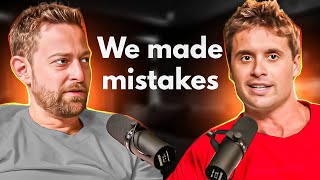
In this conversational podcast episode, host Ryan Shank interviews tech‑sales leader and angel investor Adam Liebman about the realities of raising capital as a solo founder. They discuss the importance of taking action over ideas, building confidence through small wins, and leveraging personal networks for warm introductions. Adam shares his angel‑investing playbook, including cold DMs, special purpose vehicles (SPVs), and the value of “micro‑checks.” The duo also recounts colorful anecdotes from the crypto/NFT boom (Zed Run, stablecoins) and examines creator‑led consumer brands like MrBeast’s Feastables and Prime, highlighting how distribution and community can fuel growth. Ryan introduces Sharewillow, a platform for designing and managing profit‑sharing plans, and explains its positioning for founders seeking equitable compensation structures. The episode wraps with a light‑hearted call‑to‑action, encouraging listeners to comment their favorite Disney character for a chance to win Sharewillow swag, while reinforcing the central message: solo founders can succeed by being resourceful, confident, and strategic in fundraising.
Chapters
Welcome everyone, episode 1 of a podcast. I say a podcast because I don't really know what we're doing here. I said, I said to my friend Adam Lieberman, who I want to introduce and I will introduce in just a second, I said, hey, I want to record a podcast. He's like, do you have a podcast? I said, I don't have a podcast, but I want to record a podcast. I want to go through the motions of renting a studio and figuring out the script of the podcast, bringing, you know, bringing guests in, you know, getting producers and editors. And I just want to go through the motions. So here we are today. It's a podcast. Maybe I'll— maybe we'll title the podcast a podcast.
Not a bad name. I'm Adam, so it's a podcast. I love that.
I love that. And speaking of that, so my name is Ryan Shank, founder of Sharewillow, which we're not going to plug too much because today I just want to chat and just have a conversation. Have a conversation with the boys.
We've also got a lot of sponsors.
We have a lot of sponsorships for our first podcast. I mean, I mean, incredible. And, and we're actually going to talk about creator-led brands and just like a bunch of just random stuff today, but, uh, here's Adam Liebman, prolific tech sales leader, angel investor, and friend. And friend.
Yeah, uh, we have, we have a good story. Adam Liebman, uh, currently the VP of sales at Steno, which I think we will definitely not plug, but we help lawyers find court reporters for depositions. Very fun stuff. That is—
wow.
Uh, I think, I think we'll probably have more fun talking about the trip I took for for Steno recently down to Nashville. But great to be here. A Podcast— am I a guest? Am I a future co-host? Is this a thing? We don't know. We don't know. See how this goes today.
We're gonna see how it goes. Leave a comment, uh, if you like what you see. I know we're gonna be flooded with comments. So like, subscribe, download, definitely, definitely get in early, definitely get in early with the, with the, uh, the comments there. But look, one thing I do want to, want to highlight is that, uh, that life rewards action. And, uh, I just— I mean, even a quick story about booking this podcast. We, uh, I went on Space, which is a website where you can find studios to book in, in New York and other cities. And I saw this backdrop here and I was like, this space looks awesome. It's in SoHo. It's like $150 for an hour to rent the studio. And I just, you know, went through the motions and, and rented the studio and I was like, oh, this is cool. And then it, it kind of transfers from being like an idea to this is happening. It's real. And, you know, I want to highlight like it's not just coming up with ideas and then not taking action. Everyone has ideas. I feel like I've talked to 100 people that are like, I thought of Uber. It's like, okay, yeah, okay, Sally from like Memphis, which I love. Memphis is a cool city too. It's a great city, but it's like life rewards action and then, you know, creativity creates energy that creates action and then just things happen. So like, you know, that saying you create your own luck. And, and one final thing, most people that I've noticed kind of have a fear of failing. So then they don't actually start. But I actually have a fear of not failing because that means I didn't put myself in a position to fail. It means I didn't act.
Yeah, it's true. You know, listen, we're both founders. I had a failed startup. I remember when I was at Single Platform, Dave Tisch actually came in and he gave a talk to the sales team. And I don't remember what the context for this statement was, but he was like, ideas are shit, execution is everything. And it's like you can have the idea for Uber. You have the idea for anything and we all kind of know what we have to do if we want to put something into action. But the tough part is going and doing it. So listen, did I think that on Saturday I was going to be here in a podcast studio recording with you? Absolutely not. But man, this is fun and we'll see what happens.
Yeah, no, this, this studio is awesome. Speaking of that, speaking of failures, I, I forget who it was, but they were like, here's everything I've done. And it's like a list of things. It's like failure, failure, failure, win, failure, failure, failure. It's like if you can bat.200, you could be a multibillionaire.
I mean, that's the— it's like the whole thing about investing, right? It's the power law. You only have to be right once. And one thing I learned from all the angel investments and even maybe more so as an employee working for a non-first-time founder is a huge advantage. Investing in a non-first-time founder is a huge advantage. I know for Squad, uh, which is the failed dating app startup that I, that I had back in 2015, um, I would do roughly 1 million things different if I started that company today. But I didn't know all that stuff, and I had to kind of fail and learn those things on my own. And I think, um, you know, you have to like just go and, and do it and see what happens. You only have to be right once. First, to our warm-up, to Sharewillow.
Exactly. And, and speaking of that, I actually have a good transition there. Um, you were on the forefront of the— at least from my circle of friends, you were on the forefront of a lot of the crypto NFT stuff. And it's funny, we can make fun of ourselves now. I actually have, you know, pictures of NFTs and monkeys and apes and stuff in my apartment that I need— I need to change. I just like— sure, do I, do I burn it?
Like, yeah, what do you do?
That's not a crypto term. Do I actually burn it. But anyway, you, you were, you were in, you were in the arena, as they say. You were playing. And so first of all, you had a big stable on Zed Run. You were doing all of this different stuff. But one thing that I think that I, I keep thinking about is we went to this event in New York on a rooftop.
I think it was a crypto event, or if it wasn't a crypto event, it was Upstream.
It was Upstream. It was Upstream. Yeah, basically. Exactly. And it was at this place, Spring Studios. Beautiful rooftop, by the way. In the summer of '21 when things were just getting hot, hot. And, uh, I remember we were in this circle and like everyone was talking about crypto and stuff, but you were there, or, or you introduced me to this guy Taylor Greene, and, uh, he was at the event. And after that, we, we kind of all actually— I think you maybe started a group text, and, you know, I was jamming on some ideas. So I just recently sold my last company, and I was like, I don't know what to do next. And I was like, having identity issues and stuff. Do I do crypto? And, you know, all this stuff. But like, I mean, not identity issues, but I was trying to figure out like what to do next. What's big? What's interesting? And we were jamming on ideas and in WhatsApp group with Taylor. And this kind of ties back to just like putting yourself out there, creating actions, not being afraid to fail. So it's like, sure, crypto, you know, the NFT stuff, we might have lost money and all of that. But, but what ended up happening is 2 years later when I was starting Sharewillow, you reintroduced me to Taylor, who ended up leading our seed round, who ended up leading like our massive funding round.
Yeah. And that, that intro came from the fact that you guys were both stable members for No Stable, No Fun. No way. That was the stable member. He was a stable member. You were a stable member. And so I think I introduced you and I said, Taylor, this is Ryan. Ryan, Taylor. You guys are both part of No Stable No Fun.
We're fellow owners. So, so if you guys don't know, uh, there's a crypto project called Zed Run. It's a lot of like digital horses and there's horse racing and you can own stables. So Adam actually had like a multi-million dollar stable and WhatsApp group text with like famous people and professional soccer and athletes and things like that. And it was kind of like big.
That was a— that was one of those like just go do it moments where the next thing you know this thing is like taking off. It was really this zeitgeist moment where everyone's investing and this is the first thing, and you're buying these digital horses for tens of thousands of dollars thinking that it's up only, and then you're taking on more money. And I'm having investor calls, I'm like, oh my God, is this a real thing? It was, uh, absolutely. I mean, listen, maybe jury's out, it is no longer a real thing. We did have a very fun party in Las Vegas to celebrate the stable. Um, I was gonna say, there was like company retreats, essentially company retreats, company retreat in Las Vegas to celebrate the 1-year anniversary of No Stable No Fun. We raised hundreds of thousands of dollars at a multimillion dollar valuation. We sold a piece of digital land. That was our biggest win for 7 figures. And today all of that is, you know, worth—
Look, we don't need to talk about today. Okay? Like, I like to— I like to stay positive. Yeah, I like to stay positive. And then look, just bringing it back to— we were doing that. You were doing that. You brought me in. I look at you as one of my, you know, more forward or probably the most forward-thinking friends and trusted advisors. And, and all of that. And, uh, you know, just doing that led to the event, which led to meeting Taylor, which led to the seed round for Share Willow. And it's like, again, just— I don't want to say get in the arena, but like, just create—
do actually put yourself in a position where you can get lucky. Go to the event, make the intro, send the cold DM. How many cold DMs have you sent that have led to X, Y, or Z?
Dude, I emailed, uh, or I cold DM'd Tyler, we'll talk about this more in a little bit. I kind of have actually a topic for it, but I sent Tyler from Beehive a cold DM and it was actually after— it was late. So it was after they raised the like Series A because a lot of times startups will announce funding and then they'll leave a little bit open. So there's— it's kind of like a little hack. So you can kind of like, unless it's super hot and everyone wants allocation and there's like none. Sometimes though, they'll leave a little sliver for angels and stuff like that. So if you see the announcement, sometimes you can like kind of get in. So I DM'd him and I was like, yo, saw that you just raised, like, love Beehive, can I write a check? Like, just let me know wire info, I literally don't need anything else. Like, make it easy, I'll send you my signature packet is what it's called. And, uh, and he's like, nah man, appreciate it. But then what happened, because I just, I thought about it, I put it out there. So I think what happens too, then you're kind of like just aware of it and you're looking for it.
And then they're aware of you, they're aware of you.
But then, then I saw a tweet that they actually— this guy, I'm pretty sure it's public, he tweeted it. But this guy Austin Reiff, who is or was the CEO of Morning Brew, who's like one of his— who Beehive came out of. And he was like, hey, we're launching an SPV, a vehicle to invest in one of the hottest companies. And I was like, this is definitely Beehive. And then I got into the SPV because I sent the DM. I was thinking about it. And then something similar happened. We got into this other company Simplecast, um, yeah, DM the founder, and that ended up being great. We got in early and then they got acquired 2 and a half years later, made 7x. Yeah, yeah, yeah, like that's great. So, uh, so yeah, just send that DM, just create the action, just do something, and that, um, you know, that'll create stuff. And that, that kind of transitions into— so you invest out of an entity called Dream Big Live Big.
Like, what is—
what is Dream— what does that mean to you and why?
I don't even— I don't know where the genesis of this phrase came from. It was just kind of a— I'm a big mottos guy, big sayings guy, and dream big, live big was this idea that I, I felt like you dream it, you think about it, you have this focus on it, and then you're not just dreaming but you're actually living it, right? Kind of that bias towards action. We're not just dreamers here, we're actually living, we're going and we're doing it. And so, uh, I, I started DBLB Ventures, right? You got to have your personal LLC so that you can separate it and put your business stuff there. And so I also think that it's just very startup friendly, right? The idea of creating a startup, dream big, live big, and it's not enough to dream big and live small. Like, you can't live small. We're here to live big. And so in order to do that, you got to dream big too. And that positivity and that general vibe check the other— I used to have this, I think, I think I took it down off my Twitter profile, but it always used to say, hashtag optimize for fun.
Oh yeah, I remember that.
Yeah. And it's funny because the James Clear newsletter, right? It's like the person who wins is the person who has the most fun. That's something that came out this week that he put, you know, the most wisdom in any newsletter. And that was one of his thoughts for the week. The person who wins is the person who has the most fun. And I've always felt the same, right? Like life is too short. All these clichés are clichés for a reason. And so when I would think about my mental model or first principles, like decision-making criteria, it's like, let's optimize for fun. Let's optimize for having a good time. Let's optimize for participation and getting everyone in there, because it's, it's typically better. And the more people you get together, especially if they're good people, the more likely you're going to have that magic of this connection or that connection. When I was doing all my advising, it was out of DBLB, right? And those were— that was who cut the checks. And my mantra, and I still say this when I get on calls, it's like the more good you put out, the more good you get back. I will take any meeting. I will try to be as helpful as I possibly can. And is the hit rate 100% on the people I meet with, they need help advising, and then I'm the person they go to? Absolutely not. I would say it might even be less than 50%, but the number of times that I've met with Person A and then it hasn't— we haven't had a formal working relationship, but Person A down the road has introduced me to person B and person C. I can't— I can't even keep track. And that's led to so many doors opening and so many opportunities. Even the failure of Squad, I got to be in rooms with people I never should have been in rooms with. You know, that leads me to working with Taylor and Ben, who then I'm able to introduce to you, and they're backing you now. You know, all that stuff. You got to put yourself in a position to be lucky. You got to dream big. You got to live big.
Yeah, I was just— I was just thinking as you were saying that, I was like, man, even, you know, even with our stuff, when we were going through the fundraise, you know, we had a few people that— or you knew a lot of these investors that I was talking to. And they're like, you know, and when you, you know, you can name drop a true common friend. Yes. A true mutual who then they call. We had this one, you know, one of our investors called, called Adam, just reference check. And like, he called me back and he's like, dude, like Adam says great things about you and they trust your word, you know, because you've built those relationships over time. But It's like the world's small, so it's like, yes, if you're just out there doing things, creating motion, things are gonna happen. Um, yeah, James Clear also said you gotta make big swings.
Yeah, so the— so he puts out this newsletter each week, 321.
Is he the Atomic Habits guy?
He is the Atomic Habits guy.
Fucking love that.
Yes, it's a great— he is a great thinker. Um, him and then, uh, Shane Parrish from Farnam Street is another really good one that I like each week, but James Clear puts out this newsletter, 3-2-1. I think it's 3 ideas from him, 2 quotes from others, and then 1, 1 thing to think about, which is just a cool format for a newsletter because it doesn't take very long to like go through it each week. And so the first one this week was about who wins in life, and it's the person who has the most fun. And then there was a number 2, but I don't remember what it is. And then the third one, the third idea from him was in order to take big swings or in order to have big outcomes, you have to be willing to take big swings. And big swings just naturally have more emotion than the smaller stuff. And one thing I've always admired about you is that you have absolutely zero fear for taking the biggest possible swings there is.
And then—
or there are. And what ends up happening is all this stuff that we're talking about that leads to, you know, probably of all this, Sharewillow is the hottest deal that I have ever invested in in terms of getting an allocation and the other people that are around it and how badly people wanted to invest. And that's all a function of you just like getting out there and making shit happen and not being afraid to go big and aim high. And you've hit the target more often than not, which is, which is really fucking cool. Which is why when I talk to people and I have no problem giving these character references, it's like Ryan is the quintessential CEO. He is the visionary. He is the person with those big ideas who can put them into action. And like I've said to everyone, like, it would be great. I would love to work with him. Someday. And so, you know, you got to take those big swings and you're very comfortable in that arena, which is great.
Thank you. Thank you. Yeah. So I'm definitely— I definitely haven't always been comfortable. And it's funny, my brother sent me a text the other day and he's like, he's like, man, you're just like playing on a different level. But yes, I've tried to kind of rewire my mindset, you know, like I look at— I look at people like Michael Rubin and like Scooter Braun and like the deals those guys are doing are like big boy deals. Because I think what happened for a while is I got too caught up in this like tech startup thing where it's like, raise a $2 million seed round, blah blah blah, sell for a billion. Where then I'm looking at like Rubin like raising this big boy money at like $30 billion valuation, buying companies, doing joint ventures with like me— with like Jay-Z when they bought, uh, some clothing brand or something like that. He's doing the Reform Alliance, they're building like libraries. I'm like, Again, this kind of goes back to like mindset and stuff, but it's like, just take— just, just like, you gotta go big. And it's— and the other thing, you know, I've thought about as I've gotten older is like, we're only here for a little bit of time, and like, just fucking swing, you know, just swing and go big. And like, I actually maybe disagree that like the bigger decisions actually are probably the same amount of— like, if you could like measure stress they're probably the same level of stress as a smaller decision. Sort of like in sales, right?
Thinking smaller scale. So it feels like the same.
It probably feels the same. Your body— I'd be interested to see like a, like an analytic approach to like how—
I don't know how you measure the brainwaves, the stress.
It's like, is it the same amount of stress? Like, like is someone that's stressed because like they're late picking up their kid? Is that the same level of stress as someone that's like about to close a multibillion-dollar acquisition and someone's blocking it and they got to do the lawyer? Like, like, is the body's response the same, or is it like— is actually bigger? It might be the same.
Yeah. And if everything's relative, just fucking go big, right? And get comfortable with it as soon as you possibly can.
Yeah.
Um, because then you put yourself running with the big dogs.
Running with the big dogs. And it's like— and that kind of goes back to like, you know, I think when I grew up, I didn't grow up around anyone with money. So it's like, it was very much like, they're over there, they're up there, And it's like, it's so, it's so, I'm so detached and so far away from it that it's like, I can't even imagine like how you could get there. But then I started like, as I got into like college and then you start to hang out with people that have money because they're not from like my little hometown.
Yep. Yep.
So then you start to like actually hang out with like billionaires and stuff and you're like, dude, like I kind of got it. Like this guy's not that different than I am.
Sure.
And like they're kind of awesome, you know, they vary, but right, like, depends. But it's like, this guy's just like a normal dude who just like, he also just dreamed big and he grinded and he's like just making deals and stuff. So then, then you start to be like, I can do that, and you start to like believe, you know, when you surround yourself 100 with those people. I used to drive, uh, I like would still do this if I had a car, but I'm in New York. But I used to drive through like rich neighborhoods just to look at the houses, just to like kind of get inspired.
Sure. Yeah, I mean, hanging around with the people I think is a really big part of it, right? Yeah. Um, there's the— and this is so old and I, I can't even remember where it's from, but there's like the Doors, uh, not theory, but like the Doors framework of New York City where it's like you move here and you're like bright-eyed bushy-tailed and you're in the first room and then you start hanging out with some people and they take you to the back and there's another door and you like go through that door and you're like, oh shit. This is like way cooler. And then you hang in there for a little bit and then you meet someone and they take you to another door and you go back and there's always another door in New York City. And that's part of what I love. And I feel like as my career has progressed and the people I spend time with, you know, remember going to whose house in the Hamptons? Oh, Michael. Michael Loeb. Michael Loeb. Loeb Ventures. Shout out to Noop. But getting, getting that chance to go there and like spend time with those people. And you're just like, what's happening right here? Right? And then I remember coming back from that, there was the, the party at his townhouse, and that was really where I connected with Shu for the first time. And then this has become someone who I consider a good friend, you know, who's, who's building businesses and just, you know, talk about running with the big dogs. And it's like I now am associated with that person and I can see the things that they do, learn from them, get exposed to the people they spend time with. There's always another room. And I think we've just done a good job at continuing to move towards the back as, as we've progressed.
And I think it's also encouraging, you know, once you're in conversations with them, seeing them respect and almost like admire your youth and energy. You're like, this guy likes— you know, you kind of feel that they like things in you, so then that gives you this like even more earned confidence. Yeah, I, I think about earned confidence a lot.
Earned confidence is like The opposite of imposter syndrome.
It's like when you, you've done something to prove it so you can say like, historic, like, I know that I have done these things, so I'm confident in my ability. Whereas before you've actually done something, a lot of times, like, if you're— it's almost like, uh, like, it's not like fake confidence, but it's like, what's your confidence based off of, you know?
Yeah.
But if I'm like, no, I've done these things and I'm proud and I've accomplished them and I have this earned confidence, like that just like exudes to the whole room and to the people and stuff. And I think like even just having the respect of these, of these people that you admire makes you be like, all right, I can do it. He believes in me. You know what I mean?
I also think that one of my favorite phrases, they reflect what you project. And this goes hand in hand with like leaders bring the weather. When you go into these conversations, these meetings, these hangouts, these associations, and you're excited to be there and you have that positive energy, people feed off that. They want to be around other people who have that kind of energy. And so even if that earned confidence might be lacking for a second, if you're just a positive person that is excited to be there, that can go a long way. And I think some people want to— they don't bring that. They bring rainy weather. And I think one thing that we share in common is walking into a room and, you know, bringing that sunshine and saying, hey, we're happy to be here. We're excited to be here. Like, this is fucking awesome, and always appreciating that in the moment, which I think people recognize and they respect.
Dude, 100%. Even like going back to the Sharewillow fundraise, like, you could look at it as, I don't have any co-founders, I'm not technical, right? There's zero employees, there's no product. I have no product, no team, absolutely zero business raising this round.
Particularly zero business raising this round, not just raising this round raising multiple rounds, and not just raising multiple rounds, but raising multiple rounds from arguably the best VCs in the country. Like, how does that happen?
How does that happen?
Leaders bring the weather.
That's crazy. But like, like, when I— like, I'm literally getting the chills right now. Like, when I'm in go mode, like, especially right now, dude, I literally have the chills. When I'm in go mode and I'm like— like, you, you can't help but feel the enthusiasm, you know? Like, like, now that I know, like, exactly what's not work— what we're building, it's like I have so much confidence that it's like if you're in a meeting with me and I'm talking about this and I'm so fucking invested and I have so much like passion, like that's what they want to, you know, and arguably that's what like early stage investors back. They back people, but a lot of times they say they back people, but then they're like, all right, well, you need a technical co-founder and like, you know, your, your SAFE is— the cap is too high. It's like, all right, John, John from Sequoia.
So funny story, when I was doing Squad and I was going around and And part of me deciding whether to go or no-go was, you know, am I going to be able to get investment here? Because I don't want to go on the ramen diet. I could go, I could do the VP sales thing. And so I was lucky enough to go pitch first round, and, you know, same similar situation, right? Solo, non-technical, first-time founder doing a consumer app in the dating space.
Nuts.
That is every possible— you just got bingo on the don't back this, do not back that person. And so I remember, and also if I showed you my deck, which I think you've seen, but this is 2015. My deck was, I think, like— like, you probably use shitty PowerPoint with Times New Roman font, with pretty much Times New Roman font.
Yeah.
And I go and I pitch, and I'm, you know, so excited in the room, and I've got this enthusiasm. And then I go downstairs to the bar by the old First Round Capital offices, and I wait there for a couple hours. And Wiley Cerilli comes down. He was the partner at First Round who kind of walked me in and a mentor, the CEO of Single Platform. And he sits down and he's like, do you want to hear their feedback? I'm like, yeah, of course I want to hear their feedback. He's like, well, they said they don't love the idea. I'm like, okay, okay, cool, cool, cool, cool. But they said, how can we not back Adam? And they said, okay, we're going to invest in the seed round. Next thing you know, I'm on the phone with Ben Lair. Lair is like, we want to get in too. Taylor becomes my partner and the rest is, you know, history. And so that's just a perfect example. You go in there with that confidence, that enthusiasm. People can tell that you're invested in something and they want to be associated with that. I feel like you have to tell people what ShareRolo does now.
Yeah. So, and by the way, hey, are we good on this laptop? Is this cutting off this camera or anything? All right.
Sorry.
Sorry. Technical difficulties. First part, it's a—
it's a podcast.
It's the first It's the first A-Pod, so I want to make sure I'm not getting blocked right now from, from my laptop. But so, yes. So quick, quick summary. Started a company called Sharewillow. It is the easiest way. It's actually a modern platform for businesses to design, launch, and manage profit sharing plans. Right now, there, there's no platforms for, for companies to create, you know, incentive plans that are motivate and reward employees while aligning incentives. Right. So, so with like tech, tech companies and we've been talking about it today, they issue stock options to their employees and public companies do as well.
Right.
And there's an equity incentive plan is what it's called. And most of those companies are using platforms like Carta as like system of record and kind of software to manage everything. But for the millions of small businesses, you know, whether you're a service company like an agency, you know, a home services company, HVAC, plumbing, whether you're a creator, whether you're a studio, there's a lot of these like cash-based businesses and it doesn't make sense to give equity to the team. Like you're probably not going to sell, you know, there's not really a market. So a lot of them are doing profit sharing right now, or a lot of them want to do profit sharing because they're like, there has to be a better way to, you know, issue comp and align incentives, but I don't really know how to do it. So the ones that are doing profit sharing, it's super manual. They go to a lawyer, they draft these docs, they ask the lawyer like, how should I structure the plan and do the calculations and everything? And the ones that aren't doing it but want to are just like, how do I structure the plan? And then no one ever tells them. But so, so, and then they're doing it all manually. There's like all these forms, Excel template or Excel calculations and everything, and then there's no transparency. For the employees. You can't see the historical distribution. So it's like, is it real? Is it not real? So what we've done is we've created the first system of record, the first software platform that allows them to design the plans. They can have triggers, vesting, design the plans, manage the plans, issue the distributions, the employees get it, everyone's happier. And so that's Sharewillow, first sponsor, first sponsor Sharewillow.
But pretty good summary. I think, you know, for, for context, it feels like we are moving towards more profit sharing being offered at companies, not less.
Yeah.
And I'm excited to see Sharewillow become this turnkey solution for all these businesses that had no idea how to offer a profit sharing plan. And if they did have an idea, it felt like it was really complicated, really expensive to manage, um, to be able to use the software. This is going to be great.
Yeah. And one, one inspiration, actually two inspirations. One, I, I heard a, an idea similar to this on the My First Million podcast. Sean Puri and Sam Parr, which I want to talk about them in a second because I really look up to those guys. And then also Nathan Barry from ConvertKit wrote a blog post about how ConvertKit isn't venture-backed. They're not going to sell and they do profit sharing with their employees. And also related to ConvertKit recently, he actually did end up creating an option pool and distributing about 10% of the company to their employees. In stock. And what they do, which I think is kind of cool, is every 2 years now, what they do, they basically do a secondary offering. So he'll say, hey, he'll put together what's called a roll-up vehicle, RUV, on AngelList, and he'll get people to invest into the vehicle. And right now, he tweeted it right now, they're raising for this roll-up vehicle that's going to buy back equity from employees and that kind of gives them liquidity. So there's a lot of just things that are happening with employee ownership and compensation and how those two things go together. There's great companies like TeamShares that are doing something and kind of shifting the ownership from owners to employees. And I think, you know, all of these companies, regardless of the ownership and cap table, have to do something with incentive plan. But that's enough of Sharewillow. I think we should— I think we should go into—
what else do you want to talk about?
I think we should go into it. Oh, I got a—
I got a lot. Long list.
So today Ladies and gentlemen, uh, there's a fight, uh, there is a fight that's happening.
Who's fighting?
Uh, in Manchester, England. Manchester, England. In Manchester, England.
Okay.
And, uh, it's, it's, it's the headlining fights are this guy KSI. He's fighting an actual boxer, Tommy Fury, who previously had fought Jake Paul. And Tommy Fury actually beat Jake Paul. So KSI and Tommy Fury. And then, uh, the second main fight is Logan Paul versus, uh, guy Dylan Dennis.
A lot of trash talking. So Dylan Dennis—
I don't want to talk about the fight even though I said all of that. What I actually want to talk about is the brand. Creator-led brands.
Sure.
I am kind of obsessed with creator-led brands, and not necessarily the actual brand, but I'm, I'm sort of obsessed with the business behind creator-led brands. As you can see today, we have Prime Uh, so we're not sponsored. This is actually an anti-sponsorship. We, we actually bought them retail pricing, not even wholesale.
Anti-sponsorship.
It's an anti-sponsorship. Uh, and, uh, and then, you know, there's other things like Feastables from MrBeast, um, which by the way, he said at the All In Summit, uh, which is like a conference for the All In podcast, he said they're gonna do a couple hundred million in revenue.
It's crazy. Yeah, he's going fucking after Hershey's peanut butter and Mars, like Mars candy.
He's, he's like, these guys are dinosaurs. He's like, he's like, chocolate hasn't been innovated in 20 years. They have all these ingredients, we have 6 ingredients or 4 ingredients. He's like, and, and he has the— he's like, I own the audience. And, uh, and he also— and nowadays it's interesting because you can kind of like get distribution into stores. I feel like before it was like, we gotta sell at D2C, and then, um, it was kind of hard to be into like 7-Eleven. It was hard to like actually get like real product distribution, especially for physical products. But now I feel like you can kind of plug into these like— I don't even know what to do— but distributors that then they can, they can get distribution like relatively easily. I think maybe they've, they maybe proved via pilots that like, hey, this will sell and move and stuff, and they're like, we have the audience stuff like that. But, uh, again, obsessed with creator-led brands. What, what are your thoughts?
So I was just in Nashville for this conference, and we went out on Broadway in Nashville.
Yep.
And everything there is essentially a creative-led or creator-led brand. You're— we started at Luke Bryan's bar, then we went across the street to Kid Rock's bar, and down the road was Miranda Lambert's. And I think there's like a dozen other—
did you go to the Barstool Bar there?
Uh, we— so surprise, surprise, uh, couple people from the conference came up. They said, hey, do you know who you look like? As if I'd never gotten it before. I'm like, no, who? Like, Dave Portnoy. We have to go to the Barstool Bar. We walked in the Barstool Bar— nothing against the Barstool Bar, but it was completely empty when we went there. Uh, we did get a picture. That's— I, I don't know, is that a creator-led brand?
Yeah, so I think, um, 100%. So I think what, Barstool?
Barstool, just the Barstool Bar. But the point is in Nashville, everything was a creator-led brand, right?
Miranda Lambert.
Yes.
Luke Bryan.
Everyone's just lending their name. And I don't know if you remember, but we looked at that company that was going to do fragrances.
Yes.
And makeup and cosmetics. And ultimately we passed. And I don't think that they really got it off the ground. I think we just didn't see the right company because clearly how many, uh, how many creators have come out with some sort of cosmetics line. Yeah, something to sell.
So for context, we looked at this company that basically what they do is they do the business and backend for fragrances and they'll partner with a creator like— and this may be just an example, although I think this is accurate— they'll partner with a creator like Paris Hilton or Selena Gomez.
Right.
And they'll have equity and they'll say like it's going to be the Selena Gomez fragrance perfume or whatever. But then this company partners with them and does all the manufacturing, all of that. And then this creator is actually, you know, the front and the brand and stuff. And by the way, I got to get back to Prime because that's exactly what Prime did. So yeah, there's a, there's a— so what they did is they actually partnered with a company in, uh, it's in Middle America. I can't believe I'm not gonna know the state right now. It's in like Kentucky though, and it's called, uh, oh man, oh man, it's right on the tip of my tongue.
I thought you were a Prime fanboy.
I'm a huge Prime fanboy. So, so basically what they did is they partnered with this company And this company has also put out other beverages like Alani Energy Drink, if you're familiar with that.
It was actually next to Prime.
Exactly. So that's how their distribution is. So what I think happens is this company has the manufacturing, has the distribution, has kind of like the ops, the, you know, the business and ops and everything. And what they want to do is they want to partner with creators. So they partner, for instance, with Prime, Logan Paul, KSI. They're like, hey, let's create a story, let's create a brand for a beverage line. And maybe they went back and forth. Do we do beverage? Do we do energy drinks? Do we do chocolates? I don't know what it is, but, you know, it makes sense for Logan and KSI because they're boxers and they're like athletes. So they can say like, oh, hydration, right? And I think probably what got this opportunity in front of them or the reason they saw the opportunity is I'm assuming during their boxing fights, which they have one today, they were getting brand sponsorships inbound from hydration companies, right? So they're like, holy shit, if if this hydration company is willing to pay me $10 million to put their logo on my shorts, they must be making a lot more on the back end.
Yeah, right.
So they launched this in 2022, uh, January 1st, 2022. Guess what their monthly retail sales are right now?
You're gonna tell me and it's gonna be a disgustingly high number.
Okay, so, so I'm gonna say these numbers. Hopefully if we edit this pod we can put them on the, um, screen. If we don't edit it, because like I don't even know if we have an editor, You can write them down, but in 2022— write them down, get out your pens and pencils. I'm going to say 2022 full year numbers first.
Okay.
They did $250 million in retail sales.
Okay.
So that, that number is like when we buy that for $3, but their revenue from that. So $250 million in retail sales, their revenue, which is attributable to them, $110 million. $110 million in revenue in year one. Okay. Logan said on a podcast that in January of '23, just in January. So the January, the next year, they're doing the— in one month they're doing $45 million in retail sales, which is like $20 million in revenue, $20 million a month. So that's $237 annually run rate. Guess what they're doing right now? 2023 is October 2023.
And this was January '23. You said they're doing—
that was January of '23. So it's 10 months later, $45 in January.
Uh, I mean, if they doubled, that would feel pretty good.
That's crazy number, but they're doing, uh, I believe it's around $80 million a month in retail sales.
Okay, so they haven't doubled yet? I don't know, man.
I mean, that's a crazy ask. Are you kidding me? So, so $80 million a month in retail sales. What's 12 times 8?
Uh, 12 times 8 is 96.
$960 million in retail sales. Okay. BodyArmor sold for 5x retail sales. Okay, so BodyArmor, BodyArmor got acquired. It was actually 4.7x, but they were doing $1.4 billion in retail sales and they sold for $6.6 billion. So if Prime is doing $960 million, call it a billion, and there's a 5x multiple, Prime is worth $5 billion. But here's the kicker. Prime's growth rate is fucking stupid right now.
So I mean, they didn't even double in 10 months.
That's just an absurd statement that we're not going to even discuss.
Okay, absurd growth rate.
Absurd growth rate. And growth rate gets factored into multiples. Okay, so let's say that— let's say it's double. Let's see, I mean, so, all right, so conservatively Prime is worth $5 billion, and like not even that much of a stretch, it's worth $10 billion. Logan's stake is 20%. Logan Paul and KSI are billionaires from 2 years of pushing a product.
So have you— do you drink Prime? Yes, on the regular. Yeah. Do you know other people who drink Prime on the right? Kids.
Taylor Greene's kids love Prime.
Any kids?
Kids. Yeah.
Okay, interesting. I don't know who the demo is because I do not know a single person besides you, bro, who's drinking Prime. You're—
yes, correct.
This is called the demo.
You're not the demo.
Which— what is that? I'm gonna try it right now for the first time.
Okay.
Glowberry. What, what flavor is that? It sounds like Ecto Cool.
You obviously don't— this is a limited drop, okay?
Oh my God, this is awful. This is— what flavor is this?
Try it. Try, uh, try Ice Pop.
This is a limited drop because it's not good. This is not— this is actively not good. And, and how is this hydration? Is it even like Why do I not stick with Gatorade? First of all, we'll try the Ice Pop.
It's so funny. It's so funny. No, no, that one's only empty. I just drank that earlier.
We'll try the Ice Pop. I'm hoping this tastes like a Fire Bomb Ice Pop. Do you think that that flavor tastes good? You cannot think it tastes good. And what flavor do you even think that is? Glowberry. It's a made-up flavor because it's terrible.
You're obviously not bought into the story, which is fine.
I mean, if you need to buy into the story for the drink to taste good, then we're going to say it's not a good drink. Ice Pop. Ice Pop Prime. Let's see. Okay, yeah, this is better. Okay, yeah, still way too sweet. Absolutely not what I'm looking for in my hydration drink. I understand why children love it.
Okay, so, uh, again, I don't even know why I'm getting so defensive, but then we can talk about the, um— I want to talk about like the story and like the why behind these creator-led brands.
We can move on from Prime in just a second, but yeah, let's move on.
For instance, like 25 calories, it's 10% coconut water. There's actually no sugar, it's fake sugar, which is— are you— whatever. So that's, that's kind of like—
it tastes like there's a ton of sugar.
Yeah, that's like their whole pitch. Um, but all right, so the business aspect. So first of all, like, they do drops, they do drops. It's like cool for kids to like have Prime because like it just is. So it's like this kid thing, kids. There's reseller markets. The sneakerheads went from sneakers to fucking Prime. So there's like this whole like resale market. There's this scarcity element aspect of it. There's the cool element. And then what I think is interesting with a lot of these creator-led brands is you feel like connected to— you feel connected to the creator. Like especially a YouTuber like who gives you like behind the scenes access, you actually feel like you know the person. So when you buy it, you have such a connection to the brand and you're like way more loyal to the brand. Or, or the other thing, you know, I watched a MrBeast video And again, maybe I'm not the typical consumer, but I actually think I do behave like a typical consumer, but I just am more aware of it. Like, I'll watch a MrBeast video, and then if I'm on Uber Eats and I'm on, you know, one of the apps, I'll like add Feastables just to like add it and support. I'm not like a chocolate guy, right? Uh, but like, you just feel like a connection to the brand, and I think that's like how you can win and lead with creator-led brands. Look, there's a lot of them that don't do it right for sure. Um, I don't know this— I don't know this guy, but, um, you probably know him, the guy Dan— Dan Reach.
Oh, Dan Reich.
Dan Reich.
Yeah, yeah, yeah.
He seems to be doing everything right.
He is doing absolutely everything right. This guy is making documentaries about breaking into his ledger and recovering millions of dollars. Um, his first skincare company, Tula, was an absolute runaway success, selling out on, uh, on QVC and then getting acquired. And his new one is called— my goodness, I'm blanking. Um, let me look it up. He has his new skincare brand and it's bigger than anything he's ever done. Not to mention he's a multi-entrepreneur, successful founder, multiple acquisitions. It's absolutely insane.
But one of the things that he— that I believe he does— again, I, I don't know him at all. I follow him from a distance.
And Dibs Beauty.
Dibs, right?
Bigger Than Tula, which was a massive success, acquired by P&G.
So from my understanding is what he does is he actually then partners with a creator.
Yeah.
So it's, it's, it's not necessarily— I guess it would be— is it a creator-led brand?
Uh, I don't think Dibs is a technically creator-led brand, but he's got a bunch of creators into the orbit.
But I feel like some of them are like co-founders though, or like maybe there's one co-founder. He actually— I think they— he just posted a video somewhere and they were saying the new face of—
sure, of—
what's it?
Dibs.
Dibs is the new one. Yes, new face of Dibs is like this person that I follow, and it's like this girl.
Girl. Yeah, I think that's new face though, right? Okay, that's like a line coming out or something. I don't— I, again, I don't know all the specifics. I do know Dan, right?
Because I actually think that that's super interesting of like, hey, I'm gonna found the company, but like, I need a partner with an audience and also that has like expertise in the whatever industry I'm in, right? So it's like, hey, let me go find this partner. Hey, come to them, you know, potentially sort of like the people did with Prime and going to Logan and them. But it's like if Dan's going to them and he's saying, hey, we, we can do this, I've done this in the past, but, you know, I need you on board and I need you to be the face and, you know, all these good things will happen. Do you think, do you think that's necessary now, um, to have a creator as a face of your brand, or someone with an audience.
So obviously having an audience is going to help for sure. Um, you know, when I think about some of the brands that I use and I like, one that comes to mind is ZBiotics. I feel like ZBiotics is having a moment right now. Uh, I first found out— so if you don't know ZBiotics, ZBiotics is a tiny little shot-like drink. It is a probiotic that you take, uh, 2 hours before drinking is ideal. And then it targets the enzymes that cause a hangover. And so it lasts for like 18 hours. I heard about this from two separate groups of friends within days of each other. I'm like, okay, I'm extremely skeptical, but I will try this out.
I was at a wedding and the person sitting next to me was a 50-year-old woman and she was raving about ZBiotics.
And so it's clearly having a moment, right? I took the ZBiotics. It's magic juice. It is absolutely unbelievable. We are not yet a ZBiotics-sponsored podcast, but—
but we're open.
We are very open.
We're open to it.
They're doing lots of cool stuff. They did a thing for fill out this form and your entire wedding party gets ZBiotics. And I have a couple of friends who did that. Anyway, that is not a creator-led brand. It is having a moment. I would love to see their sales. I think it's reaching an inflection point. The other one that comes to mind, and this isn't, you know, necessarily— I've eaten it. I think it's good. They have this interesting niche in the market, but Immi Ramen, and it's like very healthy ramen noodles, ton of protein, ton of fiber, opposite of a creator-led brand. They've tried to have a story around them, and I think ZBiotics does the same thing.
Yeah, I don't think it's necessary.
I think it definitely is a boost, right? If you had MrBeast Alcohol Hangover Cure, is that going to do better than ZBiotics? Abso-fucking-lutely. But is that a requirement in today's landscape to be successful? Probably not. It's just, it's very helpful to have it.
Yeah, I think it's helpful to have. And a lot of it's also interesting that it's like if you don't have it and even if you do have it, it's almost like partnering with creators is a necessary channel at least, right? So even if you're not a creator-led brand, a lot of them are like, all right, we have to have creators as part of our marketing strategy. And, you know, there's a lot of— there's a whole ecosystem now of agencies that are like place you with brands and creators and do, you know, ad buys and, and ad reads and, and, and podcasts and stuff.
And now you've got another channel with the NIL deals, and you've got marketplaces for athletes as well.
Yeah.
Um, there's a, there's a company I invested in called Meepo. I think you remember Meepo, the gummies. The gummies, you eat a bag of them, it's like a full meal. Um, very not a creator-led brand, but his strategy has been partnering with creators, mostly fitness influencers, and having them post about Meepo. So now you're getting that reach. I think it's a— it's absolutely a necessary channel that you've got to have, dude.
Uh, I just watched the Jewel documentary on Netflix. Have you seen it?
The singer?
No, Jewel.
J-U-E-L. Oh, oh, Jewel. Okay, the vape. I have not seen it.
You have to watch it. So it's—
did they have creator partners?
So Jewel, what happened was— so, so without going— it's a longer longer story, uh, but basically what happened is they created this ad campaign, um, and it was kind of fun and stuff. And then it didn't really like take off like we think of Juul, how it took off in like 2017. And what— but, but then what they did after that is they had a couple like of these influencer parties, and they basically seated— they would have parties, they would have like the Juuls out, people were like smoking them and stuff, and they would basically like seed these influencers with jewels and stuff. And it almost— see, if you watch the documentary, it almost seems like it took a little while, like it almost took like 4 to 6 months for it to then start to get almost like natively placed into these influencers. Maybe because they just like got them addicted. Yeah, but like then it— then like once the big boy influencers— and when I say big boy, that's not gender specific— because like Bella Hadid, all of these like big ones, and they would like have it in their hand and it was almost like, if you know, you know, but it wasn't. So it's not— obviously it's not creator-led, but it seems like the whole like influencer creator space is what took this thing and just went— took it to outer space.
Sure. I think a bit of a reach for me. It's more like they created something that people wanted and so famous people had it and then other people saw that and wanted it too. I don't know if that's like a creator-led brand. If you make a great product, that celebs want to, you know, wear, use, uh, endorse, the— sometimes they'll do that for free. That's like saying the iPhone takes off because, you know, our favorite movie stars are using iPhones.
I was wrong. You're right. As soon as you started talking, I go, yep, I was wrong. Like, hey, it happens.
This is, this is not live, but it's live to tape.
It feels live tape. Uh, what— all right, so we, we're going to wrap up in just a second. What companies do you love right now? What founders do you love? Who are you following? What's interesting?
Okay, so, so this one, and you know, obviously my scope is extremely limited and I tend to be biased towards the things that I know, um, but one company top of mind right now has to be Jackpocket. I look at these guys— so Jackpocket, if you don't know Jackpocket, it's a mobile app that lets you buy lottery tickets from your phone. So instead of having to go to the bodega or, you know, remember to purchase them, you can even set a reminder. If it gets above a certain jackpot, we're going to auto-purchase tickets, right? Watching this company go from an absolute nothing— no one said it was going to work, they thought it was stupid, there were so many regulatory hurdles— to now selling double-digit percentages of all lottery tickets in the states that they're in has been absolutely incredible. And I feel like every week I am seeing them announce another partnership. Yeah, they just announced that they are the official lottery provider of, um, whoever owns USA Today. I forget the name of the overarching media company. Um, they did a round, I think at the end of last year, that was like a small strategic with 7 or 8 different sports teams. And I believe that the Jack Pocket logo is on the Islanders' hats, uh, the Islanders' hats, the Islanders' helmets for hockey, which is just totally crazy. They have a, um, they sponsor an inning on the signage of the New York—
I got it, I got it. This is rapid fire, let's go. Sorry. Jackpocket.
Jackpocket. Love Jackpocket. Think that one's great. Um, we already talked about ZBiotics. The other one that I love, uh, is Bilt. I think Bilt is doing some incredible stuff with paying your rent, the way that they've like gamified—
Bilt or built?
Bilt. B-I-L-T. The credit card that lets you pay your rent to earn points. Um, the fact that they have created this like gamified— I'm excited to pay my rent on the first of the month. Yeah, yeah, that is crazy to me. What are some companies that you like? Sorry, I went— I just got really excited.
No, no, no, I love it. I love it.
Uh, tools.
Um, I love Beehive. Uh, I love Beehive as a brand. I kind of like following their story, and then I'm using them now. So I, I like, I like all of that.
Do you think Beehive is going to start to slow down aggressively? I was thinking about this the other day. Are there really that many newsletters, and are there really that many successful newsletters? I don't know.
I don't know.
The, the Beehive founder and the Morning Brew growth story is truly incredible. I was lucky enough to get advice from them when I was at a couple of other companies trying to talk about like how to activate your users and growth and marketing. They're geniuses, no doubt about it. But how big is that TAM? Like, I genuinely don't know.
I also don't know. I think the bigger vision is not just newsletters, it's other things. And then I also think no one's created a native ad network within newsletters.
That's a good point. That's a great point.
Oh, so, so there's a lot of stuff that they're doing. They're also doing a lot of things to be able to like cross-promote newsletters with these things called boosts.
Okay.
Um, so they're doing boosts, they're creating a native ad network because right now, I mean, even the process of like sponsoring a pod or a newsletter, yeah, that's like kind of crazy. Like I'm doing a sponsorship right now, uh, for from Sharewillow sponsoring this like TikTok creator who does, um, like HR and finance videos and stuff. And like there's an agency and then they gotta send me their media kit and then I'm like, cool, then they send me the DocuSign and they're like, here's a creator send. It's like I literally reached out to them a month and a half ago, it's gonna be 2.5 months. So what, what they're— what Beehive's doing, and that's for like TikTok videos and stuff, but like with newsletters it's a similar— it's the same exact thing that happens, uh, a lot of these like agencies. And by the way, there was actually, uh there was actually an exposé from Coffeezilla of this agency that was like representing a bunch of creator podcasts. And the agency like wasn't paying out the creators. They would take like millions of dollars in product sponsorships and people would do the ad reads on their, on their podcast, just like we're going to be a massive podcast and have to do ad reads and stuff. Imagine an agency is giving us these like brand deals and we're like, fuck yeah, Prime's going to give us like $10K or like $100K per episode. We have like millions of subscribers and stuff. And then we never get the— we never get the payment from them. So anyway, that's what this agency is doing. I think there's a lot of like dirty shit in there. Anyway, that's a really long tangent to say that with Beehive is doing is the brand could say like, hey, we'll pay like per impression or CPM or, or whatever it is. And then there's just like a network in there.
Beehive, what else?
That was a really long— so I don't use this product, but I again, I kind of admire products and founders from a distance. Linear seems to be like on a tear right now.
Okay, what does Linear do?
Linear is, uh, it's product— it's basically what you use for like creating products. So like, uh, instead of like a Trello or, or all these other tickets, a lot— like, BF uses Linear. A lot of like great product companies are using Linear to do like backlog and like product development. Okay. Um, but like incredible founders and teams and design, and they're just doing things that are, uh, really nice. Again, from a distance, I like what Deal's doing. Deal Payroll and HR software, they seem to be on a tear.
I— so fun story about Deal. I got intro'd and they were looking for some sales help, sales leader, and the timing was not right with my existing company that then had some serious trouble during COVID And that was, that was certainly one that got away very, very quickly.
Deal supposedly is the fastest growing company ever.
They were So Jeeves was basically like just behind Deal, and they're in that same space. I think just international, uh, there's so much to gobble up internationally, and they both got to go after it. And then the timing was right with like COVID, because now you're hiring all these people who work in these other countries. Yeah, yeah, uh, great company. That's a good one.
That is a really good one. Um, and another one similar to that, I actually don't admire them as much as Deal from like a product and design perspective, but, uh, Parker Conrad with Rippling, dude, my man has a chip on his shoulder. Like, I didn't realize how much, uh, he is going after David Sacks and how much— like, did you hear about all the, like, the drama with Zenefits and how, like, they were like, all right, we're not gonna say anything, like, bad, blah blah, and then David Sacks, like, goes and just, I guess, puts out this— according to Parker in some other podcast, it's like David puts out this press release that like basically throws Conrad Parker under the bus and is like, he was like, like illegally operating this like insurance buying thing with unlicensed insurance agents or something like that. Anyway, Parker's like, I'm going to create the biggest fucking company ever. And he's like, say fuck you to these guys. Like, this guy has a chip on his shoulder and I love anyone that has a chip on their shoulder like that. So I really like him from a distance. Kind of bigger people that I just like admire and stuff. Like I said, like Rubin. I think he's doing big stuff. I've always been a fanboy of Scooter Braun. Sure, I think Scooter's doing some cool stuff.
Controversial take, controversial take right now, man. You want to wrap up?
Yeah, let's wrap up. So thank you so much, uh, to all the listeners out there. I know, I know everyone stayed till the end, every single one. If you stayed till the end, uh, make a comment and say who you liked better, Ryan, or— or say—
that's a terrible—
okay, that's a really terrible—
just how about like say you're—
yeah, yeah, that's really bad.
We're gonna say your favorite Disney character. Okay, so you're gonna get some free Share Willow swag.
Free Share Willow swag if you put in your favorite Disney character. Uh, and thank you guys so much. Be sure to subscribe, like, and share this with your friends. There's gonna be a lot more coming. Thank you for coming to A Podcast.
A Pod. Great, great to be here, man. This was good.
That was great. It's great. Thank you.
More from Ryan

We Analyzed 500+ Contractors. Here's What the Most Profitable Companies Do Differently.

Employee Incentive Programs That Drive Team Performance and Profitability with Ryan Shank


Stop Losing Money! Ryan Shank of ShareWillow on Using KPIs to Reward Field Teams






