Steven Morris From The Mth Degree Is An Expert In Brand Strategy
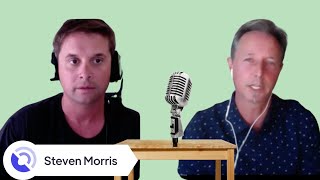
Stephen Morris split his full-service agency to focus on brand strategy, which he sees as the upstream work that precedes marketing. He prices through structured programs with a base fee plus retainers, keeps operations simple with Google Workspace and spreadsheets, and builds his client list through thought leadership and speaking rather than sales calls.
Chapters
Alright guys, welcome back to another episode of Growing Your Agency. Today, super excited, we have Stephen Morris from The M Degree. Stephen, thank you so much for joining the podcast today.
Stoked to be here. Thanks, Ryan. Really appreciate it.
Awesome, awesome. So, so tell us before we dive into some tactics, because that's what we like to do here, before we start grilling you with a bunch of questions, tell us a little bit about your business, your agency, and the approach that you're taking and why you're taking that approach.
Yeah, yeah, yes. So my business is less of an agency and more of a consultancy. And so I'll just get into a little bit of backstory about sort of, you know, what I've done over the years and, and where I'm sort of at today. And I'll fast forward a lot of things to truncate the long journey here. But back in 1994, I founded my agency, and it was, uh, it was under a different name at that point called Morris Communication and Morris Design. And so I founded it in '94, and for 23 years I ran it, built it, and then ultimately split it apart. So for the longest time, my agency was both a marketing agency, a digital marketing agency, but also a brand strategy company where we went in and worked with organizations around the globe as big as Samsung and NFL teams and ESPN and folks like that, and as small as companies based here in San Diego. Essentially took them through brand evolution programs. And then ultimately what we got hired on for was doing a lot of marketing campaigns and programs for them. So, you know, like I mentioned, Samsung and LG and Sony, we did a lot of product marketing for them.
So more on the creative side?
Creative, but also a lot of work in retail, a lot of work in digital marketing as well, and a bunch of work back then in sales training. So what I did 2 years ago is I split off the agency, and on one side of the agency was the kind of the marketing arm to it, and then the other side was the strategic arm to it. I split it off and sold the marketing side of it. And really now, Mth Degree, me, is focused on doing brand strategy work. And so I work with business leaders really at their apex of change, and I take their organization to the next level, starting with their most deeply held beliefs within the leadership team, capture them into a process that I have, and fuse them within the culture of the organization, and then ultimately build the brand that creates the exterior of the world. So, you know, I don't really get into marketing these days in a direct way other than to craft and create what we consider marketing strategy or marketing plans. So some organizations that I work with, after we go through some of the brand building processes, I help them craft a strategic marketing approach to figure out how to deliver and how to capture the audience in the way that they want to. And really, ultimately, how do you capture brand loyalty is really what I tend to be focused on.
That's interesting. I was talking to someone recently and they were saying, you know, how they're incredibly focused on copy and just like the psychological effect that like really good copy has instead of getting caught up actually in like design and that sort of thing. They said, look, if you can speak to someone and you can really hit those pain points and like resonate with someone, they are more likely to buy just because you're actually speaking their language versus if you have this well-designed landing pages with the buttons that convert and that sort of thing. So that's really, really interesting. What made you decide to split it up? Why did you not want to go with the marketing route? Why did you say, hey, I want to take the consultant, the Strategy route.
Yeah, my work, Ryan, is big impact. And so I believe that business can be a change for good in our world. And a lot of customers today, and really just our culture, has lost trust in large institutions. And large institutions would include the government and would include large corporations. And so I think a lot of people are looking to companies to create the change that they want to see in the world. And so a lot of trust that they put behind them. And so what I do in my Brand Evolution programs, and the reason I'm focused in that area is because I want to help these business leaders just like you do in your podcast. I want to help them thrive. And I know that organizations thrive when they create their deeply held beliefs connected to a significant value that they can create for a customer. Really make a change in the world of their customers. So it's that big strategic work that I really love doing, which is why I chose to go in that particular route instead of the marketing route. And not that marketing can't have change, but I think that these value systems that organizations have is really the head of the missile, if you will, for how change actually gets integrated within, even if it's in a marketing program.
Sure. And it's almost like further up than the marketing. It's almost like that comes first, kind of drives marketing, you know, spend positioning.
Ryan, the way I talk about it is like It's upstream. So, you know, you have a stream, like marketing's way down here. It's, it's after all this other strategic stuff is built. And so I really, what I do is I work on strategy, and it's mostly business strategy, brand strategy, culture strategy.
Okay. I mean, even, uh, you know, a lot of the people listening who are starting agencies and going after the marketing route, I think it is important to know that, like, hey, let's take a step back. Let's not just go and, you know, chop up a new campaign for someone. And once we get a client, but almost take a step back and really think about those things that are necessary to to drive the marketing efforts. Switching gears into just a little bit of tactical stuff, how did you acquire clients? Like, how did you get your first client when you were starting off?
How I acquire them now is very different than how I got my first one.
Sure, exactly. That's why I had to frame it like that.
Yeah, yeah. So I'll tether this to your last point. So Ryan, what you were just talking about where really any business leader needs to focus on you know, what is their business truly all about? And I'm a firm believer, believer in specialization and expertise. So, you know, there's great companies out there that are experts in SEO, for instance. There's great companies out there that are great when it comes to copy or strategy or creative or whatever. My expertise happens to be in business and brand strategy and the tethering of those two things. And so, you know, if you have a position of expertise, for any business— this goes for my company, your company, and anyone else— the more that you can put that expertise out into the world and get on anything that would be considered a stage or platform. Now, a stage could be a literal stage, it could be a podcast like this, or it could be a platform where you're actually sending out thought leadership, such as writing a book or sending out a blog. Almost all of my work comes from one of two things: the, the thinking that I do and that which I put out into the world on these platforms or stages, or the referrals for companies that have worked with me in the past. And they say, you know, I have to agree, Steve and his team did a great job on this. You really need to work with them if that's your problem, that's your challenge. So it's almost all referral and all this work around really building a platform of expertise.
And could I describe that as content, putting out content?
It is, but it's content of value. So it's not just content, it's making sure that Any blog I write, so I have like, you know, 10,000 people on my mailing list. Any blog that I send out there, then they're going to be looking at that content that it's going to be something for them. I'm never pitching them. I'm never trying to sell them. All I'm doing is putting thought leadership out into the world that's valuable for their life. Love it.
That's— I actually recently kind of took this similar approach. I was like, look, we got to stop just pitching all the time. Let's just like give value and interact and just have a lot of like activity with people in the space. Maybe collect something, be that kind of like go-to source and then then like good things will happen, right? Absolutely. Starting to just like be known and, and, uh, you know, people will look if they have a need at that time or know someone that has a need, um, then they're going to think of you at that time. So totally, um, totally get it. And I really like that, um, that model. What's, uh, what's your pricing model? How do you, how do you, when you onboard a new client, how do you decide, you know, what the pricing looks like?
Yeah, I really only have a couple of programs that I put together and, you know, it's a lot of companies that come to me, they want to hire me for complete brand evolution program. So I have packages that I set up for that. And there's a, there's a base figure that I won't go below for programs. And some, the bigger the company, the more complicated. So, you know, there's almost always a research component, there's workshops, and then there's the delivery of the work. So everything that I do is based upon a, essentially a program approach. And then occasionally I have some clients that want me for ongoing strategic work. And so they can then put me on retainer for that kind of work in the future.
Got it. So it's going to be based on whatever program they want. You kind of itemize out the different elements to that package and then you deliver it to them. What, in terms of delivery, I guess, and even maybe project management, what kind of tools are you using to kind of put everything together and communicate with the client on those deliverables?
Yeah. I don't get hung up in the tools. So sorry, I'm probably not going to be a lot of help here. No, no, no. Google workflow processes and Google, you know, all the Google tools are really, really adept. Cool tools like, in my countries, my clients are all over the country, so Zoom and, you know, Skype and things like that for meetings and that kind of thing. But I don't use a lot of project management tools.
No, like Trello, Basecamp, or anything like that?
No, no, I don't really need it.
Yeah, yeah, yeah, no, no, it's totally fair. I think some people— I was talking with Talking with someone the other day and they had everything like so, you know, like just like almost so complicated and they're like, we almost just need to like do just hand-to-hand combat right now because it's like we're not at this hyper-scale, like hyper-blitz, you know, growth company. It's like we just need, we almost need to like slow down on that aspect of things. So I do think that is like interesting when people get like overly complex with tools. And then in terms of like deliverables to the clients? Are you reporting to them weekly, biweekly, monthly?
We have weekly check-ins. Like this morning, I have— the reason I'm late even for this call is because I had 3 clients, 3 weekly check-ins that I do on Monday morning, and one ran a little bit long, which cascaded my whole thing. So weekly check-ins, I use a spreadsheet just through Excel to make sure that they're up to speed on all the calendar items that we're working on and, you know, project milestones and stuff like that. But weekly check-ins for those kinds of things, either via Zoom or face-to-face, but it's usually Zoom or a phone call for these Monday morning check-ins.
Sure. And then when you have to— do you ever have to bring in outside partners for like copywriting or design? And if so, do you have your go-to people?
Oh yeah.
Do you use Upwork? I guess, how do you do that?
Well, it's interesting that you bring up Upwork because I just hired a virtual assistant through Upwork.
One of these episodes they've used Upwork. Every single one.
Oh my God, yeah, and it's just an incredible tool. Like, uh, yeah, the gal that I brought on for the VA work is, uh, you know, she was super responsive and like really skilled, like just awesome. Yeah, so highly recommend that tool. And I've tried Fiverr, but, um, it's— I don't think they're quite the calibers there. Like, you're gonna get a higher-end, uh, type of professional through Upwork versus on Fiverr.
Yeah, Fiverr to me feels like they almost have like SKUs of services and they sort of are just delivering these like, you know, bundle of services versus— and again, I could be completely wrong, but just from my interactions with it, and I've done a lot on Upwork, is just, you know, it just feels like you're hiring like good quality people that want to find, you know, jobs all over the world versus like, hey, I will do this one task for, you know, X amount of money. That sort of thing.
I think that's the difference between Fiverr and Upwork. Upwork, you're hiring people for skill set. On Fiverr, you're hiring skill set for project. And then that's why they present it based on packages.
Yeah, definitely. I just personally like the Upwork model a lot better. So getting into your why, like why— and I know you said you want to be thinking big and everything, but like what drives you? Like why are you still, you know, 2 years ago you broke off Why, why, why keep going every single day doing it for your clients?
Ryan, I love what I do. Oh my God. I'm just like, I get fired up every day, every time I'm working with somebody. And you know, you ask the question about the why, what's my driving purpose, if you will, my true north. Um, you know, I'm in this work to help organizations find their own individual purpose and realize their potential in business. And so some of the companies that I work with are actually, agency owners, like creative agency owners, where I guide them through because I've been in the agency world for, you know, 25 years. And occasionally I consult with them. I run masterminds even out of those, uh, with, with those folks. Oh, cool. And so my driving purpose is to help them understand what their driving purpose is and then activate that within their culture and make sure that they're communicating that clearly to the set of somebody's out there that we call customers or ideal customers out in the world so that that company provides real value. This is what I love doing.
I love that. And then, you know, obviously seeing the wins is, is incredibly fulfilling as well once you are able to help them and then you start to see the wins that, that they get. Okay, wrapping it up, we always ask this at the end. What does your morning routine look like?
Oh yeah, so morning, um, I'm up without an alarm clock usually between 5 and 5:15, and my first thing is I meditate every day for about 20 minutes, and then I do some type of journaling practice. Uh, that journaling practice is usually a, um, sorry, my phone's ringing. Uh, the journaling is usually a reflection upon the day before and then what I want to accomplish today. And then I do some type of movement. So I either do yoga, surf, or a trail run. So I love, I live right on the canyon here. And so I do one of those three things every day.
A couple of follow-up questions. Do you use any apps for meditation, Headspace or any of those, or are you unguided?
No, I'm guided. Yeah. Just silent meditation.
That's awesome. Um, yeah, I started journaling recently. So, so when you look at the day before, is it gratitude or is it just a reflection of what happened?
It's two things. So I write a sentence on recapping my experience of the day before, and then I write a gratitude list of the things that just come up into my attention. And then the, the rest of the journaling is here are the things that I'm looking to accomplish today or experience today. It could be both. And then I'm usually thinking about something that, or I'm writing down something that I've been thinking about, and that could be a blog topic or it could be something that I'm working on with my new book or something like that.
All right. Awesome. Stephen Morris, The Emp Degree. Thank you so much for joining us on Growing Your Agency. We will link to your website below. And where can everyone find you?
Oh yeah. So theempdegree.com is where you can find me and stephen@theempdegree.com is my email. Email. Anyone who wants to reach out, feel free. And Ryan, thanks for hosting.
Awesome. Thank you so much, Steve.
Yeah. See ya.
More from Ryan

We Analyzed 500+ Contractors. Here's What the Most Profitable Companies Do Differently.

Employee Incentive Programs That Drive Team Performance and Profitability with Ryan Shank


Stop Losing Money! Ryan Shank of ShareWillow on Using KPIs to Reward Field Teams






