This One Tactic Helped Andrey Kisselev Win His First Few Clients (Using Upwork)
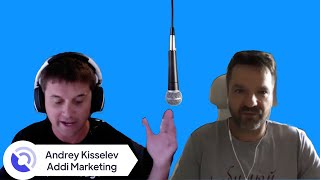
Andrey Kisselev built AddiMarketing by sending 15-20 personalized Upwork proposals daily, converting 3-5% into contracts. He started with low setup fees and $300-500 monthly management fees, then shifted to referrals as his client base grew to 20 accounts.
Chapters
Alright guys, welcome back to another episode of Growing Your Agency with Ryan Shank. Today, super excited, we have Andrei Kisilev from AdiMarketing. Andrei, thank you so much for joining us today.
It's great to be here. Thanks, Ryan.
Yeah, thank you so much. So I know that you— I see obviously in the background you're a Google Certified Partner. Tell us a little bit about, you know, your agency, your current company, and also how you got into this. Like, why, why go into digital marketing?
Okay, short story how I started doing digital marketing. Actually, it all started by accident. A few years back, my previous corporate job was coming to an end. I was working for BlackBerry and it wasn't going great.
Yeah.
And I kind of was, I wanted to do something else, something different, start a new chapter of my life. Financially as well.
Sure.
I started thinking, it was about 3, 3 and a half, 4 years ago, and I'm kind of looking, I'm thinking, okay, I'm, I'm technical, but I have an IT background, but not programmer.
Yeah.
I like to learn. I learn fast. What would be interesting stuff that goes on? So first thing I did, I learned solar cells, solar energy. Before it was a thing with—
Product, you learned about the product or?
About product, about how it works and everything. And I was hired to the company, small company. I was living in Italy at that time. But it was very slow. There was no, basically no clients and they put me, they told me, okay, do some get some client acquisitions, make phone calls, and I was making cold calls and I hated it.
So you were working for the company selling, but you were cold calling and just grinding it out?
Yes, I was cold calling and I hated it, and then I kind of started thinking, so what's a better way to get customers? Oh yeah, we're running this Google AdWords thing and it's paid advertising And that's how I learned first about it.
So who told you about it? Who told you about this Google AdWords thing?
It was in a company. They told me, okay, get the new client, call these numbers, like 100 calls a day. Yeah, yeah, yeah. And I hated it and I started asking questions. So do you guys, is there any way to, another way to find the clients?
Sure, yeah. How do we get to this many people without having to pick up the phone 100 times?
Yes, yes. And they were running this rudimentary Google AdWords Sure. That's how it started. I started learning, started reading, started listening to podcasts.
Sure.
And basically I decided to put all my efforts to learn, to become certified and basically do it on my own.
Did you do that within the company and then decide to break out? Because I've heard a lot of stories about people sort of learning the ropes inside of a company and then boom, they're kind of like, will break off on their own.
No, I did it on my own, completely on my own, because this company wasn't— there wasn't very many clients.
Got it. So when you were at that company, you were only doing the cold calling, then you said, hey, I'm going to learn this on my own, and then I want to leave, and then I want to do this for other clients?
Yes, that was the plan. And I took a sabbatical, basically I quit that company, I quit that job, and I basically spent 3 months, months of learning and getting certification. Google Ads certification partner. And after that, I started searching for my first new client. But imagine with no background, no previous clients, it was extremely— it was probably the hardest thing to do.
Yes, this is what I actually love and this is what I think is really, really interesting. And I think a lot of people listening to this or watching this are kind of in that exact situation that you're in. Maybe they've taken a course, they've learned, they probably haven't gotten certified, to be honest. But they're saying like, how do I get that first client? So what did you do? How'd you do it?
Upwork.
Upwork?
Yes.
Every single episode so far, people have using Upwork, every single one. So what did you do on— oh, you posted at someone, you responded to a listing?
Yes, I created a profile saying I'm doing Google AdWords, these are my certifications, and I started basically searching for for jobs, for job offers. And then you basically, I spent every day like 2-3 hours putting, pitching for jobs and occasionally I started getting calls and that's how it works. You start getting calls, people interview, talk with you and then—
Talk to me about that funnel because that's actually something I'm really interested in because I've posted on there, I've never actually like tried to get hired on there and I know whenever I post I get a lot of responses so I'm curious, you know, when you're responding to these job postings on there. You know, how many, how many of them do you respond to? Because you take time, you put together a little proposal, then you get the phone calls, then you actually get the, get the client. What is that like Upwork hiring funnel look like?
So the Upwork, basically it's a site that connects, connects professionals with, with employees, and employees are people who need some kind of project be done quickly. And so In addition to having my profile, every day I go to the list of offers and I search by my keyword. Like in my case, it was Google AdWords.
Yep, yep.
And I see job offers where basically roughly it says what needs to be done, what kind of rate they're prepared to pay.
Yep.
First of all, I select which— the ones that sound more interesting and up to my level.
Yeah.
And I write a short proposal. Ideally, I include my case studies when, I mean, I didn't have anything in the beginning. I didn't have any feedback, any testimonials. That's why it was like the hardest thing to do.
Did you win on price? Like how did you win in those early days with no true case studies, no experience, no verified hours, which I actually know is really important on Upwork, verified hours and reviews. Like how did you win those initial deals?
Well, partially by luck, but also I was pricing very, modestly myself. But even though some people, a lot of them, a lot of clients, they just want to hire someone from Asia even cheaper. But mostly people then realize that to get quality you need to have something different.
Absolutely.
And so I think I spent 2-3 months before getting my first actual client.
2-3 months, okay. And then, so kind of going back to the funnel question, how many proposals do you think you sent in order to convert that?
I think like 15 proposals a day, 15-20 proposals, because you want to, you don't want to send a cookie-cutter kind of template. You want kind of to be very personal with every proposal.
10-15 a day for how many, like how many total proposals? Like hundreds before you got one?
Like 15, yeah, probably 200-300. 2-300.
Wow.
But another thing is when, like, if you keep searching on Upwork, I mean, there are so many offers a day, you cannot really invent more because there are no more.
Exactly, exactly. There's a finite amount of jobs. So anyway, so maybe like a 3-5% conversion rate from proposal to actually landing the job if it's 2-300 proposals. And then now, are you— so curious, kind of like transitioning forward, are you still getting jobs off of there and do you have a higher conversion rate? Maybe not.
Okay, so now after I incorporated 2 years ago and I'm almost having 20 clients, first year, like the previous year, I was getting, I would say, 95% of my clients from Upwork. Then going forward, I started getting clients through referrals, leads through referrals from my previous clients. And that's getting— this part is getting bigger and Upwork part is getting smaller. But I still do some clients, get some leads from Upwork. Actually, honestly, now I reached the level where I have so many, so much work that I I spend much less time on client acquisition.
So how do you, for the clients, I guess now and even back then, just kind of going into some tactics, how are you pricing? Like back then you said you were pricing low. Does that mean flat fee, percentage of ad spend, some type of blend? What does your pricing model look like for the clients that you have?
Yeah, first initially I kind of, some, when you see job offers, they don't, Some of them don't tell you how much to spend, some of them kind of give you an idea and by looking at the history of that client, how much they were paying to previous freelancers, I kind of got an idea what they are ready, prepared to pay and also what kind of job, how complicated and involved the project is for me because I didn't want to spend 10 hours and get $20 of pay. So, and then I kind of—
You mean for account setup, kind of like going through keyword research, that sort of thing?
Most of them wanted to fix their Google Ads, which involved optimization or setup from scratch. I call it setup. Okay guys, I will do— I was really pricing hit and low and I said, I would do your optimization for you and manage it for 30 days for $500. $1,000, which was really low.
Separating out campaigns and ad groups, doing some broad match modifiers.
All of that, all of included, I will create and I manage for 30 days for this amount of money. And even then, not kind of everyone was jumping at this opportunity. So people, maybe they found something cheaper elsewhere. That's how I got first, second, third client. And then kind of going forward, I started a little bit saying, "I can do all of that without actually rating myself." And then next step they would call me, we would chat and kind of then I would give them proposal, the number. But first to break in, I actually, I was attracting them by this super low offer.
Got it. So almost like an audit plus optimization at some low price, $100, something like that, whatever it is.
It's the most typical need for people.
And then that gets you in the door, that gets you to the proposal state, and then whatever it is from there, you at least get to have the conversation, then you convert, whatever it is. So then once you get past that stage and maybe even transitioning to now, what's your pricing model? And do you have a retainer? Tell us about that.
Yes, so I do mostly Google Ads, some Bing Ads, and I started doing also design, landing page design.
Perfect.
I don't require any contracts and usually there is a one-time setup fee for the initial optimization or account creation. Kind of low because I don't want to scare clients away. And after that I say, I'm gonna manage this campaign proactively for you and I will charge you in the beginning of the month. No contract, but I charge in the beginning of the month.
Yep.
Oh, everyone is free to walk away at the end of the month, and I have to earn my job.
Yep.
Next month.
Put the ball in my court, give me a shot.
Yes, and actually the reason I did it, I'm doing it because I want to simplify it as much as possible for clients.
Sure.
And kind of feel free and keep the options open.
So it's a flat management fee then going forward? Does it vary based on ad spend? Is it based on a percentage of ad spend? Like how do you price it necessarily?
Well, I have kind of minimum where someone is starting Google Ads and they obviously they're gonna spend probably under $1,000 a month and for that I say, okay, I can do this for this fixed fee which is my absolute minimum, bare bottom minimum.
Couple hundred bucks a month, $500 a month.
Yes, $300 actually for managing that type of account because lower than that is becoming kind of fun.
And those are probably like local service businesses anyway that are like, hey, I want to try this out, you know, that sort of thing, lower ad spend.
I have interesting businesses. One of my first very good clients who is still with me, he is a local dance instructor. They have a great school in Louisiana. Another one is a recent client, he is a private investigator. So very interesting kind of speaking with people. You learn some businesses you don't know even they exist. You read it in the books.
Totally. You know what business surprised me that does a ton of online digital marketing and lead gen is hearing aids. Actually, there's massive hearing aid companies that are just doing these like national ad buys. And I guess their whole thing is, you know, they drive people to their landing page, like very simple, large text, and then just drive like phone calls or leads. It's kind of crazy. But yeah, it's the same thing where it's like, I never even would think about those kinds of businesses. So in terms of deliverables, right? So are you— I know, let's say they're giving you your management fee to do the ongoing management. How are you reporting back to them? What kind of tools are you using to report? And then what metrics are you— is it just spend and leads, or are you going into cost per click? What does that look like?
Depending on the client, I'm trying to gauge what do they need. I tell them, I'm going to report monthly and I will report to you as high level or as detailed as you want. So most clients want just to know how much was spent and what's the result, how many calls, how many leads, how many form submissions. Others want to know a little bit more and I I expand it.
Got it.
And so some clients ask questions, they want to learn more, specific questions during the month, and I send them video explainers which are screencasts with voiceover, and they find it very helpful.
Yeah, I love that. And what is the cadence again of the reporting? Is it weekly?
Is it just monthly?
Monthly?
Monthly.
And then it's always a call. It's like you jump on a call to kind of go over it, or— because what I've found, and I work with like almost 800 agencies now, is that they find it hard to get the clients to actually jump on those reporting calls. So I'm curious if you're running into the same issues sometimes.
Well, in 80% of cases, I just sent a report which I know will be satisfactory for the client.
So push first.
It's a push and we don't really call. For some clients we have calls, but actually I encourage feedback because that kind of helps me do my job better.
Absolutely. But not always I get that. So you said you're tracking the web leads, the phone calls, then I'm assuming you come to like a blended number of leads and then obviously total spend and then you're ultimately reporting on a cost per lead. Do you guys kind of like back solve into like what the client can and wants to pay for a lead? Like how much education I guess are you doing for your client on cost per lead and why it might make sense or not make sense to pay that much for a lead?
Well, first of all, a very important part is managing the expectations from the get-go. So I don't tell them I will guarantee you that many leads or that many clients in the first month, second month. Instead, I tell them, actually I underline that I don't guarantee the end results. What I do guarantee is you'll be getting good traffic, relevant traffic, you're not going to be wasting your clicks, especially in many cases when I take over account, I see a lot of traffic was just spent on completely irrelevant clicks. And that's what I tell them. It's kind of a matter of trust, a little bit, because you cannot really convince someone without some context and background. And people look at my Upwork testimonials. They basically— I'm a top freelancer on Upwork, and in my proposals now I include, I add my testimonials, and they kind of see, okay, he did a similar kind of project for similar type of industry.
So good.
Do you use—
how do you create those proposals? Do you use like Ninja Cat or anything like that, or are you just kind of like using like a template you have in like Google Docs?
Well, I have a template, but for each proposal I use it as a base and I customize it based on client.
Yes.
Now I found another good proposal tool inside FreshBooks, which is a software. Yeah, actually proposal part, you can write a proposal with your quote and if people kind of like it, they accept it, you can convert this proposal into an invoice.
Oh, I love that.
It looks kind of professional.
Yeah, yeah, yeah, FreshBooks is really good. I feel like it's kind of under the radar.
They got sort of like overplayed by QuickBooks, but I feel like they're differentiating with stuff like that and I've heard a bunch of Actually, I was using QuickBooks for the first year and now I switched recently to FreshBooks because it seems that they have a little bit more, a little bit better, more features.
Yeah, yeah, yeah. That's awesome. All right. In terms of tools that you're using, I got to ask, what are you using to track the calls on the site? Are you using Google Call Tracking?
I use mostly Google Call Tracking and also for a couple of clients I use CallRail.
CallRail.
Because historically they were using CallRail and that's—
Yeah, we're going to have to get you switched over to PhoneWagon from that. But anyway, I'm just messing around. And then I'm actually curious what the makeup is in terms of like, do you see a higher percentage of calls versus web leads? And if so, does it vary by industry? Because what— yeah, does it vary by industry?
Of course it varies by industry. Most like local businesses and blocker service businesses, they really rely on phone calls. And they just, if they don't get enough phone calls last week, they keep calling me and say, tell me what's going on. And for them, I really not only track the conversions, but even I send them the lists from Google Ads, how many calls, even if they were short calls, and they really analyze it very closely. Some clients, they accept also forms and phone calls. But strange for me was to find out that one client, he didn't want to be contacted by phone actually, and he wanted to only receive the forms. It was kind of SAS, internet software provider.
Yeah, SAS, yep, got it. Yeah, he just wanted the form signups. Yeah, one of the things that that, you know, some agencies that we're working with have been doing is like, though there's, and you're starting to see this kind of all over. It's not even just related to us, but people are like making the numbers textable. Like we actually had to just launch this texting feature because so many people kept asking for it. They're like, I want a two-way text with my customers from my business line and things like that. So we're starting to see, I think like kind of the rise of, uh, of that happening. Um, but yeah, you know, the other thing that's interesting is, you know, do you ever find that your clients, like you could be doing your job as a marketer. This is what I hear all the time. Like, you could be driving them relevant leads from people that need their services in their area, and then they're just either not answering the phone or they're like not responding to their leads. And it's kind of frustrating. You know, what I've heard is that there's just like a level of frustration because it's like, you know, it's like, hey, I'm doing pretty much everything I can, and then you're not, you know, taking this like really warm lead and servicing it properly. So how do you like— how do you deal with that? And then if so, how do you How do you get around that?
Well, when I'm managing campaign for someone, I'm kind of becoming, I feel that I am inside in the company and become like a partner. And when there is a phone call from call-only campaign with a click that costs $20, which actually happened yesterday in one of my clients, and this call was missed, I feel really bad because this client was waiting for the calls, for leads, and I emailed them, I let them know, look, this call was missed and some clients get defensive saying, yeah, I was there, but they appreciate it and they feel, I mean, they know that I'm trying to help. But not only that, I also look at the client, look at their kind of marketing channels and I, in analytics especially, you can see how they're getting leads from other channels and I tell them and kind of compare performance from different channels and kind of give them bigger picture and that's what clients always appreciate.
Yeah, that's awesome. Alright, just wrapping up, just a few more questions. So you said you're kind of positioning as a freelancer on Upwork. How many clients can you possibly take at a time? Like, what's your cap?
Okay, now I'm hitting 20 clients and I'm becoming really overloaded. So last year I was spending like 30% of my time to learning. This year I'm spending only half of that. Most of it I'm spending administering, managing clients. So I try to optimize my workload. I use different kind of techniques and little tools.
Sure.
But I know that I, at certain point, I need to or expand or hire other people or keep doing what I'm doing and charge higher rates. Actually, I'm inspired by the book, One Million Dollar One Person Business, that I recently read.
Yeah, I've heard of it.
It shows that people, like one-person companies, can actually create a lot of value.
Yeah.
But I think at some point, probably I'm gonna need to hire someone.
Yeah, I was reading something recently where they were talking about how like it used to almost be an indication of success based on the number of team members you have or number of employees, whereas now it's like with so many people working remote, all these tools, everything is like pretty optimized for scaling that you can get away and you can go really, really far, build a pretty big business with a lot less people nowadays. Probably similar to—
It's question of strategy and question of what you want. Do you want to scale, become really big, or you want to keep keep it small intentionally and have a really good lifestyle if you want.
Yeah, exactly. So by the way, speaking of lifestyle, where are you at right now?
I'm located in Newark, New Jersey. I work from home and make my own hours and I spend time with my family.
That's awesome. Yeah, we're in New York.
Newark.
Yeah, we're on right in Nomad and like 26th and Broadway.
Cool. I'm in Newark, New Jersey.
Newark, nice. Just went through there yesterday. Cool, man. Um, all right, so last thing I ask everyone this: what is your morning routine?
I wake up at 5 o'clock, I swim in a pool for an hour, and then I have breakfast. And at 8 o'clock, from 8 o'clock start work. Well, I meditate for 10 minutes, then I start working.
Oh, interesting. I've had a lot of people that meditate. Do you use any guided meditation like apps, or are you doing—
yes. I use Headspace.
Headspace?
It's great.
Love Headspace. Do you do the 10-minute guided one?
10-minute guided one. It helps me actually even in business and be kind of sharp.
It's so good. I just started doing it maybe like 2 to 3 months ago. And it's like, I can't even explain it. It's the best thing I've ever done. It's like, it makes you feel like you just got like a full night's sleep. 'Cause I feel like my body's always just like, Tense and crazy. Alright, awesome. Thank you so much, Addi Marketing. And where can everyone find you?
My website is addimarketing.com, which is A-D-D-I marketing dot com. And sometimes I'm also on Twitter, @akisselev.
Alright, Andrei Kisselev from Addi Marketing. Thank you so much for joining us on Growing Your Agency. We'll see you later.
Thanks, Brian Shank.
All right, see ya.
More from Ryan

We Analyzed 500+ Contractors. Here's What the Most Profitable Companies Do Differently.

Employee Incentive Programs That Drive Team Performance and Profitability with Ryan Shank


Stop Losing Money! Ryan Shank of ShareWillow on Using KPIs to Reward Field Teams






