Vince De Benedetto Helps Clients Automatically Book Qualified Appointments
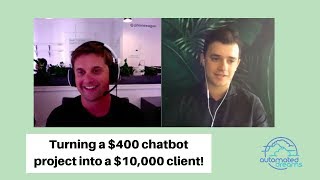
Vince De Benedetto runs Automated Dreams, a remote agency that guarantees contractors 40 hours monthly to keep talent stable. They skip paid ads entirely, relying on partnerships with platforms like Design Pickle and Ontraport. Before implementing solutions, they map out a client's entire business and tech stack.
Chapters
Alright guys, welcome back to another episode of Growing Your Agency. I'm your host Ryan Shank. Today, super excited, we have Vince DiBenedetto from Automated Dreams. Vince, thanks for joining us today.
Thanks for having me, I'm really excited to be here.
Yeah, this is awesome. So I was checking you guys out and I've heard a lot of good things about your company and you guys don't position yourself as an agency. Tell me a little bit about that kind of mindset and philosophy.
Yeah, totally. I guess for me, when I started my company, I started out as a consultant for a particular CRM, for Ontraport. And a lot of my clients, they would come to me and they'd say, "Great, you did this piece of the funnel, you did this piece in Ontraport, can you also do this?" And I'd often say, "No, I can't do that," or, "Let me refer you out to so-and-so." And 9 times out of 10, referring out ended up using one of my clients. Like being bad, and so, the same sort of thing applied to me recruiting those people in-house as it was needed. Just couldn't control the quality. So, like, we don't position ourselves as an agency 'cause everyone we have in-house, we're a team of 13 or 14 right now, we've had them for a long time, we know their quality, we secure their quality, and I think something we do that not a lot of traditional agencies do is, we provide like a minimum retainer for every contract that works with us. So like if we don't use their hours for that month, then they just won. Like, like we pay them for 40 hours a month minimum and they only work 10 hours, then great. They just pocketed another 30 hours. Um, but that just gave security for the contractors and they stick with us and they like us. Um, really what we do at Automated Dreams is try to harbor a community that is full of entrepreneurs. And hopefully we're building them up with the tools.
That's awesome. And then how are you sourcing a lot of the talent for your team?
Yeah. Honestly, a lot of it's Upwork. And sourcing is really, really hard. There's certain positions that we've tried to recruit for a year and a half or two, just like really specialized stuff.
Yeah.
It took me like two, almost two years to find someone that could like replace me in terms of Ontraport work so I could be the CEO of the company and not have to do the higher-level strategy. So the talent pool, it's really, it still is pretty small for some specialized work.
Yeah, absolutely. Absolutely. So tell me, I guess, about a typical engagement that you'll have with a client, you know, and, you know, I'm curious to hear, you know, how you're acquiring clients and then also sort of like what the actual, engagement and scope of services looks like?
Yeah, so I think I have, it's so funny, like I get targeted on LinkedIn and ads and it's all for a problem that probably 99% of agency owners have, but I don't have. It's like, are you not getting enough leads? Like we can fill your calendar with calls. And I'm like, please no more calls.
Yeah, yeah, yeah.
Everything, we don't do any sort of paid traffic, paid marketing, no outbound reach. Everything's purely organic that comes to us. And it's 'cause really, and making sure that like, basically I pay for my certification so I can be listed on their site. And same thing with ManyChat as an agency, we're like a top-level partner with a company called Design Pickle and working on a couple other ones, but that's where we get all of our leads from. And their support teams will just send like, "Oh, AutomatedDreams can help you with that." So yeah, 10 to 15 calls, requests for calls a week, the people that need our services. And this just isn't people filling out a quick contact form, that's going to our website and filling out all the information we ask. We screen those.
[Speaker:RYAN_SHANKER] Right, people that—
yeah, yeah, yeah.
That's interesting, 'cause I've recently done a few things. I keep getting ads for Design Pickle and I actually wanna try it 'cause I do like their creatives and I've heard good things. But recently I've actually— I've used them all in the past, you know, Fiverr and Upwork and that sort of thing. But recently I've been going to 99designs and not posting the contest, but actually sort of, I guess, going to their fulfillment side of the house, which I'm assuming would be an agency like yourself or someone like that, right? They have, you know, they have like a shortlist of top agencies that then will just like do the project versus having to like, you know, create the contest for it like their traditional model. So that is interesting, kind of getting fed these like jobs from, you know, these these like consumer marketplaces essentially without having to like then go and kind of bid against like 800 other people that are in like, you know, all these other countries. So they're all, it's a race to the bottom. Yeah.
And we don't target ourselves as the cheapest. We target ourselves as like the best.
Yeah.
And yeah, so our pricing is like, I'm like, I'm on Upwork just as a consultant. Like that's how I used to get leads in the beginning. And I just get pure invites, like maybe 2 or 3 a day. And every so often I'll just get like an offer, like, "Here, just start working with us." It's 'cause I'm like, "Oh, I'm like $250 an hour." And they're like, "Okay, here's a job for you. Like, we don't even need to like interview you." So really in like, in this area, people, there's so many agencies, so much talent out there. Some people have the money to spend, they're bigger companies. And as long as they see the ratings and they see like your price is premium, like, they have a lot to burn through. So like the higher the price, like right now, it seems like the quicker we close.
That's crazy. I mean, also, I mean, if you think about it just from, I mean, it's a little bit, you know, contrarian thought, but it's like the higher the price, I mean, I guess it's a normal thought, but the higher the price, the higher likelihood that the client is like larger, has a bigger budget, that sort of thing, views you as higher quality as well, and is like also ready to pull the trigger. I guess the only flip side from that, what I've seen is that sometimes these people with like these really, really, really large companies, like they're forced to go down like an RFP process. So then it's more of like submit the, you know, submit the proposal and then kind of go, go down that path. So I don't know if you guys have seen that.
Yeah, not so much. Like I got a request for proposal the other week and I'm like, this is just so much. I'm like, yeah, if I wasn't getting leads, like sure, I'd spend, you know, 5 hours on this, but I don't know if it's worth it.
Right, right, right.
Yeah.
So what are a lot of the jobs that you're doing? Is it a lot of kind of like cleanup? Like I'm looking at, you know, services page seems like, you know, there's obviously a lot of like, you know, tools that you've mastered. So is it people like, hey, we just kind of come in here and, you know, hook up my ClickFunnels to this, build a funnel for us. Or is it like kind of more end to end, hey, from ideation, can you help us execute on this project strategy?
Yeah. So it took a, it took a while for me to finally like hone down in like 60 seconds like who we are as a company. I'm like, part of my personality is like, I like trying a lot of different things. And like the first year I tried, you know, 10 different ways of billing and 10 different ways of like working with folks. And like, you know, 90% of those failed. And had I not tried those 10 things, like I probably still wouldn't have been in business. And so like that 10% of stuff that's working, like just through testing and improving as a company and our offerings is what's like keeping us like thriving. And so, everything that we do starts with business processes and business process mapping. So, we start with all of our clients. It's sort of like an onboarding requirement that we go through all of their systems, what they're using, what they're not using, what's working well and not working well, and then their overall business goals and strategies. And to then evaluate, like, is your business tech stack set up to support you in those goals, support you in reaching those goals, like, 5 years from now? And then, like, from there, we map out what the right tech stack is for them and what the project phases are for them to get to their goals, whether or not we do it. But then that helps our team have a 30,000-foot view of their company, and oftentimes that's the first time, like, the business had a 30,000-foot view of their company. So, yeah, we, we come in and we clean your foundations up. So that's what we do, and then we have complementary services to help implement that.
Forces them to zoom out a bit. You know, everyone's kind of so like in the trenches, so like narrow focus that it's like, hey, let's zoom out and see why we're doing this, what we're doing.
Yeah. Like I had someone come to me from my ManyChat listing wanting like probably like a $400 bot build. And I'm like, that's not the problem here. That's not why you're not making sales. I'm like, basically like we're professional organizers and like the business, like a technology sense, like let's dump everything out. Like your problem is you don't have a clear brand identity. You don't have the clear systems to help you grow. And then next thing you know, he's like, "Here you go, here's $10,000." Like, "Sure, I'll buy that proposal." Right, right, right. I'm like, "Oh, okay, from $400 to $10,000." Yeah, we don't do one-off projects because it's a quick way to get into problems and also scope. You also do this real quick and as a business agency owner, you're probably like, oh sure, I can cover that. And the next thing you know, you're covering a lot of stuff.
And yeah, you're just getting hit with these little like kind of like freelance type projects and then you're not able to zoom out and do the larger items. So talk to me about your team. So how big is the team? I think you said earlier you guys are all remote, but what is the kind of makeup of the team? Is it mostly salespeople? Is it, you know, engineers?
So I always have a— I think we're between 13 and 15 folks right now. Okay. And like a core team of around 8 or 9 that's been with us for like a year and a half or two. And so I'm just the main salesperson right now. Like the flip side of the con of trying 10 things at once is that I can't train a salesperson to—
Yeah.
These conversations. I have organic leads coming in, but every conversation is sort of different. And so, we're in the process of niching into certain builds so we can build up our sales team. But then, we have about 2 project managers in-house. We have a business operations manager. So, basically, he's the one keeping the business running if I don't have to. We have automation— What is his day-to-day?
Because I'm actually curious about that. I was talking with someone last night. I think we need that. Um, but yeah, what are they doing? I mean, are they looking at making sure reporting is airtight? Are they kind of driving one-on-ones? Like, what does that role look like?
Yeah. So, I mean, something I learned, like, uh, at my last conference I went to, and like, I'm in a mentorship program with Design Pickle, it's that generalists are the ones that you need to recruit early on in your business structure. Cause those are the people that build your business. Like once you have the strong generalist, then you can, um, hire the specialists to build their company. That's been working. He's just like super general. Like he's also having ownership in the company. So it doesn't feel like I'm the only one with like ownership of if the company fails or succeeds. Um, he's on salary now. Uh, you know, we gave him a bonus and he's fully invested in the company. Um, and his day to day, um, really like there's two kinds of people. I thought there was two kinds of people. There's people who like make mistakes and don't ask questions and there's people who ask questions to avoid mistakes.
Sure.
Like, he's one who, he won't ask questions. He'll go research on his own. He'll find it out. He'll be like, here's the plan I've created. Like, here's what needs to be done better. Like, can I go ahead and do this? I'm like, dude, like, you just did all like my job for me. Like, you're the third kind of person who researches, like, ask questions to others, and then like presents me with like the final product. So he's been handling all of the small like admin pieces, like, and Yeah, sort of everything, but we're taking the hats off of him. Like my philosophy, position I wouldn't want, and that's like doing jobs that I like, duties that I hate. So everything I ask people when I onboard them, like, what about this position do you not like doing? Because we can easily take that off your plate.
Yeah.
Because if people are doing things day to day that they hate doing, they're not going to stick with you.
Definitely. We ran into that recently. I had someone that was just day to day in the trenches and I think she got burnt out. So, but it's like, it's the nature of, you know, the other thing that I guess we were having struggle, we were having problems with is like, you know, how do you create like growth in such a small organization when it's like, you're, you know, at such a point where it's like, hey, we just need to go heads down and kind of like do these things. We're not, you know, in a place, you know, and I think like as leaders, it's our job to at least maybe paint the bigger vision and like show them that there is that path of growth. But, you know, I think ultimately it has to come from within, for them to be like motivated to just kind of like grind it out and just to do those things for at least some period of time.
Yeah. Well, and we're also in like an age where there's so many systems out there. Like if you're, if you build it smart, like I'm proud of like the systems we have in place internally. Um, cause, um, yeah, like something we're having a really hard time recruiting for is a virtual assistant because like 95% of the admin and clerical tasks are already automated.
Yeah.
So it's like the 5% we need them for, it's hard to find someone who just like specializes in that 5% that we can't automate away. So a lot of those tasks people hate is pretty much automated away. And so we rely on like these key foundational softwares instead of having 20 different softwares that most companies will end up having.
Yeah, totally get it. Interesting. All right.
Awesome.
So we're going to wrap up in just a second. So talk to me about your pricing model. So, and pricing model, how many clients, you know, If you don't want to say total number, interested to hear a range of clients and how do you scale from there? And then, yeah, then we can wrap up.
Gotcha. Yeah. So pricing model, we tried to completely ditch the whole one-off project hourly rate model. And if we do, then there's an agreement that the credit card's on file. You know, we tell them we auto-charge every 2 weeks. And so we never have to deal with, here's an invoice, can you please pay? Can you please pay? I'm like, I've never had that problem from the get-go. Like, I tried to be lenient on that and I've had that problem. So I'm like, nope. Or it's like, here's a fixed price. And then rather than setting my like payment plan price as the fixed price, you know, like that's the price I set, like the discounted rate as my price. Like if you pay in full and then I just add on like an additional margin if they have a payment plan. But that payment plan's 50% upfront, 25% in 2 weeks, and then the final 25% is gonna be collected at this date no matter what. And that's just what works really well, especially the fixed price model. Like, if you just charge more and cover things, so there's like a 1% chance there'll ever be a conversation of scope overages, the client's happy because they just want to know what they're spending. And that's been working really well with us. And we also work in a retainer model where it's like a use it or lose it every month. Within your retainer, like all of our team's rates are discounted at this certain point, and if you ever go over, we just charge the overage on the additional month at their regular rates. So yeah, we have a few different pricing models. We also have products, but I won't go into that. And then you said types of clients, like how many clients we currently have.
Mm-hmm.
So I think currently we have around 20 to 25 clients, active clients, and really we're trying to fade some out that are smaller projects so we can take on bigger ones, because 10 smaller clients means there's 10 different egos to deal with and 10 different points of contact to keep happy. So we're trying to consolidate a bit in that. Yeah, and sort of, we're lucky in the sense that what we offer in terms of business automation and process mapping is not a heavily competitive market. So I, that's like our niche, but yeah, we're trying to niche more so we can have a paid sales team. Yeah. That cover everything? Yeah.
That was awesome. And then final question that we always ask everyone, what is your morning routine?
Oh God, don't ask me that. So I hate routine. I take the Strength Finders test and that's like on the bottom. Like I hate routine. But I joined this mastermind, um, it's, uh, with Design Pickle. It's called the Expand Program and it's really pushing me. Um, there's a routine every morning. Um, you're supposed to have done before 8:30. There's 4 core areas of your life. Um, and business is the last one. It's with your family, but it is like being like how you are internally. And then like the first and foremost is your body. Um, so like you're supposed to hit those 4 areas and each of them have 2 parts to it. So with your body, like I try to sweat every day. So I go to Orangetheory in the morning, like 6 o'clock, um, try to have like a green smoothie, not try, actually have a green smoothie and then meditate and journal. And then you deposit into your relationship, your partner, like with the, just like giving like a compliment or like gratitude, appreciation. Um, and also doing the same thing with your friends or family. And then with business, it's taking the time to discover something new. And then once you discover that, you stop and then you declare it to someone. You declare it on social media, declare it to your, your business members. Um, because when you declare like a discovery, that's when it really locks into your mind. And so doing all of those 4 things within a 2-hour range every morning, that like sets you up for the day.
Got it. Yeah.
I noticed when I don't like exercise in the morning, it never really feels like I got my day started.
Yeah.
Like you're still just kind of like, You're never separating that. Floundering around.
Yeah, yeah, floundering around. All right, awesome. Vince, Automated Dreams, thank you so much for joining us today. Where can everyone find you?
You can find us at automateddreams.com.
Automateddreams.com. All right, Vince DeBenedetto, Automated Dreams, thank you so much for joining us, and we will see you later.
Awesome.
All right.
More from Ryan

We Analyzed 500+ Contractors. Here's What the Most Profitable Companies Do Differently.

Employee Incentive Programs That Drive Team Performance and Profitability with Ryan Shank


Stop Losing Money! Ryan Shank of ShareWillow on Using KPIs to Reward Field Teams






